


Erhalten Sie Zugang zu diesem und mehr als 300000 Büchern ab EUR 5,99 monatlich.
- Herausgeber: Pushkin Press Classics
- Kategorie: Abenteuer, Thriller, Horror
- Sprache: Englisch
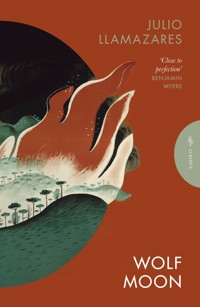
Spain, 1937. The Civil War is not yet over, but for the Republicans, it is already lost. Franco's army is scouring the country for their remaining enemies, and four fugitive soldiers are in hiding, deep in the Cantabrian mountains. Surrender means execution. Winter means starvation. There is no way out - and yet they endure. A taut and thrilling story of pursuit and evasion, Wolf Moon is also a testament to undying loyalties: to a cause, to justice, and to brothers-in-arms.
Sie lesen das E-Book in den Legimi-Apps auf:
Seitenzahl: 225
Veröffentlichungsjahr: 2025
Das E-Book (TTS) können Sie hören im Abo „Legimi Premium” in Legimi-Apps auf:
Ähnliche














i
‘A novel so close to perfection that, as a writer, I was immediately engulfed by conflicting feelings of both jealousy and awe over its achievements… Exemplary… As historically valuable as it is powerful, as poetic as it is horrific. It is a treasure’
BENJAMIN MYERS
‘Llamazares has written a great lyrical story… This tale is one that should be read aloud around the campfire’
LA VOZ DE GALICIA
ii
iii
WOLF MOON
JULIO LLAMAZARES
TRANSLATED FROM THE SPANISH BY SIMON DEEFHOLTS AND KATHRYN PHILLIPS-MILES
FOREWORD BY BENJAMIN MYERS
PUSHKIN PRESS CLASSICSiv
Contents
Foreword
I find that in these situations it is always best to be honest: I wandered into WolfMoonblindly. With no prior of knowledge of either the novel or its creator Julio Llamazares, I resisted that ever-present modern urge to turn to the internet for the merest snippet of information or a signpost that might at least give me a hint as to the kind of literary territory I was about to enter.
But I stood firm with only the phrase “We think you’ll like this…” echoing through my mind as I cracked the spine for the first time. What lay within was one of those rare discoveries – a novel so close to perfection that, as a writer, I was immediately engulfed by conflicting feelings of both jealousy and awe over its achievements.
WolfMooncould – let us say should– be considered a pursuit novel that has earned its place alongside some of the best in a genre that seemed to increase after the publication in 1915 of John Buchan’s genre defining TheThirty-NineSteps. A pursuit novel is exactly as it suggests: a high stakes game of cat and mouse, where nothing less than life, death and liberty are the prevailing themes. It can take place in any country in any era, and against any political backdrop, though two world wars certainly broadened its potential for possible new plot lines. And while, superficially at least, the pursuit novel appears to belong viiito the thriller section of the bookshop, the best examples are simply stand-alone works of classic literature which once read are rarely forgotten. These are the archetypal page-turners – a description that, to my mind at least, is the highest praise that can be bestowed upon a writer’s work.
Published in 1939, RogueMaleby Geoffrey Household and a comparable but lesser-known novel that preceded it in 1936, WildHarbourby the Scottish author Ian McPherson, both seemed to prophesise the experience of many who would find themselves having to flee Nazi persecution via gripping heart-in-mouth accounts. Tellingly, though neither name the threat, all readers coming to such works implicitly understand the historical context. No one needs the dire and depraved deeds of Hitler and his cohorts explaining to them to appreciate why capture by them must be evaded.
And so too WolfMoonbelongs to a world where the emphasis is placed upon the pursued rather than the regime itself from which they are fleeing. A reader need not know the intricacies of the Spanish Civil War in order to immerse themselves in the experience that Llamazares relates. And it isan experience, with each dank cave, miserable downpour or starvation pang keenly felt. This is not the Spain of sun, sea and sangria that we know in Britain, but rather a place of fear, fascism and permanent flight. (Reading it now, I am also reminded of other tonally similar works, such as the Booker nominated Figures InALandscapeby Barry England or, more recently, AMealInWinterand FourSoldiersby Hubert Mingarelli.)
In it we join four beleaguered and fearful fugitives retreating to the Cantabrian Mountains, which run from east to west across the northern region of Spain. Today the mountains are a ixpopular spot for hiking, skiing and the undertaking of particularly challenging climbing routes, but following the Republican defeat at the hands of fascistic Francisco Franco’s Guardia Civil during the Spanish Civil War of 1936 to 1939, they also provided a topographical sanctuary in which the anarchist survivors could hole up, regroup or just simply stay alive. 420,000 Spaniards were killed during this period and as the narrative careers onwards we can’t help but wonder what ultimate fates await Gildo, Ramiro, Juan and narrator Ángel, each young man already tainted by the trauma of violence while bringing risk to those friends and family left tantalising close by in their home villages, and who they attempt to make contact with in scenes that are nothing less than heartbreaking. No reader with a heart could scour such sections and not put themselves in their positions. There but for the grace of God go I…
The writing is exemplary as Llamazares lures us in with pure poetry. In WolfMoona bell does not simply ring, it instead grinds out “four peals of wounded iron that explode into the night, showering my heart with something bitter, cold and mineral”. Elsewhere, “light lashes the immense darkness of the earth’s entrails like a bloody knife”. Or how about this for a sentence: “the water suppurating from the depths of the mine spirals into a puddle of its own neglect, forming a dirty spring, a foul-smelling stream trickle through the heaps of rubble.”
This is writing of the highest order, and made all the more effective by the knowledge that this is human history. It may be a fictional rendering, but never once do we doubt the veracity of the world that Llamazares relates. This actually happened, we tell ourselves. This actually happened within living memory, and we allowed it.x
As the story progresses we also find ourselves increasingly trapped in the sodden and sometimes snow-bound hostile mountain range, where morsels of food rot in the damp, the only inhabitants of abandoned buildings are “solitude and neglect” (neglect of space, of purpose, or people) and the landscape itself becomes the unforgiving and indifferent central character, unable to do anything but passively observe the human cruelty that plays across it.
If you hold this book in your hands then you don’t need persuading to read it. Nor do you need the plot giving away – a fatal error of any novel’s foreword. But before you do, let us remember that following his victory over the Republican proletariat, Franco ruled as dictatorial leader of Spain for another 35 years, his torrid reign only coming to an end shortly before his death in 1975. To understand the true impact of his decades-long campaigns of terror, we turn to poetry and fiction. We turn to a novel such as WolfMoonto free ourselves from cold historic fact and instead allow ourselves to experience those raw emotions of its characters. We know we can never truly understand the plight of these resistance heroes, but we can at least sympathise and pray such regimes do not rise again, even if we must begrudgingly concede the grim reality that comparable situations are happening in the world right now. Like the best book about politics, WolfMoondraws the Spanish Civil War away from dictatorial dogma and party factions and instead brings it down to something far more important and enduring: humanity.
Across the terse, pared-down narrative Llamazares takes us through four time periods running from 1937 to 1946, each section becoming a little more exhausting, desperate and xilonely than that which has gone before. But he also delivers an afterword that allows some light to shine through one of the worst periods of European history; hope is here, finally, late in the day. Meanwhile, no word is wasted throughout, leaving this reader reeling at the revelations within.
Literature’s purpose is to tell these stories and in Wolf Moon we have a novel that is as historically valuable as it is powerful, as poetic as it is horrific. It is a treasure.
Benjamin Myers
xii
WOLF MOON
xiv
Part One
19372
1
As evening falls, the wood grouse is singing in the nearby beech groves. The cold cierzowind suddenly stops, wraps itself around the trees’ sore branches and tears off the last few autumn leaves. Then the black rain, which has been lashing the mountains violently for several days, finally stops.
*
Ramiro is sitting by the door of the shepherd’s hut where we took refuge the night before last, fleeing from the rain and from death. As he squeezes the cigarette I have just rolled for him between his fingers, morosely and ritualistically, he stares intently at the trail of rocks and mud that the downpour has washed down the side of the mountain. His silhouette is outlined in the doorway against the milky-grey half-light of the evening sky, like the profile of an animal that is motionless, perhaps dead.
‘Well,’ he says. ‘It looks like it’s over.’ He glances towards the corner where his brother Juan, Gildo and I are huddled up next to the fire, burning bitter green wood, trying unsuccessfully to avoid the rain leaking in through the roof. ‘As soon as night falls we’ll cross the mountain pass,’ says Ramiro, lighting his cigarette. ‘We’ll be on the other side by dawn.’4
Gildo smiles behind his balaclava, his grey eyes shining. He throws a bundle of branches on to the fire. The flames spring up, warm and cheerful, in the spiral of smoke that rises to meet the rain soaking through the thatched roof.
*
The moon has not come out tonight either. The night is like a cold black stain on the outline of the beech groves, which climb up the mountain and into the fog like ghostly armies of ice. It smells of rosemary and shredded ferns.
Our boots slosh through the mud searching for the elusive surface of the ground with each step. Our submachine-guns shine in the darkness like iron moons.
We carry on climbing towards the Amarza Pass, towards the roof of the world and solitude.
*
Suddenly, Ramiro stops in the middle of the heather. He sniffs the night like an injured wolf. With his one and only hand, he points into the distance.
‘What’s up?’ asks Gildo, his voice barely a murmur in the fog’s frozen lament.
‘Up there. Can’t you hear it?’
The northerly cierzowind blows down the mountain, whipping through the heather and the silence. It fills the night with its howl.
‘It’s the cierzo,’ I tell him.
‘No, it’s not the cierzo, it’s a dog. Can you hear it now?’
I can now. I can hear it clearly, a sad distant barking, like a groan. A barking that the fog stretches and drags down the hill.
Gildo takes his submachine-gun off his shoulder without 5making a sound. ‘At this time of year there are no shepherds still up in the passes,’ he says.
The four of us now have our weapons in our hands, and, motionless, we listen out for the sudden crack of a branch or an isolated word in the cierzo, scanning the mountain for a still shadow waiting in ambush in the fog.
We hear the barking again, more clearly now, in front of us. There is no doubt about it. A dog is chewing the frozen entrails of the night up in the pass.
*
The barking has guided us through the darkness, along the path that crosses through fields of heather and broom, towards the grey line of the horizon.
We are close now. Ramiro signals. Juan, Gildo and I deploy quickly to either side. The climb is now much slower and more difficult, without the dark outline of the path to guide us and with thick undergrowth gripping our feet like animals’ claws buried in the mud.
Ramiro’s shadow on the path has stopped again. Now the dog is barking just a few metres away from us.
On the grey line of the horizon, behind a line of oak trees, we can make out the shadow of a rooftop, imprecise and frozen, floating in the fog.
The shelter and sheepfold at the top of the pass are a mass of crumbling dry-stone walls. A strong smell of excrement and neglect assaults our noses. A smell of solitude.
The barking threatens to blow apart the night’s swollen belly.
‘Is anyone there?’ Gildo’s voice rumbles in the silence like 6damp gunpowder. It forces both the dog and the wind to be quiet, at the same time. ‘Hey, is anyone there?’
Again, silence. Dense and profound. Indestructible.
The door creaks bitterly as it turns on its hinges. Like it’s half-asleep. The beam of Gildo’s torch slowly ruptures the heavy darkness inside the shelter. Nothing. There is no one there. Only the terrified eyes of the dog in the corner.
Ramiro and Juan come out from behind the oak trees and approach the shelter.
‘There’s no one here,’ says Gildo.
‘What about the dog?’
‘I don’t know. It’s in here. On its own. Scared to death.’
A barely perceptible moan comes from the corner, which is lit up again in the torchlight.
Juan goes up to the dog cautiously. ‘OK, OK. Don’t be afraid. Where’s your owner?’
The animal cowers in the straw, its eyes full of panic.
‘He’s got a broken leg,’ says Juan. ‘They must have abandoned him.’
Ramiro puts his pistol back in its holster. ‘Kill it. Don’t leave it to suffer any longer.’ Juan looks at his brother incredulously. ‘It’s what the owner should have done before he left,’ says Ramiro, collapsing heavily on to a pile of straw.
*
The straw is soaking wet, compacted by the damp. It compresses under my body like soft bread. Outside, the cierzostill beats violently against the heather and the oak trees. It howls over the roof of the shelter and goes off down the mountain in search of the night’s memory.7
Opposite the open door, hanging from a branch, the swollen black body of the dog swings gently back and forth.
*
Someone has lit a lamp in the farmhouse at the bottom of the valley, which nestles peacefully in the foothills of the southern slope of the pass. The babbling of the newborn river greets us, together with the gentle sound of the breeze in the willow groves.
It will soon be dawn. It will soon be dawn and, by then, we will have to be hidden away. Daylight is not good for dead men.
‘I’ll go down first,’ says Ramiro, getting up from the stone wall he has been sitting on. ‘You three stay next to the river and cover the retreat. OK?’
Gildo and Juan stamp their thick boots on the wet grass, trying to shake off the cold.
Slowly, we begin to descend towards the valley, its higher fields climbing uphill to meet us.
The river is swollen by the rains of the past few days. It roars lugubriously under the wooden bridge that Ramiro has just crossed in a low crouch, slowly, not making a sound. Like a hunter who, over time, has come to imitate the animal movements of his quarry.
But the dogs have already caught his scent, and it is not long before the outline of a man, alerted by their barking, appears in the window, which pours a torrent of crimson light on to the water.
Ramiro flattens himself against the wall of the farmhouse. ‘Who’s there?’
The man’s voice reaches us, muffled by the frost on the windows and the river’s roar.8
Ramiro does not reply.
Now, a second figure, a woman, appears at the window. They seem to be arguing while, fearfully, they scan the shadows of the night in front of the house. Then they both disappear, and a moment later the light goes out. Beside me, in the willow groves, Gildo and Juan are watching, restless and impatient.
A door. The creak of a door. And a voice shouting across the river, ‘Don’t move or I’ll shoot.’
The three of us charge across the bridge towards the house. The barking in the yard gets louder.
When we get there Ramiro’s pistol is pointing at the face of a man gripped by terror and the cold.
*
Some milk is bubbling on the stove in an old blackened saucepan, filling the kitchen with steam. The stove is still just about warm, and the crackling of the burning logs and the spirals of pungent red smoke drive out the cold of the night and the memory of the rain. The four of us are eating now. Our weapons are propped, forgotten, against the back of the bench, and our memories are pervaded by the familiar flavours of earlier times. We’ve had nothing to eat for five days.
The woman, wrapped up in a black shawl and her hair tied back carelessly, places the saucepan of milk in the middle of the table and goes back to stand by the hearth next to her husband. She is slim, with fair hair and light-brown eyes, still pretty despite the sadness that lies deep behind her smudged lips and hugely swollen belly. She has not said a single word since she came into the kitchen. She has not even looked at us.
Ramiro finishes his food and leans back against the bench.9
‘Does anyone else live here?’ he asks the couple.
‘Not any more,’ the man replies. ‘The children are in La Moraña with their grandparents. It’s safer there. And the lad is up in the hills with the cows.’
‘When is he back?’
‘Tomorrow.’
Gildo pours the milk on to his plate and watches as a red border forms around the edges. ‘I used to like doing that when I was a kid,’ he says, smiling.
The milk is hot and thick. It burns like fire as it goes down my throat.
The first light of dawn is now curling through the window shutter. It is white and bittersweet, like the steam from the milk which fills the kitchen.
‘OK,’ says Ramiro, getting up and going to the window. ‘We’ll sleep here today, and we’ll be on our way again once it gets dark. You carry on with your chores as if nothing out of the ordinary has happened,’ he adds, speaking to the owners of the farmhouse. ‘And be careful. One of us will be watching you all the time.’
The man nods silently without even daring to look up from the floor.
But finally the woman bursts into tears. I can barely understand what she is saying as she fights back her sobs. ‘But what have we done, for God’s sake? What have we done? We’ve given you food. You’ve had food to eat and you’ve warmed up by the fire. Now go and leave us in peace. It’s not our fault what’s happening to you.’
The woman has collapsed on the bench, crying, burying her face in her hands. I can hear the bitter murmur of her weeping and see her enormous belly trembling beside me.10
Her husband watches her from the hearth, scared and disconcerted, waiting for us to react.
It is Ramiro who reacts. He has taken out his pistol and orders the man to go to the door. We pick up our capes and our weapons and follow him in silence.
Before leaving, I turn around again to look at the woman, who is still crying on the bench, more softly now. I’d like to tell her that nothing is going to happen to them. I’d like to tell her that what’s happening to us is not our fault either. But I know that it would be pointless.
2
We walk across the mountains for two long nights without stopping to rest, in search of the home we left a year ago.
We sleep by day, hidden in the undergrowth, and when night falls, when the shadows begin to stretch out across the sky, we start off again, hungry and tired.
Behind us, asleep in the depths of the moonlit valleys, we leave behind villages and hamlets, sheepfolds and farmhouses, barely discernible lights, fainting away in the night, on old river courses or under the desolate, vertical shelter of the mountains.
Until, little by little, the sky and the paths and the forests become familiar. Until, at last, having finally crossed the black peaks of Mount Morana, the distant rooftops of La Llánava appear before us, beneath the October night studded with stars and blueberry bushes, at the start of the wide valley streaked with poplar groves, carved out by the River Susarón at the foot of Mount Illarga.
*
‘Look over there, Ángel. Beside the mill.’ Ramiro crawls through the heather to hand me the binoculars. My eyes are instantly flecked with greens and yellows: water meadows next to the river, rows of elms, smoke rising lazily from the chimneys on the old rooftops of La Llánava. In a flood of bundled images – cows and 12winding paths, bridges, towers, backyards and alleyways, figures already stooping over in their vegetable plots – the familiar sights that I have never forgotten come flooding back to me from afar through the binoculars.
‘On the path,’ says Ramiro, pointing impatiently. ‘By the dam. Can’t you see her?’
Between the hedgerows that border the road to the mill, against the languid early morning mist, I finally spot a patch of yellow. A scarf.
‘It’s my sister!’
‘Yes, it’s Juana. She must be taking the cows out to the pasture at Las Llamas.’
Now I can see her, clear as crystal. She is walking slowly alongside the mill race carrying a cattle-goad, with her yellow scarf snatching at the morning light. I remember that scarf. I bought it for her myself, out of my first pay packet, so she could wear it when she came back from the threshing floor on the cart loaded with straw and lazy sunshine.
‘I’m going down,’ I say, my mind made up.
‘Now?’
‘Right now.’
Ramiro scans the whole valley again through the binoculars. ‘It’s too risky,’ he says. ‘Someone might see you from down below.’
‘Not if I’m careful and stay in the undergrowth. I’ll speak to Juana so they can get ready, and tonight all four of us will go down.’
I take off my cape, and Gildo hides it in the heather.
‘Leave the submachine-gun here,’ says Ramiro, passing me his handgun. ‘It’ll be easier with this.’
The three of them watch me leave in silence, anxious that someone might spot me. The area is occupied, full of soldiers, 13and our lives are now totally dependent upon how successful we are at not being seen.
*
Juana has turned around, startled, on the other side of the hedgerow where she had been sitting.
She jumps up and, without turning around again, begins to retrace her steps very slowly towards the middle of the field where the cows are grazing, bored and indifferent.
‘Juana, Juana! Don’t be scared, Juana. It’s me, Ángel.’ My voice is nothing more than a whisper among the brambles, but Juana hears me and stops suddenly, as if struck by a bullet.
Her blue eyes are wide open like two round coins, startled, incredulous, staring into mine.
‘Sit down. Sit down where you were. With your back to me, like you were before. And look over at the cows.’
She does as I say and sits down again on the other side of the hedgerow, barely half a metre from where I’m lying flat on the ground, waiting for her. If I wanted to, I could almost reach out and touch her.
‘What are you doing here?’ she asks with a mixture of terror and tenderness in her voice. ‘They’ll kill you, Ángel. They’ll kill you.’
‘How is everyone?’
‘We’re fine,’ she replies in a low voice. ‘We thought we’d never see you again.’
‘Well, here I am. Tell Father.’
‘Did you come on your own?’
‘No. I’m with Ramiro and his brother and Gildo from Candamo. You know who I mean; he got married to Lina. They are waiting 14up on the hillside.’ My sister listens without turning her head, anxiously scratching at the ground with her goad. ‘Listen, Juana. Tell Father that we’ll come down into La Llánava tonight. Tell him to meet us in the hayloft. Make us something to eat. And if you can, go and see Ramiro’s mother. We need to find somewhere to hide for a few days.’
In the distance, along the path by the river, some cows begin to low.
‘Please go, Ángel, go. They’ll kill you.’ Juana has turned to face me, her eyes burning with fear. Her yellow scarf is like a sudden blaze of flames. ‘They’ll kill you,’ she says again. ‘They’ll kill you.’
As I leave her, crawling through the heather like a mangy dog, her words still echo in my ears.
*
The moon has appeared from between the clouds, and it bathes the branches of the oak trees with frozen silver. Today a thick silence holds up the sky’s dome, like an arch of black water curving gently over the valley.
Just beyond the oak groves, near the hill, is the start of a path. It is a drovers’ path, which wends its way downhill between stone walls and fields of thyme. It is seeking out the roar of the river that runs down the mountain on the left, with bulrushes swaying in the distance. Further on, across the bridge, the roofs of La Llánava hack enormous chunks of black pulp out of the skyline.
*
The streets are empty. Not even the dogs, penned in by the cierzowind against the warm languidness of the stables, seem to notice our arrival.15
‘Let’s cross by the weir,’ says Ramiro, at the head of the group, holding his handgun. ‘It might be risky on the bridge.’
Down below, in among the willows and the reeds along the bank, the river’s roar grows until it smashes against the arches of the bridge, against the old stones eaten away by water and time.
‘You cross first, Ángel,’ says Ramiro, keeping watch from the other riverbank.
The stones of the weir, which channels the water off towards the mill, are as slippery as sleeping fish beneath my boots. Like the skin of those trout we used to catch when we were boys, in the sleepy summer afternoons, while the villagers watched us from the bridge.




