


32,99 €
Mehr erfahren.
- Herausgeber: ibidem
- Kategorie: Geisteswissenschaft
- Serie: Ukrainian Voices
- Sprache: Englisch
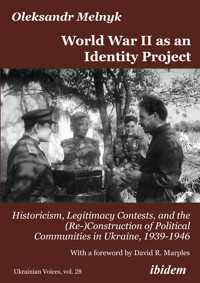
This book explores the relationship between history, legitimacy, and violence in the building and breaking of nations and states on the territory of contemporary Ukraine during the Second World War and in its aftermath. At its center are various institutions of the Soviet state. Other states and rival political movements also enter the picture insofar as their acitivities influenced Soviet policies. Methodologically, the study shifts attention from a limited body of normative texts and their creators within the Soviet political and cultural elite to a wider array of practices, organizations, and players engaged in power struggles and production of knowledge about the past in different social domains. Specifically, it brings into focus groups not normally thought of as participants in the production of Soviet memory discourse, notably NKVD officers, Soviet archivists, Ukrainian nationalists, Nazi collaborators, and former partisans in the German-occupied territories. The book not only demonstrates the complexity of nation-shaping processes, but also restores agency to some seemingly powerless actors.
Das E-Book können Sie in Legimi-Apps oder einer beliebigen App lesen, die das folgende Format unterstützen:
Seitenzahl: 667
Veröffentlichungsjahr: 2022
Ähnliche



















ibidem Press, Stuttgart
Contents
Letter to Petro Vershyhora
Table of Figures
Note on Transliteration
Foreword
Introduction
Soviet Historicism and Historical Cultures
Historiographical Contexts
Historicism and Modernity
Soviet Historicism during the 1920s
Stalinism and Securitization of Culture
The Second World War and Legitimacy Contests
1 The Second World War and the (Un-)Making of Political Communities
Operation Barbarossa and the End of Soviet Rule
The Occupation Apparatus and the Problem of Collaboration
The Holocaust and Other Cases of Mass Murder
Soviet Resistance Movement
Nationalist Insurgencies and the Ethnic Conflict in the Borderlands
2 The Nationalist Challenge
The Protagonists
The Expeditionary Groups
The Place
The Network
Historicism and Political Mobilization
The Postscript
3 Reckoning with War Criminality
War, Societal Mobilization, and State Security
Soviet Intelligence Networks
Soviet Political Warfare
In the Spaces of Contested Sovereignty
The “Return“ of the Soviet State
4 Archives, Surveillance, and Historical Politics
Archives in the Soviet System of Political Control
Task Forces of the NKVD
Visions and Realities
Operational Uses of the Archives
Special Services, Archives, and the Politics of History
5 Stalinist Justice as a Site of Memory
Antecedents
Milieux de Mémoire
Tangled Webs
The Crime
Narrating the Murder
6 Partisans, “False Partisans,” and the Negotiation of Political Identities
The Origins of the Soviet Partisan Movement
The Soviet State and the Problem of “False Partisans”
Bureaucracies
The Structure of the Verification Process
The Role of Local Communities
Epilogue History, Memory, and Legitimacy after 1945
War, Memory, and the Postwar Social Order
Towards the Creation of the Political Community
Украïна Радянська
Sources
Archives
Electronic Resources:
Newspapers
Films
Literature
Acknowledgements
Letter to Petro Vershyhora
Write. Write as much as possible. Do not trust memory. Facts are remembered to a lesser or greater extent, but feelings and all things dear and delicate that grow out of experiences vanish from memory […] Write a lot about everything. Record your thoughts, the thoughts of Kovpak and other people. Remember: Kovpak must remain part of the arts and history of Ukraine, and it is your responsibility to make sure of it […] Let partisans write. Teach them. Encourage them. Let them keep diaries, intimate and warm, not officious reports for household use. Maybe your diary will grow into a book about the Ukrainian people fighting for life. The book has to show heroic characters, military skills, human passions, elation, battle exploits, a spiritual greatness equal to that of our glorious forefathers, as well as the lowness, incompetence, darkness, treason, and wanderings through the labyrinths of the giant cataclysm, through swamps and fires, amidst ruins and gallows, like wild beasts in the forests, sometimes without an oath, without knowledge of history, without well-nourished feelings of patriotism and prey to various influences aggravated by an agitation that makes use of all our stupid mistakes [...] Write. Time is running out. Appoint a record keeper for yourself and the old man [Kovpak]. Restore all human passions, movements, tears, pride and hatred for the enemy, revenge, and passion. Do not allow them to lapse into oblivion. [...] Do not follow the example of our glorious forefathers, Zaporozhian Cossacks, who, after their scepters and alcohol flasks disintegrated under the pressure of time, left behind hardly any historical traces, so that even their history must be written using the testimonies of foreign contemporaries [...]. Instead, follow the example of the Germans. It is true that they, bastards, have no ideals, because the ideas they are fighting for are heinous, but we, people of higher ideals, creators and authors of history, should not fail to record for posterity the beatings of our hearts and the fire of our reason.
Oleksandr Dovzhenko, June 1943
Table of Figures
Figure 1. Oleksandr Dovzhenko speaks on Ukrainian radio, 1941. Courtesy of TsDAKFFDU.
Figure 2. Victims of an NKVD prison massacre, Lviv, summer 1941. Courtesy of TsDAKFFDU.
Figure 3. The OUN-B manifestation in Rivne, July 1941. Courtesy of TsDAKFFDU
Figure 4. Ukrainian auxiliary police in the Kivertsi district, Volhynia, August 1941. Courtesy of TsDAKFFDU.
Figure 5. The future head of the Ukrainian Headquarters of the Partisan Movement, Timofeī (Tymofiī) Strokach, with members of one of the partisan regiments of the NKVD, Kyiv, August 1941. The archival record description from 1966 referred to these men as “members of Communist units,” disguising their institutional affiliation. Courtesy of TsDAKFFDU.
Figure 6. An unknown unit of the UPA, 1943. Many of the men are wearing police and Schutzmannschaft uniforms. Courtesy of TsDAKFFDU.
Figure 7. The memorial cross in honor of victims of Soviet repression, Eastern Galicia, 1941. Courtesy of TsDAKFFDU.
Figure 8. The OUN-B rally in support of the Ukrainian state, Ternopil’, July 27, 1941. Courtesy of TsDAKFFDU.
Figure 9. The memorial service at the grave of the leader of the Kholodnyī Iar insurrection, Vasyl’ Chuchupak, near Chyhyryn, June 1942. Courtesy of TsDAKFFDU.
Figure 10. The 1970 Soviet monument to residents of Medvyn who perished on the front in the “Great Patriotic War.” Author’s Personal Archive.
Figure 11. The memorial cross at the Medvyn site of the 1920 massacre, October 2019. Author’s Personal Archive.
Figure 12. The burning of Khreshchatyk, September 24, 1941. Courtesy of TsDAKFFDU.
Figure 13. A photographic exhibition of Nazi crimes, Kerch, 1942. Courtesy of TsDAKFFDU.
Figure 14. Partisans of Aleksandr Saburov execute an alleged collaborator, Ukrainian-Belarusian Polissia, 1943. Film still. Courtesy of TsDAKFFDU.
Figure 15. A Hungarian soldier with a local woman, Poltava, 1943. Courtesy of TsDAKFFDU.
Figure 16. Nikolaī (Mykola) Popudrenko and his partisans with captured collaborators, Chernihiv region, 1943. Courtesy of TsDAKFFDU.
Figure 17. The commemorative reburial of victims of the Nazi occupation regime, Osypenko (now Berdians’k), 1944. Courtesy of TsDAKFFDU.
Figure 18. German POWs conduct an exhumation of victims of the Holocaust near Kirovohrad (now Kropyvnyts’kyī), 1944. Courtesy of TsDAKFFDU.
Figure 19. German POWs march through Kyiv. The ruins of Khreshchatyk street are visible in the background, August 1944. Courtesy of TsDAKFFDU
Figure 20. The Kyiv trial, January 1946. Courtesy of TsDAKFFDU.
Figure 21. Crowds await the public execution of those convicted in the Mykolaïv trial, 1946. Courtesy of TsDAKFFDU.
Figure 22. Cadres of the UGA NKVD of the Ukrainian SSR. In the front row Panteleīmon Hudzenko (left) and Mikhail Shkliarov (right). Courtesy of TsDAKFFDU.
Figure 23. Panteleīmon Hudzenko and members of his team retrieve archival documents, Voroshylovhrad (now Luhans’k) region, February 1943. Courtesy of TsDAKFFDU.
Figure 24. Soviet security agencies used inscriptions on the walls of Nazi prisons in their work, uknown location, 1944. Courtesy of TsDAKFFDU.
Figure 25. A public execution in Kyiv, Shevchenko boulevard, late 1943. Courtesy of TsDAKFFDU.
Figure 26. The corner of Mezhyhirs’ka and Nyzhniī Val streets, the site of the 1941 pogrom. December 2010. Author’s Personal Archive.
Figure 27. Alekseī (Oleksiī) Fedorov. Courtesy of TsDAKFFDU.
Figure 28. One of many partisan groups created at the start of the war, eastern Ukraine, August 1941. Courtesy of TsDAKFFDU.
Figure 29. Alleged partisans exit the catacombs near Odesa, April 1944. Film still. Courtesy of TsDAKFFDU.
Figure 30. The bronze bust of a Red Army officer, an early example of the cult of wartime heroes. Museum “The Battle for Kyiv in 1943,” Novi Petrivtsi, Kyiv region, November 2019. Author’s Personal Archive.
Figure 31. The Military Cemetery in Stanislav (now Ivano-Frankivs’k), 1946. Courtesy of TsDAKFFDU.
Figure 32. The opening of the memorial complex in Novi Petrivtsi near Kyiv, 1958. Courtesy of TsDAKFFDU.
Figure 33. Teklia Pokrysheva with young pioneers near the monument to her son, Twice Hero of the Soviet Union, Piotr (Petro) Pokryshev, Hola Prystan’, Kherson region, 1969. Courtesy of TsDAKFFDU
Figure 34. Soviet conscript soldiers visit the Brest Fortress, circa 1975-1976. Author’s Personal Archive.
Figure 35. The meeting of former partisans in Shchors (now Snovs’k), Chernihiv region. The aged Alekseī Fedorov and the commander of the local partisan unit Aleksandr Krivets (Oleksandr Kryvets’) lay wreaths on a partisan grave, 1970s. Courtesy of TsDAKFFDU.
Note on Transliteration
I have transliterated from Ukrainian place names associated with the Ukrainian SSR. Except for notable Ukrainian political, military, and cultural figures (Sydir Kovpak, Oleksandr Dovzhenko, Petro Vershyhora and others), I have used transliterations from Russian to render in English first and last names of individuals associated with the Soviet state. If they hailed from the territory of the Ukrainian SSR or were ethnic Ukrainians, I provided Ukrainian transliterations in brackets at the first use.
Foreword
The Second World War was arguably the most important event of the 20th century. It began in China, exploded in Europe, then ignited in the Pacific, and eventually involved most of the world’s key armies. But the victims of the war were principally in Europe and Asia. The war redefined the world. The winners emerged as the arbiters of the new world order, founders of the United Nations, and the decision-makers responsible for new European borders and the future of Germany.
But it was also defined by its losses. In that regard, much focus has been on Hitler’s attempt to eliminate the Jews of Europe in the Holocaust. For the Soviet Union, on the other hand, the war was the great legitimizer, and ensured the longer-term survival of the world's first Communist state. Stalin was at the table in Yalta and Potsdam with his American and British counterparts and, at Yalta and Potsdam, his position was powerful enough to dictate the future of Europe.
In the USSR, the postwar years were to see the war memorialized, starting in the early 1960s, and developing more fully after the 20th anniversary of victory in 1965. In those days, different narratives were deployed: a triumphalism regarding the Red Army's victory, praise for the heroism of the partisans and, less conspicuously but constantly, the treachery of the “Ukrainian bourgeois nationalists” and Baltic nationalists who were the “hirelings” of the German occupiers in the period extending from 1944 to the early postwar years.
Later, in the period of post-Soviet independence, the Great Patriotic War, at least initially, was no longer the focus of official rhetoric. Russia took over the Soviet mantle, inheriting the USSR’s embassies and domestic buildings, including the Kremlin in Moscow. But the notion of the great friendship of the Soviet peoples was undermined by the desire of the former republics to break free from Moscow and to establish their own futures. The largest and most contentious case was always Ukraine. Though Ukraine’s contribution to the war was immense—at least 6 million troops served in the Red Army, and proportionally it suffered the most losses of any state fighting in Europe other than Belarus—the legacy of the war was a mixed one and largely undefined.
As this book shows, starting in the early 21st century, Russia began to treat the war once again as the defining moment of its modern identity. Vladimir Putin “privatized” the war, and began to belittle, undermine, or simply ignore the contribution from Western countries, especially the United States. The Russian version has stressed the unity of the Soviet people, and the accomplishment of that same people in defeating the Nazi hordes, driving them out of Soviet territory and pursuing them all the way to Berlin, thus bringing democracy to Europe. Within this narrative is implicit condemnation of Western countries’ ingratitude for their liberation, and a lack of respect for the sacrifices of the Red Army.
In the current narrative, there is little place for the Holocaust, or for the Pacific War or the war in Africa, and there is not much room to consider collaboration and the forces fighting on the enemy side against the Soviet Union. For Ukraine, however, the issues involved were very complex, and begin with the lack of a national state and the failure of the Great Powers after the First World War to address Ukrainian aspirations for independence.
On the one hand, there was not one Ukraine, but four: Soviet Ukraine, with its capital in Kharkiv until 1934, when it was changed to Kyiv; and Western Ukraine, whose lands were part of newly established old and new states: Poland, Romania, and Czechoslovakia. On the other, none of the Ukrainian territories had any independent decision-making power.
Soviet Ukraine experienced several different historical phases after the brutal period of the Civil War, German occupation, and various White and anarchist bands forming short-lived governments, ending in widespread famine in 1921. In the 1920s, a program of indigenization was in place that permitted some room for the development of the Ukrainian language and culture, as long as the ideology remained closely attuned to Soviet Communism. But it was never a straightforward matter for Communism to attract the allegiance of Ukrainians. No ethnic Ukrainians were entrusted with republican party leadership during the time of Lenin and Stalin, for example.
The 1930s might be described as the “age of cataclysms”, beginning with the man-made famine of the Holodomor, starting in 1932 and peaking in 1933, which saw the deaths of some 3.9 million people, and even more if one includes the mostly Ukrainian North Caucasus to the southeast. It was soon followed by Stalin's Purges and mass arrests, executions, and deportations, coinciding with the evisceration of Ukrainian professional, political, and cultural leaders, and not least the mass of “kulaks” who could never be trusted and made up the majority of the victims. In the late 1980s, as archives began to be opened in the more tolerant era of Mikhail Gorbachev’s Glasnost, followed by the “archival revolution” that Dr. Melnyk describes, more details became available about the extent of Stalin’s terror and the People’s Commissariat for Internal Affairs (NKVD) executions at sites like Bykyvnia, near Kyiv.
As Hitler’s Germany began to reverse the stipulations of the postwar Versailles Treaty, marching into the Rhineland, annexing Austria, colluding with the Western Powers to grab the Sudentenland from Czechoslovakia, Stalin and his new Foreign Minister Viacheslav Molotov began discussions with their German counterparts, and the Nazi-Soviet Pact was signed in August 1939, with its secret protocols dividing Poland, the Baltic states, and parts of Romania between them. For Ukrainians, the material benefit was the reunification of Soviet Ukraine with the Ukrainian lands of Poland and later Romania. For Stalin, the new territories added to the authority of the Ukrainian Soviet Socialist Republic (SSR) and “[ethnicized] the political discourse” (p. 22, below).
On the other side of the border, Ukrainian national life developed under duress in Galicia under Polish rule. The Polish state, while less repressive than its Soviet counterpart, tolerated Ukrainian political and cultural life only insofar as it conformed to the authoritarian state and its institutions. In the 1920s, some Ukrainian activists turned to the Communist Party of Western Ukraine, a branch of the Communist Party of Poland, which became dangerous once the mother party in Moscow began to speak of deviations, Trotskyites or Zinovievites. The party in any case was dissolved in 1938 by the Comintern.
The 1930s, however, saw the dramatic rise in rightist ideologies, from the already well-established Italian Fascism to German National Socialism. The Ukrainian Military Organization (UVO) had evolved into the Organization of Ukrainian Nationalists (OUN) by 1929, an illegal terrorist organization that targeted public officials, buildings, and attracted a following in the Ukrainian villages, often from the sons of priests of the Ukrainian Greek Catholic Church. Its leader was a military man, Ievhen Konovalets’, who was assassinated by an NKVD agent in Rotterdam in 1938.
In 1940, the OUN divided into two wings—a smaller one around the natural successor of Konovalets’, Andriī Melnyk, and a larger, more dynamic group around Stepan Bandera, a priest’s son from Staryī Uhryniv in the Stanislav region (today Ivano-Frankivs’k), whose name would continue to provoke extreme emotions in his own lifetime and in the decades after his death, by assassination, in 1959. Both groups perceived Hitler’s Germany as a potential harbinger of change for the fate of Ukrainians, deprived of independence after 1918. Hitler spoke long and often of his desire to remove the “Judeo-Bolshevik regime” in Moscow.
There is no need perhaps to reiterate the oft-told story of the establishment of the two battalions that accompanied the Germans into western Ukraine and the OUN-B-founded, but very short-lived Ukrainian state in Lviv on June 30, 1941. Dr. Melnyk has described the pogroms that followed and the refusal of the German occupiers to share power with the Ukrainian nationalists. Anti-Soviet Ukrainians joined the auxiliary police, and later the Ukrainian Insurgent Army (UPA), founded in October 1942 but active from the following spring, particularly against Polish settlements in Volhynia, but later, from 1944, involved in a lengthy guerrilla war against Soviet security forces.
These events demonstrate why Ukrainians looking to the past and those searching for the roots of national identity were always going to have difficulties using the Great Patriotic War as a foundation stone. Ukraine, to a much greater extent than Russia or Belarus, began to investigate the crimes of the 1930s by Stalin’s regime. Having done so, there was a natural tendency to compare Stalinist Communism with Hitlerian Fascism. The war divided Ukrainians from the outset and after 1945, and the anti-Soviet element in Ukrainian political life remained prominent, among the UPA, Gulag inmates, the western Ukrainian population, the more modern Dissident movement and, not least, the Diaspora.
In the independent state, the Holodomor was always perceived as a more unifying issue than the war—with a focus on suffering rather than victory, and with Russians depicted as the alien Other, the perpetrator of the woes of Ukrainians. But a perpetrator could not be a liberator, or for that matter even a friend.
Ukrainians have had a strong Diaspora in North America since the 1890s, but after 1945, it was catalyzed and politicized by the inflow of Displaced Persons from the war, including an important contingent of OUN members who were frequently divided, but strongly anti-Russian. Their arrival coincided with the intensification of the Cold War, so that their political beliefs (often somewhat modified) could be overlooked by Western countries in the quest to combat the Soviet behemoth that was threatening the world. In fact, they would become instant allies of the greatest enemy of the Soviet Union, the United States.
The Soviet Union, on the other hand, adopted new formulas, such as “Ukrainian-German nationalists” (UPA) and most commonly—as noted above—“Ukrainian bourgeois nationalists”, supported by “Anglo-American imperialists” and occasionally by Zionists. All such slogans served to simplify the interpretations of the war in Ukraine.
One feels bound to point out the ironies in the legacy and impact of the war on Ukraine. The start of the war saw the uniting of most Ukrainian territories, completed later with the Soviet annexation of Transcarpathia in June 1945 and the addition of Crimea as a “gift” from Russia in 1954. But it brought heavy losses, including of Ukrainians and Jews caught up in the Holocaust. Repressions and deportations followed in the late 1940s in western Ukraine. Ukrainians there fought the Nazis, but they fought the Soviets for even longer, into the 1950s.
Though the Ukrainian Soviet Socialist Republic (SSR) appeared at times to be the most stable of the Soviet republics politically, especially in the lengthy period when Volodymyr Shcherbyts’kyī (1972–89) was the Communist Party leader, various contrary elements remained within society, as did the sense of injustice at Stalin’s crimes in Ukraine. Today, there is a battle for the future of Ukraine—perhaps even its future existence—but it is clear that while the modern state is not linked closely to the Soviet past—it has been thoroughly de-Communized—it is still dealing with much of that legacy, including the war years of 1939–45.
One of the great contributions of this book, however, is to return to the war in all its complexity, particularly in the passages on collaborators and on how the perpetrators of one day could become the partisans of the next. The war divided people and unified them, as all wars do. Evil and good are no longer defining qualities if they change daily. And if these traits could appear in people with no apparent contradictions, then the folly of politicizing the war for the benefit of state propaganda is evident.
This book focuses on “the complexity of the processes of nation shaping” and how the Soviet state rebuilt political community in the post-Nazi era. It is about Ukraine, and not Russia. But it is inevitably linked to contemporary events that have seen an unprovoked and savage Russian attack on Ukraine, starting on February 24, 2022, ostensibly to “de-Nazify” and demilitarize Ukraine, though framed in a broader context of unwarranted NATO expansion and alleged Ukrainian threats to the separatist republics formed in the eastern parts of the Donetsk and Luhansk regions.
At the time of writing, the author of this book is living in a Russian-occupied village in Kherson in southern Ukraine.
It is hard to avoid the conclusion that behind the invasion is the question of historical memory and nation building. The Russian leadership seems obsessed with the legacy of the Great Patriotic War, and in particular its own version of how that war started, developed, and ended. The war elevated Russia as a Great Power—or perhaps more accurately returned it to that status, reflecting the empire founded by Catherine II, and symbolized by the defeat of Napoleon in 1815, with Tsar Aleksandr I sitting in Paris alongside European leaders deciding the fate of the continent.
Today, as a result of its sacrifices and great victory, Russia, it seems, believes it has the right to deal with its “empire”, whether it be Ukraine, Belarus, or the Baltic states and Poland. The conservative traditionalism of the 19th century lives on in Putin’s autocratic state, which is redefining its “rightful place” in the world, a place it earned by its victory in 1945. Whereas the West decolonized in the 1960s and 1970s, the contiguous Soviet empire lived on, basking in self-glory.
Ukraine is the first victim because it has been taken over by Nazis. Ukrainians, according to Russia’s narrative, are people still following Bandera, the German collaborator. The reader should be aware that this statement is not entirely untrue: there are some Bandera followers in Ukraine and especially in the Diaspora. But in Ukraine they have always been a small minority, and they have never been a factor in the country’s government or leadership. Russia is in any case referring mostly to the uprising of 2014 that saw the departure of pro-Russian president Viktor Yanukovych.
It appears that Putin anticipated that Ukrainians would welcome the invasion and assist in removing from power Ukraine’s Jewish president Volodymyr Zelensky. The scale and unity of the resistance to the Russian attackers clearly stunned the Russian leaders, who soon redefined their goals and began to focus on occupying all of the Donbas. The misconception says much more about the mindset of the Russian leaders than it does about Ukraine. The war defined Russia because of the power of the post-Soviet state, but not Ukraine, with its competing narratives and its regional and cultural differences.
The Russian invasion has in some respects destroyed the image of the liberators of Europe in 1945. Its savagery and ethnocidal actions can leave no doubt in the minds of the occupied that Russia is the enemy, and such a legacy cannot be easily shed. If Ukraine survives, it will be easier to define its identity and future path, but that does not change the fact that the state of today is the legacy of the 1939–45 war. To understand today’s Ukraine, one needs to comprehend what the war brought to its lands, its consequences and legacy.
Oleksandr Melnyk has written the most comprehensive and well-researched book to date on the impact of the war on the Ukrainian state. It should be required reading not only for students of the Second World War, but also as a background to what is happening today in Ukraine in the tragic year of 2022, over three decades after it gained independence.
David R. Marples
Edmonton, Alberta, Canada
May 30, 2022
Introduction
This book explores the relationship between history, legitimacy, and violence in the building and breaking of states and political communities on the territory of contemporary Ukraine during the Second World War and its aftermath. While the war itself serves as the primary frame of reference, the study is not a conventional account of warfare, Axis occupation policies, the Holocaust, the Soviet partisan movement, or the Ukrainian nationalist insurgency. What it seeks to elucidate instead is the dynamic field of power relationships constituted by an interlocking grid of state and non-state actors engaged not only in hard power contests but also in the production of historical knowledge, the shaping of collective values, the fashioning of ideal citizens, and the manufacturing of domestic and international legitimacy in the field of competing sovereignty claims.
My main interest lies with the Soviet state and its various subsidiaries, although other states and political movements also enter the picture as their activities influenced Soviet policies. Methodologically, the study shifts focus from a limited body of normative “texts” and their creators within the Soviet political and cultural elite to a broader array of practices, institutions, and actors engaged in power struggles and daily production of political meta-narratives. Within this context, the study allocates space to historical actors not generally thought of as participants in the construction of Soviet memory discourse, notably security officers, Soviet archivists, Ukrainian nationalists, Nazi collaborators, and partisans in the formerly occupied territories.
Ultimately, the book seeks to elucidate the complexity of the processes of nation-shaping and bring into focus the agency of little-known actors. The aim is also to show how the nexus of history, memory, nation-building, and state security came into existence; how its various elements manifested themselves in the context of the Second World War, and how the Soviet state proceeded with the (re-)construction of the political community in the aftermath of the Axis occupation. In the process, the study will expose multi-faceted, at times complementary, at times conflicting imperatives undergirding the activities of various participants in the process of production of knowledge about the past; shed light on the relationships between various actors and organizational networks within the Soviet cultural system; and uncover structures of complicity in the Stalinist dictatorship while simultaneously mapping the outer limits of its power. Finally, it will show how the narratives propagated by Soviet officials could be manipulated, reconfigured, and occasionally even thwarted by less powerful actors, prompting state actors continually to adapt to the reality on the ground.
Soviet Historicism and Historical Cultures
Historians of the Soviet era are by now quite familiar with the rich tradition of Soviet historicism and its role in constructing the Soviet political community before, during, and after the Second World War. Istpart, the Institute of Marxism-Leninism, Maksim Gor’kiī’s “History of Plants and Factories” and “History of the Civil War” projects were only some of the undertakings that attracted the attention of international scholars. Equally well-known is the “Extraordinary State Commission for the Documentation and Investigation of Atrocities of German Fascists and their Henchmen” (ChGK), the “Commission for the Study of the History of the (Great) Patriotic War”, the “Black Book” of the Jewish Anti-Fascist Committee, and the “History of the Great Patriotic War”, to name a few. Undergirding these high-profile historical endeavors, which spanned several decades before and after the Second World War, was the fundamental understanding of the power of historical narratives to shape cultural communities and prop up claims to legitimacy and political dominance.1 As such, Soviet historicism was part of a truly transnational phenomenon, which reached back to medieval and early modern antiquarianism and was firmly embedded in the ideological universe of the Enlightenment, its influence in different parts of Europe antedating the Russian Revolution by more than a century.2
Scholars have been slower to recognize that of the numerous Soviet historical ventures, only some were oriented exclusively towards the public, involving historical activists and broad strata of citizens. Other projects, however, had a substantial secret component, and some unfolded in complete secrecy. This characterized, for example, the coordinated gathering of reminiscences of veterans of Soviet security agencies, implemented on the orders of Felix Dzerzhinskiī during the 1920s. In later years there appeared classified publications on the history of the intelligence and security services of Tsarist Russia, the Soviet Union, and various rival powers.3 On the other hand, thousands of publications were removed from public circulation, including some in the context of the Second World War, either because they contained state and war secrets or because censorship bodies deemed them ideologically subversive.4 Even the canonical “History of the Civil War” did not escape such restrictions, insofar as the text contained positive appraisals and photos of “enemies of the people”.5
Notably, the primary objective of historical projects classified by design was not the public commemoration of historical events, the ideological cultivation of the Soviet polity, political mobilization, or the increase of Soviet power in the international arena. Instead, their function was the application of niche historical knowledge in the process of training security and intelligence professionals and for use in special operations against opponents of Soviet power abroad.6 Also involved in the production of open and secret institutional publications were the Soviet armed forces and the People’s Commissariat of Foreign Affairs.7 In other words, while the institutions, objectives, and cultural consequences of Soviet historicism were legion, the underlying ethos always centered on the belief that the past was meaningful and politically significant.
Finally, one should not overlook the relevance of questions pertinent to the quotidian production of the meta-narrative of Soviet power in various social domains and to the state control over the archives. Indeed, the documents generated by the Communist Party, the Soviet security service, and other agencies of the state as part of their daily operations, as Soviet officials understood too well, were themselves of historical significance, containing a wealth of information about the present in the process of becoming the past.
Historicism and symbolic politics, modern scholarship shows, were inseparable companions in both the February and October Revolutions. The Bolsheviks turned history into a powerful tool of political mobilization for and legitimation of the Communist government during the 1920s.8 At the same time, Soviet historical culture was not static. Between 1917 and 1991, it went through at least three major inflection points, reflecting the influence of broader strategic, political, and cultural contexts and exerting influence on the meta-narrative of Soviet power.
The first watershed was Stalin’s “revolution from above”. As the relative pluralism of the New Economic Policy (NEP) era gave way to the mobilization campaigns of the Five-Year plans, the Soviet leadership began the search for the unifying master narrative of Soviet history. As David Brandenberger and Mikhail Zelenov have shown, this quest lasted for several years and ended in 1938 with the appearance of the History of the Communist Party of the Soviet Union (Bolsheviks). Short Course.9 In the process, Soviet historical institutions became little more than instruments for the violent transformation of the social and natural lifeworlds.10
Empirical studies undertaken from the early 1990s onwards suggest unambiguously that the revolutionary logic of Stalinist historical culture contained a substantial security component. Indeed, if the Soviet state could leverage historical symbols to build, break, and mobilize political communities, it was only reasonable to conclude that its enemies could do the same. To illustrate this point, one need only mention the show trials of various opponents of Soviet rule, organized by the Soviet security services during the 1920s and 1930s.11 More mundane but not less consequential was the surveillance of prominent cultural figures.12 It should therefore come as no surprise that the campaign of mass repression affected Soviet historical institutions. In 1938, with many writers, historians, archivists, and museum workers arrested, shot, or sent to labor camps, the NKVD took over the state archives, while the “Short Course” and Stalin’s less-known historical interventions set the parameters of the Soviet cultural system for the next decade and more.13
The next turning point was the Second World War. Involving the acquisition, loss, and eventual reconquest and incorporation of vast swaths of territory, this meta-event featured not only unprecedented societal mobilization in the face of foreign invasion, but also painful defeats, the crisis of legitimacy on the western Soviet peripheries, the Nazi genocide of the Jews and Roma, the killings of Communists, mass deaths in POW and concentration camps, extensive local collaboration, costly resistance in the Axis-occupied territories, and the emergence of indigenous forces staking alternative sovereignty claims couched in the language of anti-Soviet historical mythologies.14 A paradigmatic exercise in state-making and state-breaking, the war, in other words, not only exposed the limits of Soviet power and redrew political and social boundaries, in some places more than once, but also lent Soviet historicism, as a means of building and breaking political communities, its peculiar moral urgency and mobilizational significance. For at stake was nothing short of the political future of the vast territory between the Baltic and the Black Sea.15
It was hardly a coincidence that in the context of the existential struggle against the Third Reich and its satellites, efforts to mobilize Russian patriotism through appeals to historical symbols of the distant past, as Serhy Yekelchyk has shown, went hand in hand with the like-minded efforts to instrumentalize the patriotic feelings of non-Russian nationalities.16 For their part, Elena Zubkova, Amir Weiner, Mark Edele, and other scholars have observed that the war and the Soviet victory helped to vindicate the Stalinist conception of the historical process, transformed the relations between the state and various segments of Soviet society, created a rich reservoir of historical myths and symbols, set in motion processes of upward and downward social mobility, generated new individual and collective status hierarchies and necessitated thorough therapeutic sanitization of the past, particularly in the territories formerly occupied by Axis powers.17 That the Holocaust and collaboration were marginalized in Soviet public discourse already during the war is by now a historiographical commonplace.18 It is, however, also true that in the context of postwar reconstruction, the war itself, while always present in Stalinist historical culture, ceased to be the central element of the political order.19 The trauma was clearly so recent and the losses so great that the whole experience, as one contemporary observer put it, required social anesthesia.20
The next stage in the development of Soviet historical culture was the period of the Thaw, characterized by the beginning of societal reckoning with Stalinism and the re-actualization of memories of the Second World War. Denouncing the Stalin cult within the context of the succession power struggles, Nikita Khrushchev unleashed policies that, by the early 1960s, resulted in the legal rehabilitation of more than 700,000 victims of political repression.21 The deconstruction of the Stalin cult and the reappraisal of the Stalin era, as Denis Kozlov has shown, also occurred in literature and in the pages of thick magazines such as “Novyī mir”.22 However, the inner mechanisms of political violence remained an ideological taboo until the late 1980s, attesting to the inconsistency of official de-Stalinization. Meanwhile, the Soviet state jealously guarded its legitimacy, continuing to celebrate the “October revolution”, heroes of the “Civil War”, and veterans of socialist construction, even if new social groups ascended to the top of the emerging social hierarchy (e.g., war veterans and partisans).23
The “Great Patriotic War” cult also started to take shape during the Khrushchev era. Relegated to the cultural margins during the late Stalin years, the memory of the recent war became a defining element of Soviet historical culture in the late 1950s and early 1960s.24 The reconfiguration of public discourse was relatively rapid. To outmaneuver his rivals and to prop up his claims to legitimacy, Khrushchev reached out to the leadership of the Soviet armed forces as well as to numerous war veterans. The sheer number of former combatants and the perception of societal under-appreciation ensured the political salience of their memories. Indeed, in the late 1950s and early 1960s, those who had participated in the war occupied prominent positions in the armed forces, in the Communist Party, the government apparatus, and the cultural establishment. The Union of Writers alone included hundreds of veterans and former partisans.25 It was not long before these groups’ outsized political and cultural influence transformed the “Great Patriotic War” into the veritable bedrock of state identity. Indeed, even the highly secretive KGB publicized wartime exploits of state security veterans in the evident effort to rebuild the institutional prestige tarnished by Khrushchevian revelations.26
The scholarly literature, by contrast, has not sufficiently engaged with the cultural consequences of the democratization of the Soviet commemorative landscape, which went beyond partial reckoning with Stalinism and the rise of the cult of the “Great Patriotic War”. The Soviet state and society now recognized wartime contributions by a broad array of combatants and participants on the home front—not just Stalin, the Soviet political and military leadership, and heroes of the Soviet Union, as was the case during the war and in its immediate aftermath. No less importantly, writers and other cultural producers, many of them low-ranking combatants, brought into focus the experiences of frontline soldiers, former prisoners of war, widows, orphans, and civilian residents of the occupied territories (victims of German counterinsurgency, inmates of concentration camps, occasionally Jews). The result was the gradual rise of a historical culture whose creed differed markedly from the core precepts of high Stalinism, with its militarism, stark power hierarchies, and rigid social boundaries violently enforced by the state and activist segments of Soviet society. The new culture, by contrast, allocated significant space to wartime losses, individual and collective suffering, bereavement, and the imperative to communicate moral lessons to the younger generation. Its defining values were empathy and pacifism. In this sense, the cultural trajectory of the Soviet Union from the late 1950s onwards paralleled the concurrent developments in the “West”, where slow societal reckoning with Nazi criminality fostered discourses on diversity, inclusion, and minority rights.27
By the mid 1960s, the influence of the historical culture of the Thaw extended to those in positions of power. The political environment was undoubtedly conducive to the social rehabilitation of the victims of mass repression and the recognition of a broader range of past injustices committed by the Soviet state, including during the war.28 In 1955–56, most of the minorities subjected to punitive deportations in 1943–44 could return to their homelands and had their national autonomies restored. Official discourse now recognized both the plight of Soviet prisoners of war, MIAs, and non-combatants, occasionally including Jews, and the wartime contributions of members of the “punished peoples” to victory.29 The state even extended amnesties to many former collaborators and nationalist insurgents, and the remaining German POWs were repatriated to Germany.30
To be sure, the processes of narrative readjustment were never consistent and satisfactory from the point of view of other reference groups. The Holocaust indeed continued to be dissolved in the broader story of suffering, with Soviet security agencies getting in the way of grassroots commemorations at important symbolic sites such as Babiī Iar in Kyiv.31 For their part, Germans and Crimean Tatars faced systematic obstacles to return to their earlier places of residence.32 Last but not least, the state purposefully obliterated reminders of collaboration and ethnic conflicts on the Soviet Union’s western and southern peripheries.33 Nevertheless, with the benefit of hindsight, the general trend of societal development can hardly be doubted. In the long run, the more open historical culture contributed to the progressive softening of the political regime and enabled a more thorough grappling with the violent nature of the Soviet modernization project during Perestroīka.34 The “Great Patriotic War” myth became the bedrock of state identity. However, the historical culture out of which it arose contained elements that, in the long term, would make the violent enforcement of the social boundaries of the political community that it delineated highly challenging. It was no accident that when the vital legitimating elements of the Soviet system came under attack during Perestroīka, the political regime rapidly crumbled.35
Historiographical Contexts
The problematics of nation-shaping is, of course, much broader than historicism and historical politics proper. Nevertheless, scholarly inquiries can be said to consist of two large blocs, both undergirded by the same set of cultural and disciplinary issues: the political salience of the past in a world dominated by nation-states and modern empires; decolonization and the ascendance of memory studies; the archival revolution in the post-Soviet space after 1991; and, finally, the growing interest in interdisciplinary and comparative approaches in the humanities and social sciences.
The first line of inquiry can be called “cultural”. This tradition encompasses cultural historians, literary scholars, sociologists, and anthropologists interested in the problems of culture, empire, and nationalism, as well as memory politics, with many researchers occupying more than one disciplinary niche. Individual works within this paradigm typically explore myths, symbols, commemorative rituals, and other cultural “texts” that constituted ideological master narratives and influenced the construction of the identities and subjectivities of historical actors.
The literary historian Evgeny Dobrenko, for example, has placed key institutions of Soviet historicism (the archive, the museum, literature, and cinema) within the broader context of Soviet cultural policies during the 1920s and 1930s and has shown how the revolutionaries’ fundamental orientation towards the future reconfigured their relationship to the past and the present. The Soviet leadership’s vision of the social order, Dobrenko argues, was contingent on their ability to exercise power in the present, which, in turn, depended on the mastery of the past. Historical narratives thus became a tool of political domination, even as they performed a therapeutic function for a collective traumatized by recent events.36
Other scholars have grappled with the paradigmatic characteristics of the Soviet cultural system, describing various agents and institutions of Soviet historicism, and mapping the processes of the creation and the content of ideological master narratives. All in all, since 1991, students of Soviet culture have accumulated significant amounts of empirical data, developed functional analytical categories, and initiated productive discussions about the characteristics of the Soviet cultural system.37
The shortcomings of cultural approaches stem not from the quality of the analyses but from the limitations of the concepts with which they operate as well as from insufficient attention to the interconnected problems of the geopolitics, political economy, and internal politics of the Soviet state. In other words, the analytical depth and intensive engagement with cultural “texts” were not always thoroughly grounded in broader historical contexts—either due to the narrowness of disciplinary interests or because of insufficient archival access. Ultimately, it is difficult to get around the fact that macro-contextual factors not only determined the strategic orientation of the policies of the Soviet state in the cultural domain but also defined the parameters of asymmetrical collaboration between the political, technocratic, and cultural elites; shaped the elaboration of crucial conceptual categories; and influenced the specific content of cultural texts.
Compensating for such limitations are approaches that one could categorize as political. Its practitioners come from the ranks of students of Soviet government and social history. Traditionally, these scholars have privileged high politics, the study of various agencies of the Soviet state, and analyses of relations between center and periphery in the formulation and implementation of specific policies, with social historians proper focused on the experiences of large social groups, such as workers, peasants, soldiers, and ruling elites. For a long time, this research focused primarily on the 1920s and 1930s, which Western scholars have traditionally regarded as key to understanding the genesis and characteristics of the Soviet political system. As a result, in moments of greatest geopolitical tension, the historiographical controversies tended to gravitate towards the problems of Soviet governance, the conflict between “state” and “society”, and mass repression. In turn, Détente encouraged historians to explore the structures of the perceived legitimacy of the Communist government and the social dimensions of the Soviet Union’s violent modernization. Until the early 1990s, however, the debate between adherents of the “totalitarian model” and “revisionists” was constrained by limited archival access, making it all but impossible to pursue questions pertinent to nation-shaping and state security systemically.38
This situation changed with the onset of the “Archival revolution” in the early 1990s. The numerous documentary collections and empirical publications, which soon came out in multiple languages, filled important historiographical lacunas and created the preconditions for the appearance of conceptual studies of the Soviet political system, mass repression, and security agencies.39 In the meantime, geopolitical transformations in eastern Europe; post-Perestroīka reform discourses in Russia; Ukrainian diaspora politics, the peculiarities of nation-building in Poland, Ukraine, Moldova, and the Baltic states; as well as globalization, the ascendance of liberal cultural sensibilities, and the post-colonial turn in historiography had the combined effect of “de-centering” Soviet history. In the process, the analytical focus increasingly shifted from the Communist Party leadership, the structures of the central government, and the urban centers of “Soviet civilization” towards the social, national, and geographical peripheries of the Soviet empire. There came importantworks on such politically salient issues as dekulakization and the man-made famine of 1932–33; nationality policy; the mass operations of 1937–38; the GULAG, special settlements, and the role of forced labor in Soviet economic development; political attitudes; gender and race; and, finally, population politics, demographic transformations, and territorial settlement in Eastern Europe in the context of the Second World War.40
Particularly influential within this context were two overlapping networks of scholars who could be called “empiricists” and “modernists”. Spearheaded by Sheila Fitzpatrick and her many graduate students at the University of Chicago, the first group placed primacy on meticulous archival research and the empirical explication of significant social trends and phenomena.41 The second group embraced a comparative perspective and emphasized theoretical generalizations and methodological innovation. The most prominent representatives of this school of thought were Stephen Kotkin and his former graduate students at Princeton and Columbia universities, who examined Soviet political culture as part of the broader problematics of modern statecraft and population politics. These scholars convincingly demonstrated the embeddedness of the Bolshevik revolutionary project within the larger framework of European modernity, with its characteristic emphasis on industrial development as the key to economic prosperity and security, the pervasive tendency towards political and cultural homogenization of populations, and its peculiar technologies of rule (surveillance, propaganda, censorship, deportations, and mass murder). The scholarship on Soviet modernity was also instrumental in deepening the understanding of power as a product of the daily actions of and ideological iterations by a broad array of historical actors rather than merely a function of state coercion.42
The story that emerges out of the growing corpus of literature is one of an interventionist state, intent on radical social transformation. However, this story is also that of complexity, particularistic identities, and resistance. If anything, the fundamental orientation of the field towards empiricism and comparative history helped accentuate the significance of local contexts, cultural institutions, indigenous traditions, and social habitus, all of which greatly complicated the modernizing and homogenizing efforts of the revolutionary state. Indeed, some authors have taken their analyses to the level of individual actors, creating the subfield of political subjectivities. Current methodologies emphasize the fashioning of collective values and the construction of self in the context of the Stalinist 1920s and 1930s.43
Historians working within the paradigm of modernity have received criticism for over-emphasizing the Soviet leadership's values and intentions at the expense of the practical consequences of official policies.44 Other critics have pointed to the persistence of traditional patterns of authority, the fundamental inefficiency of the Soviet state apparatus, and the inability of the Soviet leadership to break neo-traditional clan structures.45 Jörg Baberowski goes as far as to argue that efforts to overcome local resistance in the absence of a well-functioning modern bureaucracy, and against the backdrop of the state’s traditional weakness in the countryside and on the national peripheries of the former Russian Empire, may have prompted the Soviet leadership to resort to ever higher levels of coercion and campaign-style mass repression.46
The most significant drawback in the scholarship on Soviet modernity may lie on the other side of its strengths. More specifically, the emphasis on the policies of the Soviet state as implemented in particular territories has resulted in generalized claims that may or may not be valid in other geographical contexts or periods. The Ukrainian SSR alone, for example, had thousands of cities, towns, and villages with different historical backgrounds, different populations, and different experiences of war and Axis occupation. Given the sheer size of the USSR and the heterogeneity of even smaller political entities over extended periods of time, there is no easy escape from this methodological conundrum. One hopes future studies will add to our empirical knowledge and help lay the groundwork for comprehensive works of historical synthesis.
Be that as it may, at this stage, one can identify several themes running through the corpus of the scholarly literature. These themes encapsulate the historiographical contexts of this study and inform the research questions pursued in individual chapters. The first theme concerns the fundamentally modern character of Soviet historicism and its complementary function vis-à-vis other technologies of statecraft employed in pursuit of state-building, technological modernization, political homogenization, and the revolutionary transformation of society in the face of external threats and considerable local resistance to state attempts at political control. Within this context, myths, symbols, commemorative rituals, and historical narratives did not simply provide individuals with tools for making sense of the complicated reality of the past and present, facilitating the construction of comfortable personal identities. Indeed, on the societal level, they functioned as essential vehicles of legitimation, nation-building and nation-breaking, state-making, and state security, and they could be successfully manipulated, especially by powerful actors possessing substantial resources and means of coercion.
The second cluster of questions relates to the gradual expansion of state control over multiple social domains during the 1920s and 1930s. Of course, Stalin and his lieutenants did not control everything or initiate every project. Nevertheless, they performed the crucial function of establishing the dominant ideological framework, allocated resources and symbolic capital as they saw fit, and routinely performed acts of censorship, with mass surveillance and repression acting as an effective disciplinary tool. This peculiarity of the Soviet political order, as Stephen Kotkin has argued, eventually had the effect of influencing not just the public performances but also the personal narratives and even the privately held beliefs of historical actors at various levels of the unstable societal hierarchy.47
Importantly, Soviet activists and the growing body of new converts to the cause were not passive objects of state coercion. On the contrary, as they constructed and acted out their narratives of revolutionary struggle and personal transformation, they effectively operationalized the official ideology in various domains of social life. In this manner, as Jochen Hellbeck has argued, they formed the human infrastructure of the dominant social order, which by the mid-1930s made the public expression of counter-narratives increasingly challenging on account of state repression, social exclusion, and, occasionally, loss of psychological autonomy. Ideological hegemony may have been so overwhelming that the reality of Soviet rule was as likely to produce tortured subjects who doubted their view of the world as it was to create inveterate opponents of the Communist regime.48
The third theme encompasses the disruptive effects of the territorial changes in Eastern Europe due to the Molotov-Ribbentrop Pact, the start of the Second World War, the partition of Poland, and the Soviet Union’s efforts to secure its western and northwestern frontiers. The strategic, political, and cultural complications of the dismemberment of the Polish state and subsequent annexation of the Baltics, Bukovyna, Bessarabia, and Finland’s territories in the north were quite dramatic. In the short term, the Soviet leadership improved its strategic depth by creating buffer zones on the peripheries of its large country. In the medium and long term, however, the territorial acquisitions complicated the provision of internal security. They also contributed to the transformation of the basic parameters of the Soviet state project, rendering it less homogeneous and thus less stable and more vulnerable to outside interference.49
In the case of the Ukrainian SSR, these actions not only increased the size of the territory to be administered but also added to the pool several million people of various nationalities, with distinct histories of conflictual relationships and a higher level of political organization than found in the “old” Soviet territories.50 The elements of the political superstructure included political parties and civic associations of Poles, Ukrainians, Romanians, and Jews, and organizations belonging to the Roman and Greek Catholic churches. A less obvious but no less important feature of the political context in Galicia and Volhynia was the incipient Polish underground and the clandestine networks of the Organization of Ukrainian Nationalists (OUN). The latter had struggled against Polish rule for more than a decade, at times with support from the intelligence agencies of the Third Reich and smaller European states. The OUN would prove an extraordinarily determined and resilient adversary throughout the war and during the first postwar decade.51
No less significantly, Stalin’s geopolitical gambit, couched in the language of national liberation and social emancipation, increased the size, power, and status of the Ukrainian SSR within the Soviet Union, and contributed to the ethnicization of political discourse both in the newly annexed territories and the Ukrainian SSR as a whole even before the start of the German-Soviet war. Simultaneously, efforts to manipulate local ethnic hierarchies aggravated relations in the Ukrainian-Polish-Jewish triangle, while systematic repressive measures undermined Soviet legitimacy claims and increased the social base of anti-Soviet resistance. Ultimately, the Nazi instrumentalization of ethnic divisions, the nationalist challenge in the Axis-occupied territories, the Holocaust, and the ethnic conflict in Volhynia and Galicia left the Soviet leadership with few options but to embark on the population transfers with Poland and to embrace Ukrainian leadership cadres, along with the symbolic accoutrements of Ukrainian statehood, even if the central authorities continued to limit the expressions of local particularism.52
The fourth theme refers to the problematics of societal responses to the mobilizing, modernizing, and homogenizing efforts of various states and political movements in Ukraine following the Axis invasion. Indeed, armed struggles for controlling the territory in the vast spaces between the Baltic and the Black Sea during the Second World War and its aftermath went hand in hand with genocide, ethnic cleansing, and fierce conflicts in the ideological and symbolic realms. Individual and group responses to the Axis occupation ranged from active identification and collaboration to passive compliance and silent recalcitrance to active resistance. With political control structures rendered unstable by the war and with the repeated change of ruling regimes, attitudes and political loyalties in many areas were likewise in flux. Under such circumstances, as Jeffrey Burds, Kenneth Slepyan, and Igor Ermolov have shown, many individuals did not exhibit ideologically uniform behavior over the long term.53 In turn, unstable political allegiances contributed to the fluidity of identities and the malleability of personal memories. Ultimately, the brutality of Nazi rule, the military preponderance of the Soviet state, and the relative weakness of organized Ukrainian and Polish nationalisms determined the direction of the ideological development of the territory after 1945.
The fifth and final theme encompasses legacies of the Second World War in the USSR of the postwar era. The war determined the boundaries of the Ukrainian SSR and facilitated its international recognition (the Ukrainian SSR was among the founding members of the United Nations). No less importantly, the Soviet victory created the preconditions for the economic development of the territory, the maturation of state institutions, and the thoroughgoing suppression of alternative discourses about the past. In other words, the Soviet victory and postwar state- and nation-building laid the groundwork for the peaceful disintegration of the Soviet Union but failed to eliminate hidden divisions within the Ukrainian polity. Such divisions would become increasingly problematic after 1991, culminating in the breakup of the political community during the Euro-Maidan Revolution and the start of the conflict with the Russian Federation. This story is not yet over.
Historicism and Modernity
Before further elaborating the methodological premises of this study, it is imperative to clarify the content of its principal terms. One of the book’s central concepts is “historicism”. This term refers to the cultural ethos underpinning the processes of the invention of tradition, to use Eric Hobsbawm’s seminal concept. Central to this ethos is the awareness of historical contingency and the malleability of political collectives; as well as the importance of symbols, political rituals, historical narratives, and shared understandings of the past as building blocks and legitimating elements of cultural and political communities imagined both synchronically and diachronically.54
“Historical politics”, for its part, will refer to the cultural policies, symbolic actions, and speech acts aimed at the promotion of shared political and social values, the fashioning of ideal subjects or citizens, and the creation/destruction of (de-)legitimating symbolic orders in the field of competing sovereignty claims. Specific historico-political acts—commemorations, the creation of “archives”, the writing of history textbooks, and various public performances of power—are, on the one hand, a product of the normalization of the historical ethos; on the other hand, they constitute and reproduce that ethos in various social contexts. Historical politics finds its ultimate expression in state policies, but non-state actors can also drive it.
“Historical culture”, by contrast, is a more encompassing concept that includes elements of deep culture that often lie beyond the realm of the conscious awareness of historical actors and are harder to manipulate. Examples include beliefs, dominant social values, conceptions of justice, the relationship between the collective and the individual, attitudes to authority, to members of one’s “own” group, to “other” groups, the environment, work and leisure, to name a few.
Whereas military force is an originating source of state power and sovereignty, historical symbols and narratives are indispensable elements of legitimation. In other words, they are critical for the propagation of the belief that any state, government, movement, or political party warrants active support or, at least, passive compliance. Such beliefs can be grounded in the perception of the political entity as “just”, as preferable to available alternatives (“the lesser of two evils”), or as inevitable, even when regarded as unjust. Legitimacy as the end goal of legitimation is always relative, contextually bounded, and subject to a greater or lesser degree of contestation. Because domestic and external support is essential to maintaining power and to winning wars, participants in political and military conflicts typically try to bolster their legitimacy claims by accentuating their moral superiority vis-a-vis the enemy and projecting power and invincibility. The assumption is that people are naturally attracted to movements that effectively project strength and abandon those that appear weak.55
An interest in the past may be inherent to being human, and the evidence of cultural practices that signal an at least rudimentary historical consciousness is plentiful in many places and in different historical eras.56 However, the global triumph of historicism in the 19th and 20th centuries relates to the discourses of nationalism and the concurrent formation of centralized nation-states and modern empires dependent on various forms of historical representation for self-legitimation and the inculcation of collective values. Insofar as historicism has had the effect of normalizing historical consciousness and the discourses of state and nation—regardless of their ideological content—it has tended to undermine traditional conceptions of legitimacy grounded in the sacral monarchical or religious authority of the rulers, progressively displacing the latter with historically informed discourses of popular sovereignty.57
The institutional embodiments of historicism are manifold. They include officially instituted holidays, commemorative rituals, monuments, often ambiguous and contested historical symbols, and, finally, various organizational networks entrusted with the assembling, preservation, study, and popularization of material and documentary traces of the past judged to possess significance within the dominant ideological framework of a given political community. Fundamental in this regard are such cultural institutions as the archive, the museum, and the academic disciplines of history, ethnography, and archeology.58




