


9,99 €
Mehr erfahren.
- Herausgeber: 50Minutes.com
- Kategorie: Geisteswissenschaft
- Serie: History
- Sprache: Englisch
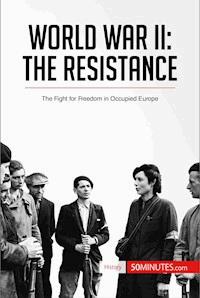
Keen to learn but short on time? Get to grips with the history of the Resistance movements during World War II in next to no time with this concise guide.
50Minutes.com provides a clear and engaging analysis of the Resistance movements during the Second World War. In 1939 and 1940, Hitler’s army was rapidly advancing across Europe, leaving many countries under German occupation. Although some chose to collaborate with the Germans, a small number of courageous men and women fought against the occupiers at great personal risk. In spite of enormous losses, their actions were a source of inspiration to many of their fellow citizens and contributed to the liberation of Europe in 1945.
In just 50 minutes you will:
• Understand why members of the Resistance decided to fight against Nazi occupation and the risks they faced by doing so
• Learn about the people involved in the Resistance, including key figures like Charles de Gaulle and other less well-known participants
• Analyse the impact of the actions of members of Resistance in relation to the losses sustained
ABOUT 50MINUTES.COM | History & Culture
50MINUTES.COM will enable you to quickly understand the main events, people, conflicts and discoveries from world history that have shaped the world we live in today. Our publications present the key information on a wide variety of topics in a quick and accessible way that is guaranteed to save you time on your journey of discovery.
Das E-Book können Sie in Legimi-Apps oder einer beliebigen App lesen, die das folgende Format unterstützen:
Seitenzahl: 37
Veröffentlichungsjahr: 2017
Ähnliche












The Resistance during the Second World War
Key information
When: 1939-1945.Where: Across almost all of Europe.Context: The Second World War and German occupation.Some key protagonists:Charles de Gaulle, French general and statesman (1890-1970).Jean Moulin, French politician and Resistance member (1899-1943).Witold Pilecki, Polish soldier and Resistance member (1901-1948).Libertas Schulze-Boysen, German journalist and Resistance member (1913-1942).Impact: although the Resistance contributed to the success of various Allied actions to liberate Europe from the Nazi invaders, it sustained extremely heavy losses for sometimes mixed results.Introduction
Although the Maquis, distributors of underground newspapers, Gaullist saboteurs and nuns who concealed Jewish children in their convents can all be grouped under the same heading, this only makes describing the movement that brought them together even more complex. Indeed, defining the Resistance is a risky undertaking because participation and experiences varied so much across Nazi-occupied Europe between 1939 and 1945. According to the historian François Bédarida (1926-2001), it is “clandestine action carried out, in the name of the liberty of the nation and the dignity of humanity, by volunteers organised to fight against the domination […] of their country by a Nazi or fascist regime”1 (Vingtième Siècle, 1986). The advantage of this definition is that it highlights the plurality of the movement. But why did these volunteers choose to join the Resistance? Who were they? What did they do and what were the consequences of their actions?
1This quotation has been translated by 50Minutes.com.
Context
The start of the Second World War
The war began on 1 September 1939, after Germany invaded Poland. This event led France and the United Kingdom to go to war against the Axis powers (Nazi Germany, fascist Italy and, from 27 September 1940, the Japanese Empire), in accordance with a mutual military assistance treaty signed with Poland in 1921. In the years that followed, Germany notched up a string of victories against the Allies and seemed invincible. In April 1940, it invaded Denmark and Norway. In May, it was the turn of Luxembourg, Belgium and the Netherlands. In June, the French army was crushed by the Wehrmacht (the German army). In September 1940 and then in April 1941, Hitler (1889-1945) invaded Egypt, Yugoslavia and Greece to support Mussolini’s Italy, which was in full rout against these countries. In June, the USSR, which until then had been spared by the Nazi-Soviet Pact (an agreement signed between the Third Reich and the Stalin’s Soviet Union concerning neutrality in the case of a conflict between the two parties and the Western powers), was invaded.
Photograph of German troops entering Prague in 1939.
Historians have put forward three main causes for the conflict. First of all, there is the unsatisfactory settlement of the First World War (1914-1918) by peace treaties, in particular the Treaty of Versailles, which gave rise to resentment, frustration and a desire to reconquer territory among the losing parties and some of the victors. Another factor is the impact of the 1929 financial crisis on the weakened economies of the participants in the Great War: unemployment and recession helped fascist nationalists (Italy) and the Nazis (Germany) to rise to power. These groups then implemented rearmament programmes to try to lift their countries out of the slump they found themselves in. Finally, the ideologies of these totalitarian states were in complete opposition to the Allied democracies, which feared the effects of the expansionist and hegemonic ambitions of Italy and Germany.
Did you know?
The Treaty of Versailles, signed on 28 June 1919 by Germany and the Allies following the First World War, attracted a number of criticisms at the time and was not signed by the United States. Indeed, its terms were far too harsh on the losing countries, which made them even more resentful. Germany felt particularly humiliated, especially as it was not even invited to the conferences to draw up the peace agreement.




