


Erhalten Sie Zugang zu diesem und mehr als 300000 Büchern ab EUR 5,99 monatlich.
- Herausgeber: Creative Essentials
- Kategorie: Geisteswissenschaft
- Sprache: Englisch
What happens when 'happy ever after' isn't quite so simple? Today's attitudes to love and romance are as varied and diverse as individuals, and audiences want and need more sophisticated, authentic films that show how we live and love now. So what does this mean for the screenwriter developing a romcom? And how do they write heart-warming stories for a genre that is constantly evolving, from bromcom to zomcom to famcom? Writing and Selling Romantic Comedy Screenplays offers a fresh approach to creating narratives for this ever-changing genre. Moving away from rigid and limited definitions that have evolved out of mainstream genre films, the book embraces a working definition that crosses cultural and national boundaries to give screenwriters around the world a truly international perspective on writing comedic love stories. It will be the first screenwriting guide to reflect the diversity of approaches in today's films that deal with the human need for emotional and physical intimacy using humour - the contemporary romantic comedy. Features of the book include: - Illuminating, challenging and provocative about the state of the rom-com genre. Why do some films feel so dated, while others are perennially relevant? - Explores and defines all subgenres of romcom, such as zomcom, bromedy, soromcom and famcom. - Uniquely draws on creativity, screenwriting genre theory and film industry practice. - Stimulating creative exercises at the end of every chapter, and 'hot tips' throughout. - Adaptable concepts that can be applied to both feature films and short films. - Encourages screenwriters to define their own values about love to ensure their voice and message is original - and commercial. - Case studies and analyses of produced screenplays, including Dostana, Due Date, I Give it a Year, I love You, Man, Midnight in Paris, Ruby Sparks, Tamara Drewe, Ted and Warm Bodies. - Interviews with writers, directors and producers. - Genuine international perspective. - Indispensible guide for both the student and the professional writer or filmmaker.
Sie lesen das E-Book in den Legimi-Apps auf:
Seitenzahl: 260
Veröffentlichungsjahr: 2014
Das E-Book (TTS) können Sie hören im Abo „Legimi Premium” in Legimi-Apps auf:
Ähnliche



















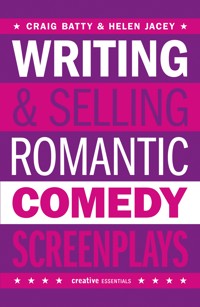
WRITING AND SELLING ROMANTIC COMEDY SCREENPLAYS
What happens when ‘happy ever after’ isn’t quite so simple? Today’s attitudes to love and romance are as varied and diverse as individuals, and audiences want and need more sophisticated, authentic films that show how we live and love now. So what does this mean for the screenwriter developing a romcom? And how do they write heart-warming stories for a genre that is constantly evolving, from bromcom to zomcom to famcom?
Writing and Selling Romantic Comedy Screenplaysoffers a fresh approach to creating narratives for this ever-changing genre. Moving away from rigid and limited definitions that have evolved out of mainstream genre films, the book embraces a working definition that crosses cultural and national boundaries to give screenwriters around the world a truly international perspective on writing comedic love stories.
It will be the first screenwriting guide to reflect the diversity of approaches in today’s films that deal with the human need for emotional and physical intimacy using humour – the contemporary romantic comedy.
Features of the book include:
•Illuminating, challenging and provocative about the state of the rom-com genre. Why do some films feel so dated, while others are perennially relevant?
•Explores and defines all subgenres ofromcom, such as zomcom, bromedy, soromcom and famcom.
•Uniquely draws on creativity, screenwriting genre theory and film industry practice.
•Stimulating creative exercises at the end of every chapter, and ‘hot tips’ throughout.
•Adaptable concepts that can be applied to both feature films and short films.
•Encourages screenwriters to define their own values about love to ensure their voice and message is original – and commercial.
•Case studies and analyses of produced screenplays, includingDostana,Due Date,I Give it a Year,I love You,Man,Midnight in Paris,Ruby Sparks,Tamara Drewe,TedandWarm Bodies.
•Interviews with writers, directors and producers.
•Genuine international perspective.
•Indispensible guide for both the student and the professional writer or filmmaker.
Helen Jacey
Helen Jacey is a screenwriter, author, and story consultant who has developed numerous projects across film, TV, radio, advertising and fiction for the UK and international industry. Helen’s first bookThe Woman in the Story(2010) has been described as the seminal screenwriting guide to creating stronger female characters and she has trained writers and filmmakers across the globe. Helen also lectures on scriptwriting at Bournemouth University, UK.
Dr Craig Batty
Dr Craig Batty is Principal Lecturer in Screenwriting at Bournemouth University, UK. He is a writer and script consultant, and has worked on many short film, feature film and television projects. He currently script edits and sometimes co-writes all drama projects for Mango Rapid Productions.
CONTENTS
ACKNOWLEDGEMENTS
FOREWORD
INTRODUCTION
WHY ROMANTIC COMEDY?
WHO’S LOOKING AT YOU, KID?
GETTING READY TO ROMCOM
A FUNNY KIND OF LOVE
WHO LOVES YOU, BABY?
LOVE LESSONS
THE WORLD OF LOVE
INDUSTRY PERSPECTIVES
CONCLUSION
FURTHER READING
FILMS REFERENCED
ACKNOWLEDGEMENTS
The following people and places were invaluable in helping this book happen. Firstly, thanks to our publisher, Kamera Books, and in particular Hannah Patterson and Ion Mills – for sharing our vision and for their patience! And thanks to Anne Hudson, for doing a great job with editing.
We’re very grateful to Bournemouth University’s Fusion Fund for supporting travel and research to Australia and the US, which was also invaluable for reducing the number of late-night Skype sessions during the evolution of this book. And to RMIT University for itsgenerous acknowledgement of the time needed to research and write.
Special thanks go to Linda Seger, who introduced us in the first place at Carluccio’s restaurant in London – a great place for a chumcom meet cute!
Thanks also to Hal Ackerman, Ben Cookson, Julian Farino, Gene Wayne Hart, Andy Horton, Suya Lee, Jeff Reno and Stayci Taylor for sharing their time, insights and thoughts about all things romcom.
Huge thanks to Jule Selbo for agreeing to write the Foreword – we couldn’t have a better screenwriting genre expert on hand!
We’d also like to thank our families, friends, students, colleagues and collaborators for helping to make this book happen. Together, they’ve offered us moral support and guidance, inspiration and reflection, and knowledge that has influenced and transformed our thinking about romantic comedy screenplays and how to talk to others about them.
FOREWORD
Dr Jule Selbo, award-winning screenwriter and Head of the MFA in Screenwriting at California State University, Fullerton
I began teaching film genre for screenwriters seminars a few years ago, and when I get to the romance and romantic comedy genres, I never tire of asking the writers in the class –Who believes in true love?Hands go up – and, surprisingly, more male hands than female hands. We talk about why the idea of true love is a staple in most cultures and societies, and how this idea of a ‘soulmate’ is so prevalent in reams of literature and films. We discuss possible reasons for why the romance genre is a dominant or supporting story element in many screenplays – top action/thriller/crime films such as theBournecycle andThe Departed, westerns such asTombstone, horror films such asLet the Right One In, fantasy/war/sci-fi adventure films such asAvatar, and countless more films in various genres.
What makesDie Hard, often considered one of the top action/thrillers, work so well? Because John McClane’sreasonto enter the fray is to save his wife, so he has the opportunity to rekindle their relationship. Helovesher. And that makes us love him. One of the most important elements about theJames Bondre-boot is that audiences watchingCasino Royalebecome emotionally attached to a man who almost gave up the spy game forlove. His ‘soulmate’, Vesper Lynd, dies tragically in the narrative, and now Bond is a haunted, hurting man – albeit still looking great in a tuxedo. We know he’s known and given profound, gut-wrenching love. And we love him for that. Audiences tend to love lovers. Because we know how much love can ‘hurt’, how love can lift a person, how love can cause crises of self-esteem, how it can make or break one’s day – basically how it affects us and affects a great majority of (all?) people all around the world.
Film theorist Torben Grodal suggests that humans are connected to the idea of love because of a deep-seated human desire for intimate connection, whether it’s for survival, for procreation, for status or for self-esteem. Grodal also refers to Nico Frijda’s work,The Emotions, positing thattrue loveoften comes with anegotiationbetween partners – what’s acceptable, what’s not, how far one’s willing to go and how much one’s willing to risk.
Anthropologist and human behaviour researcher Helen Fisher, in her TED talk,The Brain in Love, points to the activity in the brain in the ventral tegmental area. Here cells create dopamine, a natural stimulant, and share it with other regions of the brain – creating a sort of reward system. She says: ‘It’s below your emotions. It’s… associated with wanting, with motivation, with focus on and craving. In fact, the same brain region where activity becomes active when you feel the rush of cocaine.’ Add a ‘comedy spin’ to these analysts’ observations and factoids – and the plots for thousands of romantic comedies come to mind.
Romance is great. It’s the adventure of discovering or accepting that we’re capable of deep emotions. That we can be swept away in an indescribable, euphoric feeling. Tolkien writes of fantasy in these terms – perhaps fantasy is connected to love, who knows. Comedy is great. It’s built on the hope that humans, by taking action, can have a strong hand in really affecting and changing their own lives. And so – in romantic comedy – things ‘work out’ because someone commits to the adventure of doing something to enhance their own life. And that’shopeful.
Like many people, I want to believe in a special relationship thatcanmake every day just a bit better. A communion with someone that, every once in a while, will be what Emily Esfahani Smith calls that ‘micro-moment of positivity resonance’. Audiences respond to ‘hope’ and want to believe. So no wonder I never tire of watching the great romcoms – films such asCity Lights,It Happened One Night,The Philadelphia Story,Divorce – Italian Style,Annie Hall,Moonstruck,When Harry Met Sally,Four Weddings and a Funeral,Hors de Prix,Bridget Jones’ Diary,Bride and PrejudiceandTanghi Argentini.
Authors Helen Jacey and Craig Batty avidly investigate screenwriting practices. I have been privileged to hear their talks and be part of their discussions on the craft and art of screenwriting in academic and professional screenwriting settings. I’ve witnessed their ability to cull nuggets of insight and to break down relevant factors into understandable,usefultools. This book will be anadventurefor you and as they call for new innovation in structures, tone and approaches, will give us all hope that the romantic comedy will live on and prosper.
INTRODUCTION
Have you ever had a romantic comedy dream? Not the physical steamy kind – we all have those! We’re talking about the kind where your now-pain-in-the-ass significant other appears as they once were, before months turned into years and ‘Your turn to load the dishwasher, babe’ came to have a more resoundingly familiar ring than ‘You complete me, my darling’?
Us neither – as appealing as it sounds!
Fantasy and desire are why romantic comedy is alive and kicking, and probably isn’t going anywhere soon. Now more than ever, romantic comedy surrounds us. Big screens, little screens, tablets and phones… it’s virtually impossible to run away from light-hearted love stories in all their evolutions and permutations, across all platforms, apps and ads. Dating websites use romantic comedy to advertise their services on underground trains, and to run viral campaigns. In feature film more specifically, the romcom is still thriving across the globe, from Hollywood to Bollywood to Nollywood.
What does this exciting proliferation of the romcom mean for you, dear reader/writer? Perhaps you’re consulting this book because you intend to write a romcom feature, or are at least exploring the idea. Maybe you’ve chosen a character or a concept for your screenplay, and it feels like a romcom but you’re not sure. Or maybe you’re seeking inspiration or answers to creative or commercial dilemmas. Alternatively, maybe you work in film development and are interested in new views and new models – resources to inspire and inform the development process of projects you’re working on. Or maybe you’re a student looking for insights that will inspire and shape your ideas about writing in this genre, from a creative rather than a mere ‘critical’ perspective.
Whoever you are, we hope that this book comes as something of a refreshing surprise. The idea to write it together also came as something of a surprise to us, and has taken us on our own ‘chumcom’ journey. As writers ourselves, we both wanted to write a book for screenwriters about creating stories that come with certain expectations to illuminate just how broad the romantic comedy genre can be. By sharing with you approaches and principles of writing, by questioning aspects of produced romcoms, and by having some fun along the way (as we have writing it!), we hope to inspire and re-energise your own stories and ideas.
Perhaps unfairly, writing a romantic comedy can come with a little more baggage than other genres. It’s the genre that can make people cringe, angry, or look at you askance if you claim to be writing one. On the other hand, lots of people will cry out that they love romcoms and can’t watch anything else. Sometimes the biggest assumption even writers can make is that you’ll be creating something formulaic – a boy-meets-girl scenario, or a story full of dubious gender representations. There’s something about romantic comedy’s unique blend of a lightness of tone and obsessively relentless emotional terrain that presses buttons or brings a smile, depending on people’s attitudes. It is true, however, that some romcoms can be over-formulaic, predictable and sugary sweet, with the ubiquitous happy ending in which soulmates commit for life at a big fat rich wedding! What’s key to remember as writers is that what repels some people might actually provide a really fun night out for others.
The romcom is therefore a genre that people tend to love or hate, a bit like the horror and the thriller. Audiences tend not to categorise drama, biopic and comedy in the same way. Romantic comedy can be viewed more rigidly than other genres. There’s something of a lasting myth about the film version of the genre – that a ‘proper’ romcom must meet certain expectations such as having polarised characters and classic turning points, like cute meets, the lovers seeing the light and finding enduring happiness. For writers, romantic comedy screenplays are possibly more vulnerable to the age-old problem of genre definition – and a need to see certain boxes being ticked when it comes to story types, character arcs, endings and themes.
The kind of romcom you want to write will ultimately depend on what you like to watch yourself. Hopefully, this book will radicalise and revitalise your approach to writing screenplays in the genre by exploring how you can make your work delightful, original and uniquely your own take on love. We’re committed to helping you write a romcom that inspires you, reflects what you want to say about love and the human condition, and is ultimately an enjoyable journey – for you and your eventual audience.
Our approach to writing the romcom is that the first draft isyour draft. Other than saying, ‘It’s probably one day going to be defined as a romcom’, our approach is to focus on the ideas around your comedic love story. We’ll explore certain familiar elements of the romcom from the perspective of writing practice, but these aim to help you question your work, not limit it. Although it might seem strange, we want to quash any rules and regulations you might be carrying around about the romcom. This is because our approach with this book is one of finding your way through development by trying, experiencing, thinking and then thinking some more. We want your story to develop organically, from the point of view of your perspectives on the world, life, love and relationships, and ideas about them that you want to explore. Ideation is, we feel, a core aspect of development. So, while we’ll be giving you lots of information about the craft of the romcom, we really want to help you get excited about your ideas. Audiences go to see films because they’re interested in ideas – in what the world has to offer us as human beings – so you, too, need to be a master of ideas.
Audiences crave reinvention and stimulation and it’s your job to tune into the zeitgeist, to mine all your creative faculties, and to put your stamp on love and romance, whatever your particular sensibility might be – crazy, quirky, cynical or upbeat. What worked five years ago might not necessarily work today. Not only do our values and attitudes change, we are living in darker, less secure and more ambivalent times. This can make us retreat to feel-good and to tradition – or it can make us more cynical. Today there is more gender equality in the Western world, and what was ‘the battle of the sexes’ is better termed a ‘constantly renegotiated truce’ between men and women. Not to mention the fact that audiences rightly expect romantic comedies to feature gay, bisexual and transgender couples. Nobody knows anything, as William Goldman, writer of arch bromanceButch Cassidy and the Sundance Kid, so saliently reminds us. And nobody has all the answers in terms of what will make a great contemporary romantic comedy. All we ask of you – as a screenwriter or someone working with screenwriters – is to detach yourself from any negative connotations or preconceptions you might have about the romcom.
In return, we’ll bring you a fertile and eclectic mix of creative, critical and commercial perspectives to aid and inspire the development of your own project, whether it’s a spec script, a commissioned project, or you’re just playing around with ideas. We do make some ‘assumptions’ in this book, and these are:
Romantic comedy frequently finds a BIG audience.Romantic comedy can press the buttons of some critics for being too… well, romantic.Humans need nurture and intimacy and romance and sex, but not necessarily in that order, and not all the time, or in any given lifetime.We all have a right to equal rights – including our characters.Society and culture influence our experiences, values and attitudes about love, romance, family and commitment – and those of our characters.Psychoanalytic theorists (e.g. Sigmund Freud, Jessica Benjamin, Melanie Klein) offer screenwriters some very useful models (not rules) to help us think creatively about character, sexuality and unconscious desires – and, of course, love!Writers are products of their unique life experience as well as their place and time in the world, but their characters and the worlds they write are products of their imagination.We hope you enjoy reading and working with this book, and that most of all it will add some zest to your romantic comedy screenplay.
WHYROMANTIC COMEDY?
A glance through the history of storytelling attests to our need to reflect on the follies and foibles of the human heart from a light if not comedic point of view. There are romcom elements to be found in a Sapphic poem and an Aristophanes comedy, where women ban sex in the name of peace. Even Chaucer gets down and dirty in the dismal Middle Ages, creating a Wife of Bath whose surprisingly radical episodic spin on casual sex can still raise eyebrows. Shakespeare found his own angle on matters of the heart with a comedic take on cross-dressing and frolics in forests. Putting it bluntly, humans have sex, hormones, form close attachments and create families of all different kinds – and writers try to make sense of these, and sometimes choose comedy to do so.
The impulse to write romantic comedy stories can take the form of a wish for our own lives – an antidote for the chaos or isolation around us. Creating romantic worlds and situations can remind us we’re in control – of our emotional destinies at least. Sometimes we can describe the simple goal of finding someone to travel along the bumpy road with, which might end in enduring love and commitment or simply show how passing strangers can make us feel better about ourselves and our lives. Creating a romantic comedy can also allow our imagination to play, to create, to take us out of the monotony of humdrum life, and to submerge ourselves unashamedly in feel-good and heartfelt emotions that normal life somehow represses.
In her bookRomantic Comedy, Claire Mortimer (2010) explains how romantic comedy films show the wider changes going on in society. For instance, from the 1930s to the 1950s, finding love in order to get married was the be-all and end-all of romcoms, reaching a matrimonial pressure point with Doris Day and her pink pyjamas and pillow talk. The rise of feminism has had a huge impact on how we think about gender difference, sex and sexuality, love and marriage, with big implications for the romantic comedy. From the late 1990s onwards, the female protagonist began to dominate the genre, in stories that focused on her problems in life and in love.Sex and the City,27 Dresses,Confessions of a Shopaholic,Last HolidayandJunoare good examples. They could be termed romantic dramedies but often go by the broader term ‘chick flick’.
But you can’t keep a good man down, and the era of the bromcom soon dawned. Certainly, male heterosexual pairings have been around for many decades in film and TV shows, such asButch Cassidy and the Sundance Kid,Cheers(Norm and Cliff’s pairing) and the various renditions of Sherlock and Watson.Sidewayslaunched the ‘bromcom’, the male equivalent of the chick flick or girl buddy movie, which has since been followed up with films such asPineapple Express,I Love You, ManandDue Date.
Fast forward to today, where the romantic comedy encompasses bromcom (boy buddies), zomromcom (zombie romantic comedies) and sorocom (girl buddies). The list of ever-evolving hybrids will only get longer – and though this might all seem like a bunch of convenient buzz words for marketing campaigns, it does go some way in showing that, like thriller and horror, the romantic comedy has finally ascended to the status of a ‘super-genre’.
There’s a writer behind all these stories. Somebody originated the germ of an idea and brought it to life. ‘Romantic comedy’ thus becomes a catch-all label for the myriad stories where a writer has chosen comedy to come up with a protagonist or group of protagonists who have a major and all-consuming problem withsomebody else(orsomething else), who appears to be the source of all problems but who really is only trouble because of unresolved issues in the protagonist. Dealing withsomebody elseand finding yourself in the process takes up most of the time and effort in the modern romcom. As Jean-Paul Sartre so eloquently said, ‘Hell is other people.’ If other people are the hell of romantic comedy, the best route out of purgatory is healing yourself first. In this respect, creating one might involve you finding out more about yourself and love than you expected!
Romcoms have definitely become edgier, quirkier, darker, dirtier and steamier in recent years. Films such asMoonrise Kingdom,Before Midnight,Silver Linings Playbookand(500) Days of Summerreflect writers finding unexplored terrain and asking new questions. Taboos are no longer off limits with the advent of gross-out comedy, subversive storylines and ambiguity of meaning. Boundaries keep shifting and today it’s not uncommon for one film to encompass many different tones, types of comedy and more subtle and ambiguous emotional arcs where characters’ love can grow over years. And despite the now very old cliché that romance is for women, a lot more male protagonists crave love and affection in this super-genre today. But do we give male romantic comedy heroes more fun and freedom than females – are ‘guy’ problems in love different to ‘girl’ ones?
SUB-GENRES, TYPES AND HYBRIDS
Art is not science, and genre theory and its focus on categorisation and labels demonstrates how the critical/rational mind likes to find a way of making sense of story types. As we want to emphasise, labelling or categorising your romcom project in generic terms too early in the development process can actually box you in, and cause too many limitations or anxieties early on. Alternatively, if you’re purposely setting out to fuse two or three genres in a way that hasn’t been done before, it can help to explore those other genres first. Hybrids can soar – and they can fall on their swords.Shaun of the Deadis a bromedy/zomromcom and was a big hit.Silver Linings Playbook– a dramedy/famromcom – ditto. Reviews were far more mixed aboutThis Means War, an espionage/romcom, andKillers, an espionage/action/romcom.
Sometimes your genre can change and evolve during development, depending on where you take the protagonist and the kind of journey you give them. A two-hander might turn into a bromcom, for example, or a combination thereof.Bridesmaids, for example, is a dramedy/romantic comedy but not quite a romantic dramedy. It follows Annie as she comes to terms with her best friend’s marriage, and has to deal with her own low self-esteem. Part of this process, but not central to it, is her relationship with a traffic cop. When Annie finally forgives herself and manages to change her negative outlook of the world, she’s ready to engage in a non-self-destructive relationship with a man who cares for her instead of using her.
The Hangoveris a bromcom/chumcom with a small element of romcom. It follows as its central story drive a group of guys who are old friends – some brothers – on a stag week. The small romcom element comes through Stu the dentist’s storyline. He has a bully and nag of a wife and on his journey finds love with a ‘tart with a heart’ single mother hooker.
Imagine a film where a hen party encounters a stag party. Depending on what happens and who the protagonists are, the screenplay could be sold as a romcom, a bromcom, a chumcom, a dramedy – or a combination of them all!
Let’s start by looking at some of the most popular genre labels for the films we want to write that deal with matters of the heart in a comedic way.
The classic romcom
Boy and Girl (or same-sex version) meet each other and, after largely emotional trials and tribulations, come together by the end. These stories are all about finding your soulmate and permanently healing the emotional scars that have got in the way of finding love previously. The classic romantic comedy can be high-concept, where the writer firmly places the main character in a situation riddled with conflict and dramatic irony to push them into being forced to change.Pretty Woman,When Harry Met SallyandSleepless in Seattlewere pre-millennial boy-meets-girl Hollywood films that set the standard for the classic romcom. We can call them classic romcoms because of their cute meets and predictable endings of the couple’s union. More recent versions includeWhat Happens in Vegas,The ProposalandThe Five-Year Engagement.
The DNA of the classic romcom includes:
Both characters have almost equal story space.Friends, family or colleagues usually act as allies and saboteurs to the brewing romance.Both have inner conflicts – low self-esteem, bitterness, fear of failure, etc. – preventing them from relating well to potential dates.These inner conflicts can be healed by the positive and opposite aspects of the other main character.Despite outer conflicts, they battle their way through clashes to finally learn the other one is in fact their soulmate.There’s a very happy ending.The romantic dramedy
Boy meets Girl has evolved into the solo protagonist (of any gender) with a problem – and this problem gets in the way of them forming a relationship with anybody, let alone the person who might be staring them in the face. Sometimes the romantic aspect to a dramedy revolves around loss or loneliness, and the challenge is for the protagonist to learn to have a better relationship with him or herself. Hope for a better relationship in the future can come as a kind of reward for the hard emotional work the protagonist has undertaken through the story.
Protagonists can be male or female in the romantic dramedy, but the female protagonist in particular has come into her own with a big focus on internal conflicts that create outer issues. Woody Allen’s relationship comedies fall into this category, where his main characters go on journeys of self-exploration triggered by the irritants or worse of other people. The ‘significant other’ in a dramedy – the one who causes problems – can be another woman. Examples includeIn Her Shoes, where a sister is the cause of resentment, andBridesmaids, where the loss of a friend who’s getting married is the trigger to a downward spiral for the protagonist. InLast Holiday, store assistant Georgia finds out she’s going to die, and decides to liquidate her life savings to treat herself to the luxury holiday she’s never been able to take. Her reward is learning how deeply loved she is – and that she isn’t going to die after all!
The DNA of the romantic dramedy includes:
There’s a dominant protagonist whom the audience is encouraged to relate to through use of POV.Internal conflicts, often relating to self-esteem, get in the way of self-respect and ability to love.External conflicts come in the form of job, family, friends, children or an out of the ordinary gift.The story doesn’t necessarily end with union, but often does.The bromcom
Formerly known as the male buddy movie, the bromcom gives male audiences a window on male friendship, emulating the familiar patterns of romcoms or romantic dramedies. In these stories, Boy meets potential male friend but internal conflicts get in the way of a good friendship. Often the male protagonist has low-self-esteem issues, something triggered by his inner (often unconscious) conflicts around conventional masculinity. He could be a ‘loser’, as far from the alpha male romantic hero as you can get.
Bromcoms can involve a romantic element in the form of a relationship with a woman, and the journey of friendship has a knock-on positive effect on the male protagonist’s capacity to be a better boyfriend. Bromcoms can also be ensemble stories, where a group of guys go through a bonding experience and emerge with a better sense of who they are. Examples includeThe Hangoverand21 & Over.
The DNA of the bromcom includes:
The protagonist (or protagonists) is male and straight.The protagonist’s opposite number is a male, with very different traits at first glance.The males become very good, if not best, friends.Relationships with females are secondary to the main story.The sorocom
Perhaps it is time for the sorocom to come into its own, away from its overgeneralised ‘chick flick’ label or the non-female-specific ‘dramedy’ category.In Her Shoes,Frances Haand any film that tells a story and celebrates the need for women and friendship, particularly the uniqueness of female friendship, without a complicated romance as subplot, would be the defining DNA. In other words, a genuinely female equivalent of the bromcom.The Heatis an example of an action sorocom, where two tough female cops form an unlikely partnership – and there are going to be quite a few more of those as women leads continue to enter action and crime territory in roles that aren’t just victim, love interest, or nasty antagonist.
The chumcom
Similar to the bromcom but without the straight male emphasis, the chumcom could be a term for those films that focus on platonic, odd-couple partnerships that involve either the same sex or the opposite sex. ‘Chum’ is the word – there’s no romantic or sexual subtext, or, if there is, it tends not to take over. That said, Julio and Tenoch inY Tu Mamá Tambiéndid end up in a passionate embrace, which on one hand was the logical conclusion of a raw and competitive friendship, but on the other hand put a stop to their friendship.
Chumcoms essentially poke fun at the headaches that working partnerships or friendships can cause. Again, the trials and tribulations of the friendship are under scrutiny here and function as the main cause of outer problems.Identity Thief,My Best Friend’s WeddingandGaybyare examples of chumcoms.
The DNA of the chumcom includes:
A pair of protagonists with opposite traits, or a group of friends with diverse traits, are pushed together.In spite of inner or outer conflicts, the protagonists end up best of friends – or at the very least they learn to respect each other.




