


17,99 €
Mehr erfahren.
- Herausgeber: John Wiley & Sons
- Kategorie: Geisteswissenschaft
- Sprache: Englisch
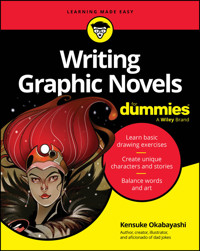
Turn your ideas into graphic novels with this step-by-step guide—including drawing exercises
Writing Graphic Novels For Dummies walks you through the process of graphic novel creation step-by-step, guiding you through the process of developing ideas, concepts, and visuals to bring your unique stories to life. Learn how to develop plots, characters, and storylines, create storyboards to organize your work, and how to creative effective visuals to support the narrative. You'll progress from basic drawing skills to more advanced techniques specific to graphic storytelling. Get recommendations for using digital tools, and work through exercises to help jumpstart your creativity and develop your style as a graphic novelist. Plus, an 8-page color insert offers a mini-graphic novel within the book, so you can see all the stages of writing, illustrating, and development of a graphic novel in any genre, from initial concept to completion.
- Learn how to choose materials and drawing supplies to suit your needs
- Understand proportion and scale, and convey different emotions and facial expressions
- Practice your skills with helpful drawing exercises
- Get tips for sharing your creations with the world and promoting your work
This accessible guide is great for aspiring writers, artists, and graphic novel enthusiasts who want to learn how to create their own graphic novels as a hobby or potential career.
Sie lesen das E-Book in den Legimi-Apps auf:
Seitenzahl: 434
Veröffentlichungsjahr: 2025
Ähnliche


















Writing Graphic Novels For Dummies®
To view this book's Cheat Sheet, simply go to www.dummies.com and search for “Writing Graphic Novels For Dummies Cheat Sheet” in the Search box.
Table of Contents
Cover
Table of Contents
Title Page
Copyright
Introduction
So What’s a Graphic Novel, and How Is It Different from a Comic Book?
About This Book
Foolish Assumptions
Icons Used in This Book
Beyond the Book
Where to Go from Here
Part 1: Graphic Novels 101
Chapter 1: Foundations of Drawing
Gathering Materials
Establishing Your Studio
Chapter 2: Boot Camp
Drop Down and Gimme 20 (Lines and Shapes)!
Hatching Latch Patterns
Chapter 3: Inking — Adding Value to your Artwork
Break-ink the Ice!
Inking Skills Worth the Drills
Fix-ink Your Mistakes
Part 2: To the Drawing Board
Chapter 4: Get Your Head into the Game
Meet the Head(s) of the Family
Create the Head/Face Template
Drawing the Ms. and Mr. Head
Heads of Different Ages
Chapter 5: Face-Off!
For Your Eyes only
Let’s Get Nosey
Lend Me Your Ears
Mouthing Off
Express Yourself!
Chapter 6: Figuring Things Out: Graphic Novel Body Basics
Heads up — Stick Up! (Setting Up Your Character’s Proportions)
Drawing a Stick Figure
Getting Your Body in Shape(s)
Growing Pains
Chapter 7: Customize and Accessorize Your Characters
Drawing Dapper Draper
Threads of Glory: Dress to Impress!
Accessorize Yourself
Part 3: The Assembly of the Greats
Chapter 8: The Main Protagonists
Teen Autobiography: The Awkward Teenager
Historical Figures: The Famed Musician and His Secret Identity
Manga Magic: The Evil Spirit Hunter
A Tale of Twisted Stories: The Misunderstood Witch
Chapter 9: The Dreaded Villains
Teen Autobiography Antagonist: The Mean Girl
Historical Figure Antagonist: Napoleon the Steampunk Emperor
Manga Magic Antagonist: The Monster Priestess
A Tale of Twisted Stories Antagonist: Hansel and Gretel
Chapter 10: Loveable Sidekicks
Autobiographical Sidekick: The Loyal Bestie
Historical Figure Sidekick: The Beautiful Mind
Manga Magic Sidekick: The Invisible Hero
Fantasy Sidekick: The Chummy Crow
Part 4: Making a Scene
Chapter 11: Gaining the Right Perspective
Creating Buildings and Backgrounds with Basic Perspective
Captivate Your Reader’s Imagination with the Power of Perspective
Chapter 12: Shape and Light Up Your Composition
Compose Yourself: The Basic Composition
Let There Be Light! Basic Light and Shadows
Chapter 13: Backgrounds ’n Stuff
Assembling a Background Shot
Bring It All Together!
Part 5: The Write Stuff – Coming Up with Your Story and Narrative
Chapter 14: Story Development
Plot — What is it Good For? (Absolutely Everything!)
The Four Stages of Story Progression
Chapter 15: From Scripts to Thumbnails
Scripting Your Action and Dialogue
Thumbnails: Ones You Can’t Bite!
Chapter 16: Finding Your Voice and Audience
Exploring Popular Graphic Novel Genres
Plot-Driven Versus Character-Driven Stories
Chapter 17: 3-2-1, Write Off!
Making a Premise with Promise
The Visual Map
Finding Inspiration
Part 6: One More Thing (Well, Maybe Three)
Chapter 18: Dialogue Art — Everyone’s Talk’n about It!
The Right Font
Balloons: Shapes and Sizes That Make Your Narratives Float!
Putting Your Balloons Where They Belong
Seeking Inspiration
Chapter 19: Special Effects
Get’em Moving!
Part 7: The Part of Tens
Chapter 20: Ten (Plus Two) Notable Graphic Novel Artists/Creators
Georges Remi: Hergé (1907–1983)
Will Eisner (1917–2005)
Osamu Tezuka (1928–1989)
Moebius (1938–2012)
Art Spiegelman (1948– )
Katsuhiro Otomo (1954– )
Frank Miller (1957– )
Daniel Clowes (1961– )
Marjane Satrapi (1969– )
Raina Telgemeir (1977– )
Emily Carroll (1983– )
Victoria Jamieson (1992– )
Chapter 21: (Roughly) Ten Places to Strut Your Stuff
Further Education
Comic Book/Anime Conventions
Graphic Novel Competitions
Self-Publishing
Small Press
Self-Promoting
Friends
Online Portfolio
Index
About the Author
Supplemental Images
Connect with Dummies
End User License Agreement
List of Illustrations
Chapter 2
FIGURE 2-1: Warming up with loose zigs and zags.
FIGURE 2-2: Drawing those erratic hurricane zigzag shapes using hard and soft l...
FIGURE 2-3: Warming up by drawing a spiral, “cinnamon roll” shape.
FIGURE 2-4: Drawing cloud-like shapes with various curve sizes.
FIGURE 2-5: Curvy shapes and sizes using other geometric shape guidelines.
FIGURE 2-6: Develop your mind-hand connection with this circle exercise.
FIGURE 2-7: Create cool rectangular compositions.
FIGURE 2-8: Drawing your crisscross patterns.
FIGURE 2-9: Just one of many crisscross applications by today’s graphic novel a...
FIGURE 2-10: Identifying creative angles and line widths, drawing your crisscro...
FIGURE 2-11: Starting the kake-ami pattern.
FIGURE 2-12: Adding the next set of
kake-ami
pattern lines.
FIGURE 2-13: Fill up the rest of the box frame to complete the rest of the
kaki
...
FIGURE 2-14: Starting the darker kake-ami pattern.
FIGURE 2-15: Completing the darker kake-ami pattern.
FIGURE 2-16: Setting up my scribble gradation pattern and laying down the evenl...
FIGURE 2-17: Adding the first overlay of scribbles from square A through C.
FIGURE 2-18: Adding the first overlay of scribbles from square A through B.
FIGURE 2-19: Complete the scribble pattern gradation by overlaying your scribbl...
Chapter 3
FIGURE 3-1: An ink doodle from my sketchbook.
FIGURE 3-2: Two different ways to grip your ink brush.
FIGURE 3-3: Loading up your brush with the correct amount of ink.
FIGURE 3-4: Brush warm-ups from my sketchbook.
FIGURE 3-5: The anatomy of the G Pen ink nib.
FIGURE 3-6: “Feeding” your nib.
FIGURE 3-7: Drawing vertical and horizontal wavy lines with varying pressure us...
FIGURE 3-8: Avoid ink seeping under your ruler by flipping it upside down.
FIGURE 3-9: Inking straight lines for practice with your ruler.
FIGURE 3-10: Marking the start, end, and midpoints of your curve.
FIGURE 3-11: Inking the curve shape.
FIGURE 3-12: Using your ink brush to embellish your curve line.
FIGURE 3-13: Creating your feathering marks using the ink brush or broad brush ...
FIGURE 3-14: Comparing two different styles of feathering.
FIGURE 3-15: Inking my stipple patterns.
FIGURE 3-16: Oh, so many cool effects you can create using ink stippling!
FIGURE 3-17: The inking mistakes shown on the left have been corrected on the r...
Chapter 4
FIGURE 4-1: The front overview of the head.
FIGURE 4-2: The three-quarter view of a character’s head.
FIGURE 4-3: The side view of the character’s head.
FIGURE 4-4: The rear view of the character’s head.
FIGURE 4-5: Start to build your character’s head.
FIGURE 4-6: Adding the landmarks to the lower face to complete my character’s h...
FIGURE 4-7: Adding the eye landmarks to the head template.
FIGURE 4-8: Sketching in the upper- and lower-lip shapes on the head template.
FIGURE 4-9: Adding in the ear shape to complete the head/face template and comp...
FIGURE 4-10: Drawing the eye and nose shapes for the female character.
FIGURE 4-11: Drawing in the upper and lower lips and cheeks of the female chara...
FIGURE 4-12: Completing the female character face.
FIGURE 4-13: Drawing in the eye and nose shapes for the male character.
FIGURE 4-14: Drawing in the simplified upper and lower lips and chiseled jawlin...
FIGURE 4-15: Drawing the ear and neck to complete the male character face.
FIGURE 4-16: Exploring the baby's head features, shown from both the front and ...
FIGURE 4-17: Exploring pre-teen and teen head features from the front and side ...
FIGURE 4-18: Exploring the middle-aged person’s head features from both the fro...
FIGURE 4-19: Exploring a senior citizen's head features from the front and side...
Chapter 5
FIGURE 5-1: The front view guidelines for the general graphic novel eye.
FIGURE 5-2: Sketching the pupil and iris shapes.
FIGURE 5-3: Adding in the upper and lower eyelids for your character.
FIGURE 5-4: Complete the pair of graphic novel eyes and add details to make the...
FIGURE 5-5: All sorts of shapes, sizes, and target audiences!
FIGURE 5-6: Drawing an M-shaped line to the bottom of the nose, adding more rea...
FIGURE 5-7: Adding accent lines.
FIGURE 5-8: Graphic novel nose shapes.
FIGURE 5-9: The human ear.
FIGURE 5-10: Drawing the outside and inside shapes of the ear.
FIGURE 5-11: Completing the right ear and shading in both inside ear shapes.
FIGURE 5-12: Various types of graphic novel ears.
FIGURE 5-13: Creating the upper portion of the basic graphic novel mouth.
FIGURE 5-14: Adding the lower lip and details to complete the general graphic n...
FIGURE 5-15: There are so many expressive mouth types and styles to choose from...
FIGURE 5-16: Introducing Karen and Caryn.
FIGURE 5-17: Karen and Caryn are happy.
FIGURE 5-18: Sudden confusion, with a side of suspicion.
FIGURE 5-19: Tears of Despair.
FIGURE 5-20: Hell hath no fury like a woman scorned!
FIGURE 5-21: They sure didn’t see that one coming!
FIGURE 5-22: Karen and Caryn are happy damsels in love!
Chapter 6
FIGURE 6-1: Different head-proportion scales used in different graphic novel ge...
FIGURE 6-2: Setting up the guidelines for the front and side view of the stick ...
FIGURE 6-3: Drawing the oval head shapes for the front and side views of the he...
FIGURE 6-4: Attaching the neck, spine, and collarbone to the stick figure.
FIGURE 6-5: Drawing the pelvis and lower legs
FIGURE 6-6: Drawing the upper arms and hands to complete the stick figure.
FIGURE 6-7: Cylinders, cubes, spheres, and cones are your best friends!
FIGURE 6-8: Drawing the sphere for the head — front, side, and three-quarter vi...
FIGURE 6-9: The torso tilted in different angles — front, three-quarter, and si...
FIGURE 6-10: Creating the opening for the arms to fit in.
FIGURE 6-11: Fitting the hip and ab shape snuggly into the torso opening.
FIGURE 6-12: Constructing the hips using the half-sphere.
FIGURE 6-13: Constructing the upper arm using cylinders.
FIGURE 6-14: Building and connecting the forearm to the biceps.
FIGURE 6-15: The hand is divided into three sections labeled A, B, and C.
FIGURE 6-16: Drawing the hand, sections A, B, and C.
FIGURE 6-17: Tracking the finger movements.
FIGURE 6-18: Connecting the fingers to the palm.
FIGURE 6-19: Adding the hands to the stick figure.
FIGURE 6-20: Drawing the upper legs.
FIGURE 6-21: Drawing the lower legs under the upper legs structure.
FIGURE 6-22: Attaching the front view of the foot to the lower leg.
FIGURE 6-23: Attaching the side view of the foot to the lower leg.
FIGURE 6-24: Drawing the opposite side of the foot.
FIGURE 6-25: Drawing the sternomastoid and the trapezius.
FIGURE 6-26: Stretching the pectoralis muscles over the torso.
FIGURE 6-27: Stretching the rectus abdominis over the stomach.
FIGURE 6-28: Defining the hips.
FIGURE 6-29: Defining structure in the arm.
FIGURE 6-30: Defining the legs.
FIGURE 6-31: Different shapes and choices for drawing your character.
FIGURE 6-32: Observing characters at different ages and stages.
Chapter 7
FIGURE 7-1: One-point tension fold examples.
FIGURE 7-2: Two-point tension folds point toward the center of tension.
FIGURE 7-3: Two types of overlapping folds show more movement.
FIGURE 7-4: Drawing the sweatband and front bill of the dad cap.
FIGURE 7-5: Add the dad cap’s details and design to finish the front and side v...
FIGURE 7-6: Drawing the head opening and top of the hood.
FIGURE 7-7: Adding the fold details and shading to the hooded character.
FIGURE 7-8: Sketching the bikini top.
FIGURE 7-9: Sketching the bikini bottom.
FIGURE 7-10: Adding the folds and details to the bikini character.
FIGURE 7-11: Adding the neck and sleeve opening to my character’s muscle tee.
FIGURE 7-12: Add the folds and details to complete the muscle tee for the chara...
FIGURE 7-13: Drawing the basic shapes of the kimono.
FIGURE 7-14: Finishing the kimono with ornamental flow.
FIGURE 7-15: Drawing the inside leg shape of the ninja pants.
FIGURE 7-16: Complete the outside of the ninja pants, and add loose folds.
FIGURE 7-17: The shape and size of glasses tell a lot about your character.
FIGURE 7-18: Commuting to school in kawaii style.
FIGURE 7-19: Drawing an edgy goth earring.
Chapter 8
FIGURE 8-1: Setting up the wire figure for your lead character.
FIGURE 8-2: Sketching the geometric shapes and drawing the basic muscle definit...
FIGURE 8-3: Sketching in the face and clothes.
FIGURE 8-4: Add finishing touches to her features and outfit with accessories.
FIGURE 8-5: A wire frame of my rendition of Niccolò Paganini.
FIGURE 8-6: The thin violinist takes his mysterious, ghastly form.
FIGURE 8-7: Drawing his basic clothing, facial features, and instrument shape.
FIGURE 8-8: Finishing up Paganini’s wardrobe and adding in details to his hair ...
FIGURE 8-9: Setting the wide, aggressive stance for the wire frame figure.
FIGURE 8-10: Making the character look more realistic.
FIGURE 8-11: Sketching in the head and facial features and snapping on ornament...
FIGURE 8-12: Sketch the detail of his clothing and facial features, along with ...
FIGURE 8-13: Drawing the wireframe for “Mildred,” the witch.
FIGURE 8-14: Keeping the overall definition down to a minimum.
FIGURE 8-15: Add in the details to the face and clothing shapes.
FIGURE 8-16: Adding the final bells and whistles to “Mildred” the witch.
Chapter 9
FIGURE 9-1: Setting up the proud posture of the stick figure.
FIGURE 9-2: Defining the head and sketching in the slender build over the geome...
FIGURE 9-3: Sketching the clothing fit for The Mean Girl.
FIGURE 9-4: Finish adding the details to her facial features, clothing, and add...
FIGURE 9-5: Setting up the wire frame figure with wide, muscular shoulders.
FIGURE 9-6: The cunning French commander bulks up.
FIGURE 9-7: Drawing the basic clothing folds and blocking in the facial feature...
FIGURE 9-8: Adding facial details and clothing to the French commander’s appear...
FIGURE 9-9: Draw the details and special effects to complete the steampunk Napo...
FIGURE 9-10: Setting the tall pose for the stick figure.
FIGURE 9-11: Adding geometric shapes and adding on to them.
FIGURE 9-12: Drawing the goth costume over the figure and defining the features...
FIGURE 9-13: Cleaning up the pencil marks and adding the details to complete th...
FIGURE 9-14: Setting up the bratty attitude stick figures for Hansel and Gretel...
FIGURE 9-15: Building up the geometric shapes and muscle structure of Hansel an...
FIGURE 9-16: Sketching in the basic clothing and facial features for the cranky...
FIGURE 9-17: Refining the clothing and accessory details.
FIGURE 9-18: Complete adding details to complete the horrific sibling character...
Chapter 10
FIGURE 10-1: Setting up the stick figure for my sidekick character, The Loyal B...
FIGURE 10-2: Sketching slender definition over geometric shapes.
FIGURE 10-3: Sketch in her basic facial features and block in the shirt, skirt,...
FIGURE 10-4: Adding the finishing touches to The Loyal Bestie.
FIGURE 10-5: Setting up the contrapposto stick figure.
FIGURE 10-6: Laying out a full-figured soprano sidekick.
FIGURE 10-7: Rough-in the clothing shapes for The Beautiful Mind.
FIGURE 10-8: Add the details and accessories to complete the historical graphic...
FIGURE 10-9: Drawing the short stick figure for The Invisible Hero.
FIGURE 10-10: Keeping the overall definition down to a minimum.
FIGURE 10-11: Dressing the character in his ninja and kimono style.
FIGURE 10-12: Adding the final bells and whistles.
FIGURE 10-13: Drawing the shorter-than-human stick figure frame.
FIGURE 10-14: Giving definition to the crow’s body.
FIGURE 10-15: Fleshing out the mysterious dark details of The Chummy Crow sidek...
Chapter 11
FIGURE 11-1: Drawing the horizon line and establishing the vanishing point.
FIGURE 11-2: Drawing the square and rectangle shapes and connecting the guideli...
FIGURE 11-3: Finishing the one-point perspective objects.
FIGURE 11-4: All these buildings are created using a one-point perspective.
FIGURE 11-5: It’s a whole fleet of cubes … no, wait … a group of warplanes!
FIGURE 11-6: Drawing a two-point perspective cube.
FIGURE 11-7: Drawing multiple cubes in two-point perspective.
FIGURE 11-8: Drawing multiple buildings using the two-point perspective.
FIGURE 11-9: Drawing a bird’s-eye view.
FIGURE 11-10: A building from a bird’s-eye view.
FIGURE 11-11: Setting up the vanishing points for my worm’s-eye perspective shap...
FIGURE 11-12: Completing my worm’s-eye perspective shape.
FIGURE 11-13: Drawing a tall building from a worm’s-eye view.
FIGURE 11-14: Laying down the markers for a crowd.
FIGURE 11-15: Adding details to my one-point perspective characters.
FIGURE 11-16: Adding details to my one-point perspective characters.
FIGURE 11-17: Setting up a two-point perspective crowd scene.
FIGURE 11-18: Finishing a two-point perspective crowd scene with geometric figu...
FIGURE 11-19: Examples of the floating vanishing point’s nearness to the buildi...
FIGURE 11-20: Drawing a worm’s-eye view telling the story of the shrunken woman...
FIGURE 11-21: Using a worm’s-eye view to show the tense moment between a teenag...
Chapter 12
FIGURE 12-1: Drawing borders is a crucial first step in composition.
FIGURE 12-2: Filling multiple overlapping borders with abstract shapes.
FIGURE 12-3: Four useful composition templates.
FIGURE 12-4: Examples of the box composition.
FIGURE 12-5: Examples of L-shape compostion.
FIGURE 12-6: Examples of Diagonal composition.
FIGURE 12-7: Examples of Yin-Yang composition.
FIGURE 12-8: Understanding the basics of light being cast on a simple object.
FIGURE 12-9: Understanding the basics of light being cast on a simple object.
FIGURE 12-10: Understanding the basics of light being cast on a simple object.
FIGURE 12-11: Understanding the basics of light being cast on a simple object.
FIGURE 12-12: Getting freaky with the bottom lighting.
Chapter 13
FIGURE 13-1: Using perspective and simple geometric shapes to set up a ramen ca...
FIGURE 13-2: Adding in the details and crosshatching to complete the ramen cafe...
FIGURE 13-3: Drawing a single circle-based tree.
FIGURE 13-4: Drawing a large tree using multiple ovals.
FIGURE 13-5: Using oval guides to create bushes.
FIGURE 13-6: Adding detail to make tall grass more realistic.
FIGURE 13-7: Drawing grass pastures that transition from background to middle g...
FIGURE 13-8: Drawing smooth rocks using basic shapes and textures.
FIGURE 13-9: Starting your jagged rocks using an overlapping polygon.
FIGURE 13-10: Finish with hatching and shading to complete your jagged rocks.
FIGURE 13-11: Establish the horizon line and early surface lines.
FIGURE 13-12: Add shadows to finish the calm water effect.
FIGURE 13-13: Begin drawing the rough water with broken wave shapes.
FIGURE 13-14: Gradually darkening the shadow shapes to build intensity.
FIGURE 13-15: Drawing the large foreground tree and grass.
FIGURE 13-16: Adding the cozy ramen cafe to the center of the composition.
FIGURE 13-17: Sketching in background treeline and waterfront.
FIGURE 13-18: Completing my composition with details that tell the story.
Chapter 14
FIGURE 14-1: The four stages of story progression, Ki, Sho, Ten, and Ketsu.
FIGURE 14-2: The opening introduction section taken from a prelude in
RISE
.
FIGURE 14-3: The development section taken from a short prelude in
RISE.
FIGURE 14-4: The climax of a short prelude in
RISE
.
FIGURE 14-5: The conclusion of a short prelude in
RISE
.
Chapter 15
FIGURE 15-1: An excerpt from my graphic novel script,
Empty Void.
FIGURE 15-2: An overview of my thumbnail sketches.
FIGURE 15-3: The process starting with the script.
FIGURE 15-4: Creating the thumbnails based on the script.
FIGURE 15-5: Producing the final inks.
Chapter 17
FIGURE 17-1: Starting my visual map with the main protagonist at the center of ...
FIGURE 17-2: Expanding my visual map with balloon elements.
FIGURE 17-3: Keep on going until your page is full.
Chapter 18
FIGURE 18-1: Conversation balloons that get your dialogue going.
FIGURE 18-2: Connecting overlapping balloons for lengthy monologues.
FIGURE 18-3: Creating distance between the balloons to change the tempo between...
FIGURE 18-4: A balloon for every thought.
FIGURE 18-5: Making a loud statement with exclamation balloons.
FIGURE 18-6: Caption boxes that deliver your narrative voice.
FIGURE 18-7: Letting your characters speak for themselves.
FIGURE 18-8: Keeping dialogue balloons at the top third of your art frame.
FIGURE 18-9: Guiding your readers’ eyes in a “Z” direction using word balloons.
Chapter 19
FIGURE 19-1: The character here looks as if he’s suspended in eternal “pause.”
FIGURE 19-2: Adding some zip to the character’s speed.
FIGURE 19-3: She’s looking shocked, but something is missing.
FIGURE 19-4: Ways to add fear into your characters.
FIGURE 19-5: Without speed lines, the effect of shock isn’t there.
FIGURE 19-6: Radial speed lines add the intensity of emotional shock to the cha...
FIGURE 19-7: Unless your character is a porcupine or sea urchin, avoid overuse ...
FIGURE 19-8: Capturing the sudden head jerking motion of the character’s head.
FIGURE 19-9: Adding in fish-hook shape curves to show her rapid head turn movem...
Guide
Cover
Table of Contents
Title Page
Copyright
Begin Reading
Index
About the Author
Pages
iii
iv
1
2
3
4
5
7
8
9
10
11
12
13
14
15
16
17
18
19
20
21
22
23
25
26
27
28
29
30
31
32
33
34
35
36
37
38
39
40
41
42
43
44
45
46
47
48
49
50
51
52
53
54
55
56
57
58
59
60
61
62
63
64
65
66
67
68
69
70
71
72
73
74
75
76
77
78
79
80
81
82
83
84
85
86
87
88
89
90
91
92
93
94
95
97
98
99
100
101
102
103
104
105
106
107
108
109
110
111
112
113
114
115
116
117
118
119
120
121
122
123
124
125
126
127
128
129
131
132
133
134
135
136
137
138
139
140
141
142
143
144
145
146
147
148
149
151
152
153
154
155
156
157
158
159
160
161
162
163
164
165
166
167
168
169
170
171
172
173
174
175
176
177
178
179
180
181
182
183
184
185
186
187
188
189
190
191
193
194
195
196
197
198
199
200
201
202
203
204
205
206
207
208
209
210
211
212
213
215
216
217
218
219
220
221
222
223
224
225
227
228
229
230
231
232
233
234
235
236
237
238
239
240
241
242
243
244
245
246
247
249
250
251
252
253
254
255
257
258
259
260
261
262
263
264
265
266
267
269
270
271
272
273
274
275
277
278
279
280
281
282
283
284
285
286
287
288
289
290
291
293
294
295
296
297
298
299
301
302
303
304
305
306
307
309
310
311
312
313
314
315
316
317
318
319
320
321
322
323
324
325
326
327
328
329
330
331
332
333
334
335
336
337
338
339
340
Writing Graphic Novels For Dummies®
Published by: John Wiley & Sons, Inc., 111 River Street, Hoboken, NJ 07030-5774, www.wiley.com
Copyright © 2026 by John Wiley & Sons, Inc. All rights reserved, including rights for text and data mining and training of artificial technologies or similar technologies.
Media and software compilation copyright © 2026 by John Wiley & Sons, Inc. All rights reserved. All rights reserved, including rights for text and data mining and training of artificial technologies or similar technologies.
Published simultaneously in Canada
No part of this publication may be reproduced, stored in a retrieval system or transmitted in any form or by any means, electronic, mechanical, photocopying, recording, scanning or otherwise, except as permitted under Sections 107 or 108 of the 1976 United States Copyright Act, without the prior written permission of the Publisher. Requests to the Publisher for permission should be addressed to the Permissions Department, John Wiley & Sons, Inc., 111 River Street, Hoboken, NJ 07030, (201) 748-6011, fax (201) 748-6008, or online at http://www.wiley.com/go/permissions.
Trademarks: Wiley, For Dummies, the Dummies Man logo, Dummies.com, Making Everything Easier, and related trade dress are trademarks or registered trademarks of John Wiley & Sons, Inc. and may not be used without written permission. All other trademarks are the property of their respective owners. John Wiley & Sons, Inc. is not associated with any product or vendor mentioned in this book.
LIMIT OF LIABILITY/DISCLAIMER OF WARRANTY: THE CONTENTS OF THIS WORK ARE INTENDED TO FURTHER GENERAL SCIENTIFIC RESEARCH, UNDERSTANDING, AND DISCUSSION ONLY AND ARE NOT INTENDED AND SHOULD NOT BE RELIED UPON AS RECOMMENDING OR PROMOTING A SPECIFIC METHOD, DIAGNOSIS, OR TREATMENT BY PHYSICIANS FOR ANY PARTICULAR PATIENT. THE PUBLISHER AND THE AUTHOR MAKE NO REPRESENTATIONS OR WARRANTIES WITH RESPECT TO THE ACCURACY OR COMPLETENESS OF THE CONTENTS OF THIS WORK AND SPECIFICALLY DISCLAIM ALL WARRANTIES, INCLUDING WITHOUT LIMITATION ANY IMPLIED WARRANTIES OF FITNESS FOR A PARTICULAR PURPOSE. IN VIEW OF ONGOING RESEARCH, EQUIPMENT MODIFICATIONS, CHANGES IN GOVERNMENTAL REGULATIONS, AND THE CONSTANT FLOW OF INFORMATION RELATING TO THE USE OF MEDICINES, EQUIPMENT, AND DEVICES, THE READER IS URGED TO REVIEW AND EVALUATE THE INFORMATION PROVIDED IN THE PACKAGE INSERT OR INSTRUCTIONS FOR EACH MEDICINE, EQUIPMENT, OR DEVICE FOR, AMONG OTHER THINGS, ANY CHANGES IN THE INSTRUCTIONS OR INDICATION OF USAGE AND FOR ADDED WARNINGS AND PRECAUTIONS. READERS SHOULD CONSULT WITH A SPECIALIST WHERE APPROPRIATE. NO WARRANTY MAY BE CREATED OR EXTENDED BY ANY PROMOTIONAL STATEMENTS. NEITHER THE PUBLISHER NOR THE AUTHOR SHALL BE LIABLE FOR ANY DAMAGES ARISING THEREFROM.
For general information on our other products and services, please contact our Customer Care Department within the U.S. at 877-762-2974, outside the U.S. at 317-572-3993, or fax 317-572-4002. For technical support, please visit https://hub.wiley.com/community/support/dummies.
Wiley publishes in a variety of print and electronic formats and by print-on-demand. Some material included with standard print versions of this book may not be included in e-books or in print-on-demand. If this book refers to media that is not included in the version you purchased, you may download this material at http://booksupport.wiley.com. For more information about Wiley products, visit www.wiley.com.
Library of Congress Control Number: 2025945475
ISBN 978-1-394-35373-6 (pbk); ISBN 978-1-394-35375-0 (ebk); ISBN 978-1-394-35374-3 (ebk)
Introduction
“Agraphic novel artist? What’s that?”
I get this question a lot — and honestly, I love answering it. Whether it’s friends, strangers, or curious passersby, I’m always excited to share what I do and why I’m so passionate about it. Drawing graphic novels is more than just a job — it’s storytelling through art. And guess what? It’s a field that’s exploding right now. The graphic novel industry is going global, drawing in fresh talent and veteran artists alike. Plus, more major movies are being adapted from original graphic novels than ever before, and the genres just keep expanding.
So What’s a Graphic Novel, and How Is It Different from a Comic Book?
A graphic novel is a form of storytelling that combines visual art with narrative text, typically presented in a book-length format. Like traditional novels, graphic novels feature complex characters and developed plots and often explore deeper themes than the shorter, multi-issue superhero comics commonly found in mainstream publishing.
Although graphic novels are usually self-contained stories, it’s not uncommon for smaller serialized works to be later compiled into a single volume under the graphic novel label.
Although this book-length comic format has existed for some time — especially in the world of manga (Japanese comics), such as Tezuka Osamu’s Message to Adolf and Ode to Kirihito — it was Jewish American artist Will Eisner who is credited with coining the term “graphic novel” in 1978 with his collection of interconnected stories, A Contract with God.
Graphic novels offer the same depth and narrative structure as prose novels but convey their stories through a blend of illustrations and dialogue.
Interested in taking a shot at creating your graphic novel? That’s where this book comes in. It’s designed to help you get started creating your very own graphic novel — from concept to finished pages — centered on the stories you want to tell.
About This Book
If you’ve already flipped through this book, you’ve probably noticed one thing: It’s packed with illustrations. In fact, over half the content is visual. Why? Because the best way to learn how to draw a graphic novel is to see it done. I’ll walk you through everything step by step — with clear instructions, real examples, and room to make it your own.
Everything in here is based on real experience. I’ve worked as a professional illustrator and sequential artist, and before that I was an art student learning the ropes. The techniques I teach here are a blend of both worlds — practical, tested, and approachable.
You’ll explore different drawing styles, from realistic characters to wild, exaggerated ones. Try them all, mix and match, and discover what works best for you. This book covers everything from anatomy and proportions to iconic character archetypes like heroes, villains, and quirky sidekicks. You’ll also learn to add energy and emotion to your panels through motion effects and dynamic compositions.
And when you’re ready to share your masterpiece? I’ve got you covered with tips on self-publishing, printing, and even preparing for your first comic or graphic novel convention.
So, are you ready? To quote the late Heath Ledger’s Joker: “And here … we … go!”
Foolish Assumptions
Before we dive in, I’m going to assume a few things about you:
You love graphic novel-based movies and want to explore the art form for yourself.
You’re a seasoned comic book artist looking to break away from superheroes and tell your own stories.
You’ve never drawn anything beyond stick figures, but you’re curious and ready to try something fun and new.
You don’t know much about graphic novels (yet), but you’re eager to learn.
You’re open to digital tools and social media as part of your creative process.
You don’t care about being published — you just love to draw. (And honestly? That’s enough.)
Icons Used in This Book
Throughout this book, you’ll notice different icons popping up in the margins. Think of these as quick visual cues — little flags to point out helpful tips, important info, or things to watch out for. Each icon has a specific purpose, and here’s a quick guide to what they mean:
Of course, we’d love for you to remember everything in this book — but if that’s a tall order, just keep an eye out for these handy icons in the margins. They’ll help highlight key info you won’t want to miss.
These are quick nuggets of wisdom picked up through years of drawing, teaching, and learning. Tips are here to save you time, avoid mistakes, and get the most out of your efforts.
“Pump the brakes!” Read these before you move forward. Warnings flag common mistakes or missteps that can throw you off track or cost you time later.
Think of these as power tips — they cover subjects that many beginning students often overlook. Take a moment, pay close attention, and really absorb the advice I’m sharing. It’ll help you keep up with the material I’m about to show you.
If you need some help getting the creative juices flowing, seek out this icon.
Beyond the Book
Even after you finish the book, don’t leave without checking out the Cheat Sheet, in which I leave you with some additional tips and info that I simply didn’t have room to include in this book (as if I didn’t already pack this book with a ton of goodies!). You can access the book’s Cheat Sheet at Dummies.com. To access this Cheat Sheet, simply go to https://www.dummies.com/ and search for “graphic novel.”
For those YouTubers looking to learn how to color and illustrate your graphic novel digitally, come check out my YouTube tutorial channel (https://www.youtube.com/@KensukeART), where I cover some tips and tricks that save time and get you amazing results.
Where to Go from Here
I didn’t pour all this time into drawing and writing just for you to skip around — but if you do, I won’t be too offended.
Certain parts of the book — like sidebars or gray boxes — contain extra info that’s interesting but not essential. And any sections marked with the Technical Stuff icon go into advanced topics that you can circle back to later.
This book is organized into seven parts, each focused on a different aspect of graphic novel creation. Here’s a quick breakdown:
Part 1: Graphic Novels 101
sets you up with the basic art materials and supplies as well as useful warm-up techniques that will come in handy in later chapters.
Part 2: To the Drawing Board
guides you through the essentials of character design, starting with drawing heads and facial structures, and then dives into expressive emotions and facial features. You’ll learn how to master body proportions and poses, which give your characters realistic movement and presence. This part also focuses on adding individuality with costumes, hairstyles, and accessories that reflect your characters’ personalities and roles in the story.
Part 3: The Assembly of the Greats
explores key character archetypes in graphic novels, starting with the main protagonists — your story’s heroes and central figures. Next, you’ll dive into the dreaded villains who bring tension and conflict, and then meet the lovable sidekicks who support the heroes while adding humor, heart, or unexpected depth to the narrative.
Part 4: Making a Scene
guides you through essential visual techniques for building compelling scenes using perspective tools, then moves on to shaping and lighting up your compositions for dramatic effect. Finally, you’ll explore how to draw natural background elements like trees, water, and rocks to bring your environments to life.
Part 5: The Write Stuff:
Coming Up with Your Story and Narrative focuses on the storytelling foundation of your graphic novel. You’ll explore story development, learn how to create effective scripts and thumbnails, and discover how to find your unique voice and connect with the right audience. The section wraps up by helping you craft a strong plot and premise to launch your graphic novel journey with confidence.
Part 6: One More Thing (Actually, There’s Three)
dives into the finishing touches that bring your graphic novel to life. You’ll learn how to craft engaging dialogue using word balloons, add special effects to convey motion and emotion, and, finally, get your work into the spotlight through publication, printing, and sharing on social media.
Part 7: The Part of Tens
wraps things up with inspiration and opportunity, introducing you to ten notable graphic novel artists worth studying, followed by a list of (roughly) ten great places where you can showcase your own work and connect with a wider audience.
Feel free to read straight through or bounce around — there’s no wrong way to use this book. My hope is that you’ll find both encouragement and tools to help you bring your graphic novel to life.
Part 1
Graphic Novels 101
IN THIS PART …
Explore the popular world of graphic novels.
Set up your drawing studio and drawing toolbox.
Get familiar with your drawing tools.
Try out different exercise warm-up drills.
Experiment with different inking techniques.
Chapter 1
Foundations of Drawing
IN THIS CHAPTER
Exploring various materials/tools used by graphic novel artists
Discovering how to use the materials
Taking care of your investment
As the popular cooking show host in Iron Chef barks the command to the cooking contestants to gather their fresh ingredients, in this chapter I introduce you to some cool art materials to use for your graphic novel creation. The graphic novel world is so diverse in styles that you may even find that you already possess some of the tools that you enjoy working with. (Cool, huh?) If you already have experience drawing comics or the ever-popular manga (Japanese comics) and like the tools that you are using, no one is going to fault you for wanting to save money and work with what you have.
However, I feel it’s also important to expand the ways of executing your ideas on paper. Researching YouTube (www.youtube.com) art product reviews, videos by fans and artists, is a great place to start if you are curious about trying out new art materials to use for your next graphic novel. Shopping online for art materials is easier than ever and cheaper than buying at a brick-and-mortar store. That being said, I do miss touching and feeling the brushes and testing the drawing pencils before making my purchase at Pearl Paint Art Store in New York City; it’s a shame they closed!
I recommend visiting Wet Paint Art (www.wetpaintart.com) and JetPens (www.jetpens.com). Both online stores carry an impressive array of art materials, including major brands that aren’t easy to find in the United States. Amazon (www.amazon.com) is another great resource for materials, but when it comes to Amazon, you should always be aware of no-name products offered at bargain-basement prices — you may end up with something whose quality is less than stellar.
In this chapter, I explain the various types of materials typically used by graphic novel artists, including my personal favorites. I show you how to use and properly maintain them. I also talk about the importance of setting up your studio and environment. After reading this chapter and gathering the necessary gear, you’ll be ready to get down to business.
Gathering Materials
The essentials for drawing manga are surprisingly simple: a pencil, a pen, an eraser, and some paper. While there are countless brands, types of pencils and brushes, and various paper sizes available, you don’t need anything fancy to begin. However, that doesn’t mean you can always rely on the tools from your elementary school pencil case — sometimes, investing in more professional-grade materials can make a difference. As my art school instructor once said when I tossed out my cheap brushes after just a day of use: “You get what you pay for.”
Starting with the right paper size and using materials commonly favored by graphic novel artists can make a big difference. Although I offer advice and recommendations on specific tools that are widely available, don’t worry if you can’t find everything I mention. Many successful artists have thrived without using every suggested material. However, if you have the budget and access, I challenge you to experiment with them to see what suits you best. If they don’t work for you, you can always return to the materials you’re comfortable with.
Using these tools offers the advantage of easier collaboration and technique sharing with other artists when everyone is working with similar supplies. Moreover, many of these materials are crafted specifically to meet the needs of artists. For example, although cheaper generic inks may be easier to find, they often smudge or fade over time.
The same idea applies to paper quality. You can’t expect excellent results when drawing or inking on thin, low-quality paper. High-quality materials are crucial for achieving professional results. Although you don’t need to invest in overly expensive, luxurious tools, putting in some effort to find reliable supplies that reduce unnecessary difficulties can make a noticeable difference — and it’s often quite affordable.
Paper
If you’re drawing a graphic novel for the first time, don’t worry about the type or size of paper you’re using (after all, paper is paper). I don’t see anything wrong with using regular photocopy paper to practice your characters or when you’re just sketching people at the local coffee shop. If you’re thinking of self-publishing or presenting your work to editors and publishers, consider working with archival-quality paper, which doesn’t yellow or tear as easily as the thinner photocopy paper. Also, consider that printers and editors may expect to see a certain paper size from artists and young prospects. You don’t want to submit your best work on, say, a crumpled receipt! If you’re already experienced and looking to be published, check out some graphic novels to get an idea of the page proportions and dimensions. After all, if you draw your graphic novel pages using paper that’s too big, publishers can’t fit all the content within the allotted space. As a result, your image runs off the page and gets cut off (that or scaled down to the incorrect ratio).
If you’re new to graphic novels and feeling overwhelmed with the many different graphic novel formats, don’t fret — start off with an 8½-x-11 inch (letter size) ratio for now. You can easily find this size at your local art/hobby shop, where they are sold in spiral-bound form or in packets. You can always challenge yourself to try different sizes down the road if you choose to do so. I have found the letter size easy to follow, as many of us are already familiar with reading this print size.
Typically, a graphic novel artist uses the standard comic book artist’s page size — 11-x-17-inch — quality paper known as Bristol paper. Bristol paper comes in various thicknesses (measured in ply) and surface quality (usually rough or smooth). If you want to go this route, start with the smooth surface in 3 ply. The company, Strathmore, produces great quality Bristol paper. Smooth surfaces are easier to sketch your detailed pencil and brush line art. Although Bristol paper is high-quality material, it’s significantly more expensive than the regular sketching paper you find at art supply stores, and depending on the size you choose to work with, the cost can add up as your graphic novel pages grow. (Don’t forget, graphic novels are lengthier than your average comic book.)
DIGITAL PAPER — THE PERFECT “PAPER”?
Let’s address that elephant sitting in the room desperately flailing its trunk in the air, wanting to be called upon — the computer armed with the popular artist/illustrator apps or software. Digital programs such as Clip Studio Paint, Photoshop, Illustrator, Procreate, and Paint SAI have a built-in template library that is specifically catered to the graphic novel artist's needs. Not only are the dimensions accurate, but the UI (user interface) makes navigating and selecting different popular templates easy, fast, and, of course, free, no matter how many pages you use. Sending your final artwork to the printers and publishers is simple, fast, and again, free. (See a pattern?)
So, is digital paper so good that I recommend converting 100 percent to it and putting aside your art paper, and possibly even investing in a digital studio? The short answer is yes … BUT. Yes, the programs I list above provide you with templates with precise measurements, which are easily customizable. BUT, if this is your first time working on a graphic novel, I challenge you to first work on physical paper.
There’s a mind-body connection when working with a physical object that you can touch, rotate, and draw on. Yes, you can digitally manipulate a page using your computer software — but I find that it’s easy to fall into the trap of relying on the convenience of these tools. For example, I’m guilty of heavily relying on my zoom tool to add detail to my artwork — so much so that I neglect the overall balance and composition of the whole page. In addition, it’s easy to get caught up spending hours in such small areas of the frame that ultimately are too small to notice when it goes for the final printing.
Since the rise and influence of Japanese comics (manga) in the western graphic novel industry, artists have adopted many of the materials that the Japanese manga artists use. I challenge artists to try using the B4 manga art size, which measures 180-x-270 mm. While working on my first business graphic novel version of Patrick Lencionni’s, The Five Dysfunctions of a Team, I found this size to be a great match because I could add more detail to the artwork that would have been difficult on a 8½-x-11 letter size paper yet easy to physically scan into my computer for my assistant to lay in the special effects before sending the files over to my copy editor in Japan. If you are interested, I recommend buying from a Japan-based manufacturer called Deleter (available at www.jetpens.com, where you can also find other awesome manga art supplies). Deleter makes different paper sizes for different purposes and is cheaper than what you’d pay for a Bristol paper pad. These thinner sheets are specially treated so that they don’t warp or buckle from the inks the artist uses. Also, they don’t tear easily from erasing or using sharp-tip pens or pencils.
PROTECTING YOUR BORDERS
Line frames, known as borders, tell you how much of the paper space you can use for your manga images. Artists rely on these boundary lines to contain their drawings and avoid having their work cropped out when it’s published. You need to be aware of several border measurements, and you should indicate them on your paper even before you pick up your pencil to draw. Here are the terms you need to know:
Safe area: All images within this area are guaranteed to be printed without any threat of being cropped out.Trim area: Basically, this area signifies the “end” of the paper. The closer an image runs to the border, the better its chances of being cropped by the printing machine.Bleed (expendable) area: Cutting machines are imperfect. Sometimes, you want to extend an image all the way to the end of the paper, but unfortunately, the cutting machines don’t always cut right at the trim line, sometimes going past it. Therefore, if your image stops right at the trim line and you want it to go all the way to the edge, it may be cut too short due to the overshot of the cutting blade. To ensure that the edge of the image doesn’t end before the printed image does, use the bleed area. The printing company considers this area expendable. Art must extend past the trim line all the way to the bleed line.Drawing supplies
Drawing supplies differ depending on an artist’s personal choice. Try different types of pencils, erasers, and inking methods until you find what you like best. The good news is that pencils are generally inexpensive. If you don’t like one type of pencil, getting another one is cheap.
In this section, I explore different types of pencils and drawing tools that artists commonly use today. If you’re just starting out, pick up any pencil, as long as you feel comfortable drawing with it. However, if you’re interested in either publishing or showing your work around, consider investing in a variety of pencils and drawing tools.
Choosing your drawing pencil
Art supply companies sell drawing pencils in different degrees of hardness or softness. Ultimately, rather than just choosing a pencil at any generic stationery store, I recommend going to your local art supply store where you can see a large selection. There, you can find pencils with varying degrees of lead hardness and softness. Some brands range from extra-hard (5H) to extra-soft (8B). You can find the degree of hardness or softness by looking at the ends of the handles.
I recently started using a graphite/clay composite pencil called a Faber-Castell 9000. It’s smooth and easy on the fingers when drawing for hours. These varnish-encased leads are a pleasure to draw with, and I recommend getting at least three different pencils with contrasting levels of hardness to get a “feel” for the different lines you can draw. If you go online at Blick (www.dickblick.com), you can get a set of different hardnesses. I recommend getting the range between 2B and 8B. The harder the lead is (higher H level), the more accurate your lines are. This accuracy means you can easily erase the lines after you’re done inking over them. The trade-off is that you lose a certain degree of feel or sensitivity of the line. Drawing with harder leads also damages the paper if you apply too much pressure. If you’re drawing carefully and lightly, this isn’t a problem. Most American comic book pencilers opt for a harder lead because it facilitates the inker’s job of erasing and gives the penciler more accurate lines, which minimizes any misinterpretations during the inking process. In contrast, the softer the lead (higher B level), the looser and wider the range of line quality. Like the harder leads, softer leads have their own trade-offs. The lines you draw with high B pencils tend to be messier and much harder to erase.




