


Erhalten Sie Zugang zu diesem und mehr als 300000 Büchern ab EUR 5,99 monatlich.
- Herausgeber: Cinnamon Press
- Kategorie: Geisteswissenschaft
- Sprache: Englisch
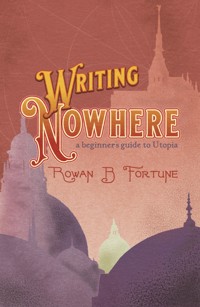
The alleged death of utopian fiction and its eclipsing by dystopia is, Rowan Fortune, cogently argues, grossly exaggerated. Reprising elements of their doctoral thesis on utopian fiction, Fortune provides not only an extensive chronology of utopia, but also gives writers a sense of the many flavours of this genre, arguing that its range and reach is as vibrant as ever and all the more urgent. This is a genre intensely in communication with itself, so that one cannot understand the richness of the tradition (nor what makes a good dystopias) without a broad reading. Morris makes less sense without Bellamy, Bacon without Andreae, and so on … Maintaining a dialogue that goes back to the beginnings of modernity (to More's moral objections to the emerging class forces of his period, the violences of the enclosures and the new secular form of rulership) Fortune demonstrates in their lively and densely packed analysis how concerns about the ordering of a good society; of women's suffering the patriarchy; of people oppressed by racism; of ecology … are at the heart of utopian discourse. Moreover, Writing Nowhere, establishes not only that utopia still has much to say, but that its ability to straightforwardly convey the most intimate values of the author is a sign of the genre's essential courage. And, in terms of narrative, there remains room to innovate so that, 'The best way to read utopia is to read with the intention of writing your own.' Writing Nowhere will guide you in this adventure. Whether you write short stories or novels, it will set you on the road to engaging powerfully in the utopic tradition, inspiring you to respond to it directly in what you write.
Sie lesen das E-Book in den Legimi-Apps auf:
Seitenzahl: 170
Veröffentlichungsjahr: 2020
Das E-Book (TTS) können Sie hören im Abo „Legimi Premium” in Legimi-Apps auf:
Ähnliche




















Contents
Title Page
Copyright
Acknowledgements
Forward
A Brief Account of Nowhere
Chronology of Utopia
Writing Nowhere
Introduction
Caves, Islands and Planets
Strange Futures and Stranger Pasts
Visitors and Utopian Subjectivity
Utopian Bric-à-brac
The Ends of Utopian Imagination
Beyond Cockaygne: utopian jouissance
Letters from Nowhere: A Short Story
Writing Prompts from Nowhere
In my Utopia...
Ten Prompts
Appendices
A Timeline of Nowhere
Recommended Reading
Notes
Writing Nowhere
A Beginner’s Guide to Utopia
Rowan B. Fortune
Published by Down Deep Books
an imprint of Cinnamon Press
Meirion House
Tanygrisiau
Blaenau Ffestiniog
Gwynedd, LL41 3SU
www.cinnamonpress.com
The right of Rowan B Fortune to be identified as author of this work has been asserted by him in accordance with the Copyright, Designs and Patent Act, 1988. Copyright © 2020 Rowan B Fortune
Ebook ISBN: 978-1-78864-802-8
British Library Cataloguing in Publication Data. A CIP record for this book can be obtained from the British Library.All rights reserved. No part of this publication may be reproduced, stored in a retrieval system, or transmitted in any form or by any means, electronic, mechanical, photocopying, recording or otherwise without the prior written permission of the publishers. This book may not be lent, hired out, resold or otherwise disposed of by way of trade in any form of binding or cover other than that in which it is published, without the prior consent of the publishers.
Designed and typeset by Cinnamon Press.
Cover designed by Adam Craig. © Adam Craig.
Cinnamon Press is represented in the UK by Inpress Ltd and in Wales by the Books Council of Wales.
Acknowledgements
I would like to thank Professor Ian Gregson, Professor Helen Wilcox, Dr Kachi Ozumba, Dr Zoë Skoulding, my wife Nina Anana, Dr. Angela Cotter, my mother Dr Jan Fortune and friend Ann Drysdale for their contributions and assistance to the portion of the text extracted from my PhD. For their contributions to my utopian timeline, I thank David Pavett and Liza Daly. I would like to thank Adam Craig for helping to format this ebook. All errors contained within the text are entirely mine.
Forward
A Brief Account of Nowhere
Utopia is a double entendre: the Greek etymology (no place) and the homophone eu-topia (good place) play into its contested quality as a floating signifier.1 Utopia can suggest certain movements and fictions as well as anti-utopian rhetoric, such as in Marx’s comment that ‘Communism is for us not a state of affairs which is to be established, an ideal to which reality [will] have to adjust[…]'.2 The dialectical antonym of utopia, dystopia, is even more indefinite: a place, a bad place? Both utopia and dystopia open psychogeographical counterfactuals, alternative worlds—providing commentaries and experimental spaces for their readers. Both blur into one another; for instance, is Thomas More's Utopia3(1516) satirical, an anti-utopia prefiguring dystopia, or a blueprint? Is dystopia analogous to tragedy and utopia to comedy, or does this separation fail to recognise a more indistinct boundary—a Heraclitean unity of opposites? This ambiguity reaches through the practice of utopic and dystopic fictions.
The opacity of genres such as utopia and dystopia goes further. Fátima Vieira notes that utopia has spawned ‘words such as eutopia, dystopia, anti-utopia, alotopia, euchronia, heterotopia, ecotopia and hyperutopia’.4 There is a need, for the purpose of study, to give specificity to the concept by providing tighter definitions. However, before such a definition can be advanced, it is necessary to outline some of the limits and challenges presented by defining a literary genre.
Anis S. Bawarshi and Mary Jo Reiff define ‘genre’, including within the context of a literary tradition, as ‘a typified way of recognizing, responding to, acting meaningfully and consequentially within, and thus participating in the reproduction of, recurring situations’. While it is not within my scope to give an analysis of genre, it will become evident that my approach assumes a non-traditional perspective, understanding with Reiff and Bawarshi that genre encompasses
knowledge of what and whose purposes genres serve; how to negotiate one’s intentions in relation to genres’ social expectations and motives; when and why and where to use genres; what reader/writer relationships genre maintain; and how genres relate to other genres in the coordination of social life.5
Using examples from cross-genres, Margaret Atwood argues that ‘when it comes to genres, the borders are increasingly undefended, and things slip back and forth across them with insouciance.’6 I am unsure whether or not this is true, and if it is true whether it is newly so. Irrespective, for the purposes of this analysis it is useful to be more methodologically precise with a definition that limits the scope of what can be called a utopia.
Similarly, while intertextuality (a concept that informs looser conceptions of genre) is acknowledged in the background of any critical reading of the utopian tradition, it is not applicable to advancing a more precise study. Roland Barthes defines intertextuality not as an attempt ‘to find the “sources”, [and] the “influences” of a work’, but as the ‘anonymous, untraceable, and yet already read’7 network that encompasses all text. For Barthes intertextuality is the fact of every text existing in a continuum of texts, a totality that cannot be demarcated or fully mapped.
It is vital to have a working idea of what constitutes a utopia to meaningfully explore its history. Making allowances for Michel Foucault’s episteme, ‘the totality of relations that can be discovered’,8 relevant, intertextual material is inexhaustible for this (or any) genre. As Nicole Pohl describes utopia, it is ‘indebted to classical utopianism, early-modern travel writing, the pastoral/Arcadian tradition and finally Christian Chiliasm.’9 Beginning with More’s Utopia allows us to narrow our survey to something more manageable, but when it comes to providing a brief chronology of utopia I will also show that my choice of texts is not arbitrary. Before such a chronology, it will nonetheless be worth outlining some notable novels on the boundaries too—thereby sketching some ambiguous and adjacent genres, and suggesting that a genre, in the sense I am using it, is a helpful tool for guiding investigation and perhaps nothing more.
According to J. C. Davis, as summarised by Susan Bruce, a useful typology of five ideal-world genres can help us to identify the key features of the utopia. The main distinction is about how the author of a given story decides to negotiate the
gap between supply and demand. The Land of Cockaygne, he argues, assumes unlimited abundance in order to fulfil unlimited desire. The Arcadia fuses a less excessive natural abundance with a representation of a humanity less acquisitive and more easily satisfied than ‘real’ human beings would be. The Perfect Moral Commonwealth realizes its ideal through an idealization of the nature of humanity. In Millennial literature parity between desire and available material wealth is effected by a deus ex machina, whose intervention transforms both man and nature.10
Bruce summarises Davis’s fifth type as utopianism, in which organisation is privileged:
the utopianist devises bureaucratic and institutional systems in order to contain desire and transgression, and thus to apportion a limited supply of material satisfactions. (xiii)
One benefit of Davis’s approach to the genre, and to pursuing his fifth type of what I will coin ‘institutional utopia’, is to correct what Vieira identifies as a misconception, that utopia be equated with perfection.11 This is not without contention. Krishan Kumar, for example, argues that perfectibility is central to utopia, although he softens that view with a caveat on human nature; the type of perfection must be ‘qualified—but not too much—by something like the belief in original sin’.12 Whether ‘sin’ is conceived as the total depravity of Augustinian Protestantism or moderated by freewill in Catholic theology, it remains a substantive stipulation. Here again, institutional checks to human evil are considered paramount. Karl Mannheim thus offers an alternative to perfection and provides a more adaptable definition in which utopia merely eliminates ‘the order of things prevailing at the time.’13 Nonetheless, what Kumar’s thesis does usefully show is how ideal societies overlap:
Paradise is fused with the Golden Age; Cockaygne is a reproach to Arcadia while it borrows heavily from the Golden Age and Paradise; the Millennium is paradise restored; the ideal city draws upon the myths of ancient Golden Age civilizations.
All of these types have political dimensions, yet as Kumar’s thinking indicates, only the fifth category of utopia (institutional utopia) definitively addresses its audience through narrative: ‘Fictive elements no doubt have a role to play in these modes but in none of them is narrative fiction, as in the utopia, the defining form.’14 Atwood agrees with the importance of fiction for the utopia when she distinguishes between the genre proper and later novels that merely entertain utopian thought: ‘Ideas about—for instance—untried forms of social organization are introduced, if at all, through conversations among characters or in the form of diary or reverie, rather than being dramatized, as they are in the utopia and the dystopia.’15
Both Kumar and I locate the beginning of the genre as a meaningful tradition with More, but Kumar goes further. He denies any prior examples to More and adds the claim that the form is uniquely Western: ‘Utopia is a secular variety of social thought. It is a creation of Renaissance humanism.’16 Nonetheless, earlier non-European works, for instance Tao Yuanming’s poem ‘Peach Blossom Springs’, written between the third and forth centuries EC, complicate the Eurocentric picture. Yuanming’s ideal society has narrative, which means it meets Kumar’s criteria for belonging to utopia:
And the path they trod was covered with grass and deserted.
And the living they gain is by tilling the soil and reaping;
When the sun goes down they go to rest together.
Bamboo and mulberry blend to give them shade,
Beans and rice follow at seasons due.
From the spring silkworm they gather long thread,
At the autumn harvest there is no imperial tax.17
Although ‘Peach Blossom Springs’ is a fiction about a perfect society, its narrative is sketchy and it arguably fails to meet Davis’s criteria as it includes elements of Cockaygne, such as the eternally good harvests and convenient foliage. Moreover, since this essay begins with More, the predominant focus will be Western.
The working definition of utopia for the purposes of our critical discussion, then, is a fictional account of a society with limited resources that strives towards a social ideal. Without these stipulations many arguments could be made for including earlier texts: Plato’s Republic (c. BCE 380),18 Tacitus Germanica (c. 98)19 and Plutarch’s Life of Lycurgus (c. 100).20 St. Augustine’s City of God (c. 400)21and Aquinas’s commentaries on Aristotle (1272)22could be added, with Lyman Tower Sargent arguing that ‘Christianity was the fount of Western utopianism’.23 Quentin Skinner contends that More merely contributed to, rather than initiated, the broad Renaissance debate over the best possible commonwealth.24 In his biography of More, Peter Berglar looks at the writer’s formation and thereby lends credence to Skinner’s conjecture: ‘While still a student […More] lectured on St. Augustine’s City of God at St. Lawrence’s’.25
Introducing a caveat that would still include a range of utopias within the working definition, without making ‘utopia’ a ubiquitous and unwieldy category, Kumar similarly narrows the focus of utopian studies by beginning with More. Earlier texts constitute, in his view, ‘at most a portrayal of the principles of the ideal state, not an exemplification of those principles in action, in concrete institutions and ways of life.’26 Kumar demonstrates that the earlier texts foreshadow, but do not fully exemplify, the genre.
In continuing to delimit utopia for the purposes of my essay, Davis’s contribution is particularly pertinent to later science fiction. For example, the society of Iain M. Banks’s Culture series is not utopian in this sense as ‘the capacity for means of production […] exceeded every […] demand its not unimaginative citizens could make.’27 Post-scarcity novels, which picture societies removed from material constraints by magic or technology, could be said to comprise a genre with roots in Cockaygne myths and folk songs, for example ‘The Big Rock Candy Mountain’: ‘Where the handouts grow on bushes, / And you sleep out every night.’28 Utopia could be said to be a subgenre of post-scarcity myths, because it depicts ideal societies but with great limitations on the content of that depiction. Going further, the Cockaygne stories could be described as a more universal, basic idea about a land of plenty from which later, more specific utopia derives. Moreover, the post-scarcity genre can be used to explore interesting ideas in contemporary literature, such as the pitfalls of overabundance. In Samuel R. Delany’s Foucaultian Trouble on Triton: An Ambiguous Heterotopia (1976) ‘they made it so easy for you—all you have to know is what you want’.29 Nonetheless, difficulties arise precisely from the easiness such abundance affords. Still, as in the following dialogue from Star Trek,we see the Cockaygne genre of abundance circumnavigating problems that utopia constitutively confronts:
Keeve: We live in different universes, you and I. Yours is about diplomacy, politics, strategy. Mine is about blankets! If we were to exchange places for one night, you might better understand.
Picard: Mr. Data, see that the replicators provide a blanket for every man, woman, and child before nightfall.30
The character Keeve creates a distinction between the concerns of institutional organisation, relevant to utopias, and the limitless technological possibilities afforded to Picard by technology. The response given by Picard exemplifies that particular distinction between utopias and this other genre. That is, that the post-scarcity society can ignore social problems that utopias attempt to solve.
We frequently find that the creatures of science fiction have more to do with what could be called archetypes than with science. The archetype of the Golembecomes Mary Shelley’s Frankenstein; something like the dynamics of werewolves is replicated (if not also surpassed) by Robert Louis Stevenson’s Strange Case of Dr. Jekyll and Mr. Hyde (1886); ghosts become people’s digitally uploaded consciousness; monsters that filled medieval bestiaries31 become Kaijū; Blemmyes and Monopods become humanoid mutants, while demons are rendered malevolent AIs as in William Gibson’s dystopian Neuromancer (1984): ‘For thousands of years men have dreamed of pacts with demons. Only now are such things possible.’32 While the Renaissance utopian genre arguably dwindles, the older Cockaygne narratives flourish under a new guise. This suggests that utopia is a bounded historical (and therefore contingent) phenomenon within the scope of a more universal form of human imagining. There will always be imagined worlds without scarcity (at least, if we don’t create such a world), but utopias are given no guarantee of existing.
Despite generally not being considered utopia, science fiction overlaps stylistically with utopia in ways that are important to, and inform, my study here. The theorist of science fiction, Darko Suvin, identifies significant common ground between science fiction and a range of other genres in their reliance on cognitive estrangement. This is true of
[…] the classical and medieval "fortunate island" story, the "fabulous voyage" story from antiquity on, the Renaissance and Baroque "Utopia" and "planetary novel," the Enlightenment "state [political] novel," the modern "anticipation" and "anti-utopia."'33
Suvin derives the idea of cognitive estrangement from Bertolt Brecht's verfremdungseffekt and the Russian Formalist Viktor Shklovsky's idea of priem otstranenie. This technique ‘consists in turning the object of which one is to be made aware, to which one's attention is to be drawn, from something ordinary, familiar, immediately accessible, into something peculiar, sticking and unexpected’.34 This makes the reader critically re-evaluate the narrative’s content, which is necessary in novels of ideas, especially utopias.
Techniques such as defamiliarisation allow broader utopian themes to be addressed in speculative literature, themes that break the mould by using the fantastical or situating new societies in different times or distant places. Slavoj Žižek singles out Theodore Sturgeon’s More Than Human (1953),35 a story about misfits with superpowers forming a gestalt entity, as an example of an allegorical and utopic ‘community of freaks’.36 This arguably falls outside Davis’s criteria for ‘utopian’ writing as members of the parabolic community are inhuman in ways that liberate them from human social needs, but still does so in ways that explore the nature of what it means to be human.
Science fiction ‘utopias’ are therefore of limited reference as, similarly, are non-western currents in utopian fiction. Whilst Jacqueline Dutton’s overview includes: ‘the spirit of utopia (Ernest Bloch), the desire for utopia (Ruth Levitas), critical utopias and critical dystopias (Tom Moylan) and utopianism (Krishan Kumar).’37 These approaches lose the discriminatory advantages of the tighter definition I am outlining. This definition does not reflect any criticism of excluded works of literature, but merely focusses the essay to cover a more manageable field of texts.
The idea of the utopia as a post-apocalyptic genre furnishes other borderline cases: E. M. Forster’s The Machine Stops (1909)38 is a prescient look at environmental catastrophe and technological enslavement; John Wyndham’s The Chrysalids (1955)39 combines utopian and dystopian motifs; both Walter M. Miller, Jr.’s A Canticle for Leibowitz (1960)40 and Russell Hoban’s Riddley Walker (1980)41 look at how societies reconstitute histories after nuclear devastation, while Atwood’s three twenty-first century novels Oryx and Crake (2003),The Year of the Flood (2009)and MaddAddam (2013)42explore similar arenas. Dmitry Glukhovsky’s Metro 2033 (2005),43 Sheri S. Tepper’s The Gate to Women's Country (1988)44 and Mary Shelley’s The Last Man (1826)45are radically varied liminal examples of post-apocalypse fiction, but all are concerned with disaster and, pertinently, the inadequacies and dangers of ideal world projects.
There is not enough space, either, to reflect in depth on utopian movements or theories, both in terms of their texts and as a form of political practice, which constitute various related genres conveyed in different forms for conflicting ideologies: be that Republican, early Liberalism, Anarchism or those Engels dubbed utopian socialism.46 Thomas Hobbes’s Leviathan (1651),47 Gerrard Winstanley’s The Law of Freedom in a Platform Or True Magistracie Restored (1652)48and John Locke’s A Letter Concerning Toleration (1689)49 are political documents written in the aftermath of the English Civil War, which also produced literary utopias engaging in the same debates about legitimate governance, such as James Harrington’s The Commonwealth of Oceana (1656).50
Edmund Burke’s Reflections on the Revolution in France (1790)51espouses anti-utopian ideas against the change wrought by the Enlightenment. He responded to revolutionary terror by emphasising the need to conserve elements of the status quo to ward off social dissolution and violence. While Jean-Jacques Rousseau’s The Social Contract (1762)52and William Godwin’s Enquiry Concerning Political Justice (1793)53 take more progressive positions, Thomas Malthus objected to political idealism on the basis of overpopulation in his An Essay on the Principle of Population (1798),54 whichhelped to shape future utopian debate. For example, in Charlotte Perkins Gilman’s Moving the Mountain (1911) we learn how that society ‘improved the population and lowered the birth-rate at one stroke!’55
Political and social movements, such as the Arts and Crafts movement, can also be shown to influence literary utopias. The utopia expanded further in the nineteenth-century as many egalitarian movements appeared; Ricœur lists key leaders and thinkers as ‘Saint-Simon, Fourier, Owen, Proudhon’—to56 which one could add Marx’s anarchist rival in the First International, Mikhail Bakunin. They advanced ideas to radically restructure society, imbued with a sense that their dreams were realisable, emboldened by economic, social and technological changes. J. B. S. Haldane’s lectures Daedalus; or, Science and the Future (1924)exemplify how such techno-optimism eventually reached its partial terminus. Haldane tackles the ways in which we can adapt to technologies and broaches prospects that would inflect later dystopias: ‘Moral progress is so difficult I think any developments are to be welcomed which present it as the naked alternative to destruction, no matter how horrible may be the stimulus which is necessary before man will take the moral step in question.’57 These texts show that at no point does the debate around utopias settle, it evolved and adapted in a way that ignores genre distinctions. And even within, for example the nineteenth-century, the terms of the conversation changed radically. Referring to the British period after 1830, Walter Houghton observed:
The Utopian dreams of human perfectibility which had grown up in the eighteenth-century seemed on the point of fulfilment when the French Revolution broke out[,] had been undermined by the Reign of Terror, the dictatorship of Napoleon, the long years of war with the succeeding period of depression and social unrest, and by the speculations of Malthus.58
Étienne Cabet’s Voyage to Icaria (1840)59 andEdward Bellamy’s Looking Backward: 2000-1887 (1887)60




