


9,99 €
Mehr erfahren.
- Herausgeber: The History Press
- Kategorie: Geisteswissenschaft
- Sprache: Englisch
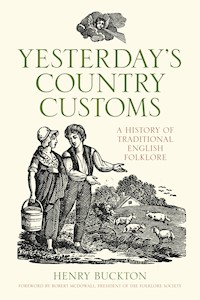
In England today we enjoy a rich diversity of folk traditions, many of which can trace their beginnings back hundreds of years. They stem from every phase of our antiquity and embody all the peoples who have traditionally enriched our culture. In this book we visit some of the best known examples, including mumming, cheese rolling, tree dressing, rushbearing, beating the bounds, flitch trials and Wassailing, among many other customs, festivals and traditions. Covering all aspects of English folklore and tradition, including myths, legends, traditional song and dance, games, seasonal events and calendar customs, this volume encompasses the history of many of England's best-loved folk traditions.
Das E-Book können Sie in Legimi-Apps oder einer beliebigen App lesen, die das folgende Format unterstützen:
Veröffentlichungsjahr: 2012
Ähnliche



















CONTENTS
Title Page
Acknowledgements
Foreword
Introduction
1 Hobby Horses
2 Hunting of The Earl of Rone
3 Cheese Rolling
4 Shrovetide
5 Unusual Sports and Games
6 Mumming
7 Straw Bears
8 Wassailing
9 Flitch Trials
10 Hocktide
11 Beating the Bounds
12 Tree Dressing
13 Jack in the Green
14 Rushbearing
15 Well Dressing
16 Fire Festivals
17 Bonfire Night
18 Guy Fawkes Carnivals
Featured Customs
Plate Section
About the Author
Copyright
ACKNOWLEDGEMENTS
I would like to thank the following individuals and organisations for their help in putting this book together:
Chapter One ‘Hobby Horses’ thanks to: Muriel Marrison; Phil Underwood, The Original Sailors Horse www.mineheadhobbyhorse.co.uk; Daphne McCutcheon, www.minehead-online.co.uk; and Sandy Glover.
Chapter Two ‘Hunting of The Earl of Rone’ thanks to: Barbara Brown, secretary of the Earl of Rone Council.
Chapter Three ‘Cheese Rolling’ thanks to: The Citizen; Paul Biggins, www.ecofocus.co.uk; Jane Harrad-Roberts Marketing Projects the Chester Food and Drink Festival; Cal Williams, www.randwick.org.uk; and Valerie Martin.
Chapter Four ‘Shrovetide’ thanks to: Lorna Dirveiks, secretary of The Friends of Atherstone Heritage; David Stowell; Stephen McKay; Michael Brace; and Andy Savage, www.derbyphotos.co.uk.
Chapter Five ‘Unusual Sports and Games’ thanks to: Richard Croft; Biff Raven-Hill, www.wartimehousewife.wordpress.com; and Steve Foster, chairman of Egremont Crab Fair and Sports, www.egremontcrabfair.com.
Chapter Six ‘Mumming’ thanks to: Peter J. Walls; Tom Hughes, Education Officer for Cheshire Museums; Will Riding; Pam Fray; and Colin Smith.
Chapter Seven ‘Straw Bears’ thanks to: James Yardley; Brian and Christine Kell; Peter Williams (Director of The Whittlesea Straw Bear Festival 2008-2011); From Whittlesey Straw Bear by George Frampton, Cambridgeshire Libraries Publications, 1989.
Chapter Eight ‘Wassailing’ thanks to: Glyn Baker.
Chapter Nine ‘Flitch Trials’ thanks to: Penny Hurley, Great Dunmow Museum Society; Catherine Metson; David Stone; and Peter Street, chairman of Dunmow & District Historical & Literary Society.
Chapter Ten ‘Hocktide’ thanks to: Dr Hugh Pihlens, Hungerford Historical Association, www.hungerfordhistorical.co.uk; Hungerford Virtual Museum www.hungerfordvirtualmuseum.co.uk; and Sylvia Breadmore, Clerk to the Town & Manor of Hungerford and Liberty of Sanden, www.townandmanor.co.uk.
Chapter Eleven ‘Beating the Bounds’ thanks to: Revd Grant Fellows; and Terry Warburton, MBE.
Chapter Twelve ‘Tree Dressing’ thanks to: Ed Scutt; Phil Knott; Rosie Evans, Arbor Tree Festival Committee; Julie Aalen, Weald and Downland Open Air Museum; Andrew Bain, vice chairman of the Bawming Committee; and Simon Garbutt.
Chapter Thirteen ‘Jack in the Green’ thanks to: Colin Bewes; Matthew Alexander and Roger Twitchin of Pilgrim Morris Men; Megan Taylor of Oyster Morris; Mike Riley of Mad Jack’s Morris; Alan Henderson of Brentham Society; Verne Sanderson, Operations Manager Festivals, Arts, Theatres and Events, Medway Council; Lisa Caleno, Senior Media Officer, Medway Council; Simon Kelsey; Gordon Newton; Tim Funnell; and Keith Leech for quotes from his book The Hastings Traditional Jack in the Green, published by Hastings Borough Council in 2008.
Chapter Fourteen ‘Rushbearing’ thanks to: Peter Thomas; Peter Ludlam, Sowerby Bridge Rushbearing Association; Pauline Journeaux, Rochdale Online; Garry Stringfellow; and Ann Bowker.
Chapter Fifteen ‘Well Dressing’ thanks to: Sir Richard FitzHerbert, www.tissingtonhall.co.uk; Glyn Williams; Ann Pocklington; Mrs Pat Swatton; Mrs Rita Walsh; and Chris Simpson, secretary of the Buxton Wells Dressing Festival.
Chapter Sixteen ‘Fire Festivals’ thanks to: Simon Reed, www.golowan.org; Michael Brace; Jack Gritton, www.westwitton.org.uk, www.burningbartle.org.uk.
Chapter Seventeen ‘Bonfire Night’ thanks to: Sian Riddle, Lewes Borough Bonfire Society, www.boroughbonfiresociety.co.uk; Lewis Clarke; and Peter Trimming.
Chapter Eighteen ‘Guy Fawkes Carnivals’ thanks to: Dave Stokes, publicity officer to Bridgwater Guy Fawkes Carnival, www.bridgwatercarnival.org.uk; Chris Hocking, director and trustee of Bridgwater Guy Fawkes Carnival; Shelly Ford, secretary for Gorgons Carnival Club; and Phil Williams.
Finally, I would like to thank Robert McDowall, president of The Folklore Society, for writing the foreword to the book.
FOREWORD
ALL PUBLICATIONS THAT stimulate interest in English customs past and present are welcome because they stimulate the public interest in folklore. Such publications are particularly welcome when they include descriptions of customs that are still celebrated.
Yesterday’s Country Customs is an enlightening and instructive collaboration by people who organise, participate in, or attend celebrations of country customs. Henry Buckton has assembled their narrative, thoughts and recollections in a thoughtfully presented, attractively illustrated book covering eighteen major country customs. A chapter is devoted to each of the eighteen customs featured in the book. The customs range from well-known traditions such as ‘beating the bounds’, ‘Bonfire Night’ and ‘tree decorating’ to more obscure customs such as ‘Hunting the Earl of Rone’ and ‘flitch trials’, which are now confined to a few or single location. Even within the chapters covering the more popular themes, those familiar with yesterday’s country customs will find one or two accounts of customs and practices from less familiar sources. The featured customs and contributors are well documented for those who wish to pursue more detailed research on particular themes or customs.
Yesterday’s Country Customs, like other publications in its genre, is an important contribution to maintaining the general public’s awareness of the importance of country customs to folklore and folklore traditions in England. The book rightly confines itself to English country customs, which have different roots to those of its Celtic neighbours, where customs and traditions often reflect broader national, historical or political themes of struggle and strife.
This book works on a number of levels. It is an English tour guide to country customs. It is a singular example of how information on disparate customs from informed people and groups, who organise and participate in country customs, can be transformed into a well-constructed book. The book is instructive to those who have passing interest in customs and folklore, and to those who have a more detailed knowledge of English country customs and folklore. I commend the book to a wide readership.
Robert McDowall
President, The Folklore Society
INTRODUCTION
IN ENGLAND TODAY we enjoy a rich diversity of folk traditions, many of which can trace their beginnings back hundreds, if not thousands of years. In fact in some ways they are a living semblance of the nation’s history. They stem from every phase of our antiquity and embody all the peoples who have traditionally enriched our culture, from the Celts to the anoverians. They encapsulate into the nation’s popular psyche some of the greatest moments from our past, and celebrate best-loved heroes or infamous villains.
In this book we visit some of the best-known examples, which are regularly attended by thousands of people. Some of these are now regarded as national, rather than local customs and draw supporters from around the country and indeed throughout the globe. Few of them have a clear definition and in many cases, scholars argue as to their origins and purpose.
As well as experiencing the way in which these customs are observed today, we look back at their histories to try and discover how and why they might have begun, and how they have evolved over the intervening centuries into colourful glimpses of England’s past.
The book is largely written with the help of people who either run these celebrations, or have been involved with them over the years. Its title, Yesterday’s Country Customs, might seem slightly contradictory, as all of the events covered are very much alive and kicking today. However, the majority of them are revivals that try and recreate celebrations of the past. Nor are they only celebrated in the countryside, as some of them take place in towns and cities. That said, when most of these customs were first practised, even the most urban spot in the country was a small rural outpost. Collectively, these and many other similar events have contributed to the unique character of the English people and provide a tangible link to the way our ancestors both lived and celebrated.
Henry Buckton, 2012
1
HOBBY HORSES
OUR JOURNEY THROUGH some of England’s quintessential folk customs begins on May Day in the Somerset coastal town of Minehead, where Exmoor sweeps down to meet the sea. Townsfolk slumbering in their beds are rudely awoken by the sound of beating drums and musicians, as a Hobby Horse makes its way to a crossroads on the edge of town. A Hobby Horse, or ’Obby ’Oss as they are pronounced in some places, will often make an appearance in other parts of the country as a character within other rituals, but in one or two locations, including Minehead, they are the central feature of their very own festival.
For some people, it has to be said, it is a particularly rude awakening, as they may not have been in bed for that long. This is because the festival actually begins on the night before May Day and some of the revellers are known to drink long into the small hours of the morning. The night before May Day is known as ‘Show Night.’ The festival always begins on the eve of May, unless it falls on a Sunday, in which case it is held on the Saturday. It then goes on for the next four days and, during the final night, a ceremony takes place called the Bootie.
But, like all ancient festivals, how did this custom originate and what does it all mean? The answer to this question, similar to most of the other ancient ceremonials we shall observe, is that we simply do not know. What we do know is that May Day has been celebrated as a festival in Minehead since at least 1465. The first recorded mention of the Hobby Horse comes from a ledger at Dunster Castle dated 1792, when it was invited to dance before the lord and lady of the manor and paid five shillings for its performance. Minehead is an ancient town whose lifeblood has always been the sea, where much of its trade came from South Wales on the other side of the Bristol Channel. From here commodities such as coal, fish, butter, wool, sheep and cattle, would all have been ferried and unloaded in the harbour for distribution around southern England.
In this picture showing a Sailor’s Horse on the Quay at Minehead, Richard Martin is pictured with the moustache and cap to the right of the accordion player. Mr Martin, who lived in the tall house to the left of the picture, was the keeper of the Hobby Horse for many years. He was the great uncle of Muriel Marrison, who is the girl front right, with her hand on the smaller child’s shoulder.The photo dates from the early 1920s. (Courtesy of Muriel Marrison)
There are various trains of thought as to the origins of the Hobby Horse festival. One tradition claims that it dates right back to the time of the Vikings, when the Hobby Horse was regarded as a way of frightening off would-be invaders as it pranced and cavorted along the shore. Another suggests that it commemorates the wreck of a sea vessel at some juncture in the town’s distant past. Another that it recalls the entry of a phantom ship into the harbour which, in true Marie Celeste style, had no crew or captain aboard. It has even been suggested that it was brought back from Africa by Somerset sailors, as its mask and costume bear striking similarities to those worn by dancers from various tribes in both west and east Africa. It is interesting that most of these claims associate the custom with the sea, although one conjecture attributes it to the May King, while others claim it to have a pre-Christian pedigree due to the fact that horse deities were worshipped in Celtic society, such as Epona. Even though the word ‘Epona’ was Gaulish for ‘Great Mare’, the goddess was more likely to have been the lady who sat on the horse, rather than the actual animal itself. Her role as the protector of all equestrian creatures was adapted by the aRomans to be a goddess that looked after the welfare of their cavalry. But whatever its origin, the bottom line is that the visit of the Hobby Horse is supposed to bring good luck to the town, and the people of Minehead itself certainly seem to favour the assumption that the original nag fought off the rampaging Danes.
At Minehead there are in fact three Hobby Horses, each of which is accompanied by its own groups of musicians, who play side drums, accordions, or squeezeboxes. These musicians perform traditional tunes handed down through the generations. The three horses are the Original Sailors Horse, the Traditional Sailors Horse, and the Town Horse. They are shaped almost like boats, prompting some people to wonder whether at one time they were in fact intended to represent sea-faring craft, alluding to the town’s early dependence on the sea, rather than simply representing horses.
These boat-shaped constructions have wooden frames that are pointed and slightly built up at either end. The top part is covered by ribbons and strips of fabric and the face of the dancer is obscured behind a mask attached to a tall, pointed hat. The bottom part of the structure is covered by a long, flowing, fabric skirt, which is brightly coloured with rows of painted roundels. Attached to the horse’s rear is a long rope, which is supposed to be its tail. The whole structure is then carried on the shoulders of the dancer by using straps, and as he swings and swaggers through the streets, the skirt appears to glide effortlessly above the road surface like some spectral apparition.
This photograph, dating from the early 1920s, shows a little Hobby Horse that Richard Martin made for the children of Minehead, in the hope of inspiring them to enjoy and carry on the old tradition. Here the children are learning how to take part in the ceremony known as the Bootie. (Courtesy of Muriel Marrison)
For the following narrative we follow the custom from the perspective of the Original Sailors Horse. On the eve of May Day the festivities commence from the quay outside the Old Ship Aground pub at around 6 p.m. The Original Sailors Horse and its retinue, wearing white peak caps, begin to wind their way through the town in search of charitable donations in aid of Mencap and the RNLI. Occasionally, during this progress, the horse might trap an unsuspecting bystander against a wall and then butt them with its prow. For young children this can be quite a terrifying sight, and even adults can feel intimidated by the antics of the rampant beast. However, it does have a gentler side, especially where women are concerned. Having suitably cornered a lady onlooker, it is known to dip its head and tickle her with a feather that protrudes from atop the mask. But what the horse is really hunting for are people who fail to give a donation. These he will single out and, after turning sharply around, the horse will attempt to lash them soundly with its rope tail. The attendants also go among the crowd to collect money and, when the party eventually reaches the Hobby Horse Inn on the esplanade, they all stop for a well-deserved drink, which usually turns into several, as the opening act of this annual celebration draws to its conclusion.
On May Day itself, the Original Sailors Horse starts at the quay at 5 a.m. then goes through the Old Town, arriving at Whitecross by 6 a.m. Legend says that a Dane was killed here in ancient times. The other Minehead horses also get to Whitecross at roughly the same time and they all dance – not fight as some sources suggest.
The Town Horse is a revival from about 1976, which is accompanied by a group of acolytes known as ‘Gullivers’, who are dressed similarly to itself but without the large boat-shaped frame. One local story tells how a man was killed by Gullivers early in the nineteenth century and since then the Original Sailors Horse has nothing to do with them, its representatives maintaining that they never will.
Eventually the Original Sailors Horse bows three times and then returns through the town to the quay. In the evening it processes to the nearby medieval village of Dunster, with its famous market place and castle. At the castle it performs its customary dance, a ritual dating back to at least the aforementioned ledger of 1792. It then comes back to Minehead, collecting further donations along its route.
On 2 and 3 May the celebrations are repeated as the horse party rises early to embark on another spree of merriment and mayhem. Traditionally, on 2 May, the Original Sailors Horse will visit the village of Alcombe, where the local children come out to be chased. Far from running out of steam, the festival gains momentum, with the final evening particularly noted for its boisterousness. This of course is Bootie night, when the horse starts out from the quay at around 6 p.m. and winds its way via Wellington Square and Bampton Street to a part of the town called Cher, of which Minehead resident Daphne McCutcheon explains:
The festivities last till the third day of May and finish at the top of Cher steep in Minehead, where they perform the Bootie. This is where they grab an unsuspecting person who has not contributed a donation and hold him lengthwise in front of the horse. The horse then rises up and down above him. He is then dropped and has to scuttle off before the horse swings round and catches him with its tail.
Another annual ‘Obby ‘Oss festival occurs a little further along the coast in the north Cornish town of Padstow, where the festivities begin at midnight on 1 May. May Day has been celebrated at Padstow since at least the sixteenth century, although the earliest known record of its Hobby Horse dates from 1803. Again, there are two separate horses here, known as Old ‘Oss and Blue Ribbon ‘Oss. Before these make their appearance, the town is dressed with flowers and flags and unaccompanied singing is performed around the port, starting at the Golden Lion Inn. Each horse has a stable from which it emerges at the start of the festival and retires at the end of the proceedings.
Several of the customs we shall study are unequivocally allied to bouts of heavy drinking by those involved. Because of this they present us with some of our most vivid links to a merry England of old, when people drank to let off steam during their well-deserved and infrequent holidays. The fact that festivals often started and finished at alehouses added to the problem. But it was this very habit of drinking, or rather the rowdiness that accompanied it, that almost brought the curtain down on some of these ancient festivals, as a terrible pestilence swept through the land known as ‘Temperance’. During the Victorian age, sombre leaders of Church, politics, industry and social reform, bemoaned the evils of alcohol and strived for what they termed a ‘temperate society’. The two Hobby Horses at Padstow are a surviving reminder of this episode in our history. At one time there was only one horse, but in the late nineteenth century the town’s Temperance movement introduced its own Horse, as an attempt to discourage onlookers from drinking. Symbolically, the ‘Old ‘Oss is stabled at the Golden Lion Inn, while the Blue Ribbon ‘Oss finds stabling at The Institute.
Emerging from their stables, the two Hobby Horses dance around the town, led by their own acolytes called ‘Teasers’ and accompanied by a procession of complimentary dancers and musicians playing drums and accordions, often numbering several dozen. The Hobby Horse costumes are far less grand than those used at Minehead and are little more than a gruesome mask attached to a tall, pointed hat, and a skirt of black shiny material that hangs down from a circular frame to about knee-height. This skirt is used to good effect to trap young maidens as they pass through the town. Protruding from the front of the frame is a small horse’s head with snapping jaws made of wood, and a long flowing mane. At the other end of the horse there is a small tail made of horsehair. The hat and other accoutrements adorning ‘Old ‘Oss are coloured white and red, and its supporters wear red scarves to illustrate their allegiance. The Blue Ribbon ‘Oss on the other hand is decorated white and blue, with its supporters following suit. During the day a number of junior or Colt ‘Osses also appear in their own May Day parade, operated by children, and at some point in the late afternoon, ‘Old ‘Oss and Blue Ribbon ‘Oss meet at the maypole to forget their historic differences and dance together.
Of course in its most basic form a hobby horse is a child’s toy. Just as children today pretend to drive cars in order to emulate their parents, in olden days when most transport was by horsepower, children pretended to be adults by riding a hobby horse. For poorer children this would normally be a stick with a carved wooden head, while for the elite brood of society, these could have been quite sumptuous, with stuffed fabric heads, reins, manes, and perhaps even saddles.A deluxe model might even have had little wheels to help it along the path. This toy was also sometimes referred to as a ‘cock horse’ as in the nursery rhyme: ‘Ride a cock horse to Banbury Cross, to see a fine lady upon a white horse.’
Banbury is a town in Oxfordshire whose crosses were famously destroyed on 26 July 1600 by Puritans, who adhered to strict religious and moral convictions. Old-fashioned customs and revelry were considered ungodly, so were definitely ‘out’. There were three crosses in Banbury: The High Cross, The Bread Cross and The White Cross, and it was not until 1859 that a new cross was built in the town centre to commemorate the marriage of Princess Victoria to Prince Frederick of Prussia. Princess Victoria was the eldest daughter of Queen Victoria and Prince Albert, who went on to become a queen and empress in her own capacity. In 2000, to celebrate the 400th anniversary of the destruction of their crosses, someone had a brainwave to capitalise on the town’s connection with the old nursery rhyme, and the Hobby Horse Festival was born.
Unlike at Minehead and Padstow, the Banbury festival would not simply feature a few rival horses, but dozens. In fact, the festival became a celebration of animal disguise costumes, both in England and around the world. It was a great success and has been going strong annually ever since, and is usually held over the first weekend in July. The festival now lasts for three days from Friday to Sunday, culminating in a grand civic procession through the town led by the town’s mace-bearer, going from the Town Hall to the People’s Park, via Banbury Cross. At the park there is an afternoon of fun and games as part of what is called Town Mayor’s Sunday, which includes mass hobby horse racing.
To further capitalise on the town’s association with the nursery rhyme, a bronze statue of the ‘fine lady upon a white horse’ was unveiled by Princess Anne in April 2005, just yards from the present Banbury Cross. It was designed by Andrew Edwards, Carl Payne and Julian Jeffery of Artcycle Ltd. Nobody really knows who the fine lady was, although her most likely identity was a member of the family that lived at nearby Broughton Castle. Today though, during every annual festival, people from all around the world will ride their cock horses to Banbury Cross, to see this fine lady upon her white horse. And they do come from all around the world, as the Banbury Hobby Horse Festival has already established itself as a focal point for followers of this ancient art.
The new statue of the fine lady upon a white horse at Banbury in Oxfordshire, which was unveiled by Princess Anne in 2005. In this picture at least two of the horses were made by Eton College, originally for a theatrical event. These are the white horse far left and the black horse in the centre. (Courtesy of Sandy Glover)
Traditional and well-known hobby horses have been attracted to the festival since its inception. These have included Sam, a horse belonging to the Ilmington Morris Men from south Warwickshire, which is reputed to be over 100 years old. The horse is said to have been made in 1899 by a certain Edwin Hancox of Stratford-upon-Avon and was introduced into Ilmington tradition by one Sam Bennett. Then there is Hob Nob, the Salisbury civic dragon paraded by Sarum Morris; and Cobb’s Horse of the Adderbury Morris Men. Even Minehead’s famous creations have made appearances, first visiting in 2001.
Hooden Horses from Kent also make regular appearances. These originated from an area around Folkestone and Whitstable during the nineteenth century. A horse’s head carved out of wood is affixed to the top of a four-foot pole, and then paraded out to big houses just before Christmas. They were made by carters and ploughmen, and the person carrying the pole would be hunched beneath hessian sacking. The horse’s head had jaws that could snap together when a cord was pulled. At each stop a short play was performed to the gentry and their anticipated reward was either money or drink, both appreciated at a time of year when farm work was in short supply.
In Cheshire, there was a similar custom called hodening, when a real horse’s skull, the jaw of which was wired to clack open and shut, was mounted on a wooden frame and carried from door to door at Christmas by a person hidden beneath a cape. And in South Yorkshire and Derbyshire, around Christmas and New Year, groups of men would perform a drama in private houses and pubs, based on an old folk song entitled ‘The Old Horse’, during which they would be accompanied by a hobby horse called ‘Owd ‘Oss. This was another real horse’s skull with snapping jaw, which was painted black and red and mounted on a wooden pole also carried by a man concealed beneath a cloth. This custom was very popular in the area around Dore in the late nineteenth century and persisted until at least the 1970s.
As well as these traditional hobby horses, every year the competition is open to adults and children alike to design new costumes, which really help to give the Sunday parade a carnival atmosphere. New designs have included dragons, elephants and unicorns. Another popular addition to the festival are the floral horses instigated by the Banbury in Bloom committee. As well as the costumes, the festival now includes street theatre, morris dancing, workshops, and the Feast of the Beasts, which is a gathering in the Town Hall on the Saturday evening where festival participants enjoy a meal and drinks, followed by a ceilidh and a chance to entertain and be entertained by their fellow creatures.
Of course no Banbury Hobby Horse Festival would be complete without an appearance by the fine lady herself, and every year since the start of the festival she has helped to lead the Sunday procession, although with the five o’clock stubble quite apparent on the face of the rider, she is distinctly more ‘rough gentleman’ than ‘fine lady’!
2
HUNTING OF THE EARL OF RONE
FOR HUNDREDS OF years a hobby horse has been an integral character within another strange custom that takes place annually at the village of Combe Martin on the north Devon coast, near Ilfracombe. This custom, occurring over the four days of the Spring bank holiday weekend at the end of May, is called the Hunting of the Earl of Rone. Unfortunately for the luckless earl in question, his fate never changes, as each year he meets a violent and soggy end.
The festival opens on the Friday evening in Holdstone Way, where villagers, many dressed in period costumes, assemble before scouring the streets in a vain attempt to seek out the infamous fugitive known as the Earl of Rone. The period represented in these costumes is very much open to interpretation and in recent years they have ranged from Tudor to Victorian, although many women simply wear timeless rustic shawls and bonnets, often adorned with floral crowns. The official line from the Earl of Rone Council is that there are no rules as to what people can or cannot wear, ‘although trainers, jeans and back-packs get close to prohibition’.
The festival is run by a council of villagers from Combe Martin, although the citizens of other local villages, such as Berrynarbor, Trentishoe and Kentisbury, are encouraged to participate. However, if they do, they are expected to make an effort in terms of their attire and should at least attempt to wear something regarded as fitting the occasion. Any other visitors, not of local origin, are also welcome to come along and spectate.
Also hunting the earl during this elaborate mumming are the Hobby Horse, the Fool, and a troop of Grenadiers. In appearance, the Hobby Horse is a cross between those at Padstow and Minehead. It has the hooped frame reminiscent of the former and the skirt is punctuated with the brightly coloured roundels of the latter. It also wears a gruesome mask beneath a conical hat, and is armed with an instrument called a ‘mapper’. This is the shaped representation of a horse’s head complete with snapping jaw. It is quite likely that this instrument acquired its unusual name through a clerical error in times past, so perhaps it should have been called a ‘snapper?’
The Fool is robed in a traditional white smock above leggings of coloured ribbons, topped by a be-ribboned hat, while the smartly dressed Grenadiers parade in scarlet tunics with gold facings and epaulettes. They also sport black breeches, white stockings, tall conical hats decorated with coloured ribbons, and carry muskets. The procession is also accompanied by a band of traditional musicians.
On the opening evening, once all the participants are duly gathered, they make their way down through the village as far as the Pack o’Cards Inn before ending the evening at the Castle Inn, having been unsuccessful in their quest. Here, a few welcome beverages help to soften their anticipated disappointment. The Castle Inn, coincidentally, is where the Hobby Horse is traditionally stabled, while the Pack o’Cards is worth visiting in its own right as one of England’s most unusual follies. This grade II listed monument was built to resemble a deck of cards and has four floors, each representing one of the four suits in a pack. There are thirteen doors and thirteen fireplaces on each floor, reflecting the number of cards in a suit – and so it goes on.
The following morning the adults have a chance to recover, as Saturday is Children’s Day and an opportunity for the young of the parish to dress up and perform their very own version of events. The junior party starts off from Combe Martin Primary School at 11 a.m. and makes its way to the beach, from where it progresses through the village, baying for the earl’s blood. However, their efforts are equally fruitless, as the cunning villain of the piece successfully eludes all pursuers.
The senior party takes to the streets again on the Sunday afternoon, after assembling at the Sandaway Holiday Park on the Ilfracombe road at 1.30 p.m. From here they proceed to the beach and commence yet another sweep of the village at around 2 p.m. This time their search is more thorough, as they venture into back alleys that they might have missed on their previous sortie. Nevertheless, they still return to the Castle Inn empty handed, having failed to apprehend their quarry yet again.
The earl’s inevitable capture finally takes place on the bank holiday Monday after the hunting party, led by the Grenadiers, sets off at 6 p.m. along Wood Lane bound for Lady’s Wood. It is here, concealed among the foliage, that the outlaw is eventually discovered and taken into custody. He is attired in a smock frock padded out with straw, wears a monstrous black, white and red mask, and has a string of twelve hard sea biscuits hanging around his neck.
From Lady’s Wood the prisoner is bundled back to the road, where the party is reunited with the Hobby Horse and Fool. He is then mounted, back to front, on a real donkey and paraded through the village towards the sea. The animal is decorated with flowers and also wears a necklace of twelve sea biscuits. Along the route the earl is frequently shot by the Grenadiers, and falls wounded from his mount. Thereupon he is revived by the Hobby Horse and Fool, remounted on the donkey, and carried ever onwards towards his fate.
As the party passes a house called Lynton Cottage, they observe a custom within the custom, for it was here that, during the celebrations of 1837, one of the participants, a Mr Lovering, fell from the steps and broke his neck. In commemoration, the modern-day procession passes the house in silence.
On reaching the Pack o’ Cards the party stops to enjoy refreshments, before finally arriving at the beach just before sunset, where the earl – not having received any form of trial – is executed by firing squad. This time he is not revived and the Grenadiers throw his body unceremoniously into the surf.
It is hard not to feel a degree of pity for the tragic and, in some ways, pathetic figure, on which the people of Combe Martin unleash their disfavour. But who was the Earl of Rone and why does his semblance deserve to be treated with such brutality and with a complete lack of compassion?
Local legend claims he is Hugh O’Neill, Earl of Tyrone, who fought against the Tudor re-conquest of Ireland in the Nine Years War, during the latter part of Queen Elizabeth I’s reign. In 1607, several years after James I had ascended to the throne, as a political refugee O’Neill was forced to flee the country with his family and retainers. The custom suggests that he was shipwrecked in a local bay called Raparee Cove and subsequently hid out in Lady’s Wood, surviving only on the ships’ biscuits he had procured from the stricken vessel that had disgorged him on to the English mainland. This explains both his shabby appearance, quite unbefitting of nobility, and his curious diet. It is interesting to note that there is no mention or involvement in the custom of any other members of his party. Do we assume, therefore, that all others perished in the treacherous waves of the Bristol Channel?
O’Neill himself, the story says, was eventually captured by a party of Grenadiers sent from Barnstaple after receiving intelligence as to his whereabouts. However, there is no actual historical evidence to prove that he floundered in North Devon at all, and in fact his party is known to have successfully reached the shores of Europe, eventually Spain, in which country he lived out the rest of his days. So why O’Neill should be associated with the custom is an intriguing mystery. The Earl of Rone Council offers the following explanation:
The Earl of Rone is frequently shot from off his mount, only to be revived by the Hobby Horse and the Fool. (Courtesy of Earl of Rone Council)
Having received no trial, the Earl of Rone is executed by firing squad above Combe Martin beach. (Courtesy of Earl of Rone Council)




