


Erhalten Sie Zugang zu diesem und mehr als 300000 Büchern ab EUR 5,99 monatlich.
- Herausgeber: Editions Parole
- Kategorie: Geisteswissenschaft
- Sprache: Französisch
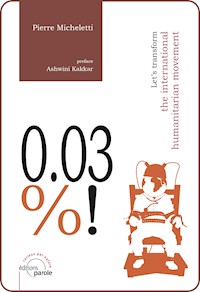
0,03 % ! Pour une transformation du mouvement humanitaire international, English version. This book examines the humanitarian movement, its history, its actors, the difficulties that are part and parcel of its deployment in complex environments, as well as the international relations in which it is the “David” alongside the “Goliath” states facing it. The author aims to analyse how the nature of today’s wars and the actors in them differ from those seen by Henry Dunant, founder of the International Red Cross, and from those that prevailed in 1945 when the United Nations was created. Once the challenges impeding the major NGOs’ ability to intervene in armed conflict zones have been highlighted, this book will suggest ways the situation might be transformed so that the main pitfalls can be avoided, and humanitarians can continue their crucial work in a safe and ethical manner.
ABOUT THE AUTHOR
Pierre Micheletti is a doctor and a graduate of the École des hautes études en santé publique (prestigious school of public health). He first worked abroad in 1985. In 1987, he joined Médecins du Monde as head of mission in Guatemala. He was appointed director of programmes in 1996 and was elected president in 2006, a position he held until 2009. Since 2009, he has been teaching at the Grenoble Institute of Political Studies, where he co-directs the MA in International Organisations and Policy, and at the Grenoble medical school, where he set up and directs the Health-Solidarity-Security Diploma. In 2014, he joined the board of directors of Action contre la Faim, of which he was elected president in 2019. He has written numerous articles for the French media, in particular as a contributor to Le Monde diplomatique.
Sie lesen das E-Book in den Legimi-Apps auf:
Seitenzahl: 228
Veröffentlichungsjahr: 2021
Das E-Book (TTS) können Sie hören im Abo „Legimi Premium” in Legimi-Apps auf:
Ähnliche

















◦◦◦
ISBN : 978-2-37 586-110-3
© 2021, Éditions Parole
Groupe AlterMondo 83500 La Seyne-sur-Mer
Courriel : [email protected]
www.editionsparole.fr
Tous droits réservés pour tous pays
◦◦◦
Pierre Micheletti
0.03%!
Let’s transform the internationalhumanitarian movement
Translated from the French by
AbleWord
“History is the art of reminding men and women of their ability to have an impact on society”1
1. Patrick Boucheron, professor at the “Collège de France”, chair in History of Western European Powers (13th-16th centuries).
Acknowledgements
A big thank you to all those who agreed to take part in the first proofreading of this book. Manuel Carrard, Didier and Martine Celle, Thierry Constans, Antonio Lopez, Nicolas Tariel and, of course, my favourite psychiatrist.
Capestere is not so far away, and Belle-Île is already in sight…
July 2020
Preface
By Ashwini Kakkar, chairman of Action Against Hunger-India and the AAH-network International Chairpersons’ Committee (ICC)
Even at great personal peril, Pierre has devoted the best part of his life to endeavours that uplift humankind in body and in spirit. He has generously shared these priceless learnings with his students at Grenoble and has effortlessly done so with the board and his colleagues at AAH/ACF in France and across the world.
In this fifth book, he has brought together humanitarian, social, economic, religious and political perspectives, in the current climate of growing inequalities and brought forth to the readers the distillation of his reflections on the path to transformation. Drawing lessons from the historic evolution of this sector, from the Red Cross, the UN, to the Geneva Convention, etc, the book takes us through movements born out of citizens’ counter-intuitive like Care, Save the Children and Oxfam, and complements the insight with real life examples like the unending war in Afghanistan, security issues in Nigeria, disease outbreaks in Guinea and Haiti, refugees’ issues in Syria, the Covid pandemic, etc. Based on the belief that victims are not good or bad, they are just victims, serious and at times counter-intuitive effort needs to be made to bring succour to the millions who depend on aid for their basic needs, indeed for their very survival: for water, food, shelter, clothing, medicine, education, etc., even more so in today’s conflict and Covid-affected times. In an interesting yet well considered proposition, Pierre makes the case that under the aegis of a neutral body like the UN, every country whose per-capita GDP exceeds US$12,000 per annum should contribute just 0.03% of its GDP to NGO causes. This would enable the neediest parts of the world’s population to improve their lives, making the entire world a much better place.
This may well be an idea whose time has come, as almost concurrently, the Indian government has introduced a CSR law ensuring that every company above a threshold level of profitability, should contribute 2.5% of its annual profit towards any cause of their choosing, out of a long list of causes. At the national level, this scheme envisages a similar level of contribution to the above proposal and seems to be working very well. Of course, the regular philanthropic endeavours of individuals, families, corporations, NGOs and others continue unabated alongside this Government effort.
While being critical of the role played by the global proliferation and sales of arms, we are encouraged to question why and when it became okay to kill innocent people and women and children, and now even humanitarians.
Another valuable line of enquiry is that in view of declining humanitarian immunity, exacerbated by the perception of the West, there may be a need for clear dissociation between governmental and NGO actors.
Equally, consideration should be given to exempting NGOs from counter-terrorism laws in order to promote neutrality. The stipulations of the 2013 Doctrine for Ransom as they apply to courageous NGO warriors and the ethical and judicial considerations applicable to refugees may also need to be revisited.
The bridge of trust as regards NGOs as both giver and receiver can only be strengthened by eliminating asymmetric manipulation and by ethically and sensitively delivering speedy, low-cost, high quality care. What is proposed is the use of the best available technological tools and techniques and best practice sharing, across the board. NGOs need to balance their independence with the regrouping of NGOs towards common goals.
The author’s insight, gathered over many years, across regions, from high-level strategy at Médecins du Monde (MDM) and Action Against Hunger (AAH), down to focussed execution at ground level, has given rise to unique and at times radical ideas for dealing with novel situations in our fast-changing world suffering from war, famine, terrorism, disease and the unfortunately inevitable Black Swan events.
What we used to be taught in our younger days, that “the world has enough to satisfy everyone’s need, but not everyone’s greed” is more relevant today, than ever before.
Ashwini Kakkar
Preamble
I am honoured that Ashwini Kakkar has agreed to write the preface to this book.
Apart from being proof of our strong friendship, this contribution underlines the importance of the alliances that exist between the organisations that make up the international network of Action Against Hunger, of which Ashwini has recently become the new president.
This preface, signed by the man who also heads an Indian NGO, bears witness above all to a major change that has taken place since the Second World War and to the birth of humanitarianism: undeniable political rebalancing and changing international relations. In this shifting world, the humanitarian movement cannot remain indifferent to the new realities. Economic and financial power, innovation, expertise, deployment capability and international solidarity are now more widely shared dynamics over which the OECD member states no longer have a monopoly.
These changes are at the heart of the analysis and proposals developed in this book. And as soon as we turn the first pages, Ashwini Kakkar’s words set the tone for us to explore the mutating international balance.
Pierre Micheletti
May 2021
Introduction
There is an intimate, historical and complex link between humanitarians and war. The International Committee of the Red Cross (ICRC) was set up in the aftermath of the battle of Solferino in Europe, in 1859, and was closely followed by the entire Red Cross and Red Crescent movement.
The Second World War led to the creation of the United Nations and, with it, the specialised agencies that today play a major role in crisis management.
In 1967, a powerful network of French International Non-Governmental Organisations (INGOs) emerged, from its birthplace in Biafra, Nigeria and its laboratory and then nursery, in Afghanistan, after the 1979 Soviet invasion.
This link between humanitarians and war has evolved over the years, as have borders, affected by decolonization or new armaments technology. The reasons for conflicts have changed too, as political, social, identity or religious demands have emerged along with the aspirations of peoples who feel they have been left behind in a globalised world.
Nation-states and their armed forces are no longer the only entities behind these demands, and the inherent violence. New combatants have emerged: freedom fighters, rebels and terrorists (depending on who is describing them...). When these new actors confront each other, humanitarian organisations have to keep adapting, as do the tools of International Humanitarian Law (IHL) which must constantly set effective limits on the way war is waged.
As with any historical process, these incessant changes bring tension, manipulation, resistance to humanitarian organisations and/or engender diverging interpretation and ambiguity. This ambiguity is rooted in how and why each type of humanitarian organisation was created, for example the Biafra war for the French NGOs.
Humanitarians thus evolve in a changing environment: they are mere components in an equation with multiple variables, and they find themselves facing a wide range of other pressures including those from political and military leaders, official economic stakeholders or those involved in organised crime.
One of these evolving factors is particularly important: the way “the Other” views them. The Other is the 27 million people who, in 2018, fearing for their lives, fled their homes and left their country to seek refuge in a third country.
It is the Congolese, Afghan or Somali migrants, asylum seekers, who are now being treated at the borders of Europe as if their respective homelands were now at peace.
The Other is the populations affected by the Ebola virus, for example in Guinea, West Africa, whose essential local customs, such as funeral rituals, are not always being respected.
The Other is the Haitian population from whom the foreign origins of the cholera epidemic were initially concealed, which made the consequences of the 2010 earthquake even more dramatic.
The Other is armed groups who might view the foreigners providing humanitarian aid in conflict situations as the hidden faces of their enemies, the “new crusaders” or precious goods whose price they will negotiate after kidnapping them.
The Other are Venezuelans who, as their country collapses, notice that their political leaders, including opposition politicians, are using humanitarian aid as a propaganda tool to strengthen their power.
But the Other is also, in Europe, governments that have lost faith in the law and now expect humanitarians to fall into line.
It is the French Minister of the Interior who lectures NGOs involved in helping migrants. It is the Italian government that refuses to give migrants rescued in the Mediterranean access to its ports. It is a part of the British political class that uses a sex scandal to weaken Oxfam.
So, despite their apparent solidarity, governments seem to wish to control the actions of NGOs, under the pretext of fighting terrorism.
And humanitarian leaders are trapped awkwardly between efficiency, independence, security and ethics.
To comprehend the context, it is important to know that there are different kinds of conflict, each with specific human, environmental and infrastructural consequences.
The Heidelberg Institute, one of the leading authorities in the field, describes conflicts from three perspectives: Which actors are involved in the conflict? What are the causes of and motives for the clashes? How do the warring parties behave and what impact does this have? The University of Uppsala (Sweden) has established a way of classifying armed conflicts according to death toll. It describes major armed conflicts as those in which the death toll exceeds 1,000 over a 12-month period, in a conflict in which at least one of the actors is a government.
Not every conflict can be called a war. A dispute between different parties might be worsened by economic pressure, threats of armed violence, sporadic incidents or even open armed conflict. A conflict is therefore a crisis in which violence is expressed. Peace does not, however, entail that all forms of conflict are excluded, and can be defined as: “a situation in which conflicts are played out without the direct use of weapons”2. For the International Red Cross and Red Crescent Movement, “peace is not merely the absence of war, but a dynamic process of collaboration between states and peoples based on freedom, independence, national sovereignty, equality, respect for human rights, and a fair and equitable distribution of resources to meet the populations’ needs”3.
The following descriptions and analysis focus on humanitarian action by ordinary people who have decided to get involved in INGOs. This broad family, with its many distinctive features, is a humanitarian movement which is referred to as a “civil society”. However, INGOs operate in conflict areas alongside the various specialised UN agencies, the other major players, each with a specific area of expertise. Finally, NGOs work alongside a third category of stakeholder, the International Red Cross and Red Crescent Movement. During a crisis, these different actors, each with its own logic, mandate, legal framework, financial resources and relationship to national and international political powers, constantly interact with each other.
Whatever the conflict, these different types of actor – the International Red Cross, UN agencies and international NGOs – base their legitimacy on a set of principles that they declare they share, and which guarantee that they intervene in conflicts without ideological, political or economic bias. They claim that they are able to work with the victims of violence in any circumstances, in the name of shared humanism, and remain strictly neutral towards opposing factions, without any form of distinction between victims and completely independent from the political or financial powers that may wish to influence them.
The ICRC is nearly 150 years old, the UN 75 and the main French humanitarian NGOs are between 40 and 50 years old, while the most active British charities (Care, Oxfam, Save the Children...) were set up between the First and Second World Wars.
So, what has become of their original aspirations? The founding desire, supported by committed citizens, to be able to provide assistance in any circumstances? In a completely independent manner? Is this really possible?
Simply asking these questions sows doubt in our minds.
This book examines the humanitarian movement, its history, its actors, the difficulties that are part and parcel of its deployment in complex environments, as well as the international relations in which it is the “David” alongside the “Goliath” states facing it. The author aims to analyse how the nature of today’s wars and the actors in them differ from those seen by Henry Dunant, founder of the International Red Cross, and from those that prevailed in 1945 when the United Nations was created. Once the challenges impeding the major NGOs’ ability to intervene in armed conflict zones have been highlighted, this book will suggest ways the situation might be transformed so that the main pitfalls can be avoided, and humanitarians can continue their crucial work in a safe and ethical manner.
2. Philippe MOREAU DEFRAGES: Les relations internationales, Seuil, Paris, 1993, 95 p.
3. Revue internationale de la Croix-Rouge, n° 750, Nov./Dec. 1984.
Part I The humanitarian constellation
Three categories of international organisation are involved in providing relief in conflict zones, and reinforcing the local solidarity that is characteristic of all human communities. It is essential to accurately describe and analyse the different types of organisation in order to clarify the notion of “humanitarian action”, which is often unclear to the public.
NGOs are private organisations such as associations, charities, federations, unions, institutes and other groups. They are not set up by governments, or established by government agreements. NGOs can play a role at an international level, but they do not necessarily have a formal international status or mandate upon which their existence or activities are based. An “intergovernmental organisation” on the other hand, is constituted on the basis of a treaty, by governments with common objectives, which have their own bodies each with specific functions. In addition to rules that define the structure of the organisation, IOs’ aims along with their members’ rights and duties, are clearly set out. An intergovernmental organisation may be universal in scope (such as the United Nations or the International Organisation for Migration) or regional (such as the Organisation of American States, the African Union or the Organisation for Security and Cooperation in Europe). Unlike NGOs, intergovernmental organisations by definition have a governmental mandate that specifies their purpose and activities. In addition, they enjoy what are known in diplomatic language as “privileges and immunities”.
The ICRC is hybrid in nature4. As a private charity, constituted under the Swiss Civil Code, its existence is not in itself based on a government mandate. However, its functions and activities, which aim to provide protection and assistance to victims of armed conflict, are mandated by the international community of States and based on international law, in particular the Geneva Conventions, which are among the most widely ratified treaties in the world. As a result, the ICRC, like any intergovernmental organisation, is recognised as having an “international legal personality” or status of its own. It benefits from privileges and immunities comparable to those of the United Nations, its agencies and other intergovernmental organisations, including exemption from tax and customs duties, inviolability of premises and documents, and immunity from jurisdiction.
Each category of humanitarian actor is itself composite and three types are active in the field, all driven by the same desire to prevent the most dramatic effects of war, to reduce damage to civilian populations, and to support the recovery and reconstruction that will inevitably be required in the aftermath of conflict.
Three different dynamics, three converging hopes: the International Red Cross hopes to humanise war by setting rules for and limits on the use of violence, the United Nations hopes to preserve peace and security by maintaining its capacity to negotiate between countries, and finally, non-governmental organisations hope to get citizens involved in concrete ways, providing relief through their commitment. Beyond their different legal status, their specific mandates, the types of skills they utilise and the financial resources they each have, these three families maintain close links with each other, which is essential for operational coordination and the need to obtain and manage, in a concerted manner, the funding required to respond to international crises. The three types of stakeholder also abide by a shared set of legal texts and fundamental principles. The ICRC has spearheaded these ties for the last 150 years.
4. Le statut du CICR: dans une catégorie à part 17-02-2004 by Gabor RONA. URL:https://www.icrc.org/fr/doc/resources/documents/misc/5wwhdp.htm. Consulted on May 11 2020.
1. Humanising war: The International Red Cross
A composite movement
Behind the Red Cross banner lie several different entities: the national Red Cross or Red Crescent societies; the ICRC, a supranational entity with a monopoly on enacting international law; and the International Federation of Red Cross and Red Crescent Societies (IFRC), a conglomeration of national Red Cross societies. Combined, the ICRC, national societies and the IFRC form the International Red Cross and Red Crescent Movement. Certain crises have generated tension between the ICRC, which resolutely refuses to bow to any political pressure, and the national Red Cross societies, which are often accused of colluding with their respective governments. The position of the German Red Cross during the Second World War or that of the Syrian Arab Red Crescent more recently, are examples of major failures by national societies to respect the fundamental principles of the movement. The 1997 Seville conference decided to split the fields of intervention between the Federation (IFRC), which now deals with post-crisis situations and natural disasters, and the ICRC, which deals with all areas of conflict because of its specific mandate to guarantee that the laws of war are respected.
Dunant at Solferino: how today’s IHL was founded
In the mid 19th century, a Swiss businessman, Henry Dunant, who in no way seemed destined for such a future, ended up raising people’s awareness of the horrors of war. In 1859, he witnessed the bloody battle of Solferino, which pitted the French and Sardinian armies against the Austrian forces, during the Italian campaign led by Napoleon III, and realised just how appalling a soldier’s fate was. He then set in motion a whole movement and the necessary organisational procedures required based on five ideas aimed at “humanising war”.
These ideas became the foundations of the newly formed Red Cross movement:
– The victims of both sides of the conflict must receive medical treatment, without distinguishing between the combatants.
– Equal treatment is justified by the necessary neutrality of the rescuer.
– In each country, the support of civil society should be sought to put pressure on governments to push for the implementation of such systems.
– This should result in the establishment of local “relief societies”, which can be quickly mobilised: these would become the “national societies” of the Red Cross and Red Crescent.
– An internationalist and universal vision should be sought “to not deprive ourselves of the support of those with another faith or philosophy”.
In 1875, Dunant’s determination and his decisive meeting with Moynier, a jurist, and Dufour, a former military officer, led to the creation of the International Committee of the Red Cross (ICRC), and with it the fundamental precept that war should be governed by the universal rule of law. This was to be the advent of International Humanitarian Law (IHL), which was then developed in successive layers, alongside the armed conflicts and technological developments of the time and the sheer genius of the human race in inventing new forms of violence and targets for it.
International humanitarian law is defined as the set of rules that aim to limit violence and protect fundamental human rights in times of armed conflict. “The law of war can only be a law of compromise between military necessity and humanitarian requirements.”5 Its objective is twofold: to limit the targets and forms of armed violence and to guarantee relief to the populations affected by conflict. Humanitarian law therefore essentially has a practical purpose in that it organises the two pillars of humanitarian action, assistance and protection.6
IHL’s scope of application is limited; it applies in times of international and non-international armed conflict alongside national law. Where there is a conflict between humanitarian law and national law, humanitarian law prevails.
The fundamental principle of humanitarian law is to limit the methods used in warfare. This limitation comes from a “principle of distinction” between, on the one hand, the legitimate objectives for attacking and, on the other, the property and persons that are protected from the effects of violence. This principle of distinction is combined with the principle of military necessity and proportionality to assess the legality of damage to persons and property.
Persons not directly participating in hostilities such as civilians, the wounded and prisoners, must be respected and may not be targeted or used in combat. Goods and services essential to the survival of the population (water, food, medical supplies, energy resources, etc.) must not be destroyed and when there is a shortage of supplies, those provided by impartial humanitarian organisations must not be withheld by the parties to the conflict.
International humanitarian law is therefore a set of norms aimed at regulating the use of force in armed conflict. Also known as the law of armed conflict, it was initially concerned with military matters. However, it has undergone several developments that have made it a branch of international public law. For a long time, it was limited to the “Geneva law” (law aimed at protecting people who were not or were no longer fighting) and the “Hague law” (law aimed at protecting combatants). Thanks to post-World War Two United Nations negotiations, it is now enriched with a “New York law”, which aims to provide a framework for the law of humanitarian action and to lay down the legal pillars and procedures in the event of non-compliance. The mechanisms for applying sanctions on those who hinder humanitarian intervention or commit war crimes, which had long been ineffective, have been considerably strengthened by the appearance of new international criminal courts. IHL rules are binding on all parties to the conflict even if they have not signed the conventions, whether they are states or non-state actors.
Putting the legal framework to the test: access challenges for humanitarians
The aforementioned operational legal framework is the result of 150 years of normative achievements which have, in stages, produced an evolving body of law.
On August 12, 1949, an improved version of IHL was passed when the horrors of the Second World War proved that the four Geneva Conventions produced since the ICRC was founded were insufficient. The first three of these conventions bring together the Geneva and Hague Conventions (dealing with the codification of military techniques), and the fourth addresses the crucial issue of protecting civilian victims of conflict. The two 1977 additional protocols filled the loopholes left by the four conventions, by examining the question of civilian victims without mentioning the enemy’s nationality. The issue of non-international conflicts was thus addressed for the first time. These texts establish the right to relief for different categories of civilian populations, through the intervention of impartial humanitarian organisations, and include criminal sanctions in the event that non-combatants are attacked or relief efforts obstructed. The emergence of these new rights inevitably led to the misuse by warring factions or governments of terms such as “restoring law and order”, or “deploying counter-terrorism”, to conceal the existence of armed conflict and thus avoid the application of humanitarian law. In particular, Article 3, common to the four Geneva Conventions of 1949, sets out a minimum framework applicable to conflicts that are not recognised as international. In particular, it refers to the right of the ICRC and other impartial humanitarian organisations to offer relief without this being considered as interference.
From 1977 onwards, following the publication of the two Additional Protocols and based on an analysis of the practices of state and relief actors, the ICRC launched a major project to codify customary humanitarian law. In 2005, it published 161 rules of customary humanitarian law applicable to situations involving international and non-international armed conflict. This work was followed by the drafting of reference documents which were presented at the 31st International Conference of the Red Cross and Red Crescent in 2011.7 Minimum humanitarian standards, referred to in common Article 3 of the Geneva Conventions, cover the following principles: the wounded and sick shall be gathered and cared for, impartial humanitarian organisations may offer their services to alleviate suffering without this being considered as interference, and certain acts against protected persons are prohibited at any time or place. These acts include murder, mutilation, cruelty, torture, etc., hostage-taking, humiliating and degrading treatment, as well as arbitrary arrest and extrajudicial execution.
Under international law, states have primary responsibility for meeting the basic needs of affected populations, based on the principle of sovereignty.8
According to IHL, if the population continues to be in need of support, humanitarian organisations may try to provide for them if the state is unwilling or unable to fully meet its responsibility. The provision of relief cannot then be considered as foreign interference in the internal affairs of the state, as long as the principles of humanity, impartiality and non-discrimination are respected. Humanitarian actors may therefore offer their services, but they are not obliged to do so.
In terms of the issue of prior consent, there are three distinct scenarios: international armed conflicts, non-international armed conflicts and situations involving occupation by a third state.9
The consequences of violating the legal framework
A state is responsible for violations of international law concerning humanitarian access in situations of armed conflict, where such violations are attributable to it. In addition, international criminal law prohibits certain acts and makes individuals who violate the rules liable for their behaviour. Denial of humanitarian access and assistance may, under certain conditions, constitute a war crime. Attacking personnel or property employed in the provision of humanitarian assistance, as long as they are not directly contributing to the hostilities, is a war crime under the Rome Statute, whether the conflict is international or not. States have committed themselves to holding perpetrators of attacks on humanitarian staff accountable for their actions, by encouraging disciplinary measures and individual criminal prosecutions.
Denial of humanitarian access and assistance may constitute a crime against humanity when it is part of a widespread and systematic attack against any civilian population, when the assailant knows about the attack. Crimes against humanity include murder, extermination, torture, persecution and other inhumane acts10.




