


Erhalten Sie Zugang zu diesem und mehr als 300000 Büchern ab EUR 5,99 monatlich.
- Herausgeber: Birlinn
- Kategorie: Lebensstil
- Sprache: Englisch
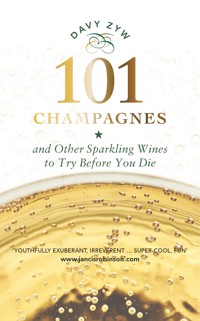
The definitive guide to champagne and other sparkling wines. Champagne is delicious; we love its flavour, we love its fizz. Champagne's association with success, partying and fun are as ingrained in the wine as the bubbles themselves. As the godfather of champagne, Dom Pérignon, famously declared: 'Brothers, I'm drinking stars'. But there's more to fizz than just champagne. Prosecco's meteoric rise in popularity has opened up our taste buds to other sparkling wines: from the glacial hills of Treviso, the lava slopes of Mount Etna, rural Brazil to the more genteel South Downs of England, the choice is vast. There has never been a better time to enjoy a glass of bubbly. Navigation is important as the new and exotic vintages aren't all wonderful, and this is where Davy Zyw can help. As one of the country's leading experts in sparkling wine, Davy explains why each of the 101 entries has made the cut. This is the ultimate ice-bucket list for fizz fans, and every bottle in this book will knock your socks off.
Sie lesen das E-Book in den Legimi-Apps auf:
Seitenzahl: 245
Veröffentlichungsjahr: 2018
Das E-Book (TTS) können Sie hören im Abo „Legimi Premium” in Legimi-Apps auf:
Ähnliche


















First published in Great Britain in 2018 by
Birlinn Ltd
West Newington House
10 Newington Road
Edinburgh
EH9 1QS
www.birlinn.co.uk
ISBN: 978 1 78027 556 7
Copyright © Davy Żyw 2018
The right of Davy Żyw to be identified as the author of this work has been asserted by him in accordance with the Copyright, Designs and Patents Act, 1988.
All rights reserved. No part of this publication may be reproduced, stored, or transmitted in any form, or by any means, electronic, mechanical or photocopying, recording or otherwise, without the express written permission of the publisher.
British Library Cataloguing-in-Publication Data
A catalogue record for this book is available on request from the British Library
Designed and typeset by Teresa Monachino
Printed and Bound in Latvia by PnB.
★ Contents
Preface: Fizz and me
Introduction
Origins and early doors
Know your glasses
Fizz with food
The 101
THE CHAMPAGNES
Understanding the champagne label
THE SPARKLERS
Understanding sparklers
Glossary
Acknowledgements
Preface: Fizz and Me
★
I HAVE WORKED WITHIN WINE FOR OVER A DECADE. I STARTED IN A basement wine shop in Edinburgh, then became a sommelier in famous restaurants. More recently I have been wine development manager for the world’s second largest wine retailer, a global wine buyer for a leading wine retailer and now a wine buyer at the world’s most famous vintner. In 2018, I was sworn into the ancient Ordre des Coteaux du Champagne as a Chevalier, so I know what I’m talking about! I live out of a suitcase, blending, tasting and travelling wherever the grapes and vintages take me. My friends hate me. However, working in restaurants is where my real love of flavour and wine was nurtured. I loved the showmanship, pace and energy of being a somm. It was in fine-dining restaurants where I was lucky enough to taste some of the most exquisite and expensive wines and champagnes. Wine can raise a plate from a forgettable dinner into a memorable, taste-bud-tantalising experience. What I love about champagne is the dynamic it brings to a meal. The fizz alters textures, cuts through or combines fats and proteins and lifts flavours to another level. Champagne with food is one of life’s true delights.
Flavour can change perceptions, incite memories, alter moods, bring people together and divide the best of friends. Sourcing and blending wine for a living, I have made a career in combining flavours and textures to enhance pleasure, enjoyment and gastronomic experience. I cannot taste for you but I can recommend what I think you will enjoy. In the following pages I’ll offer suggestions as to what you might like to eat both to enhance the pleasure of the wine you are drinking and to improve the taste of what you are eating.
Lots of people would enjoy wine more if it were demystified a little. Wine is made to be enjoyed by everyone, and even the smallest amount of knowledge will empower imbibers to make the right choices. This book will add to your drinking and dining experience – and doubles up as a terrific coaster.
Introduction
★
CHAMPAGNE IS DELICIOUS. THIS IS VERY IMPORTANT. IT’S SCRUMPTIOUS and magnificent. We love its flavour; we love its fizziness. We love the sense of drama and celebration it brings to any occasion. Champagne’s associations with success, partying and enjoyment are as ingrained in the wine as the bubbles themselves. As the godfather of champagne famously said: ‘Brothers, I’m drinking stars!’ Dom Pérignon had obviously had a few glasses at this point, but his quote is poignant nonetheless: drinking champagne is liquid heaven.
I want to share with you my passion for the fizz, and in doing so give insight into how champagne has earned its eternally glamorous status, and why sparkling wine and champagne are the drinks with which we celebrate life. It marks our milestones, in a way no other drink can. There is always an excited intake of breath when the bottle pops. Most champagne bottles have close to 6 atmospheric bars of pressure within them, a similar pressure found in a doubledecker bus tyre. This danger and tension in opening a bottle is unique to champagne; it is both sexy and dramatic. It gets the party started.
But for all the drama and allure, ultimately it’s the drink itself which has made champagne such an irresistible choice for millions of drinkers over the past four centuries. It hasn’t been one long party for the people of the Champagne region of north-east France, however. Wines have been made there since Roman times but their look and taste have changed over those millennia. The region, and its wines, have had a turbulent history: revolutions, a couple of invasions, economic turmoil, two world wars and a devastating vineyard pest. Times have been tough, and, like the production of champagne itself, this has been no quick process; it has taken time, sweat, blood, tears and a helluvalotta love. This history makes it all the more marvellous that champagne has survived and thrived.
For all its success, champagne is a misunderstood drink. Its purely celebratory positioning has meant we tend to focus on the luxurious larger brands, instead of exploring the range for our more frequent drinking habits. Many of the most famous champagne houses have a place at my table but the world of sparkling wine is evolving rapidly, even within the Champagne region. More and more small growers are producing quality champagnes, and the diversity and quality from the region is exciting.
But champagne is not the only magnificent sparkling wine available – we have never had so much choice in finding our favourite fizzer. Many champagne makers have taken their trade all around the world, finding new methods, grapes and climates to producer fine examples from Australia, California and South America. There are many other sparkling wines which offer parallel quality and terrific value, from the rural slopes of the Jura, to where it all started in the land-locked hills of the Languedoc, and even to the lava dashed slopes of Mount Etna. Catalunya is home to cava, where the styles and quality have never been so good. And, back in the UK, the English sparkling wine business is booming. Many wines are now beating champagnes in blind tastings and awards, and I celebrate some of them in this book.
The UK is historically one of the largest markets for champagne and sparkling wine in the world. We love bubbles. And, although we have begun to make our own we are still the sixth largest importer of sparkling wine in the world today. The incredible success story of prosecco has opened doors for many of us to drink and try new sparkling wines, without breaking the bank. In the UK prosecco has become a go-to drink, and many prefer it to champagne.
There are so many amazing sparkling wines in the world, and my 101 recommendations are a great place to start. Get those glasses poised.
★ DID YOU KNOW?
There are 49 million bubbles in every bottle of champagne.
Origins and early doors
★
HISTORY CREDITS THE SEVENTEENTH-CENTURY DOM PIERRE PÉRIGNON with discovering the magic and secret of champagne’s bubbles at the Benedictine Abbey of Hautvillers. The story goes that in the dark, damp chalky cellars, the monk managed to metamorphose the local still wine into the sparkling liquid gold wine we know today. However endearing this might be, it couldn’t be farther from the truth. Dom Pérignon was certainly an exceptional wine taster, winemaker and grape grower, but his job at Hautvillers Abbey was not to create a new wine but to get rid of the naturally occurring bubbles which were ruining the quality still wines that formed his fellow monks’ profitable business. If he had been successful in his job, champagne might have never existed. Champagne, the first commercial sparkling wine, wasn’t an overnight discovery, but developed and evolved over centuries, driven by human endeavour.
If you think sparkling wine was invented in Champagne you would be wrong about that too. Like many of the best ideas, the invention of fizzy wine was a total accident. For the birth of sparkling wines we must turn to a little unknown town in the south of France.
Limoux is a small, mountain-locked town in the Languedoc-Roussillon area of Mediterranean France. The first written record of Limoux’s sparkling wine Blanquette de Limoux is in 1531 at the abbey of Saint-Hilaire, but it is likely that the wines had been made for some time previously. At this point champagne didn’t exist, and this was over a century before the birth of Dom Pérignon. Like a lot of wines and spirits in Europe at the time, the wines of Limoux were made by Benedictine monks. Many of the spectacular monasteries you see across the continent were directly funded by booze.
Until the late 1700s the sparkling wines of Limoux and Champagne were made in a similar way to today’s artisan cider. After pressing the grapes, natural yeasts found in the winery would begin fermenting the grape juice into wine, converting the sugars of the grapes into alcohol. For fermentation you need a steady, pleasant temperature; otherwise the yeasts give up and go dormant, which would have happened over the cold winters of 1500s rural France. This meant the wines were bottled even though the fermentation process was hibernating during the cold winter months. Then spring came and kickstarted the process again. There are two main by-products of a wine’s fermentation: alcohol and CO2 gas. So, when the weather warmed up and the yeasts got back to work, the fermentation would carry on, converting the remaining sugars into alcohol and trapping the CO2 in the bottle, dissolving it into the wine . . . and voilà: sparkling wine.
At the beginning, this process was haphazard and totally accidental. Back then the glass used for bottles was not as strong as it is today, so when a thirsty monk went down into the cellar in the spring, he would find a lot of his precious wine bottles had exploded and smashed. For a long time champagne was called Devil’s Wine, because of the danger associated with the exploding bottles, which were responsible for many deaths. It would take hundreds of years to streamline and develop this process (now called méthode traditionnelle) in the chalk cellars of Champagne, making it safe and reliable. Outside of the Champagne region, modern technology has allowed winemakers to make sparkling wines by other means, creating wines which are more efficient to produce, less labour intensive and cheaper to make. These wines are made in one tank, rather than in individual bottles. The most famous of these wines is prosecco.
★ DID YOU KNOW?
It is maintained that the reason wine bottles are 75cl is because this was the average breath of a glass blower.
The breakthrough moment for all champagne production came in the nineteenth century, when a local French pharmacist, André François, trialled and discovered the precise measurement of sugar needed to create the sparkle in the bottles, without producing too much pressure. This is when champagne became the success story it is today. Production boomed from a mere 300,000 bottles a year to 20 million by the mid nineteenth century. Today close to 340 million bottles are produced each year.
Champagne’s real success is a post-war phenomenon. In the late nineteenth and early twentieth centuries, the Champagne region had to contend with severe setbacks. Phylloxera, a vine louse, ate 99% of all the vines in the region, which meant the entire area had to be replanted by grafting on resistant roots. This devastated the world of wine, and its effect can still be felt in the champagne and wine industry today. Some champagne houses (such as Louis Roederer and Moët & Chandon) had the foresight to purchase prime-situated vines when the prices were rock bottom. Nowadays, the real estate in Champagne is some of the most expensive in the world: for a block of vines in the Côte des Blancs you would pay the same price as for a penthouse in Manhattan.
After the First World War, two of the largest markets collapsed due to the revolution in Russia and Prohibition, which stopped most sales into America from 1920 until 1933. The enterprising Champenois had to look elsewhere to sell their wines, and successfully achieved this in Germany and Britain, which are still the most important export markets for Champagne. The United Kingdom is the most important market outside France.
★ DID YOU KNOW?
Up until a couple of years ago London drank more champagne than the entire United States.
Know your glasses
★
If you really want to get maximum enjoyment out of your champagne or sparkling wine, it helps to have proper glassware.
The shapes and sizes of glasses have shifted, following changes in drinking status, trends and fashions, and with an improved understanding of the flavour of champagne. Generally speaking champagne glasses are designed to enhance and accentuate a particular organoleptic quality found in the wine, while keeping your hot hands away from the liquid to avoid warming your delicately cooled champagne. This is why wine glasses have long stems.
There are three main factors influencing the shape of glass:
1. Air. The ratio of oxygen to wine is important – the more surface of the wine that is exposed, the more aromas and smells that are released. A fine balance is needed, as too much oxygen can let all the bubbles escape too quickly and allows the aromas to disappear too easily.
2. Shape. The shape of the glass will channel aromas and smells in the right direction, i.e. up your schnoz. The shape will also dictate the persistence and display of bubbles: the narrower and taller the glass, the smaller the ratio of air to wine, keeping those cheeky bubbles alive for longer.
3. Style. Champagne is a symbol of status. If you drive a Rolls Royce, you park it where people can see it. Many people who drink champagne want everyone to know they are drinking champagne. The best way to do this is to waft and wave your coupes or flutes around the place.
Ciao ciao coupe!
The most famous of champagne’s glasses has to be the shallow coupe, said to be modelled on the breasts of France’s queen Marie Antoinette. Although this glass was actually created specifically for sparkling wine in England in the 1690s, I still like to think Marie Antoinette’s desirable bosom had a part to play in the design. The coupe became hugely popular in the UK, the States and Russia, glamorised by champagne houses, including Veuve Clicquot. The problem with the coupe glass is that it is too short and too wide. Once poured, the champagne goes flat a little too quickly.
Farewell to flutes!
Flutes are popular because they showcase the tiny, gently rising bubbles up the sides of a tall, narrow glass, thus continuing champagne’s visual appeal. The best flutes have etching in the bottom of the glass to act as a nucleation point for the steady, even stream of bubbles. Another major plus for the flute is that it’s much harder to spill your precious fizz out of the glass.
But although flutes are visually pleasing, they do not best showcase the quality of champagne in the glass; in fact they impede it. They are fine for simple fizzers at parties, but if you have a special bottle you want to savour, then flutes will literally restrict the flavour. Like fine wine, a certain amount of oxygen is needed to open and aerate the aromas and flavours. The shape of the flute inhibits the style, and can hide the taste. I’m happier drinking my champers out of normal wine glasses so that I can fully appreciate the aromas and tastes released in the glass. I recommend you follow suit.
‘drinking from flutes is like listening to a concert in ear muffs’.
MAGGIE HENRIQUES, CEO OF KRUG
Time for the tulip
With the shift away from flutes and coupes, many of the top champagne houses have devised bespoke glasses for their own top cuvées. When I visited Dom Pérignon, we tasted (drank) out of bulb-shaped glasses with a tapered lip, more similar to burgundy glasses. The perfect glass for champagne was devised between head sommelier in Reims’ top Michelin restaurant, Les Crayères, and the town’s university. The result is a tulip-shaped glass which offers the best of both flutes and wine glasses. Basically, the glass is made to respect the role of the mousse or effervescence found in the champagne, which carries more of the flavour aromas than the liquid itself. The shape of the tulip glass gives more air to the surface of the champagne, thus allowing more of the fizzy aromas to escape, then cleverly tapers around the rim to allow each one of the bubbles to burst simultaneously at the glass’s widest point. So, when you stick your nose in for a whiff, you get maximum flavour and aromas from the bursting champagne bubbles. BOOM!
Many sparkling wines, especially champagnes, have taken years or decades to make. It would be a shame to undo all that time in a few seconds by using the wrong vessel. So, next time you pop a cork, do yourself a flavour favour and use a proper glass.
Fizz with food
★
Food and wine matching isn’t taken very seriously in the UK, an afterthought at best, but if you follow a few simple principles it can lift an ordinary meal and glass of wine into a gastronomic extravaganza. There are countless books on the principles of food and wine matching; you could write a bloody dissertation on it – I did! But as any sommelier will tell you, you can’t learn anything without trial and error: eating, drinking and evaluating.
At the most basic level, food and wine matching serves one purpose: to enhance enjoyment of what you are eating and drinking. It does this by combining or contrasting the tastes and flavours of a dish to the wine, utilising taste attributes of a dish (sweetness, bitterness, acidity, astringency, saltiness and fattiness) to bring out desired flavours in both food and wine. This works for two reasons:
The fundamental difficulty with food and wine matching is the unknown of what the wine will taste like, and the risk of parting with money for a stab in the dark – I’ve been burnt before! If you are buying a bottle from the supermarket shelf or wine shop, unless you know the wine it is almost impossible to know exactly how it’s going to taste, even if you do read the back label. In good wine retailers, there is help on hand – use it. In fancy restaurants this is the role of a sommelier or somm: to match the desired flavour of a wine to the customer’s wants (and budget), to enhance the plate of food that the chef has cooked.
Champagne and sparkling wine are usually opened as an aperitif before dinner, for two reasons. First, it gets you buzzed quicker, as the alcohol bursting in the bubbles enters your bloodstream faster than through your stomach lining. And, secondly, champagne stimulates taste buds: the acidity and bitterness of champagne make you salivate, so it actually makes you thirstier and hungrier. After we finish our flute, and eat one too many canapés, we tend to move on to other wines. But why stop the party there? Champagne and good sparkling wine with the correct food is bliss. It shouldn’t be forgotten that champagne has all the same elements as the still variety. Sparkling wine brings a fresh dynamic to any meal because the fizz brings texture in the form of mousse, often carrying a level of astringency and bitterness which, paired with rich, fatty or salty flavours, makes for a delicious combination. Acidity is one of champagne’s key pillars, hugely desirable for food and wine matches, as it brings freshness. If you are eating fatty or salty foods, you need acidity to balance the heaviness and richness of texture and flavour from the fat. We use acidity like this every day, for example malt vinegar on your chips or lemon juice on your fish.
Champagne and other sparklers also bring sweetness. This level of sweetness, paired with the acidity, means champagne is an incredibly versatile food companion. If your dish is salty, a touch of sweetness in your wine can work wonderfully well. For example; a fatty, salty cheeseburger benefits from sweet and acidic tomato ketchup; dry sparkling wine brings the same principle to any dish.
Champagne and other méthode traditionnelle sparkling wine like English Sparkling or cava have a unique flavour: toastiness. This delicious flavour spectrum brings a different element to any plate of food, and like bread it is a versatile flavour. Whether you are eating soup, starter, main course or dessert, champagne can be drunk with them all.
Two things to keep in mind when choosing a champagne to pair with your meal: age and style. Generally, the older a champagne, the richer and fuller it is going to be, so it can be paired with more wholesome, savoury and richer dishes. Younger styles are fresher tasting, and tend to work with lighter, crunchier dishes. For instance, the younger English sparkling wines are fantastic with oysters, chips or creamy caesar salad because of their fresh flavour and high acidity; older vintage champagne could complete a roast chicken (richer dish).
A simpler sparkling wine, such as prosecco, is often just drunk on its own without the need for food, but can also be a delightful pairing with a host of lighter dishes: salty olives, canapés, summer salads, grilled chicken or even fruity desserts, because of the bright acidity and sweetness.
Rosé champagnes carry all the traits of normal champagne, and more. Depending on the production methods, rosés tend to have bolder red fruit characters to match with richer dishes, sweet or savoury. Many rosés are made with a proportion of still red wine, so the flavours found in them can be more akin to Burgundian red wine, and tend to have fuller, savoury character. This means you can enjoy them on their own, but they are also hugely versatile food companions. You can throw a lot of flavour-rich foods at rosés, meaty or fruity, and be rewarded: Thai crab cakes, steak tartare, pink rack of lamb, beetroot salsa and even fruity desserts.
Sparkling reds are another ballgame altogether; we have three in this book, all with their own nuances. These wines can be paired with the richest dishes owing to their concentration of fruit, acidity and brilliant nature.
DAVY ŻYW WITH CYRIL BRUN, CHEF DE CAVE AT CHARLES HEIDSIECK
The 101
★
There are 101 champagnes and sparkling wines in this book; the 51 champagnes are my favourites and many are significant to champagne’s success. The other 50 are sparkling wines I have found through my travels, or on the grapevine – they will surprise, impress and I hope inspire you to drink differently. I have discovered these beauties in the course of my last thirteen years in the wine industry, and have painstakingly tasted each and every bottle.
While this is an ice-bucket list of champagnes to try, no list is definitive and I recognise that everyone has their own preferences when it comes to their favourite fizzer. However, I can, hand on heart, say the bubble-filled bottles in these pages will rock your socks off. I promise that it’s worth saving those pennies and every so often cashing them in for a bottle or two of the world’s greatest drink.
PRICE
Champagne is expensive! It is part of the allure. But, in the wider scheme of things, it is well priced compared with some wines. Lots of people get the wrong end of the stick when it comes to the value of a wine. Fine wines can be priced at £1,000 a bottle (at least!) because of simple economics: supply vs demand.
If a bottle of wine retails at more than £30, it means there are factors other than purely production costs which make it more expensive. The same can generally be said for champagnes over £50. Considering champagne is one of the most desirable wines in the world, it is arguably good value, given that the most expensive bottles retail at only a few hundred pounds rather than thousands. But with increasing consumer demand, prices of champagne and other fine sparkling wines are only going up.
Most, but not all, of the champagnes I have included here won’t sell for much under £20, although you will find some under £10. Champagnes are often heavily discounted by retailers, especially over the festive period. Making sparkling wine is time consuming and expensive, but we have alternative, cheaper options available: crémant, lambrusco, cava, moscato and prosecco to name a few, all featured in this book.
Although discounts and prices may vary, I have based my pricing codes on the following:
£
Under £10
££
Under £30
£££
Between £30 and £50
££££
Between £50 and £100
£££££
Over £100
THE FACTORS THAT MAKE SPARKLING WINE TASTE THE WAY IT DOES
Vineyard
Where the vines are grown directly affects the flavour of the grapes, resulting in different expressions in your glass. Soils, altitude and exposure to the elements and sun affect the ripening and quality of grapes, and ultimately the finished champagne or wine. In Champagne, the best-quality vineyards are classified as Grand Cru or Premier Cru, which generally indicates a higher level of chalk, resulting in the best-quality champagnes. Chalk is champagne’s calling card; its good drainage and mineral character mean grapes can reach full ripeness of sugar and flavour, while retaining high acidity and low pH. Many of the world’s best vineyards have either chalk or calcareous elements, giving the wines purity and minerality. This character translates into wines with full flavour while retaining great freshness and longevity.
Another important factor in finished quality is the yield at harvest. As a rule of thumb, the smaller the yield at harvest, the more concentration and flavour in the finished wine. Organic and biodynamic vineyards produce smaller yields, and produce the most flavoursome grapes; I have included a few of these in the following pages. I love wines that taste of where they are from; this taste of somewhereness is what the French call terroir.
Vintage
Grapes should only be produced once a year. Many factors throughout an annual growing cycle affect the vine and final quality of the grapes picked at harvest. Vintage variation is particularly relevant in cool climate regions like Champagne, or England. If it is a particularly hot year the grapes will be riper, have sweeter flavours and less acidity; in a cool year, the wines will have higher acid and more tart fruit flavours.
By blending multiple vintages together, champagne houses can produce consistent styles year after year to maintain house style and consistency of quality. As these styles make up the lion’s share of any champagne house’s production, it is important for houses to create the best champagne at this level. Prosecco and cava are similar as they don’t often declare vintages and tend to be a blend of a few years of harvests.
When a vintage is declared on the label, it is a celebration of a specific year, and is generally produced only in good or great years. Only 6% of all champagne production is a vintage product, a tiny proportion considering all other fine wine regions in the world declare and celebrate a vintage every year, in good and bad years. I think we will be seeing more and more vintage champagnes and sparkling wines being produced, with climate change producing more regular vintages.
Vinification (wine making)
Vinification (how a wine is made) is a fundamental factor in the way the finished sparkling wine will taste. Although all champagne is made by the méthode traditionnelle (MT) there are many possible ways to do it. Whether the wine was handled oxidatively or reductively (without oxygen); whether fermentation was quick and controlled or wild and slow, giving more complex flavours; what type of press or storage vessel was used – steel, wood barrel or cement: these all have an influence on the final taste. Reserve wines for MT sparkling wines are a house’s secret weapon, and how they use, age and mature their reserve wines drastically affects the flavour of what’s in your glass. Reserve wines can be aged in oak, steel or even in bottle and can be up to 20 or 30 years old by the time they are blended into the new champagne, giving more texture and complexity of flavour.




