


Erhalten Sie Zugang zu diesem und mehr als 300000 Büchern ab EUR 5,99 monatlich.
- Herausgeber: Birlinn
- Kategorie: Lebensstil
- Sprache: Englisch
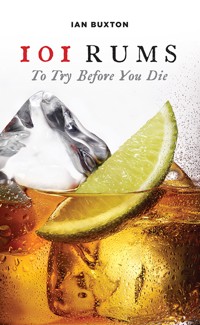
Rum, once the poor relation of the spirit world, has undergone a revival and is no longer seen just as the preferred tipple for tipsy pirates. The craft drinks movement has certainly stimulated the rum world, with high numbers of new artisan rum brands launching around the world in the last few years. The rise of the rum cocktails is another successful trend, with the popularity of mojitos and mai tai contributing greatly in the growth and development of the rum market. Ian Buxton, the UK's No.1 bestselling author on spirits, takes us on a tour of the different colours, flavours, creation methods and characteristics, and makes his pick of the best rums in the world. Whether you like your rum in cocktails, or prefer to sip it neat, this is the only book on rum you will ever need.
Sie lesen das E-Book in den Legimi-Apps auf:
Seitenzahl: 222
Veröffentlichungsjahr: 2018
Das E-Book (TTS) können Sie hören im Abo „Legimi Premium” in Legimi-Apps auf:
Ähnliche



















101 RUMS
TO TRY BEFORE YOU DIE
101 RUMS
TO TRY BEFORE YOU DIE
IAN BUXTON
First published in Great Britain in 2018by Birlinn Ltd
West Newington House
10 Newington Road
Edinburgh
EH9 1QS
www.birlinn.co.uk
ISBN: 978 1 78885 043 8
Copyright © Ian Buxton, 2018
All rights reserved. No part of this publication may be reproduced, stored, or transmitted in any form, or by any means electronic, mechanical or photocopying, recording or otherwise, without the express written permission of the publisher.
The moral right of Ian Buxton to be identified as the author of this work has been asserted by him in accordance with the Copyright, Designs and Patents Act 1988
British Library Cataloguing-in-Publication Data
A catalogue record for this book is available on request from the British Library
Designed by Teresa Monachino
Printed and bound by PNB Print, Latvia
CONTENTS
INTRODUCTION
101 RUMS
ACKNOWLEDGEMENTS
INTRODUCTION
Perhaps it’s the funk, or the hogo, or the thunder of the dunder1, but whatever’s going on, rum is definitely having a moment. Rum, after centuries in the doldrums, is once again a thing.
But what sort of thing, because there’s no denying that rum can be confusing. There are a confusing number of styles. Do you, for example, prefer your rum in the British, French or Spanish style? Do you refer to it by colour? White – or silver, as some would have it – gold or dark might be your guide. And where do you stand on the vexed question of added sugar: is it a sweet benediction or the work of the Devil?
Does rum have to come from the Caribbean? In fact, it’s made virtually everywhere that sugar cane is grown and quite a few places where it isn’t, unless I’ve missed Orkney’s lush and verdant sugar fields. Rum is made – pause for impressive list – all across the Caribbean; in Central and Latin America; Canada and the USA; much of Africa; Australia; India and in the islands of the Indian Ocean; Japan; the Philippines; Nepal; Thailand; parts of Europe; England; and, yes, even in bonnie Scotland. And, as things stand, I’ve probably missed a good few (Albanian rum, anyone? It could well be out there). Once upon a time rum was a major industry in New England. Its remarkable geographic spread is part of rum’s appeal and yet, as we shall see, one of its challenges.
Then there’s the question of the stills. Some swear by the product of the pot still; others are aficionados of the traditional column; while yet a third school maintains the superiority of the modern multicolumn still. Or, as many do, you can blend the spirit from different types of stills – and why not, because the results can be delicious. And though most rum is made from molasses, if this book were published in France, the automatic assumption would be that it was made, naturellement, with fresh sugar cane juice. Strangely though, sugar beet alcohol, despite some small experiments, is not generally accepted as rum.
Cane sugar is also used to produce cachaça (sometimes termed Brazilian Rum), clairin (native to Haiti), aguardiente (Andean South America), arrack (Asia; rice and other additives may be added to the distillation) and basi (from the Philippines). Not to be purist, but as these are rarely if ever seen in the UK, apart from clairin they fall outside the scope of this book. And, because it’s anathema to hardcore rum snobs, dare we mention spiced rum?
Actually, though, why not? Spiced rum can claim a great heritage and some of today’s most exciting and innovative rum-based drinks are a play on spiced rum. What’s more, the popular brands of spiced rums bring new drinkers into the category and, potentially, introduce them to the amazing world of this most versatile of spirits. If you accept rum as a key ingredient in classic cocktails, as even the most hardline and pedantic stickler seems to do, then I can’t see the problem that some commentators have with spiced rum. But while you’ll find a few of the best listed here, the Captain is missing in action.
By contrast, one of the most interesting products in this book, supplies of which should be reaching the UK around about the time this goes to print, is a twenty-first-century take on a very traditional spiced rhum agricole or clairin trempé from Haiti (see entry 21 – Boukman).
However, though this probably isn’t a book for purists, even they will be pleased that I’ve drawn the line at flavoured rums. There is so much flavour in good rum to start with that added flavourings such as torched cherry, wolfberry (no, I’ve no idea either) and coffee rum (why, just why?) seem uncalled for. If flavoured alcohol is what you want, then look in the vodka aisle, as there will certainly be something there for your inner adolescent, but please, step away from the rum.
That said, I couldn’t resist including one particular pineapple-infused rum that comes with stellar credentials. It’s based on a recipe mentioned by Charles Dickens who, as far as I’m aware, never extolled the virtues of torched cherry or coffee rum. If ‘hot pine-apple rum-and-water’ was good enough for Boz then it’s certainly good enough for me.
In my listings I’ve attempted a spread of style, origin, colour and flavour. I’ve tried to point out that great rum doesn’t need to be mixed with cola (in fact, I’d rather you didn’t do that) or even used in a cocktail – tasty and enjoyable as some of these really are – but can be enjoyed exactly as you would a fine cognac or Scotch whisky.
Actually, that’s part of the reason for rum’s rapidly growing popularity. An ever-increasing number of whisky drinkers, especially those who in the past might have favoured single malt Scotch, have grown disenchanted with whisky’s increasingly desperate attempts to play with the trendy kids. As whisky has become more fashionable, so demand has risen and, inexorably, so have prices; a trend that has been further compounded by shortages of mature stock and ever more lavish and costly (not to say, vulgar) packaging. A move by many producers to drop age declarations in favour of No Age Statement (or NAS) bottlings has not been universally well received, and more than a few traditionally minded whisky consumers have begun to look around for the combination of flavour, rich heritage and value that once characterised Scotch.
Realising, belatedly, that’s there more to rum than rum and Coke, many have ended up exploring and savouring a world of outstanding quality rums which, currently, offer remarkable value for money. Having said that, there are some alarming signs that certain distillers (or their marketing departments) have looked with greedy eyes at whisky pricing. But despite that worrying development, it’s still very hard indeed to find a rum at anything over £1,000 a bottle and, rare antiquities and limited-edition commemoratives aside, there is nothing currently available on the UK market at more than £3,500. Even Havana Club’s remarkable Máximo Extra (number 49) could be yours for under £1,250. It is the most expensive rum in the book, but I have made an extra-special effort on your behalf and tasted it. You can thank me later.
Agreed, £1,000 is a great deal of money for anything, let alone a bottle of grog, but consider this: a 60-year-old single malt such as Glenfarclas will cost around £15,000; a 1926 Dalmore will set you back over £50,000 and a collection of The Macallan Six Pillars (basically six bottles, but admittedly in Lalique decanters) sold recently for just shy of $1 million. In comparison, you can find the 1929 bottling of Bally’s rhum agricole from Martinique for under £2,000 or unbroached flagons of Royal Navy rum from the 1960s for the bottle equivalent of £350.
It won’t last. The smart ‘investment’ money has already spotted the opportunity in rum: dusty old bottles are starting to appear on the main online auction sites and prices are moving up. If you want to get into this game, names to look out for are J. Wray & Nephew, the Italian bottler Samaroli, Caroni, Port Mourant, Uitvlugt, Long Pond and early bottles from Barbancourt.
But here’s the good news: there are many, many fantastic rums to enjoy at well under £100 a bottle. In fact, you’ll find particularly good value in the £30–50 price range, so enjoy.
A World to Explore
As I’ve mentioned, rum is made across the globe and this is a great part of its appeal. It can also be a challenge, leading to confusion in labelling and some misconceptions as to what actually constitutes rum. It’s a complex subject, and what follows represents a considerable simplification. If you want a basic introduction, then read on. If you can’t be bothered, then just jump right into the rums. Otherwise take a deep breath and, if you actually know about this stuff, please excuse my sweeping approach.
Due in part to rum’s colourful history (and there are whole books on this as well), we can identify three basic styles: English, Spanish and French. These can be related to the respective nation’s colonial past and are thus inextricably linked to a darker record of imperial conquest, slavery and oppression, as European powers looked to dominate the Caribbean sugar trade through the infamous ‘triangular trade’. However fascinating, these are not topics that I have space to cover here, though there are passing references where they are relevant to individual brand stories.
Something else that crops up all the time is piracy. The association of pirates and rum remains a potent one, as illustrated by the number of brands that maintain a somewhat romanticised connection with these brigands. In actual fact, pirates were (and remain) deeply unpleasant and violent characters, best avoided in real life. Back in the past they undoubtedly drank anything they could beg, borrow or steal, and whether they cruised the waters of the Caribbean or New England, then rum would have been just part of their provisions. We can thank Robert Louis Stevenson’s novel Treasure Island and his Long John Silver character for much of the misrepresentation of the pirate in popular culture whilst noting, in passing, that however misplaced the imagery it is certainly enduring and retains a widespread appeal.
Fifteen men on the dead man’s chest—
Yo-ho-ho, and a bottle of rum!
Drink and the devil had done for the rest—
Yo-ho-ho, and a bottle of rum!
Stevenson only ever mentions the chorus to the pirate’s song and seems to have taken the ‘dead man’s chest’ reference from Dead Chest Island, the name of a tiny, uninhabited rock outcrop, part of the British Virgin Islands. The story of Blackbeard marooning a mutinous crew there with a bottle of rum and a cutlass each post-dates Stevenson’s novel, but speaks to the potency of the pirate mythology.
In what Disney’s film trailer would refer to as ‘the world’s greatest adventure story’, the actor Robert Newton, himself no stranger to a hard-drinking lifestyle, portrayed Silver with the exaggerated West Country accent that spawned the archetypal pirate’s voice and subsequently inspired the creation of International Talk Like A Pirate Day. It’s every 19 September, should you feel the need to borrow a parrot for the day and hail chums and shipmates with cries of ‘Ahoy, me hearties!’
While the link between pirates and rum may be spurious, it is undeniably potent and seems unlikely to fade. Perhaps a more positive association would be between rum and revolution, notably the American War of Independence, the Haitian Revolution and Australia’s less well-known Rum Rebellion of 1808. However, this is not a history book, so on to a brief and very broad-brush summary of the principal geographical styles.
Modern Cuban
Basically, this is a shorthand way to describe Bacardi and similar white rums. As the best-known brand on the UK market, Bacardi is many consumers’ introduction to the spirit but, ironically, is somewhat atypical. Originating in Cuba during the nineteenth century, it is today made principally in Puerto Rico in a modern multi-column continuous distillation process, resulting in a very clean, light-bodied, less assertive rum, which is aged in oak barrels but then filtered to remove the colour. In its younger versions (Carta Blanca and Carta Oro), it is well suited to mixing and is promoted on the basis of its historic association with Cuba and as a party and lifestyle brand.
Bacardi in particular has been an outstanding marketing achievement; such is the potency of the brand that it is not entirely clear if every Bacardi drinker would necessarily know that it was rum they were drinking.
English – Rum
An earlier, and thus today, more traditional style of rum for the English market originated from the British colonies in the Caribbean and tended to a heavier, molasses-dominated taste, which varies by island origin. Rums from Jamaica and Guyana, often distilled in traditional pots similar to those used for malt whisky, were heavier, richer and more full-flavoured when compared to the style which predominated in Barbados. Navy Rum was a blend from different distilleries to a specification drawn up by the Admiralty.
Spanish – Ron
Spain once had extensive colonies in the West Indies and in Central and South America, where expatriate Spanish distillers introduced their distilling techniques and the use of the solera system found in sherry production from home, notably in the Jerez region. Hence, Spanish-influenced rums tend to a sweeter, fruitier taste, somewhat reminiscent of brandy. Many Spanish-style rums contain a percentage of added sugar, a practice entirely legal in some jurisdictions yet completely banned elsewhere (e.g. Barbados). The addition of sugar is increasingly controversial and the operation of a typical rum distillery’s solera has, over time, diverged somewhat from the practice in Jerez.
French – Rhum
The classic French tradition is rather different. For the most part, distillation is of fermented sugarcane juice subsequently distilled in smaller, single-column stills. This is known as rhum agricole and is widely found in rums sold in France, which remains a very important market for rum, especially this distinctive style. These rhum agricoles originate largely from the French West Indies, particularly Martinique, and the Indian Ocean French colonies. It also remains the dominant style for artisanal production in the former French colony of Haiti. The taste is quite different to other rums, being in general grassier, dryer and somewhat vegetal. If accustomed to the other styles, the first taste of rhum agricole may come as something of a shock.
Because rum is produced so widely and in line with quite distinct traditions, there is no one common method of classification. Attempts to classify by colour are overly simplistic, and the ageing of rum is an area fraught with problems, not least because of the solera system. For that reason alone, it is important to study the label closely: many soleraaged rums carry a prominent number on the label, which the unwary, or those familiar with the more strictly regulated world of whisky, might easily assume to be an age statement in years. It is not always so! Quite apart from that, as rum producers are quick to point out, the typical maturation conditions of most rums result in a significantly faster ageing than found in most whiskies. As a consequence, it is relatively unusual to find rum that has been aged for an extended period – a 20 or 25-year-old rum is something of an exception to the general rule and a 50 or 60-year-old rum is a real rarity.
Distillers have long since sought to accelerate the ageing process, with a sharp eye to the considerable profits that could be obtained from getting the flavour without all the tedious and costly delays involved in casks and warehouses. So far, no one has achieved anything close to satisfactory, but there is a rum here (Lost Spirits – 54) that may be about to change the whole spirits industry.
Classifying Rum
It would seem that proposing a definitive system of rum classification is a thankless and demanding task, but that does not stop people trying. Perhaps the nearest anyone has come to it is the system proposed by Luca Gargano of Velier (an influential Italian independent bottler) and forcefully endorsed by Foursquare Rum’s Master Distiller, Richard Seale. The Gargano Rum Classification System has yet to be widely used, but it is gaining some credence amongst dedicated enthusiasts. The problem it faces is that it is unlikely to be adopted by the major international competitions or industry giants such as Diageo or Bacardi, who will likely be unimpressed with their less-than-appealing description as ‘modern/industrial’, however accurate it may well be. Doubtless they will also see the classification as promoting the self-interests of Gargano and Seale, and there is some justice in that charge.
For all that, the Gargano classification is surely superior to the confusion of classification by colour and has the great merit of simplicity. Here are his proposed categories:
Pure Single Rum – Molasses 100% Batch Pot Still Distillation
Pure Single Agricole Rhum – Cane Juice 100% Batch Pot Still Distillation
Single Blended Rum – Blend of 100% Traditional Column and Pot Still rums
Traditional Rum – Traditional 100% Column Still Distillation
Modern Rum – Modern / Industrial Multi-Column Distillation
Pure 100% Pot Still rum
Single 100% Single Distillery rum
This may gather momentum in future years as a growing band of enthusiasts demand more and more information about the products they are drinking. This has happened with other spirits and will surely come to influence rum packaging and brand communication. Right now, what is probably most important is that people understand what they are drinking; hopefully this 101 Rums to Try Before You Die will make some small contribution to that process.
The format here follows that of my previous efforts in the 101 Whiskies series and the more recent 101 Gins to Try Before You Die. On the left-hand page is a large picture2 of the bottle under discussion, with some brief pointers to further information. Opposite is my commentary on what struck me as important, interesting or different about the rum in question. I’ve aimed to be approachable and not overly serious, and what you get is a personal view. As I never tire of repeating, it’s only a drink we’re discussing, not politics, religion or nuclear chemistry. If it’s not fun, then I maintain that we’ve rather lost sight of the point.
And, as ever, there are no scores or particularly lengthy tasting notes. I don’t know what you like, and what I like is only one person’s opinion. Your opinion is rather more important to you, as it should be, so try lots of things and go from there. It’s basically what I do…
__________
1 The liquid left in a boiler after distilling a batch of rum.
2 But be aware that those pesky marketing folks are forever changing both label and bottle designs; damn their eyes.
1
ADMIRAL RODNEYEXTRA OLD
Brand owner: St Lucia DistillersWebsite:www.saintluciarums.comOrigin: St Lucia
ONE OF THE LOVELY THINGS ABOUT RUM IS THAT DIFFERENT RUMS frequently come with interesting history lessons, and I find that it adds to my enjoyment to discover the backstory behind a particular brand name.
This tasty drop from St Lucia Distillers, on the lovely island of the same name, carries the moniker of Admiral Rodney. Who he, you plonker? Well, as you can’t be bothered to look it up, he was a very distinguished eighteenth-century British admiral, who was so successful in various naval battles against the French that he was made a peer and granted a life pension of £2,000 annually. By one measure, that’s worth more than £21 million today, so you can see that he was very highly thought of by his contemporaries.
The award was principally for his achievements at the Battle of the Saintes (April 1782) which, among other things, prevented a French invasion of the important colony of Jamaica and also saved the Windward Islands group, including St Lucia. Strange though it now seems, Britain’s Caribbean interests were then thought more valuable than the 13 American colonies, so considerable importance was attached to their defence during the American War of Independence (the colonists were aided by the French).
So, consider this: had Admiral Sir George Brydges Rodney not given the Comte de Grasse and his 35 ships of the line a jolly good thrashing, St Lucia might have become French and we’d be drinking rhum agricole. But Rodney was keen on his prize money (rather too keen, according to many contemporaries), and fittingly, this Admiral Rodney rum has been filling its boots with honours.
Rightly so, because this is a nicely matured and very well-made rum from the charming St Lucia distillery. It’s described as ‘Extra Old’, which seems rather vague, but upon further enquiry I have established that the rums used have an average age of 12 years, and the distillery hopes that future releases will see that increase to 15 years. It’s very much the company’s flagship product and a fine example of an aged rum from molasses and a continuous still.
It’s unsweetened, but naturally delivers quite a honeyed, rich and mouth-coating palate. At around £50 it’s definitely one for sipping while reflecting on the glorious history of our past naval victories (unless you’re reading this in France, obviously).
2
ALDI’S OLD HOPKING WHITE
Brand owner: Aldi Stores LtdWebsite:www.aldi.co.ukOrigin: Blend
NOW, LET’S BE HONEST. YOU’RE WATCHING THE TELLY AND PROBABLY snacking on crisps (though you know you shouldn’t). Some friends – not terribly discriminating drinkers, if truth be told – have popped by for a chat. Or perhaps it’s sunny and you’re chilling in the garden.
There are some days when all you want from your rum is a pleasant hit of alcohol; a bit of complexity and depth and a sensible price. After all, it’s not every day that you want or need to think deeply about what you’re drinking; to sip and savour the subtleties of some arcane spirit or to impress your drinking buddies with your superior connoisseurship. Some days you just want a drink.
This may just hit the spot. It may come in at a modest 37.5% ABV but, tasted neat, it drinks fuller than that, and in practical terms all it means is that your chosen mixer goes further because you won’t be using as much. And there’s more good news: at the time of writing, the price of a full bottle is under a tenner. So, what’s not to like?
Well, the curious Old Hopking brand name, I suppose. I must admit to some confusion when I first encountered this, assuming it was a craft beer. So confused was I that I asked their helpful PR person where the name came from. Normally, if they don’t know, you get some PR obfuscation and a more-or-less convincing attempt to make something up. Bearing this in mind, I was delighted to learn that (and I quote directly from the email) ‘unfortunately the current buyers inherited the product, so don’t know where the name “Old Hopking” comes from! One of life’s mysteries”☺)’.
And so it must remain, but I particularly appreciated the smiley face.
Ignore the basic bottle and label, ignore the drinks snobs who may look down on this and grab a bargain. If challenged, point out that this won a perfectly decent silver medal in the 2016 International Wine & Spirits Competition (IWSC) and it is a genuine Caribbean rum, originating in Trinidad and Tobago (here endeth the Bluffer’s Guide). Or get your picky friends to taste it blind in a line-up of two or three other better-known white rums – that should shut them up.
Or tell them it cost less than a tenner (did I mention the price already?). Then put on your best smiley face.
3
ANGOSTURA 1919
Brand owner: Angostura HoldingsWebsite:www.angosturarum.comOrigin: Trinidad
LONG REVERED FOR FINE RUM AND FOR ITS EPONYMOUS BITTERS – an essential in any cocktail cabinet – this Trinadadian producer has emerged from some tortuous commercial wrangling to again concentrate on the products that made it famous. If you’re wondering where the name came from, it was actually Venezuala, where in 1824 in the town of Angostura (now Ciudad Bolívar), Dr J. G. B. Siegert invented his aromatic bitters while working as Surgeon General to the armies of Simón Bolívar.
Later, to escape Venezuala’s penal taxes, the family moved to Trinidad and distilled rum on a small scale. Things really took off in the 1940s but, confusingly, this 1919 expression relates to events in 1932, when the Government Rum Bond burnt down. Some heavily charred casks survived the fire and the master blender of Fernandes Distillers, J. B. Fernandes, bought them. They dated from 1919 and, one presumes, the combination of their great age and their exposure to the heat, flame and smoke of the conflagration had produced something quite unusual. I’d love to tell you that ancient casks of rum are still left to the tender mercies of some pyromaniac in the hope of Vulcan’s favourable intercession, but nothing so romantic actually occurs (though it’s an idea . . .).
So, though Angostura 1919 may celebrate a very particular date in the development of the rum industry in Trinidad and Tobago, today the product is sadly only a tribute to that remarkable original. However, though its creation is no longer a matter of serendipity, it is still a notable achievement, employing Angostura’s large five-column distillation plant, with lengthy ageing in specially charred barrels. As to the exact age, eight years is often quoted, though I have been unable to verify this and other sources suggest this is a blend of five to ten-year-old rums. It scarcely matters, for this is well matured without being over-aged or woody, with the molasses fading discreetly into the background.
The result is a beautifully well-mannered and complex spirit, creamy sweet on initial impact but revealing crème brûlée notes alongside cocoa, caramel, buttered toast and ripe bananas. This is not quite top of the line for Angostura (they also offer a couple of higher-priced expressions), but I would suggest that you can buy this confident that no bitter surprise awaits!
4
ANGOSTURA 7 YEAR OLD
Brand owner: Angostura HoldingsWebsite:www.angosturarum.comOrigin: Trinidad
HERE’S A SECOND EXPRESSION FROM ANGOSTURA IN TRINIDAD AND




