


Erhalten Sie Zugang zu diesem und mehr als 300000 Büchern ab EUR 5,99 monatlich.
- Herausgeber: Nick Hern Books
- Kategorie: Geisteswissenschaft
- Sprache: Englisch
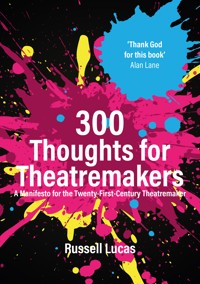
'The future of theatre will belong to the maverick minds who possess the skills to mix things up and who have enough tools in their box to trick the game.' This is a practical, grassroots, self-empowerment book for theatremakers. It's for anybody who wants to make live theatre, whether you're an actor, a director, a producer, a designer or a writer. Whether you're all of these, or none of them. Categories don't matter. What matters is making your show, and putting it in front of an audience. This book is not a method, nor a practice. It's an accessible toolbox of reflections and provocations designed to help you – an independent-minded, career-driven, professional theatremaker – along the path towards achieving your dreams. Inside, Russell Lucas shares his decades of experience in independent theatremaking, covering aspects including: - Generating and developing ideas - Working with other creatives - Promoting your show and selling tickets - Understanding the power of the audience - Making ends meet and sustaining your career He tackles abstract problems, dissects the practical ones, and debunks plenty of myths along the way. Inspiring and unconventional, but always grounded in sound, real-world sense, 300 Thoughts for Theatremakers is a book for anyone who's passionate about a life in theatre, and wants to make that a reality. 'Thank God for this book. It will surely be a comfort and support to all those who follow in Russell Lucas's independent and determined footsteps' Alan Lane, Artistic Director of Slung Low, from his Foreword
Sie lesen das E-Book in den Legimi-Apps auf:
Seitenzahl: 211
Veröffentlichungsjahr: 2022
Das E-Book (TTS) können Sie hören im Abo „Legimi Premium” in Legimi-Apps auf:
Ähnliche




















Russell Lucas
300THOUGHTS FORTHEATREMAKERS
A Manifesto for the Twenty-First-Century Theatremaker
Foreword by Alan Lane
NICK HERN BOOKS
London
www.nickhernbooks.co.uk
Contents
Foreword by Alan Lane
Introduction
1. MAKING THEATRE
60 thoughts on how to make some choices and interrogate your actions
2. MAKING A PRODUCTION
60 thoughts on how to make a responsive production that serves your show
3. MAKING A COMPANY
60 thoughts on how to make a theatre company that works for you
4. MAKING A TRADE
60 thoughts on how to identify your version of the trade
5. MAKING A CAREER
60 thoughts on how to make a bespoke career that is flexible and responsive
Thanks
About the Author
Copyright Information
For Ana (She’ll know why)
‘The actor, his muscles humming like a live wire, his voice thundering with a revivified resonance, his instincts sharp as the cutting edge of a laser beam, his sensibility imploding with original perceptions and a readiness to communicate a fresh vision of the postnuclear world, will take the stage again, and a new theatrical age will dawn.’
Charles Marowitz
Foreword
Alan Lane
‘Thought #131: Did you ever get taught how to set up a theatre company? Me neither.’
‘Theatre’ is a small word for an amazingly rich and varied practice. Andrew Lloyd Webber makes theatre. Selina Thompson makes theatre. Forced Entertainment makes theatre. Russell Lucas makes theatre. I make theatre.
Russell Lucas and I live in very different theatre worlds. I have loved reading about Russell’s world in this book. His passion, his practical wisdom, his indestructible optimism. How could someone with all that at his disposal fail to make theatre that people want to watch?
‘Thought #195: There are many, many artists out there who do not have funding, yet still find a way – but this thought won’t chime with the funded, as they seem to presume that you can only work in the arts if you have funding.’
The theatre world is under real pressure. What with the cuts to arts in state schools, the increasing cost of attending drama school, and the overall crisis in arts funding, there is less space than ever for independent, audience-focused theatremakers like Russell.
But what this book demonstrates so clearly is that whatever happens, however catastrophic the effects of this current culture war, there will always be theatremakers. Battered by the forces that question their worth, that attempt to make them subservient to institutions, or (as Russell explains in Thought #249) reduce them to tick-boxes, they remain unrepentant, never tamed.
When everything else is in crisis and penury, a theatremaker will find a light and a costume – and get on with the job of entertaining, of provoking, of inspiring. Thank God. Thank God for all the theatremakers like Russell who, with clear-eyed conviction, set about the age-old job of sharing a space with people and telling them a story. And thank God for this book, because it will surely be a comfort and support to all those who follow in Russell’s independent and determined footsteps.
To the theatremakers!
Alan Lane is Artistic Director of Slung Low, an award-winning theatre company based in Leeds, specialising in making large-scale productions in non-theatre spaces with community performers at their heart. During the Covid pandemic, the company was the ward lead for social-care referrals and ran a non-means-tested food bank. The experiences are recorded in Alan’s book The Club on the Edge of Town: A Pandemic Memoir, published in 2022.
Introduction
Who Am I?
I’d like to begin by explaining why I’ve written a book about making theatre, because technically it shouldn’t exist – at least not by me. I’m not famous, nor am I prolific. I’m a relatively unknown theatremaker with one GCSE and no degree. See, with my background you’re really not supposed to work in the arts – never mind be successful and then write a book about it.
Of course, I’m being glib, as we’re all allowed to work in the theatre, but that message doesn’t always get through to society – let alone to the lost artists who’ve been encouraged to ‘Go get a real job.’
Take my journey, for example: I come from Clacton-on-Sea in Essex, where it’s all about economic survival – and back in the seventies and eighties it really was. When you reached your sixteenth birthday you were expected to work in a chip shop or on the pier and that was you done. You’d peaked. Any deeper discussions about utilising your existing skill set or having a career… Well, there were no debates on either of those, as no one knew what they were and we probably couldn’t afford them anyway. Dreams were for the rich. So, one week after my sixteenth birthday, I began real-jobbing in my local chippy, The Plaice To Be, and one week and one hour after my sixteenth birthday, I silently whispered: ‘This isn’t the place for me.’
Admittedly, I didn’t know where I wanted to go next or how to get there but, as it turns out, it’s enough to keep pulling at a thread, because I’m here now, working in the arts, despite society telling me that I couldn’t, and my parents saying that I probably shouldn’t.
From a very early age, every time I went into a theatre I felt completely at home. Its magic, its possibilities and its warmth were palpable to me. I wanted to live and work in there for ever, and thanks to my teenage whisper finally finding a voice, I got there. Here.
So, how did I do it? And how can you make a successful and long career in the arts? Well, what type of career do you want?
One piece of immediate advice I can offer you is that you should resolve right now that, no matter what, you’re going to stick around. You should also acknowledge you really do wish to live your life in the theatre. It’s only then – after you’ve given voice to your ambition – that the flimsy, self-imposed barriers that have stopped you from seeing the theatre as a real job will melt away.
Next, you need to redefine two words: ‘industry’ and ‘success’. These two nouns are responsible for so many artists falling by the wayside because they seemingly couldn’t get into the industry nor achieve success. So let’s redefine them.
‘Success’, from this point forward, will be when you have begun to take steps towards achieving an income from your artistic work; and the ‘industry’ will now be called your ‘trade’.
Now, I acknowledge that your path won’t be an easy one – but that’s one reason why we all feel so at home in the theatre, isn’t it? We’re not regular people, nor do we seek the ‘normal’ life. We desire creativity, freedom, stories, illusion, applause, a team, agency, travel – in fact: a life filled with imagination. Every day.
So, suit up; for you are allowed to work in the theatre.
Who Are the Theatremakers?
A theatremaker is anyone involved in the making of theatre. Whether you are a director, actor, writer, designer or another creative, this – of course – makes you a maker of theatre. This book speaks directly to all of these roles as individuals and to its collective noun. The person who uses the term ‘theatremaker’ is a hybrid artist, a creative soul that can turn their hand to anything to get their show on.
I consider myself to be a theatremaker as I make theatre using my own resources. I come up with an idea, rehearse it, find a suitable platform, and then sell tickets however I can. I have no regular team, I’ve never used a set, sound or costume designer (yet), and I generally operate the lights myself. I write, produce, improvise, teach and choreograph. I’m also quite deft at finding cheap props online and can make trailers, posters and GIFs for publicity. Plus I know how to remove red wine from a costume (use white). I’m not rich and don’t come from money (can you tell?), and I don’t possess the urge to climb a career ladder either, nor become a prolific artist; and curiously I’ve never applied for public funding. I just make theatre. In a room. Any room. I theatricalise my idea and put it in front of an audience. For the most part, my ideas manifest on a live platform, sometimes online or like now, as a book.
I’ve staged work in New York, Toronto, London and Tipton, and in 2018 I made an online interview series with Digital Theatre+ that’s streamed into schools around the world. I’ve directed art gallery films, commissioned an American playwright with an independent venue in London, and devised a new play with the same team over three years. Oh, and everyone’s always been paid.
Sounds professional, doesn’t it? Well, it is. So who am I? Well, I’m definitely not ‘Fringe’, as that’s a reductive term used by the misinformed to describe and supposedly locate artists who, at some point, must surely be aiming for the ‘Centre’ (be honest). Nor am I commercial. No. I am an independent theatremaker, and you won’t have heard of me because I don’t exist – at least not under the regular terminology of ‘director’, ‘producer’, ‘actor’ or ‘writer’, terms that don’t really represent my skill set any more, and so I rarely use them.
Theatremakers are like the ‘Where’s Wally?’ of the arts – we’re here, but you have to look really hard to find us. We’ll pop up at festivals (a lot), but you’ll rarely see us on the popular stages, as our transient nature could be performing cabaret or dance one week, then borrowing from the conventions of mime or puppetry the next; and that’s hard to categorise using the regular ways of classification. Maybe we’re indefinable?
So how did we manifest? By the continued slashing of budgets, changes of policies within funded theatres, and the ever-persistent commercial sector sucking up the air through the vacuum of nostalgia and film? It’s a theory.
How about our extended periods of unemployment as we wait for ‘heavy-pencilled’ jobs to turn into half a day’s work? (#actorslife) What about that devious myth that there are too many artists and not enough places for them to perform? Couple that with the cold hard truth of not enough affordable rehearsal spaces, outlandish financial demands on our already delicate reality – and how long was it going to be before we grabbed hold of the reins? Again.
In the same way that the actor-managers of the nineteenth century morphed into the director, the theatremaker is the next aggregation of the desires of the actor. And this seismic evolution/revolution was born from our exclusion from too many parties – for all those times we should have been the hosts, we were miscast as the caterers. And now that the theatremaker roams freely, they have discovered that the theatre itself needed them, before it too became a muted servant.
Theatremakers no longer spend days waiting for permission to cross the Rubicon to that utopian centre. No. We have walked off down the road and created our own trade, and us Jills and us Jacks of all the trades are fast becoming the majority.
Maybe one day, the birth of theatremakers – and their dirty ways – will be studied in schools, paving the way for more like us? Imagine the possibilities.
So, let it be known: the theatre is being reoccupied by its original tenant: The Maker of Theatre. And if you’re salivating right now, come join us off the radar. You can plough up the stalls, erase the interval and even tie some knots in the curtains if you wish, because it’s your trade too. But be warned: you’ll need to tear the tickets, serve the drinks, bring up the lights, and then go break everyone’s heart with your self-penned aria. Yes, it’s back to the old ways: make a show, sell your tickets, make some money, then make a new show.
Spread the word: the theatremaker is now the centre.
How to Use This Book
The endless academic theories on the making of performance don’t chime with me much, so 300 Thoughts for Theatremakers is more of a practical, grassroots, help-yourself book on the endless minutiae of live art-making that I have observed or used over the years. It is not a method, nor a practice, and I am not your teacher. It’s more of an accessible sense-making tool whereby you can drop in occasionally for a provocation or a reflective moment which may usher you along to your next decision.
Some of the thoughts give specific examples of my experience, others offer up ways towards clarity. Most, however, are designed to shunt you – the career-driven, professional artist – towards an independent way of thinking, whilst I secretly slip out the back door leaving you to your own discoveries.
The book has five parts in total, each containing sixty thoughts. Some of my musings slot nicely into specific sections, but, because the making of theatre is a holistic process, some sit comfortably in any one of the sections.
The three hundred thoughts are jumping-off points, they are provocations, and whilst you may not agree with all of them, I merely seek to encourage new thinking, debate, discussion – and maybe some disagreement. It’s full of contradictions and if it wasn’t, I’d be very worried, as there is no one way to make theatre, but there are a million new questions to ask.
The future of theatre will belong to the maverick minds who possess the skills to mix things up and who have enough tools in their box to trick the game. In fact, I’d say that you and I – the Trojan horses of theatre – are required now more than ever.
The mandatory elements required to make theatre can be tricky to pin down because first we need to establish what actually qualifies as a piece of theatre.
My friend, the performer Ana Mirtha Sariego, says that theatre is an illusion. I wholeheartedly agree. I’d add that it must also be a live act with at least one performer present – and my inner-hippie would like to conclude that it’s a form of mass-meditation, whereby the audience all sit in silence receiving a specific discussion on life.
But now the shape-shifting theatremaker has arrived, bending the rules and operating inside a system they’ve built for themselves. Will they also use new techniques to make work, thus redefining the theatrical act?
Well, be careful, my friends. Therein lies ‘The Artist’s Trap’. Just because we can make theatre our own way, we must not forget that we are still an amalgamation of all of the traditional skill sets, and – like the multi-million-pound musical – we too serve the audience and the sale of the ticket.
More inside…
1. What Does the World Need?
2. What Does the World Not Need?
3. Why Now?
4. What’s the Discussion?
5. Allow Projects to Ferment
6. Working Titles
7. Set Up Shop ASAP
8. No Messages
9. Devising is Not Writing
10. Off-ramps
11. Structure
12. Intervals are Over
13. Admin
14. Preserve Performance Art
15. Editing
16. Jeopardy
17. Invisible Direction
18. Plot Rules
19. I Said, Plot Rules
20. Break a Mould
21. The Ticket Sales
22. Dance
23. Flashbacks
24. Torture Your Characters
25. Money is Nothing
26. Academic Language
27. Direction Within Movement
28. Movement Within Dialogue
29. Create Spaces
30. Interrogation
31. Sci-fi
32. Theatremakers are Dramaturgs
33. Direction is…
34. Direction is Not…
35. Acting is…
36. Acting is Not…
37. Blocking
38. What the Audience Secretly Wants
39. What the Audience Needs
40. Avoid the Cinema
41. Your Life on Stage?
42. Electronic Sound
43. Protagonists
44. Play
45. Deep Discussions
46. Treasure Hunts
47. There are No Formulas
48. Exposition Bad?
49. Know the Whole Plot
50. Theatremaker Loses Control
51. Rabbit Holes
52. Use Music
53. Conjure the Production
54. Previews and Press
55. Recording Your Show
56. Flyering
57. Play Formats
58. Three-star Reviews
59. Writing Competitions
60. Feedback Questions
WHAT DOES THE WORLD NEED?
1
Before you make some new theatre – stop. Park your idea for a moment and ask yourself: ‘What does the world need from the theatre right now?’
As a theatremaker, you should – in fact you must – learn to foster a mindset whereby you can divine what the world currently needs. This isn’t necessarily about making something that represents what is happening now – that lives in the realm of documentary which probably (truthfully) will be happier on screen or radio. No, discovering and then devising the world’s next piece of groundbreaking theatre is embedded in you being able to tap into the zeitgeist – to the world around you, to the one that you can see and feel.
But how do you conjure this skill?
I suspect everyone must find their own way to tune in. But to hear and answer the call to arms, first you must learn to listen to the questions and cries from humanity. Does the world need political art right now? Protest? Fun? Clowning? And what about the theatre: what does it need? Another Hamilton? More verbatim work? Fewer autobiographical shows?
Answer some of the above, and you will begin to create theatre with a responsibility to the ‘Now’.
WHAT DOES THE WORLD NOT NEED?
2
Still, pausing for a second, I want to share a secret with you: there is a real desire inside some producers of theatre to repeat what has come before.
You only need to study the plethora of failed jukebox musicals that followed Mamma Mia! and the opulent, Wagnerian shows that snapped at the heels of Phantom of the Opera and Les Misérables to note the many challenges to their thrones. As of today, though, those top-three musicals still reign supreme in the West End. Why? Because we don’t (truthfully) need any more of them. Sure, there have been a few shows that maybe lasted seven or eight years and were deemed to be ‘hits’, but that’s usually down to financial backing rather than a never-ending audience demand and any specific artistic contribution to the genre.
Take Mamma Mia!, for example. It’s the pioneer of the modern jukebox musical and perfectly captures a particular audience’s desire. I remember thinking in 1999, when it opened, that it is a flimsy plot with some ABBA songs attached, and that it was not a musical – but it has proved to be a brilliant partnering of hit songs and it tapped into a zeitgeist. Coupled with an astute marketing campaign, and voilà, the genre of jukebox musical was reborn again. A theatrical coup d’état.
I guess it makes sense to copy it. You see a formula working really well and find a way to reuse it again. And again. But whilst this is tempting and can (on occasion) be financially lucrative, I believe replicating an existing piece of theatre will always be short-lived. It will create a career based on the past, rather than one that wishes to renew the theatre and remain relevant inside its ecosystem.
If you want to make the ‘Next Big Thing’, you are going to need to bend a genre, repackage it, and then bring something new to the table. We need it.
WHY NOW?
3
Now you have an idea for your show, let’s hold its feet to the fire for a moment.
The most effective theatre – in fact, the most impactful art – is the one that answers the question: ‘Why now?’ Why does this piece exist now in its current time? So, before you even go into pre-production, ask yourself: ‘Why am I even making this show now?’
Yes, you could say ‘Because I want to make it’ (which is actually the reason you’re making it), but the shows that survive the decades are the ones that are relevant to mankind and to the world, which are not only snapshots of their time, but also include one or many of the never-ending problems of living. Identify and focus on these elements in your show and your piece might be studied and revived for years, and if you include the human condition and family dynamics, you’re more than halfway there.
Here’s an example. Your show is ‘about your childhood’. Great. I’m sure it’s interesting and everyone you know will love it. Your family and friends will buy tickets and cry at the opening. But they are not your true audience – not if you wish to live a long professional life in the arts.
Your true audience is the people you don’t know. But how do you reach them? By showing them a world they understand, have heard about, or are interested in; by creatively discussing – not teaching – your show’s topic in such a unique way that they discover something new about themselves and the world; by finding the humanity inside your story, the loneliness, the joy of childhood, and the pitfalls of maturity. Do all that and you will have answered some of the audience’s silent thoughts: ‘Why am I watching this now?’ ‘Why am I giving you ninety minutes of my life and fifteen pounds?’ and: ‘I want to learn.’
If you don’t at least attempt to answer these questions, your work could be quickly forgotten – and you don’t want to be forgotten, do you? Solve all of the above, and the audience will not only cry at your show – they’ll fund your next one.
WHAT’S THE DISCUSSION?
4
Whenever you start work on a new piece of theatre, you’ll have an idea of what your show is about or based on. For instance:
‘A moment in my life.’
‘That time I watched someone unlawfully deported.’
‘The life of Charlie Chaplin.’
Amazing. You’ve started. Your idea is here and after asking ‘Why now?’ of your project, you must move forward by identifying the discussion within the show.
I learned this wonderful framing device on a workshop with Lois Weaver from the theatre company Split Britches, where she asked us: ‘What do you want to discuss in your show?’ This then extended into ‘What do you really, really want to discuss?’ and so on. For me, this was a beautiful, contemporary way to re-ask the old-fashioned questions: ‘What is my show about?’ and ‘What is its message?’ – but on a much deeper, intelligent level. By using Lois’s concept of discussion over ‘It’s about…’ raises your focus, creating an enticing and intelligent invitation for your audience.
Let’s take ‘A moment in my life’. Having boiled down your discussion you might be surprised to learn that you actually want to make a show discussing how parental errors can be cyclical; or the concept of blame; or the physical things parents buy children that represent their ideas and values. If you’re making a show ‘about Charlie Chaplin’, you might find you actually want to discuss the way women’s voices were also muted off-camera in the silent era.
Find the contemporary, relevant discussion within your work – and it will further nourish you and answer ‘Why now?’
ALLOW PROJECTS TO FERMENT
5
Don’t worry if you’re currently ‘frozen’ or ‘stuck’ on your project. It’s important to allow your ideas to fester, compost and mature.
I once had a show idea I named Ghost Bollocks. I knew I wanted to use the image of the classic white-sheeted ghost, but that was all. That was back in 2015. It’s now 2021 that I’m writing this, and although we’ve had a few exploratory days, nothing concrete has evolved. Yet. Now is not the time. Yes, we’ve had lots of fun creating some really interesting imagery and content, but (for now) we’ve walked away from it, resolving to let it soak for a while and wait for the moment when the world needs it. This is very important for two reasons. One – if we really had a burning desire to make it now, we’d do it. And two – we haven’t solved the ‘Why now?’ of the project.
I actually don’t mind this bump in the road, as it’s all part of the process. Sometimes projects just need the world to require them, or for you to catch up – either way, it’s all fine. Put it on the shelf until you’re ready and don’t worry if someone else creates something similar – it’ll be nothing like yours.
WORKING TITLES
6
It’s super-useful to allow yourself to riff and remain fluid with the title of your piece; to not quite find its real name straight away. But how do you get to that space?
I made an educational show once that we provisionally called ‘Teen’. It was the code word we used to talk about it, but we knew it would never be the actual title. The real name arrived (The Pregnancy Project), once we’d found the discussion of the piece and created some solid content.




