


8,49 €
Mehr erfahren.
- Herausgeber: A&S publishing LLC
- Kategorie: Lebensstil
- Sprache: Englisch
Though it may initially seem daunting, producing your veggies is more straightforward than it sounds. If you don't have a yard, you may still grow your food by starting a patio or indoor herb garden on a ledge. You'd be surprised how many tomatoes or peppers you can grow in a single container.
One of the most important things you can do for your health is to increase your intake of fresh fruits and vegetables. The vitamin content of vegetables is highest when picked fresh from the garden. Also, because you know exactly what you're eating, the risk of consuming harmful chemicals that may have been applied to the vegetables diminishes. Involving children in gardening increases the likelihood that they will try the vegetables grown there.
Garden veggies might help you save money on your monthly grocery bill. You can produce organic vegetables for a fraction of the cost they would otherwise cost in supermarkets.
Physical tasks in the garden, such as weeding, planting, and digging, can burn up to 400 calories each hour. Gardening is not only terrific physical exercise, but it also helps keep your mind sharp.
Being outside in the sunshine and fresh air may boost your mood and leave you feeling refreshed and content. You'll feel quite successful and proud if you grow your produce.
This book is an all-inclusive guide to getting your vegetable garden up and running and optimising it to meet your specific requirements.
Das E-Book können Sie in Legimi-Apps oder einer beliebigen App lesen, die das folgende Format unterstützen:
Veröffentlichungsjahr: 2024
Ähnliche


















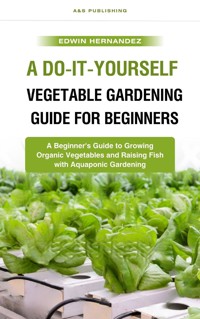
A Do-It-Yourself Vegetable Gardening Guide for Beginners
The Complete Manual for Successfully Cultivating a Fruitful Vegetable Garden
By
EdwinHernandez
Table of Contents
A Do-It-Yourself Vegetable Gardening Guide for Beginners
Introduction
Chapter 1
Vegetable Gardening 101
Why You Should Have a Vegetable Garden?
The Fundamentals of Vegetable Garden Planning
Growing Vegetables in Abundance
An assortment of other great veggies
Working the soil
Chapter 2: The Popularity and Benefits of Vegetable Gardening
Why You Should Grow Your Food in a Few Words
Gain better health
Chapter 3: Planning Your Veggie Garden
Choosing a Location for Your Vegetable Garden
Taking into account several sites
Checking the drainage of your soil
An ethnic pizza garden
Chapter 4: Tomatoes: The King of Veggies
Examining Tomato Variety
Consuming traditional red, rounded tomatoes
Examining all the various tomato colours
Looking at some savoury tomatoes
Introducing the relatives of the tomato
Boosting tomato growth
Pruning, planting, and trellising
Planting
Trellising
Pruning
Maintaining and fertilising your plants
Chapter 5: Meeting the Tomato's Cousins: Peppers and Eggplants
Making a lot of peppers
Those adorable bells
Sweet peppers that are long and spherical
The ornamental peppers are lovely.
Differentiating Eggplants based on Shape
Small and round
Tips for fertilizing and watering
Chapter 6: Growing Underground Crops: Carrots, Onions, and Potatoes
Carrots are a rabbit's (and gardener's) favourite root.
Examining some types of carrots
Introduction
Everyone enjoys delicious cuisine. We are all entitled to wholesome, delicious food. And growing your food is the best method to have delightful cuisine. Additionally, you don't have to be a farmer to achieve this. Growing your food is a satisfying and rewarding hobby, whether on a piece of ground in your yard prepared for vegetable cultivation, in a container filled with lovely, delicious options, or in a few veggies planted among your flowers and shrubs.
Gardening vegetables is relatively easy too. For thousands of years, people have been cultivating their own crops. Like any endeavour, getting started only requires inspiration, helpful guidance, and direction. For anyone who already produces vegetables or wishes they could have some of their food, Vegetable Gardening For Dummies, Second Edition is the book for you. To begin, all you need is some resolve. By choosing this book, you've already made progress towards your goal !
Chapter 1
Vegetable Gardening 101
Why You Should Have a Vegetable Garden?
Vegetable gardening has become less popular over time due to progress and prosperity. Growing your food is still crucial for maintaining a healthy body, mind, spirit, lifestyle, and community, even though it isn't as essential for survival as it formerly was. This realisation has just recently become more widespread. Vegetable gardening is becoming more popular as a hobby and a source of sustenance. Everyone has set up a vegetable garden in the White House, including the president and first wife. Officially, vegetable gardening is back!
Who can resist the taste, aroma, and texture of food harvested only moments before you had it? You'll understand what I mean if you've ever bit into a ripe, sun-warmed tomato and felt the juices and flavours explode in your lips.
However, growing vegetables is not just about flavour. It is about consuming locally produced, safe food. Knowing what was sprayed on that food is essential. It involves giving your loved ones wholesome food rich in vitamins and antioxidants (compounds that fight cancer). As you experiment with international cuisine utilising exotic products produced in your not-so-exotic garden, it's about building relationships with your neighbours and the local community. You can reduce pollution and global warming by not purchasing vegetables from a local grocery store that has travelled hundreds of miles. To regain some control over your life, it's about growing some of your food, even if it's just a jar of basil.
Check out Chapter 2 if you want to learn more about the prevalence and advantages of vegetable gardening.
The Fundamentals of Vegetable Garden Planning
When is the perfect season to begin growing vegetables? Right away! Here are the fundamentals for choosing where to grow yours:
To ensure you remember your project, choose a location close to your home that you pass by daily.
Locate a location with at least 6 hours of direct sunlight each day.
Locate a location with excellent soil.
Your new garden should be modest. Small raised bed gardens, container gardens, and kitchen gardens can produce just as much as a backyard that has been tilled. Start small, achieve success, and then expand (if desired).
What ought to be included in your new garden? Choosing which vegetables to plant won't be easy because you have a wide range of alternatives for what you can grow. The most crucial advice I can give you is to increase the foods you enjoy. Yes, folks, the taste is the key here. Therefore, if you don't like to eat beans, don't cultivate them despite what people may claim about how simple they are to grow. (Of course, you might have a different opinion after sampling some garden-fresh green beans.) Grow a variety of your family's favourite new and old vegetables. Additionally, experiment with a couple of different ones to expand your mind.
You can learn a lot of advice in Chapter 3 to plan your garden wisely.
Growing Vegetables in Abundance
Vegetables can be grown in your yard in various locations, not only in the backyard. These days, vegetables are attractive enough to take centre stage. To get you started, the following sections cover some of the most well-known. I hope you have lots of space!
Tomatoes
The most widely farmed vegetable is the tomato and for good reason. A fruit matured on the vine is incomparably superior to one picked green, gassed, and transported hundreds of miles to your local supermarket. You can choose between enormous plants that grow to the height of a garage and produce fruits the size of a softball and container kinds that make fruit the size of a pea. Even tomatoes can be grown in every rainbow colour except blue (although I wouldn't be surprised to see that colour one day).
Tomatoes need fertile soil, support, and a lot of heat. Stakes, cages, trellises, teepees, and arbours are necessary to keep plants erect and sturdy unless you're growing the dwarf variety. You only need a few plants to supply your family with tomatoes for most of the summer.
Peppers and eggplants
Although they are related to tomatoes, peppers and eggplants, they have slightly more uniform plant sizes. They make up for their lack of plant diversity with the diversity of their fruit, though. Pepper fruits can be shaped like bells or like long, thin tubes. Some are hot enough to burn your mouth, while others are as sweet as candy.
The colour progression of pepper fruits is stunning; they often begin green and end red. Try out orange, yellow, purple, lavender, purple, chocolate, and yellow fruits that can be eaten raw or used in various cooked meals. With new cultivars that yield unusually coloured fruits, such as white, purple, striped, and even orange, eggplants have also emerged.
You can grow peppers and eggplants if you can grow a tomato. They require similar growing environments. Additionally, I adore them as decorative delicacies. They look lovely in flowerbeds and pots and are edible as well. More information on peppers and eggplants is provided in Chapter 5.
Carrots, onions, and potatoes
Planting carrots, onions, and potatoes will help you get to the bottom of the problem. (I know, I couldn't help the wordplay!) Potatoes, onions, and carrots all thrive in chilly climates and soil. They can be sown either in the spring for an early summer crop or in the summer for a harvest in the autumn.
Here are some exciting details about each category (Chapter 6 contains further details):
Carrots: There are two types of carrots: short and squat and long and thin. Additional colours, including red, purple, yellow, and white, are available in addition to orange. Carrots can be challenging to start because their seeds are tiny and take so long to develop. But as they begin to grow, you'll soon be eating roots.
Onions: Depending on the kind, onions can grow in northern and southern climates. Some are sweet and can be consumed right out of the bag, while others are intense and are best cooked and stored for the winter. Onions may be grown from seeds, sets (bulbs), or plants.
Potatoes: Since you only need to plant a portion of the potato to produce new plants, potatoes are a simple cool-season crop. You'll swim in potatoes come summer if you cover the tubers with soil, mound them, and keep them watered.
Peas and beans
Beans and peas are related. Despite belonging to the same family and having some shared characteristics, they differ significantly in several respects!
Peas are cool-season plants that produce plump or flat pods, depending on the type. Some pea kinds allow you to consume the entire pod. With some, you only consume the inside peas.
Beans enjoy being warm. They are one of the most uncomplicated veggies to grow in them. They are available in bush, twining, and pole bean shapes.
Both make excellent garden veggies since, once they're established, they need little maintenance and fertiliser.
Cucumbers, melons, pumpkins, and squash
Cucumbers, melons, pumpkins, and squash are affectionately called "viners." They enjoy taking up space in the garden and providing plenty of fruit. However, you may still produce these space hogs even if you plant them in a small area. Modern cucumber, squash, and melon types can be grown in small raised beds or containers.
These veggies all share the need for heat, water, fertility, and bees. Bees? Bees, indeed. Bees are essential to most of these squash family crops' growth since they require cross-pollination to produce fruit. You can count on bees to do the grunt work if you cultivate other veggies, flowers, and herbs.
Only grow a few pumpkins, cucumbers or zucchini because some vegetables can be very productive. However, you can raise a lot to share if you want to share the produce!
Broccoli, Brussels sprouts, cabbage, and cauliflower
Cauliflower, cabbage, Brussels sprouts, and other vegetables develop similarly and require comparable conditions. However, the bits you eat are where they differ. Here's the skinny:
The plant is done and ceases production once the heads of cabbage and cauliflower are picked.
After picking broccoli heads, you will continue to receive additional broccoli side shoots for the duration of the season.
Similar to your wacky Uncle Louis are Brussels sprouts. He has a slightly off-putting appearance, and you are still determining his origin. Along a straight stalk, Brussels sprouts develop cabbage-like balls throughout. As soon as it stops producing due to the cold, keep picking the nodes, working your way up the stem from the bottom.
This set of vegetables is productive and makes a beautiful addition to a spring or autumn garden in a cooler climate. Chapter 9 contains more details.
Lettuce, spinach, Swiss chard, and specialty greens
Go to Chapter 10 and grow greens, such as lettuce, spinach, chard and wild greens like dandelions, if you're searching for immediate rewards. Gardens can be harvested as soon as your stomach grumbles and the leaves are big enough to nibble because you don't need to wait for them to develop into fruits (you're simply eating the leaves). They mostly prefer chilly temperatures, so begin planting and harvesting as soon as spring arrives.
Greens are among the most accessible and flexible vegetables to cultivate in containers. You may combine different lettuce varieties to create stunningly gorgeous and delectable hues and textures.
An assortment of other great veggies
I barely scratched the surface of what to cultivate for veggie variety in the earlier sections. You only need to stroll through the produce sections of your neighbourhood grocery store and ask yourself, "Do I like to eat that?" There are still so many more vegetables that can be grown—chapter 11 details more than 30 additional vegetables to grow, from asparagus to turnips. Be careful; you can become addicted and start growing so many vegetables that you must visit a restaurant. Planting vegetables can be a lot of pleasure.
Non-vegetable edibles
In the vegetable garden, don't restrict yourself to cultivating only veggies. That'd be a little smart! Your yard would benefit significantly from adding berries like blueberries, strawberries, and raspberries and herbs like basil, parsley, and chives. They look lovely, yield fruit, and provide flavour to food. Want some motivation? Here are a few recommendations:
Think about including a strawberry patch in your backyard.
Plant blueberry bushes or a raspberry hedge in your yard's landscaping.
Give herb plants their space in the garden or intersperse them with vegetable plants. In flower-filled planters, herbs also thrive. I enjoy growing rosemary in a deck planter every year because of its lovely foliage and alluring scent.
Cultivating berries and plants in an edible environment is extensively covered in Chapter 12.
Getting Down to Growing
A portion of your food will you be growing? Wait a minute! To get off to a successful start, you need a plan. Like driving, it takes a lot of time and work to return on track if you veer off course. Therefore, you must make a plan at the outset and follow it. A quick overview of growing vegetables from seed to table is provided in the following sections. After reading this section, turn to the chapters in Part II for all the specifics needed to succeed.
Choosing between seeds and transplants
Vegetables that may be sown straight from seed in the ground are the simplest to grow when starting a new garden. Purchase local transplants for vegetables that respond well to transplanting. (Some veggies can be prepared either way.) Here is a comparison between the two groups.:
Beans, peas, carrots, beets, and sweet corn are among vegetables that can be sown as seeds directly into the ground.
Tomatoes, peppers, eggplants, broccoli, cauliflower, cabbage, lettuce, cucumber, squash, basil, and parsley are a few examples of the veggies and herbs you can get as transplants in your neighbourhood garden centres.
Consider using transplants if your garden is small. Growing vegetables from seed will be less expensive if you have a more extensive garden.
Working the soil
The temptation is to stir the soil and plant after your vegetable seeds or transplants are ready. However, soil formation is one of the most crucial aspects of your gardening experience. To develop the best crops, your soil must be rich in nutrients, loose, dried out, and free of weeds and rocks. If you tend to the ground in your beds, it will grow to you by yielding nutritious, fruitful veggies with few pest and disease issues.
Work the soil by hand or with a tiller for a while. Compost should be added annually to maintain high fertility and improve usability. Check the earth to see whether it requires additional fertilisers.
Chapter 2: The Popularity and Benefits of Vegetable Gardening
In This Chapter
Knowing what makes food gardening such a popular activity
examining a few benefits of food farming
Welcome to the club if you're interested in growing your food (of course you are; you're reading this book!). Food gardening, also known as vegetable, fruit, berry, and herb gardening, is extremely popular in the United States and abroad. Why, you inquire? In a nutshell, people profit much from food growing. In this chapter, I outline the prevalence of food gardening in the United States and a few key benefits of growing your food.
More people are growing interested in food gardening
Food gardening is a fantastic backyard hobby, but it's also part of a growing movement among people who want to eat healthier, produce some of their food, and have more control over the standard of the food they consume. What better method to guarantee healthy food consumption than to cultivate it yourself?
The National Gardening Association (NGA) completed a poll early in 2009 that described food gardening in the US. Here are the findings:
Around 23% of families, or 27 million, had a vegetable garden in 2008. There have been 2 million more since 2007. The percentage of homes with food gardens increases to 31%, or 36 million households, if you include those growing fruits, berries, and herbs.
The typical person invests roughly $70 in their food garden every year. (I wish I could maintain such minimal spending!) The entire amount spent on food gardening in the country is $2.5 billion. Later in this section, I discuss how you benefit from that $70 compared to what you would spend on groceries.
Although the typical vegetable garden is 600 square feet, 83% of vegetable gardens are only 500 square feet or smaller. Most gardeners—nearly half—also plant some veggies in pots.
The typical vegetable gardener has no children at home, is married, has a college degree, and is at least 45 years old. And less than five years of gardening experience is common among nearly 60% of vegetable gardeners.
The most common motivations for growing vegetables are to make fresh food, save money, make better-quality food, and grow food that you are confident is safe, in that order. (Later in this chapter, I discuss several crucial reasons to cultivate food in more detail.)
You now have it. Many food gardeners are out tending to their crops, and their numbers are increasing more quickly than maize in July. Even if you only have a modest food garden, the combined effect of all the parks is significant. Want more evidence? Let me demonstrate!
The total amount of money made through food gardens in America is the gross national garden product (GNGP). Here's how the NGA calculated it (time for some enjoyable maths!):
Thirty-six million families grow fruits, berries, vegetables, and herbs nationwide. The typical garden is 600 square feet in size. According to the NGA, a garden can yield around half a pound of vegetables per square foot yearly in a typical garden, which amounts to around 300 pounds of veggies. Vegetables cost about $2 per pound per season, so an average vegetable garden yields $600 worth of produce. Therefore, Americans spend an average of $70 a year to produce $600 value of food. Wow! That's a good return!
In the aggregate, 36 million families spend $2.5 billion annually on vegetables, generating a GNGP of more than $21 billion. I can support that stimulus idea. It's good! (You don't think it's true? See how you can save that much money by producing your vegetables in the section "Save some cash" later in this chapter.)
Why You Should Grow Your Food in a Few Words
People tend to go to the garden when things are tough financially, which is practically predicted. It occurred during the 1920s' Liberty Gardens project, the 1940s Victory Gardens initiative, and the 1970s rise in food and energy prices. Similarly, food gardening has emerged as an easy and satisfying response to the issues of food safety, global warming, carbon footprints, and pollution, as well as a desire to strengthen ties to the planet and our communities.
Food gardens are no longer limited to backyards. People grow food in containers on decks and patios, in community gardens, at senior centres, in schools, and even in public front yards. Why not allow everyone to benefit from food gardens if they are attractive and profitable? In the following sections, I outline some benefits of growing your food.
Gain better health
Everyone is aware that we should consume more fruits and vegetables each day. Not just mom's wise counsel, though. Numerous veggies are rich in fibre, water, potassium, and vitamins A and C. According to a growing body of research, fresh fruits and vegetables provide your body with the necessary vitamins and nutrients to function correctly.
It reveals that many of these foods are packed with phytochemicals and antioxidants. These specific substances help prevent and treat illness.
Even while some fruits and vegetables are higher in particular nutrients than others, the best method to ensure you get a good variety of these substances in your diet is to "eat a rainbow." You can obtain all the nutrients you want for good health by consuming a range of fruits and vegetables of various colours.
Consuming fruits and vegetables is typically a healthy idea, but there are growing worries about the food's safety and quality in supermarkets.
Warnings appear to be issued annually for anything from E. coli in spinach to Salmonella on jalapenos. Additionally, some consumers worry about pesticide residues in their food. The fruits and vegetables most likely to contain pesticide residues are included as the "Dirty Dozen" on a list. The list consists of strawberries, bell peppers, spinach, apples, nectarines, peaches, pears, imported grapes, bell peppers, celery, red raspberries, potatoes, and spinach. Growing your food is the best approach to guarantee a source of food that is safe and uncontaminated by biological agents or pesticides. You'll be fully aware of the methods used to cultivate those lovely vegetables.
Chapter 3: Planning Your Veggie Garden
It would help if you did a little planning before going out and till the entire yard to construct a vegetable garden. I am aware of that. You dream of juicy melons, delicious tomatoes, and fresh salad greens from your garden. But as my father would say, "You gotta have a plan, Charlie." As a result, I provide you with a simple strategy in this chapter for choosing and planning the ideal vegetable garden for your yard and requirements.
Choosing a Location for Your Vegetable Garden
Site, sun, and soil are the key components essential for the ideal position when deciding where to place your plot. In the following sections, we'll go over each of these in more detail and offer some ideas as you scan your garden for the ideal location for your plot. Some of these concepts are illustrated visually in Figure 3-1.
If you don't have the ideal garden location, don't be disheartened; only some gardeners do. Just attempt to maximise what you already have.
Taking into account several sites
The very first step in designing a vegetable garden is selecting a location. You may think this is a difficult decision, but don't worry—common sense played a significant role in it. Keep these things in mind while you search for a location for your garden:
Keep it beside your house. Place your garden where you will see it daily to help yourself remember to take care of it. A vegetable garden is also a popular gathering spot, so position it adjacent to a walkway. (In a later chapter of this book, I discuss garden walkways.)
Traditionally, vegetable gardens were only allowed in some remote areas in the backyard. Sadly, if something is out of sight, it is also out of mind. Even in the front yard, I like to grow veggies front and centre. You can then remember what needs to be done and enjoy the results of your labour. Additionally, it's a beautiful opportunity to interact with the neighbours as they pass by and gaze at your plants. You might even be moved to give them a tomato.
Make it simple to get to. Ensure a truck or automobile can easily access your garden if you need to bring in soil, compost, mulch, or wood. Otherwise, you'll have to exert much effort transporting these necessities from one end of the yard to the other.
Have a water supply nearby. Locate your garden as close to an outdoor tap as you can. Dressing hundreds of feet of hose around the yard will be more effort and frustrating to water the garden. Also, could gardening be more enjoyable?
letting your plot receive the sun
For maximum results, vegetables need a sufficient amount of sun. For good yields, fruiting vegetables like tomatoes, peppers, beans, squash, melons, cucumbers, and eggplant require at least six hours of direct sunlight daily. However, the amount of the sun need not remain constant. You can enjoy three shaded hours in the morning and three more in the late afternoon.
Don't give up, though, if your small corner of paradise only receives 5 or 6 hours of sunlight daily. You have a few choices.:
Eat-leaf crops like lettuce, rocket, pac choi and spinach perform decently in a shaded area, with the sun shining directly on the plants for three to four hours daily.
Despite needing more light than leafy vegetables, root crops like carrots, potatoes, and beets can thrive with only 4 to 6 hours of sunlight daily.
Consider growing a mobile garden if you need more sun to cultivate fruiting plants like tomatoes and peppers. Plant these crops in containers and relocate them yearly to your yard's sunniest areas. More on this strategy is covered in Chapter 18.
Remember that the seasons affect how much sun and shade there is. Eventually, trees, structures, and the long shadows of late autumn and early spring may shade a sunny place in the middle of the summer. It's crucial to choose a sunny location in the winter and the summer if you reside in a region with a mild winter temperature, such as regions of the southeastern and southwestern United States where vegetables can be grown almost all year round. In general, locations with direct southern exposure receive the most sunlight during the winter
Depending on the climate and the veggies you're growing, several vegetable garden plots can be scattered across your yard. If the only sunny space you have is a little plot of land near the front of the home, plant a row of peppers and tomatoes there. Plant lettuce and greens in a plot ideal for growing food but only receives morning sun, such as one next to a rear door.
Vegetable plants will compete for water, nutrients, and light if your garden receives shadow from surrounding trees and shrubs. The drip line, or the tree's outermost foliage reach, barely exceeds the tree's roots. If possible, keep your garden away from nearby trees and shrubs' root zones, which are the regions that run from their drip lines to their trunks. If avoiding root zones is impossible, make sure you fertilise to compensate for it and give the veggies additional water.
Vegetable gardens are particularly troubled by black walnut trees because their roots emit juglone, which stunts the growth of various plants, including tomatoes. Black walnut roots frequently cause plants growing there to wilt and die. Try to keep a distance of at least 50 feet between walnut trees and your garden.
Checking the drainage of your soil
After examining your potential garden's site location and solar exposure, you should pay particular attention to the third component of the "big three": the soil. The ideal soil is loamy, rich, well-drained, and has few rocks (as I explain in Chapter 14). Unfortunately, it isn't easy to find that kind of soil. But adequate water drainage is an even more vital component of healthy soil. Both air and water are essential for plant roots, and water-logged soils are deficient in both. Following rain, water pools on the soil's surface, indicating inadequate drainage.
Dig a hole about 10 inches deep, then fill it with water to test the drainage of your soil. The next day, fill the gap again after letting the water drain. Please keep track of how long it takes the water to drain. Your soil drainage needs to be improved if water lingers in the hole longer than 8 to 10 hours after the second filling.
Clay-based soils are frequently regarded as heavy. Heavy soils don't generally drain as well as sandy soils do. The drainage of your soil can be improved by adding a lot of organic matter (I go into great detail about how to accomplish that in Chapter 14). Alternatively, you can construct raised beds in a location with poor drainage (see "Deciding on hills, rows, or raised beds," later in this chapter).
The slow draining of water is sometimes a terrible thing, though. Additionally, soil can be arid. Very sandy soil must be watered frequently when it dries out. Again, sand soil can hold more water when there is a lot of organic stuff.
If your soil has a lot of large boulders, choose a different location. Alternatively, think about using raised beds. Clay-rich or very sandy soils can be improved, but extremely rocky soil can be a real pain. It might be impossible to grow plants there.
Knowing different types of vegetables
It's a good idea to have some basic knowledge of the available types before you start drooling over the delicious vegetables you see in catalogues, garden centres, and online. Before planning your garden, choose your vegetable kinds to ensure you have the right area and the most critical growing conditions. (Later in this chapter, I describe how to plan your garden.)
A variety is a choice of a specific vegetable with some recognisable, preferable characteristics. The following qualities could be among them:
Some kinds are very well adapted to particular regions and temperatures. For instance, some tomato cultivars produce tasty fruit in the chilly, foggy coastal areas of the Pacific Northwest. Additionally, some bean cultivars are more suited to the arid, hot climate of the American Southwest.
Appearance: You can choose from a rainbow of fruit and leaf colours, such as purple peppers, yellow chard, and orange tomatoes. Leaf textures and shapes range from frilly to smooth to puckered. The flowers of some vegetables, such as okra and eggplant, are attractive in their own right. You get the idea. The more beautiful the vegetables, the more beautiful the vegetable garden — and the more stunning the food.
Features of cooking and storing: For instance, some bean and pea varieties freeze more successfully than others. While some species of winter squash can be preserved for months, others must be consumed immediately.
Days till harvest (or days until maturity): Days to maturity measure how long a vegetable planted from seed (or transplants) typically takes to mature and yield a crop. This figure is crucial for vegetable gardeners who reside in climates with brief summers. The average days to maturity are listed for each vegetable species in the appendix. Part II contains details on each vegetable's distinct variety.
Additional harvest season: For instance, a specific type of maize may ripen early or late in the growing season. Harvesting can begin 60 days after sowing and last for 5 or 6 weeks if you grow types that mature at various periods. Regarding other kinds of the same vegetable, seed catalogues and packaging frequently categorize variations as early, mid, or late season..




