


13,19 €
Mehr erfahren.
- Herausgeber: Hammersmith Health Books
- Kategorie: Ratgeber
- Sprache: Englisch
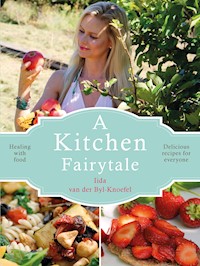
Written by 'expert patient' Iida, who has used the principles of plant-based whole foods with no added sweeteners or oils to regain her own health, this is a beautifully illustrated cookery book that explicitly supports the approach of the Paddison Program for Rheumatoid Arthritis and may also provide help with other autoimmune conditions. It shows how anyone eating according to those principles can do so simply, sustainably and enjoyably – and inclusively so that family and friends can eat the same way whether they have health issues or not. The recipes are graded for their level of healing, with the gentlest badged 'Humble & Healing' to indicate a good starting point. Clear instructions show how to fry, bake and roast without added oils. The author includes plant-based, whole-food versions of favourite recipes, from burgers, 'creamy' sauces and curries to brownies and pancakes, all illustrated throughout with beautiful photographs from Iida's collection. With Iida's guidance, going plant-based is simple, rewarding and delicious!
Das E-Book können Sie in Legimi-Apps oder einer beliebigen App lesen, die das folgende Format unterstützen:
Veröffentlichungsjahr: 2018
Ähnliche


















2First published in 2018 by Hammersmith Health Books – an imprint of Hammersmith Books Limited 4/4A Bloomsbury Square, London WC1A 2RP, UKwww.hammersmithbooks.co.uk
© 2018, Iida van der Byl-Knoefel (text and photographs)
All rights reserved. No part of this publication may be reproduced, stored in a retrieval system, or transmitted in any form or by any means, electronic, mechanical, photocopying, recording, or otherwise without the prior written permission of the publishers.
The information in this book is of a general nature and is meant for educational purposes only. It is not intended as medical advice. The contents may not be used to treat, or diagnose, any particular disease or any particular person. Applying elements from this publication does not constitute a professional relationship or professional advice or services. No endorsement or warranty is explicitly given or implied by any entity connected to this content.
As always, if you are have pre-existing health issues and especially if you are taking any medications, you are advised first to consult your health practitioner before making any changes to your lifestyle and diet.
British Library Cataloguing in Publication Data: a CIP record of this book is available from the British Library.
Print ISBN: 978-1-78161-134-0 Ebook ISBN: 978-1-78161-135-7
Editor: Georgina Bentliff Cover design: Madeline Meckiffe Text designed and typeset by: Madeline Meckiffe, Julie Bennett and Iida van der Byl-Knoefel Production: Helen Whitehorn of Path Projects Ltd Printed in Poland on behalf of One World Books Ltd
3Dedication
To Fred For being the best person in the world, for walking next to me throughout this journey and for contributing to this book by always spotting any lack of crunchiness in a recipe
4
5
Contents
8
Forewords
Iida is a breath of fresh air to the plant-based community. She is driven by a sincere passion to help others after recovering from a very serious autoimmune condition and adopting ground-breaking measures to treat it naturally.
Iida and I first met on my Paddison Podcast, where she shared her incredible health transformation. What struck me about Iida was that she had grand plans for the future. She spoke with excitement about ‘what’s next’ and provided her view of a happier, healthier world through a plant-based diet. The episode with Iida was far reaching, and the combination of her kind nature, health recovery, and sound knowledge of autoimmune fundamentals inspired thousands of people worldwide.
Since then she has garnered a large loyal audience, who admire her work equally as health advocate, plant-based chef, and photographer with a girl-next-door like- ability. So it was only a matter of time until she pulled together the best of her cooking and photography work and presented it for the benefit of others on a grander scale.
It’s an honour to introduce Iida’s A Kitchen Fairytale to the world.
It’s bright. It’s light. It’s fresh, and it’s brimming with potential for what can be in the future.
Not just for the person Iida will become, as a highly popular voice of clarity in the clouded space of nutrition, but also for the broader human race. For A Kitchen Fairytale presents wholesome, delicious, beautiful recipes that come wrapped up in a big, warm bundle of hope. Hope for what can be achieved on an individual level when we follow the right plan and make healing a must – alongside the hope for what might be achieved as a civilisation if we were to follow her eating style. A Kitchen Fairytale recipes will make the human race healthier, reduce our collective carbon footprint dramatically, and correct the erroneous view that animals are a necessary food.
Enjoy A Kitchen Fairytale and feel proud, joyful and righteous that you’re consuming plant-based foods. Because it is the way of the future, and with Iida’s labour of love it’s now become tastier than ever.
Clint Paddison, founder of The Paddison Program for Rheumatoid Arthritis
Forewords | 9
10
I am honoured to be able to write this dedication in support of this wonderful book. Iida and I met through our shared passion for promoting plant-based nutrition for optimal health and wellbeing. Iida has healed her own body through plant-based nutrition and is now committed to helping others heal too.
The urgency of the plant-based message cannot be overstated. We are in the midst of a full-blown epidemic of diet-related chronic disease. The human race is fatter and sicker than ever before. The most common causes of death and disease, including cardiovascular disease, cancer, diabetes and hypertension, are directly related to the food we eat. Studies suggest that up to 70% of chronic disease could be prevented by making lifestyle changes, with diet changes being of greatest importance. So where have we gone wrong? Since the end of the second World War, the diet of well-resourced Western countries has become increasingly defined by high amounts of animal-derived and processed foods. This has been made possible by the advent of industrialised agriculture and fast-food outlets. Our demand for these foods is also contributing to the destruction of our planet and its natural resources. The shift from a predominantly plant-based, low-calorie, nutrient-dense diet to one that is calorie dense, yet nutrient deficient is fuelling the rise in chronic disease. As under-resourced countries become more affluent, they are adopting the food habits now prevalent in the West, with devastating, yet predictable, consequences. Medical advances, remarkable though they are, rely on pills and procedures to help control the symptoms of disease, yet most conventional medical treatments fail to address the root cause – our diet.
Iida’s journey back to health using a dietary approach is remarkable and inspiring. Yet it should not come as a surprise. We have known for decades that many common diseases can be prevented and reversed by adopting a predominantly whole-food plant-based diet, low in added fat, salt and sugar. In addition to arthritis, scientific studies have reported reversal of diseases such as severe coronary artery disease, diabetes, early stage cancer, inflammatory bowel disease and other autoimmune diseases through the adoption of a diet made up of vegetables, whole grains, legumes and fruits. Some of the longest lived, healthiest populations in the world are eating a predominantly unprocessed diet of whole plant foods rich in fibre and other plant nutrients and low in animal fat and protein.
In this book, Iida shares her knowledge and expertise with recipes that will help you and your family enjoy delicious, health- promoting food. Share this book with everyone that you can, because Iida’s story should not be a secret. We all have the power to heal our body through food and in doing so we will begin to heal our planet.
Dr Shireen Kassam Consultant Haematologist, London, UK
10 | Introduction
11
Welcome
Welcome to a world of delicious and healing plant-based foods. I have been creating these recipes while healing my body from inflammatory arthritis, very similar to rheumatoid arthritis; a chronic disease I was told, until I turned it around with a change in diet.
All the recipes in this book are humble and nourishing, as well as delicious and mostly very easy to make. For me, and for so many others, moving onto a plant-based diet has turned out to be a tremendously satisfying experience and I can now see how people have thrived on eating like this for thousands of years. There is nothing new
about going plant-based; rather, it is a move back to a humble diet that has worked for us humans throughout history, without all the artificial nonsense that is put into our foods today.
So if you are new to plant-based cooking, I am absolutely delighted to see you here, and I hope that you will enjoy widening your senses and learning all about this wonderful way of cooking.
If you are already plant-based, I am equally pleased to see you here and I hope that this book will give you some further inspiration in the kitchen.
Iida
12 | Introduction
My Story
I used to think that I had a healthy diet; I would have a good breakfast of salmon, spinach and eggs, or rye bread with a slice of cheese/ham/turkey and veggies, or yoghurt and granola. I would avoid ready-made meals and processed foods as much as I could, and choose full-fat dairy products, because who knows what goes into the low fat ones? I wouldn’t deprive myself of ‘treats’, so every now and then I would have a burger with fries, some ice cream or pizza, and Sunday roasts were always a great end to the week.
I also ventured into the world of low-carbohydrate, high-fat and protein, because everyone is always talking about how carbohydrates make you put on weight and leave you bloated, causing high blood sugar spikes that then send you crashing down, longing for something sweet. Lean protein in the shape of white meat and fish would surely be the way to build a strong, healthy body, right?
Well, that didn’t work so well for me, and at the age of 32 I developed a form of inflammatory arthritis, similar to rheumatoid arthritis (RA); in simple terms a state where my joints were being attacked by my own immune system.
From July 2014 until August 2015 I suffered from this vicious disease which made my left knee so swollen that I had
to walk down the stairs with my left foot first, as my left knee wouldn’t bend far enough to take a normal step. Some days I could hardly walk the four minutes to the grocery shop and I had to decline invitations to concerts and other events with my friends, because I knew that I wouldn’t be able to stand up for more than a few minutes before my knee began to swell. I nevertheless had the same energy as before, and wanted to do everything that I had been used to, so having my body shut down on me like that was a horrendous experience.
Doctors, osteopaths, homeopaths, acupuncturists and physiotherapists were all unable to help relieve my pain and a year after the onset of the symptoms, in the summer of 2015, I started taking the medication sulfasalazine, as prescribed by the rheumatologist. This was probably the most awful experience to date; I felt like I had metallic poison going through my veins and it gave me a terrible, unnatural headache, unlike anything that I had experienced before. After two weeks I ended up in the emergency room having had an allergic reaction to the medication. I stopped taking it immediately and that is when I decided to get well on my own.
I embarked on my own intensive research to see if the condition could be healed naturally and I noticed that whenever
Introduction | 13
14
others indicated that they had recovered from rheumatoid arthritis, there would be a mention of dietary change. I began by excluding dairy, gluten and sugar, and greatly increased the anti-inflammatory foods in my diet. Not only did the latter result in a decrease in pain and inflammation, but it also made my cooking extremely tasty – and this involved simple ingredients like garlic, ginger and turmeric!
Around the same time I also discovered yoga and so clearly remember how some very simple exercises took away the pain within 10 minutes (see the yoga stretch that helps my knees on page 16). I started doing yoga every morning and evening at home – 10 minutes to an hour each session. The swelling in the knee went down and the pain around my body started disappearing; I could feel the difference immediately.
Less than a month after implementing these changes I went to see my rheumatologist, who told me that my blood test results showed that I was back to normal. Hearing her tell me this was just beyond amazing, as it showed that the natural approach had worked, where the drugs had not. I told her my story, expecting her to say that the results had nothing to do with the change in diet but on the contrary, and to my surprise, she told me to continue and also asked if she could pass on my recommendations to her other patients who were asking for a natural way of beating the disease, to which I happily agreed.
However, I still knew that I hadn’t been able to get to the bottom of the disease because though a lot of the symptoms had gone away with the initial food elimination, persistent inflammation that wasn’t attributable to any one food still lingered.
I also wanted to remove the fear of being stricken by this disease again. After further online research, I found the Paddison Program for Rheumatoid Arthritis (PP) where Clint Paddison addresses the underlying cause of the condition before presenting steps to help heal the body from the inside and give it the chance to reverse various forms of inflammatory arthritis. What Clint Paddison brought to light, and which I hadn’t discovered during my own research, was that the severity of my own immune system attacking my joints was being increased by fat and undigested proteins in my diet. The remaining inflammation was therefore resolved by going through the elimination process of the PP, followed by long periods of eating gut-healing foods and doing certain types of exercise. As a result, since October 2015 I have been on a no-oil, whole-foods plant- based diet, where fruits, vegetables, whole grains and legumes take centre stage. I have excluded all meat, fish, egg and dairy products, as well as vegetable oils, because extracted oils, being pure fat, interfere with the digestive system. After several months on the PP, I was able to reintroduce foods with higher fat content, like nuts, olives, coconut and avocados, that had previously caused swelling in various joints; as a result, the recipes in this book reflect this progression.
The PP was crucial to my healing process and as an added bonus it steered me in the direction of a plant-based lifestyle. I do, however, recall how hard it was to start cooking in such a different way; this book is my means of sharing some of the delicious recipes that allowed my body to continue to heal after the initial phases of the PP. Following on from the foundation principles of the PP, these recipes do not
14 | Introduction
15
16
contain any animal-derived products or oils that may aggravate the healing process.
This diet works like a dream; the symptoms of arthritis have disappeared and my test results are back to normal, which is something that the doctors very rarely, if ever, see. The inexplicable stomach pains and irritable bowel syndrome which I used to experience are also gone. I never get cravings for sweet ‘treats’ because my body is so satisfied with all the goodness that it derives from whole foods, and I have considerable amounts of energy.
Yoga and exercise
I started using the cross trainer at the gym in February 2016 and my knee responded well very quickly and grew increasingly strong while the pain and swelling subsided further. I would hop on it 3-4 times a week for 30 minutes; I initially started on the lowest resistance and within a couple of months I had worked my way up to the highest resistance. This was followed up
with some lighter weight training, a lot of stretching and yoga.
My favourite yoga stretch for the knees
Lie flat on your back on the floor, breathe in deeply and bring your knees up towards your chest. At the same time, lift your head and upper back from the floor, and reach for the bottom of your feet with both hands. Hold your feet and your breath for five seconds, then let go, lean back and lower your legs and head back onto the floor slowly while you breathe out. Repeat five times. You can alternate by lifting up one foot at a time.
This was the exercise which made the most positive impact on my knee at the very beginning of my journey. It also helped me discover yoga, as it immediately took away the pain in my knee and left it pain free for several hours. Initially I couldn’t get my knees anywhere near my chest, as one in particular was so swollen, but after about
16 | Introduction
17
a month or two I was able to rest my knees on my chest – great proof that the exercise was helping. I still do this move about five times a week.
Where I am today
I haven’t taken any medication since those two weeks in August 2015. Overall, the inflammation which caused the arthritis is gone and my test results remain normal, including iron and calcium levels. Healing the body naturally is a slower process than we are used to with modern medication, where pain and symptoms are quickly masked. With inflammatory arthritis, the workings of my gut were essentially harmed from the food that I used to eat, so I am still in the process of healing my gut, slowly reintroducing foods and observing how my system reacts to them. Eating something too high in protein or fat results in a slight swelling in a finger or knee, but this recedes after a few hours. I expect to eat like this for a while longer, gradually introducing new foods and enjoying the ones which I can tolerate.
Once my gut is completely healed, I feel sure that I shall remain a happy plant-based eater for the rest of my life, given how great it makes me feel and knowing the positive effect which it will have on my future well-being. I have learned to listen to my body in a way which I had never expected, and if something feels wrong, I try to establish why that is, instead of rushing for painkillers or other drugs which we use so liberally these days.
We sometimes have to take medicine and are fortunate to live in times where science in that field is so advanced. However, I find that we often rush to treat the symptoms instead of investigating the underlying causes of so many of our modern-day diseases, and this therefore often keeps people on medication for the rest of their lives, even though there is an alternative solution close at hand. The established medical profession acknowledges the connection between diet and certain diseases, and it is also therefore logical that we should seek solutions to various other conditions in a plant-based diet.
A plant-based diet and disease today
The body is such a remarkable instrument, always working to heal itself. Just think about when you accidentally cut your finger and how quickly it heals – we don’t even question whether it will heal or not, we just know it does. The same process happens on the inside, where constant healing is taking place; in my case, given the right conditions, my dysfunctional digestive system was able to heal, leading to the end of arthritis.
We hear about miracle cures for everything these days so I know how daunting it can be to read about yet another way of fixing the problem. For me, however, learning about a plant-based, whole-food diet just made such sense and observing how quickly my body reacted to it finally convinced me.
I like to think about it like this: we humans are part of nature and have been living ever so close to it for millennia. These days, however, with our modern cities with their amazing, advanced technology, it is small wonder how easy it is to forget how complex nature is, including the foods which are part of it. The nutrients in whole foods are so beautifully balanced that, when we consume them in their natural state, we obtain all the nutrients which our bodies require to function properly.
Today however, so much is readily available in a pre-packaged form that we have moved away from the nutrition which we evolved to eat. During the course of evolution our ancestors most likely wouldn’t have started their days with large cups of caffeinated drinks filled with sugar and dairy, and they probably wouldn’t recognise half the ways that meat is processed and presented as foods these days.
We also tend to eat like kings and queens three times a day, so no wonder our bodies are taking the strain and manifesting discontent through different diseases. The most distressing aspect is seeing these illnesses starting to affect younger and younger people.
While we continue to eat our super- delicious processed, ready-made foods we also experience all these health problems, and turn our attention to miracle cures, be they single nutrients in the shape of supplements to prevent specific diseases, or pills and drugs which suppress the symptoms, or diets promising a quick fix.
At the moment, some of the most popular diets are the high-protein, high-fat ones – I should know, because I was cutting down on carbohydrates like bread and pasta, and
18 | Introduction
19
20
21
increasing the amount of eggs, fish and white meat before I became so very sick. Increasing evidence, however, now shows that it is the vast amount of animal protein in our diet that is the direct link to many of the health disorders we are facing.1
The day I was prescribed medication for arthritis was the day on which it occurred to me that the emphasis on palliative care rather than addressing the underlying root causes was a strategic error. I eventually realised that all along I had been aggravating my system with the very foods that I thought were keeping me healthy, and how grateful I was to learn that I could stop the vicious circle by swapping all the animal-based foods for a rainbow of grains, vegetables and fruits. I am nevertheless grateful that I had a quick stint on medication, because during the first few weeks of changing my diet, which can be tough with only very humble foods on the menu that allow the gut to heal, I was able to think back to how awful the medication had made me feel, and suddenly that spoon of buckwheat tasted mighty delicious. Now, with the profound adaptation of my taste buds, buckwheat tastes amazing as it is.
More and more doctors around the world are moving into lifestyle medicine and guiding their patients through a transition to a plant- based diet to prevent, halt and even reverse conditions like diabetes and heart disease, which have been considered chronic. These patients also routinely report improvements in other conditions, like osteoporosis, high cholesterol, high blood pressure, cancer, multiple sclerosis, autoimmune diseases (been there!), headaches, acne, asthma, allergies, colds and inflammatory bowel disease, to name but a few.2
Dr Colin T Campbell goes into great scientific detail about the link between animal protein and disease in the book The China Study. In Forks Over Knives, Alona Pulde, MD, and Matthew Lederman, MD, further explore why we are so unwell despite all the advanced science and modern technology now available, and Dr McDougall’s website is loaded with free information on how various health conditions are improved as well as cured and reversed with a plant-based diet, in addition to welcoming people on-site with more hands-on guidance.
Just to add another angle to the high-protein diet debate, we all know by now that the amount of meat which we currently consume in the Western diet has a profoundly negative impact on the environment. This should make any one of us stop to reflect on whether that steak on our plate is worth it. I for one wouldn’t want my children, nieces or nephews to look at me one day and ask why we didn’t do anything, even though we knew that our actions were directly harming their future.
What can I expect from a plant-based diet?
This cookbook is a collection of all the recipes created while healing my gut. Each chapter includes foods that I was able to tolerate early on as well as more advanced recipes for wwhen the gut is able to tolerate a wider range.’
The recipes that I have found to be kindest to the system have been labelled with a ‘Humble and healing’ sign and those are the recipes to which I return whenever I want to reset my body – for example, after having done a lot of travelling and fallen out of my regular routines.
Introduction | 21
22
23
One day of eating these basic foods is usually enough to stop any inflammation and get back into balance, and I can then continue where I left off. During all this time, the symptoms have kept diminishing steadily, so I know that eventually falling out of routines won’t have any effect on my health. For now, I am still careful with the foods I know I am still reacting to slightly – mainly lentils – but when I do have them I make sure to add a huge bunch of baby spinach or kale to help break them down in my gut.
If you are on the Paddison Program, the best approach is to follow the first four phases of the Program exactly as directed – after that, all the recipes in this book are an expansion of everything which you can eat beyond that point.
When it comes to healing the gut, our tolerances are individual, so the important thing is to pay attention to how the foods make you feel and not to rush into trying too many new foods in one go. If there is anything in these recipes which you cannot yet have, simply exclude that ingredient or replace it with foods that you can tolerate; patience is key and eventually you will be able to have all of these whole foods again. For example, I wasn’t able to eat bell peppers for years as they used to give me severe stomach aches, but now that I have given my gut the chance to heal, these vegetables are back on the menu again, to my great surprise and delight.
I know very well how intimidating it sounds to stop having meat and dairy – so what is there left to eat? Well, first and most importantly, when eating like this you will not go hungry or feel unsatisfied and your system will get all the vitamins, minerals, fats, proteins and carbohydrates that you
need. Within a few days you may notice that small issues which have bothered you health-wise are easing up, and this might be just the push that you need to keep going. Do have a look through this book and maybe challenge yourself to follow a plant-based diet for a month to see how you get on. A month out of your whole life is really no big deal; you can definitely do it! Resetting your body like this and giving it a rest from processing all that heavy food will always be a good thing, so don’t be afraid to give it a go.
In my experience, the biggest difference when going plant-based was that I had been used to seeing my meals based around meat or fish, with maybe some potatoes or rice and veggies on the side. Suddenly, centre stage of my plate was taken up by potatoes, sweet potatoes, rice, pasta, grains or bread – with lots of beautiful vegetables, beans, lentils and nuts as accompaniment. I also learned to incorporate a great deal of fermented foods, as they contain probiotics which will help improve the immune system and the digestive function. My favourite ones are brown rice miso, kimchi and sauerkraut and I do also take probiotic capsules every day to further help my gut to heal.
After going plant-based I very quickly decided that I didn’t want to miss out on my favourite foods, so I made a conscious effort to create plant-based versions of dishes that we all love, like lasagne, burgers, chillies, stir-fries and pasta with various sauces, and you will find them all in this book.
It has been a fascinating and unexpected journey to relearn everything that I thought I knew about nutrition and health. I know that it is confusing to get your head around this new way of
Introduction | 23




