


Erhalten Sie Zugang zu diesem und mehr als 300000 Büchern ab EUR 5,99 monatlich.
- Herausgeber: Icon Books
- Kategorie: Ratgeber
- Sprache: Englisch
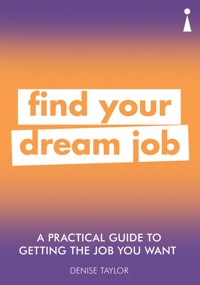
Introducing Getting the Job You Want supports you through all the stages of finding your perfect job – from organisation and preparation to the different ways to implement a job search campaign. In a challenging job market you need to create a resumé that will sell you, and to be well prepared for interview. Both new graduates and those returning to the job search will learn simple yet effective techniques from award-winning career psychologist, Denise Taylor.
Sie lesen das E-Book in den Legimi-Apps auf:
Seitenzahl: 203
Veröffentlichungsjahr: 2013
Das E-Book (TTS) können Sie hören im Abo „Legimi Premium” in Legimi-Apps auf:
Ähnliche


















First published in the UK in 2012
by Icon Books Ltd,
Omnibus Business Centre, 39–41 North Road, London N7 9DP
email: [email protected]
www.iconbooks.net
This electronic edition published in the UK in 2012 by Icon Books Ltd
ISBN: 978-184831-506-8 (ePub format)
ISBN: 978-184831-506-6 (Adobe eBook format)
Text copyright © 2012 Denise Taylor
The author has asserted her moral rights.
No part of this book may be reproduced in any form, or by any means, without prior permission in writing from the publisher.
Typeset in Avenir by Marie Doherty
About the author
One of the UK’s top career strategists, Denise Taylor is a chartered psychologist with an MBA. She is an Associate Fellow of the British Psychological Society and an Advanced Registered Guidance Practitioner.
Through her double-award-winning Amazing People Career Coaching Company, Denise offers inspirational and practical guidance, using an open, direct and supportive coaching style. Many people offer career and job search coaching; what has made Denise stand out for over 25 years is how she uses her energy and creativity to identify new trends and adapt and improve traditional approaches for the benefit of her clients.
Her career books include How to Get a Job in a Recession and Now You’ve Been Shortlisted, and her eleven ebooks include How to Use LinkedIn to Find a New Job. She also wrote Fat to Fantastic, an inspirational story of how she lost over 10½ stone in weight through healthy eating and challenging fitness routines.
Denise regularly appears as an expert at career forums, on radio and in the British press, including The Times, the Sun, Esquire, Metro, the Daily Mail and the Guardian.
www.denisetaylor.co.uk
www.amazingpeople.co.uk
Twitter – @amazingpeople
Facebook – www.facebook.com/amazingpeopleUK
Contents
Title page
Copyright information
About the author
1. Introduction
2. Be clear on your goal
3. Understand your target using research
4. Networking
5. Fact-finding interviews
6. The CV
7. Getting ready for your job search
8. Creating your message – the pitch
9. LinkedIn
10. Making applications
11. Cover letters
12. Hidden job market
13. Interview preparation
14. The interview
15. Phone and Skype interviews
16. Staying motivated
17. The job offer
Index
1. Introduction
Why do some people find it easy to get the career move they want while others flounder and give up? A lot of it is down to what goes on inside their heads: when people think they will be successful, they probably will; but if they doubt themselves, their likelihood of success is slim.
I’m going to talk you through a process to ensure you stand the very best chance of success in getting the career you want. As a psychologist, I’ll be including relevant and helpful psychological theory, but only when it makes a difference.
This book is full of practical advice, helpful tips and facts. It’s also easy to read and focused on helping you to achieve your goals.
I want you to be a HERO to achieve your goals. I was introduced to the HERO concept by Professor Fred Luthans, University and George Holmes Distinguished Professor of Managementat the University of Nebraska–Lincoln whose current research focuses on positive psychology. Being a HERO involves:
Hope – that you will be successful and persevere as you work towards a goal.Efficacy – the self-confidence and the belief that you will succeed, and that you will put in the necessary effort.Resilience– to bounce back from disappointments and problems.Optimism – a positive mindset that you will succeed both now and in the future.Without the belief that you can achieve your goal you may as well not even get started. But it can’t be just a dream or a goal without foundation; you have to be willing to put in the work and to have sufficient background and experience to make you a credible candidate. This may mean that you need to choose an interim step, to find a job that will get you on the way to where you want to go.
We all have disappointments: we don’t win the race, we lose out on buying something at an auction, or we have an injury that stops us participating in a game. It’s how we respond to that disappointment that matters.
We have to treat each disappointment as a learning experience, and use this to do better next time. We also need to remember that sometimes the decision is outside our control. Just like an actor going for a casting call where the casting director may have an ideal in mind (if we are the wrong build or without a particular background, we will never be chosen), so at interview, the job may already be allocated to someone and the company is ‘going through the motions’, or they want someone with specific experience which wasn’t made clear in the job ad.
Let’s look at the process you will follow.
Be clear on your goal
You should be very clear on the job you are looking for, both the job title and your ideal company. Knowing the job provides focus for all further activity.
If you want to start a career, for example marketing in the fashion business, any activity you undertake from now on should be to enhance your chance of success and look good on your CV. If you want to move from management accountant to financial controller, your activity should focus on developing more senior leadership and business skills and experience to enhance your technical experience.
As a recent graduate you may have a desired goal, but in the short term be happy to be offered any job that seems like a step in the right direction.
Do you know what you want to do? If not, take time to do research to identify a career that will both excite you but that is also within your capability of getting. Chapter 2 will get you started.
Understand your target
Once you know the type of work you want and the type of organization you want to work for, you focus on research. Treat this like a research project and find out as much as possible about the organization, its competitors and the industry as a whole. This is covered in Chapter 3.
Building relationships through networking
You will probably find your next job through someone you know, so you need to network. Let me show you how to do this effectively in Chapter 4. I’ll cover online networking too.
Fact-finding interviews
Sometimes you need to find out more about a job so you know whether you should apply or not. Setting up fact-finding interviews can really help your research phase, and sometimes lead to work. Chapter 5 will guide you in how to do this.
Understand your strengths to create your CV
You are not creating a CV in isolation; you should focus it on the particular job you seek. You must understand and be ready to exploit your strengths and your CV should make it clear to the reader what you want. Chapter 6 will focus on your CV.
Getting ready for your job search
We’re going to take a time out before you get on to your job search proper. Having done all your preparation, what is the best strategy to take? You must be organized, and have some systems in place. We will cover this in Chapter 7.
Creating your message – the ‘pitch’
You will need to develop a short ‘pitch’ you can say to anyone who asks what you are looking for. Too many do this badly; you’ll be fine if you follow the guidance in Chapter 8.
Facebook, LinkedIn, Pinterest … where do you start? You probably use Facebook socially, so should you use this or something else to help you get a job? Right now you need an effective LinkedIn profile, and Chapter 9 will make sure you are using LinkedIn to your advantage.
Making applications
The most obvious way to get a job is to apply to job ads and upload your CV to job sites. Chapter 10 will make sure you follow sound advice to increase your chances of getting shortlisted.
Cover letters
You can’t just submit a CV or an application; you also need to send a cover note. Follow a structured approach to dramatically increase your chances of getting shortlisted. See Chapter 11.
The hidden job market
People talk about the hidden job market as if it’s a big secret, but it just means contacting organizations direct. You need to be bold and be ready for setbacks. As this is likely to be the best way to get a job offer, you’ll be pleased that the process is explained simply in Chapter 12.
The interview
Woo hoo! All your work has been worth it and you’ve been shortlisted. We’ve got all about the interview covered in Chapters 13 and 14.
Phone and Skype interviews
There’s a different approach needed when you are interviewed by phone or Skype, and you will find the essentials in Chapter 15.
Staying motivated
It’s going to take time to get the job, so you need to keep yourself motivated. Chapter 16 has this covered.
The job offer
It’s great news to get the job offer, but let’s make sure you should say yes in Chapter 17.
2. Be clear on your goal
Before focusing on looking for a job, you need to be clear on what you want to do. Having a clear idea of the job you want means that every aspect of your job search is focused on achieving your objective.
Do you know what you want to do? You need to identify a career that will excite you but that is also one where you are likely to be successful, even if it may entail further training or experience, otherwise you are setting yourself up to fail.
The easiest job to get is one that is similar to the job you already have (or had), or the next level up, and in a similar company. It is more challenging – although not impossible – to make a change; it can involve a drop in salary and will definitely require you to be absolutely clear on why you want this change of career and how you match up.
You have focus when you know what you want to do. Your goal may be difficult to achieve right now, so break it down and think about what jobs could be a step on the way to where you want to be. This will help you choose a job wherein you will gain relevant experience that will enhance future applications.
Jenny knew she wanted a career in marketing, and also knew that competition was tough, so she works as a temp in a marketing agency, helping her to make contacts, find out more about the industry and enhance her CV for her next application.
Keith wanted to stay within the finance field after redundancy – and knows that his 15-year track record will appeal to other companies. Within just a few months he is successful in finding a new role.
Sue wanted to keep her options open and applied for everything she thought she could do, but her CV was vague, she couldn’t be specific when telling others what she wanted and four months on is despondent – she can’t understand why she has only been shortlisted once.
Many people seek to keep their options open but as Sue (in the above case study) found, this can make it harder to create a clear message, whether you are talking to somebody or revising your CV. It also means you are going to find it hard to do sufficient research – you can’t look in depth if you are focused on too many options.
The choice you make is not for ever – indeed a career for life is now a rarity. You are making the choice for your next job. Some people will work towards a defined career path. For others it will be a job for the next couple of years, where they gain experience and then reconsider the direction they will go in.
Most people make a career decision based on their career history. They look at their CV and choose a job to apply for based on what they have done before. This can often be the easiest way to get a new job, and if you need to get a job quickly, this may be your best option. Once settled in a new job, you can then take time to explore what you would really want to do and plan a move to achieve your new goal.
It’s always worth spending time reviewing who you are and making a decision on what it is that you want to do. The rest of this chapter takes you through practical exercises to aid your career decision-making.
Let’s start by looking back to when you were younger.
Looking back to childhood
What did you love to do when you were young? What subjects did you enjoy at school? How did you spend your spare time? What activities made you lose track of time? Make a note. Often these activities had real meaning for us and they may provide inspiration for a career change or ideas for how to tweak a job.
James, who loved to draw, became an accountant because his parents said it would be a secure job. Carrie, who loved to mend and make things, didn’t pursue a career path like engineering but instead moved into retail management, as she wanted to fit in with her friends. Both may be good at the jobs they have chosen but believe there is a more fulfilling career for them elsewhere.
Who are you?
Alongside looking back into childhood, we can also think about the type of person we are – quiet, thoughtful people are drawn to different jobs than outgoing people. Make a note of the many ways in which you can describe yourself; start by looking at the list below for ideas. You may like to add to this over the next few days.
Achievement-driven
Adaptable
Adventurous
Aggressive
Analytical
Assertive
Astute
Bashful
Careful
Caring
Competitive
Confident
Creative
Curious
Decisive
Dependable
Disciplined
Dominant
Efficient
Empathic
Expedient
Focused
Forgiving
Imaginative
Impulsive
Introspective
Logical
Methodical
Modest
Objective
Patient
Persistent
Practical
Precise
Punctual
Realistic
Reserved
Resilient
Resourceful
Self-critical
Sensitive
Sociable
Straightforward
Strategic thinker
Tactful
Talkative
Task-orientated
Tense
Tolerant
Traditional
Unassuming
Understanding
Versatile
Weak
Worrier
Skills – what can you do?
Skills are the things we have learned to do, gained through both work experience and hobbies. They fall into a number of categories such as communication skills, interpersonal skills, leadership skills, organizational skills, analytical skills, problem-solving skills, financial skills, numerical skills, practical skills and creative skills.
Make a note of your top skills – what are the tasks that you are praised for achieving, and what are you qualified to do? It’s not just about what you have done in your current or most recent job; skills can include things you do outside of your main, paid work such as a hobby or interest. As you write down your top skills, there will be some that you don’t enjoy using, so cross these out. With the ones that remain, make sure you are specific. For example, which are better: your written or verbal communication skills? Are your verbal skills better in one-to-one situations or in large groups? Providing an example of using each skill will be very useful for revising your CV and to discuss at interview.
Interests
Make a note of everything you enjoy doing. This does not need to be focused purely on work tasks; thinking more broadly can generate possibilities. Even if you can’t directly use your interest in a specific job, it can help with the work setting. For example, if you are an accountant with a love of art, you could seek opportunities within art galleries, museums etc.
Lucy completed this exercise and realized that she had always thought of herself as creative, witty and outgoing, so why was she working as a contracts manager in an organization where these characteristics were not highly valued? She was good at her job – she could pay attention to detail and was able to communicate effectively both in writing and in person. She loved music – she went to gigs and kept in touch with new music through internet radio shows. The exercise resulted in her considering a career reviewing contracts within the music business.
Nick was an unhappy lawyer who loved golf. He wondered if it would be possible to follow his dream of becoming a golf pro. It was, and he is!
Personality and environment
John Holland, a US psychologist, developed a theory that vocational interests are a result of personality, so people will express their personality through their career choices as well as through their hobbies. His theory divides people and jobs into six broad areas: Realistic, Investigative, Artistic, Social, Enterprising and Conventional. Read the descriptions of these six different groups below and choose the two that most resonate with you.
Realistic: Jobs which fall into this category involve operating machinery, providing security, using computers or outdoor jobs including farming. Hobbies probably include being outdoors – hiking, camping, being active, building or repairing things. You are probably noted for mechanical ingenuity and dexterity, physical coordination and common sense.
Investigative: Jobs which fall into this category involve research, science, mathematics and working in a lab, doing research and solving abstract problems. Hobbies may include reading, playing strategy games and doing puzzles. You are probably noted for being intellectually curious and analytical.
Artistic: Jobs which fall into this category include creating art, writing, performing, and composing music. Hobbies may include listening to music, visiting art galleries and museums, going to the theatre, producing art and playing music. You are probably noted for being imaginative, independent and creative.
Social: Jobs which fall into this category are those which demonstrate listening skills, verbal ability and people skills, including teaching, counselling, healthcare and religion. Hobbies probably include volunteering, community service and reading self-development books. You are probably noted for your empathy and concern for others.
Enterprising: Jobs which fall into this category are those which involve selling, managing, persuading and risk-taking. Hobbies may include politics, adventure sports and raising money for good causes. You probably like to influence others and status is important to you.
Conventional: Jobs which fall into this category include office management, setting up systems, business education, software development and working in banking and finance. You are probably focused on efficiency and accuracy and pay attention to detail. Hobbies probably include volunteering, collecting things and managing the family finances.
Look at the two which appeal to you the most and you might find yourself pulled in different ways. For example, you may be seen by everyone as a brilliant computer programmer, but this is ignoring the side of you that enjoys spending time with people. Perhaps you were able to combine the two while at university but your computer-programming job involves too much time spent alone.
This can help you make sense of why you are unhappy or dissatisfied, and help you decide what you want to do.
It’s not just about the job – your working environment
You should also consider the type of working environment that suits you. If you are someone with strong artistic tendencies, you will probably prefer a more creative environment rather than a conventional one such as working in a bank or insurance company. If you are someone who prefers conventional interests you are unlikely to be happy in a creative environment and would prefer a more office-based one.
Do you have any preferences for things such as job structure, career path, working hours, commuting distance, office location and environment, minimum salary and ideal benefits? The clearer you are, the easier it will be to focus. What sort of environment would enable you to work at your best? Consider the type of organization, culture, salary, location and anything else you can think of.
Consider the size of organization. For example, you could be a catering supervisor in a large organization and move to be a catering manager in a smaller organization. Or be a general manager in a smaller company and change to an operations manager in a medium-sized company.
If your maximum commuting time is 30 minutes, it may seriously constrain your search, so could you extend it to 60 minutes? But be realistic – there’s no point getting excited if you see an ideal job and then realize it’s 100 miles from your home.
Cheryl was made redundant from her highly paid job as a financial analyst. Her ideal working day would be up to a 30-minute journey from home and with the freedom to work from home at least one day a week. She was willing to earn less if it meant she could work with a company she believed in. Employment as a finance manager in the charity sector would match many of her needs.
It is important to be clear on what you want to do. Knowing yourself, knowing more about the job you seek, and being clear about how you match up will dramatically increase your chance of success. Fail to do this and you will be one of the many who browse through job sites in the hope that something appeals. This means you will never be fully focused on a job and success in an application is less likely.
Knowing who you are and what you want to do means that your CV, cover letter, LinkedIn profile and so on are consistent. It also makes it much easier when you meet with people; you are clear on what you want to do and can clearly state what you seek. This applies when meeting people both in person and via platforms such as LinkedIn.
Making your choice
You can’t get a job till you know what you want. It’s not down to a recruitment agency or HR department to work out what it is you should be doing. Everything you include in your CV and letter must be focused on the job you want.
You can do much more self-analysis, and many do, but if you need a job quickly, it’s better to make a decision now so you can focus on your job search. Are you happy that you have now identified a suitable job, and the ideal location and environment? If not, what more do you need to find out?
It may be a specific job, or it may be a broader area. The clearer you are on the sort of job you want, the easier it will be when other people ask you what you are looking for. So write it down. Does this answer the question of the type of job you are seeking, the sort of company, etc.? Read it out loud and fine-tune it till it sounds natural. (You will find more detail on how to be clear on what you want in Chapter 8, ‘Creating your message – the pitch’.)
But it’s not just about what you want – you must also make sure you focus on the needs of the organization. Doing research (see the next chapter for more on this) will ensure you focus your message on what the company wants.
Finally, while you have identified a job to apply for, you must check that jobs in this area are going to be advertised. Ideally you will be looking for a job in a growing market.
When you still don’t know
Many people need more extensive help in making a career choice, such as that provided by a registered guidance practitioner, chartered psychologist or career coach. You can get an idea of the help on offer by looking at the websites of reputable career-coaching companies. My own company, Amazing People, provides a good benchmark in the UK.
For many, the use of assessments can be highly valuable. There are several well-known career assessments, with the Highlands Ability Battery, Myers Briggs Type Indicator, Strong Interest Inventory and Talent Q Dimensions among the most useful. Again, seek the advice of a reputable career-coaching company if you think you would benefit from an assessment.
Setting goals
Now you are clear on what you want, you need to make sure you communicate this clearly – don’t be vague, have a focused outcome. Then, when you have a meeting, you will be clear on what you want: a follow-up appointment, an introduction, etc. Having an end in mind makes it much easier to focus; otherwise, it is like setting out on a journey with no clear idea of where you are going.




