


0,49 €
Mehr erfahren.
- Herausgeber: DigiCat
- Kategorie: Fachliteratur
- Sprache: Englisch
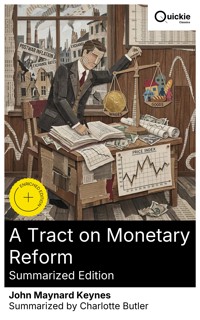
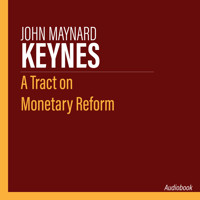
In "A Tract on Monetary Reform," John Maynard Keynes presents a compelling analysis of the monetary system and its crucial role in promoting economic stability. Written in 1923, during a period of post-World War I turbulence, Keynes employs a clear, incisive style that reflects his deep understanding of both economic theory and practical application. The text critiques the rigidity of the gold standard and advocates for a more flexible monetary framework, emphasizing the need for a coherent approach to monetary policy that adapts to changing economic conditions. Keynes's insights laid the groundwork for subsequent economic reforms and resonate with contemporary debates around fiscal policy and monetary regulation. John Maynard Keynes, a prominent British economist, is revered for his revolutionary ideas that transformed economic thought in the 20th century. His experiences during the interwar period, marked by financial crises and the Great Depression, profoundly influenced his perspectives on economic stabilization. Keynesian principles became foundational to modern economics, promoting the importance of government intervention and stimulating aggregate demand. This book is essential reading for anyone interested in economics, finance, or public policy. It not only elucidates Keynes's visionary ideas but also invites readers to reconsider the frameworks that govern monetary policy today, making it a timeless resource for both scholars and practitioners. In this enriched edition, we have carefully created added value for your reading experience: - A succinct Introduction situates the work's timeless appeal and themes. - The Synopsis outlines the central plot, highlighting key developments without spoiling critical twists. - A detailed Historical Context immerses you in the era's events and influences that shaped the writing. - An Author Biography reveals milestones in the author's life, illuminating the personal insights behind the text. - A thorough Analysis dissects symbols, motifs, and character arcs to unearth underlying meanings. - Reflection questions prompt you to engage personally with the work's messages, connecting them to modern life. - Hand‐picked Memorable Quotes shine a spotlight on moments of literary brilliance. - Interactive footnotes clarify unusual references, historical allusions, and archaic phrases for an effortless, more informed read.
Das E-Book können Sie in Legimi-Apps oder einer beliebigen App lesen, die das folgende Format unterstützen:
Veröffentlichungsjahr: 2023
Ähnliche





A Tract on Monetary Reform
Table of Contents
Introduction
Money is a fragile architecture of trust, and in the intervals when its foundations shift, lives, contracts, and governments discover how quickly certainty dissolves into confusion, a drama in which John Maynard Keynes stages the central conflict between rigid doctrine and adaptive reason, urging readers to see that the health of a society depends not on the sanctity of metallic rituals but on the wise, humane management of the very measure by which we count our work, our debts, and our hopes.
A Tract on Monetary Reform, first published in 1923, is Keynes’s compact, forceful intervention in the monetary turmoil that followed the First World War. Composed as Europe staggered through inflation, deflation, and exchange-rate volatility, the book addresses policymakers and citizens alike. Its premise is straightforward yet profound: stability in the value of money is a precondition for productive planning and social fairness. Without recounting every policy step, Keynes sets out principles for managing currency and prices in ways that safeguard contracts, savings, and employment, and he explains why the conventions of the past might falter under modern economic pressures.
The immediate context is essential. In the early 1920s, governments debated restoring the gold standard and wondered whether pre-war parities could be resumed without pain. Businesses faced volatile costs, wages lagged or surged, and exchange rates swung. Households saw the real value of savings altered by forces beyond their control. Keynes writes from the center of these debates, skeptical of automatic mechanisms and insistent that institutions must serve public purposes. He considers how inflation distorts calculation and how deflation can be equally destructive, emphasizing that the path back to normalcy requires judgment rather than nostalgic reverence for a bygone monetary order.
Part of the book’s classic status rests on its style. Keynes writes with lucidity, economy, and an eye for the telling example. He turns intricate monetary mechanics into arguments that feel intimate and urgent, not remote or technical. The prose is disciplined without being dry, and the moral stakes are evident without sentimentality. He alternates between diagnosis and prescription, pairing empirical observation with conceptual clarity. This controlled eloquence set a standard for economic writing that subsequent generations admired, because it demonstrates that policy can be debated in language precise enough for experts and accessible enough for an informed public.
The enduring themes are unmistakable. Money is not merely a neutral veil but a social institution with deep distributive consequences. Price stability matters because it stabilizes expectations, facilitates investment, and preserves fairness between borrowers and creditors. Rules can guide, but unthinking adherence can become a trap when circumstances change. Keynes explores index numbers, purchasing power, and the channels through which monetary changes travel into wages and prices. He examines how contracts written in nominal terms can, under instability, become instruments of unintended gain or loss, and he argues that society must design its monetary framework to minimize such arbitrary shifts.
As policy, the book advances a tempered but decisive stance. Keynes questions the wisdom of returning to gold at pre-war parity and resists the idea that a metallic standard, unaided, ensures justice or efficiency. He argues that authorities should aim at internal price stability as a principal objective, and that central banks must accept responsibility for that aim. The recommended reforms rely on careful observation of price levels and a willingness to adapt instruments to goals. Without prescribing a single rigid blueprint, the Tract insists that monetary arrangements be judged by their performance in promoting stability and productive activity.
Its influence radiated through interwar debates and beyond. Central bankers, finance ministers, and scholars engaged directly with its arguments, whether in agreement or dissent, as they grappled with stabilization, reparations, and exchange-rate choices. The book foreshadows key concerns later developed in Keynes’s broader macroeconomic work, especially the link between monetary conditions, expectations, and employment. It helped shift the conversation from automatic standards toward managed policy regimes, underscoring the importance of institutional design and accountability. In this way it became a reference point for twentieth-century discussions of monetary governance and a foundational text in modern policy discourse.
The Tract is also a literary landmark within economic nonfiction. Its pages blend analytical rigor with memorable exposition, shaping the genre of policy essay that speaks both to specialists and to engaged citizens. Rather than burying its logic in algebra, it advances through transparent reasoning and careful definition, an approach that invites critique and understanding. The book’s tone is measured, neither alarmist nor complacent, reflecting a temperament committed to practical wisdom. Readers encounter an argument that is not merely technical guidance but a civic-minded meditation on the obligations of monetary authority in a democratic society.
Later writers found in its method and moral clarity a model for how to address urgent policy questions. The emphasis on intelligible prose encouraged economists to write for multiple audiences, bridging the academy and public debate. Its analysis of inflation and deflation became touchstones for textbooks and commentary, while its insistence on institutional responsibility resonates in speeches and reports by monetary authorities. Even when thinkers departed from Keynes’s prescriptions, they often did so by contending with his framing, which is to say they wrote in dialogue with a standard the Tract helped establish for serious monetary argument.
For new readers, it helps to approach the book as a sequence of connected essays that move from diagnosis to remedy. Keynes begins by clarifying how changes in the value of money propagate through an economy, then considers the human and contractual consequences, and finally assesses alternative regimes and practical reforms. The historical particulars—currencies, parities, statutory arrangements—are of their time, but the analytic scaffolding remains instructive. One need not endorse every judgment to appreciate the disciplined way evidence is marshaled and the humility with which rules are weighed against evolving realities.
The contemporary relevance is unmistakable. Episodes of sudden inflation or disinflation, debates over inflation targeting and price-level stabilization, concerns about credibility, and disputes about exchange-rate regimes all echo themes the Tract articulates. While today’s instruments and institutions differ from those of the 1920s, the central problem persists: how to align monetary policy with social stability and broad prosperity when uncertainty is unavoidable. The book’s pragmatic spirit, skeptical of automatic formulas yet committed to clear goals, offers guidance for navigating shocks, whether they arise from financial crises, supply disruptions, or novel payment technologies.
A Tract on Monetary Reform endures because it joins analytical insight, historical consciousness, and an ethic of responsibility. It remains a classic not simply for diagnosing its moment but for articulating principles that travel across eras: that monetary systems are human designs, that stability is a public good, and that policy must answer to lived consequences. In our age of rapid change, its counsel to measure, to adapt, and to prioritize social welfare endows it with lasting appeal. Readers will find in these pages an invitation to think seriously about money—and, through money, about the order of a just society.
Synopsis
A Tract on Monetary Reform (1923) by John Maynard Keynes is a concise intervention in the turbulent post–First World War monetary landscape. Written amid rapid inflation in parts of Europe and contentious British debates over restoring the prewar gold parity, the book sets out to diagnose how changes in the value of money disrupt economies and to propose a practical framework for policy. Keynes aims to redirect attention from metallic rules and exchange-rate nostalgia toward the stability of purchasing power. He writes for policymakers and informed readers, organizing the argument from concrete social effects to theoretical clarity and then to the choice of national and international objectives.
He begins with the human and distributive consequences of unstable money. Inflation, by raising prices unevenly, benefits some debtors and asset holders while eroding the position of creditors and those on fixed incomes; deflation reverses the pattern and burdens production and employment. The immediate winners and losers are not chosen by merit but by timing, contracts, and bargaining power, which strains social trust and industrial relations. Keynes underscores how uncertainty about the value of money distorts saving and investment decisions, shortens planning horizons, and channels effort into hedging rather than productive activity, making stability itself a public good that markets alone cannot reliably supply.
Turning to public finance, the book links monetary instability to fiscal choices. Wartime and postwar debts magnify the stakes: inflation functions like an unlegislated levy, while deflation amplifies the real burden of obligations and may force contractionary budgets. Keynes argues that durable monetary reform cannot succeed without credible fiscal arrangements, including transparent taxation and debt management that do not rely on surprise changes in the price level. He explains how index numbers can help governments and citizens perceive real trends in revenues, expenditures, and wages, limiting the temptation to conceal imbalances through currency depreciation or to pursue abrupt, damaging deflation in pursuit of nominal targets.
Keynes then outlines a monetary theory suited to policy design rather than abstraction. He connects the quantity of money, the public’s demand for balances, and the velocity of circulation to the general price level, emphasizing expectations and institutional frictions that produce lags between policy moves and outcomes. Because prices do not adjust uniformly and immediately, he argues that measurement is indispensable. The discussion of index numbers highlights their construction, strengths, and limits, presenting them as guides rather than mechanical rules. By rooting analysis in observable aggregates and cautious inference, the book prepares the ground for a monetary authority tasked with stabilizing purchasing power.
With this foundation, the argument turns to the aim of policy: internal price stability or external exchange stability. Restoring a fixed gold parity promises predictable exchange rates but can require painful domestic deflation if prices and wages are above prewar levels. Prioritizing the internal price level shields employment and domestic contracts, yet implies tolerance for exchange-rate variability. Keynes weighs these alternatives in the concrete circumstances of the early 1920s, when many countries were attempting monetary normalization after severe shocks. He suggests that the costs of rigidly chasing an old parity can exceed the benefits, especially when other nations’ policies and conditions are not aligned.
From this comparison flows a proposal for a managed currency guided by a price-level objective. Rather than binding policy to an unyielding gold definition, the central bank should adjust the terms of credit to stabilize the domestic purchasing power of money, accepting changes in the exchange rate if necessary. Where the prewar parity is far from current realities, changing the parity is presented as less damaging than compressing prices and wages through prolonged deflation. The practical emphasis is on moderation, continuous observation of indices, and readiness to correct course, so that monetary order is rebuilt around predictable real values rather than a particular metallic anchor.
Implementing such a regime, Keynes argues, requires institutional clarity. The monetary authority should possess the tools and independence to vary interest rates and influence credit conditions, while remaining publicly accountable for the objective of price stability. Systematic use of data, careful interpretation of indices, and clear communication of reasoning are essential to guide expectations and to minimize destabilizing speculation. He notes the limitations of any rule in the face of shocks and imperfect information, urging a pragmatic approach that learns from experience. Coordination with fiscal policy matters, but the core accountability for the value of money must rest where operational control and expertise can be concentrated.
The international dimension receives cautious treatment. Gold remains useful as a reserve asset and unit of account, but rigid adherence to its old conventions can transmit instability across borders. Keynes favors cooperative arrangements that economize on the use of gold, dampen international interest-rate contagion, and accommodate gradual realignments when economies diverge. He stresses that external balance, capital flows, and trade competitiveness interact with the domestic price objective, so policy must be alert to pressures that could force abrupt moves. By advocating flexible mechanisms and consultation among central banks, the book sketches a path toward stability that does not depend on uniform national circumstances.
Overall, A Tract on Monetary Reform crystallizes a practical creed: protect the real value of money, design institutions to do so, and avoid sacrificing domestic stability to historic parities or automatic rules. Without relying on elaborate formalisms, Keynes assembles evidence and reasoning from the postwar experience to show why monetary policy should target the price level and be prepared to adjust when conditions change. The broader significance lies in its enduring call for policy to serve social stability and productive investment rather than symbolic benchmarks. The book’s careful balance of diagnosis and prescription helped set the terms for later debates on central banking.
Historical Context
A Tract on Monetary Reform appeared in Britain in 1923, at a moment when Europe was struggling to shape a new monetary order after the First World War. London remained a leading financial center, with the City’s merchant banks and the Bank of England at its core, while the Treasury and Parliament set national policy. Across the Atlantic, the relatively young U.S. Federal Reserve influenced global credit conditions. The League of Nations increasingly mediated financial stabilization on the Continent. Within this institutional lattice, questions of currency convertibility, exchange rates, and central bank responsibilities framed the debate to which John Maynard Keynes contributed his distinctive and urgent voice.
The war had shattered the pre-1914 gold standard’s routines. Britain suspended gold convertibility in 1914, financed unprecedented military outlays with borrowing and monetary expansion, and saw domestic prices surge during 1914–1918 and into 1919–1920. Similar inflation swept much of Europe. By the early 1920s, policymakers confronted the task of normalizing money and credit without undoing fragile social settlements forged during the war. Whether to restore gold convertibility at prewar parities, at new parities, or to adopt a more flexible regime became a central dilemma. Keynes wrote amid these pressures, evaluating the costs of different paths in terms of employment, distribution, and the credibility of the state’s promises.
The peace settlement of 1919 left a heavy economic imprint on the 1920s. Reparations demands on Germany and inter-Allied debts to the United States linked fiscal strains across borders. Keynes, who had served at the British Treasury and at the Paris Peace Conference, resigned in protest and published The Economic Consequences of the Peace in 1919, warning that punitive terms would destabilize Europe. That earlier critique shaped his reputation and his analytical lens. In A Tract on Monetary Reform, he turned from the design of the peace to the design of money, but the same concern for workable burdens and social cohesion guided his assessment of exchange-rate and price-level choices.
Britain’s domestic economy endured a sharp slump in 1920–1921, following a brief postwar boom. The Bank of England raised its discount rate as high as 7 percent in 1920 to curb inflation and support sterling, contributing to deflation, falling prices, and widespread unemployment. Export industries such as coal, cotton, and shipbuilding struggled with weak demand and intensified foreign competition. Budgetary austerity, urged by those prioritizing external financial credibility, coincided with social tensions at home. Keynes situated his argument here: he analyzed how deflation transfers wealth to creditors, depresses investment, and worsens joblessness, and he weighed these outcomes against the manifest injustices and distortions of unchecked inflation.
Internationally, the 1922 Genoa Conference sought a coordinated restoration of monetary order. Its resolutions encouraged a “gold exchange standard,” under which central banks could hold foreign exchange as reserves alongside gold, and urged cooperation among monetary authorities. Many officials hoped to recreate prewar stability at lower cost. Keynes, writing in this atmosphere, challenged reliance on automatic gold flows and defended the priority of stabilizing the domestic price level. He maintained that fixation on prewar parities would force unnecessary deflation in countries like Britain, and he proposed that central banks use policy instruments to offset shocks rather than passively transmit them through the exchange mechanism.
Events in Germany during 1921–1923 dramatized the perils of inflation. After reparations strains and political turmoil, the Ruhr was occupied in early 1923, the Reichsbank extended credit to finance “passive resistance,” and the mark’s value collapsed. Hyperinflation reached extraordinary levels by late 1923 before stabilization via the Rentenmark began in November of that year. Keynes, who had long criticized excessive reparations, treated Germany’s experience as a cautionary example of how the erosion of money’s value undermines contracts, savings, and social order. His analysis in the Tract balanced this warning with a parallel indictment of deflation’s damage, seeking a practicable middle course.
Reparations interacted with war-debt politics. Britain owed substantial sums to the United States and, in turn, sought payments from European allies and Germany. The Balfour Note of 1922 set out Britain’s stance on inter-Allied debts, and a funding agreement with the United States was reached in 1923. These obligations influenced London’s budget choices and strengthened the case, among orthodox financiers, for a strong sterling. Keynes emphasized that such external commitments could not be managed prudently if domestic output and employment were sacrificed; the capacity to pay depended on national income, and monetary rigidity could erode that base.
Personalities and institutions shaped the debate. Montagu Norman at the Bank of England favored restoring gold convertibility and reasserting London’s financial preeminence. In New York, Benjamin Strong at the Federal Reserve Bank of New York informally coordinated with European central bankers, affecting global interest rates and gold flows. The City of London’s bankers and discount houses prized stable exchange relations. Keynes argued that clinging to the old parity of sterling would require a painful fall in prices and wages. He urged policymakers to weigh national welfare—especially employment—over the prestige associated with resuming gold at the prewar rate.
Technological and intellectual shifts provided new tools for monetary governance. The proliferation of official statistics and price indices during and after the war made it feasible to track the cost of living with more precision. Economists such as Irving Fisher had advanced index-number theory, including in 1922, encouraging proposals to stabilize the price level by adjusting policy as indices moved. At Cambridge, the “cash balances” approach associated with Marshall, Pigou, and Keynes linked money to spending through desired holdings of cash. The Tract drew on these currents, recommending that central banks consciously manage credit to stabilize purchasing power rather than defer to gold flows alone.
British politics in 1922–1924 was unsettled. The postwar coalition collapsed in 1922, leading to a Conservative government under Bonar Law and then Stanley Baldwin. A tariff-centered election in late 1923 produced a hung parliament, and early 1924 saw the first Labour government under Ramsay MacDonald. Across these shifts, unemployment, wages, and the value of sterling were constant concerns. Keynes intervened through public letters and essays as well as his book, pressing the case that monetary policy should serve domestic stability. The Tract thus speaks to a political moment when parties weighed external commitments against the social consequences of internal deflation.
Industrial relations underscored the stakes of monetary choices. Trade unions had grown in membership during and immediately after the war, and disputes in coal, transport, and textiles revealed the fragility of wage bargaining under volatile prices. Unemployment insurance, expanded during the war, faced fiscal strain and political controversy as joblessness proved persistent after 1921. Keynes emphasized that price-level instability—whether rising or falling—complicates long-term contracts and undermines efficient investment. By anchoring attention on the distributional effects of inflation and deflation, he connected abstract monetary rules to everyday concerns in factories, shops, and households.
Beyond the major powers, the League of Nations organized stabilization programs for fiscally distressed states. Austria received an internationally supervised loan in 1922, with conditions including budget reform and central bank discipline; Hungary followed in 1924. These efforts aimed to halt inflation, restore confidence, and reintegrate economies into international finance. Keynes recognized their technical achievements yet remained alert to the social costs of rapid deflation and the risks of subordinating employment to exchange-rate objectives. The Tract’s advocacy of managed stabilization speaks to this broader European pattern of conditional, externally guided monetary restoration.
The British Empire’s commercial networks framed monetary policy choices. Sterling’s role in imperial trade created a constituency for exchange stability, as colonies and dominions settled accounts through London. Yet world trade patterns had shifted, with the United States enjoying surpluses and accumulating gold. British exporters faced structural challenges in price and productivity, complicating any attempt to adjust solely through domestic wage cuts. Keynes argued that a flexible, domestically oriented monetary strategy would better support output and trade competitiveness than a rigid commitment to an overvalued exchange rate, especially while international relative prices were still realigning after the war.
The communication environment of the early 1920s helped Keynes reach a wide audience. Mass-circulation newspapers, a growing periodical press, and the advent of radio broadcasting in Britain in 1922 broadened public engagement with economic issues. Keynes wrote regularly for leading journals and was closely involved from 1923 with The Nation and Athenaeum, using it to analyze policy and critique orthodoxy. His connections to the Cambridge and Bloomsbury circles reinforced a style that combined technical analysis with accessible prose. A Tract on Monetary Reform belongs to this moment of expert commentary entering public discourse to shape the choices of legislators and central bankers.
Subsequent events highlighted the relevance of his warnings. In 1925, under Chancellor of the Exchequer Winston Churchill, Britain returned to gold at the prewar parity. Keynes publicly argued that the decision overvalued sterling and entrenched deflationary pressure, notably in his 1925 pamphlet critiquing the move. The economic strains that followed, including persistent unemployment and industrial conflict culminating in the 1926 General Strike, were interpreted by many contemporaries through the lens he supplied in 1923. While causes were multiple, the episode underscored the Tract’s insistence that monetary arrangements must be judged by their effects on output and employment.
Within economics, the Tract occupies a pivotal place in Keynes’s intellectual trajectory. It preceded his Treatise on Money (1930) and The General Theory (1936), but already advanced themes of managed currency, expectations, and the distributional impact of price movements. He proposed that central banks aim to stabilize the internal price level using interest rates and open-market operations guided by index numbers. He famously contrasted the injustices of inflation with the wastefulness of deflation, urging a practical balance. Later debates over rules versus discretion, price-level versus inflation targeting, and the social foundations of monetary legitimacy echo issues he framed here.
A Tract on Monetary Reform also reflected the emerging internationalism of central banking while questioning its prevailing doctrines. Keynes accepted that cooperation among monetary authorities was necessary in an interdependent world, yet he resisted the idea that cooperation required a rigid gold parity whatever the domestic cost. By urging attention to national income, employment, and the predictability of contracts, he translated the high politics of exchange regimes into criteria accessible to citizens and parliamentarians. His approach asked whether monetary policy served the broader purposes of a liberal society, not only the preferences of financial markets or external creditors. This perspective sharpened public judgment of elite decisions in the 1920s, while offering a template for reform that outlasted the decade.
Author Biography
John Maynard Keynes (1883–1946) was a British economist and public intellectual whose ideas reshaped economic theory and policy during the turbulent first half of the twentieth century. Writing amid the upheavals of two world wars and the Great Depression, he challenged prevailing doctrines that assumed markets naturally return to full employment. Keynes argued that fluctuations in aggregate demand drive output and jobs, and that judicious public policy can stabilize economies. Through books, policy memoranda, journalism, and government service, he linked analysis to action. The framework that came to be called Keynesian economics became a foundation of modern macroeconomics and influenced mid-century fiscal and monetary policy worldwide.
Educated in Britain’s elite schools, Keynes studied at Eton College and then at King’s College, Cambridge, where he read mathematics and philosophy before turning to economics. At Cambridge he encountered mentors such as Alfred Marshall and A. C. Pigou, whose teaching and example shaped his analytical style even as he later departed from their conclusions. He moved in the broader intellectual milieu of the Bloomsbury Group, which strengthened his interest in the arts and a humane, liberal outlook. Early academic appointments at Cambridge allowed him to teach and research while developing a distinctive voice that combined technical reasoning with historical, moral, and practical concerns.
Keynes began his career with a brief period in the British civil service before returning to academic life and then entering wartime service at the Treasury during the First World War. The experience informed The Economic Consequences of the Peace (1919), a widely read critique of the Versailles settlement and its reparations policy. He also wrote A Treatise on Probability (1921), reflecting his philosophical training, and A Tract on Monetary Reform (1923), which argued for stable monetary frameworks after the inflationary upheavals of the era. As an editor and commentator, he helped shape professional and public debates, bridging technical analysis and policy discourse.
During the interwar years Keynes deepened his monetary and macroeconomic analysis. A Treatise on Money (1930) examined credit, interest, and business fluctuations, while Essays in Persuasion (1931) gathered policy arguments directed at contemporary problems. Essays in Biography (1933) showed his range as a writer and historian of ideas. His culminating theoretical contribution, The General Theory of Employment, Interest and Money (1936), overturned central tenets of classical economics by explaining how economies could settle into prolonged underemployment. It introduced concepts such as the centrality of aggregate demand, the role of expectations, and liquidity preference, providing a new toolkit for understanding recessions and guiding countercyclical policy.
Alongside theory, Keynes was a persistent advocate for practical remedies to mass unemployment. He urged governments to undertake public investment and accept temporary budget deficits during slumps, to be offset over the cycle, and he supported monetary policies that maintained low interest rates to stimulate activity. In Britain he advised officials, testified to inquiries, and wrote influential articles aimed at persuading policymakers and the broader public. His administrative and investing work in academic and cultural institutions complemented his policy engagement, reflecting a belief that economic ideas must be tested against real-world constraints and that financial stability supported both prosperity and the arts.
During the Second World War Keynes returned to intensive service at the Treasury, working on wartime finance and planning for the postwar economic order. He played a leading role in the international negotiations that culminated at Bretton Woods in 1944, contributing ideas that shaped the creation of the International Monetary Fund and the World Bank. Although his proposal for a comprehensive International Clearing Union was not adopted in full, it influenced the design and aims of the postwar system. He was elevated to the peerage and participated in parliamentary debate, using his platform to explain the principles and compromises underlying Britain’s economic strategy.
Keynes died in 1946, leaving an intellectual legacy that has remained central to economic thought and policy. In the decades after his death, many industrialized countries used Keynesian-inspired tools to pursue full employment and stabilize demand. Later controversies, including debates over inflation and the challenges of the 1970s, prompted revisions and new schools, yet modern macroeconomics still engages with Keynes’s questions about expectations, coordination, and policy design. During crises from the late twentieth century onward, policymakers repeatedly revisited his arguments for timely fiscal and monetary action. His prose, range of interests, and enduring influence secured a place among the most consequential economists.




