


129,99 €
Mehr erfahren.
- Herausgeber: John Wiley & Sons
- Kategorie: Fachliteratur
- Sprache: Englisch
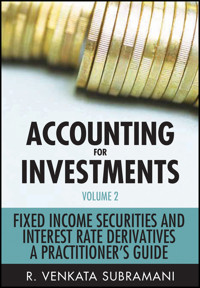
A comprehensive guide to new and existing accounting practices for fixed income securities and interest rate derivatives
The financial crisis forced accounting standard setters and market regulators around the globe to come up with new proposals for modifying existing practices for investment accounting. Accounting for Investments, Volume 2: Fixed Income and Interest Rate Derivatives covers these revised standards, as well as those not yet implemented, in detail.
Beginning with an overview of the financial products affected by these changes—defining each product, the way it is structured, its advantages and disadvantages, and the different events in the trade life cycle—the book then examines the information that anyone, person or institution, holding fixed income security and interest rate investments must record.
- Offers a comprehensive overview of financial products including fixed income and interest rate derivatives like interest rate swaps, caps, floors, collars, cross currency swaps, and more
- Follows the trade life cycle of each product
- Explains how new and anticipated changes in investment accounting affect the investment world
Accurately recording and reporting investments across financial products requires extensive knowledge both of new and existing practices, and Accounting for Investments, Volume 2, Fixed Income Securities and Interest Rate Derivatives covers this important topic in-depth, making it an invaluable resource for professional and novice accountants alike.
Sie lesen das E-Book in den Legimi-Apps auf:
Seitenzahl: 422
Veröffentlichungsjahr: 2011
Ähnliche


















Contents
Foreword
Introduction
Preface
Acknowledgments
Chapter 1: Fixed Income Securities—Theory
Learning Objectives
Fixed Income Securities in General
Basics of the Bond Market
Definition of Financial Instruments
Categories of Financial Instruments—An Overview
Questions
Chapter 2: Fixed Income Securities—Fair Value through Profit or Loss
Learning Objectives
Meaning and Definition of Fixed Income Securities
Classification of Debt Securities as “Fair Value through Profit or Loss”
Accounting for Fixed Income Securities
Trade Life Cycle for Fixed Income Securities—Fair Value through Profit or Loss
Corporate Action
Additional Events in the Trade Life Cycle
Complete Solution to the Illustration
FX Revaluation and FX Translation Process
Distinction between Capital Gain and Currency Gain
Illustration 1: Investment in Bonds held for Trading Purposes
Solution to Illustration 1: Investment in Bonds held for Trading Purposes
Problem 1: Investment in Bonds (Trading) in Foreign Currency (AUD)
Accounting Entries in Functional Currency
Summary
Questions
Chapter 3: Fixed Income Securities—Available-for-Sale
Learning Objectives
Basic Understanding of Available-for-Sale (AFS)
Accounting for Fixed Income Securities Classified as Available-for-Sale
Option to Designate a Financial Asset at Fair Value through Profit or Loss
Accounting for Fixed Income Securities
Trade Life Cycle for Fixed Income Securities—Available-for-Sale
FX Translation on Available-for-Sale Securities
Impairment of Available-for-Sale Fixed Income Securities
Bonds Classified as Available-for-Sale—Complete Solution to the Illustration
Problem 1—Bonds Held as Available-for-Sale in USD
FX Revaluation and FX Translation process
Accounting Entries in Functional Currency—USD
Summary
Questions
Chapter 4: Fixed Income Securities—Held-to-Maturity
Learning Objectives
Meaning of Securities Classified as Held-to-Maturity (HTM)
Exceptions to the Rule for Classification as Held-to-Maturity
Effective Interest Rate
Accounting for Securities Classified as Held-to-Maturity
Trade Life Cycle for Fixed Income Securities—Held-to-Maturity
Illustration of Bonds Held-to-Maturity—Complete Solution
Problem—2: Bonds Held as Held-to-Maturity in BRL (Foreign Currency)
Solution to Problem—2: Bonds Held as Held-to-Maturity in BRL (Foreign Currency)
Accounting Entries in Functional Currency—Problem 2—USD
Summary
Questions
Chapter 5: Presentation, Disclosures & Reclassification
Learning Objectives
Relevant Accounting Standards
General Disclosure as per IFRS 7
A. Significance of Financial Instruments for Financial Position and Performance
Statement of Comprehensive Income
Other Disclosures
B. Qualitative Disclosures
C. Quantitative Disclosures
Amendments to IAS 39 & IFRS 7 (October 2008)
Reclassification as per IFRS 9
Presentation of Financial Instruments
Summary
Exercise
Chapter 6: Interest Rate Derivatives—Theory
Learning Objectives
Derivatives in a Financial Instrument
Definition of Derivatives as per Accounting Standards
Accounting Standards for Interest Rate Derivatives
Differences between US GAAP and IFRS
Over-the-Counter Contracts
Exchange-Traded Derivative Contracts
Benefits of Interest Rate Derivatives
International Swaps and Derivatives Association (ISDA)
Types of Interest Rate Derivatives
Hedged or Hedging Instrument—Status of Various Financial Instruments
Summary
Exercise
Chapter 7: Interest Rate Swaps—Receive Fixed Pay Floating
Learning Objectives
Meaning of Interest Rate Swap
Definition of a Derivative
Accounting for Interest Rate Swaps
The Trade Life Cycle for Interest Rate Swaps
Receive Fixed & Pay Floating—Illustration 1
Complete Solution to Illustration 1: Interest Rate Swap—Receive Fixed Pay Floating
Problem1: Interest Rate Swap—Receive Fixed Pay Floating
Solution to Problem 1: Interest Rate Swap—Receive Fixed Pay Floating
Summary
Questions
Chapter 8: Interest Rate Swaps—Pay Fixed Receive Floating
Learning Objectives
Meaning of Receive Floating and Pay Fixed Type of Interest Rate Swap
Accounting Standards
The Trade Life Cycle for Interest Rate Swaps
Pay Fixed and Receive Floating—Illustration 1
Complete Solution to Illustration 1: Interest Rate Swap—Receive Floating Pay Fixed
Pay Fixed to Receive Floating—USD
Solution
Summary
Questions
Chapter 9: Interest Rate Caps
Learning Objectives
Interest Rate Caps—Description of the Product
Accounting for interest rate caps
The Trade Life Cycle for Interest Rate Caps
Interest Rate Cap Instrument—An Illustration
Complete Solution to the Illustration—Interest Rate Cap
Problem 1: Interest Rate Cap—Pay
Solution to Problem 1: Interest Rate Cap—Pay
Problem 2: Interest Rate Cap—Pay
Solution to Problem 2: Interest Rate Cap—Pay
Accounting Entries in Functional Currency
Problem 3: Interest Rate Cap—Receive
Solution to Problem 3: Interest Rate Cap—Receive
Problem 4: Interest Rate Cap—Receive
Solution to Problem 4: Interest Rate Cap—Receive
Problem 5: Interest Rate Cap—Receive
Solution to Problem 5: Interest Rate Cap—Receive
Accounting Entries in Functional Currency
Summary
Questions
Chapter 10: Interest Rate Floors
Learning Objectives
Interest Rate Floors—Description of the Product
Accounting for Interest Rate Floors
The Trade Life Cycle for Interest Rate Floors
Interest Rate Floor Instrument—An Illustration
Complete Solution to Illustration
Problem 1: Interest Rate Floor—Sale of Floor Instrument
Solution to Problem 1: Interest Rate Floor
Problem 2: Interest Rate Floor
Solution to Problem 2: Interest Rate Floor
Journal Entries in Functional Currency Problem 2: Interest Rate Floor
Illustration: IRD Floor—Receive
Comprehensive Solution to Illustration
Problem 1: Interest Rate Floor (Receive)
Solution to Problem 1: Interest Rate Floor (Receive)
Problem 2: Interest Rate Floor (Receive)
Solution to Problem 2: Interest Rate Floor (Receive)
Accounting Entries in Functional Currency Problem 2: Interest Rate Floor (Receive)
Summary
Questions
Chapter 11: Interest Rate Collar
Learning Objectives
Meaning of Interest Rate Collar
Collar or Reverse Collar as a Hedging Instrument
Accounting for Interest Rate Collar
The Trade Life Cycle for an Interest Rate Collar
Interest Rate Collar Instrument—An Illustration
Complete Solution to the Illustration—Interest Rate Collar
Problem 1: Interest Rate Collar
Solution to Problem 1
Entries in Functional Currency
Meaning of Interest Rate Reverse Collar
Accounting for Interest Rate Reverse Collar
The Trade Life Cycle for Interest Rate Reverse Collar
Problem 1: Reverse Collar
Solution to Problem 1: Reverse Collar
Problem 2: Reverse Collar
Solution to Problem 2: Reverse Collar
Entries in Functional Currency
Summary
Questions
Chapter 12: Cross-Currency Swaps (XCCY Swaps)
Learning Objectives
A Meaning of Cross-Currency Swaps (XCCY Swaps)
Accounting for Cross-Currency Swaps
The Trade Life Cycle for Cross-Currency Swaps
Complete Solution to Illustration 1: Cross Currency Interest Rate Swap—USD/GBP
Accounting Entries in Functional Currency
Problem 1: Cross Currency Interest Rate Swap—USD/EUR
Accounting Entries in Functional Currency
Summary
Questions
Bibliography
Index
Copyright © 2011 John Wiley & Sons (Asia) Pte. Ltd.
Published in 2011 by John Wiley & Sons (Asia) Pte. Ltd.
1 Fusionopolis Walk, #07–01, Solaris South Tower, Singapore 138628
All rights reserved.
No part of this publication may be reproduced, stored in a retrieval system, or transmitted in any form or by any means, electronic, mechanical, photocopying, recording, scanning, or otherwise, except as expressly permitted by law, without either the prior written permission of the Publisher, or authorization through payment of the appropriate photocopy fee to the Copyright Clearance Center. Requests for permission should be addressed to the Publisher, John Wiley & Sons (Asia) Pte. Ltd., 1 Fusionopolis Walk, #07–01, Solaris South Tower, Singapore 138628, tel: 65–6643–8000, fax: 65–6643–8008, e-mail: [email protected].
This publication is designed to provide accurate and authoritative information in regard to the subject matter covered. It is sold with the understanding that the publisher is not engaged in rendering professional services. If professional advice or other expert assistance is required, the services of a competent professional person should be sought.
Neither the authors nor the publisher are liable for any actions prompted or caused by the information presented in this book. Any views expressed herein are those of the authors and do not represent the views of the organizations they work for.
Other Wiley Editorial Offices
John Wiley & Sons, 111 River Street, Hoboken, NJ 07030, USA
John Wiley & Sons, The Atrium, Southern Gate, Chichester, West Sussex, P019 8SQ, United Kingdom
John Wiley & Sons (Canada) Ltd., 5353 Dundas Street West, Suite 400, Toronto, Ontario, M9B 6HB, Canada
John Wiley & Sons Australia Ltd., 42 McDougall Street, Milton, Queensland 4064, Australia
Wiley-VCH, Boschstrasse 12, D-69469 Weinheim, Germany
Library of Congress Cataloging-in-Publication Data
ISBN 978–0–470–82591–4 (Hardback)
ISBN 978–0–470–82904–2 (ePDF)
ISBN 978–0–470–82903–5 (Mobi)
ISBN 978–0–470–82905–9 (ePub)
This book is dedicated to my parents, my wife and my daughter
Foreword
This is the second volume in the series of books on the subject “Accounting for Investments” authored by R. Venkata Subramani. This volume deals with the financial instruments in the nature of fixed income securities and interest rate derivatives such as interest rate swaps, caps, floors, collars, reverse collars and cross currency swaps. The comprehensiveness of the coverage is apparent from the fact that the author has meticulously dealt with the accounting treatment, presentation and disclosure aspects related to the fixed income securities and interest rate derivatives by any entity dealing with such financial instruments.
Subramani is an expert in the finance field with hands on experience in the treatment of various financial instruments for about two decades. He is also a techno-savvy professional and therefore quite conversant with the manner in which the transactions are executed in the globalised scenario. Being a Chartered Accountant who has passion to comprehend and apply Accounting Standards, he has analysed the accounting aspects in the context of the US GAAP and IFRS. Wherever considered appropriate, he has indicated the similarities and differences between the US GAAP and IFRS.
The methodical way in which the subject matter is covered with appropriate illustrations indicating the relevant entries to be passed referring to each step in the respective transactions is bound to guide and enlighten the readers practically. The lucid style adopted in authoring this book is sure to communicate the nuances and intricacies with absolute clarity. The book has systematically captured all the workings to the smallest detail as to how figures have been arrived at in each example given. The special feature of this book is that for every category of fixed income securities, the author has taken care to reflect the accounting entries to be passed at various stages in the entire trade life cycle of such instruments.
The significance of the financial instruments in the corporate world cannot be undermined. Equally important is the proper accounting, presenting and disclosing the transactions related to the financial instruments. In the present day scenario, transparency, accuracy and accountability are perceived by the stakeholders to be of paramount importance. This book will go a long way in facilitating proper accounting and reporting of financial instrument related transactions same as the Volume 1 of the same series. This Volume 2 would be a meaningful addition to the library of all the corporates, accountants, academicians and students of finance for ready reference and guidance on the contents.
T.N. Manoharan
Padmashri awardee
Former President, The Institute of Chartered Accountants of India
Chennai
March 2011
Introduction
The last decade has been one of constant changes in theory and practice in the economic sphere. The decade has also been one where significant changes in the thinking and organization of control structure in the financial sector have taken place, where regulatory functions hitherto exercised by the State have been gradually but certainly passed on to statutory supervisory bodies which have been established as independent operators. All these have brought about exciting times with new and fresh research in the financial sector leading to the adoption of new structures and products. It is the financial sector that has, in the recent years, shown phenomenal growth. This has led to very important changes in the thinking and adoption of practices in the commercial world.
Changes in accounting theory and practices have not been ignored by these developments. Globalization which has led to a breakdown in the geographical barriers has led to a free movement of resources, capital, manpower and ideas. Such measures have brought about a serious relook at aligning the accounting theory and practices to global prescriptions and practices, though there are still some areas of discussion pending even amongst the western experts on principles.
The unprecedented growth in the financial sector has called for not only an adoption of changed accounting standards and principles but also has brought about the creation and adoption of financial instruments that are continuously appraised and fine-tuned based on experiences of the accounting fraternity and also other users of these instruments. Such measures attempt to bring about accounting models that are reflective of the present day demands by plugging inherent gaps and inconsistencies in the current complex economic environment. We are still in a formative and experimental stage and one does not know for certain that what we adopt now will really stand the test of time and prove to be adequate to meet the exacting demands of the future. We are still based on the hope that future changes may not vitally affect our current practices.
It is in this background that one should view the efforts of R. Venkata Subramani in bringing out literature on the new areas that get highlighted because of a change in the perspectives. I am informed that the author would be bringing out a set of four volumes—all connected with the various types of financial products that are currently available. It is encouraging to note that this professional accountant has decided to share his scholarship and expertise with others by authoring such illuminating and scholarly treaties. The book written in a very simple, straight and candid manner presupposes a basic knowledge and awareness of the current practices prevalent in this field on the part of the reader. The efforts of the author in bringing out such a cluster of books is not only welcome but should be appreciated in a situation where such books are not that freely available.
The present book, Accounting for Investments Volume 2—Fixed Income Securities and Interest Rate Derivatives, covers an important area on a subject that often confuses and misleads the thinking and behavior of even tested practitioners. Subjects such as swaps, caps, floors, and collars etc., which are currently extensively popular, are dealt in the book in a very facile manner to impart education to both a novice and a professional alike.
What is very significant in the treatment of the subject in the book is that each instrument has been treated very comprehensively—its full life cycle right from its inception to its closure or redemption has been thoroughly explained and treated in a very simple, straight and lucid manner. Accounting entries that are called for at each of the stages have been fully recorded and explained in the book that makes it of great value and importance. The treatise also covers the requirements of presentation and disclosure.
I find that the author’s approach to the subject and its treatment in the book is very practical. His efforts are to be lauded. This work satisfies the requirements of the modern accounting theory and practices that are assuming importance.
I have no doubt that the book will be one that will be welcomed by the experts in the field of finance and will also be ideally satisfying the needs of the academic and the profession. The author deserves our appreciation for his intellectual ability, clarity of thought, facile expression and above all simplicity that pervades the entire work. I along with all others will await the release and publication of the other two books on connected subjects to the present one to make the literature comprehensive and complete.
My sincere appreciation is to the author for a job well done.
N. Rangachary
Retired Chairman
Central Board of Direct Taxes, New Delhi,
Government of India
Insurance Regulatory and Development Authority, Hyderabad
Preface
Accounting for Investments—Fixed Income Securities and Interest Rate Derivatives is the second volume of the Accounting for Investments series. This volume covers the financial instruments of fixed income securities and interest rate derivatives viz. interest rate swaps, caps, floors, collars, reverse collars and cross-currency swaps. As in the first volume, this book provides an exhaustive treatment of accounting, presentation and disclosure aspects of any entity dealing with such financial instruments.
Since the break out of a severe financial crisis, which started in 2008 and virtually crippled the world economy, the regulatory authorities including the accounting standard setters have been on their toes and, thanks to their tireless efforts, a substantial addition to the knowledge of accounting has been made along with a thorough overhaul of the accounting standards relating to financial instruments. The good news is that the seat of accounting standard setting authorities on both sides of the Atlantic are now speaking in a singular voice despite some lag in the implementation timeline. This means that very soon there will be a “convergence” in spirit of the world’s top two standards, although it may take a little longer before we see a single converged standard in letter.
Never in the past have we seen such rapid succession of accounting standards issued on financial instruments continuously being revised and fine-tuned, based on input received from the accounting fraternity and other users of financial statements across the globe. While these measures are an attempt to bring about a better accounting model by plugging the inherent gaps and inconsistencies in today’s complex economic environment, no one can say for sure whether these changes would prevent such occurrence of financial crises in the future. Nevertheless, it is a good development and this book captures the changes that have already been announced irrespective of the actual date of implementation, and other key proposals in the exposure draft stage are also considered at the appropriate places.
This book assumes that the reader already has basic accounting knowledge. Those who are entirely new to the field of accounting should refer to some basic accounting books before attempting this one. It might be useful to have some basic orientation on accounting for investments, especially plain derivatives on equity instruments like equity futures and equity options to understand better the concepts given in this volume. However, it is not a must and the reader can easily grasp the essentials as this volume is meant to be self-sufficient in dealing with basic accounting concepts in so far as it relates to the particular financial instrument under review.
The entire trade life cycle of each financial instrument is covered in detail from the accounting perspective. For each illustration, the accounting journal entries, general ledger accounts, trial balances, income statements and balance sheets are presented to give a complete understanding of the accounting treatment. Also, for all calculated numbers the details of such calculations are given. The presentation and disclosure requirements for these financial instruments are given separately in an exclusive chapter and are not given as part of each illustration and solution to the worked out problems in this book.
While an overview of the trade life cycle for each financial instrument is given, the readers are advised to refer other resources for a detailed treatment on the trade life cycle from the front office and middle office perspective. The trade life cycle in so far as it relates to the back office viz. the accounting aspects are covered in detail with appropriate reference to the GAAP or IFRS requirements. For each financial instrument, the relevant accounting standards that are applicable are given and wherever necessary a comparison showing the similarities and differences between the US GAAP and IFRS is also provided.
CHAPTER ARRANGEMENT
Chapter 1: Fixed Income Securities—Theory—This chapter gives some basics of fixed income securities, basics of bond markets, types of issues and special characteristics, bond coupons, bond maturity, bond pricing, yield measures, duration and certain types of bonds like municipal bonds, corporate bonds, risks of investment in bonds and so on.
Chapter 2: Fixed Income Securities—Fair Value through Profit or Loss—This chapter covers the accounting for fixed income securities held for trading purposes. After explaining the meaning and definition of fixed income securities, an overview of the categories of financial instruments is given along with the recent changes contemplated by the accounting standard IFRS 9. The explanation of fair value through profit or loss is given with the circumstances in which the designation at fair value through profit or loss on initial recognition is allowed. Fair value concepts and the measurement hierarchy of fair value as per the accounting standard are explained here.
The trade life cycle for fixed income securities held as trading securities is given with the accounting entries to be passed at various stages. Illustrations cover fixed income securities in the functional currency of USD held for trading purposes.
Distinctions between FX revaluation and FX translation are given in great detail along with the explanation of functional currency, foreign currency and presentation currency and the requirements of accounting standards in this regard. Another illustration covers bonds in AUD with the functional currency of USD explaining the FX revaluation and FX translation processes.
Chapter 3: Fixed Income Securities—Available-for-sale—This chapter covers the accounting for bonds that are held as available-for-sale. Amendments made through IFRS 9 that impacts this category is explained. FX translation on available-for-sale securities calls for some special treatment, which is explained in this chapter.
The trade life cycle for bonds classified as available-for-sale securities is given with the accounting entries to be passed at various stages. One illustration covers equity shares in the functional currency of USD held as available-for-sale; one more illustration is given in a foreign currency with FX translation into the functional currency of USD.
Chapter 4: Fixed Income Securities—Held-to-Maturity—This chapter covers the accounting for bonds that are classified as held-to-maturity. Meaning of securities classified as held-to-maturity is discussed. Tainting rules along with exceptions are given. However, tainting rules are dispensed with in light of the recent changes made to this category. Similar changes are also proposed by the FASB. The concept of effective interest rates is then explained. Impairment provisions relating to amortized cost category is covered in this chapter.
The trade life cycle for bonds classified as held-to-maturity securities is given with the accounting entries to be passed at various stages. One illustration covers equity shares in the functional currency of USD held as available-for-sale. FX revaluation and FX translation on held-to-maturity securities is explained with the help of one more illustration, which is given in foreign currency with FX translation and accounting entries in the functional currency.
Chapter 5: Presentation, Disclosure & Reclassification—This chapter covers the current accounting standards for the presentation of financial instruments in the financial reporting system, the mandatory disclosures required for these financial instruments, as well as the requirements when an entity reclassifies the financial instruments. The presentation and disclosure requirements are very important as these give quantitative and qualitative information about the financial position of the entity and provide adequate information for the reader of the financial statements to understand the nature and extent of risks undertaken by the entity. These presentation and disclosure requirements are mandatory and ought to have been provided in the illustrations and solutions to problems throughout this book. However, for the sake of convenience the requirements are all bunched and presented in this chapter only. Readers should understand that these requirements should be taken to be an inclusive component of the illustrations and solutions to the problems throughout the book.
Chapter 6: Interest Rate Derivatives—Theory—This chapter covers the theoretical aspects of interest rate derivatives. First an explanation of what is meant by derivatives in a financial instrument is explained, followed by a definition of derivatives as per US GAAP as well as IFRS accounting standards. Then the nuances of over-the-counter derivates are elaborated on comparing the same with exchange-traded derivative contracts. The benefits of interest rate derivatives are spelled out.
The following common types of interest rate derivatives are briefly explained viz. forward rate agreements, interest rate swaps, caps, floors, interest rate collars, reverse collars, swaption, and cross-currency swaps. The status of various financial instruments for hedging purposes is covered in this chapter.
Chapter 7: Interest Rate Swaps—Receive Fixed Pay Floating—This chapter covers the accounting aspects of interest rate swaps—receive fixed and pay floating. Meaning of interest rate swap—receive fixed and pay floating is explained with an illustration. The definition of a derivative as per US GAAP and as per IFRS is then given.
The trade life cycle for an interest rate swap contract is given with the accounting entries to be passed at the various stages. The trade life cycle for an interest rate swap contract viz. recording the trade; accounting for the upfront fee in the form of premium on the trade; resetting the interest rate on the floating leg; accrual of interest on the pay leg as well as the receive leg on the valuation date; accounting for the interest payable on the pay leg as well as the receive leg on the coupon date; payment or receipt of net interest; valuation entries on valuation date; and the termination of the trade and accounting for termination fee are all covered. Ane illustration covers the accounting aspects of an interest rate swap contract in the functional currency of USD.
Chapter 8: Interest Rate Swaps—Pay Fixed Receive Floating—This chapter covers the accounting aspects of interest rate swaps—pay fixed and receive floating. The meaning of an interest rate swap—pay fixed and receive floating is explained with an illustration.
The trade life cycle for an interest rate swap contract is given with the accounting entries to be passed at the various stages. The trade life cycle for an interest rate swap contract viz. recording the trade; accounting for the upfront fee in the form of premium on the trade; resetting the interest rate on the floating leg; accrual of interest on the pay leg as well as receive leg on the valuation date; accounting for the interest payable on the pay leg as well as the receive leg on the coupon date; payment or receipt of net interest; valuation entries on valuation date; and termination of the trade and accounting for termination fee are all covered. An illustration covers the accounting aspects of an interest rate swap contract in the functional currency of USD.
Chapter 9: Interest Rate Caps—This chapter covers the accounting aspects of interest rate caps. The meaning of interest rate caps is explained with an illustration, before covering the benefits of interest rate caps and the risk associated with it.
The trade life cycle for an interest rate cap contract is given with the accounting entries to be passed at the various stages. The trade life cycle for an interest rate cap contract viz. recording the trade; accounting for the upfront fee in the form of premium on the trade; receive or pay the interest on the coupon date depending upon the actual interest rate; valuation entries on valuation date; and termination of the trade and accounting for termination fee are all covered. An illustration gives the accounting aspects of an interest rate cap contract in the functional currency. One problem as a holder of the cap instrument and another problem as a writer of the cap instrument are also given here.
Chapter 10: Interest Rate Floors—This chapter covers the accounting aspects of interest rate floors. The meaning of interest rate floors is explained with an illustration before covering the benefits of interest rate floors and the risk associated with it.
The trade life cycle for an interest rate floor contract is given with the accounting entries to be passed at various stages. The trade life cycle for an interest rate floor contract viz. recording the trade; accounting for the upfront fee in the form of premium on the trade; receiving or paying the interest on the coupon date depending upon the actual interest rate; valuation entries on valuation date; and termination of the trade and accounting for termination fee are all covered. An illustration gives the accounting aspects of an interest rate floors contract in the functional currency. One problem as a holder of the floor instrument and another problem as a writer of the floor instrument are also provided.
Chapter 11: Interest Rate Collar—This chapter covers the accounting aspects of interest rate collars and reverse collars. The meaning of an interest rate collar is explained with an illustration, before covering the benefits of an interest rate collar and the risk associated with it. An interest rate collar is an instrument that gives protection against rising rates by guaranteeing that the holder will never pay above a pre-agreed rate but at the same time sets a downside rate below the floor rate, which the holder will benefit from if interest rates do fall below the floor rate.
The trade life cycle for an interest rate collar contract is given with the accounting entries to be passed at the various stages. The trade life cycle for an interest rate collar contract viz. recording the trade, accounting for the upfront fee in the form of premium on the trade, receiving or paying the interest on the coupon date depending upon the actual interest rate, valuation entries on valuation date, termination of the trade and accounting for termination fee are all covered. An illustration gives the accounting aspects of an interest rate collar contract in the functional currency.
Similarly, the accounting and trade life cycle of a reverse collar are also given with suitable illustrations.
Chapter 12: Cross-Currency Swaps—This chapter covers the accounting aspects of cross-currency swaps—receive floating and pay floating in different currencies. Meaning of a cross-currency swap is explained with an illustration.
The trade life cycle for a cross-currency swap contract is given with the accounting entries to be passed at various stages. The trade life cycle for a cross-currency swap contract viz. recording the trade, accounting for the upfront fee in the form of premium on the trade, resetting the interest rate on the floating leg, accrual of interest on the pay leg as well as receive leg on the valuation date, accounting for the interest payable on the pay leg as well as the receive leg on the coupon date, payment or receipt of net interest, valuation entries on valuation date, termination of the trade and accounting for termination fee are all covered. FX revaluation and FX translation for a cross-currency swap contract is explained with the help of an illustration.
Acknowledgments
I would like to thank Nick Wallwork, Publisher, John Wiley & Sons (Asia) Pte. Ltd. for agreeing to publish the second volume of this series. I would like to thank Jules Yap, Joel Balbin and the entire production team at John Wiley. Without their persevering efforts and help this book might have never seen the light of the day. I want to acknowledge Grace Pundyk for her wonderful copy editing of my text.
Special thanks to Loretta Wickenden, Chief Executive Officer of Latilla LLC for her very meticulous efforts in dotting the i’s and crossing the t’s.
I want to express my deep gratitude to respected Sri N. Rangachary, Past Chairman of the Central Board of Direct Taxes, India and also Past Chairman of Insurance Regulatory and Development Authority, India who is also a Chartered Accountant for writing the introduction for the second volume. I take this opportunity to express my sincere thanks to my well wisher, respected Padmashri T. N. Manoharan, Past President of the Institute of Chartered Accountants of India, for writing the foreword. My sincere thanks go to all the other learned reviewers who came up with critical comments enabling me to improve this volume of the book.
I want to particularly thank my parents, S. Ramachandran and Parimala Ramachandran, who constantly motivated me to complete the second volume amidst my other commitments. Last but not the least, my heartfelt gratitude goes out to my loving wife, Dr. Rama, and my affectionate daughter, Ramya, who encouraged and motivated me constantly to pursue my goal of completing the second volume.
R. Venkata Subramani
Chennai
CHAPTER 1
Fixed Income Securities—Theory
LEARNING OBJECTIVES
After studying this chapter you will be able to get a grasp of the following:
Fixed income securities in generalBasics of the bond marketTypes of issues and special characteristicsBond couponsBond maturityBond pricingYield measures—current yield, yield to maturity, and yield to callDurationCorporate bondsMunicipal bondsRisks of investment in bondsDefinition of financial instrumentsAn overview of the categories of financial instrumentsRecent amendments to accounting standards relating to financial instrumentsFIXED INCOME SECURITIES IN GENERAL
Fixed income refers to any type of investment that yields a regular (or fixed) return. A bond is a debt security. When an investor purchases a bond, the investor is actually lending money to the issuer of the bond. The issuer could be a government, municipality, corporation, federal agency or other entity. In return for the money lent, the issuer provides the investor with a certificate in which it promises to pay a specified rate of interest during the life of the bond and to repay the face value of the bond (the principal) when it matures, or comes due. This certificate is known as the “bond.”
Lesen Sie weiter in der vollständigen Ausgabe!
Lesen Sie weiter in der vollständigen Ausgabe!
Lesen Sie weiter in der vollständigen Ausgabe!
Lesen Sie weiter in der vollständigen Ausgabe!
Lesen Sie weiter in der vollständigen Ausgabe!
Lesen Sie weiter in der vollständigen Ausgabe!
Lesen Sie weiter in der vollständigen Ausgabe!
Lesen Sie weiter in der vollständigen Ausgabe!
Lesen Sie weiter in der vollständigen Ausgabe!
Lesen Sie weiter in der vollständigen Ausgabe!
Lesen Sie weiter in der vollständigen Ausgabe!
Lesen Sie weiter in der vollständigen Ausgabe!
Lesen Sie weiter in der vollständigen Ausgabe!




