


Erhalten Sie Zugang zu diesem und mehr als 300000 Büchern ab EUR 5,99 monatlich.
- Herausgeber: Atlantic Books
- Kategorie: Geisteswissenschaft
- Sprache: Englisch
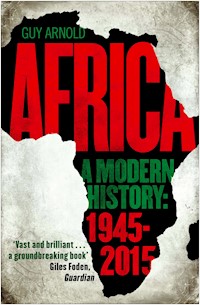
A magisterial and sweeping history of modern Africa. The end of the Second World War signalled the rapid end of the European African empires. In 1945, only four African countries were independent; by 1963, thirty African states created the Organization of African Unity. Despite formidable problems, the 1960s were a time of optimism as Africans enjoyed their new independence, witnessed increases in prosperity and prepared to tackle their political and economic problems in their own way. By the 1990s, however, the high hopes of the 1960s had been dashed. Dictatorship by strongmen, corruption, civil wars and genocide, widespread poverty and the interventions and manipulations of the major powers had all relegated Africa to the position of an aid 'basket case', with some of the world's poorest and least-developed nations. By exploring developments over the last fifteen years, including the impact of China, new IT technology and the Arab Spring, the rise of Nigeria as Africa's leading country and the recent refugee crisis, Guy Arnold brings his landmark history of modern Africa up to date and provides a fresh and insightful perspective on this troubled and misunderstood continent.
Sie lesen das E-Book in den Legimi-Apps auf:
Seitenzahl: 2449
Veröffentlichungsjahr: 2017
Das E-Book (TTS) können Sie hören im Abo „Legimi Premium” in Legimi-Apps auf:
Ähnliche



















CONTENTS
Acknowledgements
List of Illustrations
List of Maps
Dateline
Prologue
Introduction
Part I: The 1960s Decade of Hope
CHAPTER ONE Problems of Independence
CHAPTER TWO The Congo Crisis
CHAPTER THREE African Unity and the Formation of the OAU
CHAPTER FOUR The Coup d’Etat and the One-Party State
CHAPTER FIVE Problems of Development
CHAPTER SIX North Africa
CHAPTER SEVEN The Nigerian Civil War
CHAPTER EIGHT West and Equatorial Africa
CHAPTER NINE The Horn of Africa
CHAPTER TEN East Africa
CHAPTER ELEVEN White Racism in Central Africa
CHAPTER TWELVE Portugal in Africa
CHAPTER THIRTEEN South Africa
The Decade in Retrospect
Part II: The 1970s Decade of Realism
CHAPTER FOURTEEN Patterns of Development
CHAPTER FIFTEEN Four Different Development Paths
CHAPTER SIXTEEN Oil and Israel; A New International Economic Order
CHAPTER SEVENTEEN The Growth of Aid
CHAPTER EIGHTEEN Strategic Highways
CHAPTER NINETEEN The Cold War Comes to The Horn
CHAPTER TWENTY Rhodesia
CHAPTER TWENTY-ONE The End of Portuguese Africa
CHAPTER TWENTY-TWO Namibia
CHAPTER TWENTY-THREE South Africa: The Critical Decade
The Decade in Retrospect
Part III: The 1980s Basket Case?
CHAPTER TWENTY-FOUR Introduction to the Decade: The OAU Tries to Cope
CHAPTER TWENTY-FIVE The Arab North
CHAPTER TWENTY-SIX The Horn: Continuous Warfare
CHAPTER TWENTY-SEVEN West Africa: Nigeria and Ghana
CHAPTER TWENTY-EIGHT East and Equatorial Africa
CHAPTER TWENTY-NINE Endgame in Southern Africa
CHAPTER THIRTY Development Standstill
The Decade in Retrospect
PART IV: The 1990s New Directions and New Perceptions
CHAPTER THIRTY-ONE The End of the Cold War
CHAPTER THIRTY-TWO South Africa: The Last Hero
CHAPTER THIRTY-THREE Democracy
CHAPTER THIRTY-FOUR Civil Wars: Algeria, Somalia, Sudan
CHAPTER THIRTY-FIVE Genocide and Border Confrontation
CHAPTER THIRTY-SIX Failed States and the Return of the Imperial Factor
CHAPTER THIRTY-SEVEN The Congo: Africa’s Great War
CHAPTER THIRTY-EIGHT Mugabe’s Zimbabwe
CHAPTER THIRTY-NINE Corruption
CHAPTER FORTY Century’s End: Globalization
EPILOGUE
Afterword to the 2017 Edition: The New Colonialism 2000-2015
List of Abbreviations
Notes
Bibliography
Index
A Note About the Author
Picture Section
Copyright
ACKNOWLEDGEMENTS
From 1960 to 2000, the period covered by this book, momentous changes occurred throughout Africa to transform the continent from being a colonial extension of Europe into fifty independent nations. Following independence these new nations, struggled to achieve an identity of their own, faced the pressures of the Cold War, witnessed the emergence of the one party state and the charismatic political leader, watched the rise of their armies as major political players who carried out coups on a scale unequalled anywhere else and saw their continent wracked by wars that inevitably attracted interventions by the world’s leading powers – in the Congo, Angola, the Horn and elsewhere. Lack of trained personnel and economic weakness rendered most African countries deeply vulnerable to external manipulation by the former colonial powers, the new superpowers, part of whose ideological confrontations were conducted in Africa, and the western controlled World Bank and IMF, a process famously described by Kwame Nkrumah as neo-colonialism. The Africa which established the Organization of African Unity in 1963 had changed out of recognition by the beginning of the 21st century. By any reckoning the events of these years amount to an historical revolution.
During 40 years of travelling in Africa and writing about its political and economic development I have drawn upon the knowledge and experience of a wide range of people whom it would be impossible to name. Their insights have influenced my own growing understanding and attachment to Africa over my professional writing life and this book reflects that influence though the arguments and conclusions are entirely my own.
I wish to record my particular thanks to Toby Mundy, my publisher, who has backed this large project with enthusiasm; and Louisa Joyner who has overseen each stage in the preparation of the book for publication. I am particularly grateful to Sue Hewitt and Ruth Weiss for their careful reading of the text and suggestions as to facts, presentation and clarity, and to Derek Ingram for a final appraisal.
Guy Arnold2005
LIST OF ILLUSTRATIONS
SECTION 1:
Kwame Nkrumah and Gamal Abdul Nasser
Kwame Nkrumah
Gamal Abdul Nasser
Patrice Lumumba with U. N. Secretary General Dag Hammarskjold
Patrice Lumumba
Alhaji Abubakar Tafawa Balewa
Ferhat Abbas
Ahmed Ben Bella
Nigerian (Federal) soldiers
Ian Smith
SECTION 2:
J. B. Vorster and Ian Smith
Portuguese troops in Luanda, Angola, August 1975
MPLA Child Soldiers
Britain’s Foreign Secretary, Jim Callaghan and Idi Amin
J. B. Vorster and K. D. Kaunda
Tanzam Railway
Helen Suzman
J. B. Vorster
Idi Amin
Bantu Housing
Black Sash protest
SECTION 3:
Robert Mugabe and Lord Soames
Robert Mugabe
Joshua Nkomo
Agostinho Neto
Jonas Savimbi
Hastings Banda
Woman of Lesotho
Lesotho landscape
P. W. Botha and his wife
Andries Treurnicht
Olusegun Obasanjo
SECTION 4:
Sam Nujoma and F. W. de Klerk
President Sam Nujoma’s guard of honour
Nelson Mandela and F. W. de Klerk
Archbishop Desmond Tutu
Muammar Gaddafi and Jerry Rawlings
Nelson Mandela and Joaquim Chissano
Thabo Mbeki
Olusegun Obasanjo, Thabo Mbeki and Tony Blair
SECTION 5:
Hu Jintao and Umaru Yar’Adua
Workers at the construction of the African Union buildings
Young miners, Democratic Republic of Congo
Jacob Zuma and Joseph S. Blatter
Egyptian protester
African migrants
French troops, northern Mali
Catherine Samba-Panza
LIST OF MAPS
African Nations 2017
Part I: The 1960s Decade of Hope
African Independence
The Congo Crisis
African Unity and the OAU
Africa’s Regional Divisions
Arab North Africa
The Nigerian Civil War
West Africa
Equatorial Africa
The Horn of Africa
East Africa
Southern Africa
Highways of Southern Africa
Part II: The 1970s Decade of Realism
Regional Development Communities
Strategic Highways
Proposed Trans-Africa Highway
War in the Horn of Africa
South Africa and its Neighbours
Part III: The 1980s Basket Case?
The Arab League
Islam in Africa
Areas of Conflict in North Africa
West African Economic Groups
South African Destabilisation Tactics
PART IV: The 1990s New Directions and New Perceptions
Africa’s Wars 1952–2000
Africa’s Great War
The Commonwealth in Africa
— * —
A Geographical Map of Africa
DATE LINE
1940s
1945 End World War II
Establishment of United Nations
Sixth Pan-African Conference (Manchester, England)
Setif Uprising, Algeria
Only four African countries independent – Egypt, Ethiopia Liberia, South Africa
1948 National Party wins South African election; implements apartheid
1950s
1951 Portugal transforms its African colonies into overseas provinces
Egypt abrogates 1936 Treaty with Britain; British troops occupy Canal Zone
Libya independent
1952 Army coup in Egypt; King Farouk goes into exile
Ahmed Ben Bella forms Algerian Revolutionary Committee in Cairo
1952-1959 Mau Mau rebellion in Kenya
1953 Trial of Jomo Kenyatta for managing Mau Mau backfires, helps create myth of Kenyatta the nationalist leader
Britain forms Central African Federation (CAF): Northern Rhodesia, Southern Rhodesia, Nyasaland under white minority rule
1954 Col. Nasser takes full control in Egypt
National Liberation Front (FLN) launches Algerian war of independence
1956 Sudan, Morocco, Tunisia independent
Suez Crisis
French Loi Cadre gives universal suffrage in French West and Equatorial Africa
1957 Gold Coast independent as Ghana
1958 De Gaulle tours Francophone Africa; offers self-government within a French Community
Guinea under Sekou Touré opts for full independence; France breaks relations
1960s
1960 Harold Macmillan gives ‘Wind of Change’ speech in Cape Town
21 March, Sharpeville Massacre in South Africa
30 June, Belgian Congo independent; descends into chaos
‘annus mirabilis’ – most of Francophone Africa – Cameroon, Central African Republic, Chad, Congo (B), Dahomey (Benin), Gabon, Ivory Coast (Côte d’Ivoire), Madagascar, Mali, Mauritania, Niger, Senegal, Togo, Upper Volta (Burkina Faso) – independent
Ethiopia, abortive coup against Emperor Haile Selassie
British Somaliland joins former Italian Somaliland to form independent Republic of Somalia
Nigeria independent
1961 Patrice Lumumba murdered in Katanga (Congo)
Casablanca (radical) and Monrovia (moderate) groups threaten to divide Africa into rival camps
Portugal claims its African subjects are full citizens of Portugal
Liberation struggle launched in Angola
Sierra Leone, Tanganyika independent
South Africa leaves Commonwealth
Death of UN Secretary-General Dag Hammarskjold
ECA study: “Impact of Western European integration on African trade and development” – EEC a threat to African exports
1962 Algeria, Uganda independent
Haile Selassie ends Federation of Eritrea and Ethiopia, incorporates Eritrea in Empire – prelude to 30 years’ warfare
UN general assembly calls upon all members to break ties with South Africa; special committee against apartheid is established
1963 Katanga secession ended by UN forces
Addis Ababa conference of 30 independent African states creates Organisation of African Unity (OAU)
Early OAU resolution calls on all members not to establish any relations with South Africa until apartheid is abandoned
Amilcar Cabral launches independence struggle in Portuguese Guinea (Guinea-Bisau)
First Yaounde Convention between the EC and African countries with ties to EC (former colonies of members)
Kenya, Zanzibar independent Central African Federation dissolved
1964 revolution in Zanzibar (January); Zanzibar joins Tanganyika to form
United Republic of Tanzania (April)
British forces quell army mutinies in East Africa
First OAU summit held in Cairo
FRELIMO launches liberation struggle in Mozambique
French troops reverse coup in Gabon to keep M’Ba in power
The Shifta border war between Kenya and Somalia – to 1967
Rivonia treason trial in South Africa: Mandela, Sisulu and other African nationalist leaders get life sentences, sent to Robben Island
Nyasaland and Northern Rhodesia independent as Malawi and Zambia
Zhou en Lai in Mali enunciates Eight Principles of Chinese aid
1965 Coup in Algeria: Ben Bella deposed; Boumedienne becomes head of state
The Gambia independent
White minority government of Southern Rhodesia makes unilateral declaration of independence (UDI) 11 November
OAU resolution calls on members to break diplomatic relations with Britain by 15 December unless it has taken action to reverse UDI; only 11 countries do so
Joseph Mobutu carries out second coup in the Congo (24 November) – to rule to 1997
1966 Commonwealth summit in Lagos devoted to UDI in Rhodesia
Coup in Nigeria: military rule replaces civilian government
UN imposes sanctions on Rhodesia
Coup ousts Nkrumah in Ghana; military rule
UN General Assembly proclaims 21 March (Sharpeville day) International day for the Elimination of Racial Discrimination
UN terminates South Africa’s mandate over South West Africa (Namibia)
SWAPO launches armed struggle in Namibia
Assassination of Prime Minister Verwoerd of South Africa
Botswana, Lesotho independent
1967 Formation of East African Common Market (Kenya, Tanzania, Uganda)
Col. Ojukwu proclaims independent state of Biafra (May);
Nigerian civil war begins (July)
Egypt humiliatingly defeated by Israel in Six day War
Arusha Declaration, Tanzania
President Banda of Malawi enters into diplomatic relations with South Africa
1968 Spanish Guinea independent as Equatorial Guinea
Britain passes Commonwealth Immigration Act restricting immigration from Commonwealth countries
Mauritius, Swaziland independent
1969 Coup in Somalia brings Siad Barre to power
Coup in Libya brings Muammar al-Gaddafi to power
Coup in Sudan brings Jaafar Nimeiri to power
Hardline Afrikaners break with National party in South Africa to form Herstigte Nasionale Party under Albert Hertzog
Second EC-Africa Yaounde Convention
Pearson Report
1970s
1970 Rhodesia proclaims itself a republic
UN strengthens arms embargo against South Africa; urges members to terminate all relations with the Republic
Non-Aligned Summit in Lusaka, Zambia
China begins construction of 1,100-mile TANZAM railway linking Tanzania and Zambia; opens 1976
1971 Commonwealth summit in Singapore debates decision of Heath Government to resume sale of arms to South Africa
Idi Amin mounts coup in Uganda to oust Milton Obote (in Singapore for Commonwealth summit)
Mobutu assumes absolute power in the Congo, renames Zaïre
International Court of Justice rules that South Africa is illegally in Namibia
President Banda of Malawi on state visit to South Africa
US Polaroid corporation experiment in South Africa: improved work conditions for black employees break apartheid rules
Ovambo strike in Namibia (to 1972) brings country to a standstill
1972 Opening of Orapa diamond mine in Botswana signals rapid development of mineral wealth
Pearson Commission to Rhodesia reports (April) that Africans
overwhelmingly reject constitution proposed by Britain
Sudan: Addis Ababa Agreement ends North-South civil war:
Nimeiri grants regional autonomy to South
Burundi: 100,000 Hutus massacred
Uganda: Amin forces all non-citizen Asians to leave; Britain receives 30,000
Rhodesia: commencement of sustained guerrilla warfare in northeast by forces of Zimbabwe African National Union (ZANU)
1973 Rhodesia closes border with Zambia
Britain joins European Community: opens way for EC aid to Anglophone Africa under Lomé Conventions
Sahel drought
British journalist Adam Raphael, in Guardian, reveals that only three of the top 100 British companies in South Africa pay their African workers above the poverty datum line
24 September: PAIGC declares Guinea-Bissau independent; recognized by a majority of UN members
Yom Kippur War: almost all African countries break relations with Israel
Algeria hosts Non-Aligned summit (September) and Arab summit (November): Boumedienne calls for Algeria and Arab world to take control of their economies
African economies hit by fourfold in crease in price of oil
1974 Portugal: 25 April Revolution; Caetano government overthrown;
Gen. Spinola recognizes right of African territories to independence
UN General Assembly rejects South Africa’s credentials and South Africa ceases to participate in UN deliberations
South Africa sponsors détente with its neighbours to ease tensions in the region
UN Sixth Special Session held in Algiers: launch of New International Economic Order (NIEO) initiative
General Assembly adopts Declaration and Programme of Action on the Establishment of an NIEO
Ethiopia: fall of Haile Selassie; military Dergue to rule
1975 End of Portugal’s African Empire: Mozambique (June), São Tomé and Principe (July), Cape Verde (September), Angola (November) independent
Mozambique: civil war between ruling FRELIMO and rebel
RENAMO – to 1992
South African force invades Angola; a PR disaster for Pretoria
Formation of Economic Community of West African States (ECOWAS)
Nigeria launches Third Development Plan, at Naira 32 billion the largest ever in Africa to that date
Nigeria: Gen. Gowon ousted in coup by Gen. Murtala Muhammad Lome I
Comoros independent
1976 Nigeria (February): Muhammad killed in coup; Olusegun Obasanjo becomes head of state
South Africa: Soweto uprising heralds year of violence
Spain gives up control of Spanish (Western) Sahara: Morocco and Mauritania claim the territory and mobilise forces to seize it
Seychelles independent
1977 Ogaden war between Ethiopia and Somalia – to 1978
Haile Mengistu Mariam assumes full control of Ethiopia and purges opponents; implements Marxist policies; US ends aid
The two superpowers (US and USSR) become engaged in the Horn: USSR supports Ethiopia, US supports Somalia
Zaire: Shaba wars (1977 and 1978) launched by exiles in Angola threaten Mobutu’s hold on country; France and Morocco provide military assistance
President Bokassa of Central African Republic crowns himself emperor in lavish ceremony
Djibouti independent
Rhodesia: Gen. Peter Walls argues publicly for negotiations, says Rhodesian government cannot win the war
1978 Amin launches attack on Tanzania through the Kagera salient
French mercenary Bob Denard leads 50 white mercenaries from South Africa to carry out coup in Comoros
Algeria: death of Boumedienne; Chadli Benjedid succeeds him
South Africa; Muldergate scandal destroys Vorster’s political career; P. W. Botha becomes Prime Minister
Kenya: death of Kenyatta; Arap Moi becomes President
1979 Commonwealth summit in Lusaka: Britain convenes constitutional conference in London to settle future of Rhodesia
Lome II
Africa 2000: analysis of Africa’s economic problems, leads to
Lagos Plan of Action 1980
Tanzanian army in support of Obote invades Uganda; fall of Amin
Central African Republic: coup supported by France ousts Emperor Bokassa
Ghana: Jerry Rawlings seizes power in coup: three former military heads of state executed
Nigeria: Obasanjo returns the country to civilian rule
Egypt isolated in Arab world following the Camp David Accords
South Africa explodes nuclear weapon in South Atlantic
1980s
1980 Brandt Report
Rhodesia becomes independent as Zimbabwe; Robert Mugabe Prime Minister; 30,000 dead in guerrilla war (official)
Wars in Africa 1980-1990 result in 5 million refugees, one-third of world total
Liberia: Samuel Doe seizes power in coup; President Tolbert killed; 13 members of his government publicly executed
South Africa: policy of destabilizing its neighbours – to 1990
Southern African Development Coordination Conference (SADCC) formed by Frontline States
1981 World Bank Report: Accelerated Development in Sub-Saharan Africa An Agenda for Action
1982 Zimbabwe: Mugabe wages ‘Dissidents’ War’ against Ndebele to 1987; destroys Joshua Nkomo’s power base
US President Ronald Reagan bans import of Libyan oil
1983 South Africa: Botha introduces constitutional reforms which establish a tricameral racial legislature; leads to increasing protests and violence through to 1986
Sudan: resumption of North-South civil war
Nigeria expels two million foreign workers from Ghana (majority), Cameroon, Chad, Nige,
Nigeria: New Year’s Eve army ousts civilian government of Sheu Shagari; Gen. Muhammed Buhari head of state
1984 UN General Assembly rejects new South African racially segregated tricameral constitution
Lome III
OAU: 30 member states (a majority) recognize the legitimacy of the Sahrawi Arab Democratic Republic (SADR) occupied by Morocco, which quits the OAU rather than accept its decision
Ethiopia: tenth anniversary of revolution: formation of the Workers’ party of Ethiopia; country affected by famine
World Bank report: Toward Sustained Development in Sub-Saharan Africa: A Joint Program of Action; calls for more aid
1985 OAU adopts five-year plan (1986-90): African Priority Programme for Economic Recovery (APPER); this is followed by UN Programme of Action for Africa’s Economic Recovery and Development (UNPARED)
Tanzania: Nyerere retires as President; succeeded by Ali Hassan Mwinyi
Western business disinvests from South Africa
South Africa: 15 August at Durban President Botha delivers ‘Rubicon’ speech – makes no concessions; Rand loses 35 per cent of value in 13 days
Group of South African businessmen go to Lusaka to talk with Oliver Tambo and other ANC leaders about the future of South Africa
Libya: Gaddafi says: We have the right to fight America, and we have the right to export terrorism to them
Sudan: Nimeiri ousted by military
December: five-day border war between Burkina Faso and Mali
1986 Yoweri Museveni wins control of Uganda after years of civil strife
United States bombs targets in Libya
Mozambique: death of President Samora Machel in air crash
South Africa: government repeals 34 laws and regulations as it begins to abandon apartheid
South Africa: the Eminent Persons Group (EPG) established by the Nassau Commonwealth summit of 1985 to sound out opinion in South Africa quits the Republic when Botha orders cross-border raids into Botswana, Zambia and Zimbabwe
World Bank report: Financing Adjustment and growth in Sub-Saharan Africa, 1986-90
1987 Angola: battle of Cuito Cuanavale (into 1988) in south of country involving South African and Cuban forces destroys myth of South African superiority
Tunisia: Gen. Zine al-Abidine Ben Ali replaces 84-year-old Bourguiba as no longer competent to rule
1988 Algeria: rise of Front Islamique du Salut (FIS)
1989 Egypt: President Sadat assassinated; Hosni Mubarak president
Ethiopia: military coup against Mengistu fails
South Africa: Botha has stroke; F. W. de Klerk becomes President
Liberia: Charles Taylor and his National Patriotic Front of Liberia launches civil war
1990s
1990 End of Cold War
South Africa: de Klerk unbans ANC and 33 other black political organizations; announces determination to end apartheid (2 February) ; week later releases Nelson Mandela
Namibia independent (March 21); Sam Nujoma becomes President
Angola: MPLA government abandons Marxism-Leninism
UN Secretary-General sends mission to South Africa to report on progress towards dismantling apartheid
ODA (aid) to Sub-Saharan Africa falls by 21 per cent from 1990 to 1996
Chad: civil war ends; Hissène Habré flees country; Idriss Deby president
Ethiopia: Eritrean people’s Liberation Front (EPLF) launches final offensive against Ethiopian forces
Côte d’Ivoire: Houphouet Boigny (aged 85) wins presidential election after 30 years of continuous office
1991 South Africa: remaining apartheid laws repealed
Somalia: Siad Barre quits country as it collapses into chaos
Zambia: elections – Kaunda is defeated by Frederick Chiluba who becomes president.
Algeria: first round of elections on 26 December bring FIS close to victory; army cancels second round (due 15 January 1992) which FIS would have won; prelude to civil war (1992-2000)
1992 Dissolution of USSR removes alternate court of appeal for aid and political systems
Brazil: Rio Earth Summit on environment
Mandela addresses UN: calls upon it to lift sanctions because of progress in South Africa
Somalia: 28,000 US marines deployed in ‘Operation Restore Hope’
1993 Eritrea independent
Burundi: civil strife to 2000 kills 200,000
Côte d’Ivoire: death of Houphouët Boigny ushers in period of political instability
1994 South Africa: (April 27) first national non-racial one person one vote elections; ANC victory; Mandela becomes President; formation of Government of National Unity
Malawi: elections bring an end to Banda’s rule
Rwanda: extreme Hutus carry out systematic genocide of Tutsis, April to September, 800,000-1 million slaughtered; international community fails to intervene
1995 Nigeria: execution of human rights protester Saro Wiwa by Abacha government causes international outrage
Publication of Our Global Neighbourhood
1996 Somalia: UN withdraws its peacekeeping mission UNOSOM
1997 Zaire: Mobutu ousted; Laurent Kabila President; country renamed Congo Democratic Republic; country descends into war
Africa’s Great War; estimated three million casualties (dead);
Neighbouring states – Uganda, Rwanda, Burundi, Angola, Namibia, Zimbabwe – become involved in one or other side
Congo (Brazzaville): civil war
Zimbabwe: Land Redistribution Act – white-owned farms designated for compulsory purchase
1998 Border war between Eritrea and Ethiopia – to 2000 – 70,000 Dead
1999 South Africa: Thabo Mbeki succeeds Mandela as the country’s second black president
Nigeria: return to civilian rule; Olusegun Obasanjo president
Côte d’Ivoire: growing divisions between north and south bring the country to the brink of civil war; France sends troops
2000s
2000 Sierra Leone: Britain sends troops as peacekeepers in civil war
Zimbabwe: Mugabe holds referendum to alter constitution; a 55 per cent ‘no’ vote is recorded
2001 Ghana: elections return John Kufuor for second term
Democratic Republic of Congo: Laurent Kabila is assassinated (January 16); his son Joseph appointed president
Nigeria: at Abuja summit the concept of a New Partnership for African Development (NEPAD) is launched
2002 OAU dissolves itself; replaced by African union (AU) with greater powers to intervene in individual states in reaction to genocide, ethnic cleansing or abuse of human rights
2003 Zimbabwe leaves the Commonwealth
US President George W. Bush visits Africa
Nigeria: first civilian-run presidential elections since end of military rule; Olusegun Obasanjo elected for second term
Civil war begins in Darfur region of Sudan
2004 South Africa: Ruling ANC wins landslide election victory. Thabo Mbeki begins a second term as president
Gambia: announcement of discovery of large oil reserves
2005 South Africa: President Mbeki sacks his deputy, Jacob Zuma, in the aftermath of a corruption case
Namibia: government begins expropriation of white-owned farms
Kenya: voters reject proposed draft constitution
2006 Ethiopian troops attack Islamists in Somalia
China issues its first Africa Policy Paper; President Hu Jintao and Premier Wen Jiabao visit Africa
Democratic Republic of Congo: first multi-party elections held since independence; Joseph Kabila elected president
2007 United States Africa Command (US AFRICOM) established
Togo holds first democratic elections
Somalia: US airstrikes against al-Qaeda suspects and al-Shabab militants; state of emergency declared; UN Security Council approves a six-month African Union peacekeeping mission
2008 South Africa: President Mbeki resigns over allegations that he interfered in Zuma corruption case
EU and US widen sanctions against Zimbabwe’s leaders
2009 South Africa: Jacob Zuma elected as president
Ethiopia withdraws forces from Somalia
Rwanda joins the Commonwealth
Africa’s population reaches 1 billion
2010s
2010 Sudanese government and Darfuri rebels sign ceasefire agreement
Nigeria: President Yar’Adua dies; Vice-President Goodluck Jonathan sworn in as Acting President
South Africa hosts the World Cup football tournament
Kenya: new constitution approved in referendum
Tunisia: street vendor Tarek al-Tayeb Mohamed Bouazizi sets himself on fire in protest over harassment by a municipal official; protests begin
2011 Tunisian President Zine El Abidine Ben Ali steps down; Arab Spring protests spread across North Africa
Egypt: President Hosni Mubarak overthrown; Mohammad Morsi elected president before being ousted; Abdel Fattah el-Sisi elected president
Libya: Muammar Gaddafi overthrown and killed by rebel forces; civil war ensues
Nigeria: Acting President Goodluck Jonathan elected president
South Sudan receives independence
2012 Northern Mali conflict begins; France sends troops the following year and Islamist forces are defeated
Central African Republic civil war begins
2013 Nelson Mandela dies, aged 95
Gambia leaves the Commonwealth
2014 Nigeria: Islamic terror group Boko Haram kidnaps 276 schoolgirls
Tunisia becomes a parliamentary republic
Burkina Faso: President Compaoré resigns after 27 years in power
2015 Burundi: rebel forces stage failed coup attempt
Burkina Faso: after a short-lived coup by the military, Roch Marc Christian Kaboré elected president
Nigeria: Muhammadu Buhari elected president
US President Barack Obama visits Kenya, his father’s homeland
MAPS
African Nations 2017
African Independence
The Congo Crisis(See Chapter Two)
African Unity and the OAU(See Chapter Three)
Africa’s Regional Divisions
Arab North Africa(See Chapter Six)
The Nigerian Civil War(See Chapter Seven)
West Africa(See Chapter Eight)
Equatorial Africa(See Chapter Eight)
The Horn of Africa(See Chapter Nine)
East Africa(See Chapter Ten)
Southern Africa(See Chapters Eleven, TwelveandThirteen)
Highways of Southern Africa(See Chapter Thirteen)
Regional Development Communities(See Chapters FourteenandFifteen)
Strategic Highways(See Chapter Eighteen)
Proposed Trans-Africa Highway(See Chapter Eighteen)
War in the Horn of Africa(See Chapter Nineteen)
South Africa and its Neighbours(See Chapter Twenty-Three)
The Arab League(See Chapter Twenty-Six)
Islam in Africa(See Chapter Twenty-Five)
Areas of Conflict in North Africa(See Chapter Twenty-Five)
West African Economic Groups(See Chapters EightandTwenty-Seven)
South African Destabilisation Tactics(See Chapter Twenty-Nine)
Africa’s Wars 1952–2000(See Chapter Thirty-Six)
Africa’s Great War(See Chapter Thirty-Seven)
The Commonwealth in Africa(See Chapter Thirty-Eight)*
* Zimbabwe left the Commonwealth in 2003, followed by Gambia in 2013. Rwanda joined in 2009.
A Geographical Map of Africa
PROLOGUE
1945
THE IMPACT OF WORLD WAR II
When World War II came to an end in 1945 the European colonial powers thought to resume business as usual in their empires; but this was not to be. Huge changes in the world’s power structures were about to take place while the climate in which the maintenance of European empires appeared to be part of the natural political order was disintegrating under a range of new pressures. These included the marginalization of Europe by the emergence of the two superpowers, the coming of the Cold War and, everywhere, nationalist demands for independence. Moreover, much of the groundwork necessary for the transition to independence had been laid during the war even though this had not been the intention. Britain may have fought its last imperial war, as historians were later to suggest, but it was the last imperial war in more senses than one.
When the war began in 1939 the African empires of the European powers were intact and few colonial administrators or politicians of the metropolitan countries had given much thought to the possibility of African independence or, if they had, it was in vague terms of a long-distant future. The war was soon to change such perceptions; indeed, it would call into question the very existence of colonialism:
In the first place, the spectacular reverses suffered at the beginning of the war by the two main colonial powers effectively destroyed their semiconscious assumption that they had a natural right to rule the ‘uncivilized’ world. In Africa this assumption had been strengthened by a widespread acceptance of it even among the natives – to the extent at least that white power was assumed to be invincible.1
The collapse of France in 1940 dealt a massive blow to French prestige in Africa, and the struggle for colonial loyalties that followed between the Free French and the Vichy regime did not help. And though black Africans rallied to France’s defence, the relationship between the French and their colonial subjects had been profoundly altered: ‘But the realisation that she actually needed their help, that they were no longer being lectured like children but appealed to as brothers, was clearly going to make it difficult to retain an authoritarian system of government after the peace.’2 From 1940 onwards progress for a French imperialist ‘would imply closer integration with the mother country, and political maturity would mean not the rule of Africans by Africans – which after all had existed before the imperial power arrived – but the participation of Africans as Frenchmen in the government of a greater France.’ Or so, for a while, it was to seem.3
The crisis for the British came early in1942 with the fall of their impregnable, as they thought, bastion of Singapore to the Japanese. This was not just a traumatic defeat but, far more significantly, the defeat of whites by non-whites. The Times described the fall of Singapore as ‘the greatest blow, which has befallen the British Empire since the loss of the American colonies… British dominion in the Far East can never be restored – nor will there be any desire to restore it – in its former guise.’ Moreover, another blow to imperialism in Asia, the bulk of the Asian populations remained spectators from start to finish of the war while Churchill, the arch-imperialist, was obliged to promise independence to India in return for its co-operation during the hostilities. The fact that Britain, though battered, had not been invaded by Germany and was carrying on the war made it easier for it to call for assistance from its imperial subjects to help save the Empire. Ironically, the response of many Africans to this call ensured that after the war the empire was doomed since, during the course of the struggle, Britain had forged an instrument for its termination by teaching its black soldiers the nationalism essential to its demise. Another factor arising out of the war was the rapid increase of British demand for colonial products – for example, spices from Zanzibar to replace those normally imported from the Dutch East Indies, which had been overrun by the Japanese. The added flow of money to the colonies that resulted became an extra source of confidence for the breed of new nationalists that was emerging.
In British East Africa, the outbreak of war led to a suspension of politics, both white and black, and when Italy entered the war on the side of Germany in 1940 the government of Kenya suppressed a number of African political organizations, including the most important one, the Kikuyu Central Association, and interned their leaders. On the other hand, Commander F. J. Couldrey, editor of the Kenya Weekly News, was the first leading European in a colony dominated by white settlers, to say openly in a BBC broadcast to East Africa, that the colony could not achieve self-government by Europeans alone but that it had to be on the basis of all races ‘co-operating’.4 Indeed, World War II was to prove an event of major importance for the peoples of Kenya: ‘Out of a total of 280,000 men recruited in the East African Forces (including men from Nyasaland, Northern Rhodesia and British Somaliland, as well as from the East African territories proper), some 75,000 came from Kenya, a figure representing a little under 20 per cent of its total adult male African population.’5 Over the war years a considerable amount of money in family allowances was paid into the African reserves; at the same time the demand by the army for agricultural and livestock products ensured a steady market for the tribes that were able to supply them.
But the main consequence was certainly the immense widening of the experience of most of the men recruited. Many served in the Middle East and the Far East, as well as nearer home in other parts of Kenya, Madagascar and Ethiopia. They came into contact with men of other tribes, and with Europeans, Indians and Arabs of all classes. They saw that the traditional superiority of European and Asian was by no means accepted outside East Africa. And in their army training they were given both formal and informal education – it was, for example, the policy of the army to make as many Askari as possible literate and also able to speak basic English. Many soldiers received technical training of various kinds, and after the end of the Japanese war the army opened schools of general and technical training, at a simple level, for soldiers before their disbandment.6
Another outcome of the war for the three territories of East Africa was the growth of co-operation between them. It was necessary to co-ordinate a plan of defence and to develop joint action in providing manpower and foodstuffs. On 1 August 1940, an East African Economic Council was created. Ironically, foreshadowing events that still lay in the future, the Ugandans complained that such co-operation was working too much in favour of Kenya.
As Waruhiu Itote, better known as the Mau Mau General China, was to write in his book Mau Mau in Action, ‘Several of our leaders had been in the Kenya African Rifles during World War II, including Dedan Kimathi and myself.’7 In Uganda ‘The Second World War did much to disturb [the] state of unruffled calm. There was, in the first place, some draining away of manpower. At the peak of recruitment in 1944 nearly 55,000 men were serving in the army, and many more spent short periods in military labour organizations.’8 During the years 1919 to 1945 there was no African political activity against colonial rule in Uganda but in 1945 disturbances in Buganda indicated that Uganda, like much of Africa, was moving into a more hostile political stance although there had been little evidence of open hostility towards Britain while the war lasted and many Ugandans (a total of 76,957) had enlisted in the Pioneer Corps, the East Africa Medical and Labour Services and the King’s African Rifles. Tanganyika became similarly engaged in the war effort as Kenya and Uganda. Its soldiers, serving with the King’s African Rifles, took part in the campaigns against Italy in Somaliland and Ethiopia that destroyed the Italian empire in East Africa. Later troops from Tanganyika were involved in the campaign of 1942 to overthrow the Vichy French Government in Madagascar. In June 1943 soldiers from Tanganyika formed part of the 11th East African Division that sailed to Ceylon in preparation for the Burma campaign. It was the first occasion in which the King’s African Rifles were to serve in active operations outside the African continent. Altogether, 87,000 Tanganyika Africans were conscripted for war service; it was assumed by the colonial authorities that when they returned home demands for African rule would become more insistent. Given its small size, Zanzibar made a substantial contribution to the imperial war effort and large numbers of Zanzibaris served in medical, signals, transport, docks and education units of the armed forces. The sum of £12,000 was raised for war charities and an additional £15,383 was subscribed for fighter aircraft for Britain. Zanzibar also raised a local naval force, a volunteer local defence force, and turned the police into a military body.9
It was a somewhat different story in British West Africa where the army had a bad reputation as a symbol of foreign rule. Nonetheless, in the Gold Coast, over the years 1946–51, ex-servicemen played a critical role in the general political upsurge that occurred in that territory. Despite the fact that the West African colonies did not have white settler minorities to contend with and were generally seen as more politically advanced than those of East Africa, official white attitudes were no further advanced. ‘Though African soldiers had rendered distinguished service to the Commonwealth in World War II, little consideration was given at that stage to the possibility of commissioning officers from the ranks.’10
The war also eliminated two European powers from the African colonial scene. It ended any possibility of Germany making a colonial comeback, an outcome that would certainly have been on the cards had Hitler been victorious, and Italy lost its African empire. Instead, ‘British, Indian, white South African and Rhodesian troops, as well as Sudanese, King’s African Rifles and soldiers from the Royal West Africa Frontier Force, invaded Italy’s East African possessions. By July 1941 the last Italian forces surrendered in Ethiopia.’ By May 1945, the total number of Africans serving in British military units (combatants and auxiliaries) came to 374,000 while the total from all colonies (excluding India and the Dominions) came to 437,000 so that Africans formed the majority of these colonial forces. White soldiers from South Africa numbered 200,000 while Southern Rhodesia contributed 10,000 whites, 14,000 Asians and 76,000 black soldiers in auxiliary services. South African losses amounted to 8,681 men, the combined losses of the colonies to 21,085 men.11
Many of these black soldiers learned new skills, for example, as clerks or truck drivers, and they travelled widely to India, Burma, Palestine and other countries where they learned new ideas and obtained a broader outlook on the world and its politics. Another aspect of the war was an increase in colonial government controls: for example, trade through government marketing boards set the foundations for the state infrastructures of the future. All together ‘The importance of overseas experience in India and Burma in World War II by both East and West African troops can scarcely be overestimated: more than any other single factor this exposure helped to bring the colonies politically into the modern world.’ Contacts took place with the Indian Congress Party but ‘the total effects of Asian service were to open the eyes of African soldiers to developments in other territories under imperial rule, to dispel the notion of European invincibility and to develop personal maturity. The respect which ex-servicemen afterwards commanded both in urban and rural areas gave them an important status in subsequent political, social and economic development.’12 This was certainly true but, as the returned African soldiers also found, they were not accorded the respect as fighting men by Britain that they deserved. In November 1945 West Africa magazine published letters from West African soldiers still in India, under the heading ‘Appeal for more recognition’. One such letter, signed ‘Yours very faithfully, R.W.A.F.F. Boys in India’, began as follows:
Sir: -We have been reading in the Times of India, and other allied newspapers since V. J. Day. Once and again we have heard it beamed to the world on the wireless – a phrase, ‘and others.’ This embarrasses us and hundreds of our country-mates who hold this view; that causes tears to becloud our sense of vision when we ask to who on earth these six letters – ‘others’ – might refer…
Later in the letter they list the numbers of allied prisoners released from Japanese camps – British, Australian, Dutch, American, Indian, Others. According to a note from Delhi, the Indian press revealed that
more than 77,000, and 49,000, West and East African troops respectively took part in most of the strongest battles, fought under the worst conditions, at one time or the other in Burma since late in 1943 up to V. J. Day.
Later, in this revealing letter, the writers continue as follows:
We were only too pleased, however, when the RWAFF News Victory Supplement of Sept. last carried pictures of our regiment and national heroes and ‘happy warriors’. Equally when West Africa, on 22 September, revealed, under the heading: ‘You have learnt to be leaders’ that ‘A special correspondent of The Times, present on the occasion, commented acidly the other day that, at the Japanese surrender after the Burma campaign, the Indian Army was not officially represented; although out of a million troops engaged, about 700,000 were Indians – and nearly 80,000, he added, were West Africans (whose ultimate total in the Far Eastern campaign substantially exceeded 100,000, making it the largest of any of the Colonial Forces engaged)…
Africans, they discovered, were not the only imperial subjects to be downgraded or to have their contributions ignored on such occasions.13
DE GAULLE AND FRENCH COLONIAL AFRICA
On 30 January 1944, General Charles de Gaulle presided over the opening session of a conference in Brazzaville, the capital of French Equatorial Africa, to discuss French colonial policy after the war, most especially that relating to sub-Saharan Africa. De Gaulle had called the conference in his capacity as chairman of the Free French ‘Committee of National Liberation’. Back on 18 June 1940, when de Gaulle had broadcast that France was not finally defeated, he had done so on the basis of the existence of an empire as yet untouched by the Germans. ‘Had there been no empire, there would have been no Free French territory. For two and a half years Brazzaville, capital of French Equatorial Africa, was also the provisional capital of what claimed to be the government of France.’14 De Gaulle was able to draw much support from French Equatorial Africa (AEF) and many Africans volunteered for service with his forces. AEF came to be described as ‘the cradle of the French resistance movement.’ By 1942 there were 10,000 men from AEF alone serving with General Leclerc’s Free French Army and many of them were to take part in Leclerc’s trans-Saharan march from Chad to Bir Hakeim. In Dahomey in 1948, 58 per cent of the electorate of 54,000 were either ex-servicemen or serving soldiers whose military service had given them French citizenship rights and thus the vote. African soldiers from areas with strong martial traditions had a high respect for their French officers whom they regarded much as they did their chiefs. Their officers responded to this regard with a paternalistic sense of responsibility.
Thus, although in general both Britain and France (the two principal colonial powers in Africa) had received remarkable support during the war from their African colonial subjects, this was not true everywhere, and at Setif in Algeria an ominous incident warned of grim times ahead. Situated in the Tell Atlas range, Setif was the centre of the Setif province of Northern Algeria. In 1945 it was the scene of an angry uprising against French rule that acted as a prelude to the Algerian war of 1954–62. On 8 May 1945, riots broke out in Setif when the police challenged Algerian Muslims who were carrying nationalist flags during the celebrations of the Allied victory over the Germans in Europe. Their action was a protest at continuing colonial rule. In the disturbances, which followed the first demonstration, about 100 European settlers were killed; then, in retaliation, between 6,000 and 8,000 Muslims were massacred. Official French statements claimed that 88 Frenchmen and 1,500 Algerians had been killed as a result of the anti-riot operations carried out by the police and military. On the other hand, the nationalists claimed that 45,000 Algerian people were killed. Independent observers placed the death toll at between 10,000 and 15,000, which was far higher than the official French figures but much lower than the nationalist ones. The accuracy of the figures was less important than the fact of a massive and brutal reprisal, which ‘gave notice’ that the French settlers and the colonial authorities would oppose ruthlessly any moves towards independence. Ferhat Abbas, then the outstanding Algerian nationalist figure, was arrested and his organization, Les Amis du Manifeste et de la Liberté (AML), was proscribed. Further disturbances took place in October 1945 and May 1946. A pattern of violence had been established which would erupt again in 1954 to dominate Algeria for the next eight years.
By the end of the war the African colonies faced two kinds of challenge: the need to rebuild and redirect economies and services that had been geared to a war effort; and the fact that vast new horizons had been opened up to those Africans who had served with the British or French forces, sometimes thousands of miles away from the African continent. ‘Although the prognostications of many officials in 1945 – that the experiences of the troops would lead to immediate disturbances after their return to the reserves – were not fulfilled in the event, none the less these experiences were to have a lasting effect.’ One immediate result was the remarkable growth of African associations in the various colonies. Though, as historians have noted in relation to Kenya15:
In 1945 there were many lines of dissension apparent – pastoralists against agriculturalists, Bantu Kavirondo against Luo of Kavirondo, all other tribes against the Kikuyu. This last antagonism became very apparent when the Mau Mau movement failed so signally to spread beyond the borders of the Kikuyu. In short, the tribalist had become the nationalist – had had to become so if he were ever to be more than a petty local politician.
Here indeed was one of the most fraught questions that would face the new generation of African leaders that was soon to make its bid for independence from colonial rule. Only as nationalists could they appeal across tribal divisions for solidarity against the common colonial enemy. And, once successful, they were likely to find their new nations again splitting along tribal lines.
INDEPENDENT AFRICA
In 1945 only four African countries – Egypt, Ethiopia, Liberia and South Africa – were independent and even in these cases independence was only partial. Although Britain had formally ended its protectorate over Egypt in 1922, the country had remained within its ‘sphere of influence’ and was to continue to do so until Nasser’s rise to power in the 1950s. The Anglo-Egyptian Treaty of 1936, which allowed Britain to station troops in the country, only came to an end in 1954 when Britain agreed, reluctantly, to remove its Suez base to Cyprus. During World War II Egypt had been a major British base and from it British forces had eventually driven the Germans out of Libya, which Britain then occupied to end Italian imperial control. The Suez Crisis of 1956 represented a final attempt by Britain to employ old-style imperial gunboat diplomacy in order to dictate policy to Egypt. It was a spectacular failure and thereafter Egypt was fully independent.
Ethiopia’s independence goes back to antiquity, at least as far as the Kingdom of Aksum (circa 500BCE). A powerful nation had been created in the nineteenth century and alone in Africa Ethiopia was able to repel the European advance during the Scramble for Africa when Menelik II defeated the invading Italians at Adowa in 1896. Mussolini’s Italy avenged this defeat when his forces invaded Ethiopia in 1935 although they only established their control over the country in 1936 after protracted fighting. Ethiopia was liberated from the Italians in 1941 and South African forces captured Addis Ababa on 6 April. Haile Selassie (who had fled as an exile to Britain in 1936) wished to enter the capital at once but was held back by the British on the grounds that they feared the Italians in the city would be massacred. Haile Selassie decided to ignore the British and went ahead to enter Addis Ababa on 5 May 1941, just five years after the Italians had seized the city in 1936.
Immediately, difficult relations developed between Selassie and the British liberators who now became the effective occupying power. Prior to the fall of Ethiopia (January–March 1941) the British had rejected the idea of a protectorate but once they found themselves in control of the whole country they procrastinated over recognizing full Ethiopian sovereignty until 1948, thus proving Haile Selassie to have been right in mistrusting their motives. When the Emperor appointed his first cabinet on 11 May 1941, the British representative Brigadier Lush said this could not be effective ‘until a peace treaty had been signed with Italy’. Later, Britain chose to regard the Emperor’s ministers as no more than advisers to the British administration. Meanwhile, the South African troops who had liberated Addis Ababa tried to maintain the colour bar that had been instituted by the Italians. Sir Philip Mitchell, chief British political officer in the Middle East, urged a hard line on London and pressed the Emperor to abide by British advice ‘in all matters touching the government of Ethiopia’ and to levy taxes and allocate expenditure only with ‘prior approval of HMG’. Haile Selassie regarded these and other proposals of Mitchell’s as intolerable and telegraphed Winston Churchill to ask why a treaty between the two countries was so long delayed. Finally, on 31 January 1942 an Anglo-Ethiopian agreement recognized Ethiopia as an independent sovereign state.
This was not the end of the story. Haile Selassie reluctantly agreed that a ‘reserved area’, a stretch of country adjacent to the French Somali Protectorate (the Territory of the Afars and Issas – later Djibouti) which was then under Vichy rule, should remain under British military administration, as well as another stretch of land along the line of the Addis Ababa–Djibouti railway, and the Ogaden region, which had been Ethiopian until 1936 when the Italians annexed it to Italian Somaliland. At the time of these negotiations the British were organizing the Ethiopian Army and police on modern lines. British reluctance to quit Ethiopia continued after the end of the war and the British occupation was bitterly resented after 1946 when wartime strategic considerations no longer applied. In that year the British Foreign Secretary, Ernest Bevin, proposed that the British occupied areas except for the line of rail should be severed from Ethiopia and joined to British Somaliland and to former Italian Somaliland, then a trusteeship territory under British control. Only on 24 July 1948 did Britain at last agree to withdraw from the Ogaden, although withdrawal from the other reserved areas did not take place until November 1954.
An independent republic of Liberia was proclaimed in 1847; its creation as a state had been the work of American philanthropists who wished to assist freed slaves of the American south find a home in Africa. Although it was never to be an American colony, for most of its existence Liberia remained an economic colony of US interests and was to be deeply influenced by the American connection. Finally, of these four independent African countries, South Africa under white rule had become fully independent in international law with the passing of the Statute of Westminster in 1931 although it remained a Dominion of the British Empire and Commonwealth. From 1910 (the Act of Union) through to 1990 the whites demonstrated their determination to hold onto power exclusively and in the process created the apartheid state which became the focus of bitter and long intractable problems in Southern Africa.
PAN-AFRICANISM: THE MANCHESTER CONGRESS 1945
The concept of pan-Africanism was born at the beginning of the twentieth century when the first Pan-African Congress, sponsored by the Trinidad barrister H. Sylvester Williams, was held in London during 1900. A second congress was held in the immediate aftermath of World War I at Paris in 1919; this Congress called upon the Allied and Associated Powers to establish a code of law for the international protection of the natives of Africa. Independence at this time was simply not on the agenda. There were three more congresses between the wars – in 1921, 1923 and 1927. Then, in October 1945, just after the end of the war, the Sixth Pan-African Congress was held in Manchester, England, and was attended by such notable leaders-in-waiting as Jomo Kenyatta of Kenya and Kwame Nkrumah of the Gold Coast. The atmosphere had changed markedly since 1919 and the scent of independence was in the air. The Congress was to call for an end to colonialism, its members declaring in their manifesto, ‘We are determined to be free.’ The Congress became a landmark, a starting point for the coming independence struggles. The Congress rejected colonialism in all its forms, its participants equating economic with political imperialism and determining to crush both forms of alleged exploitation so as to achieve their independence. As the leading African participants were to discover when they returned home, they had achieved considerable prestige by taking part in the event.
A number of African and black leaders visited Britain at the end of the war to take part in a world trade union conference and some of them agreed to organize a Pan-African Congress: they included George Padmore, C. L. R. James, Peter Abrahams, Kwame Nkrumah and Jomo Kenyatta. The latter spent much of the summer of 1945 in Manchester helping the joint secretaries, Padmore and Nkrumah, to organize the Congress. In the end 200 delegates attended the Congress, which was opened by the Lord Mayor of Manchester. The Congress chairman was the American Negro, Dr W. E. B. duBois. Kenyatta attended in his capacity as General Secretary of the Kikuyu Central Association (KCA), although this was still banned in Kenya. Kenyatta was chairman of the credentials committee and rapporteur of the East African section. The Congress was not militantly anti-European and recognized the value of European contributions in Africa. Although duBois, an icon of the Negro struggle in America, was there, the Congress was dominated for the first time by African leaders and not American Negroes. Kenyatta was elected President of the Congress, and in this role he was described as ‘sane, humorous and intelligent’. The congress convinced Kenyatta that it no longer made sense to struggle for piecemeal reforms: ‘He firmly decided, therefore, even at this time, that the paramount design must be to unite all the people of Kenya, and the purpose must be nothing short of independence.’16 Later, when he returned to East Africa, ‘Like Nkrumah, who returned to the Gold Coast in 1947, Kenyatta found a fertile field for his activities. In both of these British territories there was much post-war discontent. From both, men had gone to serve in the Army. In service overseas they had become aware of the aspirations of the nationalist movements in Asia. But their horizons had been widened in another way: they had learned simple skills such as driving and hoped to maintain the higher standard of living they had in the Army.’17
The Congress was as important to Nkrumah as it was to Kenyatta. Nkrumah had gone to the United States in 1936 and taken a degree in economics and sociology at Lincoln University in 1939. In June 1945 he arrived in London. Almost at once he became involved in the forthcoming Pan-African Congress. George Padmore from Trinidad was then the leading figure in the Pan-African movement and Nkrumah became joint organizing secretary for the Congress with him. Although the West Indian figures, led by W. E. B. duBois, then aged 73, Padmore and James, were veterans of such events they did not dominate the proceedings at Manchester; rather, a younger more dynamic African contingent of men, who would shortly rise to fame as nationalist leaders in their own countries, took the lead. The list of participants (in hindsight) was impressive: from the Gold Coast came Joe Appiah and Ako Adjei; from Sierra Leone Wallace Johnson; from Nigeria Obafemi Awolowo, later to be the leader of the Action Group, Premier of Nigeria’s Western Region and a towering political figure in his country; from Kenya Jomo Kenyatta; from Nyasaland Hastings Banda; the black novelist Peter Abrahams from South Africa; and Amy Garvey, the widow of Marcus Garvey. The previous Pan-African Congresses had been dominated by middle-class intellectuals but at Manchester there were workers, trade unionists, a radical student element and no representation from Christian organizations. The emphasis was on African nationalism.18 The Congress argued for Positive Action à la Gandhi, preferably without violence. There were demands for economic independence to prevent imperialist exploitation and hopes were expressed for an African and Asian resurgence to end colonialism and resist both imperialism and communism. The conference called on Africans everywhere to organize themselves into political parties, trade unions, co-operatives and other groups to work towards independence and political advance. DuBois proposed the first resolution: that colonial peoples should determine to struggle for their freedom, if necessary by force. Nkrumah proposed the second resolution: a demand for independence for all colonial peoples to put an end to imperialist exploitation, this to be backed up by strikes and boycotts if needed. It was Nkrumah who coined the final phrase: ‘Colonial and Subject peoples of the World Unite.’ The Congress was a success: it brought together Africans who would change the face of the African continent over the next 20 years and it called on Africans everywhere to prepare themselves for political change. Nkrumah was to remain in London for two years, and became deeply involved in pan-African and West African causes. He became secretary of the West African National Secretariat (WANS), which had been established in 1945 to co-ordinate plans for the independence of British, French, Portuguese and Belgian territories. Then, in November 1947, he returned to the Gold Coast to become secretary of the United Gold Coast Convention (UGCC) and so began the political career that would make him the first leader of an independent Ghana.
West Africa, then as later the journal of the politics of the region, gave the Manchester Congress a cool reception, questioning the wisdom of the programme and wondering whether their radical ideas would receive support back in Africa. It asked whether nationalist leaders would be ‘more likely to get redress of grievances by agitation at large or by concentrating effort on particular areas which are under one government, perhaps even individual matters within such areas’. Later, the same editorial suggested that ‘Calling for national independence, in its old sense of unfettered freedom of action, is unreal. It is now a meaningless term. This Kingdom has not got it. Really no country has. Far more to the point is the proposal of a central secretariat to link and organize reform movements in various countries.’ An accompanying article covering the main activities of the conference referred to the conditions of ‘coloured’ people resident in Britain. ‘Speaker after speaker protested against the operation of a colour bar against Africans. Mr J. Kenyatta (Kikuyu Central Association) proposed a resolution, which was carried unanimously, “that the pan-African Federation should take all practicable steps to press the British Government to pass an Act of Parliament making racial discrimination illegal”.’ Many speakers appealed for unity and co-operation among Africans. ‘Mr. W. Johnson (Sierra Leone) said: “African students in Britain should not go back to their homes in Africa assuming a role of superiority, but should co-operate with the workers’ movements for the advantage of all coloured peoples.”’ The largest African contingent came from West Africa and many grievances were aired, especially the problem of illiteracy. ‘Mr. W. Johnson dwelt on what he stated as the main problems of Sierra Leone. The first was mass illiteracy. After 157 years of British rule only five per cent of the people were literate, and he estimated that the average number of children each school is expected to serve is 5,000… He described the medical facilities of the Colony as almost nil.’19 Many of these concerns would remain at the centre of Africa’s development problems to the end of the century. In their manifesto at the end the delegates said: ‘We are determined to be free… Therefore, we shall complain, appeal and arraign. We will make the world listen to the facts of our conditions. We will fight in every way we can for freedom, democracy, and social betterment.’
The participants in the Manchester Congress were in the vanguard while the policy makers of the Metropolitan powers still hankered for a return to the status quo ante 1939. The euphoria of the peace was succeeded all too quickly by the rising tensions of the Cold War that would soon become the all-absorbing priority of the United States and Europe. Indian independence in 1947 acted as the spur to independence demands everywhere else. And as Britain and France, the greatest of the colonial powers, at once discovered in the new world climate, the Americans were either hostile to or uncomprehending of European imperialism and the arguments to justify it. The Soviet Union was even more hostile to colonialism in all its forms (except its own) and was to gain considerable mileage in the years that followed championing liberation movements. The Cold War accelerated nationalist trends while the hostility of the two superpowers to European imperialism put extra and unwelcome pressures upon London and Paris.
THE UNITED NATIONS




