


Erhalten Sie Zugang zu diesem und mehr als 300000 Büchern ab EUR 5,99 monatlich.
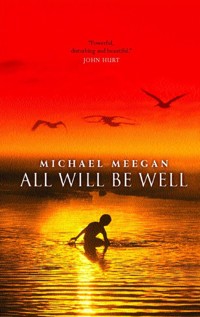
All Will Be Well looks at how love and compassion, when given out to others, can act as an antidote to the often painful human condition. It awakens us to all the small things that we can do to make those around us feel better and in doing so, bring happines to ourselves as well. It shows that each of us has the ability to make a difference. This book will encourage us to use those abilities and by doing so help ensure that all will be well. This is a story of unswerving, joyful faith and hope.
Sie lesen das E-Book in den Legimi-Apps auf:
Seitenzahl: 173
Veröffentlichungsjahr: 2004
Das E-Book (TTS) können Sie hören im Abo „Legimi Premium” in Legimi-Apps auf:
Ähnliche















ALL WILL BE WELL
“Michael Meegan is quite simply inspirational. It is an extraordinary experience to encounter someone so living in the present.”
The Irish Times
“Full of delight and joy, gentleness, honour and grace.”
Sunday Tribune
“Powerful, disturbing and beautiful.”
John Hurt
Copyright © Michael Meegan 2004
All rights reserved. Apart from brief extracts for the purpose of review, no part of this publication may be reproduced, stored in a retrieval system, or transmitted in any form or by any means, electronic, mechanical, photocopying, recording or otherwise without the permission of the publisher.
Michael Meegan has asserted his right under the Copyright, Designs and Patents Act 1988 to be identified as the author of this work.
All Will Be Well
2nd Edition
August 2004
Published by Eye Books Ltd
29 Barrow Street
Much Wenlock
Shropshire
TF13 6EN
Tel/fax: +44 (0) 20 8743 3276
website: www.eye-books.com
Set in Frutiger and Garamond
ISBN: 1903070279
British Library Cataloguing in Publication Data
A catalogue record for this book is available from the British Library
Printed and bound in Great Britain by Biddles Ltd
This book is dedicated to Joe who has always lived his dreams, sung a different song and danced with children. Joe always believes in the impossible.
He taught me that you can always think outside the box if you have no box. When I grow up I’d like to be like Joe and always remember what matters.
To my dear and beloved physician and fellow pilgrim, Dr Joe Barnes.
All royalties from this book will be donated to ICROSS medical programmes in East Africa
ACKNOWLEDGEMENTS
True friends are not those who come to your parties and celebrations, they are the ones who help you clear up the mess afterwards. The friends you have with you all your life are those who come to you when the rest of the World has just walked out on you. My heart goes to those who have accepted me in all my fragility and weakness, accepted me despite knowing the whole of me. These friends I am delighted to say are so woven into my world that they know from my eyes who they are, and from my kiss.
I thank Dr Thomas Ernst for his support to our work in Africa and for his great friendship. I also thank John Woodridge who has supported our water and diarrhea prevention for many years. I thank Sarune Olelengeny our Maasai communities and our dedicated teams led by Dan Ngwiri. A special word of thanks to Sharon Wilkinson. A great debt of gratitude goes to Colin Meagle and his team for their enormous contribution to our work in Africa. Penny Shales and Davida DeLaHarpe have continued to provide vital support to our communities in Africa. My deepest gratitude to Edward Ngera for his love and presence.
And then there’s you my friends, sharing these reflections. We are if only for a few hours together and you are taking time to hear what I have to share. This too is a communion, this is a looking at the stars, wondering, discovering… and I will leave it to one greater than I to thank you.
CONTENTS
1 THE JOURNEY
2 THE SEARCH FOR MEANING
3 THE DANCE
4 SECRETS OF JOY
5 BECOMING
EPILOGUE: THE FOOTBALL LESSON
THE JOURNEY
‘It is only with the heart that one sees clearly, what is essential is invisible to the eye.’
The Little Prince
We were not designed to live the lifestyle that has become predominant today. The nature of our Western economy is to feed an insatiable value system based on having more. It is based on people not being happy. If people began thinking that they were content with what they possessed already, the economy could no longer sell you the latest style or the latest ‘must-have’ stuff. We live in a time of self-preoccupation and a culture of self-absorption. We settle for trifles such as wealth, fame and comfort but human beings are more complex than that, which is why there is such an industry built around seeking – lifestyle changes, nutrition, ‘getting your life back’, staying young, having a better sex life, how to be more confident. Such self-help books, at their best, can do three things. They can remind people that they are locked into cycles and patterns of negative thinking; they can point out practical ways of changing behaviour or developing self-awareness and they can help people to climb out of emotional straitjackets: but these are merely by-products of a way of life that we were never meant to live in the first place.
The fact that self-help literature has been the fastest growing sector of popular books over the last decade indicates there is a real need but we should not allow ourselves to surrender the formation of our own ideas and opinions to others.
It is often easier to read about happiness than to become happy, easier to aspire than to do, easier to plan than to break the entrenched patterns of our daily routine. We are actually being told what we already know – that to be whole, we need to recognise our complete selves, to accept and love ourselves. To grow, we need to know where we are and in order to enjoy life, we need to let go. This cannot be achieved through books offering quick fixes or instant solutions such as ‘60 second stress relief’ or ‘How to become happy in 5 minutes.’
The things we want to come home to at night, the things that make us cry with joy, the things that fill us with utter delight – these are things we cannot buy or rationalise.
All life is about relationships. All human relationships are about light and dark, positive energy and draining energy. They are a dynamic flow of life force. Our interactions are closely linked to that vibe, that karma or chemistry that either draws us towards each other or keeps us apart. At an unconscious level, our instincts tell us a lot about those around us. More importantly, they also tell us about what is within us. The problem is, we do not always listen to our innate wisdom but instead to our reasoning.
I have deliberately departed from putting experiences into boxes because it is not the way we really think. I also doubt that thinking in straight lines is helpful. We have been taught to think logically, to reason and deduce. Scientific analysis too depends on rigid thought processes and rational models. But life is rarely logical or rational, and human experience stretches boundlessly beyond the constraints of the mind.
We all have basic needs. We all cry when we are hurt or rejected. We all bleed when we are beaten and we all thirst for love above all else. If we look, we find that most of the wonderful moments of our lives, the most magical moments, happen unplanned. They usually surprise us and they are usually very simple. The things we want to come home to at night, the things that make us cry with joy, the things that fill us with utter delight – these are things we cannot buy or rationalise.
In sharing my thoughts I do so without regard to time and place because what matters is not the minutiae but the big picture. Like all essential things, it is completely obvious and so clear that we can easily overlook it unless we think without our logical, adult heads.
I studied philosophy and theology, then science and languages but for myself, I have always found that thinking like a child is much more useful. I believe that the way in which people learn in school is damaging to the way in which our minds should be able to create and evolve. The concept of placing ideas into subjects and information into linear models binds thought processes, often burying children’s imaginations. Our kids are growing up in front of TVs and computer screens having their possibilities ever reduced to the dimensions of Microsoft and cyberspace. But cyberspace is very small. The billions of three-dimensional gigabytes that shoot across the information superhighway are just that – more bits of other people’s information. Children are, increasingly, not exploring the infinite possibilities of their own creative powers. They are not learning the many arts of sharing, communicating or expressing what is in their hearts.
The concept of placing ideas into subjects and information into linear models binds thought processes, often burying children’s imaginations.
Children, by nature, are insatiably curious, do not have rules or boundaries, do not fence in the range of possibilities, cannot see why not. Their sense of danger is overwhelmed by their sense of wonder. I would ask you to taste these thoughts with that same innocence. I have not written as a doctor or as a philosopher, or as an author. I am writing as a friend, as a child, as a fellow traveller. I look at the world with unending curiosity and excitement. There is so much to delight in, so much to discover and awaken to. Everything is possibility. Everyone we meet is an opportunity. Every morning is full of chances to become, to change, to grow.
Everything is possibility. Everyone we meet is an opportunity. Every morning is full of chances to become, to change, to grow.
There are two journeys we make through life – the physical journey of the body, through time and space, and the internal voyage of the heart and soul that is somehow more challenging. There are moments in all our lives when we are deeply touched, inspired or enriched. There are also moments of anguish and pain, times of stress and confusion.
The way we are treated, profoundly affects the way we respond to others. Every one of us goes through life hoping to love and be loved. Much of our lives are spent trying to find a sense of belonging. Whatever the pursuit, whether it be to make money, possess things, be popular, have power; it is done in the belief that eventually we shall be happy but so often we get lost along the way. We can learn from each other, learn from how we are treated and in time, we can develop a map for our journey. In sharing our experiences we can become stronger, more aware, sometimes wiser. We cannot think of ourselves in isolation for we are all of us travellers on an uncertain journey; one of possibilities and choices where the decisions we make can change the energy, fabric and dynamics of our lives. The journey begins with the recognition that there is the same extraordinary energy within all of us, the same mystery, the same fire.
There were people alive who had never known what it was like to sleep in a warm bed, or eat a full meal, or have one good day.
Who I am is not important but what I want to share is, I think, of real significance. I offer my thoughts as a fellow pilgrim. I share them with delight – please take what you like from them.
My own journey began with a realisation that seems self evident to me. My logic was crude and my reasoning child-like, but I trusted my instincts. For years on TV news I had seen images of people who were hurt. There were famines and wars and droughts. There were hungry kids, tragedy and pain. Like most young guys, I would change the channel over or become distracted by the next commercial. I had a busy social life and distant stories were just that, distant. They were not part of my world.
Growing up, I had never wanted for anything, I had a happy childhood, travelled a lot, and developed friendships that have lasted over thirty years. I was having a great life and was deeply content. The only jarring note came with an observation that there were human beings on our tiny globe who were really having a lousy time here. It was as simple as that. There were people alive who had never known what it was like to sleep in a warm bed, or eat a full meal, or have one good day. There were people who were simply trying to survive from one hour to the next. To my mind that was just bad.
I never doubted for a moment that I could do something.
I never thought for a single second that there was anything wrong with my lifestyle. I still liked nice restaurants, going to the cinema, music, girls, cycling holidays, hanging out with friends. For me, wanting to try and balance an obvious wrong did not mean I would be doing anything noble or charitable or acting out of a sense of guilt. There is something dangerous about calling basic justice charity and something unhealthy about exhibiting what we do for others.
I was aware that there were a lot of people in need at home. There were street kids, lonely old people, children in hospital, and so many ways in which to do so much. But I kept comparing my own fantastic life and the people who would never even dream about such a life. It was the opposite of guilt. It was a very simple but strong feeling that everyone should be able to enjoy the pleasures and freedoms I had. I never doubted for a moment that I could do something. If someone somewhere did not have anything, I could actually go and give them something. There really was nothing more to it, it was merely a question of getting off my backside. I had no intention of changing who I was. I wasn’t on a mission, and I had no interest in sharing my idea with anyone.
I decided to express my gut feeling in Africa. It could have been in countless other ways; in countless other places in the world – the journey would have been essentially the same. The unfolding of a life; different places, different people but hopefully the same mystery, the same spark.
I had the idea of going to the Karamoja desert and doing something about the famine there. It was as simple an idea as that. That was many years ago, before the aid game became big business, before The Lords of Poverty was published. It was a devastating expose of the misery industry and the manipulation of the poor by the World Bank, UN and other agencies whose extravagant misuse of resources created more poverty. It was long before Live Aid. I wanted to do something, but I was not quite sure what. I was walking in the dark, but at least I was walking.
I was walking in the dark, but at least I was walking.
Before I went to Africa, I read many books about malnutrition and starvation and what people could do about it. David Morley was the first professor of tropical child health and one of the most influential promoters of childhood development, his books, writings and insights changed the face of international health and continue to inspire health care throughout the poor world. I had only ever heard of Professor Morley in this professional context until I finally got to meet the man. I had expected an oracle, an expert consultant type, a man who would give me five minutes and move on. I had already met a lot of people who made me feel stupid and plenty who told me not to even bother going to Africa. David Morley was not in his office as he had filled it with students who were short of space. He was somewhere beneath piles of work and experiments.
He taught me that unlearning what we know is as important as knowing how little we do know and the limits of what we know.
The first thing he did was to put a cup of tea in my hand and talk about what made children smile and why adults did not. He had the excitement of a small child and rooted through boxes showing me things. We knelt down to explore an invention, listened to children singing and he showed me ways children play. His passion blinded him to my ignorance and his excitement in everything was contagious. David was so receptive to all ideas, and almost 25 years later, we are still working together. After a lifetime of moving the boundaries of international health, David remains one of the most loved and respected child doctors in the world. His legacy is seen in health policies in most developing countries, and his openness and energy have inspired generations. David taught me that unlearning what we know is as important as knowing how little we do know and the limits of what we know. And so began in my mind the idea that I might really be able to do something. I believed then, and even more now, that there is a harmony in creation and that despite the failures in humanity everything will be well.
When we hear of so much human misery, it is far less painful for us to close the door than to allow the tide of suffering to overwhelm us.
Since then, so much has happened. The world we live in today is a very different place. The gap between the rich and poor is far greater now than we could ever have imagined.
The six richest people in the world own more than the six hundred million poorest.
If that doesn’t surprise you, how about the three hundred richest people in the world owning more of the worlds wealth than half of humanity.
There are over eight hundred million people living in the world who are hungry.
We live in a world at war, a world polarising and dividing. Our society is troubled with depression and stress – the fastest growing health problems in the Western world. There seems to be a tidal wave of bad news every day: corruption, conflict, AIDS, violence, injustice, pain, suffering, sorrow… Lets face it, it’s hard enough trying to survive the trauma of daily life without beginning to look too hard at the mess going on all around us. When we hear of so much human misery, it is far less painful for us to close the door than to allow the tide of suffering to overwhelm us.
In my life, the greatest inspiration has come from people.
Much of what is shared in this book cannot be explained away. There is no wonder in pointless suffering and poverty. I have no answers to these problems. I can only tell you what I am doing about it and the attitude with which I engage it. I do not get used to the pain and cruelty I see, but I believe it is more productive to channel my energy into action, than to give in to frustration or apathy.
I would like to share with you some of the beauty that has touched my life in the hope that it will enrich you in some way. I have always been amazed by the power of nature and the majesty of the universe. There are many things that can stun us into silence and awaken our senses. We can be lifted from ourselves by music and awoken by books that reach our inner-selves.
In my life, the greatest inspiration has come from people. You know the ones I mean, those whose passion and energy have no words. They are like children in that they see the simplicity and honesty of life. The people that touch us are rarely perfect, but they are awake. They are not icons but they aspire to be themselves. They rejoice in life, delight in being and make us feel better just through their presence. Such people cannot begin to comprehend cynicism or scepticism because their mind-sets see possibilities and opportunities, not doubts and dangers.
My journey is not about the distant lands to which I have travelled, the ancient tribes I have met, the awesome things I have seen, it is about wonder, it is about joy. At its heart are the lessons I have learnt from my experiences with the people who have danced into my life – some that have touched me and moved me to action, others that have enthralled me, still others who have set me on fire. Each of these are human and full of frailty which is why they are so important – they are like us.
T




