


6,00 €
Mehr erfahren.
- Herausgeber: Select
- Kategorie: Geisteswissenschaft
- Sprache: Englisch
A dog that has been mistreated may be sad, depressed, or compulsively repeat certain behaviors, such as barking at all hours. Abuse, physical or psychological, leaves sequelae in the dog that has suffered it. The behavior of an animal that has suffered abuse by its owner changes, especially if it lasts for months or years. A distrustful dog, with problems relating to other animals or people in its environment, and even certain types of aggression, may indicate that the dog has been mistreated and therefore needs help.
Das E-Book können Sie in Legimi-Apps oder einer beliebigen App lesen, die das folgende Format unterstützen:
Veröffentlichungsjahr: 2023
Ähnliche




















jjj
Libro inglés maltrato animal1
Table of contents
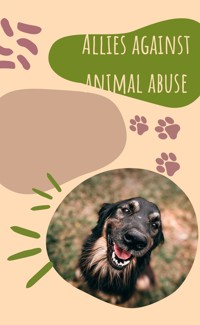
Allies against animal abuse
INDEX
TEM1. Signs of abuse
ITEM 3.Abused dog: how to report it
ITEM5. Greater interest in animal welfare
ITEM 7.Throwaway puppies: weren't we best friends with animals?
TEM9. Wild animals: why you shouldn't keep them as pets
why do we get angry
The importance of context
never an enemy
Work within ourselves
homework for others
Allies against animal abuse
From animal welfare to criminal protection
INDEX
Introduction
TEM1. Signs of abuse
ITEM 2. Acknowledgeamistreated
ITEM 3.Abused dog: how to report it
ITEM4. From animal welfare to criminal protection
ITEM5. Greater interest in animal welfare
ITEM 6.Allies against abuse
ITEM 7.Throwaway puppies: weren't we best friends with animals?
ITEM 8.Divorce with dog or cat at home, who does the animal stay with?
TEM9. Wild animals: why you shouldn't keep them as pets
ITEM10. Veterinary negligence: how to act?
ITEM11. Penalties for mistreating animals
DEVELOPMENT
INTRODUCTION
Animal abuse is a serious problem that not only affects the victimized cats and dogs. It is a global problem that concerns everyone, vets warn. And it is that scientific researchers have shown the relationship between theanimal abuseand human abuse. For this reason, in this article the veterinarians ask for collaboration to increase social awareness against the mistreatment of animals, better laws and greater penalties, in order to help prevent harm to animals. Abused dogs (and cats) need urgent help. "Animal abuse is a global problem. But there is still more: therelationship between animal abuse and human abuseit is proven. And this is one more reason, and no less, to fight for the well-being of dogs and cats (and other animals),as well as to come together to prevent it."
When an abused dog or cat arrives at the clinic, the veterinarian has an essential role in detecting situations of physical and psychological harm against the animals. And that is especially relevant in cases where animal abuse occurs with physical damage that requires medical help. The doctor then not only establishes the nature and extent of the injuries derived from the abuse, but also establishes criteria to assess the damage and apply the necessary treatment.
Cruelty towards animals must be considered a global problem, since researchers have demonstrated the relationship between animal abuse and human abuse, and in particular gender violence and domestic violence in general. For this reason, veterinarians, along with other professionals, have a vital role in not only recognizing the situation of animal abuse, but also in helping people who may be the object of abuse. Abuse, therefore, must be considered as an entity with different expressions, within which is animal abuse.
And, above all, the important thing is to prevent damage. Social awareness is a necessary tool against the mistreatment of animals. Citizens must be more sensitive to the problems of cruelty towards dogs and cats and other animals vulnerable to physical and psychological damage inflicted by malicious people. But how to achieve it? The training and education of society in terms of animal welfare is very important. And, in this sense, veterinarians can also be a key piece.
But howrecognize animal abuseat the veterinary clinic? Veterinarians can, and should, play an increasingly important role in animal welfare and in the fight against cruelty to animals. Therefore, having some tools that help them detect risk situations early is essential. Among them, it is important to create and put into practice protocols related to animal welfare that allow not only finding risk situationsfor four-legged friends, but also to solve problems and promote good practices when there are animals at home. One of them would be responsible ownership of dogs and cats, as well as other animals.
To recognize this mistreatment, and be able to prevent it, the veterinarian must acquire, throughout his training period (undergraduate, postgraduate and specialized), quality scientific training in the different disciplines that constitute the so-called Animal Welfare Science, which is interdisciplinary. For nature. This continuous training must constitute a fundamental pillar in updating his knowledge. . "The veterinary profession is committed to leading the fight for animal welfare with all its technical and scientific tools against the other side of the coin: animal abuse", veterinary medicine professionals must join forces with prosecutors, security forces, other health professions, university circles, animal protection associations in a fight for animal welfare that, although it seems long, should not be lost. "Veterinarians are in a position to recognize when animal abuse occurs: we can act as forensic experts in the fight against abuse and, therefore, in achieving animal welfare."
Abusing a dog or harming it, in addition to being cruel and deplorable conduct, is prohibited and punished. In a situation of abuse, the complaint can come from a private citizen, although they can also be channeled through the numerous animal protection associations that exist. The fines for abusing a dog vary in each autonomous region, which approves its own regulations for the protection of domestic animals. The Penal Code considers the mistreatment of the dog a crime, and punishes it with up to one year in jail. The complaint for abuse can come from a private citizen, or can be channeled through an animal protection association.
An effective speech against animal abuse must have real experiences and the right doses, and rationed, of passion. The fight against dog abuse includes actions such as collaborating with a protection association, launching a blog on the Internet and organizing events to raise awareness about the importance of protecting our pets. In the latter case, it is convenient to prepare an efficient speech with which to raise awareness, which is capable of transmitting the message efficiently and forcefully.
Passion is not enough to articulate an effective message with which to communicate the importance of stopping dog abuse. The seriousness of the problem must reach the listening public, and to convey the message strongly it is convenient to rely on current data. Creating a simple outline on paper to order the key ideas of your speech on animal abuse is essential to avoid getting stuck or stuck during the intervention. Starting from an own or close experience that reflects the abuse suffered by a dog, can be used as a common thread to guide his speech. Abusing a dog or harming it, in addition to being cruel and deplorable behavior, is prohibited and punished. . Domestic animal abusers, including dogs, face sentences of between three months and one year in jail, as stated in our Penal Code.of the autonomous communities collect the fines and sanctions corresponding to the abuse towards the dog.
Knowing the signs that can warn that a dog is being mistreated helps increase the sensitivity we feel towards this cruel behavior. It must warn of the serious consequences that remain after repeated episodes of violence, and that may not disappear completely throughout the life of the animal. Extreme mistrust and trouble relating to the people around you is one of the most obvious signs of possible mistreatment in the dog.
Compulsive behaviors, such as repeated actions for no apparent reason at different times of the day, excessive or meaningless barking at all kinds of surfaces are other symptoms that warn of probable abuse.
The fear that a dog experiences in situations of cruelty may explain why certain mistreated animals feel afraid when going out into the street: any noise can be cause for panic. Lack of physical activity, sadness or a depressed attitude may also be warning that the animal is suffering from episodes of violence. Knowing these traumas helps to become aware of the seriousness of the problem. While using a direct and real message is an almost certain way to get your speech against dog abuse across.
Although the panorama of the abuses against dogs is sad and bleak, when you organize or come up with a talk against the abuse you should not remain planted in pessimism. His speech must motivate, and make the people who listen to join the, in general, silent and diffuse social movement against the mistreatment of animals. Offering solutions to dog abuse behaviors helps them feel encouraged to continue the fight against this scourge.In this sense, providing contact information for some protective associations that fight against abuse is a good idea. Passing out a sheet to collect signatures against abuse is another way of turning the meeting into something more dynamic and participatory.
Tips:
Passion is not enough to articulate an effective message. To transmit the message strongly, it is convenient to rely on data, the more current the better.
Create a simple outline on a piece of paper – it will help you sort out the key ideas of your speech on animal abuse.
Start from your own or close experience that reflects the abuse suffered by a dog: your speech will be more real and sincere.
Remember that knowing the signs that can warn that a dog is being mistreated helps to increase the sensitivity towards that cruel behavior.
Compulsive behaviors such as excessive barking are one of the warning signs of probable abuse.
Traditionally animals were considered as mere things and objectsTherefore, the injuries or death of them, in Spanish legislation was regulated as a crime or a lack of damages of a patrimonial nature. This idea about animals has been modified over time, due to the work of raising awareness about the importance of their protection, leaving anthropological doctrines behind, to focus on theories increasingly focused on animal protection. , understood as such. Proof of this is the Universal Declaration of Animal Rights proclaimed on October 15, 1978 through which animal rights were promoted through legal regulation or at the European level with the Protocol on the protection and animal welfare, annex to the Constitutive Treaty of the European Community of 1997 or the resolutions of the European Parliament on the welfare and status of animals of January 21, 1994 and June 6, 1996, through which it is recognized that animals have rights and enjoy dignity. The increase in interest in the international and national arena, together with the inefficiency of Spanish Administrative Law, which was in charge of its regulation, promoted the change of guardianship that was carried out by the criminal sphere and in this way, granting a greater legal security. In the world together with the ineffectiveness of Spanish Administrative Law, which was in charge of its regulation, promoted the change of guardianship that was carried out by the criminal sphere and in this way, granting greater legal security. In the world together with the ineffectiveness of Spanish Administrative Law, which was in charge of its regulation, promoted the change of guardianship that was carried out by the criminal sphere and in this way, granting greater legal security. In the worldSociety's interest in the protection of animals can be seen reflected in the creation of various animal associations that work every day on projects that contribute to reducing situations in which animals are unprotected or suffering some type of abuse. . The function of the protectors, unlike the kennels, is very important for the protection of abandoned animals, since they not only welcome and care for the animals, but also take care of them during the time it takes for them to be adopted by families. host. After the adoption, the protectors carry out continuous monitoring to verify that the animals adapt correctly and that the treatment received is adequate, thus avoiding possible abandonments and ensuring the well-being of the animals at all times. On the contrary, the function of the kennels is similar, in the sense that they also take in animals, but unlike the shelters, in the kennels they are not in charge of taking in the animals for an indefinite period of time; but only until a period elapses, which is normally pre-established, after which the animal is sacrificed.
The actions of animal groups are essential to raise awareness in society about the importance of protecting animals, since they are the ones in charge of disseminating awareness and information campaigns to the population, promoting changes and participating in legislative frameworks, promoting participation platforms in favor of respect for animals or, in most cases, filing complaints with the authorities about cases in which it is presumed that there is a crime of animal abuse or abandonment.
But at the same time, it is possible to observe how in some circumstances, radical animalist sectors carry out illegal actions, such as crimes of injury to people who they consider to be an attack against animals or hate crimes through the promulgation of "discourse speeches". hatewith the purpose of inciting to carry out violent and hostile acts.
In Roman Law, animals did not enjoy any special protection or law against their mistreatment until the arrival of the Emperor Constantine. In fact, legally. they were equated to things and shared legal status withall those subjects or objects that did not have legal personality, such as slaves, children or women4. The emperor, with his arrival, promulgated an order that prohibited "driving with sticks or rods those horses that were used in public posting" 5. For its part, in Germanic law, animals were considered pure patrimonial components, and activities such as poaching and theft of certain animals were harshly punished. In other words, the rights of hunters or owners of certain animals were protected and reaffirmed, but at no time were there any rights of the animals or regulations aimed at their direct protection. The Middle Ages were no different and were characterized by their lack of sensitivity and mistreatment of animals. It is difficult to find any rule that directly penalizes the ill-treatment of an animal and, in case of finding it, and as in Germanic Law, what was valued was the value that the animal could suppose for the human being before the own animal itself. During this time, in Europe an event worthy of mention occurred, and it is the succession of several criminal proceedings against animals that were considered guilty of committing certain crimes or public havoc and that were later convicted and executed as if they were human beings. in question, something that may lead one to think that the animals enjoyed their own legal personality. However, nothing is further from reality,
It was Aristotle who, based on the realistic ideology that characterized him, accepted the evidence and stated that "the behavior of children from their infancy, in reference to their soul, does not differ practically at all from the soul of beasts during that period" . However, the first glimpse of understanding between human beings and animals occurred in the Christianity advocated by Saint Thomas Aquinas, who considered that "even irrational animals are sensitive to pain." Santo Tomás used this argument to qualify cruelty towards animals as unfair, stating that being cruel to animals can lead to behaving in the same way towards human beings themselves. Another notable position within Christianity was that of Saint Francis of Assisi, who made the decision to become a vegetarian in order to avoid eating animals, which he considered God's creatures. In fact, his support for ecology, his rejection of the mistreatment and captivity of whom he considered "his younger brothers", led Pope John Paul II to proclaim Saint Francis of Assisi "Patron of Animals and Ecologists" in 1980. Specifically, a phrase that came from the lips of this healthy man was the following: "Animals are my friends and I don't eat my friends." With the advent of rationalism and authors such as Descartes or Kant, the first steps were taken towards considering animals as beings subject to criminal legal protection. In the eyes of the rationalist current, human beings and animals differ in that the former possess a soul, reason and understanding, which empowers them to distinguish between good and evil, while animals, although they are capable of expressing their suffering, do so as a simple mechanical reaction, since they are considered mere objects or tools. It is precisely this apparent superiority of the human being that morally obliges him to care for and not mistreat animals, since otherwise it would be an unworthy act. This rationalist current has had a great influence when it comes to legally guiding the issue of animal abuse in general and, more specifically, in the criminal order. Specifically, and in the absence of protection by regulatory texts, it was the jurisprudence that began since they are considered mere objects or tools. It is precisely this apparent superiority of the human being that morally obliges him to care for and not mistreat animals, since otherwise it would be an unworthy act. This rationalist current has had a great influence when it comes to legally guiding the issue of animal abuse in general and, more specifically, in the criminal order. Specifically, and in the absence of protection by regulatory texts, it was the jurisprudence that began since they are considered mere objects or tools. It is precisely this apparent superiority of the human being that morally obliges him to care for and not mistreat animals, since otherwise it would be an unworthy act. This rationalist current has had a great influence when it comes to legally guiding the issue of animal abuse in general and, more specifically, in the criminal order. Specifically, and in the absence of protection by regulatory texts, it was the jurisprudence that began This rationalist current has had a great influence when it comes to legally guiding the issue of animal abuse in general and, more specifically, in the criminal order. Specifically, and in the absence of protection by regulatory texts, it was the jurisprudence that began This rationalist current has had a great influence when it comes to legally guiding the issue of animal abuse in general and, more specifically, in the criminal order. Specifically, and in the absence of protection by regulatory texts, it was the jurisprudence that beganto punish animal abuse by estimating that "cruelty against animals was a sign of perversity deserving of punishment." This meant an important change in the perspective on the protection of animals, since now it was not the supposed economic interest that animals had that mattered to them, as if they were beings without personality, but rather animals began to be treated as beings with their own life and to punish the breach of some duties with respect to them. Another great advance regarding animal abuse occurred with the utilitarianism of the late eighteenth century with authors such as Bentham, Darwin or Schopenhauer. For the thinkers of this current, both the human being and the animals are one more element of nature, regardless of the fact that human beings are intelligent and rational beings. In this line, both one and the other have the capacity to experience different sensations and feelings, such as suffering, loneliness, pain or need, which makes a position of respect towards the other necessary9. This recognition of certain interests and rights of animals that the utilitarian current advocated left its mark on the codes and laws of the 19th century, particularly those of English Law, one of the pioneers in dealing with the regulation of animal abuse and which inspired the laws of different countries in this matter. During the 19th century, authors such as Henry Salt also stand out, who published in 1892 the first complete work on the rational defense of animals: Animals' Rights: Considered in Relation to Social Progress. In this book, Salt argues that simple welfare is insufficient for animals, and that they must have rights and freedoms. Salt also criticized the killing of animals with the aim of being turned into food, as well as practices such as hunting or experimentation.
All of us, to a greater or lesser extent, by action or omission, lie. We do it to the extent that we do not say what we think or that we say what we do not think or do not know, or even what we know uncertain. The loss of spontaneity is an evolutionary process whose stages we are consuming from childhood, as the conviction settles in us that sincerity is not always possible or convenient because it can cause damage to the receiver of the communication, or to the sender himself.
There are socially more positive lies than certain incontestable truths: there are many situations in which a wisely transmitted lie generates a beneficial effect, or at least a palliative one, for us to establish radical moral categories on this apparent ethical dichotomy: truth-lie. If we add to this that all of us, sooner or later, lie or hide relevant truths, perhaps it would be convenient to downplay the fact of lying in order to be able to approach it with more sensibility and sense of measure.
The intention counts, and a lot
According to the dictionary, lying is "saying something that is not true with the intent to deceive". And if we look for a more academic definition, we come across "expression or manifestation contrary to what is known, believed or thought". So whoever deceives or confuses without being aware of doing so, he does not lie: he simply transmits his own mistake to others.
The relationship that each person maintains with the lie -besides saying a lot about it-, is very different from that of the others. There are those who only resort to lying when it is compassionate, or when it provides positive results without generating significant deception or if it is a trivial matter. And there are also those who lie tooften, almost out of habit and only on irrelevant topics. But we cannot forget those who lie sporadically but conscientiously, causing harm to others or pursuing personal benefits. And there are also those who lie, or hide necessary truths, out of shyness, shame or lack of character.
Finally, let us mention pathological liars, who lie with astonishing ease, either out of convenience or out of an absolute and cynical lack of respect for the truth.
Why do we lie?
Some people never (or almost never) lie for reasons that are very different from ethics: fear of being discovered, laziness (you don't have to remember the details of the lie in the future), pride ("how can I fall me so low?")... But, if we think about it, very similar reasons are those that can lead us to lie or omit, in certain circumstances, what we think or know. Because truths like very inopportune fists, or that offend or annoy. As important as the fact of lying or telling the truth is the intention with which one or the other is done. And here is the real moral dilemma. A lie that harms no one or even benefits its addressee may be more defensible than a truth that causes needless pain. We lie for many reasons: out of convenience, hatred, compassion, envy, selfishness, or out of necessity, or as a defense against aggression... but leaving aside its origin or motivation, not all lies are the same. The least convenient for our psyche are the lies we fall into so as not to take responsibility for the consequences of our actions. And the least admissible are those that hurt, those that are wrong and those that can lead the recipient to make decisions that are detrimental. Let us conclude, therefore, that the two essential parameters to measure the seriousness of the lie are the intention behind it and the effect it causes. And the least admissible are those that hurt, those that are wrong and those that can lead the recipient to make decisions that are detrimental. Let us conclude, therefore, that the two essential parameters to measure the seriousness of the lie are the intention behind it and the effect it causes. And the least admissible are those that hurt, those that are wrong and those that can lead the recipient to make decisions that are detrimental. Let us conclude, therefore, that the two essential parameters to measure the seriousness of the lie are the intention behind it and the effect it causes.
hide and fake
Whoever hides the truth withholds part of the information that may be interesting to the interlocutor but, strictly speaking, is not untrue. However, whoever falsifies reality goes a step further, issuing false information labeled as real. It is easier to lie by omission (there is no need to concoct uncertain stories, and there is less chance of being discovered) and socially this type of deception is considered less reprehensible, despite the fact that it can be as harmful and immoral as active lying. . Likewise, falsification is used when emotions or feelings are hidden that provide relevant information to the interlocutor, to the extent that they can lead him to misinterpret or initiate inappropriate actions.
We can also lie to ourselves, to avoid assuming some responsibility, or for fear of facing a problematic situation, or for the difficulty of not recognizing a feeling or emotion. Invariably, sooner or later, this self-deception leads us to lie to others.
Other forms of lying are "half truths" (the liar denies part of the truth or only reports part of it) and "twisted truths", in which it is saidthe truth but in such an exaggerated or ironic way that the interlocutor, almost ridiculed, takes it for not true.
The lie has its classes
The rational lie pursues a specific interest, is malevolent and is issued with the intention of harming or deceiving. In emotional lying, what is said or done does not match the emotional situation of the person. And in the behavioral lie we make believe that we are what we are not: younger, better informed, less outdated... But there are also other kinds of lies: gossip, rumors and white lies: . The liar has no age and lying can occur throughout the life cycle. Let's see what De Vries points out: ”The child is a liar to the extent that his fantasies are present to confuse them with realities. The adolescent is when his encounter with the real world causes him frustrations. The young man lies because he does not see himself capable of facing the truths that contradict him. The adult is a liar when he has not overcome the obstacles that life has placed on him, and he deceives to feel like the winner he has never been. And the old man lies when he does not forgive himself for the mistakes he has made throughout his existence.
We can see our relationship with lies (how often we lie and how serious these lies are) as a scale that measures our degree of responsibility and maturity, how we deal with frustrations, and whether we show consistency in attitudes and behaviors in our lives. .
lie and trust
The foundation on which human relationships are built is trust. The relationship between human beings would not require trust if we were transparent, but we are not: the absolute discovery of our privacy, as it contains purposes and intentions that could torpedo the dialogue, would slow down the social relationship. We all resort to a communication protocol, and pretense, dissimulation and lies are -although it is hard to admit- essential components of that agreement. We are not equally sincere before some as before others, this is obvious. We all show a certain degree of opacity to others. And not always more sincerity generates greater trust. Information is power: knowing everything about someone amounts to a form of possession. And in a certain sense, the depth of friendship or love is measured by the degree of reciprocal knowledge of intimacy, and by the trust existing between the interlocutors. Trust is a basic attitude, because it presides over all interactions. We need it, but we use it in the doses that, according to our criteria, each case requires. At the moment that communication with another person arises, we have to place a certain degree of trust in them, which is the thermometer of the involvement and connection that we maintain with that person. Betting on the trust of the other is to consider him trustworthy. At the moment that communication with another person arises, we have to place a certain degree of trust in them, which is the thermometer of the involvement and connection that we maintain with that person. Betting on the trust of the other is to consider him trustworthy. At the moment that communication with another person arises, we have to place a certain degree of trust in them, which is the thermometer of the involvement and connection that we maintain with that person. Betting on the trust of the other is to consider him trustworthy.
Trusting someone means believing that the chances of being deceived are very slim or non-existent. If we want to be credible, enjoy the trust of others, we will have to forget the deceit, the lie. The credit that we have before others is a fragile and not perennial treasure, since it is updated and reviewed in each action, in each dialogue, which ends up becoming a constant test of trust. Isresponsibility of each one of us to relate from the truth, which does not imply the offer of all privacy. Each one and at each moment has to assess what and how much of their privacy the other wants to participate.
The lie can hurt the addressee but ultimately the one who hurts the most is the liar, since it makes him or her unreliable, untrustworthy and lacking in credit. The saying goes: "In the liar, the truth becomes doubtful."
Some truths about lying
There are many kinds of lies: some may be convenient, but the most correct thing is to resort to deceit as little as possible.
No intent to deceive, no lie.
The intention that motivates it and the effects it causes define the seriousness of a lie.
The lie is as harmful for the one who receives it as for the one who resorts to it.
One leads us to another, and can mark (always negatively) our way of relating to others.
The liar is insecure, or selfish, or irresponsible, or immature. Or all of it at once.
One of the most pernicious kinds of lying is self-deception. If we believe ourselves and show ourselves as we are not, we will never know if they love or despise us or the fraudulent image we have created for ourselves.
ITEM 1. It signs of abuse
Lack of physical activity or sadness are signs that can alert that a dog is being mistreated and needs to be fostered in an adoption center and find a loving family. Abused dogs (and cats) need urgent help, to be rescued, an adoption center where they can be safe and find the final home where they can be happy and give the love they carry inside. adopt or rescue aabused dogIt is an act of solidarity and responsibility, since mistreatment is a crime punishable by jail under the Penal Code. Mistrust of people, especially those he knows, is one of the first signs that a dog may be suffering physical or psychological abuse.
Fear explains that amistreated dogfear when going out into the street: any noise is cause for panic for him. Lack of physical activity, sadness and depression are other signs that can alert that a dog is being abused and needs help.
The inability to relate is an anomaly in a herd animal like the dog. Furthermore, the ability to play is one of the defining characteristics of a healthy and happy dog. An animal that, on the contrary, shows misgivings when a playful activity is proposed to it or that even shows signs of not knowing how to play, are situations that may be warning that it is suffering abuse. Watching the dog's reaction to certain objects is another way to detect possible abuse. A dog that runs away, growls, or hides from household utensils like a broom has likely been hit with something similar in the past.
The person who adopts a dog that has been mistreated should consider the possibility that, out of fear, the dog may attack when it sees him with an object that reminds him of the one that was used to mistreat him. A prompt visit to the trusted veterinarian or canine ethologist in the face of any fearful situation that may arise will guide the family.
Extreme dog loneliness is another form of abuse. The dog is a social and pack animal, which needs social relationships to stay healthy. A dog deprived of contact with people and other congeners suffers. The damage caused by abusive loneliness in the animal is exacerbated when the victim is a puppy or a young dog.
A dog that has suffered prolonged loneliness may become overly dependent on its new family. It is common for him to feel terrified at the possibility of being alone again. This fear of abandonment is what vets callseparation anxiety in dogs. A dog with this disorder often abnormally chases his owner when he notices that he is preparing to leave the house.
Unusual injuries, wounds, and scars are physical signs of abuse. To recognize them, you have to feel them with your hands. The exploration of the canine skin should be done more carefully in the areas of the neck and on the hips and rear areas: if absence of hair or sores are detected, it may be a warning that the dog has suffered injuries or has been tied up Long periods of time. A dog that has suffered abuse is usually nervous and fearful. The damage suffered will explain why the animal may initially be suspicious of people. Re-educating a dog that has suffered physical or psychological abuse requires time, love and certain efforts to make the animal trust its new family and that it can be, in the end, happy.
An abused dog needs a scheduling routine, a warm place, and kind words from its new owner. A dog that has been abused is often nervous and fearful. The damage suffered will explain why the animal may initially be suspicious of people. Re-educating a dog that has suffered physical or psychological abuse from its previous owner requires time, love and certain efforts to make the pet trust its new family, and that it can be, in the end, happy.
The physical or psychological abuse suffered by a dog can leave deep scars on the animal, which will be more intense the longer the sad and deplorable situation of abuse lasts.
There are certain behavioral disorders that characterize pets that have suffered abuse at some point in their lives, and that have not yet been rehabilitated.
Mistrust towards the people around them or towards other dogs; sadness, symptoms of depression and even certain aggressive behaviors can sometimes be explained as a consequence of the abuse suffered.
Nor is it strange that a dog victim of abuse develops certain compulsive behaviors, which it performs repeatedly and for no apparent reason. Excessive barking, licking surfaces in an abnormal way, obsessively chasing its own tail or being obsessed with digging all kinds of surfaces are some of the signs that may indicate that the dog has suffered some abuse.
Recover a mistreated dog: keys




