


36,99 €
Mehr erfahren.
- Herausgeber: John Wiley & Sons
- Kategorie: Fachliteratur
- Serie: Wiley Finance Series
- Sprache: Englisch
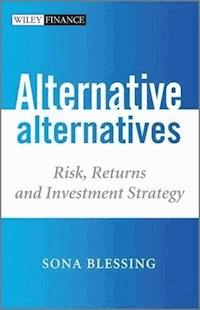
In the aftermath of the financial crisis, investors are searching for new opportunities and products to safeguard their investments for the future. Riding high on the wave of new financial opportunities are Alternative Alternatives (AA). However, there is a dearth of information on what Alternative Alternatives are, how they work, and how they can be profited from. The book defines what Alternative Alternatives are, based on research and the following hypothesis: If the source (origin) of the risk lies outside of the financial markets, then it should be insulated from the vagaries of those markets. The book identifies and examines such and other unique, idiosyncratic, and difficult to replicate sources of risk - assets and strategies. The recent credit and sovereign debt crisis have served to defend the hypothesis and have upheld the conclusion that alternative alternative assets and strategies offer a risk-return profile that is distinct to those offered by traditional and main stream hedge fund strategies. These strategies include timberland investing, insurance risk transfer, asset/loan based lending (aviation, shipping, trade, entertainment, litigation financing etc), collectables and extraction strategies such as volatility and behaviour finance. This book will be a one stop resource to the new investment class known globally as Alternative Alternatives (AA) and will provide a comprehensive but accessible introduction to these assets. It provides an in-depth analysis of the assets and strategies which will leave investors with everything they need to identify and allocate to the best AA for them. It reviews the asset on a standalone basis, providing an explanation of the product, its characteristics, a SWOT analysis, and details its risk/reward drivers. The book also looks at how to integrate the asset within a portfolio - its peculiarities, the challenges and the constraints of each. Next, the book shows how Alternative Alternatives are used in the real world, how they are implemented, and the results that they have achieved. Finally, the book looks at the scope, scalability and prospects for each asset in the future.
Sie lesen das E-Book in den Legimi-Apps auf:
Seitenzahl: 433
Veröffentlichungsjahr: 2011
Ähnliche


















Contents
Cover
Series
Title Page
Copyright
Dedication
Preface
Acknowledgements
A Note on How to Use This Book
Introduction
Risk Origination
Peculiarities
Conclusion
Epilogue
Chapter 1: Timberland
1.1 Introduction
1.2 Statistics on Investable Timberland
1.3 Asset Characteristics
1.4 Investment Drivers
1.5 Return Drivers
1.6 Perceived Risk
1.7 Real Risks
1.8 Measuring Risk and Returns: Science, Art, ‘Boots on The Ground’
1.9 Investment Objective
1.10 Investment Strategy
1.11 In Practice
1.12 Country Case Studies
1.13 Species Case Study
1.14 Emergence and Outlook
1.15 2010 and Beyond
1.16 Opportunities and Challenges Facing Timberland Investors
1.17 Conclusion
Chapter 2: Insurance Linked Risk Transfer
2.1 Introduction
2.2 Classification
2.3 Asset Characteristics
2.4 Risks
2.5 Return Drivers
2.6 Constraints
2.7 The Players
2.8 Evolution
2.9 Non-Life Insurance Linked Risk Transfer
2.10 In Practice
2.11 Life Insurance Linked Risk Transfer
2.12 Pandemic-related insurance investing – extreme mortality risk
Chapter 3: Asset-Based Lending
3.1 Introduction
3.2 Aviation Finance, Loan-Based Lending, Leasing
3.3 Ship Financing, Leasing, Investing
3.4 Trade Finance
3.5 Litigation Led Investing
3.6 Lending Against Hospital Receivables
3.7 Film Financing
3.8 Music Investing
3.9 Appendix
Chapter 4: Collectables
4.1 Introduction
4.2 Investing in Art
4.3 Case Study Series (with Philip Hoffman, The Fine Art Fund Group)
4.4 Investing in Photography
4.5 Investing in Wine
4.6 Investing in Vintage Cars
Chapter 5: Extraction Strategies
5.1 Volatility Investing
5.2 Behaviour Finance
Chapter 6: Place in a Portfolio
Further Reading
Index
For other titles in the Wiley Finance series please see www.wiley.com/finance
This edition first published in 2011 © 2011 John Wiley & Sons Ltd
Registered office John Wiley & Sons Ltd, The Atrium, Southern Gate, Chichester, West Sussex, PO19 8SQ, United Kingdom
For details of our global editorial offices, for customer services and for information about how to apply for permission to reuse the copyright material in this book please see our website at www.wiley.com.
The right of the author to be identified as the author of this work has been asserted in accordance with the Copyright, Designs and Patents Act 1988.
All rights reserved. No part of this publication may be reproduced, stored in a retrieval system, or transmitted, in any form or by any means, electronic, mechanical, photocopying, recording or otherwise, except as permitted by the UK Copyright, Designs and Patents Act 1988, without the prior permission of the publisher.
Wiley also publishes its books in a variety of electronic formats. Some content that appears in print may not be available in electronic books.
Designations used by companies to distinguish their products are often claimed as trademarks. All brand names and product names used in this book are trade names, service marks, trademarks or registered trademarks of their respective owners. The publisher is not associated with any product or vendor mentioned in this book. This publication is designed to provide accurate and authoritative information in regard to the subject matter covered. It is sold on the understanding that the publisher is not engaged in rendering professional services. If professional advice or other expert assistance is required, the services of a competent professional should be sought.
Library of Congress Cataloging-in-Publication Data
Blessing, Sona. Alternative Alternatives : risk, returns and investment strategy / Sona Blessing. p.cm. ISBN 978-0-470-68396-5 (Hardback) 1. Investments. 2. Speculation. 3. Risk. 4. Portfolio management. I. Title. HG4521. B54 2011 332.63′2–dc22
A catalogue record for this book is available from the British Library.
ISBN 978-0-470-68396-5; ISBN 978-1-119-99168-7 (ebk); ISBN 978-1-119-97352-2 (epub); ISBN 978-1-119-97353-9 (emobi)
This book is dedicated to
My husband Markus My father Dilip, my mother Jyoti, my sister Rupa and my friend Vreny
Preface
‘Risk is inherent in every investment’
The financial crisis that began in the summer of 2007 would suggest that under stressed market conditions supposedly ‘noncorrelating’ asset classes, such as commodities back then, tended to ‘converge’. Why was this?
In a de-leveraging environment, owing to their above-average liquidity, commodity positions were among the first to be unwound. Their rapid fire ‘sell-off’ inadvertently triggered the convergence of multiple risk factors, causing their ‘normally noncorrelating’ behaviour to revert. Ironically, such phenomena occur precisely when supposedly ‘noncorrelating’ asset classes are meant to deliver. Not only have they tended not to, but the occurrence of such a convergence is becoming more frequent.
The collapse of Lehman Brothers that ensued in the fall of 2008 hastened the credit crisis and only served to reinforce that when liquidity requirements need to be fulfilled money will be withdrawn, firstly, from where it easily can be (the automatic teller machine effect) and then, even if it bears a cost, from wherever it is. As has been witnessed, such forced withdrawals exerted a downward pressure on and across a spectrum of asset classes, leading to further withdrawals, which, in turn, intensified a negative asset price spiral and contributed to the most severe crisis since the Great Depression.
Irrespective of when the next financial crisis occurs there is a need to be cognisant of the changing investment landscape and the repercussions associated with being market participants in a complex, highly interconnected world:
Where information exchanged on the robustness of economies, its markets and its players is virtually instantaneous.Where technology plays a pivotal role in not just running markets, but can and has been disruptive.Where the impact of human error (lapse of concentration, ‘fat-finger’, etc.) should not be underestimated.Where institutions will likely continue to be ‘too big to fail’ and ‘too interconnected to let them collapse’.Where the existing mismatch between investable risk premia and capital inflows is expected to widen further, resulting in efficient markets packed with overcrowded trades, making it harder to generate returns and encouraging the use of leverage.Where the frequency and intensity with which financial crisis occur is predicted to rise.Where market volatility is slated to rise.Where speculators have the ability to, do, can and will move markets.Where the velocity at which money moves has a bearing on leverage levels in the financial system.Where ‘… public debt ratios in the advanced economies at present are on an unsustainable path’.1Protection of principal led insurance already does and is slated to cost more.With this as backdrop, were there and are there still, certain asset classes and strategies that were able to deliver-in-line positive returns through the crisis, still do, and will likely continue to perform?
This book identifies and elaborates on which they are: ‘Alternative Alternatives’ – the risk, returns and investment strategies associated with them.
1‘Three post-crisis challenges’, Remarks by John Lipsky, First Deputy Managing Director, International Monetary Fund, at the seminar in Honour of Mr Marcel Wormser, Banque de France, Paris, 1 March 2010; http://www.imf.org/external/np/speeches/2010/030110.htm. ‘… Already in 2010, the average debt-to-GDP ratio in advanced countries is projected to have reached the level prevailing in 1950, in the aftermath of World War II. This surge in public debt is occurring at a time when pressures on health and pension spending are starting to accelerate, reflecting the combined effects of aging populations and of rapidly rising health care costs. On the basis of current policies and existing cost trends, we project this spending to increase by an additional 4–5 percentage points of GDP during the next two decades. Thus, it is easy to conclude that public debt ratios in the advanced economies at present are on an unsustainable path.’
A Note on How to Use This Book
In researching alternative alternatives, I have followed a pragmatic approach that relies on a combination of: data collection, monitoring, SWOT analysis (i.e. identifying and understanding the strengths, weaknesses, opportunities and threats), case studies and, most importantly, drawing on the experiences and expertise of those that ‘walk the talk’.
Not only has, and does, this real world approach help in ‘de-mystifying’ the widely held perception alternative alternatives have of being ‘esoteric’ assets and strategies but, more importantly, it adds a ‘practical log’ dimension that makes comprehending the associated risk–reward profiles, drawbacks, strategic scope, integration potential as an investment (including within a portfolio) feasible – why and how they have fared through the most recent credit crisis and how they are expected to fare going forward.
In a similar fashion, the contents of this book intend to make alternative alternatives accessible, not just for current and prospective investors looking to broaden the scope of their asset allocation universe but for all those seeking to understand and be informed on what these assets and strategies are. It is written to serve as a compass that lays particular emphasis on identifying the source of risk, return drivers, peculiarities and persistence, scalability, caveats and challenges associated with investing in these assets and strategies.
Alternative alternatives, as defined in this book, are still in their nascency, which means that statistically significant data is often incomplete, lacking and scarce. Assuming it were available, caution needs to be exercised in its interpretation, as by definition a lot of these asset classes and strategies are characterised by idiosyncratic risk – i.e. measuring and pricing those occurring in nature, regulatory, legal, valuation, illiquidity-related risk, among others. This is as much art, science and ‘craft’.1
1‘Absolute returns revisited’, April 2010, by Alexander Ineichen, ‘Risk management is a craft, neither a science nor an art. It works on the premise of learning by doing.’
Introduction
What are Alternative Alternatives?
My working definition for this book has been based on unconventional, nontraditional, nonmainstream hedge fund investments and strategies whose risk profiles and return drivers are atypical, unique and/or idiosyncratic in nature.
Given that financial literature tends to define alternative investments as a negation to traditional assets or, in other words, if core asset classes include equities, bonds, real estate, commodities and currency, and if these are compounded by their respective derivatives, then alternative investments are the resulting permutations and combinations thereof – such as hedge funds, structured products, etc. If we were to take this thinking a step further, then ‘alternative alternatives’ could be considered a ‘negation’ of alternative investments.
Source: Sona Blessing
Why Alternative Alternatives?
The raison d'être for alternative alternatives and my hypothesis has been:
– In theory, market risk (also referred to as systematic risk or beta) can be isolated and measured.
– By default, a risk originating outside financial and capital markets (as in nature) should not be affected by it.
– Clearly, neither the biological growth of trees nor the occurrence of natural/weather phenomenon are influenced by events playing out in financial and capital markets. Quite simply, trees will continue to grow provided they have adequate sunshine, water, air and the appropriate soil conditions.
– Natural catastrophes such as earthquakes will continue to strike without our ability to accurately time and/or predict their occurrence.
– Potentially, each of the above, if made investable can provide exposure to a specific, nonreplicable, unique risk premia that could deliver returns.
Put differently, if the source of risk (inefficiency/inefficiencies – risk premia) rests outside the domain of mainstream financial markets, then it should be insulated from the vagaries of the financial market – as it has nothing to do with this market. It is important to recognise that even though the source of risk resides outside the market, the risk is real and, if borne, so are the prospects of being compensated for it. Even so, an exposure to such risk is not immune to a performance pull-back, as its risk profile is different and its return drivers or triggers are idiosyncratic.
In practice and in the real world it is virtually impossible to get ‘exclusive’ exposure to naturally occurring sources of risk. However, exposure to such risk can be calibrated – and, if taken on, offers access to a source of partially inhomogeneous return. Similarly, research I have undertaken reveals (affirmed by the occurrence of the credit and sovereign debt crisis) that select sources of idiosyncratic risk, although not originating in nature, are equally capable of offering unique risk–return profiles, provided the risk transfer process has been structured ‘correctly’.
Risk Origination
Naturally Occurring Sources of Risk
The Biological Growth of Trees
The biological growth of trees is a naturally occurring phenomenon, i.e. trees grow (they increase in size and they gain in volume) independent of and irrespective of financial markets. However, for this to function as an investment, the underlying assumption being made is that the implied price of a tree and the land it stands on are not zero. At any given point in time, the actual price being paid for a ‘tree’ (and/or the land it stands on) is still determined by the laws of demand and supply.
Natural Catastrophes
The occurrence, or not, of a natural catastrophe such as an earthquake could determine the positive/negative payout of investing in insurance linked securities or, in the context of weather derivatives, a one degree rise or fall in temperature could be the ‘return’ driver. Clearly neither the occurrence of an earthquake nor a shift in daily temperature is remotely influenced by events playing out in financial markets, as both originate in nature. However, investing in ‘just’ the occurrence of an earthquake or a shift in temperature is at best impossible without a financial vehicle.
For the process of extracting a return/performance from such naturally occurring sources of risk, or the wrapper/ instrument that make it an investable proposition, is unfortunately where financial, market contagion starts creeping in. An investment vehicle such as a cat bond that has exposure to, for instance, an earthquake, has, among others, a component of model risk, interest rate-related risk (LIBOR) and counterparty risk.
Nonnaturally Occurring but Idiosyncratic Sources of Risk
Asset-Based Lending (ABL): ‘Secured’ Credit Risk Transfer, or Lending Money Against Collateral
In the case of such strategies, the source of risk is not entirely isolated from and alien to financial markets as has been historically evidenced during the Great Depression. Often referred to as ‘merchant banking in a hedge fund garb’, ABL is when money is lent against a tangible asset – or cash flow generating collateral. The reference here is to private loans with no securitised secondary market.
Such ‘coupon-clipping’ (cash flow based) return streams are generated by taking on idiosyncratic risk (primarily credit). These strategies tend to hinge around the creditworthiness of a borrower (and the ‘quality’ of collateral), but clearly they are also exposed to other risks, which include, but are not confined to, pricing and valuation, duration, liquidity, legal, structure and regulatory. Such investment opportunities have included trade and commerce finance, shipbuilding and leasing, aviation and rail leasing, claims (insurance, legal, medical, hospital, etc.), infrastructure – public and private finance, entertainment finance across the entire chain (pre-budget, post-film distribution – movies, music, libraries, artists, royalties, etc.) and others such as bridge loans and syndicated loans.
Collectables
Idiosyncratic risk, scarcity-related premia, the persistence of inefficient markets and the ability to identify, verify, evaluate, source and secure ‘sought-after’ objects are the main drivers of return. Whether or not such ‘scarcity led’, ‘emotional’ investments in real, ‘tangible’ assets, as in art, wine, stringed music instruments, vintage cars, rare coins, stamps and other collectables, are influenced by the cyclicality of financial markets continues to be debated.
For instance, ‘While auction prices for contemporary art dropped as much as 50 percent in the crisis, values of the most desirable classic modern works were little changed or rose, dealers said.’1 Select art works of historical relevance have found favour because they are perceived as a ‘store’ of value, particularly when there is considerable uncertainty shrouding an economic recovery, when cratered interest rates are likely to persist and there is no opportunity cost. They can also serve as a hedge in anticipation of a hyperinflation-like scenario.
Extraction Strategies
Volatility and Behaviour Finance
Then there are strategies, e.g. volatility driven, that find their origin in the market (across asset classes such as equity, bonds, currency, real estate, commodity), but their capturable source of risk premia or performance lie in the extraction process. Irrespective of the direction in which markets move, it is the frequency and scale of those moves that strategically determine when and whether gains will be made.
Likewise, the ability to formulate strategic and tactical investment moves to generate returns that are based on interpreting and analysing scientific observations (sociological–economic–political–psychological), on why and how human beings tend to behave under various market conditions, as well as actively exploiting informational inefficiencies, e.g. by trading market pricing inefficiencies to render performance.
Peculiarities
The above-listed investment opportunities and strategies seem to share certain ‘alternative alternative’ characteristics:
Nonreplicable risk or risk that cannot be replicated easily. It is difficult to replicate the actual occurrence of a natural catastrophe or the biological growth of a specific 25-year-old tree.Idiosyncratic. As illustrated by the following excerpt in the concept of Marine Insurance2:In any event, disregarding shifts in income, importance in terms of premium production and market shares, ships will continue to sink, be stranded, collide and catch fire sometimes, and cargo will never cease to break, disappear, rust and get stolen. This fills our hearts with happiness, since it assures our future right to exist. There will always be marine insurance!
Whereas there are probably 13,765,311 brick houses owned by middle class blue-collar working families with a fire hydrant within 100 m, likelihood has it that there will only be one 35-year-old thoroughly rusted steamship, managed by a Liechtenstein managing company for Japanese interest, flying a Panamanian flag and employing an illiterate captain and an equally uneducated crew in turn entrusted with a sensitive cargo of milk chocolates to be transported from Rotterdam across the equator to Rio de Janeiro in mid-December insured against all risks of course. No doubt you will agree that this scenario represents an absolutely unique combination of individual risk factors making the risk as a whole not repeatable, at least not within a reasonable time period. The logical conclusion to be drawn from this would no doubt be that a book of marine insurance business is a collection of non-homogeneous risks, just very loosely related by the fact that somewhere along the line, there is some form of transport involved.
Statistically, this implies that correlation of data will be low, whereas fluctuations of the unpredictable kind will be high – not exactly the mathematician's dream.
On a more down-to-earth note, it further illustrates that marine insurance is a risky business, difficult to assess and therefore requiring a high degree of experience, know-how, imagination and, last but not least, ‘gut feeling’ from its underwriters.
Inefficiencies. Their markets tend to be inefficient and are driven by factors such as, in the context of investing in collectables, who is looking for which painting, rare wine bottle? How much are they wiling to pay? Who is a distressed seller? Is it a verified ‘original’? How scarce is it?Heterogeneity. In the context of micro life settlements – longevity/mortality risk – each policy is unique or in the case of asset-based lending strategies, each loan needs to be evaluated and structured individually.Low-to-no correlation, as in the case of naturally occurring catastrophes, such as winds in Europe, and an earthquake occurrence in the US, Japan, etc.Such risk premia are not always apparent – they can be disguised, concealed and so need to be well understood, carefully researched and analysed differently.Conclusion
I have always held, and continue to believe, alternative alternatives will play a meaningful role in the context of an investment landscape that has and will continue to be in flux. As the quest for ‘all-weather’ performance delivering strategies intensifies, not only have alternative alternatives drawn renewed investor and manager interest but more importantly they have witnessed innovation and growth in assets under management.
Although alternative alternatives still continue to remain out of bounds and off the radar screen for some, and as an asset class is considered to be in its infancy by others, it is only a matter of time before they are more widely embraced and implemented within portfolio and asset allocation. On the supply side there are signs of evolution, as the broader base further decomposes into isolatable, investable niches – e.g. the possibility of investing in a species such as teak in the context of timberlands, loan-based lending against fine food and wine as collateral, as also the emergence of exchange listed investment opportunities with alternative alternative strategies as underlyings (litigation led investing, in coins, etc.).
A word of caution is not entirely out of place. Some of these strategies might never assume ‘mainstream’ status; it is possible that some may remain supply constrained and, on a relative basis, may continue to be more ‘illiquid’ than their traditional asset counterparts. In addition, the underlying risk in some instances could prove to be deceptive and more complex than bargained for. To go full circle, however, I believe it is these very characteristics and inefficiencies that will enable alternative alternatives to afford diversification and offer a different risk return profile to that obtained from mainstream investments.
1Scott Reyburn, ‘Giacometti sculpture fetches record $103.4 million’, Bloomberg, 3, February 2010.
2Walter M. Mellert, Marine Insurance – Technical Publishing Marine, Swiss Re.
Epilogue
A majority of these alternative alternative assets and strategies have continued to deliver ‘characteristic’, in-line, positive performance irrespective of the credit crunch and the ensuing recessionary environment.
Timberland has continued to ‘grow’ increase in volume and value terms.Insurance linked strategies (life and non-life) have delivered a positive performance also for the year 2008, including those that partially suffered owing to the collapse of Lehman (counterparty risk exposure as Lehman was one of the custodians of the special purpose vehicle accounts).Loan-based lending strategies have even benefited from the enhanced rigidity in regulation applicable to banks and other formal money lending institutions.Collectables of historical significance have maintained or appreciated in value.Volatility trading strategies have, depending on the underlying traded, and selectively, delivered in-line performance.Behavioural finance conditioned funds – selectively – have also delivered in-line performance.On occasions where there has been a performance setback, it has been largely owing to structural issues. Paradoxically, even though most of these strategies are ‘stereotypically’ perceived as being ‘illiquid’, if needed to be exited they have proved to be remarkably stable and ‘liquid’. In spite of this fact, it is important to be realistic about managing liquidity needs, particularly in the context of investing in alternative alternatives.
Understanding fully an asset's or the strategy's source of risk (its origin), characteristics – peculiarities (including valuation methodology, illiquidity, uniqueness), return drivers, persistence, scalability, shortcomings, terms and conditions – systematically isolating them from the risk posed by the investable wrapper/investment vehicle (structural) – operational, legal, regulatory, tax, currency, manager, market risk, liquidity, etc. – is imperative.
Alternative alternatives’ underlying investible source of ‘pure/core’ risk has, and is capable of performing (positively), given its fairly high ‘certainty of returns dimension’. These assets and strategies can offer ‘real’ diversification and provide a differentiated risk–reward profile. This has played out through the financial (liquidity) crisis and in so doing validates my hypothesis.
1
Timberland
1.1 Introduction
Growing a tree isn't rocket science … even so, investing in timberland as an asset class is structurally unique owing to, on the one hand, its inherent biological drivers characterised by their diversity and complexity and, on the other, its interconnectivity to markets via the globalisation of forestry commerce and environmental issues.
Perceived as being obvious, the real risk posed by weather (natural catastrophes) and fire, for instance, have, based on recent studies and contrary to common belief, had only a marginal impact on performance.1 While their occurrence and impact should not be underestimated,2 it is as imperative fully to understand, thoroughly research and recognise the significance of the ‘less obvious’ risk factors such as those posed by, among others, valuations – appraisals (inventory), overpaying for land, timber price led dynamics in the short, medium and long term and the impact of different taxable entities/taxation regimes on returns. Often it has been or is precisely such ‘covert’ risk that tends to be overlooked and can be misunderstood, leading to an unanticipated and significant setback in realised returns.
Lesen Sie weiter in der vollständigen Ausgabe!
Lesen Sie weiter in der vollständigen Ausgabe!
Lesen Sie weiter in der vollständigen Ausgabe!
Lesen Sie weiter in der vollständigen Ausgabe!
Lesen Sie weiter in der vollständigen Ausgabe!
Lesen Sie weiter in der vollständigen Ausgabe!
Lesen Sie weiter in der vollständigen Ausgabe!




