


9,99 €
Mehr erfahren.
- Herausgeber: The History Press
- Kategorie: Lebensstil
- Sprache: Englisch
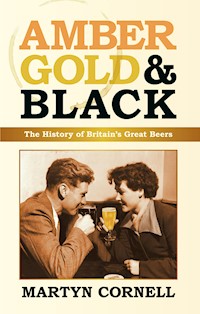
Amber, Gold & Black is the most comprehensive history of British beer in all its variety ever written. Learn all there is to know about the history of the beers Britons have brewed and enjoyed down the centuries: Bitter, Porter, Mild and Stout, IPA, Brown Ale, Burton Ale and Old Ale, Barley Wine and Stingo, Golden Ale, Gale Ale, Honey Ale, White Beer, Heather Ale and Mum. This is a celebration of the depths of our beery heritage, a look at the roots of the styles we enjoy today, as well as those ales and beers we have lost, and a study of how the liquids that fill our beer glasses, amber gold and black, developed over the years. Whatever your knowledge of beer, from beginner to buff, Amber, Gold & Black will tell you things you never knew before about Britain's favourite drink.
Das E-Book können Sie in Legimi-Apps oder einer beliebigen App lesen, die das folgende Format unterstützen:
Veröffentlichungsjahr: 2011
Ähnliche













AMBER GOLD& BLACK
AMBER GOLD& BLACK
The History of Britain’s Great Beers
MARTYN CORNELL
To Arthur Harry Cornell (1922–1990)
and Herbert Charles ‘Bert’ Cornell (1926–2000)
My mentors in beer
Many thanks to Fuller, Smith & Turner of Chiswick, London and Harvey & Sons of Lewes, Sussex, without whose help this book would not have appeared.
First published 2010
The History Press
The Mill, Brimscombe Port
Stroud, Gloucestershire, GL5 2QG
www.thehistorypress.co.uk
This ebook edition first published in 2011
All rights reserved
© Martyn Cornell, 2010, 2011
The right of Martyn Cornell, to be identified as the Author of this work has been asserted in accordance with the Copyrights, Designs and Patents Act 1988.
This ebook is copyright material and must not be copied, reproduced, transferred, distributed, leased, licensed or publicly performed or used in any way except as specifically permitted in writing by the publishers, as allowed under the terms and conditions under which it was purchased or as strictly permitted by applicable copyright law. Any unauthorised distribution or use of this text may be a direct infringement of the author’s and publisher’s rights, and those responsible may be liable in law accordingly.
EPUB ISBN 978 0 7524 7594 3
MOBI ISBN 978 0 7524 7593 6
Original typesetting by The History Press
CONTENTS
Introduction
Why Britain is one of the greatest brewing nations and how the ales and beers uniquely developed in Britain made it so
1 Bitter
Its Victorian roots in the pale ales of Burton upon Trent, its regional variations and comparatively recent national triumph
2 Mild
A history dating back to Saxon times, the myths, the varieties, the rise to national dominance and subsequent fall, the survivors
3 Burton Ale
How the beer that filled aristocratic mugs in St Petersburg became a favourite across Britain and then almost vanished away
4 Porter
The true story of the beer that fuelled London’s street and river porters, its global triumph, death and rebirth
5 Stout
What stout really means, the fortunes it made in London and Dublin, how it became ‘good for you’ and what it is now
6 India Pale Ale
The seasonal speciality that turned into something marvellous on its journey to the East and became a huge success at home
7 Golden Ale
The late twentieth-century answer from real ale brewers to the rise of lager, how it was invented and grew, where it’s going
8 Dinner Ales and Low-Gravity Beers
The story of beers made to go with food and Britain’s tradition of refreshing low-strength ales
9 Brown Ale
How an old style was given two new twists at the start of the twentieth century and went on to take America by acclaim
10 Wheat Beer
A lost British beer style that gave us two legendary brews and came back again at the end of the twentieth century
11 Barley Wine and Old Ale
Beer’s answer to brandy, the long story of powerful, aged brews that pack lots into each small glassful
12 Herb and Flavoured Ales
The many plants that have gone into beers and ales besides hops, from moorland bushes to weeds
13 Honey Beer
One of the oldest styles of beer, which returned in the twentieth century and proved popular with hairdressers
14 Heather Ale
The ancient tale of a legendary brew supposedly made long ago by the ancient Picts and revived by a boutique brewer
15 Wood-Aged Beers
The twenty-first-century development of beers aged so as to take flavours from the cask, including whisky brews
16 Lager
How the pioneers of lager learnt from British brewers, authentic Victorian lagers and modern quality lager in the UK
Glossary
Bibliography
INTRODUCTION
Britain is one of the world’s greatest brewing nations: a fact the British themselves often seem to be unaware of. We need to be much more proud of what we have given ourselves and the world: beautiful, refreshing hoppy bitters and IPAs, golden summer ales for hot days in the garden, heady, rich barley wines, unctuous winter warmers, cheering, sociable, conversation-encouraging milds, creamy, reviving black porters and hearty, filling stouts, barley wines and old ales for sipping and relaxing, beers that go with food of all sorts and beers that can be enjoyed on their own, beer styles born in these islands and now appreciated and brewed from San Francisco to Singapore, from St Petersburg to Sydney.
This book is a celebration of the depths of British beer, a look at the roots of the styles we enjoy today, as well as those ales and beers we have lost; a study into how the liquids that fill our beer glasses, amber, gold and black, developed over the years and a look forward to some of the new styles of beer being developed in Britain in the twenty-first century, such as ales aged in casks that once contained whisky or rum.
Astonishingly, despite a greatly increased interest in beer as a subject in Britain over the past thirty or so years, this is the first book devoted solely to looking at the unique history of the different styles of beer produced in Britain; more world-conquering styles, it might be suggested, than any other nation has managed.
It may be a good thing that Britons would rather be down the pub enjoying their beer with friends than sitting on their own at home reading about it. But I hope that learning more about, for example, how bitter grew and developed out of the Victorian middle class’ desire for the then newly fashionable pale ales once exclusively enjoyed by the gentry; how the demand by the street and river porters of London for a filling, strength-giving beer to help them get through the working day eventually gave us a style that, in Irish arms, circled the globe; how a style developed for Baltic aristocrats became Burton Ale, one of the most popular beers in Britain until a couple of generations ago and now almost forgotten; how beers such as Broom Ale, Mum and West Country White Ale once thrived and then vanished; how the huge boom in brewery numbers in Britain in the past thirty years, with more than 700 microbreweries now in operation, has helped bring in new styles such as golden ale and wood-aged beers, and even how nineteenth-century British brewers helped inspire the development of modern lager, all may add to the enjoyment of your beer-drinking experience, wherever you are doing it and encourage you to appreciate the marvellous drink, beer, more and to explore further its many offerings.
In addition, detailing the long histories behind Britain’s beers may go some way to restoring respect for the country’s national drink. While Thomas Hardy could write in The Trumpet Major of Dorchester beer that ‘The masses worshipped it; the minor gentry loved it more than wine, and by the most illustrious county families it was not despised’, today beer is seldom given the position at the heart of British gastronomic life that it deserves. British food grew and developed alongside beer and the two complement each other, just as French or Italian food is complemented by wine. Roast beef is fantastic with pale ale, porter is terrific with steak or lamb, stout is great with pork and chicken or spicy foods and any British cheese has its companion beer, from Cheddar and bitter to Stilton and barley wine – and desserts go just as well with beer too, as anyone who has tried apricot clafoutis with IPA, strong ale with plum pudding or chocolate stout with good vanilla ice cream will affirm.
In short, this book is a celebration of British beer in all its many beautiful shades and inspiring flavours. Good drinking!
1
BITTER
I’m getting rather hoarse, I fear,
After so much reciting:
So, if you don’t object, my dear,
We’ll try a glass of bitter beer –
I think it looks inviting.
Phantasmagoria, Lewis Carroll, 1869
The pint is one of the icons of Britain – and to most people today the beer in that iconic pint must be bitter, the amber-brown, malty beer strongly flavoured with hops that everyone imagines in the hands of Britons as they drink at an old oak table in a thatched-roof country pub, or while they enjoy an evening song around a battered piano in a cheery street-corner boozer. Except that bitter, while undoubtedly one of Britain’s greatest contributions to the world of beer, only became the country’s favourite drink in the early 1960s.
The origins of bitter, especially considering its popularity, are surprisingly obscure. There does not appear to have been a beer called ‘bitter’ much before the time that Queen Victoria came to the throne in 1837. What seems to have happened is that the name ‘bitter’ came about because drinkers wanted to differentiate the well-hopped, matured pale ales, which were gaining a place in brewers’ portfolios around the country by the start of the 1840s, from the sweeter, less-aged and generally less hopped mild ales that, until then, had been almost the only alternative to porter and stout for most drinkers for more than a century.
Porter, which was slowly losing its enormous popularity when William IV died, after 100 years as the nation’s top seller, was always called ‘beer’. Even in the 1930s if you ordered simply ‘beer’ in certain pubs in ‘mean neighbourhoods’ you were likely to be served porter, no further questions asked. If you didn’t want porter you asked for ‘ale’. What you got for ‘ale’ was young, mild, sweet and, at that time around 1840, pale as well, being made generally entirely from pale malt. What to call it, then, when a new type of beer, pale, but tart, aged and hoppy, began appearing in pubs?
Brewers named, and continued to name, the new hoppier drink ‘pale ale’. The London brewer Whitbread listed ‘pale ale, mild ale, stout and Burton’ as the ‘four chief types of beer today’, and many of the beers we think of today as bitters are still called ‘pale ales’ by their makers. Truman, Hanbury and Buxton brewed beers at its Burton upon Trent brewery called PA1 and PA2 for pale ales one and two. The first was its strong Ben Truman bitter, the second its standard bitter. When Young & Co.’s Ram brewery in Wandsworth, South London, closed in 2006, it still sent its ‘ordinary’ bitter out in casks labelled PA for Pale Ale, exactly the same as when it was first brewed in 1864, while casks of its special bitter are marked ‘SPA’. In 1952 Marston’s of Burton gave its best pale ale the name Pedigree Pale Ale, while London Pride was originally advertised by its brewer, Fuller, Smith & Turner, as London Pride pale ale; today no drinker would call Pedigree or Pride anything except brands of bitter.
However, there were no pump-clips on the handles of the beer engines in Victorian pubs (pump-clips did not appear until the 1930s and did not come into wide use until the 1950s) and while brewers could dictate the nomenclature of the new drink on labels of the bottled versions (which is why we have bottled pale ale, not bottled bitter), drinkers themselves could decide what they were going to call the draught version when they ordered it. They kept the name ‘ale’ for the old, mild style of drink and called the new one by a name that defined and contrasted it – bitter beer, ‘bitter’ for short. The ale/bitter, rather than mild/bitter dichotomy lasted for at least 120 years on the customers’ side of the bar in some areas: Tom Berkley, who was a trainee pub manager in the early 1950s in Poplar, East London, close to the docks, had to learn quickly that when the stevedores walked in and said simply ‘ghissile’, they wanted mild, while bitter was more specifically ‘pinta bi’er’.
From the start, ‘pale ale’ and ‘bitter’ were synonyms. The very first mention of the term ‘bitter beer’ in The Times comes on 5 September 1842, in a small advertisement for ‘Ashby’s Australian Pale Ale’, made by the Quaker-founded Ashby’s brewery in Staines, Middlesex, a few miles up the Thames from London, which ‘is the most pleasant of all the different sorts of bitter beer that we have ever tasted’, according to a newspaper quoted in the ad.
The best evidence for the idea that brewers and the public regarded pale ale and bitter beer as interchangeable synonyms comes with the ‘great strychnine libel’ of 1852. In March that year, a French professor, Monsieur Payen, claimed that large amounts of strychnine were being exported from France to England for use instead of hops to give beer a bitter flavour. The libel was repeated in an English medical journal, the Medical Times and Gazette, which wrote:
It is just now the fashion to believe that bitter beer is the best stomachic that was ever invented … That the bitterness of the best kind of ‘pale ale’ is given simply by an excess of hops or camomile we firmly believe [but] large quantities of strychnine have been made in Paris … to be intended for exportation to England, in order to fabricate bitter beer.
A letter appeared in The Times on 29 March under the heading ‘Bitter Beer’, calling the wider public’s attention to the French claim. This was answered by a broadside from the brewers intended to bring down M. Payen’s canard, including a letter the next day from Michael Thomas Bass, head of one of Burton upon Trent’s biggest brewers and one of the biggest exporters of pale ale to India. Bass said:
When a letter is admitted into The Times, warning the public that they may be imbibing the most subtle and deadly poison while they are only dreaming of the pleasures of ‘bitter beer’, I may, perhaps, be pardoned as one of the brewers of that favourite beverage if I ask your permission to notice what the Spectator in its last number called a ‘Paris Fable of Pale Ale’ … Why, Sir, India would long ago have been depopulated of its European inhabitants had there been anything pernicious in pale ale.
Bass’s letter makes no distinction between bitter beer and pale ale and neither did a follow-up story published in The Times on 12 May 1852 under the heading ‘Alleged adulteration of pale ales by strychnine’. This was about a report commissioned from two professors of chemistry in England by Henry Allsopp, head of another big Burton upon Trent brewer, which said: ‘… the charge of adulteration is totally unfounded, and the bitter beer drinker may dismiss all fears of being poisoned some day while quietly enjoying his favourite beverage.’
In the mid-nineteenth century, the new pale bitter drink was particularly in vogue with young middle-class and upper middle-class consumers as something visibly different from the sweeter milds and black porters of the working classes. In the novel The Adventures of Mr. Verdant Green, an Oxford Freshman, by Cuthbert Bede (the pseudonym of an Oxford don, the Reverend Edward Bradley), written around 1853, the Oxford undergraduates who populate its pages all drink bitter beer, which one of the characters calls ‘doing bitters’. Not everybody welcomed this new drink; in 1850 an editorial in The Times said that while ‘among the wealthier classes beer has been much superseded by light wines’, among ‘the middle ranks the iniquitous compound termed “bitter beer” bids fair to drive out the old British drink as completely as the Hanoverian rat exterminated that indigenous breed which is now only visible in the Isle of Portland.’ Two years later the newspaper, talking about ‘the “pale ale” of upper-class drinkers’ and allegations of under-sized pints, said: ‘If we were forced to drink a pint of ‘bitter beer’ for dinner we candidly own that we shouldn’t care how small the measure was.’
By 1855 Punch magazine was making jokes about the ‘fast young gents’ who drank ‘bitter beer’ living an ‘embittered existence’. A few years later, in 1864, the music hall artist Tom Maclagan, dressed as a fashionable ‘swell’ in a top hat and monocle and with nine-inch-long ‘Dundreary’ sideburns, was performing a song in praise of ‘Bass’s Bitter Beer’, with the sheet music advertising India Pale Ale on the back page. The growing popularity of pale bitter ales among ‘fast young gents’ and swells (probably because pale ales were expensive and visibly different in the newly untaxed beer glasses that were then replacing pewter and china mugs in saloon bars) was intimately connected with the growth of Burton upon Trent as a brewing centre.
Pale ale had been around probably since the 1640s, after the invention of coke (coal with its toxic volatile elements removed). Maltsters could not use ordinary coal to dry the green malt, it poisoned their product, but they could use coke instead of wood or straw. This meant, with a more reliable fuel, they could control the temperature of the malt kilns, and thus the colour of the finished malt, more easily. With the invention and increasing use of the saccharometer in the eighteenth century, brewers were able to discover that pale malt contains more fermentable material than darker malts, and it was often used in the eighteenth century to brew strong, pale, heavily hopped October or stock beers, which matured for twelve months or more. However, these were expensive, because coke was more expensive than wood to dry malt and they were generally drunk only by the wealthy.
At the end of the eighteenth century a market for these stock pale ales grew up in India, where they were very popular with the civil servants (clerks and bureaucrats) and military servants (officers in its private armies) of the East India Company, the giant trading concern that ended up running much of the sub-continent. Before the reign of George IV, the biggest supplier to the Indian market was a brewer called Hodgson from Bow, on the eastern edge of London, close to the East India Company’s docks. But the brewers of Burton upon Trent in Staffordshire began brewing a version of pale bitter beer in the 1820s to compete with Hodgson in the India market. This beer was originally known under a variety of names, including ‘pale ale as prepared for India’, but by the late 1830s it had become known as ‘India Pale Ale’ or ‘East India Pale Ale’.
Although the brewers of the time scarcely knew why, the well waters of Burton, naturally laden with calcium sulphate thanks to the beds of gypsum deep below the town, were perfect for brewing highly-hopped, sparkling pale ales. The gypseous brewing liquor used by the town’s brewers assisted the coagulation of proteinaceous matter during boiling (the ‘hot break’), which would otherwise cause cloudiness in the beer. It allowed a higher hop ratio without bringing out harshness from the hops in the way that the carbonate-high waters used by London brewers did; took less colour out of the malt, producing paler beers even from already pale malts and promoted yeast growth during fermentation.
The arrival of the railway in Burton upon Trent in 1839 enabled the Staffordshire town’s brewers to start sending the pale, hopped beers of the kind they shipped to India to customers around Britain as well, without having to pay the huge charges and suffer the inevitable pilfering they faced when sending their beers by canal. Their trade leapt by 50 per cent in a year and continued to climb rapidly. Within a few years other brewers had to offer similar pale bitter beers themselves to compete.
Before the 1840s the few advertisements for brewers in local newspapers normally listed only ale (in three separate grades, X, XX and XXX) and porter. One of the first brewers outside London and Burton to offer a bitter beer in the style of IPA was Thomas Henry Wyatt of the Bridge Street brewery, Banbury in Oxfordshire, who was advertising ‘Very Fine Pale Bitter Ale (India)’ in July 1843 at the high price of 17d a gallon, the most expensive beer on his list. An advertisement from 1851 from Laws and Company of the Chevalier brewery in King’s Lynn, Norfolk declared: ‘Pale Bitter Beer! Laws and Company, Family Brewers, have succeeded in producing an excellent article, which they are selling to families at 1s a gallon’, showing a cheaper version of bitter-flavoured pale ale was now available.
The same year Hall & Woodhouse, then still at the Anstey brewery near Blandford, Dorset, said pale ale had ‘recently been added’ to its brews. A year later, 1852, Nanson & Co. of the Lady’s Bridge brewery in Sheffield was advertising ‘Bitter Beer’. But these were rarities. Through the 1850s most brewers seem to have carried on advertising just ale and porter. From the 1860s, however, many brewers had started brewing pale ales and were selling both an IPA and a lower-priced ‘bitter ale’. In 1875 Henry Earle of the Barnet brewery, Middlesex, listed three different grades of ‘bitter ales’, IPA, BA and LBA, in descending order of strength and price.
Other brewers followed a similar pattern, though not always with a beer called IPA in the range. Michael Bowyer of the Stoke brewery, Guildford, Surrey, for example, brewed three different bitter ales in 1887: PA light bitter at 15s a kilderkin (18 gallon cask), implying an OG (original gravity – See Glossary for explanation) of around 1040 and a retail price of 3d a (quart) pot, about the cheapest brew in any Victorian pub; BA bitter ale at 18s a kilderkin, 4d a pot, with an OG of around 1045 to 1050; and BBA strong stock bitter at 27s a kilderkin, an OG of around 1070 and a retail price of 7d a pot.
The term ‘bitter’ never crossed the Atlantic as the name of a local-brewed beer style, perhaps because it came into being after the time of maximum English immigration to North America, though plenty of brewers in Canada and the New England states brewed pale ales for their customers. It occurs, however, in South Africa, Australia and New Zealand, where emigration from Britain was strong during the 1840s and 1850s, a time when the word was coming into use in British pubs. In 1868, in the recently founded town of Newcastle, Natal, William Peel’s Umlaas brewery, a direct ancestor of the later South African Breweries, was selling ‘Pale Bitter Ale’ at 2s a gallon. In Australia the style kept its full name, rather than being shortened to just ‘bitter’, so that the South Australian brewery in Adelaide produced West End XXX Bitter Beer and Southwark Bitter Beer, while Toohey’s Standard brewery in Sydney sold Standard Bitter Ale, and its rival, Tooth’s, made Sydney Bitter Ale. Australian brewers also called their bottled versions of the beer ‘bitter ale’ or ‘bitter beer’, rather than pale ale, as in Britain. By the 1920s in Australia, however, ‘bitter’ as a style meant simply a slightly darker type of beer compared to local lager, served cold and brewed with bottom-fermenting yeast: Castlemaine XXXX, for example, called a lager in the UK, is known as a ‘bitter ale’ in its Queensland home.
At least one author, writing anonymously in 1884, regarded the development of Burton IPA as the invention of bitter beer in general. However, there was a style of hopped pale ale that existed independently of the IPA tradition, which went by the name KK or AK. Although the K style of bitter pale ale was probably an old one, evidence is lacking: one of the first mentions in print is in 1855 in an advertisement for the Stafford brewery, which was selling ‘Pale India Ale’ at 18d a gallon, and AK Ale, ‘a delicate bitter ale’, at 14d a gallon. The Burton brewer James Herbert said of AK ale: ‘This class of ale has come very much into use, mostly for private families, it being a light tonic ale, and sent out by most brewers at 1s per gallon. The gravity of this Ale is usually brewed at 20lb’, which is 1056 OG.
Other evidence suggests that Herbert was wrong in his estimation of the strength of AK, though it was certainly a popular style. A single edition of the Richmond and Twickenham Times, dated 8 July 1893, carries advertisements from five different brewers in south and west London, four of whom offered a beer called AK or KK, all indeed priced at 1s a gallon, which suggests an OG of 1045 to 1050. Professor Charles Graham, in his talk to the Society of Chemical Industry in 1881, confirmed the original gravity of AK as 1045, with an alcohol-by-weight of 4.3 per cent (5.4 per cent abv, which seems rather high), while Burton bitter, he said, has an OG of 1064 and an abv of 5.4 per cent. AK was matured for slightly less time than other pale ales: In 1898 Dr Edmund Moritz, describing beer types to a parliamentary committee on beer, spoke of light pale ales, or AK, kept two to three weeks before delivery, while other pale ales were kept for up to a month.
Brewers seem to have maintained a deliberate difference between the two types of bitter beer: lower-gravity, lighter-coloured, less-hopped AK light bitters, served relatively soon after brewing; and slightly darker, hoppier, stronger ‘pale ales’, often designated PA, stored for some time before sending out. The brewing books of Garne & Sons of Burford, Oxfordshire, in 1912 show AK being brewed at an OG of 1040 and with a colour of 14, a reddish-brown hue, while PA was brewed to an OG of 1056 and with a colour of 18, a darker, medium brown. The difference is confirmed by contemporary comments on the two beers. Alfred Barnard, the late-Victorian drinks writer, sampled an AK brewed by Rogers of Bristol in 1889, which he described as ‘a bright sparkling beverage of a rich golden colour and … a nice delicate hop flavour’. Of Whitbread’s Pale Ale, on the other hand, a more standard bitter, he wrote that it tasted ‘well of the hop’, though it too looked ‘both bright and sparkling’. Crowley’s brewery in Croydon High Street, Surrey, in 1900 described its AK in one of its advertisements as ‘a Bitter Ale of sound quality with a delicate Hop flavour’ and the frequent description of AK in Victorian advertisements of ‘for family use’ suggests a not-too-bitter, not-too-strong beer.
Why a K was used in the name of these pale, lower-hopped beers is a mystery yet to be properly solved. It may be simply to contrast with the X normally used for milds and darker ales. It may go all the way back to a popular medieval Dutch and Flemish beer called koyt, or coyt, which came in two strengths, single and double. In Old Flemish, the word for ‘single’ was ankel (enkel in modern Dutch), making ‘single koyt’ ankel koyt, which could easily have been shortened to AK. Many Dutch and Flemish brewers immigrated to England in the fifteenth and sixteenth centuries, bringing with them a preference for brewing with hops and a large number of brewing terms, from gyle to kilderkin. Perhaps they brought ‘Ankel Koyt’ with them too. What AK does not have anything to do with, despite mythology to the contrary, is a brewer called Arthur King. Nor is it short for ‘Asquith’s Knockout’, since the beer easily predates Herbert Asquith, the Edwardian politician notoriously fond of a drink and who was Prime Minister in 1914 when the First World War began and beer taxes leapt from 7s 9d to 23s a barrel.
There was certainly room for a lower-hopped bitter beer, since the first rush of popular pale ales used hops in substantial quantities. Michael Bass, the Burton brewer, revealed in 1857 that even ‘common beer’ used up to 2 or 2½lb of hops per barrel, while ‘Pale Ale and every superior quality of beer’ used a remarkable 18lb of hops per quarter of malt, around 3¼lb to 4½lb of hops to the barrel. These were beers that needed vatting for twelve months or more to be drinkable. As tastes changed towards what was called in 1890 a ‘less intoxicating and less narcotising’ beer, which was produced more quickly, without lengthy storing, hop rates dropped. By 1902, the average for all beers in the UK was 1.9lb of hops per barrel, with a survey in 1908 finding ‘London pale ale’ hopped at a rate of 2lb 2oz to 2lb 13oz per barrel. By 1935, the average hop rate for all beers had dropped by a third, to 1.29lb a barrel.
The 1908 study, from the American Handy Book of the Brewing, Malting, and Auxiliary Trades, found London pale bitter ale had a quoted gravity of 14 Balling, equal to an OG of 1057. While for porter and stout all hops were added at the beginning of the boil, for pale beers a quarter to a third of the total was added 15–20 minutes before kettle knock-out, to give hop aroma, not just bitterness to the final beer. The ‘classic’ hop for bitter ales is Goldings, specifically East Kent Goldings, but excellent versions of English bitter are made with such hop varieties as Northdown, Challenger and Styrian Goldings, which, despite its name, is a variety of the other great English hop, Fuggles.
Today the general definition of bitter is that it is pale, drier than a brewer’s other products and the most highly hopped. Even now, strengths can vary considerably: Palmers of Bridport in Dorset once brewed a so-called ‘boys’ bitter’, BB, with an OG of just 1030.4, less than 3 per cent alcohol, while Fuller Smith & Turner at Chiswick in West London bottles Extra Special Bitter, ESB, at an OG of 1059, giving nearly 6 per cent alcohol. Colour can also show considerable variation, from the golden bitters of Manchester to the ambers of the South East and the ruddy, almost cornelian shades of some West Country pale ales. Most traditional brewers still produce at least two different bitters, an ‘ordinary’, today around 1037 OG, and a more expensive ‘best’ of around 1045 to 1048 OG. When bottled beers were more popular, these were put into bottle as ‘light ale’ and ‘pale ale’ respectively, and it was the light ale that drinkers would add to poor quality draught beer as a light-and-bitter or light-and-mild.
Any attempt to find regional styles in bitter is controversial, with many observers insisting that there are more differences to be found in neighbouring brewers’ beers than similarities. Finding real regional variety is made more difficult by the disappearance of so many hundreds of regional breweries. However, there are useful generalisations that can be made. Andrew Campbell, writing in 1956, said that London bitters were ‘a little lighter [in strength] and either sweeter or less strongly hopped than many from the country’. Campbell found Watney’s ordinary bitter, for example, brewed at the time at the Mortlake brewery near Richmond in Surrey, was ‘not very highly hopped’, while its Red Barrel bottled pale ale (later to win notoriety as one of the most widely available keg beers) was ‘not very bitter, yet not sweet’. London bitters also frequently have loose, big-bubbled heads which soon disappear.
Bitters from the North West of England were (and are) often very pale and extremely, sometimes mouth-puckeringly bitter. Bitters from the South West were often (but not always) sweeter and less well attenuated than bitters from other parts of the country. Midland bitters were again often sweet, but thin. Bitters from Kent were often very hoppy.
There are regional biases to be found in production methods, which can make for particular tastes. For example, the Yorkshire Square method of fermentation, found mainly in Yorkshire and Nottinghamshire (but also in the past, in Norfolk and even at Watney’s brewery in London), in which the excess yeast produced in the fermenting wort flows up from a lower chamber to a top ‘barm deck’. The system produces full, malty, highly conditioned beers which are well-hopped and then served with a tight, creamy head through a ‘sparkler’ device on the handpump tap.
An analysis of the brewing books from 1903 at Hammonds’ brewery in Bradford, Yorkshire, by Dr Keith Thomas of Brewlab, found that it was producing four different strength bitters from 1042 OG to 1055 OG, all light in colour, ‘possibly gold or straw’, and with limited malt flavour although moderated by caramel. Large amounts of hops were used, to give EBU (European Bitterness Unit) bitterness levels of from 34 units to 55, which, as Dr Thomas says, means ‘even the low gravity beers seem to be considerably more bitter than accepted today’. Bitterness would have dominated the flavour, despite a good mouth feel, because of the unfermented sugars that are evident in the moderately high final gravities shown in the brewing books.
The best known regional brewing method used for pale ales was the Burton union system, found in Staffordshire but also, in the past, in Derbyshire, Nottinghamshire, Edinburgh and (again) London. It turns out fruitier bitters which are often, because of the calcium sulphate-imbued water found in Burton and replicated by brewers elsewhere, distinctly sulphury.
A rather less well-known, though formerly common method was the ‘dropping’ system, where the partially fermented wort is dropped into a new vessel on a lower floor to reinvigorate the yeast and leave behind the first lot of ‘trub’, or dead yeast, and coagulated protein. It was once found from Bristol to Newark via Oxfordshire and London (Whitbread’s brewery in Chiswell Street was still using it in the 1950s and Young’s brewery used it occasionally in the early twenty-first century). It is said to give a butterscotch flavour to the beers. By the end of the twentieth century only one brewer was still regularly using the ‘dropping’ system, Brakspear’s of Henley, in Oxfordshire, though when that brewery closed in 2002 its equipment and the ‘dropping’ system, was recreated at the Wychwood brewery in Witney, Oxfordshire to carry on brewing Brakspear beers.
Although pale bitter ales were increasingly popular from the 1850s, especially among the middle classes, they were still a minority taste, in part because they were more expensive. Bitter was 6d a ‘pot’, or quart, in the pub and thus sometimes known as ‘six-ale’, while mild, ‘four-ale’, was a third cheaper at 4d a pot. In the 1890s at Steward and Patteson, the big Norwich brewer, pale and light bitter ales made up only 5 per cent of production. The best-selling beer, the standard tipple in the public bar, was mild, which had replaced porter as the nation’s favourite. For the next sixty years, through the ‘great gravity drop’ of the First World War, which saw light bitter, under the pressure of higher excise duty and restrictions on raw materials, plunge from an OG of 1047 to 1030, and pale ale from 1055 to 1047, bitter remained, to quote Maurice Gorham in 1949, ‘the staple draught drink in the Saloon Bar’ but not much ordered in the public bar. However, Gorham said, ‘it quite often happens that a house is out of bitter, and has nothing to serve but mild’.
Bitter was still clearly the minority drink even after the Second World War (at Hyde’s brewery, Manchester, for example, it made up only 15 per cent of total production). But in the 1950s, mild began to lose ground. Much of the reason was precisely bitter’s image as a middle-class choice. A commentator in 1958 wrote: ‘In many parts of the country, the drinking of bitter beers is on the increase. Traditionally bitter is looked on as the bosses’ drink. Any man reckons today he’s as good as his boss. So he chooses bitter.’ In 1959 draught mild still outsold draught bitter nationally by two pints to one, and draught bitter represented only one pint in five of total beer consumption. Within six years, however, by 1965 bitter had overtaken mild to become the country’s most popular beer style.
Ten years later bitter peaked at just over 60 per cent of draught beer sales. Soon after the first new microbrewers began in Britain and quickly there were more different makes of bitter available than there had been for decades. Unfortunately, none of these new brewers had the marketing power of the big lager manufacturers and sales of bitter began to decline. They lifted only briefly around 1991–93, when the UK government’s ‘guest beer’ orders, designed to increase competition, forced the national brewers to open up the bar-tops in their then massive pub estates to other brewers’ beers. Since 1995 draught bitter has been only the second-best selling beer in the country; though for all that, perhaps the most loved by those who drink it. The best bitter beers leave the drinker satisfied and yet still happy to have more. The harmony of complex flavours that the finest examples contain, even at comparatively low alcoholic strengths, is one of Britain’s greatest contributions to bibulous pleasure.
Today drinkers still have hundreds of bitters to choose from, but there are some that stand out. One is Landlord, from Timothy Taylor & Co., Keighley, West Yorkshire, at 1042 OG 4.3 per cent abv, a tremendously ‘moreish’, satisfying special bitter. It is the avowed favourite of beer drinkers from Ted Tuppen, chief executive of Britain’s biggest pub company, Enterprise Inns, to Madonna, who was introduced to it by her former husband, Guy Ritchie. Landlord is made with Styrian Goldings and the almost floral hop flavours mesh brilliantly with the round, nottoo-full maltiness.
Southerners would probably vote for the ordinary or special bitters from Young’s, which transferred from their original home in Wandsworth in 2006 to Wells’ brewery in Bedford, or London Pride from Fuller Smith & Turner of the Griffin brewery, Chiswick, London, at 1041.5 OG. All three of Fuller’s bitters, the others being Chiswick at 3.5 per cent abv and ESB at 5.5 per cent, are excellent examples of the style, but London Pride, now one of Britain’s most widely available cask beers, noses ahead: flowery, honeyed, a touch of marmalade and a Goldilocks attitude to alcohol – not too weak, not too strong, just right.
In the West Country, Palmer’s IPA from J.C. & R.H. Palmer of The Old Brewery, Bridport, Dorset, at 1040 OG, 4.2 per cent abv, is dryer than the typical West Country bitter, with a deep copper colour and, like all the best bitters, a marvellous balance between sweet malt and bitter hop, with a lingering bitter aftertaste that almost demands another pint to follow. This is a hard-to-find beer that is, as a result, nowhere near as well-known as it ought to be.
Many drinkers, however, would rate as their number one bitter Adnam’s, from the Sole Bay brewery, Southwold, Suffolk. At 1036 OG it is fine example of the complex flavour-filled beers British brewers can produce at comparatively low alcoholic strengths. It combines the two best known English hops, Fuggles and Goldings, in a subtle symphony with sweet malt.
Some prefer the hoppier Best Bitter from another established family brewer, Harveys of Lewes in Sussex, with Fuggles and Goldings hops again, and also Bramling Cross and Progress, two hops with Goldings in their ancestry.
One of the best breed of ‘new’ bitters is also, like Adnams, from East Anglia: Wherry Best Bitter, brewed by Woodforde’s Norfolk Ales at Woodbastwick, Norfolk. The 1037.4 OG bitter has been a classic since its introduction when the brewery started in 1981; amber coloured, with a remarkable length of flavour as biscuity malt holds up citrus-tinged hops. It is certainly a worthy addition to the many offerings available in Britain’s favourite native beer style.




