


Erhalten Sie Zugang zu diesem und mehr als 300000 Büchern ab EUR 5,99 monatlich.
- Herausgeber: Nick Hern Books
- Kategorie: Geisteswissenschaft
- Sprache: Englisch
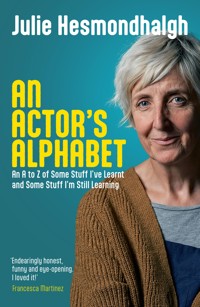
In this candid and empowering A to Z of being an actor, Julie Hesmondhalgh draws on her decades of experience on stage and screen – including in massively popular television shows such as Broadchurch, Happy Valley and Coronation Street – to lift the lid on the realities of life in today's industry, and show you how to navigate it. She shares practical advice on preparing for roles (don't be afraid of looking like a dick), managing the ups and downs of your career (and how to be out of work without losing your mind), dealing with failure (and success), not constantly comparing yourself to others (bloody hard, but try), looking after your mental health, and the power of knowing when to say 'no'. Passionate about the arts, she makes a compelling case for their importance to society, but also calls out the industry on where it continues to fall short – including a clear-eyed assessment of what needs to change to make it safer and healthier, more accessible and inclusive. Written with refreshing honesty and self-deprecating humour, An Actor's Alphabet is a book for anyone who dreams of becoming an actor, wants to be a better one, or just wants to learn what being one is really like. 'Endearingly honest, funny and eye-opening. I loved it!' Francesca Martinez 'Like its author, this book is brimming with wisdom, intelligence, empathy and humanity... An absolute must!' Maxine Peake 'This is the best book on acting and being an actor I've read… Julie Hesmondhalgh is the mentor/best friend/guide we all need in these troubled times' Paul Chahidi 'Wonderful… not just a book about acting, but also about life. Us. The world. Humanity. Battling through this shit and finding time for a hug. I adore it.' Russell T Davies 'A must-read, whether you've been on the artist's journey for years or are just starting out' Shobna Gulati 'This book is bold, brash, sincere and angry. It regrets nothing and questions everything… Treasure it like we should treasure Julie' Jack Thorne 'A generous gift to actors, full of honesty, hope and wit. There is loads of tangible advice, not just for acting but for life' Anna Jordan 'Julie's book is honest, challenging and helpful. A great read' Andy Nyman
Sie lesen das E-Book in den Legimi-Apps auf:
Seitenzahl: 209
Veröffentlichungsjahr: 2022
Das E-Book (TTS) können Sie hören im Abo „Legimi Premium” in Legimi-Apps auf:
Ähnliche




















Julie Hesmondhalgh
An Actor’s Alphabet
An A to Z of Some Stuff I’ve Learnt and Some Stuff I’m Still Learning
NICK HERN BOOKS
London
www.nickhernbooks.co.uk
For Rosa
And in loving and thankful memory of Martin Cosgrif and Brian Astbury
Contents
Dedication
Introduction
Activism
Body Issues
Class, Casting and Cultural Capital
Drama School
Equality in Education
Fame, Failure and Filling the Well
Growing (Older)
Harassment and Bullying
Insecurity and Imposter Syndrome
Jealousy
Kids and Other Caring Responsibilities
Line-learning
Mental Health
No – and How to Say It
Openness
Process
Quiet Times – and How to Cope with Them
Rehearsals, Rehearsal Rooms and Representation
Social Media
Trauma and Triggering
Unions
VAT, Income Tax, and Other Boring but Important Stuff
Work – Paid and Unpaid, and Making Your Own
X-rated – Sex, Nudity, and the Rise of the Intimacy Coordinator
Young Artists – and What You Can Do to Help
Zoom (and Self-tapes), Zen and Zeal
Appendix of Resources and Reading
Acknowledgements
About the Author
Praise for An Actor’s Alphabet
Copyright Information
Introduction
In 2016, Anna Brewer at Methuen Drama approached me about writing a journal of my working life as part of their Theatre Makers series. Writing my Working Diary was a wonderful and enriching experience for me – and, as I remarked at the time, there’s nothing like having to document your daily cultural activity to inspire you to get out of the house and live your fullest life. To say ‘yes’ to stuff. Nobody wants to read about all your nights in watching Love Island, you know?
In writing that book, I think I always unconsciously had a particular readership in mind: those who might be emerging into the industry (at whatever age), those who were thinking about making their own work, people from working-class and disadvantaged backgrounds or with strong regional identities like my own. And I think from the subsequent feedback I received that those groups of people responded positively to some of what I had to say. So I started to think about writing a book that was more advice-based, without the journal element. I’m incredibly grateful to Anna for giving me a voice in the first place, and for inspiring a newfound love of writing, and to Matt Applewhite, my editor at Nick Hern Books, for his enthusiasm for the idea of an A to Z from Day One.
I’ve been working as an actor for over thirty years now. But because SIXTEEN of those years, from the age of twenty-seven, were spent working on Coronation Street, I think that my re-emergence into the wider industry at the age of forty-three has
given me a unique view of some of the huge changes that have taken place in my lifetime. The culture has shifted in seismic ways since the 1990s when I was last a jobbing actor, and it has been absolutely invigorating to find myself in a position of having so much to learn. Shit, there is nothing like writing a book like this to make you realise how much you don’t know.
I am, I think, fairly well-positioned to talk about class and accent and fame and failure and body image and making your own work and growing older as an actor. I am a state-educated socialist and trade unionist, an intersectional feminist and activist from a working-class northern background and with a strong Lancashire accent, and these identities affect, inspire and infuse every word in these pages.
However, I am also white, cisgendered, non-disabled, neurotypical, married to a man, reasonably well-known, award-winning, and (on paper) part of the cultural elite (!) – so there are many things I am not qualified to write about. But what I have endeavoured to do is share with you what I have learnt, and crucially what I’m still learning, along the way: about how I continue to try to educate myself about the struggles and challenges of other groups and how I can keep working to be part of positive change in our industry and in our wider society.
I will have got stuff wrong for sure. Language evolves so quickly, and some of the terms I have used in these pages may already feel antiquated by the time this is published. In identifying groups of people who have traditionally been excluded, and in talking about various movements that have affected change, it has been important to name those groups. I have generally used the term ‘Global Majority’ as a catch-all for anyone non-white. So much better than the historic use of ‘minority’ with its connotations of otherness. I am indebted, always, to the many friends and colleagues from different backgrounds to mine who have always been so open and generous in sharing their experiences with me.
This is not an academic book; it’s very much written from the heart and based on my own experiences and strongly held views. It’s a bit sweary, because I am. Some people will think it’s too ‘woke’ (don’t care); some people might think it’s not ‘woke’ enough (sorry). I’ve tried to be open and honest about my own experiences and not come at this from a position of knowing anything with any certainty. I hope that you find some hope in it, as well as some practical advice for entering, surviving or even leaving this bonkers job. My passionate and unerring belief that underlies everything I do, say or write, is that art matters. That everyone should have access to art, culture, creativity; that everyone has a right to the bread and the roses, whatever your background.
I hope there’s something for everyone here, and that reading these chapters leaves you with a little bit of encouragement and maybe even inspiration. And, at the very least, a feeling that you are not alone.
September 2022
Activism
I blame the Baptists.
And my brother.
And Brian. Especially Brian.
So maybe this section should come under B, actually.
Let me explain. When your childhood soundtrack is a mash-up of stirring old-school hymns, happy-clappy gospel songs and Never Mind the Bollocks (with a bit of Paul Robeson thrown in for good measure); when you know the security of ‘FELLOWSHIP’ and ‘COMMUNION’ and the thrill of ‘BEARING TESTAMENT’; when Jesus is your poster boy and your big brother buys you Billy Bragg EPs and sneaks into your room after the pub to teach you about ‘IMPERIALISM’ and ‘RACISM’ and ‘CLASS’, it kind of sets your stall for a life of some sort of evangelism. And when you later become aware of some of the more problematic parts of organised religion (‘Hello, homophobia! Hey, The Patriarchy! How ya doin’?’) and become at worst agnostic, at best Buddha-curious, you find you never really lose that bit of yourself that wants to heal the world and storm the barricades at the same time.
I always loved acting, but when it came to deciding about careers, I was so consumed with the idea of being of service to the world (insufferable right-on god-botherer that I was) that to go into the arts felt frivolous to me, and at odds with what I believed was my purpose on this earth. (Evangelism and grandiosity often go hand in hand.) I wanted to help people, goddammit! Like Jesus! I thought I should go into social or probation work instead – after a stint of volunteering ‘in the third world’, of course – and be of use to society. It never occurred to me that I could try to do both. Be an actor and try to be a useful citizen. I had no sense that art could actually have a purpose beyond pure entertainment.
It was my brother Dave who persuaded me to audition for drama school and to take a different path than what might be expected of someone from Accrington. And because I do everything that my brother tells me to do, I did, and I got in!
When I started at the London Academy of Music and Dramatic Art (LAMDA), I met Brian Astbury, who became one of the most important and influential figures in my life. Brian was a white South African who set up The Space in Cape Town in the early 1970s, along with his wife, the actor Yvonne Bryceland, and playwright Athol Fugard. The Space was the first multiracial theatre of its kind, and was operating at the height of apartheid. Police raids were par for the course in a country where it was illegal for black and white creatives to work together. There is a story that I love to tell to tired actors (oh god, so many tired actors) about the black actors at The Space working all day as manual labourers, then turning up at the theatre to rehearse into the night, in a room where brooms were strategically placed against the walls, ready to be grabbed the moment the police inevitably turned up. Because if the black people were sweeping the floor they were allowed to be there, of course.
To put on the plays they were producing – plays like Athol Fugard’s provocatively titled Statements After an Arrest Under the Immorality Act, about an illegal love affair between a man of colour and a white woman – was an act of huge resistance, and also of courage. Brian and his colleagues at that theatre were in real danger of arrest and imprisonment for making art that spoke truth to power. As the apartheid regime became more and more brutal, many people were forced to either take up arms or leave the country. Brian and Yvonne, lifelong pacifists, left.
Everything that Brian taught us at LAMDA was imbued and inspired by his first-hand experience of seeing the power of art and of theatre to be a force for change, even when that change doesn’t happen straight away. He believed passionately in our responsibility as artists to engage with injustice, to start conversations and to tell stories that help us make sense of the world and hold the powerful to account. He kick-started in me a lifelong passion for making work that challenges convention and that has something to say. And under his mentorship, I started to understand who and what I wanted to be. I discovered that my happy place is in the crossover point of the Venn diagram that has Art in one circle and Activism in the other. Like Brian, I believe that to be apolitical is a place of absurd privilege. How can you live in this world and not question the greed, the poverty, the inequality? It can only be if you’re unaffected by it, or worse, if you benefit from it.
For the last seven years I’ve co-run a political theatre collective in Manchester called Take Back. We have made a lot of work: some immersive and installation-based stuff, including collaborations with the university and bigger theatre spaces, about migration, refugees, and, more recently, sex work. But we’re best known for our award-winning script-in-hand responses to social and political events: joyful evenings of FELLOWSHIP and COMMUNION where we’re in a room together, starting conversations and emboldening each other in the face of unbelievable amounts of despondency and apathy out there.
Our model is simple: we ask ten or more writers to create a short piece on a theme, then we come together in a space to share them with an audience. Our first was Ten Takes on Hope in 2015, at a time when things looked like they might be on the up – if you can imagine such a thing! We took over a room above a pub at no cost, set up ticket sales on Eventbrite, sold out twice in one night, and had enough money in the account to hire a bigger venue for Ten Takes on Capital a few weeks later. Other shows have included Take Back Our Bodies, Take Back Our Girls, Take Back America (on the day of Trump’s inauguration) and Take Back Togetherness (after the Brexit referendum).
Some shows have been more successful and nuanced than others; some evenings have needed a serious edit (Take Back Our NHS, I’m looking at you…). Of course, we have never been so naive as to think that we might effectively heal the deep divisions in our country caused by Brexit, or that we might topple the Trump administration with a bit of cleverly curated spoken word at The Comedy Store. But what we have done, I think pretty successfully, is bring together a group of artists who broadly share a worldview – a worldview that feels a bit out of step with the spirit of the times – and who have a hankering to exist in the overlap of that Art/Activism Venn diagram. And I believe we have had some success in helping those artists, and our audiences, to feel less alone in it all, and sometimes even feel, dare I say it, empowered by the experience.
Last year I had the privilege of producing, with Take Back, Lucy Kirkwood’s short and powerful howl of pain that was Maryland, her response to the murders of Bibaa Henry, Nicole Smallman, Sarah Everard and Sabina Nessa. We brought together fifty women of all ages and backgrounds, dis/abilities and ethnicities, and rehearsed for two days over a weekend, then performed it twice on the Sunday night. The material was raw and painful, especially the sections written specifically for the women of colour in the cast. There were tears in the readthrough. And in the performance. It was overwhelming.
But in spite of the subject matter, and the unspoken personal memories of sexual violence for many of us; in spite of (or perhaps because of) the unadulterated rage we all felt as the play reached its harrowing climax; in spite of the stunned reaction of the audience who sat in silence for ten minutes after the second performance had ended, and the difficult and upsetting conversations that inevitably took place in the bar afterwards; in spite of all this, that weekend was one of the most exhilarating and joyful experiences of my working life. I will never forget it. Because in that accelerated way that can only happen in theatre, friendships were formed, connections were made, everyone held each other steady, and we all united in the most powerful way imaginable over something that we all desperately needed to express in that moment. There is no feeling like it in the world. Using our voices and raising each other up.
As an unapologetically political group, we have been asked many times about what we hope to achieve with our work, when we are so clearly preaching to the converted in most cases. But as someone who grew up buzzing off bearing testament, and to all intents and purposes literally preaching to the converted, I can testify that there is joy and purpose in just that. Because coming together and connecting over ideas and feelings and hopes and beliefs in a room is actually a really, really important and uplifting thing, especially in this age of isolation and doom-scrolling.
I’m not sure that anyone who was part of our sharings of Maryland, as an artist or an audience member, necessarily had their minds changed about anything. That was not the purpose of making this piece of political theatre. But I feel that every single person left the theatre that night feeling as though something in them had shifted. Something deep and unsayable had been said. And we were all a bit changed by that. And the world felt a bit different as a result.
Body Issues
Bodies are completely bonkers, aren’t they? There’s a programme on TV where people choose prospective partners from a line-up of naked candidates in individual booths. We see their legs and genitals first, then their chests, then last their heads. Standing stock-still for the most part, give or take the odd self-conscious wiggle, it always shocks me at how unattractive I find the naked form, how preposterous bodies are: all those vaginas and penises and bollocks, all those breasts and arses and tattoos and piercings and do you like it shaved or hairy? It’s the most unsexy thing in the world to me. Bodies stripped of well-chosen clothes and natural movement and expression, just exhibited as if personality is expressed in whether you leave a bit of pubic hair or not, or whether you’ve had a boob job. No wonder the subsequent dates are nearly always an unmitigated disaster.
There is so much more to us than the pile of flesh we drag around. We’re not made to be photographed mid-stride with rings of shame circling our less-than-perfect upper arms, or scrutinised in a badly lit cubicle, part by part. The beauty and sexiness of bodies is when they come as part of a whole: shaking with laughter, gesturing with enthusiasm, goosebumping with desire… But still we spend so much time obsessing over how we appear, standing in front of the mirror, comparing ourselves to others, always falling short of a standard of beauty sold to us in part by our own industry. We are positively encouraged to obsess over our flaws and to spot each other’s physical failings, and we work and work to make the grade, to rid ourselves of that hairy chin/spare tyre/droopy breast/moob/bald patch/crooked tooth/frown line. But also to mock those who have gone (what we perceive as) too far in their pursuit of physical perfection, as if we have nothing to do with the fact that people are willing to go under the knife to feel better about themselves, that we are mere innocent bystanders in a culture that renders older people irrelevant, so much so that folk are trying to disguise the signs of age with fillers and injections and surgery.
I’m a Gen Xer, so the gym or the salon weren’t part of my growing up. We didn’t wax our pubes, and our pop stars had wonky, shit teeth and untoned arms. Botox wasn’t a thing. So I do find it a bit disconcerting to witness the lengths that women in particular (of course women in particular, although it is definitely harder for men now too) feel they have to go to, in order to conform to a certain standard of beauty: from regular waxing to teeth whitening to brow-sculpting, from the painstaking application of acrylic nails to the perming of eyelashes. The perming of eyelashes! And then all those hours in the gym. It’s hard sometimes not to feel like it’s a conspiracy to keep us so tied up in upgrading our physical appearance that we don’t have any time left to change the world. But my daughter tells me that being a good feminist is about allowing people to express themselves in their appearance in whatever way they feel fit, without judgement. That it’s at best missing the point and at worst unsisterly to be disdainful about time spent on health and beauty. That when she and her friends invest in these treatments it’s about self-love, self-care, and that that is never a bad thing. That anything that is about celebrating your body is better than hating on yourself.
And I do get it, I do. And I feel there is – in at least some of the images sold to and consumed by my daughters’ generation – a new kind of body positivity, a celebration of different kinds of bodies, sizes, skin tones that does feel new and fresh. There is an acceptance of trans bodies, an elevation of queerness, that definitely feels on the rise in their circles at least. Gender feels excitingly performative and exuberant. Less traditional and unconventional interpretations of beauty feel as though they’re becoming more mainstream, and even though I feel cynical about marketing and advertising catching hold of this new diversity and monetising it, as they do and will, the visibility and representation feels positive in the main.
But we have to be vigilant. In some sections of our industry, women are still being told to lose weight, get breast implants, have lip fillers. Men are being sent to the gym. We engage in gossip about who has had what work and where, and is it ‘good work’ or a botch job? We comment on people’s weight loss and weight gain as if we have a right to, as if our constant monitoring of others is okay. We tolerate and prop up a culture that desexualises disabled people and sexualises black and Asian women. We are still endlessly, boringly binary in our thinking about gender. We applaud actors’ ability to change their physical shape, in a way that is probably extremely problematic.
When I was cast as a rape survivor in Broadchurch I shocked myself at my own internalised misogyny. I worried that the public would struggle to believe that anyone would rape someone who looked like me: an ordinary middle-aged woman with an ordinary middle-aged body. Isn’t that awful? Quite apart from the fact that rape is never about desire but only about control and violence, the fact that I was seeing my own lovely, soft, healthy, strong, imperfect body as somehow sexually unacceptable to the viewing public was pretty horrifying to me.
It goes in, you see. For every celebratory and body-positive TikTok post my daughters imbibe, there are still shelves full of those magazine covers aimed at us older women, selling us made-up shit about that reality star’s ‘battle’ with weight, or that presenter’s ‘fabulous new beach body’; for every kick-ass, gender-nonconforming, young pop star on the cover of Teen Vogue, there are still hundreds of tweets about the faces and bodies of our peers, all that picking apart of beautiful women’s teeth, thighs, wrinkles; all the sharing of photos and discussion of our bodies, our faces, our hair, of how young we look, how natural, how you wouldn’t recognise us now since age has ravaged our once perfect skin, how we’ve managed to lose our baby weight, how we’re too skinny, had too much work done, how we’re ‘loving our curves’, even though the subtext is so clearly how fat we got.
And it all goes in. And it isn’t harmless. It turns us against each other and ourselves. That sidebar-of-shame clickbait is deeply, insidiously misogynistic and we have to stop justifying our consumption of this shit as a bit of fun. We end up, as actors, not being able to watch ourselves on telly without pulling ourselves to pieces, and having panic attacks when we have to choose what to wear for an awards do that should be a laugh. We fixate on tiny flaws and magnify them in our minds. And we contribute to a society that values only a standardised ideal of beauty. We’re doing the patriarchy’s work for it, mate!
I want to see real bodies in all their glorious diversity on our stages and screens. I want to see all shapes and sizes, all ages, all skin tones. I want to see people with scars and with missing limbs, in hijabs and in wheelchairs living fully and vividly. LIKE IN REAL LIFE. Sometimes I feel like we’re heading towards a time when our stages – but especially our screens – will be entirely populated by beautifully groomed humans looking only like, well, actors, and models even.
I love big arses and bingo wings and Caesarean scars and hairy backs and nostrils and bald patches and acne scars and jowly cheeks and spare tyres and untidy eyebrows and imperfect teeth. I like thin lips and thick lips and sticky-out ears and broken veins and hearing aids and eye bags and braces and uneven skin pigmentation and natural hair. And I love those gangs of girls in town centres on Saturday nights, freezing cold but defiantly coatless, thick make-up like armour, unapologetic in their working-class glam, full of self-love and out for a good time. I just like real people. Real bodies. Not some airbrushed ideal. I think that we actors need to stop trying to look like actors, and concentrate on being, well, just people, in all our diversity and #NoFilter imperfection.
Class, Casting and Cultural Capital
Our industry, like our country, is class-ridden. And yet to talk about class is often seen as such a throwback. Prime ministers from Thatcher to Major, from Blair to Cameron, have been trying to tell us for decades that class doesn’t exist, possibly in the hope that we would all conveniently stop looking at the unequal ways in which the wealth of the nation was, and continues to be, distributed. What does it mean to be ‘working class’ anyway?




