


2,99 €
Mehr erfahren.
- Herausgeber: Hussein Elasrag
- Kategorie: Fachliteratur
- Sprache: Englisch
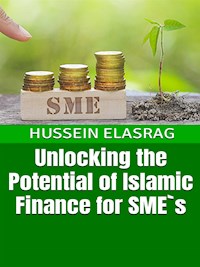
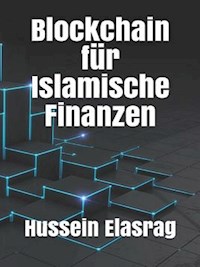
The purpose of this book is to investigate the opportunities of development and growth as well as the main challenges for Islamic Financing for SMEs. The book focuses on analyzing the innovative technology Blockchain and the potential of blockchain-based applications to Islamic Financing for SMEs. The main objectives were to define how blockchain can change the Islamic Finance industry. The book discussed the various interesting applications of blockchain in Islamic finance that can bring different benefits. The book also shed light on the challenges facing Applying Blockchains for Islamic finance. This book will help to deepen understanding of the concepts of blockchain as well as SMEs. In addition to evaluate how blockchain can support Islamic Financing for SMEs .
Das E-Book können Sie in Legimi-Apps oder einer beliebigen App lesen, die das folgende Format unterstützen:
Veröffentlichungsjahr: 2022
Ähnliche










Applying blockchain on Islamic Financing for SMEs
Hussein Elasrag
Abstract
Small and Medium Enterprises (SMEs) make up the bulk of the economic tissue of the economy. In developing countries, they represent the majority of employment, including female employment. Investing in SMEs is a long-term and smart strategy, with sustainable returns that multiply across regions, countries and societies. SMEs constitute the overwhelming majority of firms. Globally, SMEs make up over 95% of all firms, account for approximately 50% of GDP and 60%–70% of total employment, when both formal and informal SMEs are taken into account. This amounts to between 420 million and 510 million SMEs, 310 million of which are in emerging markets. Promoting access to finance for SMEs has been on the global reform agenda since the global financial crisis.
Despite the fact that SMEs account for a significant part of a country's economy and provide employment opportunities for the majority of people, they are less likely to be able to secure bank loans than large organizations; instead, they rely on internal or “personal” funds to launch and initially run their enterprises.
According to The World Bank, One of the biggest constraints to SME development is a lack of financial resources to start, sustain and grow their businesses. It is calculated that between 55 to 68 percent of formal SMEs in emerging markets are either unserved or underserved by financial institutions.
In developing economies, the picture is even worst: the World Bank Report 2017 estimates that 70% of small and medium as well as micro-enterprises are unable to access the credit they need. While the gap varies considerably between regions, it is particularly wide in Africa and Asia. The current credit gap for formal SMEs is estimated to be US$1.2 trillion; the total credit gap for both formal and informal SMEs is as high as US$2.6 trillion.
Islamic finance, as an alternative and ethical financing method, directs funding to impact-oriented real economic activities; it thus utilizes economic and financial resources to satisfy the material and social needs of all members of the community — including SMEs and innovative start-ups. The main foundations of Islamic financial products are its asset-based transaction nature, together with its equity-based nature of sharing risk and profits. Each of these financing categories has a fundamental role to play in increasing the financial inclusion of SMEs and innovative start-ups, as well attracting potential capital from Islamic capital providers and sources.
The blockchain technology is rapidly gaining the attention of the Organizations of Islamic Cooperation. There are various Islamic financial institutions that are planning to use the blockchain system to bring the benefits that come with it. Dubai authorities have revealed their plans to use blockchain in public and private sectors in 2020 proving that even the government is showing interest in the digital currency which connects blockchain in Islamic finance with the banking system.
Islamic finance can use cryptocurrencies to provide financing for SMEs, underpinned by blockchain technology, to structure payments in an efficient and cost-effective manner. The installation of blockchain in Islamic banking will primarily affect the way payments, remittances and trading activities are conducted. This modern technology is moving forward towards the mainstream and promises to provide benefits such as the following:
•Modernize legal documentation through the application of smart contracts
•Significantly reduce transaction processing time
•Reduce costs for providers and transaction fees for consumers
•Eliminate the need for documentation and manual reconciliation of transactions
•Reduce the need for centralized regulation
•Eliminate the risk of errors and duplication
•Reduce or eradicate fraud
•Manage counterparty risk
Blockchain’s core attributes has significant potential for use in Islamic SME financing due to its:
•Transparency — blockchain provides provenance, traceability and transparency of transactions
•Control — access to permissioned networks is restricted to identified users
•Security — the digital ledger cannot be altered or tampered with once the data is entered whereby fraud is less likely and easier to spot
•Real-time information — information is updated for everyone in the network at the same time
Blockchain has the potential to completely reinvent the wheel when it comes to SME funding. The technology shows real promise in solving things once and for all: the inefficient and antiquated system of bank business loans is one that’s ripe for disruption.
The real challenge, going forward, will be the legality of smart contracts, and the global regulatory framework needed to establish true peer-to-peer lending across borders; just because it is legal in one country, does not make it so in the other. However, the power and potential of blockchain and smart contracts is being recognized across the business and political spectrum.
While it may take regulators some time to catch up, broader adoption will surely lead to sensible regulations.
The purpose of this book is to investigate the opportunities of development and growth as well as the main challenges for Islamic SME`s Financing. The book focuses on analyzing the innovative technology Blockchain and the potential of blockchain-based applications to Islamic SME`s Financing. The main objectives were to define how blockchain can change the Islamic SME`s Financing industry. The book discussed the various interesting applications of blockchain in Islamic finance that can bring different benefits. The book also shed light on the challenges facing Applying Blockchains for Islamic finance. This book will help to deepen understanding of the concepts of blockchain as well as SMEs. In addition to evaluate how blockchain can support Islamic SME`s Financing industry.
Table of Contents
Abstract
Introduction
Chapter 1
The blockchain basis
Types of Blockchain
Investments in Blockchain
Why it's hard to trust a blockchain
Proof of Existence
Proof of Nonexistence
Proof of Time
Proof of Order
Proof of Identity
Proof of Authorship
Proof of Ownership
Specific Use Cases
Chapter 2
Understanding SMEs
SMEs Definitions
SMEs distribution in various parts of the world
Chapter 3
Islamic Financing techniques for SMEs
Islamic Financing techniques for SMEs
Obstacles Faced by Banks in SME Financing
Islamic Financing Options for SMEs
key elements required to unlock the full potential of Islamic finance for SMEs
1- Creating an Enabling Environment
2- Developing the industry and markets
3- Ensuring financial stability
Chapter 4
Applications of Blockchain in Islamic Finance
1. Smart Contracts
2. Cloud Storage
3. Digital Currencies
4. The collection of zakat
5. Improving the utility of waqf
6- Effective, and efficient halal supply chains
7- Remittance Transaction Flow using Cryptocurrency and Blockchain
8- Takaful (Islamic Insurance)
9- Smart Sukuk
Chapter 5
Applying Blockchainsto Islamic SME`s Financing
Blockchain to Islamic SME`s Financing: Obstacles & Challenges
Government Interferences
Underdeveloped Ecosystem Infrastructure
Unclear Regulations
Security , Privacy and Lack of Standards
Immature Middleware and Tools
Scalability
Strategic operational adjustments to target SMEs
1- Strategy and Segmentation
2- Products and Services
3- Sales and Delivery
4- Advisory Services
5- Organization and Systems
6- Risk Management
References:
Introduction
Distributed ledger technology (DLT), the technology that started the various cryptocurrencies in circulation today, has created quite a buzz in many areas in the last few years. Putting it simply, a DLT is a decentralized system for recording transactions with mechanisms for processing, validating and authorizing transactions that are then recorded on an immutable ledger. Blockchain is one implementation of DLT. It is also referred to as an “Internet of value”, meaning a secure way to store and transact value – anything from currency, stocks, contracts and even votes – from one entity to another. It is also the underlying technology powering cryptocurrencies such as Bitcoin and Ether.(Sylvester, 2019)
The blockchain technology is rapidly gaining the attention of Organizations of Islamic Cooperation. There are various Islamic financial institutes which are planning to use the blockchain system to bring the benefits that come with it.
The authorities in Dubai have revealed their plan that in 2020 they will be using blockchain in public and private sectors. It is no surprise that even government is showing interesting in the digital currency. Here we have the information related to the relationship of blockchain in Islamic finance and banking system.
Blockchain is an exciting new technology that may prove to be a radical innovation—similar to technologies such as the steam engine and the Internet that triggered previous industrial revolutions—with the power to disrupt existing economic and business models. It has the potential to deliver productivity gains to multiple industries, from the financial sector to energy markets, supply chains, intellectual property management, “virtual firms”, the public sector, and beyond.
Its ability to provide disintermediation, improve transparency, and increase auditability can significantly reduce transaction costs, introduce efficiency into existing value chains, challenge revenue models, and open new markets.
And blockchain may prove particularly valuable in emerging market economies. Yet the technology is in its early stages of development and serious challenges and risks, both technical and regulatory, will need to be addressed before it achieves widespread adoption. Questions remain about blockchain’s scalability, interoperability, security, transition costs, data privacy, and governance. And business leaders and policy makers will need to think long and hard about when and under what conditions a blockchain initiative may be warranted. (International Finance Corporation, 2019)
Blockchain technology has been referred to as a new “trust machine” because of its ability to allow people to interact and conduct transactions even though they may not know each other or have a pre-existing trust-based relationship. Although the technology is amassing a body of literature, few sources make sense of the technology in accessible ways, and fewer yet focus on its applicability to the public sector, such as ways it can enable collaboration within and across governments and help reduce fraud, errors, and the cost of paper-intensive processes. (Berryhill, 2018)
Islamic finance and its digital economy offer opportunities for Muslims and non-Muslims as both populations now seek a convergent solution to their pressing issues—rebuilding trust and confidence in a financial system that had lost them. Some technologists imagine this world without intermediaries, while others just want a faster and more efficient way of transacting.
Either way, the challenge comes from accountability, and embedding that sense of accountability within the new systems that are being built, based on the sharing of risks and profits that anchor the nature of our economies, including the sharing economy of underutilized assets.(Mohamed & Ali, 2018)
What is the state of blockchain today? In PwC’s 2018 survey of 600 executives from 15 territories, 84% say their organizations have at least some involvement with blockchain technology. Companies have dabbled in the lab; perhaps they’ve built proofs of concept. Everyone is talking about blockchain, and no one wants to be left behind. It’s easy to see why. As a distributed, tamperproof ledger, a well-designed blockchain doesn’t just cut out intermediaries, reduce costs, and increase speed and reach. It also offers greater transparency and traceability for many business processes.
Gartner forecasts that blockchain will generate an annual business value of more than US $3 trillion by 2030. It’s possible to imagine that 10% to 20% of global economic infrastructure will be running on blockchain-based systems by that same year.
For the Islamic economy, blockchain technology has the potential to make a significant impact for use in Islamic SME financing. The blockchain in Islamic finance and banking will surely help the Islamic banks, and financial institutes to succeed. Without worry about the interest and other such issues Islamic banking system will be able to work more productively.
Small and Medium Enterprises (SMEs) play a major role in most economies, particularly in developing countries. Formal SMEs contribute up to 45 percent of total employments and up to 33 percent of national income (GDP) in emerging economies.
These numbers are significantly higher when informal SMEs are included. According to estimates, 600 million jobs will be needed in the next 15 years to absorb the growing global workforce, mainly in Asia and Sub-Saharan Africa. In emerging markets, most formal jobs are with SMEs, which also create 4 out of 5 new positions. However, access to finance is a key constraint to SME growth; without it, many SMEs languish and stagnate.
Despite the fact that SMEs account for a significant part of the country's economy and provide employment opportunities for the majority of people. SMEs are less likely to be able to secure bank loans than large firms; instead, they rely on internal or “personal” funds to launch and initially run their enterprises.
Fifty percent of formal SMEs don’t have access to formal credit. The financing gap is even larger when micro and informal enterprises are taken into account. Overall, approximately 70 percent of all MSMEs in emerging markets lack access to credit.
While the gap varies considerably between regions, it’s particularly wide in Africa and Asia. The current credit gap for formal SMEs is estimated to be US$1.2 trillion; the total credit gap for both formal and informal SMEs is as high as US$2.6 trillion.1
A World Bank Group study suggests there are between 365-445 million micro, small and medium enterprises (MSMEs) in emerging markets: 25-30 million are formal SMEs; 55-70 million are formal micro enterprises; and 285-345 million are informal enterprises. Moving informal SMEs into the formal sector can have considerable advantages for the SME (for example, better access to credit and government services) and to the overall economy (for example, higher tax revenues, better regulation). Also, improving SMEs’ access to finance and finding solutions to unlock sources of capital is crucial to enable this potentially dynamic sector to grow and provide the needed jobs.
Nevertheless, SMEs consistently cite lack of access to finance as a severe constraint. Often, the costs and risks of serving SMEs are perceived to be too high by banks. Because of information asymmetries and the high costs of gathering adequate information to assess the creditworthiness of typical SME borrowers, banks are usually reluctant to extend them unsecured credit, even at high interest rates. Subsequently, many SMEs with economically viable projects, but inadequate collateral, cannot obtain the most needed financing from traditional lenders. The International Finance Corporation (IFC) reports that top banks serving SMEs in non-OECD countries reach only 20% of formal micro enterprises and SMEs, and just 5% in sub-Saharan Africa. Underscoring the scale of problems with access to finance, the Asian Development Bank (ADB) estimates that there is a global gap of US$ 1.9 trillion between the supply and need for trade finance alone. This gap widens especially at the ‘lower end of the market’, where almost half of SMEs requests for trade finance are estimated to be rejected, compared to only 7% for multinational corporations.
According to The World Bank estimates, approximately 70 percent of all MSMEs in emerging markets lack access to credit. While the gap varies considerably between regions, it’s particularly wide in Africa and Asia. The current credit gap for formal SMEs is estimated to be US$1.2 trillion; the total credit gap for both formal and informal SMEs is as high as US$2.6 trillion.
The lack of funding is one of the most important constraints faced by SMEs. Marketing and administrative barriers, the lack of an integrated accounting system, shortage of trained manpower, institutional constraints and government legislation are also limitations faced by the SMEs. (Mumani, 2014)
High interest rates and the lack of adequate collateral are the major barriers facing the SMEs where banks would usually finance large businesses and prefer to deal with them because of the low degree of risk and the ability of these businesses to provide the required guarantees.
According to several research studies in the last decade there are greater opportunities for development and growth of Islamic financial system because Muslim community is eager to take financial products and they are willing to spend their lives according to their religion. Islamic Finance is a promising solution to SMEs to meet the requirements of formal financing. And can prove particularly effective to facilitate access to finance for SMEs.
Islamic finance has certain features which give it the potential to effectively support SME financing, and economic growth and development.
According to a 2014 report by the World Bank's International Finance Corporation (IFC), there is a shortfall of some USD 13.2 billion in Islamic finance across nine surveyed Islamic countries. The IFC report notes that despite rising demand for Islamic financing among SMEs, only 36% of MENA region banks offer SME products, and a mere 17% subset of those offer Islamic options.
This has a chilling effect on SME financing, particularly in those countries where local SMEs won't consider non-Islamic finance. In Saudi Arabia, for instance, IFC figures note that up to 90% of SMEs are only seeking Shariah-compliant banking services. When the net is widened to include Iraq, Pakistan, Yemen, Saudi Arabia, Jordan, Tunisia, Morocco, Lebanon and Egypt, around 35% of SMEs are dissuaded from borrowing due to a lack of Islamic banking options.2
Bank lending to SMEs seems to be tailor made for Islamic banking practises based around relationship lending as opposed to other more conventional forms of debt financing. A key competitive benefit of this approach is a pure cost advantage brought about by reduced monitoring costs.
However, the nature of the contract may also provide opportunities for enhanced growth and an additional quality advantage based around the holding of collateral, greater managerial experience and reduced information asymmetries. Islamic banking and the use of Islamic financial products has increased significantly in recent years. A pure cost advantage should provide Islamic banks a foothold in the market for lending to SMEs. An additional quality advantage means that this advantage can be more intense in the sense that the market share of Islamic banks could increase dramatically in principle capturing the whole of the market.(Shaban, Duygun, & Fry, 2016)
This is a gap that Islamic finance offerings can address. Islamic finance helps promote financial sector development and broadens financial inclusion. By expanding the range and reach of financial products, Islamic finance could help improve financial access and foster the inclusion of those deprived of financial services.




