


3,99 €
Mehr erfahren.
- Herausgeber: Inspiring Publishers / ASPG
- Kategorie: Lebensstil
- Sprache: Englisch
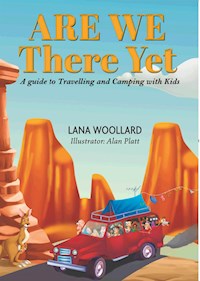
Lana Woollard is a rural based writer, an artist, mum and author of the new book 'Are We There Yet?' A book that has been written with parents and children in mind and is a parents' survival guide for travelling with kids, camping and remaining sane on family holidays.
With over 30 years of travelling and teaching her own children how to love the Australian outdoors, in her latest book, Lana shares her experience, wisdom, tips and thoughts on travelling and camping with children. Lana also has a small property in New South Wales where she and her husband grow Perigord Black Truffles for sale to fancy restaurants in Canberra and Sydney.
Lana hopes that this book will encourage anyone who has not yet taken their children on a camping holiday to do so. The book should also provide ideas and tips for the more seasoned campers amongst us.
Happy camping everyone!
Das E-Book können Sie in Legimi-Apps oder einer beliebigen App lesen, die das folgende Format unterstützen:
Veröffentlichungsjahr: 2020
Ähnliche



















Copyright © 2019 Lana Woollard
All rights reserved. No part of this publication may be reproduced, stored in a retrieval system, or transmitted in any form or by any means, electronic, mechanical, photocopying, recording or otherwise without prior permission of the author.
Publisher:
ASPG (Australian Self Publishing Group)
P.O. Box 159, Calwell, ACT Australia 2905Email: [email protected]://www.inspiringpublishers.com
National Library of Australia Cataloguing-in-Publication entry
Author: Woollard, LanaIllustrator: Alan Platt
Title: Are We There Yet/Lana Woollard
ISBN: 978-1-925908-29-9 (Print)
978-1-925908-30-5 (eBook)
About the Illustrator - Alan Platt
I started drawing by copying Snoopy cartoon characters when I was a kid. I “studied” art by doodling in my English and maths classes, not letting the high school curriculum distract me. Then life got in the way of everything and it wasn’t till years later when I started drawing again. Attempts at realism produced cartoon-like features and scenes so instead of working at my art I took the easy way out and decided that my drawings were in fact cartoons. Having a sense of humour my inspiration comes from life. Activities like camping, fishing, travelling and cycling being useful sources of material (often with myself as the “butt” of the joke). Raising two children (my wife might dispute that I had much involvement in that) has also provided me with plenty of material.
I generally avoid political cartoons as politicians do a good enough job of lampooning themselves, it’s a bit like shooting fish in a barrel. I like to focus on the funny things in life that happen to real people. My idea of a good time is sitting around a campfire with friends enjoying a drink and resolving the problems of the world right there. Who needs a parliament!
The aim of my art is to make people laugh without intentionally hurting anyone’s feelings, although sometimes the devil does take me over!
I am happily married (sorry girls) and have two wonderful adult children.
My future ambitions in life are to work less, become an internet sensation (so I can work less), travel more, lose 20kgs and create funny cartoons. That should see me out.
If you are interested in seeing more or of my cartoons, you can search for my site under Alan Platt on Facebook.
Foreword
A little about me. My name is Lana and I’ve been camping, travelling and caravanning since I was a little tacker. At the youthful age of 22, I married my wonderful husband John. We have two daughters, Carly and Kate, who were introduced to camping and travelling from a very early age and have both been bought up to enjoy the great outdoors. Our first trip with children was with Carly at three months of age. It was a wonderful time to travel with her, because she slept all day. Breastfeeding at night created some challenges in the cold air of a tent, so we went further north where it was warmer, and a little more comfortable to feed during the night.
We lived in Katherine for a number of years, and my second daughter Kate was born there. Living in Katherine was great and allowed us to explore Kakadu and the Kimberley’s in the dry season, with most weekends and holidays spent exploring and camping. The wet season up north was not a good time to camp or travel, as the humidity made camping very uncomfortable with the rain often closing roads, making access to many places in national parks impossible. So we would often escape the humidity and travel and camp in the southern states during the ‘wet’.
We moved to Canberra in the late 90’s where my husband and I worked in the public service. At the age of 43, I was diagnosed with Multiple Sclerosis where my eldest daughter had just started university and our youngest was in the last few years of college. This news was to change our lives forever and made us stop and assess everything in the past, present and future.
After being medically retired at 43, I spent a couple of years working through the depression, pain, numbness, weakness, stumbling, and all the emotions that go with a lifetime diagnosis of MS. Whilst at the same time accepting that there is no cure for MS, only lifestyle changes that can improve my outlook on life, in addition to disease-modifying drugs (DMDs) that can slow down the progression of the disease. My new best friend became my neurologist, in addition to my husband of course.
The neurologist gave me some advice to help me cope with the diagnosis, and advised me to do things that make me happy! Those few words were to be the best advice that I could have been given. Ok, so what really makes me happy, I thought. I started drawing again which had been one of my favourite past times before children. Cooking I loved, but soon realised that my fingers and hands were showing too much weakness and cracking eggs never ended up well! My coordination to mix and spread ingredients also was horrible, so I had to find another way to cook, and not get depressed about the broken eggs on the floor or flour that had missed the bowl altogether. I’m still searching for a solution to this dilemma!
Something that I loved that didn’t involve mess and I could still do was travel. Camping and caravanning became my happy place, although these days my children say I’m glamping rather than camping! These days I’m not really good at getting on the ground on an inflatable mattress or tenting, and prefer the queen mattress and ensuite comfort of the caravan.
Hiking and running is something that I have left to my husband, as my legs have become weaker and more awkward. Stumbling has unfortunately become a common occurrence. My lack of coordination was exhibited one day when I stumbled and performed a sky dive from the top of the caravan steps. That manoeuvre didn’t end well with a trip to accident and emergency at the local hospital. I now use the disabled rails in the caravan that were installed to help me stay upright.
When going through the emotional roller coaster, I also thought about everything we had achieved in life and loved. Having brought up two daughters who love the outdoors, can light a fire, tie knots, pitch a tent, hike, water ski, and travel the world independently was our biggest accomplishment. Both girls have also travelled overseas with their partners, hiked in Tasmania, visited and explored every state in Australia and best of all, learnt to savour and enjoy the time spent with their families and friends.
I guess proof that we have done something right is that our girls (now in their early 20s) still love to go on holidays with us and enjoy time spent together.
So when reading this book, my most valuable tip is to enjoy every second with your child, not because your health can change in a blink of an eye, but also because teaching lifelong skills and enjoying holidays and making memories together is the most important gift that you can give your children.
Happy travels,Lana
Introduction
Woo Hoo! Yes, there is still life after becoming a parent! Travelling, enjoying the great outdoors and planning for your next family holiday can be one of the most rewarding pleasures of bringing up children. Whatever type of holiday or outdoor activity you choose, planning and travelling to your destination is all part of the fun and the journey.
Kids are like sponges and remember everything, even things that you really don’t want them to remember. They are far more likely to remember a family camping trip or skiing holiday, than a weekend at home in front of the Xbox. Children often don’t remember the flash toys, designer label clothes or money spent on them, however holidays and outdoor experiences will help your child to create amazing memories that will stay with them forever. You will be amazed by how much your children remember about your last holiday or the last time that the family spent time outdoors together.
I consider time spent outdoors with my children as an investment in their health and fitness, current and future interests, love of nature and most importantly, childhood memories.
This book aims to assist both parents and children make the most of their holidays and outdoor activities. It contains tips for parents that will hopefully make planning for journeys and travelling a little easier.
I would like to wish you and your family many years of happy and safe travelling and exciting outdoor adventures.
The Journey
Sometimes we can be so busy trying to get to a destination that we forget to slow down and actually enjoy the journey. Allowing time to ‘smell the roses’ can relax not only you, but also your children and will make the trip more enjoyable for all. Often the pleasure in a holiday is not where you end up, but how you get there. Things may not always go to plan, so be willing to be flexible and resilient. Ask yourself - if things happen to go off the rails, does it really matter?
To ensure that your outdoor adventures and holidays are fun for all of the family, whenever possible, try to involve everyone in the planning process. Perhaps you can discuss things to visit along the way, the route, the menu planning, or restaurants that you might eat at. Maybe you can make a list of all the features that everyone would like. By involving the children as much as possible, you are teaching organisational skills, as well as giving them a sense of importance or ownership of the holiday. This may also assist in developing excitement and familiarity about the destination or stops along the way.
Planning Ahead
Planning really depends on your activity or destination, safety, weather and your own personal choice. Some outings are worth planning quite carefully in advance like hikes, especially if you are planning to take a group of children, and some holidays are best if you just go with the flow. As long as you have a destination and timeline in mind, that’s all you really need.
If you are planning any special expeditions or outings, try to space them at intervals through the holiday and time something for the children to look forward to near the end so that you finish your holiday on a high point.
Regardless of the age of your child, you will undoubtedly come across obstacles along the way. Considerations may include the age of your children, your budget, how long, and the type of activity. There is no right or wrong age to start travelling with your children. Different ages and levels of ability will mean that you will have to change your pace a little and adjust how you do some activities, but the main thing is being prepared to compromise to meet all of the family needs and have fun.
The earlier that your children get used to the holiday experience, the travel routine and spending time outdoors, the easier life will be in the coming years. The following provides some basic information about what to expect.
Babies: generally, means that you will need to cart a lot of extra gear, but on the flip side, babies can be easier than you might think, as they sleep a lot, are generally easy to please and don’t argue about where you are going. Routine changes can provide a few challenges, but holidays are about doing the best that you can and compromising so that everyone has fun. Ensure to include in your luggage a favourite toy and extra clothing.Toddlers: By walking age, children have generally developed a mind of their own and will require a lot more supervision. This is an amazing age as toddlers become absorbed in activities and the abundance of opportunities to touch, smell and explore. It’s the exploring that will keep you on your toes. Toddlers seem to adapt to changes in routine fairly easily. If they are totally worn out following the day’s activities, you might even find that they sleep better.Older children: can be a great help with younger siblings and can be very responsive to being involved in outdoor activities and giving new things a go. Older children respond well to being involved in the planning of holidays and outdoor activities. They may also enjoy helping out with the chores, rather than being told what to do.Teenagers: To get teenagers on board and more receptive and excited about the holiday’s activities, it can be helpful to include them in choosing the holiday destination, the activities, and the menu, or the restaurant to eat at. Don’t expect too much and don’t be surprised if they disappear back into their teenage cave or bedroom. Your challenge is to encourage! I might add, that I’m not good at this process and leave all of the holiday communications to the more diplomatic husband. You will need to take teenager needs into your holiday plans and allow flexibility to make everyone happy. Wherever possible, allow teenagers some ‘me time’ to communicate with their friends back home. Teenagers can also be good baby sitters if you need some time alone.Where To Go
Camping: A fantastic way to spend time with your children, connecting with nature without the latest gadgets and gizmos and electrical devices. You will definitely need to spend some time planning and making sure that you have not left anything off the packing list for anyone. For example leaving pillows at home can be really uncomfortable for a child. For older children and teenagers, you have the opportunity to provide them with their own tent and space.Apartment or house: An apartment or rental houses generally come fully furnished and include all of your linen requirements, however this can vary between houses, so best you check inclusions. All you will need to pack is clothes and plan for the day’s activities. A great way to travel and forget about where you are going and not having to find room to pack the kitchen sink. Make sure you check the house for safety like you would at home, for example, make sure that dishwasher detergent is in a child safe bottle, etc.Family Resort: Most resorts appreciate that families enjoy holidaying together and therefore holiday packages have been planned accordingly. A resort holiday may also have the option of everything being done for you, offering activities for all ages, childcare if you require it and meals at the restaurants are generally offered for all ages including the fussiest of eaters.Cruise Ship: Some cruises offer both on-board and shore-based activities catering for many ages. The smorgasboard and restaurants can also help keep fussy eaters happy, offering a variety of differing culinary options.Campervan or Motor Home Hire: Everything is generally provided including the sleeping bags. Campervans are a great way to get around the country and see the sights. You will also be able to maintain some routine if you are traveling with little ones. For older children the opportunity to meet other young travelers and share the experiences of the day will create lasting memories.Walking or hiking: Easy from any location, and a great way to see and enjoy the countryside, just pack a good quality day pack, food and enough water for everyone. You will need a good quality map or the latest electronic download of where you are going and adapt your walk to meet the abilities and age of your group. A longer hike, for example overnight or a few days, will require a lot more planning and research, but can still be done with children and provide lifetime experiences and memories.Theme Parks: are a real winner to include in your holiday itinerary. With so many theme parks around the world, family packages including accommodation and entry tickets are ideal.Farm Stays: are great fun for children aged between 4 and 12 years, allowing them to be involved in farm activities and learn about farm animals. Farm-stays offer a fantastic opportunity for families who live in the city to enjoy the fresh air and time together as a family.Beach Holidays: are perfect for families of all ages to chill, enjoy the sun, swim and relax. Whether you are camping or staying in a beach house, children love the beach and with the addition of shovels, buckets for sand castle building or shell collecting, time at the beach is an activity that the whole family will enjoy. Make sure that you remember to take shovels to build sand sculptures and castles. Also, don’t forget to apply sun screen and keep watch on your child when swimming. Take the opportunity to explain to your child why you need to keep between the flags. Safety at the beach will ensure that your holiday goes off without a hitch and creates memories of happiness, not of the Accident and Emergency department at the hospital. My childhood holiday to the beach is scarred with the memory of Dad losing his false teeth in the surf and spending the next two weeks travelling to get new teeth made. The image of a shark wearing false teeth makes humour of the sad situation Mum and Dad were faced with.When To Go
The time of your travel will greatly depend on when you are able to schedule your annual leave and as the children get older, the school holiday periods, school absentee policies and the weather. If you do not have school aged children, then when your travel is going to be a little easier. In fact, travel at non-school holiday periods often will allow you to avoid the peak periods and the crowds, particularly in popular holiday destinations and resorts.
In our family, the destination of our holidays has often been dependent on the weather and are often for weeks or sometimes months at a time. During these periods, we often organised school work in advance to reduce the amount of work that is missed and to ensure our girls didn’t fall behind. Children will learn so many life experiences from being on the road and will have countless stories for show and tell when they get back home. Our children have both learnt the phonetic alphabet and some of their best biology and physics school lessons when we travelled through Outback Australia.
Whether you are going to the snow, beach, tropics or planning an overseas trip, you will definitely need to know what type of weather to expect and plan for.
Check the best time to visit an area with national park offices or with Tourist Information Centres. For example, going to Kakadu in the wet you may encounter lots of water, be uncomfortable if camping, and some areas may be closed for the wet season. Also going to Thredbo in summer, you are unlikely to encounter snow to ski on.
I have provided details of websites below that allow you to research weather information around Australia and the world. This will help you work out what to pack and determine the best time to visit.www.bom.gov.auwww.weather.com.au/worldwww.weatherzone.com.au/world
Entertainment
Depending on the age of the children, there are limitless activities that will entertain little ones who have a short concentration span or occupying the older children and teenagers. The secret is to be well prepared and have lots of tricks up your sleeve. For ideas of activities, see chapter 4 on travel activities.
Luggage




