


Erhalten Sie Zugang zu diesem und mehr als 300000 Büchern ab EUR 5,99 monatlich.
- Herausgeber: Luath Press
- Kategorie: Geisteswissenschaft
- Sprache: Englisch
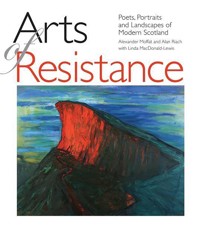
Arts of Resistance is an original exploration that extends beyond the arts into the context of politics and political change. In three wide-ranging exchanges prompted by American blues singer Linda MacDonald-Lewis, artist Alexander Moffat and poet Alan Riach discuss cultural, political and artistic movements, the role of the artist in society and the effect of environment on artists from all disciplines. Arts of Resistance examines the lives and work of leading figures from Scotland's arts world in the twentieth century, concentrating on poets and artists but also including writers, musicians and architectural visionaries such as Charles Rennie Mackintosh and Patrick Geddes. Poets studied include Hugh MacDiarmid, Sorley MacLean, Iain Crichton Smith, Edwin Morgan and Liz Lochhead; artists include William McTaggart, William Johnstone and the Scottish Colourists. The investigation into the connection between the arts and political culture includes historical issues, from British imperialism to a devolved Scotland. Finally, the contribution to poetry and art of each major Scottish city is discussed: Edinburgh, Glasgow, Aberdeen, Dundee. Highly illustrated with paintings and poems, Arts of Resistance is a beautifully produced book providing facts and controversial opinions.
Sie lesen das E-Book in den Legimi-Apps auf:
Seitenzahl: 410
Veröffentlichungsjahr: 2020
Das E-Book (TTS) können Sie hören im Abo „Legimi Premium” in Legimi-Apps auf:
Ähnliche


















for Marshall Walker
‘a torchlight procession of one’
First published 2008
ISBN (10): 1-906307-63-6
eISBN (13): 978-1-913025-76-2
Acknowledgements of permission to reprint copyrighted images are set out in the List of Illustrations and constitute an extension of the copyright page. All rights reserved.
The publishers acknowledge the support of
towards the publication of this volume.
Printed and bound by Scotprint, Haddington
The paper used in this book is recyclable. It is made from low chlorine pulps produced in a low energy, low emission manner from renewable forests.
Typeset in 9.5 pt Quadraat by 3btype.com
Design by Tom Bee
The authors’ right to be identified as authors of this book under the Copyright, Designs and Patents Act 1988 has been asserted.
Text © Alan Riach and Alexander Moffat 2008
Contents
Acknowledgements
Introduction
List of Illustrations
Part One: Hugh MacDiarmid and the Arts of Modern Scotland
Art, Poetry and Time
The Manifesto of the Scottish Renaissance
Correspondences in the Visual Arts
The Scottish Modernists
MacDiarmid and Language
Language and Art
MacDiarmid in the 1960s
MacDiarmid’s Politics
Poets’ Pub
Part Two: Poets of the Highlands and Islands
The Highlands and Islands
The Visualisation of the Highlands
Sorley MacLean
Iain Crichton Smith
George Mackay Brown
The Sense of Place
Part Three: Poets of the City
The Cities of Scotland
Norman MacCaig
Robert Garioch and Sydney Goodsir Smith
Edwin Morgan
Edwin Morgan, Alasdair Gray and Liz Lochhead
Select Bibliography
Acknowledgements
We are immensely grateful to both Dr Duncan Thomson (former Keeper of The Scottish National Portrait Gallery) and Dr Joanna Soden, Collections Curator, The Royal Scottish Academy, for their expert help and advice in all matters relating to the reproduction of artists’ work. We are also indebted to Janis Adams and Shona Corner of the National Galleries of Scotland for their kind assistance in supplying many of our most important images. We had valuable support from Susan Charlas, The Aperture Foundation, New York; Andrew Tullis, Copyright Manager, The Tate Gallery, London; Deborah Kell, RMJM, Glasgow; Peter Trowles, Mackintosh Curator, The Glasgow School of Art; and Mungo Campbell, Deputy Director, The Hunterian Art Gallery, University of Glasgow.
Our special thanks are reserved for Helen Monaghan, Talks and Events Programmer at the National Galleries of Scotland whose invitation to deliver a series of lectures entitled ‘Poets, Portraits and Landscapes of Modern Scotland’ led directly to the writing of our book; and to Linda MacDonald-Lewis for insisting we compile the book and not taking no for an answer.
Our warmest thanks go to all of the artists who have readily supplied images of their work and copyright permissions. We would also like to thank all of the copyright holders who have so generously supported this publication.
Jennie Renton took on the task of reading our early versions of the text and her recommendations proved invaluable. We are most grateful to her.
In addition we wish to express our gratitude to Tom Bee whose expertise in all aspects of book design brought a rare elegance to the finished product and to Senga Fairgrieve whose typesetting skills made it all possible. And, of course, all at Luath Press.
The book was completed thanks to a Sir William Gillies Bequest Award from the Royal Scottish Academy, and the generosity of the Department of Scottish Literature and the Faculty of Arts at Glasgow University.
Our thanks are due to the authors, publishers and estates who have generously given permission to reproduce poems:
Robert Garioch, ‘The Puir Faimly’, ‘Letter from Italy’, ‘Elegy’, ‘At Robert Fergusson’s Grave (October 1962)’, ‘After a Temperance Burns Supper’ from Collected Poems (Polygon, 2004), Liz Lochhead, ‘Something I’m Not’ from Dreaming Frankenstein and Collected Poems (Polygon, 2004), Norman MacCaig, ‘Five Minutes at the Window’, ‘Toad’, ‘19th Floor Nightmare’, ‘New York’ from The Poems of Norman MacCaig (Polygon, 2005) all reproduced courtesy of Polygon, an imprint of Birlinn Ltd, www.birlinn.co.uk; Sydney Goodsir Smith, ‘There is a Tide’ reproduced courtesy of Calder Publications Ltd.; Iain Crichton Smith, ‘Poem of Lewis’ from Collected Poems (Carcanet, 1992), Hugh MacDiarmid, ‘You Know Not Who I Am’ from Selected Poems (Carcanet, 2002), Edwin Morgan, ‘Joan Eardley’, ‘A Little Catechism from the Demon’, ‘Siesta of a Hungarian Snake’ and ‘Message Clear’ from Collected Poems (Carcanet, 1996) all reproduced courtesy of Carcanet Press Ltd; W.S. Graham, ‘Loch Thom’ from New Collected Poems (Faber, 2005) reproduced courtesy of Michael and Margaret Snow; George Mackay Brown, ‘Afternoon Tea’ and ‘Hamnavoe Market’ reproduced courtesy of Archie Bevan.
Every effort has been made to trace the copyright holders of poets and artists published in this book. If any material has been included without the appropriate acknowledgement, the publishers would be glad to correct this in future editions.
Introduction
All art is a long conversation, usually with the dead. But it is a living dialogue. This book is a series of conversations between an artist and a poet. It developed from a series of lectures we gave at the National Galleries of Scotland, presentations and discussions of modern Scottish art and poetry.
All art, whether poetry, painting or prose, represents and interprets the world. It resists the numbing of the senses, it helps us to live more fully, engaged with the world and critical of it. Arts of Resistance is about the work the arts do, particularly the arts of Scotland through the 20th century, in resisting all the efforts to confine and limit our creative potential in an age of distraction.
No national literature is more connected to particular locations than Scottish literature, and the 20th-century poets of Scotland have specific associations with geographical areas from which they derived great strengths and virtues. Hugh MacDiarmid, both from his native Border landscapes and from the Shetland islands where he lived in the 1930s; Sorley MacLean, from the small island of Raasay and its neighbouring Skye; Norman MacCaig, both from Edinburgh where he lived and worked as a teacher and from the north-west of Scotland, around Assynt and Lochinver, where he spent many summers; George Mackay Brown from Orkney; Edwin Morgan from Glasgow; Robert Garioch and Sydney Goodsir Smith from Edinburgh; Iain Crichton Smith from Lewis – all the poets discussed in this book drew from their hinterland of different geographies, different imaginative landscapes, seascapes, cityscapes. The geography of the imagination is what we set ourselves to chart. So our book is an exploration and evocation of these different parts of Scotland, their enduring and reliable shapeliness and strengths, their swiftly changing aspects through a century most typified by rapid alterations and speedy movement. Beauty is in the eye of the beholder, but perspectives change in time and depend on where you are and how fast you’re moving. Our poets and artists are our best guides to how the world can be seen and understood, how the challenges of modernity can be addressed and how we can make the best of our lives. Their work is to help us to live.
And yet, our education system in Scotland has for many generations failed to introduce our young people to the great artists and poets of our country, people who have painted and written in our own languages, about our own earth.
We are committed to an openness of mind and the capacity for self-extension to which human nature is healthily prone. We would always encourage people to look further – to read Rabelais, Flaubert, Dante, as well as Melville and Shakespeare, George Eliot and Emily Dickinson, to study the work of Picasso, Munch, Jack Yeats, Turner, to listen to Sibelius, Richard Strauss, Mahler. But we should never neglect or scorn the work of our own people. Everyone in Scotland should be able to express the informed opinion that Raeburn, Wilkie, the Colourists, Johnstone, Gillies, Eardley are great artists, that Carver, McEwen, Chisholm and Scott are great composers and that Henryson, Dunbar, Burns and MacDiarmid are great poets. They should be able to express why and what is great about their work, the pleasures it gives, the knowledge it brings, the help it offers to the lives we lead. Until all the schools in Scotland are fully enabled to provide this knowledge, confidence and enjoyment, until every university in Scotland has an established Chair of Scottish Literature and an established Chair of Scottish Music, until every Art History Department and every School of Art pays full attention to the whole inherited file of Scottish cultural production, people will continue to suffer the deprivations of dullness and ignorance to which we have become so long inured. If more people understood how great the artists, composers and writers of Scotland are, what a difference that would make to their self-confidence. This book, we hope, in however modest a fashion, will help redress this wrong.
When we had finished our lecture series – the audience gradually grew in number and was generously appreciative of our rather modest and anecdotal method, nothing too stentorian and no jargon – we were approached by an American woman who told us there was a book to be made of this. Nothing like it exists, she said – a study of modern Scottish art and poetry that would bring together the works themselves, paintings and poems, but also link them with the lives the artists and poets lived, who they knew and loved, where they lived, how their lives were intertwined, the century and the Scotland they lived through, what sense they made of it. The problem, however, was that our lectures were unscripted. We were talking freely, ranging widely, drawing simply from our own knowledge and friendships with the artists and poets we were talking about. Linda MacDonald-Lewis was insistent, however. Whether or not we had written notes, we could still find a way of reproducing and extending the lectures for a book, perhaps through recorded conversations based on her notes and recordings of the lectures. We thought this was worth trying, so Linda is present in these conversations as a prompt and leader of the discussions, bringing us back to our focus and dedicated topics whenever we are in danger of straying too far from what we’d promised to talk about.
You might imagine three people: Alexander Moffat, Alan Riach and Linda MacDonald-Lewis, sitting around an oval table in Riach’s office in the Department of Scottish Literature at Glasgow University with a tape-recorder running as they follow through three conversations, each one based on the three lectures delivered at the National Galleries of Scotland a few months previously. The office is walled by books on three sides; on the fourth, a big window overlooks the trees in University Avenue. Whenever the moment requires a reference, a book can be taken down from one of the shelves, or a newspaper cutting brought from a box-file, or a magazine searched for a relevant article. This is picturesque, and close enough to actuality to be fair, although the book is much more a literary reconstruction than a series of recorded conversations.
While the book is based on our lectures, we have also taken the opportunity to extend and elaborate from them to consider the whole story more fully. So the ‘conversations’ you’re about to read are really a literary creation – ‘dialogues’ might be a better term – and their spontaneity records our considered thinking about the subjects as well as immediate anecdotes and off-the-cuff remarks. The words of this book come from conversations we actually had, but they’ve been complemented by things we thought appropriate after further consideration. As a literary form, dialogue is a neglected genre, although there is the recent inspiring example of Parallels and Paradoxes: Explorations in Music and Society by Daniel Barenboim and Edward Said. We hope the form we’ve practised in this book is attractive and engaging – certainly it has the virtue of immediacy and absolutely rejects exclusively specialist vocabularies; maybe you’ll feel like joining in the discussion, disagreeing with us. That would be to the good, of course, but we also hope there are some things we can agree on, ground rules that offer foundations for friendship. All art works to sensitise the world. It’s always better to talk, write, draw, paint, to create the opening for dialogue, than be forced to the resort of violence – physical or linguistic. We hope that, in a world so badly given to violence in its various forms, the dialogue that sustains this book is a different example.
We open our conversation with the end of the 19th century, the beginning of Modernism and the role of art in the modern world. Above all, from the 1920s on, Hugh MacDiarmid is acknowledged as the pioneer and driving force of the Scottish Literary Renaissance, leading to a renewal of understanding and revaluation of all the arts in modern Scotland. To our eyes, his vision, so hard-earned, has borne unquantified fruit in the late 20th and early 21st centuries.
MacDiarmid lived a long life – from 1892 to 1978. He literally came out of the 19th century. He was born in the decade of the Battle of Wounded Knee and he died in the nuclear era, when a small country like New Zealand could reject the technology of nuclear weapons and nuclear power, by virtue of its own statehood and self-determination, offering another different example. MacDiarmid’s life runs through two world wars and the rise of mass-media and globalisation. He joined the British Army for the First World War, thinking, he said, like thousands of other young men, ‘Here comes Armageddon, let’s join the party!’ Yet when he heard of the Easter Rising in 1916 in Ireland, he said that if it had been possible he would have deserted the British Army and joined the Irish fighting British Imperialism. He was at the epicentre of Scottish artistic, literary and intellectual life in the 1920s, but was in virtual exile and isolation in the Shetland islands in the 1930s, writing some of the most profoundly enquiring poems of the century, counting the cost, asking deep questions about what life is worth and how much it has been wasted. And in the 1940s, 1950s and later, he was still producing great, epic poems, finding ways to celebrate the languages of the world, the ways people speak, live and all the different cultures we produce in all the different places of the earth.
The foundation of his praise is the nation: the idea that national self-determination can fuse and ignite art, safeguard its provision, be the ground from which self-knowledge, love of others and the intrinsic optimism of curiosity, can grow. To be truly international, he would say, you have to be national to begin with. The ethos of his work provides the example by which all of us have found benefit: to see Scotland in its entirety from the point of view of Scotland, and not from the Anglocentric or Anglo-American perspective that dominated broadcasting media and cultural analysis for most of the 20th century.
MacDiarmid’s presence and example informed, abraded, catalysed and spurred his contemporaries. The poets we go on to discuss were all, in varying degrees, friendly with him.
The second part of this book considers the poets of the Highlands and Islands and the third part looks at poets of the city. To some extent, there is an arbitrary allocation of Norman MacCaig to this section, for he is better known as a poet of the natural world of the Highlands, writing about toads, frogs, basking sharks, lochs and mountains. But when he calls a thorn bush ‘an encyclopedia of angles’, a country-bred wiliness is blended with a city-sophistication. His finely-modulated voice, his careful use of tone and register, are among the steeliest instruments on the tray. MacCaig’s Edinburgh is as vivid as his vision of Highland landscapes and people. The ambivalence of his comprehension, accommodating both country and city, indicates an essential aspect of modern Scotland’s story.
The 19th century began with most of Scotland’s population living in the country. It ended with most of us living in cities, especially in industrialised Glasgow. So while most of our poets come from rural locations – Langholm, Stromness, Stornoway, Skye – relatively few, pre-eminently Edwin Morgan, are completely urbanised. Perhaps this suggests one way in which Morgan has been lastingly and widely influential on the younger generation of poets emerging in the 1980s and 1990s. In 2008, at the age of 88, Morgan is the last survivor of that great generation and the first National Poet of Scotland, appointed on 16 February 2004 by the First Minister of the newly-resumed Scottish Parliament. But we wanted to look at the whole generation of poets in that marvellous constellation of which Morgan was one, and to consider their strengths and qualities singly and in context.
We would like to acknowledge a crucial precedent for this approach, the seminal work of 1980, the landmark Seven Poets exhibition and book collated by Christopher Carrell of what was then the Third Eye Centre in Glasgow’s Sauchiehall Street, one of the truly vibrant and exciting arts venues of post-war Scotland, opening in 1975 and thriving through the 1980s. The legacy of that exhibition is a terrifically valuable book, bringing together Alexander Moffat’s portraits, photographs of the poets by Jessie Ann Matthew, essays about them by Neal Ascherson and interviews with them conducted by Marshall Walker, as well as a sampling of their poems. We are happy to note here our thanks for the example of that book and exhibition. But we wanted to do more. We wanted to locate the poets in a broader context, relating them to the artists – mainly painters but also some architects, composers, photographers and social visionaries – who were their contemporaries. So the ‘arts’ in our title encompass a whole range of different activities.
The artist closest to MacDiarmid throughout his long life was his fellow-Borderer William Johnstone and there could be no doubt that MacDiarmid’s views on the visual arts were often influenced by Johnstone. MacDiarmid also collaborated with William McCance and J.D. Fergusson though his friendship and admiration for W.G. Gillies appears to have gone unnoticed by the art world and unmentioned by literary critics. Gillies, seriously underestimated at the present time, is in many ways MacDiarmid’s equivalent: his interpretations of both the Highlands and Lowlands, in thousands of drawings, watercolours and oil paintings, give us a new way of seeing our country, making us more aware of, and so enriching, the life around us. The Colourists, Fergusson, Peploe, Cadell and Hunter, have also been misrepresented in recent years, perhaps because of their success in the auction houses, and the rising prices their paintings now command. This popularity has obscured understanding of the radical nature of their early works. By stressing light and colour as essential, they swept away centuries of Presbyterian gloom. By linking with France rather than London, they set Scottish art on an independent path. In the early 1980s, a group of young Glasgow painters, most notably Stephen Campbell and Ken Currie, seemed to stumble across MacDiarmid’s call to arms and began to reimagine Scotland afresh in their epic pictures. Campbell addresses the MacDiarmid of the Drunk Man, with his psychological exploration of the self, while Currie stresses the political, communist vision in his historical narratives. The arrival of Paul Strand and Josef Herman in the Hebrides in the late 1940s and early 1950s – at precisely the time when Sorley MacLean was beginning to publish his poetry – is also something which deserves appraisal in the light of the cultural revival taking place in the Highlands which is much more visible in the 21st century. In this context, we see William McTaggart as a proto-modern artist, with profound things to say about his own people, their land and their lives.
The book begins with the visionaries of architecture and town-planning, Charles Rennie Mackintosh and Patrick Geddes, and the idea that their work sets the precedent for an internationalist and a distinctively Scottish identity. Geddes founding the Scottish College in Montpellier and Mackintosh being lionised in Berlin and Vienna in the early 20th century are part of an international story that is too often neglected. That international context begins the trajectory of our conversations, which run through to the 1960s, when Alexander Moffat and John Bellany, as students, first met MacDiarmid, and to the 1970s, when Alan Riach also met him. As we’ve noted, MacDiarmid’s example and influence crosses to the young Glasgow painters of the 1980s, and remains a potent force in the 21st century. As one Whitehall censor, intercepting MacDiarmid’s letters from Shetland in the 1930s, put it, ‘The man is a menace!’
We’ve been selective and no doubt critics will pounce on our omissions. Why are there so few women? What about W.S. Graham and other poets and artists who lived mainly outside of Scotland? Well, one answer is that not all our omissions are due to neglect, and we don’t regret all of them either. The main focus of our dialogues is poetry and painting but we have allowed ourselves to discuss a number of questions about music, sculpture and architecture. There are a small number of references to photography, but for a full discussion of Scottish photography, we would recommend Tom Normand’s Scottish Photography: A History.
Some difficult questions are raised in the course of these conversations. There are some questions and sometimes hard answers that the strictures of political correctness inhibit. We’ve tried to resist such inhibitions and face up to the questions. So we hope that Arts of Resistance carries further the perceptions and pleasures afforded in Seven Poets, and carries them on, to another generation of people to whom it might all still be new. For beyond all the individual arts we’re discussing, it’s the people they’re for that matter in the end.
Alexander Moffat, Edinburgh
Alan Riach, Glasgow
November 2008
List of Illustrations
Part One: Hugh MacDiarmid and the Arts of Modern Scotland
1.1 Henry Raeburn 1756–1823 Walter Scott 1808
182.9 x 147.3 cm
The Duke of Buccleuch (In the collection of the Trustees of the 9th Duke of Buccleuch’s Chattels Fund)
1.2 William Gillies 1898–1973 The Dark Pond c.1934
50.5 x 63.5 cm
Scottish National Gallery of Modern Art
1.3 William Gillies 1898–1973 Between Raeshaw and Carcant on Heriot Water c.1968
86.3 x 96.8 cm
Royal Scottish Academy
1.4 Desmond Chute 1895–1962 Patrick Geddes 1930
33.4 x 23.7 cm
Scottish National Portrait Gallery
1.5 Phoebe Anna Traquair 1852–1936 The Chancel Arch: Catholic Apostolic Church, Edinburgh 1893–95
© Mansfield Traquair Trust (Photograph: Stewart Guthrie)
1.6 Charles Rennie Mackintosh 1868–1928 Glasgow School of Art, Library Interior 1909
Glasgow School of Art
1.7 Charles Rennie Mackintosh 1868–1928 Glasgow School of Art, Museum 1898
Glasgow School of Art
1.8 Enric Miralles 1955–2000 Debating Chamber, the Scottish Parliament 1999–2004
(Reproduced by courtesy of RMJM)
1.9 J.D. Fergusson 1874–1961 Les Eus c.1911–12
213.3 x 274.3 cm
Hunterian Art Gallery, University of Glasgow. (Courtesy of The Fergusson Gallery, Perth & Kinross Council)
1.10 S.J. Peploe 1871–1935 Ben More from Iona 1925
63.5 x 76 cm
Hunterian Art Gallery, University of Glasgow
1.11 James D. Robertson b.1931 Shallows 2008
122 x 122 cm
(© The artist)
1.12 John Cunningham 1926–98 Raised Beaches, Colonsay c.1975
63.5 x 76 cm
Estate of the Artist (reproduced by courtesy of Mrs Yvonne Cunningham)
1.13 Stanley Cursiter 1887–1976 The Sensation of Crossing the Street, West End, Edinburgh 1913
50 x 60 cm
(Estate of Stanley Cursiter. All rights reserved, DACS 2008)
1.14 William McCance 1894–1970 Conflict 1922
100.5 x 87.5 cm
Culture and Sport Glasgow (Museums) (© Margaret McCance)
1.15 William Johnstone 1897–1981 Francis George Scott c.1933
96.5 x 71.1 cm
Scottish National Portrait Gallery (© Alistair D. Currie)
1.16 William Johnstone 1897–1981 A point in Time c.1929
137 x 243 cm
Scottish National Gallery of Modern Art (© Alistair D. Currie)
1.17 William Johnstone 1897–1981 and Hugh MacDiarmid 1892–1978 Conception 1977
20 x 28 cm
Twenty Poems by Hugh MacDiarmid and Twenty Lithographs by William Johnstone Limited edition of 50 numbered copies (The poems were hand-set in Perpetua Italic and printed letterpress by Pillans and Wilson, Edinburgh. The lithographs were hand-printed by Ken Duffy at the Printmakers Workshop, Edinburgh.)
1.18 William Crozier 1893–1930 Edinburgh from Salisbury Crags c.1927
71.1 x 91.5 cm
Scottish National Gallery of Modern Art
1.19 David Wilkie 1785–1841 Study for The Defence of Saragossa 1828
18 x 23 cm
Blackburn Museum and Art Galleries
1.20 Thomas Lawrence 1769–1830 Lady Maria Hamilton 1802
73.7 x 61 cm
Hunterian Art Gallery, University of Glasgow
1.21 Henry Raeburn 1756–1823 Grace Purves, Lady Milne c.1817
76.2 x 63.5 cm
The Paxton Trust, Paxton House
1.22 William Dyce 1806–64 Pegwell Bay: A Recollection of October 5th 1859 [1859–60]
24.4 x 34.4 cm
Aberdeen Art Gallery and Museums Collections
1.23 E.A. Hornel 1864–1933 Two Geisha Girls 1894
71.6 x 45.9 cm
Hunterian Art Gallery, University of Glasgow
1.24 William Gillies 1898–1973 Still Life – with yellow jug and striped cloth 1955
112 x 114.9 cm
Royal Scottish Academy (Diploma Collection)
1.25 William Gillies 1898–1973 Self–Portrait 1940
86.9 x 71.4 cm
Scottish National Portrait Gallery
1.26 William Gillies 1898–1973 Edinburgh Abstract 1935
pencil drawing · 16 x 22.7 cm
Royal Scottish Academy
1.27 William Gillies 1898–1973 Edinburgh Abstract 1935–6
75.3 x 112.3 cm
Royal Scottish Academy
1.28 John Bellany b.1942 Fishers in the Snow 1966
243.5 x 320 cm
Scottish Parliament (© The artist)
1.29 Gustave Courbet 1819–77 The Beggar 1867–68
210 x 175 cm
Kelvingrove Art Gallery and Museum, Glasgow
1.30 John Bellany b.1942 Kinlochbervie 1966
243.5 x 320 cm
Scottish National Gallery of Modern Art (© The artist)
1.31 Alexander Moffat b.1943 Alan Bold 1969
49.5 x 36.5 cm
(© The artist)
1.32 Alexander Moffat b.1943 George Davie 1999
25 x 30 cm
(© The artist)
1.33 Calum Colvin b.1961 The Twa Dogs 2002
104 x 131 cm
(© The artist)
1.34 Alexander Moffat b.1943 Hugh MacDiarmid: Hymn to Lenin 1979
113 x 190 cm
Scottish National Portrait Gallery (© The artist)
1.35 Alexander Moffat b.1943 Poets’ Pub 1980–82
183 x 244 cm
Scottish National Portrait Gallery (© The artist)
1.36 John Bellany b.1942 Milne’s Bar 2007
Diptych 173 x 76 cm · 173 x 152 cm
(© The artist)
Part Two: Poets of the Highlands and Islands
2.1 James Guthrie 1858–1930 Highland Funeral 1882
129.5 x 193 cm
Culture and Sport Glasgow (Museums)
2.2 John Byrne b.1940 Set-design for the Cheviot, the Stag and the Black, Black Oil 1972
Scottish Theatre Archives, Glasgow University Library
2.3 J.M.W. Turner 1775–1851 Loch Coruisk, Skye c.1831
watercolour · 8.9 x 14.3 cm
National Gallery of Scotland
2.4 Edwin Landseer 1802–73 The Monarch of the Glen 1851
63.8 x 68.9 cm
Diageo
2.5 William Dyce 1806–1864 Man of Sorrows c.1860
34.3 x 49.5 cm
National Gallery of Scotland
2.6 William McTaggart 1835–1910 The Storm 1890
120 x 182 cm
National Gallery of Scotland
2.7 Jack B. Yeats 1871–1957 Queen Maeve walked upon this Strand 1950
91.5 x 122cm
Scottish National Gallery of Modern Art (Estate of Jack B. Yeats – All rights reserved DACS 2008)
2.8 David Forrester Wilson 1873–1950 An Islay Woman 1931
68.2 x 60.9 cm
Royal Scottish Academy
2.9 David Forrester Wilson 1873–1950 The Young Shepherd c.1929
157.8 x 122.7 cm
Royal Scottish Academy (Diploma Collection)
2.10 Paul Strand 1890–1976 Tir A’ Mhurain, South Uist, Hebrides 1954
Paul Strand Archive, Aperture Foundation Inc, New York
2.11 Josef Herman 1911–2000 West Highland Fisherman c.1940s
16.5 x 22 cm
Private Collection
2.12 John Cunningham 1926–98 The Cuillin, Evening 1964
39 x 44 cm
Private Collection (reproduced by courtesy of Mrs Yvonne Cunningham)
2.13 William McTaggart 1835–1910 The Sailing of the Emigrant Ship 1895
75.6 x 86.4 cm
National Gallery of Scotland
2.14 Alexander Runciman 1736–85 Cormar attacking the Spirit of the Waters c.1772
etching · 7.5 x 12.6 cm
Royal Scottish Academy
2.15 Alexander Runciman 1736–85 Cath–loda c.1772
etching · 14.5 x 18.8 cm
Royal Scottish Academy
2.16 Calum Colvin b.1961 Blind Ossian 2001
104 x 131 cm
(© The Artist)
2.17 Alexander Moffat b.1943 Sorley MacLean
152.5 x 91.5 cm
Sabhal Mòr Ostaig (© The artist)
2.18The Standing Stones of Callanish, Lewis
Photograph by Alexander Moffat
2.19 William McTaggart 1835–1910 The Coming of St Columba 1895
131 x 206 cm
National Gallery of Scotland
2.20 William McTaggart 1835–1910 Consider the Lillies 1898
132 x 203 cm
Fife Council Libraries & Museums
2.21, 2.22 and 2.23 Will MacLean b.1941 Land–raid Memorials, Isle of Lewis 1994–96 Ballalan Cairn 1994, Gress Cairn 1996, Aignish Cairn 1996
Comhairle Nan Eilean Siar (Western Islands Council) (© The Artist)
2.24 Will MacLean b.1941 and Arthur Watson b.1951 Crannghal 2006
Sabhal Mòr Ostaig (© The Artists)
2.25 Alexander Moffat b.1943 Iain Crichton Smith 1980
91.5 x 152.5 cm
Scottish National Portrait Gallery (© The artist)
2.26 John Bellany b.1942 Allegory 1965
Triptych 212.4 x 121.8 · 213.3 x 160 212.5 x 121.8 cm
Scottish National Gallery of Modern Art (© The artist)
2.27The National Art School (Instituto Superior de Arte), Havana, Cuba 2008
Architects: Ricardo Porro, Vittori Garatti and Roberto Gottardi 1961–65
Photograph by Alexander Moffat
2.28 Ingmar Bergman 1918–2007 Dance of Death from The Seventh Seal 1957
British Film Institute
2.29 Alexander Moffat b.1943 George Mackay Brown 1980
152.5 x 152.5 cm
Tankerness Museum, Orkney (© The artist)
2.30 Jack B. Yeats 1871–1957 On Through the Silent Lands 1951
50.5 x 68 cm
Ulster Museum, Belfast Courtesy of the Trustees of National Museums Northern Ireland (Estate of Jack B. Yeats All rights reserved, DACS 2008)
Part Three: Poets of the City
3.1 Ian Fleming 1906–94 Black Wall, St Monans 1958
55.2 x 75.6 cm
MacManus Galleries and Museum, Dundee (© The Fleming family)
3.2 David Donaldson 1916–96 Rabbi Jeremy Rosen c.1969
121.6 x 91.5 cm
Royal Scottish Academy (Diploma Collection)
3.3 Margaret Hunter b.1948 Maidens’ Chambers 2006
(© The Artist)
3.4 Anne Redpath 1895–1965 In the Chapel of St Jean, Tréboul, 1954
86.3 x 111.6 cm
Royal Scottish Academy (Diploma Collection)
3.5 Edward Baird 1904–49 Unidentified Aircraft, 1942
71 x 91.5 cm
Culture and Sport Glasgow (Museums) (© Graham Stephen)
3.6 James MacIntosh Patrick 1907–98 The Tay Bridge from My Studio Window 1948
76.2 x 101.6 cm
McManus Galleries and Museum, Dundee (© The artist’s family)
3.7 Stewart Carmichael 1867–1950 Self–Portrait in the Artist’s Studio 1947
51.1 x 61.2 cm
McManus Galleries and Museum, Dundee
3.8 David Foggie 1878–1948 The Young Miner 1926
76.2 x 64 cm
Royal Scottish Academy (© The Executor of the late Mrs M.A. Foggie)
3.9 James Pryde 1866–1941 Lumber: A Silhouette 1921
182.9 x 152.4 cm
Scottish National Gallery of Modern Art
3.10 Alexander Moffat b.1943 Muriel Spark 1984
183 x 91.4 cm
Scottish National Portrait Gallery (© The artist)
3.11 William Crozier b.1933 Burning Field, Essex 1960
91.4 x 76.2 cm
Scottish National Gallery of Modern Art (© The artist)
3.12 Pittendrigh MacGillivray 1856–1938 The Byron Statue c.1913
Aberdeen Grammar School
3.13 Alexander Moffat b.1943 The Rock (The Radical Road), 1989–90
137 x 183 cm
The Royal Scottish Academy (Diploma Collection) (© The artist)
3.14 Alexander Nasmyth 1778–1840 Edinburgh from Princes Street with the commencement of the building of the Royal Institution 1825
122.5 x 165.5 cm
National Gallery of Scotland
3.15 James Craig 1744–95 Edinburgh New Town Street Plan 1767
National Library of Scotland
3.16 Muirhead Bone 1876–1953 A Shipyard Scene with a Big Crane, 1917
46.5 x 36.4 cm
Hunterian Art Gallery, University of Glasgow (© The Estate of Muirhead Bone) All rights reserved DACS 2008
3.17 Ian Fleming 1906–94 Air-Raid Shelters in a Tenement Lane 1942
14.9 x 21.3 cm
Hunterian Art Gallery, University of Glasgow (© The Fleming Family)
3.18 John Quinton Pringle 1864–1925 Muslin Street, Bridgeton, Glasgow 1895–6
35.9 x 41.2 cm
City Art Centre, Edinburgh
3.19 Alexander Moffat b.1943 Berliners 2 1978
119 x 188 cm
Private Collection (© The artist)
3.20 Bet Low 1924–2007 Sauchiehall Street with Unity Theatre 1947
78 x 48 cm
Scottish Theatre Archives, Glasgow University Library (reproduced by courtesy of the Trustees, Estate of Bet Low)
3.21 William Gillies 1898–1973 Studio Window, Temple c.1970–73
89.2 x 113.6 cm
Royal Scottish Academy
3.22 Alexander Moffat b.1943 Norman MacCaig 1968
122 x 91.5 cm
Scottish National Portrait Gallery (© The artist)
3.23 Michele Tripisciano 1860–1913 Giuseppi Belli Monument, Rome 1913
Photograph Alexander Moffat
3.24 Walter Geikie 1745–1837 I Can Whistle Fine, Now, Grannie 1831
etching · 18 x 15.5 cm
Royal Scottish Academy
3.25 Alexander Moffat b.1943 Robert Garioch 1978
175 x 113 cm
Scottish National Portrait Gallery (© The artist)
3.26 Denis Peploe 1914–93 Pote and Penter c.1946
From Sydney Goodsir Smith, The Deevil’s Waltz 1946 (reproduced by courtesy of Guy Peploe, The Scottish Gallery)
3.27 Rendell Wells The Auk
Frontispiece of Sydney Goodsir Smith’s Carotid Cornucopius. M. MacDonald, Edinburgh 1964
3.28 Eduoardo Paolozzi 1924–2005 The Doors of the Hunterian Art Gallery 1976–77
360 x 410 cm
Hunterian Art Gallery, University of Glasgow (© Trustees of the Paolozzi Foundation Licensed by DACS 2008)
3.29 Robert MacBryde 1913–66 Two Women Sewing c.1948
100.3 x 143.5 cm
Scottish National Gallery of Modern Art (© J. Brown)
3.30 Ian Fleming 1906–94 The Two Roberts 1937–38
102 x 125 cm
The Glasgow School of Art Archives and Collections (© The Fleming Family)
3.31 Joan Eardley 1921–63 Confectio c.1960s
Private Collection (© Estate of Joan Eardley)
3.32 Joan Eardley 1921–63 Flood-Tide c.1962
Lillie Art Gallery, Milngavie, near Glasgow (© Estate of Joan Eardley)
3.33 Alexander Moffat b.1943 Edwin Morgan 1980
153 x 101 cm
Scottish National Portrait Gallery (© The artist)
3.34 Steven Campbell 1953–2007 Untitled, from the Fantomas series 2006–7
218 x 217 cm
© Estate of the Artist (reproduced by courtesy of Carol Campbell)
3.35 Steven Campbell 1953–2007 The Childhood Bedroom of Captain Hook with Collapsible Bed 2007
215 x 215 cm
© Estate of the Artist (reproduced by courtesy of Carol Campbell)
3.36 Adrian Wiszniewski b.1958 Tuberbabes 2008
213.5 x 183 cm
(© The artist)
3.37 Ken Currie b.1960 Red Clyde: We can make Glasgow a Petrograd, a revolutionary storm-centre second to none 1987
218 x 251 cm
Glasgow Museums, The People’s Palace (© The artist)
3.38 Peter Howson b.1958 From the series ‘Army Life’ The Regimental Bath 1981
44.5 x 57 cm
Private Collection (© The artist)
3.39 Douglas Gordon b.1966 Confessions of a Justified Sinner 1995
Collection Fondation Cartier pour l’art Contemporarain, Paris (© The artist)
3.40 Alasdair Gray b.1934 Cowcaddens in the Fifties 1964
120 x 241 cm
(© The artist)
3.41 and 3.42 Shauna McMullan b.1971 Travelling the Distance 2006
Scottish Parliament (© The artist)
Part One
Hugh MacDiarmid and the Arts of Modern Scotland
Art, Poetry and Time
ALAN RIACH: Really, what we are talking about is time, and the way art intervenes in time and changes the past. So although the historians will look at events in the past and historicise them and contextualise them, and give them dates, and say ‘this is what happened then’ – what we’re talking about is different.
SANDY MOFFAT: What we’re talking about is the way works of art, poems, paintings, portraits, landscapes – works of art of any kind – intervene and have a permanent value, both in terms of what they’re saying and continue to say. And also in the way they change the possibilities for what comes later, so younger artists and interested people can then have a different attitude to what has gone on in the past. When you look at Scottish painting, poetry and literature from the 19th century till now, look at the great writers, the great artists and their works, you can see that particular people make a major intervention in the story.
ALAN: When a radical break with the past happens, it cuts you off, and you can throw old things out, and it liberates you to establish new connections with the past. New perceptions of continuity become possible. You ask what’s really valuable, what is it that we want, and what is it that we can’t get…
SANDY: I think that’s a good way of putting it. The best Scottish art has always got something to do with some kind of radicalism. It’s also got to do with reaching out beyond the frontiers of Scotland.
ALAN: And that radicalism can take many forms. Not just the obvious, say, Burns’s ‘A man’s a man for a’ that’ – put that alongside Scott. Unlike Burns, Scott was a middle-class aspirant to the aristocracy. But he was certainly a revolutionary writer in that he was the first to attempt to bring into literature a comprehensive image of Scotland. And whether that was subsequently exaggerated and distorted in terms of kitsch and tartan later on is really not his fault, because what he actually did was to bring the Highlands and the Lowlands, and the whole complex question of what a Scottish identity might be, into focus. It’s not uniform, you see. It’s not a conformity. So his vision is radical in terms of its depth and scale and its sense of different identities and different languages coexisting in one nation, and in its engagement with the European concerns of his time.
That radicalism is there in Burns, it’s there in Scott and in the 20th century, overwhelmingly, it’s there in MacDiarmid. That’s why we can truthfully call these writers ‘great’ – it’s a question of magnitude.
SANDY: So what we’re going to talk about is MacDiarmid, the artistic context of his origins in the 19th century and his explosive work after the First World War, and then we’ll go on to talk about the later generation of poets and artists, after the Second World War.
The Manifesto of the Scottish Renaissance
LINDA: What was the Scottish renaissance movement of the 1920s really all about?
ALAN: There are two quotations from MacDiarmid which give a handle on this:
A certain type of critic is apt to say that the movement so far has consisted only of propaganda – only ‘of the posters’ – that the actual work has still to be done. This is a mistake. The Scottish Renaissance has taken place. The fruits will appear in due course. Earlier or later – it does not alter the fact. For the Scottish Renaissance has been a propaganda of ideas and their enunciation has been all that was necessary.
MacDiarmid wrote that in December 1925. It’s a wonderful thing. He’s not talking about the achievement of a number of poems or a number of works of art. He’s talking about new ideas. Let’s make a complete break with the past and see what the future will bring. He spells it out:
From the Renaissance point of view, it is utterly wrong to make the term ‘Scottish’ synonymous with any fixed literary forms or to attempt to confine it. The Scottish Renaissance movement sets out to do all that it possibly can to increase the number of Scots who are vitally interested in literature and cultural issues; to counter the academic or merely professional tendencies which fossilise the intellectual interests of most well-educated people even; and, above all, to stimulate actual art-production to a maximum.
That’s from February 1926. Imagine that you have a Minister for the Arts, in Scotland, now, whose sole directive was those three points:
1. Increase the number of Scots who are vitally interested in literature and cultural issues;
2. Counter the academic or merely professional tendencies which fossilise the intellectual interests even of well-educated people;
3. And, above all, stimulate actual art-production to a maximum.
1.1 Henry Raeburn 1756–1823 Walter Scott 1808
Go for it, get it done! That’s all you need. You don’t need thousands of pounds spent on cultural commissions to tell you that. And that’s what we need right now, in Scotland, today. Yes, please, Minister.
SANDY: So MacDiarmid is saying that we want to find a continuity with what matters in that past. We want a complete break with the past if we have no use for it. We want to grasp the vitality of the Scots language – it’s not just for jokes and eccentric behaviour and funny stuff. We’ve got to use it to deal with serious issues. English, of course, is a Scottish language. Its roots are intertwined with those of Scots but they developed differently. Gaelic needs to be part of the scenario too. The various, different voices that people have are all valid, and they need to be made valid in literature for literature to be vital.
ALAN: In an essay about growing up in Langholm, a wee village in the Borders at the confluence of three rivers where he was born, he says that at a certain point he decided he would be the great national poet of Scotland. Remember, his given name was Christopher Murray Grieve. He took the name Hugh MacDiarmid in 1922. Talking about his family, he said:
As boys my brother and I wore the Graham tartan. Our mother was Elizabeth Graham. If my father’s people were mill-workers in the little Borders burghs, my mother’s people were agricultural workers. My alignment from as early as I can remember was almost wholly on the side of the industrial workers and not the rural people. I have never had anything but hatred and opposition for deproletarianising and back-to-the-land schemes; my faith has always been in the industrial workers and the growth of the third factor between man and nature – the machine.
SANDY: Well... That’s the manifesto, isn’t it?
ALAN: MacDiarmid once said that he thought one of the great pities about modern Scottish art was that so few modern Scottish artists issued manifestos. Painters or poets or other artists, write or paint or work at their art, with a purpose – but wouldn’t it be more fun, wouldn’t it be more challenging and really curious in terms of the ideas they’re dealing with, if they put it all down on paper and said, ‘This is what we believe!’ Artists always tell the same old story, they deal with the way things are, but what they say will be new to every new generation. And the technology does change. There are new ways of telling the story and there are new languages, new technologies to use. There’s the balance between the world of nature and the world of technology that MacDiarmid saw in his childhood.
‘But even as a boy,’ he says, ‘from the steadings and cottages of my mother’s folk and their neighbours in Wauchope and Eskdalemuir and Middlebie and Dalbeattie and Tundergarth, I drew the assurance that I felt and understood the spirit of Scotland and the Scottish folk in no common measure, and that that made it possible that I would in due course become a great national poet of Scotland.’
SANDY: You have to take that with a pinch of salt.
ALAN: What he’s actually saying is that on the one hand, there’s the machine world, and on the other hand, there are the country folk, the rural folk, and he’s in touch with them both. He might place his faith in the industrial workers, but he’s actually in touch with the rural world as well. His family lives below the local library and with an appetite second to none, he reads as much as he can. On the other hand, he has these beautiful essays, affectionately describing himself going out to play as a child, in the honey-scented heather hills, the forests, and the rivers, around Langholm. So he was exploring intellectual ideas as well as experiencing the natural world around him.
SANDY: The two artists closest to MacDiarmid in their love for the Borders were William Gillies and William Johnstone. There’s a hilarious account of MacDiarmid meeting William Gillies for the first time in the early 1960s, in a book called Pilgrim Souls by Mary MacIver:
Chris was coming home with us to spend the night for he was going on to Queen Margaret Drive, Glasgow, next day. We had a late meal and Hector had invited Bill Gillies in to meet him. At first, Bill, being a little straitlaced, was unwilling to come and Hector had practically to drag him in. But after he had settled down in the Boutique [the MacIvers’ name for their sitting room], with his cigarette, and a brimming glass of whisky in his hand, he soon overcame his reluctance and joined in the conversation. He discovered that Chris, like himself had served in the Royal Army Medical Corps in the First World War, and realised that they must both have been working in Marseilles at the Hospital for shellshocked patients, about the same time. They all passed from that to talking about poetry and painting. Chris, I always liked, for he never sounded affectedly pretentious but always seemed to me to be stating simply what he honestly felt. At this particular time, he said unaffectedly, how much he liked Bill’s landscapes in watercolour. They began to talk about various particular landscapes in the Borders, etc, that had moved both of them, one to paint, the other to write a poem…
ALAN: That’s fascinating – I never knew MacDiarmid admired Gillies like that…
SANDY: Wait, though – there’s more:
1.2 William Gillies 1898–1973 The Dark Pond c.1934
As time went on, however, even Bill, unusually for him, got very merry and, in the end, so abandoned did the three of them become that they decided to treat me to a display of a Highland Reel. Hector started to sing a ‘puirt-a’-beul’; with the grace of elephants, the two white-haired men and the dark man pranced round my coffee-table. As Burns says: ‘They reeled, they set, they crossed, they cleekit’. As the merriment grew louder, I don’t know why nor could Bill remember either, next day, he suddenly took a comb out of his pocket and started to comb Chris’s mane of hair down on his forehead, as he squared up to him. Thinking this apparently, was no less than a stroke of genius, the others whipped combs out of their breast pockets also, and for the rest of the dance, each and every one of them, combed the hair down on the forehead, of whoever happened to be prancing opposite to him. When the dance ended the panting heads resembled those of seals, the eyes peering forth from jungles of sweat-sodden, lank locks. After this, they seemed incapable, and this did not surprise me, of further effort and taking a loving farewell of each other, they staggered off to bed.
ALAN: The spirit of the Borders. You know MacDiarmid’s little poem about his birthplace?
I had the fortune to live as a boy
In a world a’ columbe and colour-de-roy,
As gin I’d had Mars for the land o’ my birth Instead o’ the earth.
Nae maitter hoo faur I’ve travelled sinsyne,
The cast o’ Dumfriesshire’s aye in me like wine;
And my sangs are gleids o’ the candent spirit Its sons inherit.
There are three rivers that run through Langholm and he said that as a boy, he could tell them apart by their sound alone. That’s a beautiful image. It makes me think of scented gardens for the blind… Anyway, you have these sounds, of the natural world, something he understood at a deep level. So his language, Scots, is spoken in Langholm, and it’s connected to the sound of the natural world around him, and the physicality of it, which impresses him profoundly. But that’s not exclusive from the world of the machine. With his commitment to the modern age and the aggressively idealist politics of that era, he questioned what could be made of the machine, in terms of saving human labour, if it were used properly and not as exploitation. All of these things come into his thinking.
1.3 William Gillies 1898–1973 Between Raeshaw and Carcant on Heriot Water c.1968
Correspondences in the Visual Arts
ALAN: When we’re talking about correspondences we’re also thinking of influences and it’s best to be clear about this. People use the word influence without ever defining it and there’s a very helpful little note by the American poet Louis Zukovsky that does this. He says basically that there are three kinds of influence.
One is a presence in the air, what you might call the zeitgeist, something almost inescapable that’s social and cultural as well as consciously part of the artist’s concern. In some way, you see this with the writers and artists and composers associated with major movements such as Romanticism or Modernism, though there are exceptions, sometimes important ones like Thomas Mann or William Blake or Sibelius, who don’t fit into the accepted ethos.
The second is a coincidence of temperament




