


10,99 €
Mehr erfahren.
- Herausgeber: Books on Demand
- Kategorie: Ratgeber
- Sprache: Englisch
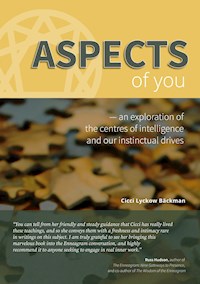
In this book, you learn to discern between thoughts, emotions and instinctive impulses. Often, we get them confused, which can create misunderstandings, frustration and inner or outer conflicts. But the problems only occur because we have not learned to meet and process these different signals for what they are. The book was originally written to fill a void in the Enneagram literature, but it is useful whether we know about the personality types or not. With clear explanations, descriptive examples and practical exercises, the reader is given a first-hand experience of the inner resources discussed and is guided step by step on the path to a life with greater presence, awareness and freedom. "Cicci Lyckow Bäckman has been a dedicated student of the Enneagram for many years, but in this beautiful and accessible book, she steps into teaching the true heart and soul of the Enneagram work. There are many places now where we can read descriptions of the nine types, but Cicci goes beyond this by inviting us into the core teachings for developing ourselves through our Enneagram type.The aptly named Aspects of you reveals to us the inner drives and mechanics behind each of the nine types through an exploration of the Centers of Intelligence. She describes the sense and function of the Centers but also offers advice on how to better express them and balance our lives through them. You can tell from her friendly and steady guidance that Cicci has really lived these teachings, and so she conveys them with a freshness and intimacy rare in writings on this subject. I am truly grateful to see her bringing this marvelous book into the Enneagram conversation, and highly recommend it to anyone seeking to engage in real inner work." -Russ Hudson, author of "The Enneagram: Nine Gateways to Presence", and co-author of "The Wisdom of the Enneagram"
Das E-Book können Sie in Legimi-Apps oder einer beliebigen App lesen, die das folgende Format unterstützen:
Seitenzahl: 214
Veröffentlichungsjahr: 2021
Ähnliche



















What they say about this book
Cicci Lyckow Bäckman has been a dedicated student
of the Enneagram for many years, but in this beautiful and
accessible book, she steps into teaching the true heart and soul
of the Enneagram work. There are many places now where we
can read descriptions of the nine types, but Cicci goes beyond
this by inviting us into the core teachings for developing
ourselves through our Enneagram type.
The aptly named Aspects of you reveals to us the inner
drives and mechanics behind each of the nine types through
an exploration of the Centers of Intelligence. She describes the
sense and function of the Centers but also offers advice on how
to better express them and balance our lives through them.
You can tell from her friendly and steady guidance that
Cicci has really lived these teachings, and so she conveys them
with a freshness and intimacy rare in writings on this subject. I
am truly grateful to see her bringing this marvelous book into
the Enneagram conversation, and highly recommend it to
anyone seeking to engage in real inner work.
— Russ Hudson, author of The Enneagram:
Nine Gateways to Presence, and co-author of
The Wisdom of the Enneagram
Aspects of you is the most comprehensive piece
of work I have read on the centres and instincts to date.
Cicci explores the centres and instincts with great intelligence,
clarity and in a way that is both ancient and innovative. In
addition to the theory, she offers experiential exercises to help
people get in touch with their own processes, and see/feel the
theory in practice. The test she offers at the end of the book is
more comprehensive than most tests for instincts, and offers a
deep and thorough way to start to determine which may be your
dominant instinct, and which may be your blind spot. I would
highly recommend this book to both beginners and advanced
Enneagram students, as well as teachers and trainers.
— Leighah Darcy, psychotherapist
and Enneagram teacher
* * *
To Russ — thank you for
doing what you do.
And, I suppose, for not being a
world class musician after all, so the
world wasn’t robbed of your
contributions in this field.
They are precious.
Contents
A few words before we start
Part I | BE WHOLE:
The three centres of intelligence
Welcome — let’s get centred
The instinctual centre
The heart centre
The head centre
The physicality of the centres and its role in our confusion
The role of presence in centre balance
Everyday misconceptions and therapeutic dead ends
The centres in spirituality and inner growth
Part II | INSTINCTUAL DUI:
The instinctual drives in the thrall of ego
The instinctual drives: a few background thoughts
The basis of instinct
The self-preservation instinct — survival and upkeep
The sexual instinct — attraction and expansion
The adaptation instinct — relating and reciprocity
Confusions and misunderstandings
Preferences and changes
Working with the instincts
The awareness factor — change from within
Some closing thoughts on an engaging topic
Appendix
About the author
A few words before we start
As my Swedish readers know from reading my previously published books, participating in an experiential course or other encounters with me, I’ve always been interested in inner growth in one form or another. A little over 20 years ago, that interest kicked into a higher gear, and since then I have had several in-depth exploration adventures in the worlds of experiential inner growth, as well as leading courses helping others to do the same thing.
One consistently and increasingly clear aspect of this journey — even though initially, I could not discern or quite identify it — is that of our different centres of intelligence, or “brains”. That they exist at all, as biological and psychological functions within us. That they are so much more than just our thoughts about them. And, not least, how much help, insight and freedom they offer once we understand how they work (and maybe primarily how they do not work!).
This book starts by introducing the three pieces of the puzzle that we call the gut, the heart and the head. You will discover what each part does, how they relate to one another and how things can get muddled when we confuse them (or, sometimes, try and run the whole show from the control panel in the head). In the second part of the book, we zoom in closer on the three biological drives of the instinctual gut centre — instincts that command so much of our behaviours and experiences from a place behind the scenes, where we are neither very aware of them nor offered much of a say in the matter.
There are so many aspects of our being, our “self” or our personality that we (that is, our minds and thoughts) cannot control or affect in our everyday awareness. Realising this, we might feel a bit resigned: “Ok, so if I can’t change it anyway, what’s even the point of trying to be aware of it?” But the “me” that cannot change it is just a limited part of us: one aspect of several. It believes it is responsible for the whole organism and all decisions — but, as we will soon discover, this is not the case at all.
Growing in co-operation with, not in opposition against
Imagine being in a house that is way too hot (if the sun is on full blast) or cold (if it is blowing hard from the North). This “me” thinks that the only way to change the situation is to make the sun cooler or the wind warmer. But we cannot do anything about the weather, and “me” ends up frustrated or resigned at the obvious lack of control. But changing the sun or the wind aren’t the only ways to change our experience. Instead, we can choose to work with the forces of nature and use the energy of the unwanted weather to create what we want. A solar panel can run a fan to cool us (or perhaps even an air-conditioning system, if we’re practically inclined). Similarly, a windmill can generate energy, which can be turned into heat. Once we see nature’s energy for what it is and start adapting to our circumstances, we suddenly get more freedom to choose.
A bit like that is how it works with our centres of intelligence and instinctual drives, too. With this book, I aim to do two things: explain how the “weather” works as well as offer “solar panels and windmills”, in the form of experiential exercises which help you find that increased freedom in your own life.
Precious but forgotten knowledge
It’s a shame that so much of personal growth is done exclusively in or with one of the centres (often — understandably — without the person doing the work realising this). To me, the centres and our knowledge about them are both important and liberating, since they explain so much about how we function as human beings. Over the years, I have assimilated various teachers’ view of the centres and ways of working with them, and my insights have integrated and fallen into place within me. In this book, I’m sharing this integrated knowledge, what it has showed me about the centres and which properties and common misunderstanding I think are particularly interesting. Since most of it, if not all, has come to me in the experiential format, there are basically no source citations in the book.
A note about the Enneagram and its relation to this text
The topic of the three centres of intelligence, as well as the instinctual drives of the first centre (which, in themselves, actually, constitute three centres), came into my awareness because of my interest in the Enneagram of personality: a model describing nine energies, archetypes or personality types that are mapped out on the geometrical symbol that is the enneagram: A circle containing a unilateral triangle and a hexagon.
The nine types each have their “home base” in one of the centres, giving rise to particular issues and points of focus. Our biological drives aren’t an integral part of the Enneagram model in the same way as the centres, but they are frequently addressed and pointed out as equally important in our understanding of ourselves.
This book is about the three centres, and the instinctual drives in particular, as they stand apart from the Enneagram of personality. Of course, this in no way negates their position within this model — rather, it sheds additional light on it, and when we understand the centres and instincts distinct from our personality type, this can actually dissolve a number of misunderstandings and question marks on the subject of personality types. Also, it explains further how we function as individuals and how we can productively work with ourselves.
So whether you’re into the Enneagram or not, and if you are, regardless of which teachings about the centres and instincts you have so far come into contact with, this book will hopefully clarify, explain and further deepen your existing insights.
Since it’s my guess that most of you have heard of the Enneagram, there are a few brief references to it. If you’re not interested in the Enneagram model, just ignore this — you will still benefit hugely from learning about the centres and the instincts: what they are, what they do (and don’t do), how they are connected and how best to allow each one of them to do its job.
If you haven’t heard of the Enneagram before but got curious now and want to know more, I recommend a visit to Enneagram Institute (https://enneagraminstitute.com) and/ or books, primarily ones written by Don Riso and Russ Hudson.
Part I | BE WHOLE:
The three centres of intelligence
In this part, you’ll learn about
the evolution and biology of the centres (very briefly)
the “consciousness” of each centre
the balanced and unbalanced expressions of each centre
what it means that a centre is underdeveloped
how common confusions and misconceptions about the centres create misunderstandings and therapeutic dead ends, and how to address this
Welcome — let’s get centred
The three centres of intelligence — the head, the heart and the gut or belly — pop up in various places to do with inner work. Also, we can see them in everyday language, of course, when we talk about “our heads being occupied with something” (meaning we focus on it mentally), “our hearts being touched/broken” (meaning we feel something deeply) or that we “have a gut feeling” about something (meaning we have an instinctual response that we cannot quite explain as a thought or feeling, but is there nonetheless). To me, the centres of intelligence and our experience of and knowledge about them are important for Enneagram work as well as inner work in general, as they shed so much light on how we function as humans. I have picked up several individual teachers’ views of and ways of working with the centres as well as doing my own inner work and leading growth groups for many years, and I have integrated whatever made sense to me into my general understanding of them. Here, I will share this understanding, what it has shown me about the centres of intelligence and what features and common confusions I find particularly interesting. As most, if not all, of what I know about the centres has been communicated verbally or discovered experientially, there are no source citations.
A comment on the word CENTRES
In the Enneagram world, I find the word CENTRES is used a bit sloppily — both to convey the meaning centres of intelligence (as in, the three basic forms of human intelligence; the topic of this part of the book) and centre triads (as in, the three sets of three Enneagram types that share common issues and tendencies arising from a certain centre). While the latter is, of course, based on the former, they are not the same. I believe that using the word centres without making this distinction sometimes contributes to a misunderstanding in the Enneagram world: That gut types — that is, personality type whose home base is in the instinctual centre — have more gut intelligence than the others, that heart types feel things deeper, and so on. To me, it seems that making the distinction between the centres of intelligence as such and the centre triads of the Enneagram might help clarify that this is not the case. Thus, when I use the word centres in this context, I’m referring to the centres of intelligence, or our three “brains” — not the Enneagram centre triads.
What are the centres of intelligence?
In my understanding, the centres are both neurological and energetic in nature, and the aspect most discussed and most relevant for inner growth is the energetic one. Each centre governs different aspects of our body-mind system, and they all represent a specific kind of intelligence, without which we would have a hard time functioning as people.
Instinctual, emotional and intellectual
The most primitive form of intelligence is found in the instinctual centre, and at least some aspects of that intelligence can be found in every life-form on Earth. In animals equipped with brains and nervous systems, we find this intelligence in the gut. No matter how evolved the animal (or human) is, this instinctual part is still operational and taking care of basic survival needs. For humans, while we have more complex needs, it does the same things as it does in animals, although often below the radar of the other two centres, of which we are more consciously aware. The instinctual centre is also called the belly centre, the gut centre or the moving centre.
The heart centre with its corresponding intelligence is located in the middle of your chest, and it is sometimes referred to as the emotional or feeling centre. Here, we find aspects of relating, self-image and identity. And finally, the head centre and its cognitive intelligence, found in the most advanced species (including humans), is located in the head. It also goes by the names of the intellectual or cognitive centre.
We possess, and use,
all of the centres, regardless
of personality type. The more
balanced and psychologically
mature we become, the more
we use and express the healthy
aspects of all three centres.
As I mentioned above, in the Enneagram context it’s sometimes easy to get the impression that the fact that belonging to a particular centre on the Enneagram circle means that the person has more of this intelligence than others have, whose home base is a different centre. In my understanding and experience, this is not the case at all. Rather, the more significant relevance for the home base centre as far as personality types are concerned is that it predicts where your biggest psychological issues will be found. That said, the dominant centre still often lends a quality to the personality that does not necessarily go away with psychological growth. A gut type might radiate a certain weight, a feeling of groundedness that is more pronounced than in the average person whose type has a different home base. A heart type might exude certain warmth, et cetera. However, we do possess, and use, all three centres, regardless of our personality type. All three centres are also equally needed for the lives we lead, and in balance, they complement each other with their various areas of expertise. Likewise, all of them can be out of balance and have unhealthy expressions.
Let’s look closer at the instinctual, emotional and cognitive centres, exploring what areas of life they are related to.
What can be gained from the awareness of the centres?
One question that sometimes comes up in connection with various theories about, or as a base for, inner work is what the point of the theory is. Can’t I have the same benefits without learning which centres is which, or how each centre functions and what it brings to my life?
We find one answer to this question when we look at what it is that makes us want to grow and evolve. A common (and stubborn, and recurring) such cause is confusion. During childhood and growing up, we learnt to collect information, draw conclusions from that information and make the relevant adjustments. (Our society has a strong preference for the head centre and its functionality, and apart from purely practical subjects such as art and physical education, our schools and educations are based upon the intelligence of the head centre. Why this is problematic is probably obvious — and if not, it well be as we move along.) This works well in a lot of areas of life, both theoretical and practical, but it works less well when it comes to inner work. The reason is that this method for learning involves just one of the three centres. When we try to apply the same principles to growth, the result is almost always confusion, since the head centre is only equipped to handle particular aspect of our experience.
Also, it is common that we mix up the centres themselves, which we will look at later. All this adds up to quite some confusion.
In inner work, we are usually looking for guidance, clarity and grounding. We want to find someone who can help us make some decisions, or at least someone who can tell us where to turn to better understand ourselves and the world. Ironically, our centres of intelligence offer just such guidance — but only once we allow each of them to do the work that nature designed them for.
Sometimes we hear that we already have everything we need — and nowhere is this clearer than when we look closer upon our various forms of intelligence. (The instinctual centre — including the biological drives that it houses — illustrates this particularly well, and we will look at them in some detail in the second part of the book.
Because
So this is the answer to the question “why”: understanding, getting to know and balancing the centres of intelligence is one of the most helpful things we can to for our inner growth. And the best news of all? We already have all the necessary tools. We came here with them. All of us. Not the lucky ones, the ones of us born in rich countries, those who got to grow up in the countryside or in the cities. No. Every human being.
Let’s take a closer look at the instinctual, the emotional and the cognitive centre and which parts of our life they are meant to handle and help us navigate.
The instinctual centre
The instinctual centre represents the most basic intelligence, and this is where our biologically programmed, instinctual drives reside. This centre shows us our most primal identity: that of being. Not what we are, or how we are — things like self-image and self-esteem come into the mix later — but the fact that we are, and that, in our everyday awareness, I is separate from you. This primal “I” wants to survive, and assuring that we do is a big part of the function of the instinctual centre.
The most basic aspect of this centre is the housing of innate, biological impulses that help us survive. They are to a large extent unconscious and autonomous, and we share them (or at least, some of them) with all other animals. (These are, obviously, the instinctual drives, which are addressed in the second part of this book, starting on page 89.) Apart from instinct, or perhaps rather as an extension of it, there are many areas that this centre is responsible for. It is concerned with grounding — that is, a sense of physical stability and being anchored within — wants, power, boundaries, territory, attraction/repulsion, control, resistance, presence, directness, hunches, primal feelings like fear and rage1, and other primal and instinctual matters. Quite literally, the instinctual intelligence mobilises us, either for/towards or against/away from things. In this sense, this intelligence can be said to be quite black and white in nature: it’s this way or that, yes or no, on or off. Our inner “yes” or “no” then for example makes us put up boundaries, strive for a certain amount of control and resist things that we don’t seem to be able to control in any other way.
It is interesting to note that our instinctual intelligence exists prior to, or is located “lower than”, our cognitive functions and what we think about things — both in the evolutionary sense and, as we will see later, neurologically. This explains why we can’t talk ourselves into liking or wanting something we don’t actually like or want. Of course, as we will also see later, this does not mean we can’t still choosethose things, or even change our feelings for or attitudes towards them — but these are different processes.
The instinctual entre shows
us our most primal identity:
that ofbeing. Not what we are,
or how we are, but the factthat
we are, and that, in our
everyday awareness,I is
separate fromyou.
An important feature of the gut and its instinctual intelligence is telling us what we want. It is, however, important to clarify what “want” means in this context. When we want things to be in a certain way or want things that are not accessible in the present, this is not the instinctual, “raw” form of wanting that I’m referring to here. Rather, that is an expression of wishes, dreams or plans — all fine and meaningful aspects of our existence, but not of the instinctual intelligence, as such. Wants, as they appear in the gut, are about things we can do, or try to do, in the (relative) now. “I want to go out” — and then I go out. “I want to write” — and then I sit down to write when given the opportunity. It’s an attraction, an inner impulse, a “pull” in a certain direction. If I claim to want to go out, but I can’t seem to get off the couch despite the fact that there is really nothing stopping me, then my “wanting” is perhaps more of a mental idea than a true gut preference.
Again, of course we do not necessarily do something just because we feel drawn to do it. I may want to have an ice cream or do something risky (gut), but I know (head) that it will give me a stomach upset or potentially kill or injure me — and thus I may choose not to act on the wanting. But the point is, it’s there, and the impulse in itself is below the reach of my conscious choice.
TRY IT OUT | RECOGNISING THE INSTINCTUAL CENTRE
Sit down somewhere where you can be undisturbed for a while. Then start by taking a few extra deep breaths. You don’t need to exaggerate; just breathe in a bit deeper than usual, then let the air flow out again as you relax. You might want to make it a sigh. Let the body follow the out-breath into relaxation, and then breathe in again when it wants to. Feel your feet connecting with the floor, or your bottom against whatever you’re sitting on; your connection with the ground.
Then, bring your attention to the body and its sensations. Breath coming and going, sounds, smells or other sensations in the environment, and the body responding, or not. Maybe there’s a sensation somewhere in your belly, or in the chest, or somewhere else in your body? Just notice, and become aware of how much the body is continually doing: registering, processing, digesting — literally as well as figuratively — and responding. All this happens automatically, without you having to choose or interfere.
This is the instinctual realm. When you become aroused, when your interest is piqued in a physical way, this also elicits an instinctual response — as well as when something within you is responding to the people around you in various ways, gauging how they feel, wanting to make a connection (or not), wanting to insert yourself into a context (or not), and move accordingly. Welcome to the moving centre: your instinctual base.
Think back to a time where an instinctual impulse was active within you — when you wanted something, when there was an impulse was to move in a certain direction. When we’re aware of such impulses, it’s quite clear that opinions or even feelings don’t much matter. The instinctual impulses are informed by our most basic, primal structures, and higher functions don’t really factor into the equation.
You might also want to take a moment to appreciate all that this centre does for you. Maybe one particular aspect feels especially relevant right now, or maybe you just want to stay in this glorious, primal energy for a bit. When you are ready to leave this exploration, just take a couple of deeper breaths, wiggle your body a bit, stretch and open your eyes.




