


4,99 €
Mehr erfahren.
- Herausgeber: A.J.Kingston
- Kategorie: Geisteswissenschaft
- Sprache: Englisch
🌟
Discover the Enchanting World of Aztec Mythology 🌟
Step into a realm where gods walked the earth, myths breathed life into ancient narratives, and heroes etched their stories into the fabric of time. Uncover the captivating journey of "Aztec Mythology: Gods, Myths, and Heroes Through Time," a mesmerizing book bundle that will transport you through the ages, unraveling the intricate layers of a civilization's beliefs, rituals, and tales.
📚
Explore Four Captivating Volumes: 📚
📖
Book 1 - Dawn of the Fifth Sun: Exploring the Origins of Aztec Mythology 📖 Journey back to the beginnings of the Mexica people, tracing their nomadic odyssey to the fertile valley of Mexico. Immerse yourself in creation myths, cosmic foundations, and the emergence of deities that shaped their worldview. Uncover the ancestral echoes that laid the foundation for a civilization's mythic journey.
📖
Book 2 - Huitzilopochtli's Triumph: The Rise of Aztec Warrior Mythology 📖 Experience the fervor of Mexica society as it embraces the warrior ethos. Witness the triumph of Huitzilopochtli, the god of war, and explore the rituals, sacrifices, and stories that define this chapter. Unveil the legends that propelled a civilization to strive for supremacy and leave an indelible mark on history.
📖
Book 3 - Quetzalcoatl's Legacy: Navigating Change in Aztec Mythology 📖 Navigate the winds of change as foreign influences collide with indigenous beliefs. Quetzalcoatl, the Feathered Serpent, takes us through a transformational journey of syncretism and adaptation. Discover the resilience of a culture as it weaves continuity and compromise into the tapestry of its myths and traditions.
📖
Book 4 - Resurgence of the Feathered Serpent: Aztec Mythology in Modern Times 📖 Witness the renaissance of ancient wisdom as Quetzalcoatl's legacy resurfaces in the modern world. Explore the impact of Aztec mythology on contemporary culture, from indigenous movements to environmental activism, artistry, and beyond. Uncover how the echoes of the past continue to shape the narratives of today.
🎁
Why Choose the "Aztec Mythology" Bundle? 🎁
✨
Timeless Wisdom: Immerse yourself in the captivating stories that have transcended centuries, offering insights into the hearts and minds of an ancient civilization.
✨
Rich Exploration: Dive deep into the intricate layers of Aztec beliefs, rituals, and narratives across four enlightening volumes.
✨
Cultural Reverence: Engage with a comprehensive exploration of a civilization's cultural heritage, connecting the past with the present.
✨
Global Perspective: Witness the enduring legacy of Aztec mythology's influence on indigenous movements, art, and contemporary dialogue.
✨
Educational and Inspiring: Whether you're a history enthusiast, a mythology lover, or simply seeking to broaden your horizons, this bundle offers a journey of discovery and enlightenment.
🎉
Embark on a Journey Through Time Today! 🎉
Embrace the allure of "Aztec Mythology: Gods, Myths, and Heroes Through Time" and unlock the secrets of a civilization that has shaped the course of human history. Delve into the pages of this mesmerizing bundle and let the stories of gods, myths, and heroes guide you on an unforgettable adventure. Order now and experience the magic of Aztec mythology like never before!
Das E-Book können Sie in Legimi-Apps oder einer beliebigen App lesen, die das folgende Format unterstützen:
Veröffentlichungsjahr: 2023
Ähnliche












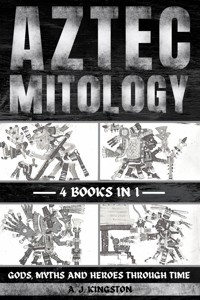
AZTEC MYTHOLOGY
GODS, MYTHS AND HEROES THROUGH TIME
4 BOOKS IN 1
BOOK 1
DAWN OF THE FIFTH SUN: EXPLORING THE ORIGINS OF AZTEC MYTHOLOGY
BOOK 2
HUITZILOPOCHTLI'S TRIUMPH: THE RISE OF AZTEC WARRIOR MYTHOLOGY
BOOK 3
QUETZALCOATL'S LEGACY: NAVIGATING CHANGE IN AZTEC MYTHOLOGY
BOOK 4
RESURGENCE OF THE FEATHERED SERPENT: AZTEC MYTHOLOGY IN MODERN TIMES
BY A.J. KINGSTON
Copyright © 2023 by A. J. Kingston
All rights reserved. No part of this book may be reproduced or transmitted in any form or by any means, electronic or mechanical, including photocopying, recording, or by any information storage and retrieval system, without permission in writing from the publisher.
Published by A. J. Kingston
Library of Congress Cataloging-in-Publication Data
ISBN 978-1-83938-446-2
Cover design by Rizzo
Disclaimer
The contents of this book are based on extensive research and the best available historical sources. However, the author and publisher make no claims, promises, or guarantees about the accuracy, completeness, or adequacy of the information contained herein. The information in this book is provided on an "as is" basis, and the author and publisher disclaim any and all liability for any errors, omissions, or inaccuracies in the information or for any actions taken in reliance on such information.
The opinions and views expressed in this book are those of the author and do not necessarily reflect the official policy or position of any organization or individual mentioned in this book. Any reference to specific people, places, or events is intended only to provide historical context and is not intended to defame or malign any group, individual, or entity.
The information in this book is intended for educational and entertainment purposes only. It is not intended to be a substitute for professional advice or judgment. Readers are encouraged to conduct their own research and to seek professional advice where appropriate.
Every effort has been made to obtain necessary permissions and acknowledgments for all images and other copyrighted material used in this book. Any errors or omissions in this regard are unintentional, and the author and publisher will correct them in future editions.
Join Our Productivity Group and Access your Bonus
If you're passionate about history books and want to connect with others who share your love of the subject, joining our Facebook group (search for “History Books by A.J.Kingston”) can be a great way to do so. By joining a group dedicated to history books, you'll have the opportunity to connect with like-minded individuals, share your thoughts and ideas, and even discover new books that you might not have come across otherwise. You can also access your FREE BONUS once you joined our Facebook group called “History Books by A.J.Kingston”.
>> Click Here to Join Our Productivity Group <<
One of the biggest advantages of joining our Facebook group is the sense of community it provides. You'll be able to interact with other history book enthusiasts, ask questions, and share your own knowledge and expertise. This can be especially valuable if you're a student or someone who is just starting to explore the world of history books.
>> Click Here to Follow A.J. Kingston <<
>> Click Here to Download your Free Bonus <<
If you love audiobooks, then joining our YouTube channel that offers free audiobooks on a weekly basis can be a great way to stay entertained and engaged. By subscribing to our channel, you'll have access to a range of audiobooks across different genres, all for free. Not only this is a great opportunity to enjoy some new audiobooks, but it's also a chance to discover new authors and titles that you might not have come across otherwise.
>> Click Here to Join our YouTube Channel <<
Lastly, don’t forget to follow us on Facebook and YouTube by searching for A.J. Kingston.
TABLE OF CONTENTS – BOOK 1 - DAWN OF THE FIFTH SUN: EXPLORING THE ORIGINS OF AZTEC MYTHOLOGY
Introduction
Chapter 1: Migrations and Beginnings: Tracing the Mexica People's Journey
Chapter 2: Cosmic Foundations: Creation Myths and Early Beliefs
Chapter 3: Pantheon Emergence: Gods and Spirits of Ancient Mexica Culture
Chapter 4: Rituals of Renewal: Early Ceremonies and Sacred Practices
Chapter 5: Myths of the Land: Stories Weaved into Mexica Geography
Chapter 6: Ancestral Echoes: Connection Between Mexica and Predecessor Cultures
Chapter 7: Celestial Influences: Observations of the Sun, Moon, and Stars
Chapter 8: A World of Symbols: Unraveling Mexica Mythological Iconography
Chapter 9: Oral Traditions and Codices: Preserving Myth in Ancient Texts
Chapter 10: Legacy of the Past: How Early Mexica Beliefs Shaped Aztec Mythology
TABLE OF CONTENTS – BOOK 2 - HUITZILOPOCHTLI'S TRIUMPH: THE RISE OF AZTEC WARRIOR MYTHOLOGY
Chapter 1: Seeds of Supremacy: The Cultural Soil for Huitzilopochtli's Rise
Chapter 2: Mythic Armor: Huitzilopochtli's Attributes and Symbolism
Chapter 3: Hearts of Sacrifice: The Rituals and Offerings to the God of War
Chapter 4: The Eagle and the Serpent: Huitzilopochtli's Role in Aztec Prophecy
Chapter 5: Temples of Power: The Architectural Tribute to the Warrior God
Chapter 6: The Dance of Warfare: Ritual Combat and Battle Ceremonies
Chapter 7: Huitzilopochtli's Champions: Legendary Heroes in Aztec Lore
Chapter 8: Beyond the Battlefield: Huitzilopochtli's Influence on Aztec Society
Chapter 9: Paths of Glory: The Role of War in Shaping Aztec Identity
Chapter 10: Echoes of Conquest: Huitzilopochtli's Legacy in Modern Mexico
TABLE OF CONTENTS – BOOK 3 - QUETZALCOATL'S LEGACY: NAVIGATING CHANGE IN AZTEC MYTHOLOGY
Chapter 1: Contact and Conflict: The Arrival of Foreign Influences
Chapter 2: Syncretic Shifts: Quetzalcoatl's Transformation in New Contexts
Chapter 3: Codices and Chronicles: Recording the Transition of Beliefs
Chapter 4: The Divine Exchange: Quetzalcoatl in the Pantheon of Change
Chapter 5: Conquistadors and Codices: Quetzalcoatl's Role in Early Colonial Times
Chapter 6: Continuity and Compromise: Indigenous Faith Amidst New Orders
Chapter 7: Colonial Catalysts: How Outside Forces Molded Aztec Mythos
Chapter 8: Echoes of Serpents: Quetzalcoatl's Influence on Art and Iconography
Chapter 9: Resilience in Adversity: Reimagining Quetzalcoatl in Modernity
Chapter 10: Threads of Rebirth: Quetzalcoatl's Enduring Journey Through Time
TABLE OF CONTENTS – BOOK 4 - RESURGENCE OF THE FEATHERED SERPENT: AZTEC MYTHOLOGY IN MODERN TIMES
Chapter 1: Awakening the Past: Reviving Aztec Mythology in the Modern World
Chapter 2: Quetzalcoatl in Popular Culture: From Ancient Deity to Pop Icon
Chapter 3: Aztec Revival: Art, Literature, and Music Inspired by Feathered Serpent
Chapter 4: Rituals Rediscovered: Contemporary Interpretations of Aztec Ceremonies
Chapter 5: Serpent Symbolism in Modern Mexico: Political and Cultural Significance
Chapter 6: Museums and Exhibitions: Preserving and Presenting Aztec Heritage
Chapter 7: Digital Age Devotion: Aztec Mythology in Online Communities
Chapter 8: Environmental and Spiritual Harmony: Quetzalcoatl in Ecological Movements
Chapter 9: Quetzalcoatl's Legacy in Indigenous Rights and Cultural Identity
Chapter 10: Continuation and Innovation: The Future of Aztec Mythology's Resurgence
Conclusion
About A. J. Kingston
Introduction
In the heart of ancient Mesoamerica, where time weaves a tapestry of gods, myths, and heroes, lies a realm of captivating narratives that have transcended centuries, illuminating the paths of those who seek to uncover the wisdom of the past. Welcome to the immersive journey of "Aztec Mythology: Gods, Myths, and Heroes Through Time," a compelling book bundle that transports you through the rich and dynamic world of Aztec beliefs, unveiling the intricate layers of cultural heritage and spirituality that have left an indelible mark on the fabric of human history.
In "Book 1 - Dawn of the Fifth Sun: Exploring the Origins of Aztec Mythology," we embark on a voyage that traces the roots of Mexica culture to its very beginnings. We venture into the nomadic odyssey of a people, their migration to the fertile valley of Mexico, and the cosmic foundations that birthed their unique worldview. Through creation myths, early beliefs, and the emergence of a pantheon of deities, we uncover the seeds that blossomed into a civilization deeply intertwined with the celestial and the earthly.
As we turn the pages to "Book 2 - Huitzilopochtli's Triumph: The Rise of Aztec Warrior Mythology," the warrior ethos of the Mexica civilization comes to life. Here, the god Huitzilopochtli reigns supreme, personifying the ideals of conquest, sacrifice, and resilience. We delve into the rituals of renewal, the myths of the land, and the transformation of society into one fueled by the pursuit of supremacy. Through the rise of Aztec warrior mythology, we witness the cultural soil from which legends and heroes would emerge.
In "Book 3 - Quetzalcoatl's Legacy: Navigating Change in Aztec Mythology," the narrative takes a turn toward transformation, syncretism, and the dynamic exchange of beliefs. The arrival of foreign influences sparks a collision of worldviews, giving birth to new narratives that weave indigenous faith with evolving circumstances. Quetzalcoatl, the Feathered Serpent, takes center stage, guiding us through the complex threads of continuity, compromise, and adaptation that define this chapter of Aztec mythology.
"Book 4 - Resurgence of the Feathered Serpent: Aztec Mythology in Modern Times" brings us full circle to the present day, where the legacy of Aztec mythology finds resonance in contemporary culture and beyond. Quetzalcoatl's enduring presence bridges ancient wisdom with modern aspirations, from indigenous resurgence and environmental activism to artistic reimagining and global dialogue. The Feathered Serpent's symbolism reaches far and wide, shaping narratives that transcend borders and connect humanity in the shared pursuit of meaning.
As you embark on this extraordinary odyssey through time, prepare to be immersed in a world where gods walked among mortals, myths wove tales of creation and valor, and heroes embodied the essence of human potential. "Aztec Mythology: Gods, Myths, and Heroes Through Time" invites you to explore the intricate tapestry of beliefs, rituals, and stories that have shaped the Mexica culture, inspiring both its past and its future. So, open the pages and step into a realm where ancient wisdom intertwines with the ever-evolving journey of the human spirit.
BOOK 1
DAWN OF THE FIFTH SUN
EXPLORING THE ORIGINS OF AZTEC MYTHOLOGY
BY A.J. KINGSTON
Chapter 1: Migrations and Beginnings: Tracing the Mexica People's Journey
The story of the Mexica people, the forebearers of the Aztec civilization, begins in the ancient lands they once called home. These lands were more than just physical territory; they held the echoes of generations, the whispers of ancestors, and the beginnings of a journey that would eventually lead to the founding of one of history's most captivating civilizations.
Nestled within the heart of Mesoamerica, the ancestral homelands of the Mexica were marked by fertile valleys, majestic mountains, and pristine lakes. The terrain shaped their identity, providing sustenance, challenges, and a canvas upon which their myths and beliefs would be woven.
In these homelands, the Mexica honed their connection to the natural world. Rivers and lakes were not merely sources of water, but also channels of spiritual significance. Lakes like Texcoco held a sacred place in their hearts, reflecting the heavens above and mirroring the Mexica's aspirations. These geographical features became not only the foundation of their physical settlements but also the backdrop against which their stories unfolded.
The Mexica's relationship with the land extended beyond the practicalities of survival. The soil they tilled held the stories of their ancestors, and the mountains they climbed carried the weight of their history. Every step was a connection to those who came before, a reminder of the continuous journey that brought them to this point.
Among the lush landscapes, the Mexica crafted their myths and cosmologies. They looked to the stars, interpreting the movements of celestial bodies as messages from their deities. The heavens were a tapestry of narratives, a canvas on which their gods and heroes danced. This connection between the terrestrial and the celestial gave rise to a profound spirituality that infused every aspect of their lives.
The Mexica's ancestral homelands were not just a backdrop; they were characters in the Mexica story. Mountains, valleys, and lakes were imbued with spiritual significance, serving as altars where offerings were made and ceremonies performed. These natural features were seen as living entities, coexisting with the Mexica as partners in a shared journey.
As generations passed, the Mexica began to feel the pull of destiny. Guided by their beliefs, they embarked on a series of migrations that would eventually lead them to the iconic city of Tenochtitlan. This migration was more than a physical journey; it was a spiritual odyssey, a pursuit of the vision set forth by their gods.
The ancestral homelands remained in their memories, woven into the very fabric of their identity. Even as they established themselves in new lands, the Mexica carried with them the stories, rituals, and wisdom that had been nurtured in their birthplace. The connection to their origins was a wellspring of strength, a reminder that their journey was not only forward but also a continuation of a legacy that stretched back in time.
In the end, the Mexica's ancestral homelands were more than a geographical location. They were a foundation, a font of inspiration, and a testament to the power of connection. The lands that witnessed their beginnings became a bridge between the past and the present, a conduit through which the Mexica's story flowed. And as the Mexica's civilization flourished and evolved, the echoes of those homelands remained, whispering tales of a people who found their roots in the embrace of the earth and the embrace of their own history.
The tale of the Mexica people unfolds as a nomadic odyssey, a journey through time and terrain that culminates in their arrival at the fertile and mystical Valley of Mexico. This chapter of their history is marked by movement, challenges, and the inexorable pull of destiny that guided their steps.
Before the Mexica arrived at the Valley of Mexico, they wandered through various regions, seeking a place to call home. Their nomadic lifestyle was not aimless; it was a quest for a promised land, a land where their gods had decreed they would find their true destiny.
Amidst the rugged landscapes, the Mexica encountered diverse cultures and forged connections with other Mesoamerican peoples. These interactions left imprints on their collective memory, influencing their beliefs, customs, and the stories they carried with them. Each encounter was a thread woven into the tapestry of their identity, contributing to the vibrant mosaic that would become the Aztec civilization.
As they journeyed, the Mexica faced challenges that tested their resolve. The unforgiving landscapes demanded adaptability, resourcefulness, and a deep connection to the earth. The trials they encountered were not merely physical; they were also trials of the spirit, a test of their commitment to their vision and their gods.
Guided by prophecies and visions, the Mexica's odyssey eventually led them to the Valley of Mexico. This fertile basin, cradled by mountains and adorned with lakes, was more than just a geographical location. It was the fulfillment of their journey, the realization of their aspirations, and the canvas upon which their civilization would flourish.
The Valley of Mexico was not an empty canvas awaiting the Mexica's touch; it was a land already steeped in history and inhabited by other cultures. As the Mexica settled, they found themselves in a complex web of relationships and dynamics. The Valley was a tapestry of diverse peoples, each with their own stories and aspirations, converging in a space that would become a crucible of transformation.
In this valley, the Mexica's roots finally took hold. They established Tenochtitlan, a city that would become the heart of their civilization. The city's majestic temples, intricate canals, and bustling markets were a testament to the Mexica's resilience and ingenuity. They had not merely found a home; they had carved out a realm that reflected their beliefs, their gods, and their journey.
The nomadic odyssey to the Valley of Mexico was more than a physical migration; it was a mythic voyage, a fulfillment of prophecies, and a convergence of destinies. The Mexica's arrival marked a pivotal moment in their history, a moment when their past and their future converged in a land that would become both a sanctuary and a stage for their legacy.
As they gazed upon the Valley's lakes and mountains, the Mexica must have felt a profound sense of accomplishment and connection. The land that cradled them was not just a geographic location; it was the fulfillment of their ancestral myths, a living testament to the gods who had guided their steps.
The nomadic odyssey was complete, but the Mexica's journey was far from over. Their presence in the Valley of Mexico would lay the foundation for a civilization that would captivate the world, a civilization built on the echoes of their nomadic past and the promise of a future yet to be written.
The story of the Mexica people's journey reaches a pivotal chapter as they settle on the shores of Lake Texcoco. This stage of their history is marked by transformation, innovation, and the creation of a city that would become the heart of their civilization - Tenochtitlan.
Lake Texcoco, with its shimmering waters reflecting the heavens above, was more than just a geographical feature. It was a canvas of possibilities, a realm that offered both challenges and opportunities. The Mexica's decision to settle in this unique environment was not only practical but also deeply spiritual, for they believed it was here that their gods had shown them their destined home.
As they built their city, the Mexica faced the intricate task of adapting to the lake's surroundings. They constructed artificial islands, known as chinampas, to create arable land for agriculture. These chinampas were a testament to their ingenuity, a fusion of human labor and divine inspiration. The fertile soil they nurtured would sustain their people and become a symbol of their ability to harness the natural world.
The city of Tenochtitlan rose from the waters, its grandeur mirrored in the calm surface of the lake. Temples, palaces, and marketplaces filled the cityscape, each structure a testament to the Mexica's dedication to their gods and the pursuit of a prosperous life. The city's layout was a reflection of their cosmology, a physical manifestation of their beliefs that connected the earthly realm to the celestial.
The lake itself played a central role in the Mexica's daily life. Its waters provided sustenance through fishing and a means of transportation through a network of canals. These canals were not mere waterways; they were the veins that connected the city, allowing goods and ideas to flow freely. The Mexica's relationship with the lake was not one of domination but of harmony, a partnership that sustained both the people and the land.
Lake Texcoco also held profound spiritual significance. It was seen as a reflection of the cosmos, a mirror in which the heavens and the earth were united. The Mexica believed that the lake's surface was a threshold between worlds, a place where the boundaries between the mundane and the divine blurred. Rituals and ceremonies were conducted on its shores, and offerings were made to the water deities who watched over the city.
Yet, even in their newfound home, the Mexica's journey was far from static. The settling on Lake Texcoco marked the beginning of a new era, one in which their civilization would continue to evolve and adapt. As Tenochtitlan flourished, it attracted a diverse array of people, cultures, and influences. The city became a hub of trade, diplomacy, and artistic expression, a testament to the Mexica's ability to create a vibrant and cosmopolitan society.
The settling on Lake Texcoco was not just a chapter in the Mexica's history; it was a foundation upon which their legacy was built. The city of Tenochtitlan, with its intricate canals, towering temples, and bustling markets, was a testament to their vision, determination, and unwavering faith. The waters of Lake Texcoco, once a distant horizon, became the lifeblood of a civilization that would capture the imagination of generations to come.
Chapter 2: Cosmic Foundations: Creation Myths and Early Beliefs
At the heart of Aztec mythology lies a tapestry of creation myths that weave together the origins of the universe, the earth, and humanity. These myths are not just stories; they are intricate expressions of the Aztec worldview, reflecting their beliefs about the nature of reality, divinity, and the interconnectedness of all things.
The Aztecs held a cosmology that saw the universe as an ever-changing and cyclical entity. Within this cosmic dance, creation and destruction were intertwined, with each cycle giving rise to new beginnings. The myths that emerged from this worldview were both symbolic and allegorical, inviting individuals to contemplate the mysteries of existence.
One of the central creation myths of the Aztecs is the story of the Five Suns. According to this myth, the universe has gone through several cycles of creation and destruction, each represented by a "sun." These suns were not literal celestial bodies but rather eras in which different deities ruled and different forms of life were created. Each era ended in cataclysmic events, leading to the birth of a new sun and a new world.
Another prominent creation myth is the story of the creation of humans. In this myth, the god Quetzalcoatl descends to the underworld, Mictlan, to retrieve the bones of previous generations of humans. With these bones, he fashions the first humans, infusing them with his own blood and the breath of life. This act of creation emphasizes the close relationship between humanity and the gods, as well as the idea that humans are connected to both the past and the divine.
The myth of the cosmic creation of the earth, often associated with the deity Ometeotl, tells of the separation of the earth from the sky. It highlights the dual nature of existence - the interplay of opposites and the equilibrium that sustains the universe. This myth also introduces the concept of the earth as a living being, a mother who provides for her children and demands respect and care in return.
In these creation myths, deities like Ometeotl, Tezcatlipoca, and Quetzalcoatl play pivotal roles as creators, shapers, and animators of the universe. These gods embody abstract concepts and cosmic forces, making the myths not only narratives of creation but also reflections of the dynamic interplay of the natural world.
The Aztecs' creation myths were not mere explanations of how the world came into being; they were invitations to engage with profound questions about existence, purpose, and the relationship between humans and the cosmos. These myths were shared through oral tradition, codices, and rituals, ensuring that they remained a vital part of Aztec culture and spirituality.
In the tapestry of Aztec mythology, the creation myths stand as foundational threads, connecting the past to the present and offering insights into the nature of reality. They are stories of birth and rebirth, of chaos and order, and of the eternal dance of creation and destruction. Through these myths, the Aztecs sought to understand their place in the universe and to glimpse the mysteries that lie beyond the material world.
Central to Aztec mythology are the deities of creation and order, divine beings whose actions and attributes shaped the cosmos, the earth, and the destiny of humanity. These gods and goddesses were not distant entities; they were active participants in the unfolding of reality, each with their own unique roles and symbolism.
One of the foremost deities associated with creation and order is Ometeotl. Often referred to as "Ometecuhtli" (Lord Two) and "Omecihuatl" (Lady Two), Ometeotl embodies duality and the cosmic balance between opposing forces. As a dual-gendered deity, Ometeotl signifies the interplay of masculine and feminine energies that give rise to all creation. Ometeotl represents the unity of opposites, reflecting the intricate dance of creation and destruction in the universe.
Tezcatlipoca, another significant deity, plays a role in establishing cosmic order. Known as the "Smoking Mirror," Tezcatlipoca is associated with fate, destiny, and the balancing of cosmic energies. His obsidian mirror reflects the truth of existence and reveals the masks that individuals wear in their lives. Tezcatlipoca's transformative nature underscores the idea that order arises from change and that all things are in a state of constant flux.
Quetzalcoatl, the Feathered Serpent, also contributes to the divine order of the cosmos. Often associated with the planet Venus, Quetzalcoatl embodies the balance between the earthly and the celestial. He is a god of wisdom, knowledge, and culture, guiding humanity on the path of virtuous living. Quetzalcoatl's journey, which includes both his descent to the underworld and his departure as the morning star, symbolizes the cyclical nature of existence and the continuous renewal of life.
In addition to these deities, Tlaltecuhtli is a goddess closely linked to creation and fertility. Depicted as a monstrous yet divine figure, Tlaltecuhtli represents the earth's nurturing and life-giving qualities. She is often portrayed as a cosmic womb, from which life emerges and returns, highlighting the cyclical nature of birth and death.
These deities of creation and order do not exist in isolation; they are interconnected and interdependent, embodying the intricate balance that sustains the universe. Their stories, attributes, and symbols are woven into the fabric of Aztec mythology, offering insights into the cosmological beliefs and spiritual values of the civilization.
Through their myths and rituals, the Aztecs sought to honor these deities and align themselves with the cosmic order they represented. The deities of creation and order were not distant figures; they were integral to daily life, guiding actions, inspiring art, and providing a framework for understanding the complexities of existence. In venerating these gods, the Aztecs acknowledged their role as participants in the ongoing dance of creation and embraced their place within the grand tapestry of the universe.
Aztec cosmology is a rich tapestry woven from the threads of mythology, astronomy, and the natural world. At its core, it is a holistic view of existence that integrates the earthly, celestial, and spiritual realms into a seamless whole. The Aztecs' understanding of cosmology shaped their beliefs, rituals, and way of life, intertwining their existence with the rhythms of the universe.
Central to Aztec cosmology is the concept of duality and the balance between opposing forces. The universe was seen as a dynamic interplay between complementary energies - light and dark, life and death, creation and destruction. This dualistic perspective was reflected in their deities, rituals, and even in their societal structure.
The cosmos was envisioned as a series of layered spheres, with different levels inhabited by various deities and celestial bodies. These cosmic layers were intricately connected, with each influencing the others in a harmonious dance of forces. The sun, moon, and planets were not just astronomical bodies; they were living beings with agency, influencing events on Earth and reflecting the spiritual energies that flowed through the universe.
Astronomy played a crucial role in Aztec cosmology. The movements of celestial bodies were meticulously observed and interpreted, serving as omens and messages from the gods. The Aztecs' calendar systems, such as the solar and ritual calendars, were closely tied to astronomical events, allowing them to align their rituals with cosmic cycles.
The natural world was regarded as a living entity, with mountains, rivers, and lakes embodying the spirits of the land. The earth was seen as a mother who provided for her children, and offerings were made to honor and reciprocate this relationship. The intricate networks of canals, chinampas (floating gardens), and agricultural terraces were not just practical solutions; they were extensions of the Aztecs' connection to the earth and their efforts to maintain harmony with nature.
The concept of cyclical time was fundamental to Aztec cosmology. The universe went through cycles of creation and destruction, reflected in the myth of the Five Suns. These cycles emphasized the transient nature of existence and the inevitability of change. Rituals and ceremonies were conducted to align with these cycles, ensuring the continuation of cosmic harmony.
Sacred spaces, such as temples and pyramids, were designed to mirror the cosmological order. The pyramids represented the sacred mountain at the center of the universe, serving as a link between the earthly and the celestial realms. These structures were not merely physical; they were portals through which communication with the divine was established.
Aztec cosmology was not an abstract concept; it was a lived experience. It shaped every aspect of life - from the way they planted crops to the way they conducted rituals. It provided a framework for understanding their place in the grand scheme of existence and allowed them to navigate the complexities of the world with a sense of purpose and reverence.
In embracing their cosmology, the Aztecs embraced their role as participants in a vast, interconnected web of existence. Their myths, rituals, and way of life were expressions of their deep connection to the natural world, the cosmos, and the spiritual forces that guided their journey through the cycles of creation and renewal.
Chapter 3: Pantheon Emergence: Gods and Spirits of Ancient Mexica Culture
Tezcatlipoca, known as the "Smoking Mirror," is one of the most complex and enigmatic deities in Aztec mythology. His multifaceted nature embodies both creation and destruction, light and darkness, order and chaos. Tezcatlipoca's influence permeated all aspects of Aztec life, from cosmology to morality, making him a central figure in their belief system.
The name "Tezcatlipoca" can be translated as "Smoking Mirror" or "Obsidian Mirror." This name alludes to his obsidian mirror, which symbolized his ability to reveal the hidden truths and the illusions that shape human existence. Tezcatlipoca's mirror reflected not only the outer world but also the innermost thoughts and desires of individuals, exposing the masks they wore and the motivations that drove them.
Tezcatlipoca's dualistic nature is emphasized by his association with a counterpart, Quetzalcoatl, the Feathered Serpent. Tezcatlipoca is often depicted with a black and yellow stripe across his face, representing his opposition to Quetzalcoatl's white and red feathers. Their dynamic embodies the tension between opposing forces, highlighting the necessary interplay between light and darkness.
As a deity of cosmic order, Tezcatlipoca played a role in maintaining equilibrium in the universe. He was associated with fate and destiny, weaving the threads of individuals' lives into the cosmic tapestry. Tezcatlipoca's influence extended beyond the celestial; he was also a patron of rulers and warriors. The Aztec elite sought his guidance in matters of leadership, strategy, and conquest.
Tezcatlipoca's connection to sorcery and magic adds another layer to his complexity. He was believed to possess the ability to transform into different forms, embodying the idea that reality is fluid and ever-changing. His status as a shape-shifter reinforced his role as a revealer of truths that transcend the surface.
The deity's myths often highlight his interaction with other gods, his tests of mortal heroes, and his role in cosmic creation. One myth recounts how he and Quetzalcoatl created the current era by sacrificing themselves to transform into the sun and the moon. This self-sacrifice emphasizes the cyclical nature of existence and the idea that creation arises from the destruction of the old.
Tezcatlipoca's complex nature made him both feared and revered. His influence was so significant that he was often invoked in rituals to ensure the well-being of the Aztec society. His ceremonies, known as "Toxcatl," involved fasting, prayer, and self-sacrifice as acts of devotion.
In the grand tapestry of Aztec mythology, Tezcatlipoca's role is integral. He is the embodiment of the dualities that shape the universe and the human experience. As the Smoking Mirror, he reflects the complexity of existence, inviting contemplation of the hidden truths that lie beneath the surface. Tezcatlipoca's story is a reminder that light and darkness, creation and destruction, are not isolated concepts but interconnected aspects of a larger whole.




