


13,99 €
Mehr erfahren.
- Herausgeber: The History Press
- Kategorie: Geisteswissenschaft
- Sprache: Englisch
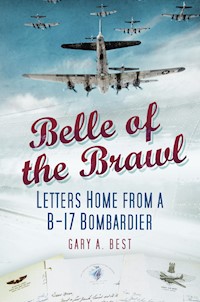
This wartime biography follows the life of a Second World War B-17 bombardier from the beginning of the war to its conclusion. Based on the 150 letters the airman, Fred Lull, wrote home to his mother, much of the horrors of what he experienced off the wing of his plane, aircraft destroyed, dismemberment by flak, go unshared. Fred did not want his mother to worry and could not tell her: 'I noticed some movement and a flash of light out of the corner of my right eye. The plane that had been flying right next to us had exploded and simply disappeared.' Using the bombardier's combat flight record, research data and interviews of former B-17 crew members, the story unfolds, breaking through the barrier of an unwillingness and inability to tell loved ones of the smell and taste of war.
Das E-Book können Sie in Legimi-Apps oder einer beliebigen App lesen, die das folgende Format unterstützen:
Veröffentlichungsjahr: 2011
Ähnliche




















I judge when the tale is all in, the bombardier, as a class, in working under the intense pressure that he does, will be found the glamour man of the air war. I have made analysis [sic] of hundreds of targets of every description and can testify without reservation to the genius of the boy in the glass cage in the nose.
– Gill Robb Wilson
Acknowledgements
If ever:
• an author had a muse, I had mine for Belle of the Brawl. M.J. (Jack) Sacia was my constant convivial congenial nudge, supporter, encourager, and gung-ho specialist.
• an author relied on others to bring to light details of a story, I had mine in Kerry Castel de Oro, who gave Fred’s letters, scrapbooks and photo albums to me; Ann Kaiser, Mary Braun and Cliff Leviton who were Fred’s friends, knew him as an educator and were with him at the end when he needed someone. And, without the introductions provided by George Marrett, the group below would have been largely unknown to me.
• there was a group of who gave of their knowledge and memories willingly, freely and with robust encouragement, it was the guys who allowed me to interview them for personal, technical and historical background for this book and answer my many questions – former B-17 crewmen, heroes all. They are listed alphabetically by name, position, name of the plane in which they flew and their unit designation: Gene Bissell, B-17 Navigator, Idiot’s Delight and others, Fifteenth Air Force, 97th Bomb Group, 341st Bombardment Squadron (also served as Squadron Lead Navigator, Group Lead Navigator); Bob Brown, B-17 Pilot, Thunder Mug and others; Richard Bushong, B-17 Pilot, Geronimo and others, Eighth Air Force, 390th Bomb Group, 569th Bomb Squadron; Bob Dickson, B-17 Pilot, Wheel N’ Deal, Eighth Air Force, 91st Bomb Group, 322nd Bomb Squadron, POW; Hank Hall, B-17 Left Waist Gunner, Ack Ack Annie, Eighth Air Force, 91st Bomb Group, 322nd Bomb Squadron; Frank Halm, B-17 Pilot, Gremlin’s Hotel, Eighth Air Force, 94th Bomb Group, 331st Bomb Squadron and 333rd Bomb Squadron as lead/deputy lead pilot; Albert (Al) Olivari, Togglier/Gunner, Round Trip Ticket, Eighth Air Force, 94th Bomb Group, 331st Bomb Squadron; James S. Peters, Sr., Flight Engineer/Top Turret Gunner, Fuddyhuckle, Fifteenth Air Force, 99th Bomb Group, 348th Bomb Squadron; Wilbur Richardson, B-17 Ball Turret Gunner, Kismet, Eighth Air Force, 94th Bomb Group, 331st Bomb Squadron; Harold Schuchardt, B-17 Pilot (he flew B-17s that did not have a name and rarely flew the same plane twice), Fifteenth Air Force, 97th Bomb Group, 342nd Bomb Squadron, POW; Leon Schwartz, B-17 Navigator, Fever Beaver, Eighth Air Force, 100th Bomb Group (The Bloody Hundredth), 351st Bomb Squadron; Roy Test, B-17 Co-pilot, Bad Penny (it always turns up), Eighth Air Force, 398th Bomb Group, 602nd Bomb Squadron; Lou Vaughn, B-17 Pilot, SNAFU Man, Fifteenth Air Force, 2nd Bombardment Group, 20th Bombardment Squadron. From this group a special thanks to Gene Bissell, Bob Brown, Bob Dickson, Hank Hall, Frank Halm, Harold Schuchardt and Roy Test who read the manuscript for historical and technical accuracy and who made valuable suggestions based on their personal experiences in a war fought so long ago.
• there were those who call it their job to help others, but yet do it in such a way as to make you feel special and that your mission is one of the most important in the world, I had mine at the 390th Memorial Museum, Pima Air and Space Museum, Tucson, Arizona in Carolyn Beaubien, Director of Research and Fred Sachs, Volunteer Researcher, and at the Glendora, California, Public Library reference desk, especially Gaetano Abbondanza who tracked down obscure reference works.
• anyone was lucky enough to have friends who shared private collections of historical materials or their expertise, I have been one of the most lucky to have Robyne Gray who shared her extensive collection of Yank magazines; Ed McAleer who shared his collection of Life magazines from the war years; Helen Hehr who provided the original Playbill for Winged Victory; C. Lamar Mayer whose genealogical research expertise brought me to my knees in appreciation; and Linda Trevillian, dubbed my ‘Wicked Witch’, for her editing skills.
• there was an acquisition editor who kept the faith and the flame glowing longer than anyone ever thought possible, I had mine in Jay Slater and his colleague and content editor Chrissy McMorris at The History Press.
• there were friends and family who endured endless and generally one-way conversations about a topic of only polite interest to them, they would have to be mine – there are too many to list by name but you can easily recognise them by their bent ears.
• and, finally, there was a spouse who endured countless hours alone in a shared home while her partner was moored to a computer keyboard, secluded in his study or was away for days on end conducting interviews and visiting museums and libraries, there is none who has been more supportive or lovingly tolerant than mine – Shirley.
Picture credits: Photographs not credited in the text were taken by Fred or his crewmates or friends and came from his wartime photograph albums. The photographs have not been enhanced or altered except for size to fit page space and are reproduced as they were discovered – worn and faded with time, grainy, perhaps distorted, some with poor focus because they were shot through plane windows during missions, and some victims of the quality of film available during the war. The photograph ‘It was supposed to be a rough mission. We went to Germany’, provided by Wilbur Richardson, also appears, without attribution, in Harry Slater’s history of the 94th Bomb Group, Lingering Contrails of The Big Square A; A History of The 94th Bomb Group (H), 1942–1945. The photograph of bomber and fighter contrails,‘Air Portrait’, is from Yank, Down Under, The Army Weekly, 17 March 1944. The cartoon at the beginning of Chapter 7, provided by Frank Halm, is unsigned but is thought to be the work of Bob Stevens, sometimes described as the air force’s Bill Mauldin.
Special thanks are extended to friend and photographer Gary Hammerstrom who established a studio environment in his home to take some of the photographs of war memorabilia.
Copyright Acknowledgements
Grateful acknowledgement is made to the following authors, publishers, agencies, estates, and corporations for use of material cited in Belle of the Brawl; Letters Home From a B-17 Bombardier:
Paul Andrews, author of Project Bits and Pieces, Heavy Bombers of the Mighty Eighth; An Historical Survey of the B-17s and B-24s Assigned to the Eighth Air Force, August 1942–June 1945. Reprinted with Permission.
Andy Anzanos, author of My Combat Diary with Eighth Air Force B-17s, 390th Bomb Group.
The Parker Pen Heritage Collection for permission to reprint the Parker Pen advertisement.
Penguin Group (USA) Inc. for material from: THE MIGHTY EIGHTH by Gerald Astor, © 1997 by Gerald Astor. Used by permission of Donald I. Fine, an imprint of Penguin Group (USA) Inc.
The Estate of John Mason Brown for: Many a Watchful Night, by John Mason Brown, published by Whittlesey House, 1944. Reprinted with Permission.
Norman Corwin author of On A Note of Triumph. Reprinted with Permission.
Oxford University Press for permission to cite from: Wartime: Understanding and Behavior in the Second Word War by Paul Fussell. Reprinted by permission of Oxford University Press.
Books International for permission to cite from: B-17s Over Berlin; Personal Stories From the 95th Bomb Group (H), edited by Ian L. Hawkins.
Chronicle Books for material from: HOME FRONT AMERICA: POPULAR CULTURE OF THE WORLD WAR II ERA © 1995 by Robert Heide and John Gilman. Used with permission from Chronicle Books LLC, San Francisco.
Globe Piquot Press, reprinted with acknowledgement material cited in The Shetland Bus by David Howarth
Los Angeles Times editorial staff for: ‘Women in Pants?! Mayor Draws line’, published 23 April 1942; Los Angeles Times © 1942. Reprinted with Permission.
Donald Miller for permission to cite lines from: Masters of the Air.
Overlook Press for permission to cite lines from: The Bomber War: The Allied Air Offensive Against Nazi Germany by Robin Neillands. Copyright 2001 by Robin Neillands, published by the Overlook Press, 2001. All rights reserved.
The Scripps Howard Foundation, especially Patty Cottingham, Vice President for Administration, for permission to cite the works of Ernie Pyle whose work was originally published in various Scripps-Howard newspapers.
Sergeant’s Pet Care Products for the use of an advertisement from 1944 for Polk Miller Products Corp., makers of Sergeant’s dog medicines. Used with permission.
Norma Slater, wife of the late Harry Slater, for permission to cite lines from: Lingering Contrails of The Big Square A; A History of the 94th Bomb Group (H), 1942–1945.
Kathleen E.R. Smith, PhD for permission to cite lines from: God Bless America: Tin Pan Alley Goes to War.
Marilyn Somers, wife of the late William F. Somers, for permission to cite lines from: Fortress Fighters; An Autobiography of a B-17 Aerial Gunner.
State House Press for permission to cite material from: Rattlesnake Base; Pyote Army Airfield in WWII by Thomas E. Alexander.
Studebaker National Museum for the use of an advertisement extolling the qualities of the B-17 engines made by Studebaker Corporation. Used with permission.
Permission has been granted to reprint the following song lyrics:
‘I Left My Heart At The Stage Door Canteen’ by Irving Berlin
© Copyright 1942 by Irving Berlin
© Copyright Renewed by Irving Berlin
© Copyright Assigned to Winthrop Rutherfurd, Jr., Anne Phipps Sidamon-Eristoff and Theodore R. Jackson as Trustees of the God Bless America Fund
International Copyright Secured. All Rights Reserved. Reprinted by Permission.
‘This Is The Army, Mister Jones’ by Irving Berlin
© Copyright 1942 by Irving Berlin
© Copyright Renewed
© Copyright Assigned to the Trustees of the God Bless America Fund
International Copyright Secured. All Rights Reserved. Reprinted by Permission.
‘White Christmas’ by Irving Berlin
© Copyright 1940, 1942 by Irving Berlin
© Copyright Renewed
International Copyright Secured. All Rights Reserved. Reprinted by Permission.
Contents
Title Page
Epigraph
Acknowledgements
Foreword
Prologue
Chapter One The Beginning
Chapter Two Classification Center
Chapter Three Bombardier Training
Chapter Four Officer, Gentleman, Bombardier
Chapter Five Advanced Flight Training
Chapter Six Rattlesnake Bomber Base and Beyond
Chapter Seven They Become a Crew
Chapter Eight Deployment
Chapter Nine England
Chapter Ten Operational Missions
Chapter Eleven D-Day – The Invasion: ‘It’s On’
Chapter Twelve Six to Go
Chapter Thirteen Homeward Bound
Chapter Fourteen Back to Texas – Pilot Training
Chapter Fifteen Texas, Again? – It’s Over!
Epilogue
A Final Word – Bravery in the Plexiglas Nose
Notes
Bibliography
Glossary
Copyright
Foreword
Gary Best thoughtfully weaves together the Second World War letters of his close friend, Fred Lull, who died many years ago. Best has also added pertinent historical war information to create this wonderful book, Belle of the Brawl. This combination illustrates behind-the-scenes glimpses of a young man’s life training for the war and his aerial combat in the skies over Europe.
When Gary Best first read the personal letters Lull sent to his mother, Louise, they answered many lingering questions Best had about his friend’s experiences of flying as a bombardier in a Boeing B-17 ‘Flying Fortress’ and the realities of his war story. The long-hidden correspondence helped Best capture in words the human side of war and the mixed emotions his close friend experienced in battle, coupled with the anxiety of a mother waiting for his safe return.
I flew combat missions in Vietnam for a year, and I also wrote many, many letters to my wife and two young sons. Hoping to keep my wife from worrying about my welfare, I told her about the great group of guys I served with. I told her of the many air force and navy aviators who were shot down and we rescued. But if you read between the lines, you realised it was a daily struggle to stay alive and be ready for the next combat sortie, just as it was for Fred Lull.
This book is an absolutely first-rate read about one of the Second World War veterans NBC anchor Tom Brokaw called ‘the greatest generation’. These veterans are dying at the rate of 1,000 per day and, fortunately for us, Gary Best and PBS producer Ken Burns’ documentary, The War, permanently record the courage and sacrifice these young men exhibited in the cause of freedom.
George J. Marrett
Author of Cheating Death: Combat Air Rescues in Vietnam and Laos
Prologue
Fred was 36 years old when we first met. I was 19. During a friendship that lasted until his death in 1990, he, like many of those that Tom Brokaw has proclaimed as ‘the Greatest Generation’, rarely spoke of his part in the Second World War.1 For the most part, I was unaware of his role in the war except for the four framed pictures that hung over his desk at home – a picture of a B-17, one of his bomber crew, one of him just after he returned from his last mission and one that announced his admission to the ‘Lucky Bastard’ club.
These men do not proclaim the glory of war; but since it had to be, they are proud of their service. There is an ever-present respect for those who were lost and sincere gratefulness among those who survived.2
We met at a summer resident camp for children with physical disabilities; he was the camp director and I was one of his counsellors. When I completed college with a teaching credential in special education, I became a teacher in a special school for children with physical disabilities where Fred was the principal. He was influential in encouraging me to marry a young woman who was an occupational therapist at the same school, which I did, and he later supported my decision to leave teaching to go to graduate school.
As our relationship grew and matured and we spent considerable time together socialising in his home or ours, he never voluntarily spoke about his earlier life as a Second World War combat veteran, a bombardier in a B-17. Only once in our many years as friends did the war and his role in it ever come up, and then only when he and I were alone and each had had several martinis and were very relaxed.
It was almost as though the pictures on the wall above his desk played a dual role – a reminder of what had been and a warning sign of ‘No Admittance’ or, at least, ‘Private Property, Trespassers Beware!’ But, armed with a couple of martinis on my part and disarmed by a couple on his, I asked Fred about one of the pictures – the one of him at the side of a plane turning to look at something in the distance.
‘That was taken after I had returned from my last mission. I flew it with another crew, because I hadn’t completed my 30 with my own crew. I had been laid up with infected sinuses, so my crew flew its last one without me. Although they had finished their 30 missions and were eligible to return home, they wouldn’t go without me. “We came over together, and we’ll go home together!”’
Encouraged by this revelation, I asked what had been his worst or scariest mission. He looked at me and, without much hesitation, said, ‘The last one. We flew a mission into France to drop supplies to the French Resistance. We carried no bombs because of the weight. We went in without fighter escort, dropped the supplies, turned and headed back to England. We were sitting ducks.’
There ended the conversation; a change of subject, another martini and never again did Fred talk about the war or his part in it. Somehow I knew that I shouldn’t ask about or pursue further this part of his life. In later years, a small break in this abstinence would occur when he would occasionally and casually announce that he had returned from a reunion of his unit and would share photos from the reunion of surviving crewmembers and their wives.
Apparently some things warriors can only talk about to those who experienced them, also.3
When Fred died, a mutual friend – a former camp counsellor and teacher colleague – acquired the letters, scrapbooks and other personal memorabilia that form the core for Belle of the Brawl. This mutual friend’s widow later gave them to me, and the entire collection lay hidden from view in a garage storage box for sixteen years.
Upon retirement, I discovered that I now had the time to get involved in those tasks around the house that are often put off until later – which translates into ‘getting to them some time’, some time way in the future. So, after sitting around for several weeks enjoying the freedom from my once work-a-day world, I attacked one of those long-forgotten tasks and settled into ‘cleaning the garage’. It was somewhere in the middle of this six-week endurance challenge that I rediscovered ‘Fred’s box’. Opening the lid, I found the treasure that had been hidden for so many years. The rest of the day was shot.
There, jumbled together in Fred’s box, were photo albums, scrapbooks, passports and the mother lode of the collection, Fred’s leather writing case. Inside the case were 150 letters that Fred had written to his mother, from the time he was sent to the Army Air Forces Classification Center in the winter of 1943 until the end of the war in 1945. Also in the writing case were several telegrams, V-mail letters, his mission log, military orders, newspaper clippings and two copies of Stars and Stripes – a jigsaw puzzle of a personal era forever embedded in an historical context known only to Fred.
After spending several hours reading and rereading the letters, looking at the albums and scrapbooks and recalling memories of Fred and what he had meant to me throughout my adult life, I was in a dilemma about what to do next. So, I made the somewhat easy decision to do nothing. I repacked the box, carefully and to some degree painfully, and put it back to rest in the garage – but in a place where it was easily accessible. I had to think about what I was going to do with these highly personal pieces of history.
During the next couple of weeks, Belle of the Brawl began to take some ethereal shape, some form in my mind that could tell a story. What evolved was not a testament about the causes of war, its justification or its end results. It was not to become a treatise of the combat record of the Eighth Air Force, its bomb groups and bomb squadrons, or, for that matter, a memoir of the exploits of Fred and his fellow crewmembers. Accounts such as these had already been written, The Man Who Flew the Memphis Belle, a familiar example.4
So, what is Belle of the Brawl? It is part adventure story and part a coming-of-age saga. It is a story of a common man among common men who became engaged in uncommon acts of wartime heroics and struggles of survival. It is the unveiling of a relationship between a mother and her ‘little boy’ who becomes a combat veteran. It is part war story, part history lesson, part travelogue and cultural exploration. It is a recording of an expansion of the mind, the growth of the man, the development of the soul and the baptism by full immersion into the conflict of life.
Belle of the Brawl is a description of the warp and woof of the fabric of human existence, at times straightforward and clear-cut and at others veiled in contradictions, contrasts, and confusion. It tells of a mix of life experiences, both shared and in some cases only guessed at by those far and near, more stressful than many, less so than others.
It is always, always a tale of forging, pushing, blending, pulling, manipulating, grinding, kicking, screaming, hollering and complaining through change in general and in a single character specifically. It is the story of an eager teenager, opinionated and cocooned in a protected middle-class existence, who becomes world-weary, war-weary and old at 23. It is a story of lifestyle, loneliness, camaraderie and, sometimes, boredom.
Fred’s letters reveal precious little about the war or his part in it. Throughout the letters there are expressions of concern about his mother’s health, how she is getting along managing her life, their mutual finances and rationing. He asks questions regarding family members, mutual friends and his high school buddies, who were also serving in the war.
There is always an undercurrent in the letters of ‘don’t worry Mom’. Fred’s letters seem to steer far away from any mention of the war that would cause Louise (Mom) to worry about her son. Kate Smith, a song stylist of the era with a zaftig presence that radiated warmth and engendered a Lady Liberty-like trust and patriotism, especially when she sang, God Bless America, introduced a song during the war that fits like a jigsaw puzzle piece into the intentions of Fred’s letters: Don’t Worry Mom (A Morale Song for Mother):
Don’t worry mom, there’s little time to write. Don’t worry mom, everything’s all right.5
The letters provide a classic example of life’s juxtaposition – what Fred writes to his mother lacks the bite of reality he experiences in combat as a bombardier. The exception is probably the one letter that caused her to worry more than any other – the one dated 20 February 1944. It explained, in part, what she should consider if she were ever to receive a telegram that told her that Fred’s plane had been shot down. Indeed, ‘Don’t worry Mom’.
Taken together, the letters form a personal and porous picket fence that separates two worlds – Mom and Fred’s – and that of everyone and everything else. Although there are many spaces in the picket fence that allow for glimpses into their relationship, a gateway through which entrance is invited and one can enter and pass through is not provided.
Fred’s scrapbook, like many other such collections, is an autobiographical record enhanced with pictures, clippings of newspaper stories, and programmes and souvenirs of a life led: a dance card filled with persons, places and events at once personal and brimming with meaningful relationships. But across and in time, these relationships have become lost, are somehow out of context and reveal piecemeal insights into what was once important and real.
Like any family album of photos of an era, a scrapbook provides bits of evidence of a life that may provoke a sense of curiosity and a glance into the past. But links to the present are made only with effort, and to some the journey may not be worth it.
Is it possible to gain any insight into a person’s character through faded pictures in a high school newspaper clipping? What do the pictures of Fred as an actor in a school play or participating in an athletic event or political debate reveal? Are these windows into the Dickensian precursors of what will be or are these framed events simply strung together in a time-related sequence?
Does one generation care about how previous ones looked, what clothes they wore, how they thought or acted or what they experienced one or more lifetimes ago? The success of The Greatest Generation would seem to suggest that this intergenerational connection is, indeed, important, valuable and sought after.
A scrapbook or family photo album easily falls into the genre, perhaps the chasm, of a history book – or worse yet into the league of a history textbook, especially when the viewer is given a spot quiz of its contents: ‘Do you know who that is? Do you remember when that happened?’
How do you take bits and pieces from the past and discover if they somehow fit somewhere? Do autobiographical shards ever come together to form a whole? And even if they do, is there any meaning to the cracks and crazing of this life-like vessel? Are the reconstructed pictures of any particular importance? To whom? Why?
If there is a connectedness by which individuals from the past are linked with those of the present, then family albums, scrapbooks, home movies, box camera snapshots, 35mm slides, the ubiquitous matchbook covers and postcards of places visited and, finally, the letters stored away are of fundamental importance to the weave of a personal and generational fabric. So, here is Belle of the Brawl, a collection of memories, facts and to some extent conjecture. Fred was not a hero; he was one of a million heroes. He did what others did – he put his life on the line for what his country had committed itself to and communicated virtually none of this to his mother.
Very few of Fred’s letters are reproduced in their entirety. Requests to be remembered to one or more relatives and friends are most often omitted in these pages, although they appear in almost every letter sent home. Fred’s answers to Louise’s questions that have no context within any other letter also have been omitted.
Military orders and correspondence often seem to have a code all their own, with abbreviations of words that appear to be mistakes or typewritten errors. These have been left intact and are reproduced here as they appeared in the original documents.
The letters reveal Fred’s likes and dislikes for any number of things. He had no taste for Texas, or most Texans, and didn’t much like train rides, although he took pride in what becomes a personal travelogue and the sense of discovery of the occasional tourist. Fred had somewhat of a passion for his Parker ‘51’ fountain pen and seemed almost lost without his radio. His letters provide a virtual catalogue of radio broadcasts and films (shows) from the past with names of performers few today will recognise:the Great Gildersleeve,Gabriel Heatter,ArleenWhelan and many others.
Throughout Belle of the Brawl, there are inserts from a variety of sources that put into context what Fred writes to Louise about – official military orders, accounts of historical events, a few statistics and explanations about the planes of war and the men who flew them, and personal remembrances of others about the war, including interviews with former B-17 crewmembers. Wartime censorship prohibited Fred and others from writing about the details of base locations, combat missions and other sensitive war-related information. It was only later that this became known to others.
Even without the presence of correspondence censorship, it seems very unlikely that Fred would have sent home details about what was happening to him and around him. He simply would not have wanted his mother to worry. What he witnessed and experienced through the Plexiglas nose of a B-17 was not pretty. You do not write home to your mom and tell her about a friend’s airplane, flying in close formation next to yours, disintegrate, as you watch, as a result of a direct hit from enemy anti-aircraft artillery.
I noticed some movement and a flash of light out of the corner of my right eye through the right side of the cockpit window. The plane that had been flying right next to us had exploded and simply disappeared.6
Don’t worry Mom. Don’t worry Mom.
‘The letters reveal Fred’s likes and dislikes for any number of things.’ (Courtesy of Gary Hammerstrom)
Note the incorrect year on the form above.
Chapter One
The Beginning
Fred was 19 on that day in 1941 when the USA joined the Second World War. He had been out of high school a year, lived with his mom in Los Angeles, and was employed as a bank teller.
He grew up in circumstances that were difficult both financially and socially. His dad had left home when Fred was a young boy and he and his mother had to fend for themselves. They moved frequently, and he learned to hang wallpaper to make their homes more attractive. During his high school years and while he was in the war, home for them was a small house in Los Angeles.
While he was in high school, Fred was a son a mother could be proud of: he was class president in his senior year, as well as student body president; received a high school athletic ‘letter’ as a gymnast with a specialty in side horse; was in the school’s senior play; and was selected by faculty to receive the‘highest honor attainable by the high school graduate – membership in the Ephebian Society. To receive this distinction, a student must rank in the top ten per cent in scholarship or (be) nominated by the faculty or class.’1 According to an article in the high school newspaper that listed the honourees and their feelings about the award, Fred ‘… seemed unable to find words to express his feelings on receipt of the Ephebianship, but has many ideas for the future. On graduating, he hopes to land a job, then in September, go to SC [University of Southern California]. He plans to become a social studies teacher.’2
As his class prepared for commencement, Fred, voted by his classmates as the most handsome boy and most popular senior, stated ,‘A new order is coming into effect … it is up to each and every one of you to keep up Poly’s many fine and noble traditions, traditions which the present group has admired and respected. To serve Poly in the capacity of ASBO [associated student body] president has meant more to me than mere words can tell; especially do I appreciate the fine cooperative spirit of the faculty and student body.’3
He graduated in February 1940 and, indeed, landed a job. But attendance at USC would have to wait, his dream of becoming a social studies teacher put on hold. The nation was soon at war. In the 110 minutes that turned Pearl Harbor into America’s twentieth century Alamo, all thoughts of an immediate normal future dissolved.
From Fred’s wartime scrapbook – he is standing second from the right in the line.
(Author’s collection)
Along with other 18–20-year-olds, Fred signed up in the nation’s fifth draft call. He is pictured in line with others in an article in a Los Angeles newspaper: ‘All eager to serve, these boys are shown signing up at Draft Board 231 at 910 South Western Avenue. The 18 and 19-year-olds are not immediately eligible for the draft, but can be called up as they reach 20.’4
The war was fought by civilians. We grew up during the Great Depression and then the war started. We could enlist or wait to be drafted. For a lot of us, it meant a job, food, clothes, etc., security we hadn’t known in a long time.5
It was $21.00 a month to start off.6
Fred was called to duty nine days before his twentieth birthday in March 1942 and it is likely that he soon began his first encounter with the army by taking exams to establish his qualifications to become an aviation cadet and then sent home to await the results. In less than a year he was on his way to the Army Air Force Classification Center in Santa Ana, California, to begin cadet training.
We all sweated out the classification tests and nearly all wanted to be pilots.7
Not satisfied that the ‘form’ letter would be enough, another in his hand soon followed.
2/23/43
Tuesday
Santa Ana
Dear Mom,
Please excuse this writing as I’ve drawn an upper bunk. Some fun.
Boy what a day this has been!! We left downtown at exactly 10:00 am. Got to Santa Ana about 11:30 with stops and all.
You’ve never seen such mud as there is here.
We drove out to here in Army trucks and started right in filling out forms and stuff. They have really fed us today. It is almost 10:00. We’re supposed to get up tomorrow morning at 5:30. Oh boy!
They’re going to give us some clothes tomorrow. They call them ‘Zoot suits.’ This is all that has happened today.
Love,
Fred
* * *
2/24/43
Wednesday Santa Ana
Dear Mom,
It has really been a busy day. Rained all night and boy has it been muddy all day. The time right now is 1530 or to you civilians 3:30 in the afternoon.
They really feed you plenty, but only firsts on butter and milk.
We got all of our clothes today.
Monday we take our first mental tests.
We are in a quarantined area now for two weeks, or until we are classified as pilots, bombardiers, or navigators. Then we can have visitors on Sunday from 9:00 until 3:00. You guys can’t come out until I give the word, which will probably be in two weeks.
Then after that we can’t leave here for a weekend until 42 days have passed since we first came here, which means if I’m classified as either pilot or so forth I can come home on a weekend about April 10th.
We had several lectures today.
Please make a small neat package and send my glasses to me.
Well that’s all that has happened so far today so I’ll write more news and details later. Take care of yourself and please don’t worry because I’m o.k. and I want you to be that way!!
Your boy,
Fred
It’s hard to believe, either from the form letter all new arrivals at the Classification Center sent home or from Fred’s pencil scribbled notes that followed, that this 20-year-old inductee has gone someplace other than to summer camp. The messages are almost childlike in form and substance, and yet are written with a sense of assurance that all is well and that they certainly are being amply fed, except maybe for the apparent limited supply of milk and butter. And, boy, is this place really ‘muddy’, and don’t forget to send my glasses!
However, the signs of change are also there: the regimentation of uniforms, limits on sleep, visits by family and friends and leave time, and the limitless supply of rumours. A further transformation begins as Fred and his companions, sometime, somehow, perhaps through ‘mental tests’, go through the process of being selected to be trained as pilots, bombardiers or navigators.
Pilot training must have been uppermost in the minds and desires of each of the cadets. Why would you want to be something other than the leader of your crew, captain of your ship?
Others had a more cynical view of the selection process:
Who would be dumb enough to get in the cockpit of a heavy bomber … loaded with 2,800 gallons of gasoline, ten 500-pound bombs, 7,000 rounds of 50-calibre ammunition, with an aluminum skin that burns with searing hot flames at the drop of a kitchen match … and fly straight and level for ten minutes … while everybody shot at them with every conceivable type of weapon intending to kill or maim him?8
All is well. Don’t worry Mom. Don’t worry Mom.
Chapter Two
Classification Center
What’s this Classification Center, anyway? Just a big sorting machine. They’ll give you fellows all sorts of examinations and aptitude tests. Inside of a week some of you will come out the pilot spout, some out the bombardier spout, while others will be classified as navigators. A few will be listed for G.D.O. What’s G.D.O.? Ground duty only.1
3/1/43
8:15 in the evening
Santa Ana
Dear Mom,
The mail just came. The guys really stormed the fellow that brought it.
Almost everybody is in bed by now.
Boy did we have some day today! Starting at 8:00 this morning we took 8 hours of mental tests. Tomorrow we take manual dexterity and coordination tests.
Can’t tell whether we pass or not for another week or so. Then if we pass certain tests and the physical we’ll be classified.
No, there is no way to send a cake dear. Just your love is enough.
I’m glad Dan and Dorothy are having you out. You’ll enjoy that.
How does it feel to be on the point system now for food?
Food rationing. Points. Ration stamps and books. Red tokens. Blue tokens. Limits on meat, sugar, cheese, butter. Rationing of gas, tyres and shoes. The Office of Price Administration issued ration books through local ration boards, and purchases of goods were fixed using a combination of cash and ration stamps or tokens. America was at war, and its citizens at home became participants, although not without some complaint:
The rationing point system, with its tiny color-coded stamps and red and blue cardboard tokens, created anxiety for housewives and drove grocers todistraction.2 Reflecting back on the war, Bob Brown, a B-17 pilot, remembered,‘It was a sacrifice for those who weren’t in the military too, those at home who had to go without because of food and gas rationing.’3
‘How does it feel to be on the point system now for food?’ (Courtesy of Gary Hammerstrom)
When you get time please send my slippers, shorts, and a couple of coat hangers. The hangers that are wood and are shaped like this: 2 or 3 are enough. Also that wire tie pin (the one that is hidden under the collar).
That’s all the latest from here dear so until next time, Dear John.
Your son,
Fred
* * *
3/4/43
2:30 P.M.
Santa Ana
Dear Mom,
Yesterday at mail call I received 12 letters. The guys were really wondering what they all were. Most of them were birthday cards.
Well the mud is really deep here again. As the drill Sergeant put it,‘The mud is deep enough to be ass high to a nine foot Indian.’
Today we had a blood test, chest x-ray, and an interview with a mental doctor. Yesterday we had some tests that were fun, manual dexterity and muscular control.
Tomorrow the main thing comes up, the big physical. After the physical it will be about the 10th before we know what we are, if anything.
I’m really in with a swell bunch of fellows. There are 240 in our squadron. The squadron is divided into 4 flights and in each flight there are 60 fellows, thirty upstairs and 30 downstairs. They are called Flight A, B, C, D.
In Flight A all the fellows are 6 feet and over. The other flights have shorter boys. A lot of the fellows are from L.A. and the rest are from around San Francisco.
Also tell anybody that asks I can’t write everybody because I don’t know anything yet, so you explain to them.
Did anybody notify you of if my check came to Western-Olympic yet? If not, you call up and find out from Louise!
Well that’s all for now.
Love,
Fred
P.S. Today I’m 21.
Two years before Fred was born, the United States of America War Office issued these ‘Regulations for Operation of Aircraft’; a generation later, regulations and circumstances had changed, as he was finding out:
Commencing January 1920
1. Don’t take the machine into the air unless you are satisfied it will fly.
2. Never leave the ground with motor leaking.
3. Don’t turn sharply when taxiing. Instead of turning sharp, have someone lift the tail around.
4. In taking off, look at the ground and the air.
5. Never get out of a machine with motor running until the pilot relieving you can reach the engine controls.
6. Pilots should carry hankies in a handy position to wipe off goggles.
7. Riding on the steps, wings, or tail of a machine is prohibited.
8. In case the engine fails on takeoff, land straight ahead regardless of obstacles.
9. No machine must taxi faster than a man can walk.
10. Never run motor so that blast will blow on other machines.
11. Learn to gauge altitude, especially on landing.
12. If you see another machine near you, get out of the way.
13. No two cadets should ever ride together in the same machine.
14. Do not trust altitude instruments.
15. Before you begin a landing glide, see that no machines are under you.
16. Hedge-hopping will not be tolerated.
17. No spins on back or tail slides will be indulged in as they unnecessarily strain the machines.
18. If flying against the wind and you wish to fly with the wind, don’t make a sharp turn near the ground. You may crash.
19. Motors have been known to stop during a long glide. If pilot wishes to use motor for landing, he should open throttle.
20. Don’t attempt to force machine onto ground with more than flying speed. The result is bouncing and ricocheting.
21. Pilots will not wear spurs while flying.
22. Do not use aeronautical gasoline in cars or motorcycles.
23. You must not take off or land closer than 50 feet to the hangar.
24. Never take a machine into the air until you are familiar with its controls and instruments.
25. If an emergency occurs while flying, land as soon as possible.4
3/7/43
Santa Ana
Dear Mom,
Hi dear, how’s everything going?
Here it is Sunday morning. We got to sleep until 7:15 this morning. I can’t believe it. Every morning it’s 5:30 and man is it dark and cold!!
Yesterday they told us we were going to march in the parade today. So we drilled for 5½ hours and now before the parade we have to drill for 2 or 3 more hours.
Our squadron marches second in line right behind the squadron that won the‘E’ flag last week. The ‘E’ Flag is for the best marching squadron. Boy are they going to make us look rank.
Last night they told us we would probably be Classified by next Friday or Saturday. If so, that means that we can have visitors next Sunday. I sure hope so. I’ll let you know as soon as I know!!
This morning the C.Q. (Charge of Quarters) came in and put ten boys on M.M. (Mess Management) for not turning out their lights at 10:00 last night. Most of us were so tired last night we were asleep before 9:30 so we didn’t know anything about it.
Last night we really had a swell dinner. Steaks and stuff. How’s the food problem at home now?
Apparently there was no ‘food problem’ at the AAF training centres. Besides ‘steak and stuff’,dinners might also include tomatoes and lettuce with dressing, fish, pork chops, potatoes and gravy, vegetables, rolls and butter and jams, dessert and coffee.
I’ll finish this letter after the parade and let you know how we came out.
One of the fellows has a radio downstairs now.
I really feel swell and my face is getting tan, believe it or not with all this rain and clouds.
Here you don’t have a worry such as you had in the Bank. They even think for you.
The airplanes really fly low around here and are they thick.
If we get classified by next Friday or Saturday we start school on Monday, March 15th.
I’ve still got $15.00 and I haven’t touched any of the other yet. No use for money here. So don’t worry about me. No idea when we get paid yet.
I wake up at 5:30 without being told and then I wake some of the others up. Wrote about 8 letters this morning and got caught up for awhile.
Next week while we’re waiting to be classified we do M.M. (Mess Management) and guard duty.
This is the army, Mister Jones –
No private rooms or telephones.5
We’re going to be getting some shots for lock jaw and stuff. Some of the boys fainted when they took their blood tests. If you fainted they washed you out, because they call it ‘fainting without cause.’
You know me after I got out of the room I felt a little white so I put my head down between my knees and I was all right then. Shots don’t bother me, but the other does. Dr. Randel will get a kick out of that. I was really pretty calm for me. My pulse and blood pressure tests were o.k. Tell Dr. Randel my Schneider was +11 and ask him what it means. It could have gone up to +18 and would have been perfect.
At the start of the (Schneider) I was ordered to lie down on a cot and relax for five minutes. At the end of that period a medical officer took my pulse and blood pressure. Then he told me to get up. Once again my pulse and blood pressure were recorded … ‘Step up and down from that chair,’ the medical officer ordered. ‘Make it about five times in fifteen seconds.’ I got up and down off the chair the required number of times. Once again my pulse and blood pressure were taken.
I learned that a pilot who had vasomotor stability (as measured by the Schneider) stood less chance of blacking out in a dive or fast turn than one who hadn’t.6
The whistle just blew, so we have to go drill now for the parade.
(Pause from 10:30 until 6:00)
Just got back from the parade and dinner. I’ve never seen so many Air Cadets in my life!! Haven’t found out who won yet.
Nothing more to add tonight.
(3/8/43 Monday morning)
The time is 7:00 right now. Just had breakfast at 6:00. Still don’t know who won the parade yesterday.
We have to go to a lecture on gas today.
That’s all for this morning dear.
With love,
Fred
The transformation from civilian life to that of the military is apparent in these letters home. Marching drill, parades and the ever-present Mess Management are the common denominators that provide the beginning basis for discipline, rule and authority that are an essential part of developing military personnel.
While Fred is learning the basic meaning of soldiering, there is an ongoing concern mentioned here and again in future letters about the family finances and the need for assurances that his mother has the money she needs. And, although the transformation into the rigors of military life form the substance of his letters, Fred still wants to bring a part of his former life to the barracks – slippers, coat hangers.
3/11/43
Santa Ana
Dear Mom,
Just a quick line as we have no time at all.
No visitors this Sunday as we won’t be classified until Monday. Isn’t that the nuts!! I’m so disappointed!
Tomorrow morning at 3:45 we do Mess Management.
I’ll phone or write more as soon as possible.
You can’t tell what they’re going to do in this army.
Love,
Fred
This is the army Mister Green –
We like the barracks nice and clean;
You had a housemaid to clean your floor
But she won’t help you out anymore.7
3/13/43
Santa Ana
Dear Mom,
It is now 9:45 Saturday night. We just got back from Santa Ana. We went to a radio show. Boy was it good. Guess who was on it? You guessed it, Ginny Sims. I’ve never seen or heard such beautiful music. The show started at 7:15 and was over at 7:45. Then until 8:30 they gave us more show. Virginia Bruce and Richard Dix were also on the program. Nobody can compare with Ginny Sims. I’m not the only one that said so either. I guess she really gives all her time for the Army and Navy.
We left here in an Army truck convoy. They stopped traffic all the way into town. They blocked all corners and all the people in town stood on the corners and watched. There was nothing to watch. About 240 of us went, but over the radio you’d swear it was over 3,000 Air Cadets.
I received your letter yesterday and also a slip from the post office to pick up a package so I went over there this morning and got it. Boy it’s a beautiful pen! How did you like it? The point is just right! I sent my other pen right back to you while I was at the post office.
It’s almost 10:00 now so I’ll write more tomorrow (Sunday).
Sunday morning:
Didn’t have to get up until 7:15 this morning. We had breakfast at 8:00. It is now 9:00. We have nothing to do this morning until 12:00 (lunch). Then I guess we’ll drill for the parade.
‘The point is just right!’
As far as we know tomorrow morning (Monday) at 8:00 we’ll know what we’ll be. Then we’ll be out of quarantine and can go anywhere on the post, to the shows and etc. That also means we can have visitors next Sunday!!!!! (That is the best news of all!)
It also means we won’t be in this squadron much longer. Then I’ll have a new squadron and Flight number here at Santa Ana.
Now comes the best news of all for you. It’s what we’ve been told, it could be changed, but I hardly think so. Because of the delay in classifying us we will miss pre-flight school if we’re classified as pilots. If we miss pre-flight school we’ll have to go to pre-pre-flight for a month or so until another pre-flight school starts. That means we’ll be here about 3 or 4 months before ever seeing an airplane.
Although this might have been good news for Louise, having her son nearby for several more weeks, it could hardly have been welcome news for Fred. ‘Let’s get on with it. Let me see an airplane. Let me fly one.’
Well I haven’t much more to write about so I’ll phone you when we find out what we’ll be if anything.
I’m hoping to be a pilot, because if you’re classified as a bombardier or navigator there’s a good chance to be shipped out of here to Texas. We have two Texans in our Flight and the more I see of Texans the more I hate Texas. Of course there are some exceptions.
It was their attitude, their Texan attitude:
Texans thought that they were bigger and better than most and smarter than the average bear. You can always tell a Texan but you can’t tell him much.8
That’s all for now folks until I see you Sunday.
Love,
Fred
* * *
3/18/43
Santa Ana
Dear Mom,
Nothing to write except to tell you to bring my shoe trees and that little mirror from my kit.
Today it’s cloudy and lousy, but the sun does manage to peek through now and then. It surely is good to hear your voice over the phone. It seems as if I’m home.
Please tell Mrs. Paddock what I’m classified as because it’s going to be more difficult from now on to write all these people. Explain to her why I’m not writing.
School starts Monday and there will be very little spare time.
There’s nothing more to write as I talked to you yesterday.
Your loving son,
Fred
‘What did you get?’ I asked. ‘Bombardier, ’he grinned. ‘Just what I wanted.’ ‘You mean you enlisted with the idea of being a bombardier?’ I demanded. ‘Do they give you your choice?’ ‘Sure,’ he said. ‘I want to be up there in the nose, the guy with the “now”. You know, “now” is the second to push the button.’9
Fred was selected for bombardier training, for pushing the button.
There are ten men in the ship – but you’re the one who gets to press the little button … There’s a terrific kick in your job – and a terrific responsibility. The entire reason for the existence and training of a combat crew is to put you where you push that button with the maximum results.10
Chapter Three
Bombardier Training
5/4/43
Monday Eve.
Santa Ana
Dear Mom,
Just a few liness. I got this letter and check today in the mail. The green card is the check, just keep the other one and the letter for my scrap book.
Well here it is raining again.
How did you like the parade? Boy they really kept us standing for a long time!! Don’t know why they had it on the grass.
We just got a rumor today. We might get 2 days off for Easter. That would not be so bad, eh?
I bought my bus ticket for next Sat. today. Can hardly wait!!
We went down to Newport Beach this morning at 7:30 and spent a half day down there shooting 30 caliber Browning Machine Guns, Thompson Sub-machine guns, and rifles.
It surely looked good to see the ocean again!!
That’s all for now.
I’ll call up in a day or so!
Love,
Fred
P.S. All you have to do is to endorse the check to cash it or to deposit it.
* * *
4/15/43
Santa Ana
Dear Mom,
It’s 9:45 in the evening now. We just got off M.M. We started at 4:00 this morning. Boy what a day!!
I’ve tried for the last 3 days to call you up, but you haven’t answered. I called about 1:30 or 2:00.
The reason for this brief note is to tell you the very sad news. 3 or 4 fellows have broken out with Scarlet Fever and the whole Bombardier-Navigator school is quarantined this weekend. That means I won’t be home Sat. night. We don’t know how long it will last. If it isn’t one thing it’s another.
They’re not taking any chances so we all have to stay here at dear old Santa Ana.
It’s time for the lights to go out so I’ll write more later or call you up.
Love,
Fred
P.S. I wanted to wish you a Happy Birthday over the phone, but you know.
* * *
5/4/43
Santa Ana
Dear Mom,
It’s just six o’clock in the morning as I’m writing this letter. As I told you Sunday we started our new schedule yesterday. It’s the nuts. We don’t have a minute of free time. That’s no kidding!! We still get up at 5:15, but don’t go to breakfast until 7:00 so in the mean time we clean up around the barracks. After breakfast we have until 9:00 free, but nothing is open so that takes care of that.
At 9:00 we have athletics then start to school. Our last class in the afternoon starts at 5:20 and ends at 6:10. We have dinner at 7:00. So by this time you can see that we don’t have any time at all. We can’t even get to the P.X. (Post Exchange), cleaners, or hardly to the show. We have this schedule until we finish here. Won’t that be fun! As far as I can figure out if and when I phone it will be about 8:15 or so in the mornings.
Found out our math grades yesterday. Well I passed, thank the Lord. We’ll know today what our physics grades are if we pass.
Our first class is still meteorology, then first aid, military hygiene, next maps and charts, ground forces and last is code. Oh by the way, we have our final test in code Wednesday. Gosh here it is May 4th so soon. How time does fly.
Did you get my pants fixed yet? Have any trouble doing it?
They just blew the whistle for breakfast so I’ll add to this letter as soon as we find out about our physics grades.
Later: (Much later, in fact 8:00 in the evening)
Well I also passed physics. Boy what a relief!! About 40 guys in our squadron failed in either math or physics.
Got the proof of my pictures today. One is pretty good, so everyone says. It will be about 15 days before I can get them.
Well hold onto your hat. We have to be on M. M. Sunday. Wouldn’t that knock your teeth out!! There’s nothing we can do about it though.
Oh by the way, you might as well send my pants to me.
Well, I’ve got to get cleaned up and study meteorology for a test tomorrow.
Good night dear,
Fred
* * *
5/16/43
Wed. afternoon




