


96,99 €
Mehr erfahren.
- Herausgeber: John Wiley & Sons
- Kategorie: Fachliteratur
- Sprache: Englisch
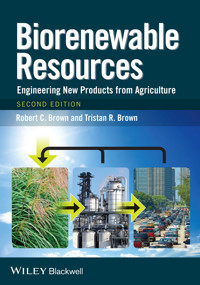
Biorenewable Resources: Engineering New Products from Agriculture, 2nd Edition will provide comprehensive coverage of engineering systems that convert agricultural crops and residues into bioenergy and biobased products. This edition is thoroughly updated and revised to better serve the needs of the professional and research fields working with biorenewable resource development and production. Biorenewable resources is a rapidly growing field that forms at the interface between agricultural and plant sciences and process engineering. Biorenewable Resources will be an indispensable reference for anyone working in the production of biomass or biorenewable resources.
Sie lesen das E-Book in den Legimi-Apps auf:
Seitenzahl: 597
Veröffentlichungsjahr: 2013
Ähnliche


















Contents
Cover
Title Page
Copyright
Preface
About the Authors
Chapter 1: Introduction
1.1 Transitions
1.2 Definitions
1.3 Brief History of Biorenewable Resource Utilization
1.4 Motivation for Returning to a Bioeconomy
1.5 Challenges in Using Biorenewable Resources
1.6 Foundations for a Bioeconomy
Further Reading
Chapter 2: Fundamental Concepts in Engineering Thermodynamics
2.1 Introduction
2.2 General Concepts in Mass and Molar Balances
2.3 General Concepts in Energy Balances
2.4 Chemical Equilibrium
Further Reading
Chapter 3: Organic Chemistry
3.1 Introduction
3.2 Classification of Reactions
3.3 Structural Formulas and Chemical Nomenclature
3.4 Classification of Organic Compounds
3.5 Chemistry of Lignocellulosic Plant Materials
Further Reading
Chapter 4: The Biorenewable Resource Base
4.1 Defining the Resource
4.2 Waste Materials
4.3 Dedicated Energy Crops
4.4 Properties of Biomass
4.5 Yields of Biomass
4.6 Size of Resource Base
Further Reading
Chapter 5: Production of Biorenewable Resources
5.1 Introduction
5.2 Herbaceous Crops
5.3 Woody Crops
5.4 Production of Oleaginous Species
5.5 Storage of Herbaceous and Woody Biomass
5.6 Transgenic Crops
Further Reading
Chapter 6: Products from Biorenewable Resources
6.1 Introduction
6.2 Process Heat
6.3 Biopower
6.4 Biofuels
6.5 Chemicals
6.6 Natural Fibers
Further Reading
Chapter 7: Biochemical Processing of Carbohydrate-Rich Biomass
7.1 Introduction
7.2 Fermentation of Sugars and Starches
7.3 Conversion of Lignocellulosic Feedstocks to Sugar
7.4 Distillation
Further Reading
Chapter 8: Thermochemical Processing of Lignocellulosic Biomass
8.1 Introduction
8.2 Direct Combustion
8.3 Gasification
8.4 Fast Pyrolysis
8.5 Solvolysis
8.6 Chemical Upgrading to Transportation Fuels
Further Reading
Chapter 9: Processing of Oleaginous Biomass
9.1 Introduction
9.2 Lipids
9.3 Lipid Extraction
9.4 Transesterification of Triglycerides
9.5 Catalytic Upgrading of Triglycerides
9.6 Other Processing Options for Oleaginous Biomass
Further Reading
Chapter 10: Processing of Biorenewable Resources into Natural Fibers
10.1 Introduction
10.2 Mechanical Pulping
10.3 Chemical Pulping
10.4 Depithing
Further Reading
Chapter 11: Environmental Impact of the Bioeconomy
11.1 Introduction
11.2 Plant Science
11.3 Production
11.4 Processing
11.5 Utilization
Further Reading
Chapter 12: Economics of Biorenewable Resources
12.1 Introduction
12.2 Estimating the Cost of Feedstock from Biorenewable Resources
12.3 Estimating Unit Cost for Manufacturing Biobased Products
12.4 Estimating the Economic Feasibility of Biorenewable Pathways
12.5 Costs of Manufacturing Various Biobased Products
Further Reading
Chapter 13: Biorenewable Policy
13.1 Introduction
13.2 Subsidies
13.3 Emission Controls
Further Reading
Appendix A: Descriptions of Biorenewable Resources
Sugar Crops: Sugar Beets
Sugar Crop: Sugarcane
Sugar Crop: Sweet Sorghum
Starch Crop: Cassava
Starch Crop: Maize
Inulin Crop: Jerusalem Artichoke
Oleaginous Crop: Aveloz
Oleaginous Crop: Canola
Oleaginous Crop: Chinese Tallow Tree
Oleaginous Crop: Jojoba
Oleaginous Crop: Rapeseed
Oleaginous Crop: Soybean
Oleaginous Crop: Sunflower
Herbaceous Crop: Big Bluestem
Herbaceous Crop: Kenaf
Herbaceous Crop: Miscanthus
Herbaceous Crop: Switchgrass
Woody Crop: Black Locust
Woody Biomass: Eucalyptus
Woody Crop: Hybrid Poplar
Woody Crop: Mesquite
Woody Crop: Willow
Aquatic Species: Giant Brown Kelp
Aquatic Species: Common Water Hyacinth
Aquatic Species: Microalgae
Appendix B: Conversion Factors
Area
Volume
Weight
Energy
Power
Index
This edition first published 2014 © 2014 by John Wiley & Sons, Inc. First edition published 2003 © Iowa State Press
Editorial offices: 1606 Golden Aspen Drive, Suites 103 and 104, Ames, Iowa 50010, USA The Atrium, Southern Gate, Chichester, West Sussex, PO19 8SQ, UK 9600 Garsington Road, Oxford, OX4 2DQ, UK
For details of our global editorial offices, for customer services and for information about how to apply for permission to reuse the copyright material in this book please see our website at www.wiley.com/wiley-blackwell.
Authorization to photocopy items for internal or personal use, or the internal or personal use of specific clients, is granted by Blackwell Publishing, provided that the base fee is paid directly to the Copyright Clearance Center, 222 Rosewood Drive, Danvers, MA 01923. For those organizations that have been granted a photocopy license by CCC, a separate system of payments has been arranged. The fee codes for users of the Transactional Reporting Service are ISBN-13: 978-1-1185-2495-4/2014.
Designations used by companies to distinguish their products are often claimed as trademarks. All brand names and product names used in this book are trade names, service marks, trademarks or registered trademarks of their respective owners. The publisher is not associated with any product or vendor mentioned in this book.
Limit of Liability/Disclaimer of Warranty: While the publisher and author(s) have used their best efforts in preparing this book, they make no representations or warranties with respect to the accuracy or completeness of the contents of this book and specifically disclaim any implied warranties of merchantability or fitness for a particular purpose. It is sold on the understanding that the publisher is not engaged in rendering professional services and neither the publisher nor the author shall be liable for damages arising herefrom. If professional advice or other expert assistance is required, the services of a competent professional should be sought.
Library of Congress Cataloging-in-Publication Data
Brown, Robert C. (Robert Clinton) Biorenewable resources engineering new products from agriculture / Robert C. Brown, Tristan R. Brown. – Second edition. pages cm Includes bibliographical references and index. ISBN 978-1-118-52495-4 (cloth) 1. Biomass energy. I. Brown, Tristan R. II. Title. TP339.B76 2014 333.95′39–dc23 2013033684
A catalogue record for this book is available from the British Library.
Wiley also publishes its books in a variety of electronic formats. Some content that appears in print may not be available in electronic books.
Cover images: blue sky © loongar; Miscanthus © martypatch; fuel production © tornadochaser; street view © tose Cover design by Matt Kuhns
Preface
Biorenewable Resources was originally published in 2003 as a textbook to support a new interdisciplinary graduate program in Biorenewable Resources and Technology at Iowa State University. This was two years before the passage of the Energy Policy Act of 2005 launched the biofuels boom in the United States. At the time there was relatively little current scientific literature to support the preparation of the book due to many of the sources dating back a decade or more. The field has grown tremendously since then, encouraging the publication of a second edition of Biorenewable Resources.
As with the first edition, the second edition is intended as a text for upper level undergraduate students and first year graduate students in science and engineering who are seeking a broad perspective of the emerging field of biorenewable resources. Traditional academic disciplines are organized to provide students in-depth training and intellectual focus in a single field such as agriculture, chemistry, engineering, environmental science, or economics. Biorenewable Resources brings together these disciplines to provide students with an appropriate system perspective valued by prospective employers and those seeking to work in this field.
The thirteen chapters of this book do not assume any previous training in biorenewable resources, although most students should have undergraduate training in science or engineering. Chapter 1 is an introduction to the field of biorenewable resources, which includes a brief history of the use of biorenewable resources and a description of the motivations for advancing the biobased products industry. Chapters 2 and 3 provide fundamental concepts of engineering thermodynamics and organic chemistry important to understanding bioenergy and biobased products. These two chapters are aimed at students who may have deficiencies in these concepts or who desire a review of the topics. The chapter on engineering thermodynamics includes expanded descriptions of mass and molar balances applied to conversion, yield, and selectivity of chemical reactions. It also includes discussions on energy return on energy invested and the role of exothermic versus endothermic reactions in the manufacture of energy products. Chemical equilibrium receives more extensive treatment than in the first edition. The chapter on organic chemistry includes descriptions of anhydrosugars, important in thermochemical conversion of carbohydrate-rich biomass, and lignin chemical composition.
Chapter 4 is a description of biorenewable resources. This chapter includes sections that defines the resource base, categorizes the different kinds of biorenewable resources, including both waste materials and dedicated energy crops, describes properties that are important to the handling and processing of biorenewable resources, provides information on yields of various kinds of biomass, and assesses the availability of different kinds of biorenewable resources. The second edition includes extensive coverage of oleaginous (lipid-rich) biomass such as microalgae. Chapter 5 is an introduction to production of biorenewable resources. In addition to descriptions of growing and harvesting herbaceous energy crops and short rotation woody crops, the second edition describes cultivation and recovery of microalgae, considered a promising aquatic species for production of biofuels and biobased products. This chapter also includes descriptions of storage systems and the prospects for using transgenic crops in production of biorenewable resources. Chapter 6 is an introduction to the wide array of bioenergy and biobased products that are currently produced or anticipated from biorenewable resources. Major topics in this chapter include process heat, biopower, biofuels, commodity chemicals, synthetic biopolymers (new to the second edition), and natural fibers.
The next four chapters are devoted to the processes by which biorenewable resources are transformed into bioenergy and biobased products. Chapter 7 focuses on biochemical conversion of carbohydrate-rich feedstocks to ethanol and other products, including hydrocarbons (new to the second edition). Chapter 8 describes thermochemical conversion of lignocellulosic biomass. The second edition expands coverage of gasification technology to include syngas cleaning and catalytic upgrading to fuels and chemicals. Considering the increasing interest in pyrolysis as a pathway to biofuels, this topic has been expanded to include fundamentals of pyrolysis, different kinds of pyrolysis processes and equipment, and catalytic upgrading of bio-oil to biofuels. Solvolysis has been added as an alternative approach to producing bio-oil or sugars. Chapter 9 considers both biochemical and thermochemical processes for the conversion of oleaginous biomass into fuels and other products. Chapter 10 explains how natural fibers can be separated from biorenewable resources for use in the manufacture of paper and building materials.
The final three chapters deal with environmental, economic, and policy issues. Chapter 11 describes the environmental impact of producing and processing biorenewable resources and using the resulting products. Extensive discussion of land use change (both direct and indirect) associated with production of biofuels is included in the new edition. Chapter 11 also describes environmental concerns associated with the use of transgenic crops as biorenewable resources. Chapter 12, an introduction to the economics of biorenewable resources, has been extensively updated to reflect current methodologies in technoeconomic analysis of biorenewables. The chapter includes separate discussions on estimating the costs of producing crops and manufacturing biobased products. The chapter concludes with specific cost estimates for various biobased products. Chapter 13, new to the second edition, explores the role of government policy in promoting the adoption of biofuels as an alternative to fossil fuels and imported petroleum. The chapter describes the various policies employed by governments around the world to promote bioenergy.
Although many colleagues influenced the preparation of the first and second edition, we would like to especially acknowledge the assistance of Kaige Wang in reviewing some of the chapters; Chris Deal in researching the biorenewable resources described in Appendix A; Trevor Brown for preparing the illustrations new to this edition; Carolyn Brown in assisting with indexing; and Justin Jeffryes and Stephanie Dollan at Wiley for providing assistance and encouragement in preparing the second edition. Of course, errors and omissions are solely the responsibility of the authors. We would also like to thank our wives, Carolyn and Kate, for tolerating this father-son collaboration, which cut into much “free time” during the last year.
Robert C. Brown and Tristan R. Brown Ames, IA October 2013
About the Authors
Robert C. Brown is Anson Marston Distinguished Professor of Engineering and Gary and Donna Hoover Chair in Mechanical Engineering at Iowa State University (ISU). He is the founding director of ISU's Bioeconomy Institute and helped establish ISU's Biorenewable Resources and Technology interdisciplinary graduate program.
Tristan R. Brown is an attorney working on issues of energy policy. He has written extensively on topics ranging from global trade law to economics of biofuels. He also teaches graduate level courses in biorenewables technology, law, and policy. He is currently a doctoral student at Iowa State University.
CHAPTER 1
Introduction
1.1 Transitions
Mankind has gone outside the biotic (i.e., derived from living organisms) environment for the majority of its material needs only recently. Plant-based resources were the predominant source of energy, organic chemicals, and fibers in the West as recently as 150 years ago, and they continue to play important roles in many emerging economies. The transition to non-biological sources of energy and materials was relatively swift and recent in the history of the world. Many assumed that the transition was irreversible. Indeed, in the 1960s it appeared that fossil fuels were only a short bridge to the nuclear age, with fission reactors supplying energy for power and transportation fuels in the waning decades of the twentieth century, while fusion reactors would ultimately provide limitless supplies of energy. In this scenario, petroleum and natural gas would continue as the source of building blocks for organic chemical synthesis.
Reality has proved more complicated, uncertain, and unsettling. In many parts of the world, nuclear fission has not lived up to its promise and has become a political pariah in the face of reactor safety concerns and unresolved questions about radioactive waste disposal. Nuclear fusion has a lively history of tokamaks, inertial confinement, and cold fusion, but no breakeven in energy output. Petroleum continues to supply most of the world's demand for transportation fuels and commodity chemicals but the remaining reserves are increasingly concentrated in the hands of a few capricious nations. Coal is plentiful but introduces tremendous burdens on the environment, ranging from acid rain to mercury poisoning. Concerns about global climate change due to carbon dioxide emissions raise questions about the future use of all fossil fuels. In this political and social climate, there are calls for the development of reliable and long-term resources that have fewer areas of environmental impact than fossil resources. This book explores a return to the biotic environment for energy, chemicals, fuels, and fibers.
1.2 Definitions
Biorenewable resources, also known as biomass, are organic materials of recent biological origin. Biomass is obtained from the thin region near the surface of the Earth known as the biosphere that supports living organisms. Biomass may be grown as crops, but the vast majority of the world's biorenewable resources are forests, prairies, marshes, and ocean biomes. The energy to build the chemical bonds of these organic materials comes mostly from sunlight. Solar energy collected by photosynthetic organisms is converted into energetic chemical bonds to produce proteins, oils, and carbohydrates. This stored chemical energy is raw material that can be used as a resource of renewable carbon and energy for the production of bioenergy and biobased products. In contrast, coal, oil, and natural gas are thought to be derived from microorganisms and plants buried and transformed into fossil fuels eons ago. In this view, the only difference between biomass and fossil fuels is the degree that nature processes biogenic materials.1
Biorenewable resources, by definition, are sustainable natural resources. Sustainable implies that the resource renews itself at such a rate that it will be available for use by future generations. Thus, a stand of grass cut every year for a hay crop represents a biorenewable resource, while a field cleared in a tropical rainforest for “slash and burn” agriculture is not.
Human societies, like living organisms, require sources of energy and carbon to survive and grow. Most living organisms obtain energy and carbon from the biosphere. In contrast, most modern human societies rely on fossil resources for energy and carbon, although this is a relatively recent historical development. Before wide-scale exploitation of fossil resources starting in the eighteenth century, human societies were almost completely dependent on biorenewable resources. The challenge of the twenty-first century is to create a bioeconomy, in which human societies obtain sustainable sources of energy and carbon from the biosphere.
Energy from biorenewable resources is used to produce bioenergy. Carbon from biorenewable resources is used to produce biobased products. Of course, bioenergy is based on fuels that contain carbon and biobased products contain chemical energy in their carbon bonds, but it is useful to distinguish between these two kinds of products from biorenewable resources as either sustainable sources of energy or carbon.
Bioenergy includes process heat, biopower, and biofuels. Process heat is often thought of thermal energy for industrial processing, but it also includes energy used for residential and commercial thermal energy demand such as space and water heating.
Biopower is the conversion of biorenewable resources into electrical power. When power generation is based on heat engines, the chemical energy of biorenewable resources is first converted into thermal energy before conversion into power. When power generation is based on electrochemical fuel cells, the chemical energy of biorenewable resources is first converted into hydrogen before conversion to power.
Biofuels are chemicals derived from biorenewable resources that have sufficient volumetric energy densities (enthalpies of reaction per unit volume) and combustion characteristics to make them suitable as transportation fuels. Most biofuels are liquids such as ethanol or green diesel, but compressed gases have also been proposed and evaluated for use in vehicular propulsion. It should be kept in mind that another way to use biorenewable resources for transportation is to convert it to biopower and store the electricity in vehicular batteries—electric cars.
Biobased products include chemicals and materials. Biobased chemicals include fine chemicals like pharmaceuticals and nutraceuticals, but the emphasis is on high-volume commodity chemicals. Biobased materials can be thought of as finished products manufactured from biorenewable resources. Most prominent in this category are biobased fibers, including both natural fibers and synthetic fibers. Natural plant fibers are bundles of long, thin plant cells with durable walls of lignocellulose (animal fibers are also natural fibers but are not treated in this book). Synthetic fibers are spun from synthetic polymers, manufactured from chemical building blocks known as monomers. Petroleum is the source of the vast majority of monomers and hence synthetic fibers, but synthetic fibers can also be manufactured from monomers derived from biorenewable resources.
1.3 Brief History of Biorenewable Resource Utilization
Many of the advances in early human society were based on the exploitation of biorenewable resources. The first campfire, dating to as early as 500 000 years before the present (BP), was most surely kindled from wood rather than coal. Evidence that vegetable oils and animal fats were sources of illumination by 40 000 years BP is found at Upper Paleolithic cave sites in Europe. Draft animals represented mankind's first use of prime movers other than their own muscle power. Grasses and cultivated grains, fed to draft animals, provided power and transportation needs in early societies.
Except for stone tools, virtually all possessions until the advent of the Bronze Age were biobased products. Wood was a versatile composite material for the construction of hunting and farming implements. Cotton fibers were spun and twined in Peru as long ago as 12 000 years BP. Fermentation of sugars to ethanol was mastered as long ago as 6000 BP, but the product remained too precious for any but convivial purposes for thousands of years afterward.
Wood remained the primary fuel for most pre-twentieth-century societies, although there are traditions of using grass for steel making in Africa and “lightly processed” grass in the form of dried buffalo dung for cooking fires in the American West. The preeminence of bioenergy began to wane when the great forests of the Northern Hemisphere were depleted by the voracious fuel demand in the manufacture of copper, iron, and glass and the powering of steam engines. By the mid-eighteenth century, coal had supplanted wood as the primary energy source for European and North American countries.
Biorenewable resources continued to be important as sources of chemicals and materials for another 75 years aided by advances in industrial chemistry. Gum turpentine, rosins, and pitches, collectively known as naval stores, were extracted from coniferous trees for maintaining wooden ships and ropes. Natural latex from the hevea rubber tree was vulcanized to an elastic, waterproof material used in numerous consumer products. The “destructive distillation” of wood yielded methanol (wood alcohol) and other industrially important compounds. Wood pulping was developed to separate cellulose fibers used in paper and cardboard products. From cellulose came the first semi-synthetic plastic, celluloid. Advances in the brewery industry eventually led to commercial fermentation of a variety of organic alcohols and acids with applications far beyond the beverage industry.
With the exceptions of lumber production for building materials, fiber production (wood pulping and cloth manufacture), and ethanol fermentation, the manufacture of biobased products rapidly declined in the twentieth century. This decline was not the result of resource scarcity, as was the case for bioenergy. Instead, rapid advances in the chemistry of coal-derived compounds during the late nineteenth century followed by the development of the petrochemical industry in the early twentieth century provided less expensive and more easily manipulated feedstock for the production of chemicals and materials.
1.4 Motivation for Returning to a Bioeconomy
Despite gradually rising prices for fossil fuels since that time, economics currently do not favor bioenergy and biobased products. However, other factors are coming into play that increases the attractiveness of biorenewable resource utilization. These factors include desires to improve environmental quality, concerns that national security is compromised by overreliance on foreign sources of fossil fuels, the presence of excess agricultural production capacity in many developed nations, and the importance of rural development in improving economies of many agricultural regions.
1.4.1 Environmental Quality
The production and utilization of fossil fuels introduce several environmental burdens of increasing concern. These burdens have local, regional, and global impacts.
Production includes mining for coal and drilling for petroleum and natural gas. Most of the impacts are local in nature. Mining leaves behind spoil piles and acid drainage. Drilling can result in oil spills or sites contaminated by drilling mud or brackish water.
Utilization of fossil fuels can yield a plethora of local, regional, and environmental impacts. Local impacts can arise from solid waste disposal sites for ash from coal combustion or coke or sulfur from petroleum refineries. Combustion of coal or petroleum-based motor fuel also produces carbon monoxide, fine particulate matter, and smog as local pollution problems. Regional impacts of fossil energy utilization are mostly the result of acid rain, which is generated from sulfur dioxide and nitrogen oxides released during combustion. Acid rain can affect environments half a continent away from the point of pollutant emission. Global impacts are of two kinds: ozone depletion in the stratosphere and global climate change. Ozone depletion is usually associated with the release of chlorofluorocarbons from refrigeration equipment and aerosol cans. Nitrogen oxides have also been implicated in upper atmosphere reactions that destroy ozone molecules. However, the greatest concern with regard to global impact is the possible role of carbon dioxide released during combustion in contributing to the greenhouse effect in the atmosphere. Although the magnitude of this problem is still being assessed, there have been calls to greatly reduce the net rate of emission of carbon dioxide from the use of fossil fuels.
Bioenergy and biobased products are not a panacea for these problems. However, the environmental burden from the use of biorenewable resources is generally much less than from the use of fossil resources. An exact accounting of the benefits of using biorenewable resources is a difficult and sometimes politically charged process. For example, some argue that the benefits of using a 10% blend of ethanol in gasoline to reduce carbon monoxide emissions from spark-ignition engines are outweighed by the increased volatility of this fuel blend, which increases the release of unburned hydrocarbons to the atmosphere, a factor in smog formation.
1.4.2 National Security
In 1974, a severe economic crisis developed in many parts of the world as a result of disruptions in the distribution of petroleum to markets. The so-called energy crisis was commonly ascribed to dwindling reserves of petroleum resources, and many experts predicted that looming energy scarcity would drive petroleum prices from a few dollars per barrel to over $100, plunging the world into an economic depression that would be difficult to reverse. These concerns provided the impetus for a short-lived effort in the United States to commercially implement alternative energy sources, including solar, wind, biomass, and coal, to provide future energy. However, by 1980 petroleum prices had considerably moderated, and it was understood that an actual shortage of energy had never existed. Instead, a decision by Arab nations to boycott the sale of petroleum to the United States was responsible for temporary escalations in the world price of oil. The boycott was an effort to influence US foreign policy in the Middle East, which favored the state of Israel in its conflicts with surrounding Arab states. Although disruptive in the short term, ultimately the boycott and various production quotas were lifted and the world price for petroleum dropped. This threat to national security failed because the United States and other nations responded by reducing their dependence on foreign sources of oil through energy conservation and energy efficiency improvements and by switching to domestic energy sources, mostly coal, natural gas, and petroleum. As demand for Middle Eastern petroleum dropped, these countries saw the major source of their revenues evaporating; economic survival forced them to suspend their efforts to use “the oil weapon,” as it was called.
The lesson is that effective national security incorporates an energy policy that reduces heavy reliance on foreign cartels for energy resources. However, there is some evidence that this lesson is not being heeded in the United States, where dependence on petroleum imports now exceeds that of 1974. As a percentage of petroleum demand, the role of imported petroleum into the United States exceeded 50% in 2001 and is expected to fall only slightly to 48% by 2020. With two-thirds of world petroleum reserves located in the Middle East (including the Caspian basin), increased dependence is inevitable unless domestic energy sources such as biorenewable resources are developed.
1.4.3 Excess Agricultural Production
A frequently expressed concern about shifting agriculture toward production of biobased products is the potential impact on food production. Securing a safe and inexpensive food supply is the keystone of agricultural policy in the United States. Many people oppose the use of agricultural lands for the production of bioenergy and biobased products on the grounds that, at best, domestic food prices will rise and, at worse, starvation will increase in developing countries that are dependent on agricultural imports.
In fact, agricultural production in excess of domestic use and export demands exists in the United States as well as in a growing number of other countries. The United States in 1990, with a population of 250 million people, had 12% less land in agricultural production than it did in 1929, when the population was only 120 million. The reason for this decline in agricultural lands is primarily due to increasing crop productivity. For example, US corn yields between 1929 and 1990 increased from 22–30 bushels per acre to 101–139 bushels per acre. These improvements are the result of advances in plant genetics, fertilizers, pesticides, and production practices. In an effort to keep production in balance with demand, the US government encouraged development of export markets for agricultural products in the last half of the twentieth century. However, this strategy did not adequately anticipate the developing world's ability to feed itself. Even China, often viewed as an unlikely candidate for self-sufficiency because of its burgeoning population of over one billion people, has in recent years become a net exporter of agricultural products.
Recognizing that overproduction threatens the stability of agriculture, the US government instituted a program called the Conservation Reserve Program to deliberately remove marginal lands from production. Producers are allowed to grow grasses or trees on enrolled acreage but cannot harvest this biomass. Almost 34 million acres were enrolled in this program in 2001 compared to about 900 million acres in production. Millions of additional acres are currently devoted to low productivity uses such as pasturage or woodlots that could provide additional land for the production of feedstocks for biobased products. Thus, devoting some land to biorenewable resources poses no immediate threat to food prices in the United States or to feeding the developing countries of the world.
1.4.4 Rural Development
The impact of modern agriculture has not been completely positive. Increases in labor productivity in agriculture have reduced labor costs but contributed to the depopulation of rural communities. Improvements in transportation have expanded opportunities for trade but put US farmers in direct competition with producers in developing nations, where land values are a fraction of what they are in the United States. The highly integrated agricultural processing industry is successful in capturing value from agriculture, of which producers share little. Whereas return in investment in the food processing industry is typically 15%, production agriculture rarely yields returns greater than 1–3%.
As a result, agriculture in developed nations is increasingly dependent on government subsidies to be viable. In the United States, government payments represent in excess of 50% of gross income for typical producers. Farm subsidies in 1997 reached $23 billion. Despite this assistance, producers are increasingly turning to off-farm jobs for supplemental income to support their families. US farming has also consolidated during the twenty-first century, with a larger share of production being attributed to a small number of very large (and often corporate) farmers in an effort to reduce costs via economies of scale.
Both producers and rural communities are looking for new opportunities to boost income and economic development. Development of crops for new markets, especially those that are processed locally into value-added products, would provide significant opportunities for rural development. US biofuels policy has already proven very successful in this regard, with 40% of the US corn crop now being diverted to a high-value fuel ethanol industry that consumed only a small fraction of the amount at the turn of the century. Advanced biorenewable pathways could further increase these opportunities by providing markets for agricultural residues and other waste products, providing a new revenue stream for producers, and by developing higher-value products from existing feedstocks.
1.5 Challenges in Using Biorenewable Resources
Biorenewable resources have a number of disadvantages compared to the fossil resources with which they compete. These include the fact that most biorenewable resources are solid materials of low bulk density, high moisture content, low heating value, and high oxygen content compared to fossil fuels.
The solid nature of biomass is both blessing and curse. Solids are easily collected by hand and can be stored in bins. These advantages were especially important to early human societies, which did not have technology to handle large quantities of liquids and gases. However, solids are notoriously difficult to handle and process in the automated industries of the modern world.
Gases and liquids can be moved hundreds and even thousands of miles through pipelines and stored in tanks with a minimum of human intervention. These fluids do not clog pumps and pipes unless they are carrying solids along with them. The flow of gases and liquids are easily metered with relatively simple instruments and their flow rates can be regulated by the turn of a valve. Gases and liquids can be rapidly and easily dispersed or mixed, which allows them to be readily processed into heat, power, fuels, and chemicals.
Monolithic solids, of course, do not have the property of flow that expedites the handling of gases and solids. However, if solids are broken up into small particles and aerated, they acquire flow properties resembling those of liquids, a fact that has been widely exploited in the twentieth century. Grain is sucked from the holds of ships by giant vacuum cleaner-like devices rather than carried up in 50 kg sacks on the backs of stevedores. Coal is blown as fine powders into giant steam boilers rather than shoveled onto grates by firemen. Even the backbreaking work of shoveling snow from driveways has been replaced by snow blowers that chop up the snow and convey it pneumatically.
Nevertheless, the handling of solids remains a problem. The process of converting solids into granular or powdered materials is an energy intensive process—as little as 10% of the energy consumed by crushing, grinding, or cutting machines actually goes into dividing the materials, the rest dissipated as thermal energy. Particulate materials do not flow as smoothly or predictably as gases and liquids. Particles as coarse as woodchips or as fine as flour can easily clog hoppers and transport lines. Solids metering and control devices are not as reliable or available as for gas and liquid flows. Finely divided solids can present special erosion problems and explosion hazards. Solids handling systems are uniformly acknowledged as high maintenance items in industrial processes.
Typically, the density of biomass is so low that the volume rather than the weight of biomass that can be transported will limit the capacity of the transportation systems. Accordingly, the number of trucks or railcars required to supply a conversion facility will increase as the volumetric density of the fuel decreases. For example, a conventional steam power plant with a relatively modest electric power output of 50 MW would require up to 75 tractor-trailer loads of biomass per day to stoke the boilers compared to as few as 28 weight-limited loads of coal. Similar arguments apply to the size of the boiler. A boiler designed to burn biomass must be much larger than a coal-fired boiler of comparable thermal output because of the lower energy density of biomass compared to coal. The moisture content of green biomass also detracts from its performance as fuel. Freshly harvested biomass can have moisture content of 50% or more. This additional weight needlessly adds to the cost of transporting the fuel to a conversion facility. In some conversion processes, such as anaerobic digestion, high moisture content may be beneficial to the conversion process. In other cases, such as direct combustion, high moisture exacts a high penalty on the conversion process. Field drying is feasible for many biomass crops but may only reduce moisture content from 20% to 25%. For some processes, additional drying at the conversion plant is required. Freshly mined coal also contains moisture: in some western coals it can be as high as 30%. However, moisture is generally much less of a problem in coal.
Biomass must compete with a variety of fossil resources, including petroleum, natural gas, and coal. Since they are both solid fuels, substituting biomass for coal might seem a more competitive entry into energy markets dominated by fossil fuels. However, on a purely thermodynamic basis, biomass is generally inferior to coal. Coals have heating values typically in the range of 23–28 MJ/kg. On a mass basis, the heating values of biomass are 16–20 MJ/kg, which is 20–30% lower than coal. Exacerbating this situation is the significantly lower densities of biomass compared to coal: mined coal has a bulk density of around 880 kg/m3 compared to 545 kg/m3 for hybrid poplar logs and 230 kg/m3 for baled switchgrass. On a volumetric basis, the heating value of biomass is only 20–50% that of coal. Volumetric heating value is an important consideration both in the transport of biomass to a conversion facility and in the conversion process itself.
Most biorenewable resources contain a significant portion of oxygen, up to 45 wt% for lignocellulosic biomass. In contrast, fossil resources contain substantially less oxygen, which may be as high as 25 wt% in lignite coal and virtually absent in natural gas and petroleum. Although “oxygenated” fuels are touted for their environmental performance as motor fuels, in general, chemically bonded oxygen is responsible for the lower heating values of biobased fuels as well as many of the difficulties of substituting biobased chemicals for petroleum-based chemicals. This difficulty can be resolved by removing oxygen from compounds derived from biorenewable resources to yield hydrocarbons, although this increases the energy consumption for the overall process.
1.6 Foundations for a Bioeconomy
An economy built upon biorenewable resources must be able to supply transportation fuels, commodity chemicals, natural fibers for fabrics and papermaking, and energy for process heat and electric power generation. There is precedence for producing all of these products from biorenewable resources. However, many of the conversion technologies currently do not yield products that are cost-competitive with the fossil-based products that dominate today's markets. This situation is likely to change as technologies improve for producing biobased products, and environmental and political factors make green products from indigenous resources more attractive. The remaining chapters of this book explore various opportunities for making biobased products.
Further Reading
Brown, R. and Brown, T. (2012) Why Are We Producing Biofuels? Brownia, LLC.
Brunori, G. (2013) Biomass, biovalue and sustainability: some thoughts on the definition of the bioeconomy. Euro Choices, 12, 48–52.
Chisti, Y. (2010) A bioeconomy vision for sustainability. Biofuels, Bioproducts and Biorefining, 4, 359–361.
National Research Council (2000) Biobased Industrial Products: Priorities for Research and Commercialization. Washington, DC: National Academy Press.
Smil, V. (1994) Energy in World History. Boulder, CO: Westview Press.
1. For a fascinating presentation of an abiogenic hypothesis on the origin of fossil fuels, see Thomas Gold's The Deep Hot Biosphere.
CHAPTER 2
Fundamental Concepts in Engineering Thermodynamics
2.1 Introduction
Engineering thermodynamics provides the foundation in mass and energy balances essential to understanding bioenergy and biobased products. Accounting for these balances is more complicated than for energy conversion processes that do not include chemical reaction because chemical constituents change and energy is released from the rearrangement of chemical bonds.
This chapter is designed to introduce or reacquaint readers, as appropriate, to fundamental concepts in engineering thermodynamics. The treatment does not pretend to be exhaustive; readers requiring additional background are directed to the list of reference materials at the end of this chapter.
2.2 General Concepts in Mass and Molar Balances
In the absence of chemical reaction, the change in mass of a particular constituent within a control volume is equal to the difference in net mass flow of the constituent entering and exiting the control volume. Figure 2.1 illustrates mass balance for a system consisting of five inlets and five exits. In general, the mass balance for a given chemical constituent can be written in the form:
Lesen Sie weiter in der vollständigen Ausgabe!
Lesen Sie weiter in der vollständigen Ausgabe!
Lesen Sie weiter in der vollständigen Ausgabe!
Lesen Sie weiter in der vollständigen Ausgabe!
Lesen Sie weiter in der vollständigen Ausgabe!
Lesen Sie weiter in der vollständigen Ausgabe!
Lesen Sie weiter in der vollständigen Ausgabe!
Lesen Sie weiter in der vollständigen Ausgabe!
Lesen Sie weiter in der vollständigen Ausgabe!
Lesen Sie weiter in der vollständigen Ausgabe!
Lesen Sie weiter in der vollständigen Ausgabe!
Lesen Sie weiter in der vollständigen Ausgabe!
Lesen Sie weiter in der vollständigen Ausgabe!
Lesen Sie weiter in der vollständigen Ausgabe!




