


14,39 €
Mehr erfahren.
- Herausgeber: Pitkin
- Kategorie: Lebensstil
- Sprache: Englisch
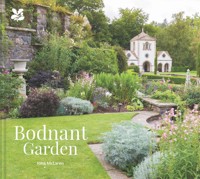
"One of the wonders of the world" Harold Nicolson From its humble origins, Bodnant (which in Welsh means 'dwelling by the stream'), this historic Grade 1 listed garden has become a must-visit attraction for garden lovers around the globe. Nestled in the Conwy Valley, in the foothills of Snowdonia, the climate and soil – as well as the vision of five generations of one family – have shaped this garden into a world-class masterpiece. With eighty acres that include elegant terraces, glades, dells and water gardens – and not least the famous laburnum arch – theatrical vistas await at every viewpoint. Bodnant Garden was given into the care of the National Trust in 1949 and with their support and commitment to continue the legacy they are intent on making Bodnant accessible and enjoyed widely by all. Highlights include: - Laburnum Arch – a dazzling 55 metre walkway under a pergola of golden flowers - The Dell – a valley of giant trees and a meandering river - The Italianate Terraces – breathe in the fragrance of beautiful old roses as you explore the terraces - Rhododendrons – see some of the award-winning plants and hybrids that have established Bodnant on the world horticultural stage
Das E-Book können Sie in Legimi-Apps oder einer beliebigen App lesen, die das folgende Format unterstützen:
Seitenzahl: 186
Veröffentlichungsjahr: 2021
Ähnliche



















Bodnant Garden
Contents
A Foreword by HRH The Prince of Wales
Introduction
Map of Bodnant Garden
The Garden at Bodnant: A Tour
Early History
The Pochin Years
Big Business
Pochin Comes to Bodnant
‘Dim and Grim Old English’
The Victorian Garden
‘I Cannot Monopolise All This Magnificent Scenery’
Black Sheep
The McLarens: Laura and Harry
Laura McLaren
The Terraces
Harry Takes Over
Experimenting With Rhododendrons
The Plant-Hunter Years
Plant Hunters
George Forrest
Harry’s Chinese Collectors
Collecting for the Nation
Plant Hunters All Over the World
If You Like It, Plant Lots Of It
The Genius of Frederick Puddle
Green Fingers
Rhododendron Hybrids at Bodnant
From Wartime to Present Day
The Pin Mill
Wartime
Post-War
Monuments of British Gardening
Charles Takes Over
Opening Up
Behind the Scenes
The Gardeners’ Year
Everything in Balance
Index
Acknowledgements
A Foreword by HRH The Prince of Wales
The Round Garden
Introduction
On 18 August 1952, Harold Nicolson – whose wife, Vita Sackville-West, had in the 1930s made the gardens at Sissinghurst in Kent – wrote in his diary:
‘At Bodnant. A happy day. It drizzles a bit, but Vita and I are conducted by Harry [Aberconway] round the garden. He devotes his whole day to us. In the morning, we go round the dell, which is the most extensive, most varied and most tasteful piece of planting I have ever seen. We then go round the rest of the garden after luncheon. Then after tea we go through the nurseries and glass-houses. I have no doubt at all that this is the richest garden I have ever seen. Knowledge and taste are combined with enormous expenditure to render it one of the wonders of the world. Viti is wonderful at remembering the names of everything, and she is happy and looks so well and lovely when it is all over.’
Bodnant is one of the wonders of the world. Certainly, there are other gardens with splendid views. There are other gardens that cascade theatrically down sloping ground. There are gardens with magnificent collections of rare plants, there are superb formal gardens, traced out in elegant stone, and there are intoxicating wild ones, threaded with running water. But is there any single garden, apart from Bodnant, that can justly claim to be all these at once?
It is a garden to please a glutton, the sort of person who might order in a restaurant not one dish but five, and greedily hope that each will come as an extra big helping. As Edward Hyams put it in The English Garden (1964), ‘Once inside this great garden, in which every device of every good school of English gardening has been used, you are inside the English gardener’s dream.’
If one has not yet walked around Bodnant, and merely heard about it, one has necessarily underestimated it in some respect, if only because it is so overwhelming on so many fronts at once. One of them is size. Within its 80 acres (32 hectares), and 7 miles of paths, one can get quite seriously lost. As H. Avray Tipping wrote in Country Life, 17 July 1920, ‘Bodnant is not merely a garden. It is a gardened demesne, occupying steep chine-riven descents from the mountainous heights to the rich alluvial flats that border the Conway river as it approaches the sea.’
It is a garden to excite the plantsman, the result of decades spent propagating rarities, sponsoring plant hunters, hybridising and breeding superior strains. There are five National Collections here – of magnolias, embothriums (Chilean fire tree), eucryphias, Rhododendron forrestii and Bodnant hybrid rhododendrons – as well as around 40 of the British Isles’ Champion Trees. In Tipping’s words, ‘Bodnant is a spot where a complete garden education can be received.’
The McLaren family, who made the garden and still live in the house, used to send their children out on Christmas Day to test their plantsmanship: they got one point if they found something in bloom in the garden, another point if they knew its English name, and a third if they knew its Latin name. On Christmas Day in 1980, 61 different species across the garden were found to be in bloom – not bad for midwinter.
But the visitor does not need the smallest scrap of horticultural lore to find the garden a delight. As Harry McLaren, the second Lord Aberconway and the man most responsible for the garden’s creation, once said: ‘You know the story of the old, bald-headed man. A small boy shouted after him, “Go on, old baldhead!” and he said, “My boy, the head is a dome for noble thoughts, and not a mere rendezvous for hair.” If some people who design gardens would say to themselves “A garden is a place for wonderful design, and not a mere rendezvous for odd plants”, they would have better gardens than some of them have today.’
Bodnant is a rendezvous for some very odd plants indeed, but it is also, without doubt, wonderfully designed. This is thanks to the vision of the family who made it, and passed it down from parent to child, starting with the Victorian inventor and industrialist Henry Davis Pochin, who gave it to his daughter Laura McLaren, and she to her son Harry Aberconway. In 1949, Harry gave Bodnant to the National Trust, but kept the running of it, to be succeeded by his son Charles Aberconway, and by his grandson Michael McLaren, who today is the director of the garden on behalf of the National Trust. The family were superbly assisted by their head gardeners, notably three generations of the Puddle dynasty – Frederick (head gardener 1920–47), his son Charles (1947–82) and his son Martin (1982–2005) – and, since then, Troy Scott Smith and John Rippin. Today there is a team of 25 full-time gardeners and some 50 volunteers.
Author Iona McLaren, whose great-great-great grandfather purchased Bodnant in 1874
This book aims to give a sense of the garden and its various parts as they look today; it traces the history of how it came to be so; and it follows the gardeners of Bodnant through a typical year, month by month, to see the labours required to keep such a garden looking magnificent.
KEY
1. Entrance
2. Kitchen Garden Wall
3. Yew Arbour
4. Laburnum Arch
5. Top Lawn
6. Dutch Garden
7. Range Border
8. Front Lawn
9. Winter Garden
10. Round Garden
11. Ha-ha
12. The Park
13. Top Terrace
14. The Bath
15. Hanmer’s Pool
16. Arboretum
17. Upper Rose Terrace
18. Croquet Terrace
19. Lily Terrace
20. Lower Rose Terrace
21. Canal Terrace
22. Meadow
23. Yucca Garden
24. North Garden
25. Magnolia Borders
26. Pin Mill
27. Kipper Box Seat
28. Old Mill
29. The Dell/Pinetum
30. Furnace Hill
31. Fall Walk
32. The Rockery
33. Shrub Borders
34. Magnolia Glade
35. Chapel Park
36. Swan Pond
37. Yew Dell
38. Quarry Garden (private)
39. New Planting
40. Far End
41. Skating Pond
42. Waterfall
43. Old Bodnod Knoll
44. Furnace Meadow
45. Bodnant Hall
CHAMPION TREES
A. Taxus baccata f. aurea
B. Acer mandschuricum
C. Acer palmatum ‘Hagoromo’
D. Meliosma pinnata var. oldhamii
E. Chamaecyparis pisifera ‘Squarrosa’
F. Sequoiadendron giganteum ‘Pendulum’
G. Chamaecyparis lawsoniana ‘Lutea’
H. Acer truncatum
I. Sorbus pallescens
J. Pinus ayacahuite
K. Pinus muricata
The Dell
The Lily Terrace with Snowdonia’s Carneddau beyond
Bodnant has more winding paths than there are strands of pasta in a dish of spaghetti, and the idea of a single route that can take them all in is a logical impossibility. What follows in this chapter is an imaginary walk that, while gesturing to the roads not taken, introduces the most famous parts of the garden. If it helps to plot the route with a finger, there is a map on here.
The Garden at Bodnant: A Tour
The garden is broached by a high arch in the old kitchen garden wall, surmounted by an urn. Once through the wall, the mountain air is immediately richer: in the warm months, sweeter with blossom; in the cold months, spicier with the decay of exotic leaves.
Here are terraced lawns: the higher one filled with magnificent spreading trees, the lower one larger and more open. The kitchen garden wall descends, with bosky flower beds planted in strips against it and muscat grapes climbing up it, until a flight of steps drops down to a conservatory.
The facade of the house is just visible, but only obliquely; the eye skates past and beyond where a great expanse of scenery unrolls theatrically to the west. Bluish (or, in winter, whitish) mountains, the Carneddau, float like a Chinese print, high above the terrace and the trees, as if they and the foreground belonged to entirely different worlds.
This, then, is the scene that greets visitors: unquestionably at this point a formal garden, dotted with parterres, balustrades and stone urns. Here the spirit of the Victorian garden is felt most strongly: the lawns are rich in the possibilities of tea and tennis, and on them one can imagine widows in black and girls in white taking constitutionals to walk off their suet puddings.
Bodnant Garden in the snow
Edwardian tennis; a photograph from the McLaren family album
Michael McLaren stands behind The Prince of Wales as His Royal Highness plants a Chamaecyparis lawsoniana ‘Wisselii’ at Bodnant in 2008
Before heading downhill, there is a good place to sit and look at those Chinese-print mountains from within the Yew Arbour, an umbrella of dark boughs trained over a trellis. It is a foretaste of a grander trellis experiment, just next door, where the shrubs close in, then part, to reveal the start of the Laburnum Arch – the oldest and longest in Britain. This tunnel of pergolas and neatly braided laburnums curves gently over its 50-metre run, so that from either end one cannot see out of it, and the entire world becomes laburnum. In June, when it flowers, fat butter-coloured racemes hang down, tickling the heads of visitors, like a surreal car wash.
Leaving the Laburnum Arch and wandering out onto the Top Lawn, visitors come to a massive Pinus radiata, asymmetrical with all its boughs on one side, like fingers, pointing down the hill, and the spectacle of a great chestnut – one of the oldest trees in the garden, planted in the late 18th century – ‘walking’ along the lawn. Its stem was blown apart by lightning long ago, and now its weight rests on its boughs, which touch the ground.
Beyond it is the Dutch Garden, a small parterre with four apple trees in box hedges encircling a round pond with a smooth stone lip. Flagstone paths lead out of it in four spurs, three of which point to three Chamaecyparis lawsoniana ‘Wisselii’: one planted by Her Majesty The Queen in 1977, another by HRH The Duke of Edinburgh on the same visit, and the third by HRH The Prince of Wales in 2008.
The fourth flagstone spur of the Dutch Garden leads to stone steps and back to the kitchen garden wall, which was once encased by a vast range of glasshouses, some 75 metres in length, designed by Edward Milner, Joseph Paxton’s assistant. These are no longer, having been knocked down in 1982, but the muscat grapevine that climbs the wall can still remember being under glass.
The Laburnum Arch in June
The Range Border in July
The flower beds that now fill the glasshouses’ footprint, known as the Range Border, are planted with hot colours in honour of those lost hothouses. The middle bed is punctuated by pillars of trim golden yew and filled with fiery red and orange spear-like flowers, which tower above head height; the third bed, furthest away from the wall, is lined with blue ageratum. These beds end at a wide flight of steps in a pierced stone wall. Below is the terrace on which the house stands, in its own thin skirt of lawn. Nearly 2 metres below that is the Front Lawn, on which two great oaks hold court.
A diversion south, into the Winter Garden, reveals a maze of narrow curling paths where cornus, azalea, skimmia, cyclamen, iris, phygelius and bergenia grow; above is a museum of beautiful bark – white Betula ermanii, its papery skin curling away to reveal pink under the silver, like a salmon; pink cornus; flaky red Acer griseum (paper-bark maple); cherry-red Prunus serrula with golden ridges.
The Winter Garden in January
The dolphin fountain in the Round Garden
To the south is a vista of rolling parkland and to the right is the Round Garden, another parterre. At its heart is a fountain, representing a dish held up by three stone dolphins whose tails have got into a terrible twist, which explains, perhaps, their murderous expressions. Around it, in a circular bed quartered by flagstone paths and yew hedges, grasses, herbs and hardy perennials sway with cottage-like informality.
A sloping path through high shrubs leads down to the Front Lawn, which is divided from the Park by a ha-ha. Policing the border is a massive oak of great antiquity, perhaps the finest tree in the garden, and certainly the most pompously placed. One heavy low bough is dipped, the trunk gently contrapposto to keep it off the ground.
The ha-ha with the Park and mountains beyond
The Bath
Across the ha-ha can be seen the grand old trees of the Park – relics of the 18th-century planting – and dotted in between them a glimpse of something racier in bloom: a rhododendron, or a cornus, or an embothrium, depending on the season. In spring, after the snowdrops, a carpet of daffodils unfurls itself on the plain of the Park, and on the hills there is a dusting of bluebells. In summer, it is a wild-flower meadow.
But from the Front Lawn there is still much to see. Facing the house, which stares at its Park with complete self-confidence, visitors will see on the right a wall of Rhododendron ‘Nobleanum Venustum’, which blooms helpfully in November and December, when most other plants are asleep. On the left is a great weeping birch, Betula pendula ‘Youngii’, planted around 1876. Its wingspan, from furthest tip to tip, is the length of an articulated lorry, and makes a roomy grey-green tent for children to play in. Different sorts of magnolia – denudata, Magnolia x soulangeana ‘Rustica Rubra’ – march around the Top Terrace wall. Under them, other shrubs vie for attention, while little flowers spill out from the bed onto the flagstones that border the lawn.
Just beyond the weeping birch is the great theatrical surprise that is the Bath, an oval terracotta swimming pool tucked some 5 metres below the lawn. At this point, apart from the sudden loss of height, which almost feels like a rug being pulled out from under one’s feet, there is an unexpected jungly profusion of exotic and tender plants – tree ferns, bamboos, bananas, dahlias and cannas – in pots or shelves of soil tucked into the warm walls, which face south and west. A slim bed girdles the oval pool of the Bath itself.
Here the garden shows its teeth for the first time: the steep drop, the deep black water, the spiky leaves, the fiery red flowers, the serrated terracotta edges of the pool’s rim. Amidst the polite lawns, it hints at the wildness to come. It is also the first indication that Bodnant will be, like Sissinghurst with its ‘rooms’, a garden of contrasting characters.
Springtime daffodils and blossom at Bodnant
Hanmer’s Pool
Below the Bath, the plot thickens. Here are more dramatic drops in height, enormous magnolias, high beeches, nests of dwarf rhododendrons. There is a sense of the garden opening out. There is also, on the left, another pond, a relic of the 18th-century house’s ornamental waters – Hanmer’s Pool. If the Bath was tropical, this is self-consciously Gothic: an atmospheric dark pool fed by a stream that leaks over greasy rocks, its edges obscured with dense planting, and in it a tiny ferny island. If all that were not Gothic enough, on the lawn to the right are some gravestones, which announce that beneath lie the mortal remains of several cats.
From Hanmer’s Pool, there are any number of routes to take: up left, past a handsome tulip tree courted by a quadrille of pollarded Irish yews, and into a meadowy arboretum; straight on, down a brook, into the Dell; slightly right, into the middle of the terraces – but that would be to spoil the surprise. To see the five terraces unfold in proper sequence, visitors should take a sharp right, past the cat graves and up a steep lawn covered with lofty beeches, back towards the house.
Here they will encounter an undressed male back, standing on a plinth. This is a statue of Bacchus, the Greek god of wine and, more generally, the quick pulse of life in all growing things, here entwined with a vine and holding out grapes with a slight leer. In front of him, smooth slabs of box hedge part to admit visitors to the Upper Rose Terrace. Guarded by a pair of amiable sphinxes, this first of Bodnant’s five terraces is a series of rose beds, underplanted with trailing saxifrages and campanula, set in a stone pavement, with an Edwardian heliochronometer in the middle.
A small wall and a peeling, pink-trunked Arbutus x andrachnoides divides this terrace into two rooms: in the south room, the roses are of many colours; in the north room, they are only white. Out of chinks in the walls grow clouds of sun-loving plants, like campanulas or lewisias; from the staircase wall there sprouts an exuberant red-flowered Zauschneria californica, the size of a large dog.
A flight of steps down to the next terrace parts around a French baroque fountain, its mythological subject now, after 80 Welsh winters, leprously indecipherable, disgorging into a green pool. Drooping over each side of the staircase, like a pair of fainting Edwardian ladies, are two white wisterias – ‘Shiro-Kapitan’ and sinensis ‘Alba’ – guarded at a chaste remove by a pair of ramrod-straight cypresses.
Steps lead to the Croquet Terrace, its lawn a neat, dense, emerald carpet, the springy texture of a sliced loaf. This is the calmest terrace: an observation platform for the splendid view. A front wall would have hidden some of the prospect, so instead there is a slender wooden balustrade. The retaining walls curve to give shelter to shrubs, among other things a vast Magnolia campbellii ssp. mollicomata, whose boughs produce dinner-platesized blooms in March. The fatness of its trunk, the size of a shire horse’s ribcage, is emphasised by a slender rose trained up it.
The Upper Rose Terrace in full bloom, with the pink-boughed Arbutus x andrachnoides and Bacchus beyond
The Upper Rose Terrace
The Upper Rose Terrace leads to the Croquet Terrace
Hydrangeas on the Lily Terrace
Having arrived by steps in the middle of the Croquet Terrace, visitors leave it – for variety’s sake – by steps at either end. These staircases, gripped by fat and determined creepers, descend to the Lily Terrace. This is a much deeper terrace, and the drop down to it is proportionally greater.
If the Upper Rose Terrace was all about roses, and the Croquet Terrace about views, the Lily Terrace, despite its name, is actually all about trees. Two massive cedars, libani and atlantica ‘Glauca’, shade a great pond. As Edward Hyams wrote in his 1964 book The English Garden, ‘the age of trees, judged by size, is always enormously over-estimated; if there was no record of these two cedars, no doubt several centuries would be attributed to them.’ They were only planted in 1876, but they are older than the terraces themselves. In fact the entire sequence, instead of being lined up with the house, was arranged around them.
View from the Upper Rose Terrace to the Croquet Terrace and Lily Terrace
Herbaceous borders on the Lily Terrace
In the pond, oblong with a semi-circular bay, are hybrid waterlilies of deep red, pink, white and pale yellow. Nearly 1,000 open blooms have been counted here at once. Behind the pond, the enormous buttressed retaining wall breaks up a bed into little square rooms, housing rare plants, like a Schima argentea, and filled in late summer with puffy hydrangeas, bright blue, purple and white.
At the front of the Lily Terrace, where it bows out in a curved lip, runs a high, crisp Taxus baccata (yew) hedge, like a moustache. On the near side is a deep herbaceous bed with a high drift of flowers and grasses, edged with a border of heather; on the far side, there is a mown path, and another bed. Through waving flowers, we look down at rose-covered pergolas, trellis-work urns and a pale stucco pavilion.
The curved lip of the Lily Terrace marks the top of a great bowed wall. Cut into it are two elegantly curved staircases, which converge at the bottom, leading onto the Lower Rose Terrace. Although its beds are the same shape and scale as those of the Upper Rose Terrace, the effect is very different: here the paths are pink herringbone brick, not flagstone, as on the Upper Rose Terrace, and each rose bed is punctuated by a wooden trellis-work obelisk. Tucked in at either extreme of the bowed wall, and mirroring each other, are the White Garden and the Pink Garden.
Two more sphinxes mind the steps down to the Canal Terrace, where set in lawn is a dark, thin pond, with a rug of water lilies at either end. Here, looking out to the setting sun, its pale facade caught in the canal, is the Pin Mill, which began life in 1720 as a garden house in Gloucestershire.
Steps leading from the Lower Rose Terrace to the Canal Terrace
The Canal Terrace; at the far end, Jupiter and Mercury flank a William Kent-style seat
McLaren children at play at Bodnant in the 1920s
At the other end of the canal, raised up, is a curved, open-air stage, with wings and a background of yew hedges, of a type popular in Italian gardens of the early 18th century. Presiding over it are a genial pair of stone herms, Jupiter and Mercury, and a seat copied from a William Kent one at Houghton Hall in Norfolk. The McLaren family never used this stage for plays, only for playing: it is here the children devised an idiosyncratic version of hide-and-seek called Bo.
Looking back at the Pin Mill, visitors can see, as H. Avray Tipping noted in 1920, ‘how big a thing this terrace is. In the variety of its levels, the number of its parts, the interest of its plants it is in itself a large, complete and satisfying garden’.
The Pin Mill
A Bodnant meadow carpeted with bluebells




