


9,49 €
Mehr erfahren.
- Herausgeber: Hamad Bin Khalifa University Press
- Kategorie: Geisteswissenschaft
- Sprache: Englisch
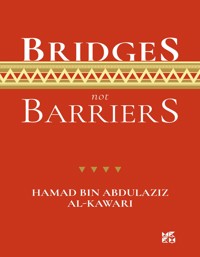
This book reveals the intricacies of inter-civilisational relations between Northern and Southern countries and details the resultant mistreatment of Southern nations. It discusses the North’s centralizing and condescending approach that has greatly harmed both stability and peace in the modern world. Starting with the author’s own personal experience and proceeding to offer a succinct historical overview, the West’s blatant disregard for many contributions from other human civilizations - including the Arab-Islamic civilization - appear in stark contrast. Having worked in the fields of diplomacy and culture for decades, the author aims to remind this generation of Arabs of their own heritage, hitherto overshadowed by conflicts and neglect of their role in building human civilization. The author calls for building bridges instead of erecting barriers and a completely new approach to relations between the North and the South; a message which resonates globally. «Bridges, not Barriers» is already in circulation in Arabic, German, French, Spanish and Farsi.
Das E-Book können Sie in Legimi-Apps oder einer beliebigen App lesen, die das folgende Format unterstützen:
Veröffentlichungsjahr: 2023
Ähnliche




















Contents
Foreword
Introduction
A Mercurial Performance
A Persistent Unease
Chapter One
The Son of the Desert – an Unfettered Perspective on Civilisation
UNESCO – A Potential Beacon, Guiding us Through the World’s Storms?
The Crux of the Matter
American Peace
The Middle Kingdom
Egypt, a Manipulation in Three Dimensions
Lebanon – the Cracked Mirror
France – a Total Eclipse
French Media Sleepwalks into Disgracing the City of Light
A Paradox Planted by Hollande along the Champs-Élysées
The Rock in my Life
Falling into a Culture War
A Personal Test – Diametrically Opposed to Accepting the Other
Building Bridges, not Barriers
The Tale of the Two Brothers’ Wall
Chapter Two
Striving to Restore the Balance Between East and West
A Deep Chasm
The Mirage of Diversity
A Continuous Quest
The Chapter of Grievances
Chapter Three
“All the rivers flow into the sea, yet the sea is not full.”
Has Orientalism Really Disappeared?
Slogans on Progress – Two Sides of the Coin
This - the West – is the Pinnacle of Civilisation!
When Europe Loses her Memory
Arabian Lights
Arab Civilisation and the System of State Governance
Examples of Arab Muslim Contributions to the Field of Science
Arabs’ Contributions to the Arts, Humanities and Literature
Influence and Favour
From the Past Towards the Future
Chapter Four
Soft Power
What is not Overcome by Coercion is won Over by Gentleness
The Diplomacy of Gifts
A Holistic Acculturation Process
A Gift’s Functions: Enhancing Knowledge and Witnessing History
Harun Al-Rashid and Charlemagne
Arab Soft Power in the Heart of Europe: The Arab World Institute
Principles of Cultural Diplomacy
Selected Means of Cultural Diplomacy
Culture and the Rainbow of Diplomacy
The Direction of the Compass
On the new global cultural diplomacy
Cultural Diplomacy and Sports Wagers
Chapter Five
The Civilisation of Cultural Dialogue
Dialogue in the Majilis
International Majalis and the Patronage of Senior Princes and Ministers
Translation is the Mirror of the Islamic Civilisation and its International Capital
And say: “Go forth unto the world.”
Conclusion
Mutual Understanding is an Arab Mission
Mutual Understanding Means Accepting the Other
A Glut in the North and Famine in the South
“Bridges have souls; and the bridges that people cross can never be reliable or safe…they can collapse, they can be swept away by torrents; and they may be infected with diseases like animals.”
Foreword
It is difficult - in the civilisational context in which we live - for an intellectual to remain on the fence. The virtue of his presence in society lies in his commitment to issues of humanity as well as his efforts alongside other societal actors in striving to create an awareness of the current challenges that our Arab Islamic civilisation is experiencing during this historic period; one in which international relations between the global North and South are characterised by confusion and crises and demarcated by conflicts and tensions.
Throughout my life, I have worked to meld both theoretical principles and pragmatic practice, for the cerebral thinker is not merely a maker of ideas – rather, he should become meaningfully and practically engaged so that his ideas do not remain imprisoned in abstract realms, incapable of practical implementation; an idea’s very essence lies in finding its way towards benefiting people and improving their condition.
Amongst my many experiences was my nomination to the post of UNESCO Director General, where my ideas and aspirations collided with reality. I detail these in my book The Injustice of Relatives, in which I shine a spotlight on the injustices that befell me, meted out by my own kith and kin as a result of their contentions, disunity and plotting, with the aim of wasting an opportunity for one of their own who was deserving of office and the responsibilities that it entails.
Likewise, I expose how the West, cloaked in Islamophobia, exploited the disagreements between Arabs and their disparate vote to win with their own unified voice. They continued to impose their perspective onto southern civilisations and obstructed an Arab from leading the organisation by denying the Arab Islamic civilisation’s role as a matter of principle, thus strengthening their stranglehold on international organisations. Instead of seizing this opportunity to build bridges, the West continued to erect barriers in this manner.
I refrained from translating The Injustice of Relatives into foreign languages in order not to wash our linen in public, preferring instead to write my book La civilisation opprimée (The Oppressed Civilisation). This was translated into Spanish and focuses on the role played by the North in persecuting the South and preventing an Arab from taking the helm of the United Nations Educational Scientific and Cultural Organisation. I perceived myself duty-bound to shift the Arabic edition’s focus towards the virtues of Arab Islamic civilisation and its favours upon the West, aiming to kill two birds with one stone. Firstly, to remind this generation of Arabs of their own heritage, which has been seemingly forgotten because of their infighting, disunity and wilful disregard of their role in building human civilisation. Secondly, to call for the building of bridges instead of the erection of barriers in the spirit of a renewed rapprochement between the hitherto polarised global North and global South.
Introduction
An image remains, etched in my mind, despite many years having passed since I represented my country at the United Nations in New York. It is an image of my fellow diplomats, fraught with anxiety and with expressions of confusion and helplessness writ large all over their faces as they try their best to reach sometimes seemingly impossible solutions that would end a war or bring about a peaceful settlement between relentlessly fighting forces. It is an image that leads me to state that meaning is extrapolated from the history of human civilisation. I do not deny that this verb is one I glean from my perspective as an Arab, as I cannot divest myself of my heritage and culture without also becoming detached from the cultures of the world or departing from the concept of a “banquet of knowledge”, the fruits of which have nourished me over the years.
I was greatly enamoured by Amin Maalouf’s literary journey and the way in which he blends both literary and historical approaches, deftly interweaving questions on the civilisational relationship between the Self and the Other amongst pages of his novels. Maalouf’s The Crusades through Arab Eyes led me to lengthy contemplation, where he addresses the “real narrative” as opposed to the “Othering”; a narrative never posited by Westerners with regard to two centuries of conflict between the Arabs and the “Franks”. He draws upon Arab chroniclers’ testimonials as primary sources when crafting events and developments within his narrative. This is a narrative that has been neglected for centuries, for we as Arabs understood none other than the narrative woven by the West, received uncritically and imbibed as axiom; whereas Maalouf’s narrative shook these presuppositions to their core whilst offering the neglected perspective on two centuries’ worth of war that undoubtedly continue to shape the Arabs’ relationship with the West to our present day.
The simple idea envisaged by Amin Maalouf focused on a fresh narrative of the Crusades based on the documented facts, lived experiences and perspectives of contemporaneous Arab historians and chroniclers. This narrative was born into a global historical context in which the world experienced a general apathy and stagnation when it came to Arab relations with the West as well as breakdown of dialogue and growing misunderstanding between both East and West. Within this narrative, my eye was particularly drawn to the distinctly shrewd reference that compels us to revisit the West’s relationship with the East – one which alerts us to the fact that Arab historians never spoke of the “Crusades”. Instead, they refer to Frankish wars and invasions, which indicates that the use of religion as a façade to these wars did not emanate from the Arab as they did not perceive them to be religious in any case. Rather, it was the West who linguistically clothed this conflict in religious garb, which continues to overshadow relationships between the Western world and Arab world today.
Maalouf never sought to condemn the Other as he had extracted reliable Arab sources for these facts insofar that he strove to achieve a historical impartiality which would restore and reformat relationships between the West and the East, for it is impossible to build a present and a future for generations who are bereft of collective references pertaining to their culture, heritage and civilisation. Before understanding the present, we must understand the past.
Naturally, we are not alone in harbouring reservations about Western discourse. Others hailing from different civilisations have the self-same reservations. Just as the West describes wars between the Arabs and the Franks as Crusades, the West also takes the initiative to label its occupation of the New World with the term “discovery”, thus excising the original population’s actual existence – an original population who neither perceived the racist expansionist European project as a “discovery”, nor considered this “New World” to be new.
Perceptions are disguised within terminology, and language becomes a home for positionality, vis-à-vis the Other. What is truly disturbing is that this language is prevalent and pervasive as a result of civilisational predominance, progressively drawing a veil over nations’ consciousness until they surrender to these labels and regard them as facts when they are no more than an articulation of the Western narrative’s perspective, which continues to retain supremacist tendencies.
It is this which caused me to observe the fruits of historical misunderstanding between ourselves and the West despite the diversity of my colleagues in the corridors of the UN Security Council, and it is a misunderstanding that encompasses other civilisations and cultures, too. I saw this misunderstanding’s foregone conclusion in my colleagues’ faltering footsteps, for they would face a hollow emptiness, unable to devise solutions to the successive cycle of problems between nations, even though they were determined to establish peace amongst humanity.
Tragically, they resembled an acrobat walking across a tightrope over a chasm with no safety net to protect them should they fall, nor recourse to any aid that would assist their balance and help preserve their life.
For a long time, I wondered: was this scenario the result of a deterioration in international relations, or the product of decades – perhaps centuries – of inter-civilisational misunderstanding? Is this not due to the “dominant civilisation’s” neglect of other civilisations’ voices? Does this self-same civilisation, given its current definitions, choose whether to categorise us as civilised or “barbarians”? How can this categorisation possibly contribute to achieving world peace?
I am confident that the status quo is born of concepts that essentially permeate Western thought, despite its cultural discourse and its institutions that call for equality between nations. Successive crises in global dialogue remind me of these chains that shackle subconscious thought behind glittering speeches that elevate international norms yet fail to find a solution to the simplest international disagreement.
I vividly remember Friedrich Engels’ analysis of France’s occupation of Algeria, celebrating it as an important civilisational development and claiming that this invasion was the ideal method by which the of countries of Tunisia and Libya would also set foot on the path to civilisation. Similarly, his friend Karl Marx defended British Rule in India, claiming that had it not been for British intervention, the social revolution would not have taken place. He granted the British a double mandate: destroying the structures of Asian societies and building the material foundations of a Western society in Asia!
These are ideas that belong to those who fought the capitalist system and criticised Western civilisation, yet their views are shocking in relation to the peoples of Asia and North Africa, as they legitimise occupation under the pretext of social transition. In any case, it is a “Western construct” par excellence, which is to say that neither deviate from the core concept sustaining Western colonialist thought – the claim that Western civilisation is superior to all other civilisations.
Whilst immersed in this retrospection and thinking of this dark situation, I felt a bitter irony as the words of Mahatma Gandhi rang in my ears, answering the question posed to him: “What do you think of Western civilisation?” with “I didn’t know they had one!” There is no doubt that Gandhi was a deeply discerning visionary who acknowledged the West’s actual possession of civilisation whilst simultaneously doubting the moral dimensions of a society that would lead it colonise nations, abuse peoples and treat them as lacking in humanity.
Likewise, there is no doubt that crises lead to a surge of ideas and push previously concealed ones to the surface. Regardless of whether these crises are economic or political in nature, they inevitably place nations’ and organisations’ policies and positions squarely on the touchstone of civilisation, revealing its true perception of the Other. The world faced a defining historical moment during the COVID-19 pandemic, exacerbated by the United Nations’ impotence in failing to co-ordinate operations in response to unexpected crises which lead to internal instability and ultimately dealt it a deadly blow.
The manner in which the UN faced COVID-19 via the World Health Organisation – one of its own agencies – threw these shortcomings into stark relief. It demonstrated the true extent of its shambling fragility and shameful disunity and exposed the real absence of global consensus and international co-operation that was previously concealed behind closed doors, in addition to the selfish attitudes and narrow interests espoused by specific parties.
Never, since the founding of the United Nations in 1948, has an American president so vulgarly condemned an international organisation concerned with the health of humanity. In fact, Trump’s uncouthness plumbed even greater depths when he decided to freeze America’s large financial contribution. Perhaps he was inspired by a similar decision taken in 2012 by his predecessor when Washington announced the discontinuation of America’s financial contribution to the UN at a time when it was most direly in need.
Thirty years after the end of the Old World Order and the fall of the Berlin Wall, these factors cause us to become increasingly aware that we live in a nebulous world first, in this, the first quarter of the 21st century.
Since the emergence of the New World Order, the world has not enjoyed peace, security or stability. Quite the opposite, the arms race has continued and the spectre of war looms large over more than one place in the world. The gap between rich and poor has widened and nationalist, populist thinking dominates the political landscape in many countries all over the world. Western literature has begun to warn of “the death of democracy”, “the demise of liberalism” and the regression of multilateral policies in favour of unilateral ones.
The hopes and dreams of those who advocate for peace were dissipated by this bleak picture, and further dampened by the erosion of the United Nations’ original maxims and the lacklustre performance of its member organisations including that responsible for culture, UNESCO.(1) The process of evaluating and reviewing these infrastructures has become an absolute necessity in this current time in response to demands of intellectuals, organisations and various countries that have, for years, called upon the United Nations to begin a period of reform. This is in addition to the special conference dedicated to “revitalising discourse on United Nations reforms” that was hosted in Qatar’s capital city, Doha, as part of a general overhaul of reforms to the UN.
It becomes manifestly clear to us that the initial aims, present in 1945 and determined by the founding fathers, have become unattainable. It is this that makes me utterly convinced that the world “post COVID-19” will not be as promising as we imagine unless those who are sincerely determined and resolute act. This was unequivocally heralded by dangers lurking in our societies in the first quarter of the 21st century, once again putting all the UN maxims to the test.
Undoubtedly, today, we live in the midst of unprecedented, accelerated change – change that forces the world to confront unexpected challenges. Humanity has experienced many catastrophes throughout its long history and incurred major losses due to natural disasters, or human suffering as a result of wars and conflicts, but it has never witnessed anything similar to the novel coronavirus. It was anticipated that the UN as an organisation would galvanise humanity’s capability when confronting the dangers of COVID-19, but the hopes that people pinned on this organisation vanished like castles in the air. With great regret, what we are witnessing today is the collapse of a world and the beginning of the birth of another, unknown world - the delivery of which the UN has failed to play a central role. The greater problem is that we are, once again, watching the rise of right-wing currents hostile to the Other and civilisation being torn apart afresh.
During the pandemic, terror gripped everyone for many months and overshadowed all other considerations. It seems to me that the population of the entire globe was shocked, caught short on the brink of this abyss that appeared before their eyes as they observed mandatory quarantine in their homes, precipitately cut off from the outside world. Suddenly, quite literally overnight, everyone realised our vulnerability to exceptional dangers in every sense of the word. After almost everyone had ignored previous warnings, considering them to be routine in much the same way fire, flood and other natural warnings are, they now realised that this was on a different scale, and that death would reap souls in their thousands with an invisible scythe.
Our short-term memory helps us recall images of catastrophes that have befallen humanity in recent years and which we relive through nightmares rather than dreams. People were suddenly confronted by the SARS (severe acute respiratory syndrome) epidemic in 2003. Panic and terror spread amongst them after they thought it was merely seasonal flu. This was followed by the 2008 mortgage crisis, which brought to mind the global economic crisis of 1929 that would have laid everything to waste, had it not been for the involvement of nations who bailed out the most prominent banks, saving them from liquidation.
Following this, the world was suddenly exposed to the roars of Eyjafjallajökull - the Icelandic volcano- and its vast plumes of volcanic ash that rose as high as nine kilometres into the sky, creating a black cloud that crippled air travel around the world and caused an unprecedented environmental disaster across Northern Europe.
During these painful, successive disasters, the American Bill Gates demonstrated characteristic sobriety and intuition by announcing in 2017: “When I was young, the threat of a nuclear war terrified us. Now I think that what will kill 10 million people over the next decades will surely be an infectious virus and not a war”. And now Bill Gates’ prediction has come true; and a pandemic has taken over the world, shaking humans’ tranquillity, just as it has destroyed many maxims that have reverberated for years in the halls and on the podia of the UN, and still it remains incapable of responding to the challenges of this era. However, this fraught and nebulous situation motivates those with an active conscience to shoulder the historical responsibility of correcting the trajectory of international organisations that were established in order to serve people and advocate for their rights, wherever they may be. Given this historical context, I cannot but remain committed to maintaining lofty ideals and moral principles as the primary reference point for all dealings and practices within the UN. It is a commitment that I have never deviated from in the slightest throughout my work in various capacities, held over four decades in various international organisations, but particularly in the United Nations.
There is no doubt that my posts in the UN have granted me the opportunity to strive for rapprochement between the North and South; and to work towards achieving tangible results separate to hollow political protocol that leaves one empty-handed. However, my commitment to this struggle never once prevented me from being critical of this bureaucratic behemoth whilst acknowledging the role this international organisation has played in embedding security by ending international conflict, protecting human rights and ending the occupation of many countries since the end of the Second World War.
The fact remains that this organisation – an erstwhile, formidable umpire that would pronounce on international conflicts by virtue of its own legal and moral terms of reference – has become in many cases no more than a plaything in the hands of a small yet powerfully influential self-serving coterie who rarely look to the global common good. By doing so, they deny international law, peace, global security and all the other principles for which the UN was established to uphold along with its constituent organisations in the wake of World War Two. Nonetheless, we must, in good faith, gladly acknowledge various successes such as the 1989 “Summit of Storms”, which took place in Helsinki between US President George Bush, Sr. and the leader of the former Soviet Union, Mikhail Gorbachev, where the UN nurtured a meeting which resulted in an agreement that opened Russia up to an era of democracy, even though it has not lasted till our present day. Despite this, the summit heralded the end of the Cold War, thus ending an era of bipolar global power dynamics and beginning an era in which the United States of America assumed unilateral hegemony.
No sane person would doubt that the UN has ceased to be the source of succour and supporter of peace that its founders envisaged in the way that it functioned between 1950 and 1970, putting an end to colonisation in particular. Nevertheless, its current state does not permit us – in the words of Trotsky – to consign it (and its most significant member organisations such as UNESCO and the WHO) to “the dustbin of history”. This is despite the absence of equality and the arrogance of some larger nations which embolden it against abiding by various international treaties and respecting others. The world witnessed this during the 2017 elections for the post of Director-General in succession to the former Bulgarian Director-General; and the host nation’s attack on the Arab candidate who represented the only geographical region that has never held the post. Arab civilisation paid the price for this arrogance and injustice once again when it had hoped to extricate itself from the difficult position of an oppressed and downtrodden society. It had seemed that the bloc of Northern nations would respect the peoples who had historically contributed to the creation of this wonderful civilisation. But it was not to be.
A Mercurial Performance
“Twenty-nine votes for Ms Audrey Azoulay, twenty-nine votes for Mr Hamad Al Kawari.” Thus were the results of the election for the position of UNESCO Director-General announced from the podium on Friday October 13th, 2017, by Michael Forbes, German President of the Executive Bureau, the body that brings together the 58 nations who are eligible to vote according to UN regulations. An equal tie was expected, even though the international media and observers had predicted that the Qatari candidate would win.
In this defining moment, everyone believed that the curtain had fallen on an entire act of the electoral battle and that the bell signalling the next round – the tie-breaker – would ring in order that the winner may be determined. Voices subsided and were gradually muffled in the hall into which Michael Forbes’ words were hurriedly tossed. Breaths were caught; when I heard the microphone crackle again and everyone turned towards a voice that seemed troubled and hoarse… Suddenly, a heavy silence settled amongst those present. The President’s voice resounded once again to announce that a mistake had been made in tallying the votes; and that upon verification it appeared that the result was 30 votes for Azoulay as opposed to 28 for Al Kawari. At this, celebratory shouts from the French candidate’s supporters drowned out the uproar that was scattered throughout the hall, drawing everyone’s attention, for nobody thought to question the President over what had just taken place and so this mystery remains hidden in those muted, swirling whispers to this day. As the chapters of this story continue to unfold, it is strange to note that the results of the final vote which led to the French candidate becoming UNESCO Director-General are markedly absent from its own website; whereas it has become customary for both proceedings and results to be displayed since 2017.
On this basis, observers still question the credibility of these polls, capricious as they were and entirely devoid of professionalism. The entire world witnessed this as though it were a performance from the Theatre of the Absurd. How can we justify this farcical performance and the election officer’s lapses, when he is one of the most prominent officials on the international arena? At this point, I personally became convinced that the intention of this entire shoddy performance was to eliminate competition rather than to face it honourably, despite the campaign’s promising start in 2016 – a campaign journey replete with unexpected events!
In writing this book, my intention is not to settle scores; rather the honourable task of faithfully documenting and revealing events as they happened to readers who seek the truth. Above all this, my personal experience stands witness and offers historical testament complete with evidence of a methodological, tendentious campaign that bore no goodwill to the nations of the South. This campaign spared no effort in impeding a fresh start for the UNESCO at the hands of an Arab Director-General who was determined to reform a decrepit international organisation and to breathe new life into its corridors and had made a pledge to his supporters that he would work to restore balance in favour of the nations of the South as well as establish trust and credibility between this prestigious organisation’s diverse cultural and social elements.
This opportunity was frittered away as a cloud of mistrust and paranoia loomed over both cultures – Northern and Southern – and the spectre of inter-civilisational conflict reared its ugly head, terrifying the nations of the South afresh. To all those who believed in UNESCO’s founding principles, it seemed that these were about to collapse and crumble, just as they were now convinced that the dominant power dynamic and prevalent narrative discourse was entirely Western-centric, favouring the North.
What grieves me is the demise of UNESCO’s symbolic value that the world is currently experiencing. What was once a bastion is now merely a lifeless archaeological relic where nothing remains but the images of its founding fathers who had crafted principles for a meritorious human life. I am anxious for the destiny of this institution should active consciences not move to correct its course. Just as I believe deeply in the seminal role that UNESCO has to play in the history of humanity, I am equally acutely conscious of what threatens the world when humanity loses faith in organisations that have pledged to protect societies from hate, conflict and discrimination.
Accordingly, the UN’s slogans ring hollow, for what of “…to save succeeding generations from the scourge of war, which twice in our lifetime has brought untold sorrow to mankind”? Does not United Nations’ literature proclaim that no race, system or culture is superior to another and that “there is no place for cultural superiority”?
Once again, Arab civilisation faces the “clash of civilisations” just as other civilisations do. The world drowns in fresh failures. Rather than leading us to aimless action, this state of affairs drives us to strive, with unrelenting determination, to correct a global cultural narrative over which the West presides in order that human civilisation may be the provenance of all instead of a blinkered, inwardly looking world view that is only capable of seeing its own steps as time progresses.
A Persistent Unease
What is the way to dispel the disquietude that one feels when the official presiding over the voting process announces an equal tie of 29 votes each to both the Qatari and French candidates, only to state moments later, that the opposing candidate actually received thirty votes instead? Of course, this was no mere slip of the tongue, but sleight of hand executed by the West before the President of the Executive Bureau hurried to collect the ballot papers and lay the files to rest, as the world watched in astonishment with sardonic smiles and bilious throats. It is ironic that he is of Germanic descent, a culture that prides itself on meticulousness and rigour. Here, I would like to share an anecdote. In her commencement speech addressing the graduates of Harvard University entitled “Tear down the walls of ignorance and narrow-mindedness”, the German chancellor Angela Merkel began by recalling her simple origins in East Germany before imparting advice which many consider to be her sincerest moral legacy, saying: “We need to be sincere with others and more importantly, to be sincere with ourselves. This means not calling lies truth, nor truth, lies”.(2)
The incident involving the recount and the announcement of results was a disturbing one which exposed the Northern nations’ true nature and caused its perpetrators to refrain from publicising the results of the votes on the UN website out of sheer embarrassment, despite the publication of all four previous rounds. It constituted the final link in a chain of shameful wheeling and dealing stretching out over two years, overseen by the countries of the North and aided and abetted by nations who betrayed their own people and intellectuals before betraying their Arab identity. Public statements appeared courteous and dignified when compared with hidden vile, shadowy whispers; aptly embodying wisdoms attributed to the Abbasid poet, Salih bin Abdul Quddus:
“No goodness is there in the love of a silver-tongued sycophant, whose words are sweet and whose heart is aflame [with hatred].
He meets you with oaths of trust and fealty, then turns away as a scorpion.
To you, his tongue drips sweet honey – he slinks behind your back, fox-like, into his den.”
History will bear witness that the international stage observed a suppressed consensus on the need to nominate an Arab Director-General; and that the French opponent had no standing in French public opinion yet rode to victory on the coat-tails of considerable support that was voluntarily offered by Arab brothers out of sheer spite, envy and hatred. It is not surprising that she would seek this opportunity to ingratiate herself, to divide and conquer whilst others were squabbling in the edifice of lofty ideals, emerging with an insipid victory reeking of betrayal and intrigue.
(1) See: Al-Kawari: Hamad bin AbdulAziz “It’s Time to Reform the UN” 12th May 2020. Published in seven languages on the Project-syndicate website https://www.project-syndicate.org/commentary/united-nations-covid19-response-shows-need-for-reform-by-hamad-bin-abdulaziz-al-kawari-2020-05?barrier=accesspaylog
(2) See the US News page in Arabic online, accessed 14/6/2020




