


82,99 €
Mehr erfahren.
- Herausgeber: John Wiley & Sons
- Kategorie: Geisteswissenschaft
- Serie: Building Type Basics Series
- Sprache: Englisch
Essential information for the design of senior living facilities Building Type Basics for Senior Living, Second Edition is your one-stop reference for essential information you need to plan and successfully complete the design of residential care environments for seniors on time and within budget. Primary authors Bradford Perkins and J. David Hoglund and their Perkins Eastman colleagues--all experts in senior living design--share firsthand knowledge to guide you through all aspects of the design of senior living communities, including independent living and assisted living apartments, and skilled nursing facilities. This edition features new examples of completed projects and is up to date with the latest developments in senior living design, including coverage of sustainable design, renovation and reinvention, international opportunities, operations, and project financing. This new edition offers: * Numerous photographs, diagrams, and plans * A new chapter on issues, trends, and challenges for the senior living industry in the next decade * A new chapter devoted to sustainability strategies and considerations * Up-to-date coverage of new technologies being implemented in senior living facilities * New space programming standards and sample programs Like every Building Type Basics book, this conveniently organized quick reference provides authoritative, up-to-date information instantly and saves professionals countless hours of research.
Sie lesen das E-Book in den Legimi-Apps auf:
Seitenzahl: 657
Veröffentlichungsjahr: 2013
Ähnliche




















Contents
Cover
Series
Title Page
Copyright
Preface
Acknowledgments
Chapter 1: Senior Living Today
STATE OF THE INDUSTRY
DESIGN AND THE AGING PROCESS
Chapter 2: Programming and Planning Guidelines
UNDERSTANDING THE MARKETPLACE
PROGRAMMING SPACE GUIDELINES
COMMUNITY-BASED OPTIONS
LONG-TERM CARE
HOSPICE
ASSISTED LIVING RESIDENCES
RESIDENCES FOR PERSONS WITH ALZHEIMER'S AND DEMENTIA
INDEPENDENT LIVING WITH SERVICES
CONTINUING CARE RETIREMENT COMMUNITIES
ACTIVE ADULT COMMUNITIES
SUMMARY
Chapter 3: The Future of Senior Living
DEMOGRAPHICS
CONSUMERS' EXPECTATIONS
LIFESTYLE CHANGES
SERVICE PARTNERSHIPS
NEW HOUSING AND CARE CONCEPTS
AFFORDABILITY
Chapter 4: Project Process and Management
PLANNING, DESIGN, AND IMPLEMENTATION PROCESS
COMMON PROBLEMS AND CAUTIONS
CONCLUSION
Chapter 5: Site Planning, Parking, and Landscape Design
SITE SIZE
RELATIONSHIP TO ADJACENT LAND USES
VEHICULAR CIRCULATION
PARKING
LANDSCAPE DESIGN
Chapter 6: Building Codes
CODES AND REGULATIONS
REGULATORY ISSUES
WAIVERS
CONCLUSION
Chapter 7: Sustainability
MARKET EXPECTATIONS
CALCULATING COST BENEFIT
STRATEGIES FOR SUSTAINABILITY
Chapter 8: Structural Systems
CONSIDERATIONS
STRUCTURAL SYSTEM TYPES
Chapter 9: Mechanical, Plumbing, Fire-Protection, and Electrical Systems
THE INTERIOR ENVIRONMENT AND COMFORT FOR AN AGING POPULATION
PROGRAM AND CONCEPT
APPLICABLE CODES
PROGRAM IMPACT ON SYSTEM SELECTION
FINISHED CEILINGS AND BUILDING HEIGHT
CONSTRUCTION
MECHANICAL and HVAC SYSTEM OPTIONS
VENTILATION
PLUMBING
FIRE PROTECTION
ELECTRICAL DISTRIBUTION
EMERGENCY POWER
LIGHTING
Chapter 10: Communications and Low-Voltage Electrical Systems
SYSTEMS PROLIFERATION
TRENDS
Chapter 11: Special Technologies
REMOTE BIOMETRIC MONITORING SYSTEMS
Chapter 12: Products and Equipment
MEDICAL EQUIPMENT
UNIVERSAL DESIGN
MOBILITY DEVICES
FOOD SERVICE
BATHING EQUIPMENT
Chapter 13: Acoustics
KEY ACOUSTICAL CONSIDERATIONS
DESIGN GUIDELINES FOR SPECIALIZED SPACES
HEARING-IMPAIRMENT GUIDELINES AND CODE REQUIREMENTS
Chapter 14: Lighting Design
LIGHT LEVELS, REFLECTANCE VALUES, AND GLARE
LAMPING OPTIONS
WINDOWS AND DAYLIGHTING
DESIGN GUIDELINES FOR SPECIALIZED SPACES
CONCLUSION
Chapter 15: Interior Design
THE DESIGN PROCESS
COLOR THEORY
WAYFINDING
MATERIALITY
INTERIOR DESIGN GUIDELINES
FURNITURE AND FURNISHINGS
PROCESS
Chapter 16: Renovation, Restoration, and Adaptive Reuse
LONG-TERM CARE FACILITIES
ASSISTED LIVING FACILITIES
INDEPENDENT LIVING FACILITIES
COSMETIC RENOVATION
MODERATE RENOVATION
MAJOR RENOVATION
ADAPTIVE REUSE
Chapter 17: International Challenges
SERVICE DEVELOPMENT
PROGRAMMING AND DESIGN
SERVICE AND SOCIALIZATION
PROCESS
AGING AT HOME
COUNTRY-SPECIFIC ISSUES
CONCLUSION
Chapter 18: Operation and Maintenance
INTRODUCTION
OPERATIONS COSTS
ONGOING OPERATING AND MAINTENANCE COSTS
DURABILITY, USEFUL LIFE, AND REPLACEMENT COSTS
OPERATIONAL EFFICIENCY
CLEANLINESS, OPERATIONS QUALITY, AND DESIGN
Chapter 19: Cost Management
COST MANAGEMENT PROGRAM
RELATIVE COSTS
VALUE ENGINEERING AND LIFE CYCLE COST ANALYSIS
Chapter 20: Financing and Feasibility
TEN STEPS TO FINANCING
FINANCING VARIATIONS FOR SENIOR SETTINGS
Appendix A: Unit Types and Sizes for Senior Living
Appendix B: Building Net-to-Gross Factors for Senior Living
Appendix C: Geriatric Clinic: Typical Program Components
Appendix D: Sample Large Outpatient Clinic Program*
Appendix E: Sample Enhanced Retirement Community Clinic Program
Appendix F: Adult Day Care: Sample Program for 50 Participants
Appendix G: Long-Term Care Gross Area per Bed Guidelines
Appendix H: Typical Long-Term care program components
Appendix I: Sample Program: Long-Term Care, 126-Bed, 4-Story (and Basement) Neighborhood/Household Model
Appendix J: Freestanding 75-Unit, 3-Story Assisted Living Facility with 20-Bed Memory-Support Neighborhood
Appendix K: Sample Program for 40-person Memory-care Residence
Appendix L: Sample Program for Independent Living with Services Building—150 Units, 4 Stories, 2 Wings
Appendix M: CCRC Program
Appendix N: Enhanced CCRC Therapy Program
Glossary
Bibliography and References
Index
Building Type Basics for Senior Living: A Quick Index to Twenty Essential Questions
Supplemental Images
BUILDING TYPE BASICS
Books are available for each of the following:
BANKS AND FINANCIAL INSTITUTIONS
Homer Williams
COLLEGE AND UNIVERSITY FACILITIES, Second Edition
David J. Neuman
ELEMENTARY AND SECONDARY SCHOOLS, Second Edition
Bradford Perkins
HEALTHCARE FACILITIES, Second Edition
Richard L. Kobus, Ronald L. Skaggs, Michael Bobrow, Julia Thomas, Thomas M. Payette, Stephen A. Kliment
HOUSING, SECOND EDITION
Joan Goody, Robert Chandler, John Clancy, David Dixon, and Geoffrey Wooding
PLACES OF WORSHIP
Nicholas W. Roberts
RECREATIONAL FACILITIES
Richard J. Diedrich
RESEARCH LABORATORIES, Second Edition
Daniel D. Watch, Stephen A. Kliment, Perkins & Will
TRANSIT FACILITIES
Kenneth W. Griffin
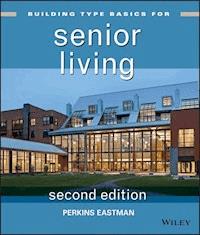
Cover image: Building: Hebrew Senior Life, New Bridge on the Charles Architect: Perkins Eastman Photograph: © Chris Cooper Cover design: Mike Rutkowski
This book is printed on acid-free paper.
Copyright © 2013 by John Wiley & Sons, Inc. All rights reserved
Published by John Wiley & Sons, Inc., Hoboken, New Jersey Published simultaneously in Canada
No part of this publication may be reproduced, stored in a retrieval system, or transmitted in any form or by any means, electronic, mechanical, photocopying, recording, scanning, or otherwise, except as permitted under Section 107 or 108 of the 1976 United States Copyright Act, without either the prior written permission of the Publisher, or authorization through payment of the appropriate per-copy fee to the Copyright Clearance Center, 222 Rosewood Drive, Danvers, MA 01923, (978) 750-8400, fax (978) 646-8600, or on the web at www.copyright.com. Requests to the Publisher for permission should be addressed to the Permissions Department, John Wiley & Sons, Inc., 111 River Street, Hoboken, NJ 07030, (201) 748-6011, fax (201) 748-6008, or online at www.wiley.com/go/permissions.
Limit of Liability/Disclaimer of Warranty: While the publisher and author have used their best efforts in preparing this book, they make no representations or warranties with the respect to the accuracy or completeness of the contents of this book and specifically disclaim any implied warranties of merchantability or fitness for a particular purpose. No warranty may be created or extended by sales representatives or written sales materials. The advice and strategies contained herein may not be suitable for your situation. You should consult with a professional where appropriate. Neither the publisher nor the author shall be liable for damages arising herefrom.
For general information about our other products and services, please contact our Customer Care Department within the United States at (800) 762-2974, outside the United States at (317) 572-3993 or fax (317) 572-4002.
Wiley publishes in a variety of print and electronic formats and by print-on-demand. Some material included with standard print versions of this book may not be included in e-books or in print-on-demand. If this book refers to media such as a CD or DVD that is not included in the version you purchased, you may download this material at http://booksupport.wiley.com. For more information about Wiley products, visit www.wiley.com.
Library of Congress Cataloging-in-Publication Data:
Building type basics for senior living / Bradford Perkins, David J. Hoglund, Douglas King, Eric Cohen. — Second Edition. pages cm Includes bibliographical references and index. ISBN 978-1-118-00745-7 (cloth); 978-1-118-33018-0 (ebk.); 978-1-118-33290-0 (ebk.); 978-1-118-49443-1 (ebk.); 978-1-118-49449-3 (ebk.) 1. Older people—Dwellings—United States—Planning. 2. Old age homes—United States—Design and construction. 3. Adult day care centers—United States—Design and construction. 4. Nursing homes—United States—Design and construction. 5. Congregate housing—United States—Design and construction. 6. Life care communities—United States—Design and construction. 7. Retirement communities—United States—Design and construction. I. Perkins, L. Bradford. NA7195.A4B85 2013 725'.560973–dc23 2012027156
PREFACE
This is the second edition of Building Type Basics for Senior Living. Since the first edition was published in 2003, the planning and design of facilities for the aging have continued to evolve. Many members of the baby boom generation have had to learn about the available services and facilities as they assisted their aging parents. What they have found in many communities across North America has left them unsatisfied and concerned. Too many of the existing options for their parents, and eventually for them as well, do not provide an attractive, supportive, and affordable lifestyle.
Over the last three decades, new and improved models for senior living and care have emerged to supplement the increasingly obsolete existing stock of nursing homes and “old age homes.” The public has become aware that there are now alternatives, but the supply of well-planned and designed facilities has not kept up with the rapid increase in the number of frail and/or cognitively impaired elderly needing housing and care. In 2012, there were 40 million Americans over 65. Thanks to the baby boom, demographers predict that numberwill increase to 63 million by 2025. Moreover, 8 million will be over 85—an age at which most people need a supportive environment.
In the decade since the first edition of this book was published, there have been many creative responses to the specialized needs of the aging that have dramatically changed what sponsors and their design teams need to know about this specialized building type. Among the major new trends described in this edition are the “small house” and Green House movements, which have rapidly gained popularity across the United States; the widespread repositioning of existing facilities to respond to the many changes in the market—including the growing number of people moving into senior living facilities when older and frailer; new technologies, such as tele-health monitoring, that address specific senior living issues; the growing number of senior living options being developed in urban areas; and the explosive growth in interest in senior living facilities outside the United States.
This second edition not only includes another decade of experience in the field but also has incorporated contributions and experience from all 13 of Perkins Eastman's offices, as well as our national senior living leadership group. Moreover, it includes material from a number of other leading specialists in this field. As with the first edition, this book has been written and illustrated to provide sponsors, their design teams, and other interested readers with an introduction to the major issues and choices facing any organization planning a senior living building program.
The need for well planned and designed senior living facilities is not limited to North America, Western Europe, Japan, and other highly developed countries. China and India are facing even more rapid increases in their older age populations. In China, for example, the over-60 age group is projected to reach 436 million by 2050. China's one-child policy has seriously weakened one of the traditional pillars of its senior care system, and little else exists to provide an appropriate environment for those older Chinese who need specialized housing and care. Both the public and the national leadership are aware of this problem and are scrambling to develop appropriate responses. They see the United States as the only country that has tried to respond to the specialized needs of an aging population on a large scale. They recognize some of the weaknesses of the U.S. model, and they are adapting it to their needs. India and many other rapidly developing countries are also beginning to address the needs of their older citizens.
Ten years from now it is likely that the United States designers will be learning from their experiences overseas. Given the size of the worldwide need for attractive, affordable supportive senior living, the demand for informed interest and action will only increase. The many people who worked on the development of this book hope that it will be a useful contribution to future senior living building programs both in North America and abroad.
Bradford Perkins FAIA, MRAIC, AICP
Perkins Eastman
ACKNOWLEDGMENTS
This is the second edition of Building Type Basics for Senior Living. The first edition was authored by the senior living principals and staff of Perkins Eastman Architects.
This edition's lead editors were Bradford Perkins, FAIA, and David Hoglund, FAIA. Most of the first drafts of the revised chapters in this edition were written by the following senior living leaders of Perkins Eastman, including:
In addition, the chapter on site design has a significant contribution from David Kamp, FASLA, of LF Dirtworks, PC Landscape Architecture. The chapter on finance, fees, and feasibility has contributions from Plante Moran.
Sarah Mechling did her usual excellent job coordinating the photographs, drawings, and graphics. Thanks go to Katarzyna Dabrowska for her help with the plans and July Chan for her help with the graphics. Rachael Perkins Arenstein efficiently acted as research assistant, assistant editor, and sheepdog for this herd of cats.
CHAPTER 1
SENIOR LIVING TODAY
STATE OF THE INDUSTRY
Since the first edition of Building Type Basics for Senior Living in 2004, the senior living industry has expanded and diversified in order to address demographic change. Recent U.S. census numbers reveal a variety of societal transformations. The industry has responded by shifting its focus from the World War II generation to the “silent generation” (some would argue they are not so silent) that matured and raised families in the burgeoning suburbs and witnessed the increase in product branding, the expansion of consumerism, and the invention of fast food. Baby boomers are altering the equation once again, as they seek options for their parents' care and envision themselves growing old. Products of postwar consumerism, they have expectations about services—and their quality and delivery—that do not mesh with the way healthcare and aging services have traditionally been provided.
The economic realignment that began in 2008 has also forced consumers (and sponsors) to reexamine available retirement options and plan for the kind of financial security they will need for services and settings as they approach 80 years of age. For the past decade, there has been a rise of community-based options with retirement living facilitated by technology. Remaining at home is not only a preference but for many is the only financially viable option. Choice, variety, and control are now embedded in the industry's lexicon; paging through retirement living sales brochures and websites affirms this evolution. No longer is it the facility or organization dictating products, services, and rules. Today, consumers are challenging that prescription, and facilities are responding to these new expectations.
Retirement living providers continue to expand wellness, dining, and recreation options in response to demands for more choices and a healthier lifestyle. Options that emerged at the beginning of the century continue to develop, with urban (sometimes high-rise), university- and college-affiliated, and co-housing solutions gaining traction in many markets. Traditional life-care models of retirement living are being challenged by more flexible entry criteria, and the transition to such communities is being handled in new and novel ways. Long-term care has evolved: a wide range of paradigms, including the “Green House” and “small house,” are replacing the traditional neighborhoods and households. The demand for sustainable and green design is growing to meet the new market's expectations of lower operating costs, healthy surroundings, and a concern for the environment.
Research metrics have also begun to shape the industry because quantifiable outcomes are expected. It is not enough to tell consumers their quality of life will improve. They want specifics: Will they fall less? Will their stress and blood pressure decrease? Will they have more friends and less depression? Government policies for reimbursing healthcare costs have set the stage for outcome-based measures, and these policies are trickling into long-term care. The Internet has made it possible to share consumer opinions—good and bad—of everything from washing machines to hotel rooms. Are senior living environments far behind?
Demographics
According to the 2010 U.S. Census, 13 percent of the population—over 40 million people—is 65 or older. That represents an increase of more than 5 million since the 2000 Census and makes this the fastest-growing age group: 15 percent per decade. Demographic projections for 2025 show the influence of the baby boom, with the population of those over 65 growing to over 63 million and that of those over 85 to over 8 million. By 2030, approximately 19 percent of the population in the United States, or 71 million people, will be over 65 (fig. 1-1). More people are living longer, and the growth of the over-100 age group is even more startling. The leading edge of the boomers, who are now 65, is almost 80 million strong.1 Meeting the housing and care needs of this rapidly growing segment of the population has become a major challenge for those setting public policy, sponsors, operators of facilities for aging adults—and those in the design professions.
These demographic trends are not unique to the United States. The world's population aged 65 and over is expected to increase from 6.9 to 16.4 percent, or approximately 1.53 billion people, by 2050.2 European countries are also dealing with a rapidly aging population and low birth rates. The rising cost of care, services, and housing for the aging has led to public policy changes in many countries. Asia is preparing for what many are referring to as the “aging tsunami.” In Japan, for example, there are already more people over the age of 60 than under the age of 29. By 2050, people 65 and over will have increased to 33–35 percent of the population3. China currently has approximately 169 million individuals over 60 years of age (12.5 percent), but by 2050 this number is expected to increase to 31 percent of the population.
Figure 1-1 Total number of persons age 65 or older in the United States, by age group, 1900 to 2050 (in millions). U.S. Census Bureau, Decennial Census Data and Population Projections
In many countries, these demographic changes are coupled with transformations in the traditional multigenerational family. Older adults are living alone, using informal means of meeting their needs for services or relying on primary-care health services that offer inadequate support for their special requirements.
The United States is also facing the demographics of a more diverse population. Minority ethnic groups, particularly Hispanics and Asians, will present unique cultural requirements, and new affinity groups will appear as communities develop around religion, lifestyle, and even sexual orientation.
The increasing number of older people, combined with changes in the way they want to live out their later years and their expectations of a high-quality life, is creating the need for new care and housing options. New models of senior care and housing conceive of these environments not simply as healthcare facilities, but as seniors' homes. In addition, the search is on for new care models that support people at home longer and maintain them in the least restrictive (and least costly) conditions possible.
Accessibility
Such changes demand a flexible system that combines services with living arrangements. The aging in all countries have unique needs that must be recognized by those who provide them with care and housing. Most older adults will never occupy a residence designed specifically for older adults; most will stay at home and rely on family or community-based services. The built environment as a whole—including airports, shopping malls, and urban centers—must be planned and designed to respond to the large and growing segment of the population who will, over time, move a little more slowly, grasp a little less tightly, react a little less quickly, and process information differently. The environment has a greater impact on the quality of life of those who require a more supportive setting than it does on any other major demographic group. If properly designed, a senior living facility can contribute positively to an older person's independence, dignity, health, and enjoyment of life. If poorly planned and detailed, it can imprison, confuse, and depress.
In recent decades, the direct impact of design on the aging has been more widely recognized by both the general public and design professionals. Previously, the frail elderly who could no longer live in their own homes had few, if any, good alternatives. Most of the very old saw a shared room at an “old folks' home” as the only option. For the majority, it was a dreaded inevitability. Tens of thousands of families can tell stories of the trauma of having to place Mom or Dad in an institution. By 1980, there was a growing demand for more attractive options that would meet health- and support-service needs in a more agreeable residential setting. Lifestyle options for retirement have had to adapt to a changing clientele who are older, with more needs, but who expect higher-quality housing and activities than even a decade ago.
Solutions
Older adults are looking for more options. Today's 70-year-olds are better educated, generally have more money than their predecessors, and expect to be motivated physically and stimulated intellectually. The great recession of 2008–2010, and continued slow economic growth, will certainly change available financial resources for future seniors. Young boomers born in the late 1950s and early 1960s may have enough time to rebuild a portion of their financial portfolio, but their older siblings may need to delay retirement and alter their lifestyle expectations. Portions of the “silent generation” with higher-risk investments and facing declining real estate values have already decided to sit on the sidelines and look for less costly options. Affordability has always been a challenge for this industry, and it may be redefined to include a much broader swath of the older demographic who have assets that exceed the threshold for traditional subsidized housing but are insufficient for proper preventive healthcare and services.
This book provides an overview of the major issues involved in the planning, design, and development of specialized environments for this new group of aging Americans. Specifically, the book describes the issues associated with each of the 10 major building types within the general framework of design for aging. Chapter 2 has also been expanded to include specialized hospice programs and to review community-based options, some of which are driving new models of services and settings. The following are general definitions of these 10 types. Please see the following sections for more detailed descriptions, as well as the distinctions among the types.
DESIGN AND THE AGING PROCESS
Housing for the elderly has not historically attracted the level of design inquiry required to transform it from the traditional boilerplate solutions based on old or inappropriate models. Unfortunately, many of the existing design criteria are prescriptive, often contained in codes in the form of minimum square-footage requirements and other governmental standards. Some of the dread of those contemplating a nursing home is directly attributable to the acute-care hospital model governing the codes for virtually all nursing home design. Fortunately, new models are challenging such requirements, but progress is slow and many innovative concepts get affected only through exception or variance. In some cases, a partnership between the regulatory agency and the provider results in solutions that are equivalent to and/or meet the intent of the code requirements. A new generation of designers has been successful in transforming the physical environment into one that is responsive to the needs of older adults yet maintains their safety and improves operations.
Older models rarely prioritized privacy, independence, and personalization. A new generation is redefining what kinds of shared accommodations are acceptable; small studio apartments no longer match lifestyle expectations. Accessibility has also been poorly understood: there has been a narrow focus on the requirements of younger, partially paralyzed veterans in wheelchairs. Accessibility must be reexamined as it applies to the frailest portion of the population, who can no longer use a wheelchair by themselves. A turning radius, for example, becomes less relevant as staff support becomes more important and two-sided transfer-and-lift systems are needed. For many older adults, the changes attributed to aging are subtle, often invisible to the observer, and shift with time.
Understanding the necessity for, and inevitability of, the proliferation of senior housing begins with the basics of the aging process, the barriers and limitations it presents, and how they impact environmental design. Certain social and psychological issues may affect an individual's dignity, impeding participation in a full life the way physical disabilities do.
Life expectancy is near 76 years for men and 80 for women, and the elderly population is therefore becoming a larger and larger percentage of the overall population. According to the 2010 U.S. Census, women outnumber men in the older age groups, but the number of older men per 100 older women has increased as differences in the causes of male mortality narrow. Although statistical data creates a distinctive group called “the elderly,” there is no average or typical older person. Like the rest of us, they have different expectations of life shaped by divergent ethnic and racial backgrounds, role models, lifestyles, personal experiences, health histories, and family settings.
Aging is often viewed from two related perspectives: the study of the biological process (geriatrics) and the study of the social passage that occurs over time (gerontology). Biological aging is measured as the decline in the body's ability to maintain a balanced interaction of the organs, muscles, bones, and endocrine systems. The gradual pace of this process, unlike that of a traumatic event, can fill individuals with doubts about their physical and mental capabilities. Social changes, just like physical changes, require people to adapt, as family and work-related roles are redefined.
Biological Aging
The body is composed of interactive systems that maintain its operation. As the individual ages, these systems begin to deteriorate in a somewhat predictable way. To design a facility that suits the needs of the aging, these physical changes must be accounted for. Well-designed facilities not only accommodate the physical and psychological changes that come with aging but also permit residents to exercise their remaining abilities as much as possible.
Communicating systems
Changes in the endocrine system, which controls hormones, can alter the maintenance of body temperature or decrease the body's ability to correctly identify and react suitably to stimuli, thereby increasing the individual's vulnerability. Sunburns, scalding, and bedsores can all be by-products of the body's inability to perceive the need for shade or cold water, or to roll over (also see “Detection senses,” below). In addition, the nervous system becomes less efficient at coordinating movement: reflexes degrade, and reaction time slows. The nervous system's ability to store and recall information also diminishes with age; memory loss can be subtle and a part of the normal aging process, or more pronounced if related to Alzheimer's or other kinds of dementia.
Design implications
There are many ways for a designer to make the aging individual's environment better suited to the physical disabilities caused by the diminished function of the endocrine and nervous systems. They include
extending time-operated devices (elevator doors, automatic entrances) to allow more time to complete activities;distinguishing repetitive/symmetrical spaces by providing landmarks (objects, views to the outside) and increasing the salience of important directional information, referred to in this book as “wayfinding”;providing electrical appliances with lights to remind people they are on, or automating them to turn off after a preprogrammed time;designing mechanical systems that allow flexible temperature control and avoid drafts and moving air;providing covered and/or screened outdoor areas that protect from sun, wind, and insects;using sensors and technology to accommodate an individual's need for more time to perform a task or to warn the individual or staff of impending risks.Mechanical systems
The muscular system loses strength and bulk after age 30. Lack of movement can lead to muscular atrophy that affects posture, endurance, and joint positions. Exercise and fitness programs can slow this decline or even restore function so independence in many daily activities can be maintained. The skeletal system loses calcium, making bones brittle and increasingly vulnerable to accidents. It also loses elasticity, affecting bending, kneeling, turning, and rising. Declining physical capacity can also impact an individual's gait, leading to shuffling or awkward steps and increasing the risk of falls.
Design implications
In response to these physical changes, the designer should
avoid devices that require twisting, pinching, or other precise manipulation;minimize walking distances to key daily activities such as dining and create frequent places to rest in hallways and near elevators;provide chairs with appropriate seat height and arms that assist in rising, permitting some upper-body strength to compensate for weaker knees and legs (see chapter 15);meet accessibility requirements, focusing on how the physical needs of older adults differ from those of younger disabled users, upon which many standards are based (for instance, placing grab bars closer to a toilet to function like the arms of a chair);avoid loose rugs, raised thresholds, or slippery surfaces that may affect balance or gait changes;minimize sharp edges or corners that could cause injury if falls occur;provide opportunities for physical fitness, particularly water activities, which can strengthen muscles without impacting joints.Control systems
The control systems of aging individuals often function less effectively than those of younger people. This can affect the digestive system in many ways, including reduced bladder control, difficulty with digestion, and (without proper diet) malnutrition. Declining efficiency in the respiratory system and in oxygenating blood can lead to curtailed movement and diminished energy reserves. Curtailed physical activity can also impact the body's ability to properly utilize (and eliminate) food, which can, in turn, curtail physical activity, a cycle that can exacerbate poor health. The efficiency of the cardiovascular system declines with age. It is subject to disease (often hereditary) that can reduce blood supply to the brain, causing dizziness, blackouts, and blurred vision.
Design implications
To create an environment that supports better health for older individuals, the designer should provide
frequent and easily accessible bathrooms;residential kitchens (eat-in or open), preferably with light and view, that encourage cooking and good eating habits;walking paths (inside and outside) that encourage physical activity;fitness and aerobic spaces to encourage cardiovascular exercise;healthier food choices and flexible dining options that stimulate appetite and encourage dining as a social opportunity.Detection senses
All five senses are affected by aging, especially those on which we are most dependent: sight and hearing. Most individuals experience hearing problems as they get older. The ability to hear higher frequencies is lost first. In addition, inner-ear changes affect balance, which can lead to falls. Impaired vision significantly affects how people perceive and use the environment (figs. 1-2 through 1-5). While some issues are correctable with surgery, others require different means of support.
The following sight-related issues need to be taken into account:
Aging eyes take longer to adjust their focus between near and far objects.Glare can cause momentary blindness.Higher light levels are needed to compensate for failing eyesight.The lens of the eye yellows and thickens, changing the perception of color.Depth perception is altered.The senses of taste, smell, and touch also change over time, and there is a diminished ability to detect pain or pressure. Because taste is approximately 90 percent dependent on aroma, some aging persons experience a decreased ability to enjoy food.
Design implications
The designer can adapt the environment to compensate for diminished vision and hearing. He or she can also limit the senior's dependence on certain senses by substituting others. The designer may
Figure 1-2 Normal vision. Understanding the deteriorating vision of the aging helps inform design. Courtesy of National Eye Institute, National Institutes of Health.
Figure 1-3 Cataract vision. Courtesy of National Eye Institute, National Institutes of Health.
Figure 1-4 Glaucoma vision. Courtesy of National Eye Institute, National Institutes of Health.
Figure 1-5 Macular degeneration. Courtesy of National Eye Institute, National Institutes of Health.
All aspects of biological aging should impact designs for senior living and care, as the physical environment has a profound effect on an older person's quality of life.
Social Passage
The literature on aging has commonly focused on the physical changes related to advancing age. However, the way older people are viewed by society and find purpose in life is affected by the subtle, often invisible transformation of aging. Four main theories attempt to explain the changes in the way adults interact with others and their environment as they age. Any or all of these theories may apply, as no one has a static personality, and factors such as health, finances, and social involvement affect people differently at different times. These theories can aid the designer in understanding the mindset of the aging adult.
Disengagement theory
As they age, some individuals disengage, withdrawing from certain roles and responsibilities. Of course, healthy disengagement can occur only when the individual determines its pace. For example, an aging woman might determine that meal preparation is no longer central to her societal role and therefore disengage from it willingly. But forcing her disengagement by designing apartments without kitchens may inhibit successful aging.
Design implications
To respond to those seniors seeking to alter their roles and disengage successfully,
provide options for staying at home or in a familiar neighborhood, connected to the services that already support them;enhance communication with technology to aid in maintaining social and business connections;permit control in decision making (locked doors, set dining hours, and inflexible rules may force unsuccessful disengagement);consider intergenerational programs for those who want to be actively engaged with children or other age groups;create opportunities to participate in a larger community via easy access to community facilities (living room, dining room, library, community center) and services (such as stores), so lifestyle patterns can be continued. Facilities that are too far away or inaccessible may force disengagement.Activity theory
Some individuals, rather than simply disengaging from previous roles, will seek to replace roles from which they have been displaced. For example, upon retirement, a corporate executive might become a volunteer board president. Others may elect to channel their time into long-lost passions, such as relearning a musical instrument or completing their education (fig. 1-6).
Design implications
In response to seniors' desire for activity, they should be provided with opportunities to take on new roles and responsibilities. They should be encouraged, for example, to host community events and to engage in meaningful volunteer work. Designers and operators may assist by
creating access to lifelong learning either through distance learning or classroom spaces;creating a business center with access to computers, photocopiers, and similar technologies to facilitate volunteer leadership;Creating spaces and programs, such as performance venues, that engage the broader community.Continuity theory
Aging adults often surround themselves with familiar objects and continue routines that reinforce their self-image. For example, couples who have traditionally hosted family holiday gatherings may select apartments with full kitchens even if they do not continue to prepare meals, or a widower may desire a large bed that he no longer needs. As these individuals adapt to changing physical capabilities, new situations, and different life experiences, they also develop a strong need to preserve continuity between their old and new lives.
Figure 1-6 A central role for most facilities for aging adults is to encourage continued social interaction.
Design implications
To support maintaining a consistent self-image, designers may
accommodate residents' desires to keep their own furniture through flexible layouts;create adaptable spaces that support interests such as art, music, woodworking, and performance arts;design units that can be customized for individual preferences and priorities that reflect lifestyle.Environmental competence
There has to be a balance between the demands of an environment and the physical, mental, and emotional capabilities of those living in it if they are to adapt to it successfully. If older people can negotiate the tasks of daily living comfortably, their experience of their surroundings will likely be positive; it can be negative if those surroundings are more demanding than the individual can cope with. A designer cannot expect people to do all the adapting; spaces must be designed to adapt to their users. For example, walkers or electric carts allow an individual with impaired mobility to move around various settings. Spacious elevators and widened hallways adapt the environment to the individual, resulting in harmony between abilities and demands.
Because the competence of individuals utilizing senior living facilities will vary greatly, the setting should be flexible to allow them to adapt to it. In addition, the environment should provide choice and variety so that they can select the settings or services that appropriately conform the environment to their needs.
Design implications
Designers must maximize both residents' potential and the facility's accessibility by
providing redundant information for wayfinding, allowing individuals to rely on their own abilities as well as environmental cues such as signage, color, and landmarks (examples of cues include the smell of bread baking, a grandfather clock in the hall, and artwork with a familiar regional scene);encouraging continued physical activity through well-designed stairs (while also providing an elevator as an accessible and adaptive option);encouraging walking by keeping distances to daily activities like dining as short as possible.Addressing these physical and psychological aspects of aging is an evolving architectural trend responsive to the interests and passions of a new generation of seniors. The next chapter describes the operational and programmatic concepts influencing and creating new models of senior living.
1 Statistics have been drawn from the following U.S. Census Bureau publications: Grayson K. Vincent and Victoria A. Velkoff, The Next Four Decades: The Older Population in the United States: 2010 to 2050, Population Estimates and Projections (May 2010), http://www.census.gov/prod/2010pubs/p25-1138.pdf; Lindsay M. Howden and Julie A. Meyer, Age and Sex Composition: 2010 (May 2011), http://www.census.gov/prod/cen2010/briefs/c2010br-03.pdf; and Carrie A. Werner, (November 2011) The Older Population: 2010, 2010 Census Briefs, http://www.census.gov/prod/cen2010/briefs/c2010br-09.pdf.
2 United Nations Department of Economic and Social Affairs, Population Division, World Population Ageing 1950–2050 (March 23, 2010), ch. 2, “Magnitude and Speed of Population Ageing,” http://www.un.org/esa/population/publications/worldageing19502050/pdf/80chapterii.pdf, and ch. 4, “Demographic Profile of the Older Population,” http://www.un.org/esa/population/publications/worldageing19502050/pdf/90chapteriv.pdf.
3 National Institute of Population and Social Security Research, Japan, Population Projections for Japan: 2001–2050 (n.d.), ch. 1, “Summary of the Japanese Population Projection,” http://www.ipss.go.jp/pp-newest/e/ppfj02/suikei_g_e.html.
CHAPTER 2
PROGRAMMING AND PLANNING GUIDELINES
UNDERSTANDING THE MARKETPLACE
This chapter provides program and planning guidelines for each of the ten building types enumerated in chapter 1. These guidelines are only a starting point for the project planning or programming effort; there are a variety of successful models for each building type. Market research is a key first step in understanding the needs and preferences of a particular market. Successful market research will identify both the need (or demand) for particular products and services as well as consumer preferences for everything from unit size to amenities to common spaces. To make an analogy to the fashion industry, an increase in population predicts a demand for more clothes, but choices about style, color, design, and price point are decisions that can determine success or failure.
Assessing trends is important. To continue the analogy, simply asking men “Do you buy ties?” will not elicit critical information: Are men dressing for business more casually than a decade ago? Is tie-wearing in decline? Might making ties, then, not be the best business choice? Or might it be prudent to merely make ties a smaller part of the overall product line?
.Lesen Sie weiter in der vollständigen Ausgabe!
Lesen Sie weiter in der vollständigen Ausgabe!
Lesen Sie weiter in der vollständigen Ausgabe!
Lesen Sie weiter in der vollständigen Ausgabe!
Lesen Sie weiter in der vollständigen Ausgabe!
Lesen Sie weiter in der vollständigen Ausgabe!
Lesen Sie weiter in der vollständigen Ausgabe!
Lesen Sie weiter in der vollständigen Ausgabe!
Lesen Sie weiter in der vollständigen Ausgabe!
Lesen Sie weiter in der vollständigen Ausgabe!
Lesen Sie weiter in der vollständigen Ausgabe!
Lesen Sie weiter in der vollständigen Ausgabe!
Lesen Sie weiter in der vollständigen Ausgabe!
Lesen Sie weiter in der vollständigen Ausgabe!
Lesen Sie weiter in der vollständigen Ausgabe!
Lesen Sie weiter in der vollständigen Ausgabe!
Lesen Sie weiter in der vollständigen Ausgabe!
Lesen Sie weiter in der vollständigen Ausgabe!
Lesen Sie weiter in der vollständigen Ausgabe!
Lesen Sie weiter in der vollständigen Ausgabe!
Lesen Sie weiter in der vollständigen Ausgabe!
Lesen Sie weiter in der vollständigen Ausgabe!
Lesen Sie weiter in der vollständigen Ausgabe!
Lesen Sie weiter in der vollständigen Ausgabe!
Lesen Sie weiter in der vollständigen Ausgabe!
Lesen Sie weiter in der vollständigen Ausgabe!
Lesen Sie weiter in der vollständigen Ausgabe!
Lesen Sie weiter in der vollständigen Ausgabe!
Lesen Sie weiter in der vollständigen Ausgabe!
Lesen Sie weiter in der vollständigen Ausgabe!
Lesen Sie weiter in der vollständigen Ausgabe!
Lesen Sie weiter in der vollständigen Ausgabe!
Lesen Sie weiter in der vollständigen Ausgabe!
Lesen Sie weiter in der vollständigen Ausgabe!
Lesen Sie weiter in der vollständigen Ausgabe!
Lesen Sie weiter in der vollständigen Ausgabe!
Lesen Sie weiter in der vollständigen Ausgabe!




