


Erhalten Sie Zugang zu diesem und mehr als 300000 Büchern ab EUR 5,99 monatlich.
- Herausgeber: BoD - Books on Demand
- Kategorie: Ratgeber
- Sprache: Englisch
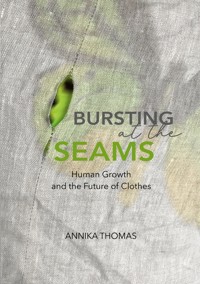
We live in a time of multiple crises where we are challenged to find new ways. Clothing is one area with serious issues since beauty ideals, consumption patterns along with clothing production have devastating effects on individual, cultural as well as environmental levels. Bursting at the Seams invites you on a thought provoking journey to explore the larger perspective behind these challenges and how they are related. Through its different parts the core issues behind contemporary imbalances, and the probable origins of specific belief systems, are scrutinized. The intricate connection between human growth, cultural transformation and our relationship to clothes is also explored. Apart from their aesthetic expression clothes are made to fill different needs. Some of these are basic and practical, while others relate to psychological needs, so closely tied to how we see ourselves. Along with adult growth new needs emerge. Unless our clothes are designed to also fill those needs, we will outgrow them. Their seams will begin to burst. As all these loose ends are tied together a new, more conscious way to relate to the clothes we wear begins to take shape, along with interesting opportunities for development.
Sie lesen das E-Book in den Legimi-Apps auf:
Seitenzahl: 284
Veröffentlichungsjahr: 2025
Das E-Book (TTS) können Sie hören im Abo „Legimi Premium” in Legimi-Apps auf:
Ähnliche

















To the women and men who are focused on
reinventing clothes, the clothing industry
and the system behind it.
Table of Contents
PROLOGUE
A Holistic Mindset
Tracing a Hidden Thread
INTRODUCTION
A Meta Morphosis
Integrating Perspectives
PART I — COMMON THREADS
THE WORN-OUT STORY
In the Midst of a Shift
Hacking Fashion
A System of Waste
Outdated Mindsets
Redirecting Growth
Asking the Right Questions
WHERE DID WE COME FROM?
The Cultural Backdrop
Hidden Stories
A Very Different Culture
The Mother Goddess
Destructive Forces
The Minoan Culture
The Demise of the Goddess
CULTURE AS A SHAPING MOLD
Image Versus Word
Two Sides of a Whole
From Wholeness to Separation
Ideals of Beauty
PART II— DRESSED FOR GROWTH
The Essence of Clothing Design
A Closer Look at Identity
The Wisdom of the Pyramid
Natural Human Growth
A SET OF NEEDS
Basic Needs
A Need to Belong
Esteem Needs
Aesthetic Needs
Inner Balance
Integration
Unity
PART III — THE ART OF DESIGNING IDENTITY
The Wardrobe Speaks
A Language of the Psyche
Our Energy Field
COLORS
A Language of Light
Color Hues
Color Brightness
Color Saturation
Three Faces of Color
Color Graphics
Color Interpretation
Red
Orange
Yellow
Green
Turquoise
Blue
Purple
Using Colors as Tools
SHAPES
Dynamic Blueprints
A Point of Focus
The Circle of Wholeness
The Dividing Line
Triangle Dynamics
The Stable Square
Expansion of Consciousness
Pentagram
Hexagram
Heptagram
PATTERNS
Impact on Repeat
Basic Life Patterns
Our Inner Climate
Fractal Patterns
CLOTHING STYLES
Dressing Archetypes
Tweaking our Clothing Style
Using Clothes as Tools
PART IV — TOWARDS A NEW STORY
A New Paradigm
Visionary Art & Design
Taking Beauty Seriously
And the New Story Begins
EPILOGUE
The Fabric of Life
List of References
About the Author
PROLOGUE
A Holistic Mindset
Iam a holistic designer. Even though a holistic perspective – where we look at the interconnection between the parts of something to understand it more fully – is known to many, my statement is often followed by a raised eyebrow. To eyes that begin to wander. What does it mean when holistic and design are combined? The confusion might be due to my own inability to explain, in a short and clear way, what holistic means in relation to clothes. When I try, I falter. Apparently more space is needed to explore and explain what it really means, maybe even to myself. Writing a book often has this magical component – it takes you through a process where things that might have been a bit muddled become more clear.
With Bursting at the Seams I invite you to join me on the thought provoking journey this book turned out to be, as I thoroughly explored the wide-ranging and interrelated parts that are connected to clothes.
So can a holistic view of our everyday clothes really shed light upon how we relate to them as well as our approach to design and ways of manufacturing? Is it possible to reach a deeper understanding, along with ideas for new ways to deal with present challenges, through considering how its different parts are tied together?
One example that clearly demonstrates the difference between our common approach to things and one that is holistic is Western medicine. Even though there are amazing inventions and progress in this field, it is still shaped by our present narrative and the mindsets born out of it. A person with a physical problem is usually looked at from a mechanistic perspective, where the body is regarded as an assembly of separate parts. A medication is prescribed to deal with the symptoms from the part in focus. This tends to shut down the important alarm system of the body, while the complex interconnections between things like lifestyle, social connections, emotional and mental struggles are ignored.
A holistic approach, on the other hand, would interpret symptoms and pain as if the body is saying, or sometimes even screaming: ”Hey… pay attention! Something is going on in this intricately interrelated system that you need to take a closer look at to understand!” This does not mean that symptoms should be ignored, or that there are no benefits from medication, but that the deeper root causes of a condition have to be addressed to find permanent healing.
So is there a similar fragmented mindset in the field of clothes? We all know that there are serious issues regarding beauty and appearance ideals, consumption patterns as well as clothing manufacturing with devastating social, economic and ecological effects. To try to counteract some of the negative consequences the clothing industry tends to focus on natural materials, recycling and the chemicals used to produce our garments. While this is necessary and important, it is still like tending to one symptom. If we instead look at all issues regarding clothes as parts of a larger problem, it might shed new light upon the deeper causes and help us find a probable common source.
What is absolutely certain is that clothes cannot be taken out of a larger context. To make sense of the various reasons why we choose to wear certain kinds of clothes we have to take a closer look at cultural ideals as well as the development of our identity.
Apart from their aesthetic side clothes are designed to fill different needs for the person wearing them. Some of these are purely practical, while others relate to psychological needs, closely tied to how we see ourselves. There are also deeper needs. So how would clothes change if our need for inner development was as important as our need for protection against things like cold temperatures? What would happen to the garments we wear if beauty ideals became obsolete? One thing is certain: As we evolve new needs emerge. Unless we figure out what those are, and find ways to develop clothes to also fill these needs, we will outgrow them. Their seams will begin to burst.
Since clothes, along with manmade systems and entire industries, are also intricately connected to culture and the prevailing paradigm, it seems necessary to take a deeper look into our past to trace the probable origins of the mindsets and belief systems that have shaped Western civilization. Thus even more puzzle pieces are added to our holistic design field, pieces that are usually related to the more hidden, inner realms of human experience. Some of these are the rise of culture and the evolution of language along with their somewhat obscure causes and interconnections. Their effect on the human psyche is another. All these relevant factors can help us discern a common pattern and an overall perspective.
The real voyage of discovery
consists not in seeking out new landscapes
but in having new eyes.
Marcel Proust
We cannot fully understand things holistically unless we look from a place that is more whole. Bear with me as I try to explain what I mean by that.
We live in a time where there is an abundance of knowledge and to state what we see as Truth we usually refer to science. The problem here is that when we believe we know something we tend to stop there, no longer open to other possibilities or different ways of understanding things. Instead of pushing the limits of what we understand regarding life and the nature of things – which is the true essence of science – this keeps us stuck within certain limits.
As parts of a culture that tends to rely primarily on the rational mind at the expense of intuition or inner experiences, we are groomed for imbalance. This kind of cultural climate can never be sustainable. With this skewed perception we are set on a journey as with an unbalanced rudder, that constantly steers off course, which will take us far from where we want to go. Despite progress in some areas we would continue to be an unsustainable society with polarization, conflict and gender imbalances, while our natural habitats slowly disappear.
When one part is overvalued – in the human psyche as well as our collective consciousness – its polar opposite is pushed aside. It becomes a shadow field that is looked down upon. This blindspot has something important to tell us about personal and cultural unfoldment.
This imbalance is the reason why some things we will explore in this book might challenge the way we are used to look at life, civilization and the human identity. Even though there has been a gradual acceptance over the last decades of some alternative fields that are more connected to inner, deeper realities such as yoga, meditation and breath-work, some biases remain. This might be the reason why homeopathy, acupuncture, energy medicine, healing and astrology, (to name a few) are still trivialized and labeled ”woo woo” by many.
Groundbreaking research, following rigorous scientific methods, has been conducted in some of these fields and clearly show their validity, but since they are still not accepted by large parts of the scientific community they remain unacknowledged. The issue is thus not about what can be scientifically proven, but rather points to a resistance to accept the existence, and value, of deeper realities.
Even though love, intuition, the existence of a soul, or how we are affected by the colors and patterns of the clothes we wear is difficult to weigh, measure or explain logically, this does not mean it is not real. If I have a deep connection to what I experience as my soul and someone tells me there is no scientific proof for a soul, these are just two different perspectives. One that trusts the rational mind and one that relies on inner experiences. From a holistic perspective we can see how these are simply two sides of a whole. Both parts are present within each of us and none is better, or more true, than the other. What is important is to find a healthy interaction and balance between them.
There are many things in our complex world that cannot be measured or proven. Luckily there are other ways of knowing. Some things must be seen through experiences that only make sense over time, while others are highlighted by intuitive insights. Wisdom emerges from a state of not-knowing and the lucid awareness of our heart – this higher faculty we all have access to – always remains the best wayshower.
Truth is, after all, a moving target. It evolves and morphs, and is always the result of challenging the established limits of thought to some degree. We need to be humble to the fact that what we believe always changes. As we face the challenges of our time, along with the risk of extinction on the one hand and the possibility to create a more conscious, sustainable and thriving society on the other, our best option is respect for different kinds of knowing and an openness to a variety of ways to look at the world. To see things differently does not have to be a conflict. Whether it regards the human psyche, the clothes we wear, manmade systems or civilizations, different perspectives help us recognize inner drivers as well as the dynamics of different phenomena.
The ability to remain in a state of not-knowing, with an open mind and heart, is a superpower that allows us to curiously explore possibilities. Learning to relate to complexity, without overvaluing one side of things while dismissing another, is part of our human evolution.
The ability to observe without evaluating
is the highest form of intelligence.
Krishnamurti
In a creative pursuit, and when we are trying to find solutions to specific problems, our minds need to work laterally and involve the unique approach of both sides of our brains. Our right-brain, with its ability to freely imagine things and grasp complex interconnections, has to be invited on to the arena even though its ways of knowing are not rational, nor easily provable. As in any creative process we need to approach new ideas with an open mind and a willingness to learn, rather than falling into the trap of judging and dismissing things.
I have approached my subject – human growth and the future of clothes – with this kind of open mindset, without any need to hastily label things as true or false, nor dismissing any piece of information that first seemed questionable. I stored these at the back of my mind as ”intriguing possibilities”. A few of them eventually made sense in the larger picture.
So welcome to join me on this explorative journey! We will travel through meandering paths where ancient wisdom, intuition and inner experiences are interwoven with scientific knowledge, analysis and categorizations. On this trail, where inner and outer realities merge, limiting beliefs will be questioned and interesting connections scrutinized.
Even though I believe that the conclusions in this book make sense, I have no need, nor intention, to claim them as the Right way forward. I continue to ask the question ”What if…?” instead of presenting any cemented truth. This book thus remains a journey of exploration meant to challenge the status quo, widen our perspectives and point to possible new paths. My best hope is that this can bring inspiration and lead to innovative ideas for future clothes.
Tracing a Hidden Thread
As I left our San Francisco head office I felt anxious. Even scared. I knew, in the depth of my heart, that I did not belong to the world of fashion and that I needed to do something about it. Up until a year before I had believed that I did. But then, on my summer holidays, I had met a new friend who talked to me about an impending paradigm shift, the need to find our deeper calling and a different kind of spirituality beyond religion. He even talked about God in a way that was new to me. Since I had been brought up more or less without any organized religion, and saw myself as a skeptical agnostic, I felt a bit uneasy. But as this man talked there was this profound sense of already knowing the things he talked about, and an immediate feeling of coming home to a deeper part of myself. It shook me to my core and was as wonderful as deeply confusing. What was happening to me? And who was I really?
Returning home to everyday life was difficult. The gut feeling that I needed to find a deeper purpose to what I was already doing was so strong that the things that had used to fill my days didn’t feel meaningful anymore. I had so many questions and the only thing that truly inspired me was to explore the deeper aspects of life. Zooming out to grasp a larger perspective. As I did, a new conviction grew: We cannot design clothes that are good for us unless we truly understand the person wearing them. Another way of working with clothes, built on a different set of values than those of modern culture, as well as awareness of the development of identity, was possible. Clothes that were actually beneficial to the person who wore them. I had no idea what this meant, or how they would look, but my determination to find out grew by each day. I knew I would get there if I just trusted what my heart told me.
Still, there were days when I questioned if I was delusional and if what had happened to me had made me lose it. Some people around me seemed to think so. My friends and colleagues didn’t understand what I was going through, even though I only shared a small part of it. I felt very lonely. At the same time I was happier than I had ever been, since I felt connected to a part of myself that felt real and true. My life had taken on a deeper meaning.
As head of design for the Scandinavian branch of a multinational clothing company I earned a lot of money. I also led what many would consider a very glamorous life; traveling around the world, meeting famous artists and rock stars. But that didn’t make me happy since there was no room for me to grow. My job was to focus on what our costumers would want the next season. Looking further into the future was not an option.
For a time I tried to implement some positive changes, like raising the quality of our garments and scrutinizing the values behind our work. But instead of contributing to something positive, I became acutely aware of the dark side of fashion. I saw how models, groomed to some unreal perfection, increased the insecurities of normal people. I noticed the mechanics behind how costumers were seduced and exploited, through flashy and extremely expensive commercials, to believe that their lives would actually be better if they wore our clothes. How hunger for profit had become more important than quality and ethics. I was appalled. Why hadn’t I seen this before? Could I really continue to be a part of this madness?
Every day that went by made it more impossible to stay. I remember telling a friend that I felt like an eagle with my wings clipped at work. I knew that leaving would be a point of no return that would ruin the career I had put so much energy and effort into. But what else could I do? My biggest problem was how to support myself. Since my heart was no longer in it, it would even be difficult for me to take on freelance jobs. But my inner guidance was relentless and increasingly loud. I simply had to take my own questions and hunches seriously.
As my courage and determination grew, a bold decision finally gained enough momentum. One day I knocked on my boss’ door and told him I had decided to quit. He seemed shocked and unable to believe that I would simply leave at the top of my career. A few months later, as I closed the door to my office for the last time, I really did leave the world of fashion. This was in the mid 1980’s and I felt certain that a paradigm shift would occur within a decade, maybe two. I was as impatient as naive, but truly curious and excited about the path I saw ahead for myself: a quest to find a deeper and more meaningful way to work with clothes. I knew I would have to dig deep. Convinced that I was doing what I was called to do, I felt sure that the rest of my life, like having an income and a place to live, would get sorted. Luckily I had some money put aside which would keep me afloat for a while.
Two roads diverged in a wood and I -
I took the one less traveled by,
and that has made all the difference.
Robert Frost
My journey turned out to be far from a pleasant ride, though. I realized that my first step had to be to thoroughly explore my own identity to begin to grasp the connection to the clothes I wore. I was ruthless in search of my core being. Within a year I had left, lost or gotten rid of practically everything that I had identified with: my marriage, my home, most of my belongings, old friends and, of course, my job. Since eating gave me comfort in a time that was quite scary, I had also gained more than 30 pounds, so my slim and fit body was also gone. My personal life hardly existed anymore and I retreated into a kind of isolation. In hindsight I can understand what a perfect setup this was to speed up my inner development. But it was as confusing as deeply painful.
In order to find out why clothes had become such an important part of my life, I took a serious look at my childhood and adolescence. I realized that I had been very confused about how, and who, to be. Growing up with a single mum required quite a lot of self-sufficiency. She had enough to cope with, so I couldn’t give her any extra trouble. There was also a lot of focus on masculine qualities. Even if these were invaluable lessons that have helped me throughout my life, the numerable times I had to cope on my own, in situations I was really too young to handle, left me feeling very insecure.
In many ways it was a harsh environment for a sensitive and quite introvert child like me, who was deeply connected to my inner life and leaned towards many feminine characteristics. I didn’t feel seen or understood. As a consequence I couldn’t see and appreciate my own qualities. As time went by the door to my true Self slowly closed – a disconnection that led to a lack of self-worth. I felt lost and insecure, but anxiously hiding it. Inadequate, trying to live up to expectations. Single mothers were unusual in Sweden at the time (I didn’t know of anyone else in our area) and mum told me and my sister to not tell anyone about our family situation. We were to pretend to the outer world that we were just like everybody else, which further enforced the necessity to create a fake, controlled front.
Looking back, it seemed clear to me why such a deep split had formed between my inner Self and the part I presented to the world, and why my core identity had been shoved into oblivion. No wonder it had led to an exaggerated identification with my outer persona. Since I was also a lover of beauty, I began making my own clothes at an early age. They gave me a silent promise to provide the confidence and the qualities I lacked. Like some kind of magic.
Eventually I lost myself in cultural ideals and became more or less addicted to fashion, telling me, through the language of clothes, which attitudes and values were ”the right” ones. Telling me how to be. At the time it felt fun though, and it was exciting to try to be on the leading edge of changing cultural ideals. I felt seen. And good enough. Which, in hindsight, was such an obvious compensation.
When it was time to choose a career I was hesitant. Eventually I went for design college, even though I knew I didn’t fit the mold of a typical designer. I couldn’t quite put my finger on what was different about me, though. Immediately after my graduation I was hired by a clothing company and the mix of employers that followed gave me the perfect combination of skill and experience in all the different aspects of the clothing business, ranging from sales to production, as well as design and the construction of garment patterns. This, in combination with an ability to intuit collective trends and translate these to clothing styles, helped me advance.
Focused as I was on my work and everyday life, I barely noticed when a larger part of me began to make itself known. The first signs were a puzzling anger. As a designer of clothes others would approach me with the question: ”What should I wear this season?” I had begun to feel this immediate explosion of anger as they asked. I tried to hide it and answer in a nice way, but it was confusing. After giving it some thought I realized it had to do with the stupidity of conforming to the unspoken rules of fashion. But that didn’t explain my explosive reaction. Why did this seem so important to me? Below the surface of my awareness, the seams of my fashionable 2nd skin were beginning to burst.
And now, a few years later, this outer skin of mine had completely burst open, leaving me raw and vulnerable. It was like I had spun a chrysalis around myself while the person I had been was dissolving inside of it. Understanding who I was behind my persona seemed crucial. I saw an astrologer who helped me explore my personal horoscope. Since it revealed deeply hidden traits, inner conflicts as well as innate gifts and talents, it was a real eyeopener. I felt truly seen for the first time in my life. It also showed me how I needed to grow. When I realized that the different planets, signs, houses, elements and aspects of astrology could be seen as a non-verbal language of energy, it triggered a strong feeling that I was on to something important that could help me solve the riddle of how to design clothes in a different way.
To explore this further I began to study astrological psychology, which was like learning a new and much deeper language, based on symbols, energetic processes and elemental forces. Excited I realized that if I could figure out how these energetic patterns were connected to colors, visual patterns and clothing styles, it could be used to influence our psyche in the process of balancing and integrating different parts. It would give us tools to transform and expand identity.
Psychoanalysis helped me find clarity about how I had been limited by my conditioning. I embarked on a journey of art therapy, began to meditate and practice yoga. I also attended a myriad of courses, workshops and retreats, and practiced many different methods of shadow work, self growth and healing, all while reading tons of books on psychospiritual processes, healing, esoteric teachings, evolution theories and everything I could find about the deeper aspects of colors and shapes, archetypes, symbols and dreams.
But instead of breaking through to a sense of inner peace, I slowly reached rock bottom. I remember having this overwhelming sense of being stuck in a crack between two worlds. I had left one but didn’t know how to reach the other. It felt totally impossible to bridge the gap between the deeper knowledge I had found and my work as a designer. While my inner Self filled my being with clarity and insights, my personal self was frail, insecure and ungrounded. The only clothes I felt like wearing were shapeless garments in black or white. It was extremely painful and at one point I even made plans to end my life. What saved me was a deep inner knowing that I was going through some necessary metamorphosis and that I simply needed to trust the process.
There were glimpses of light though, and a strong feeling of being at home in my true Self, as I delved into the deeper mysteries of life. My steady focus, and relentless work with my own development, led to quite a fast progress in grasping the psychology behind the different facets of my personality. I had many insights about the correlation between colors and visual fabric patterns with feelings and attitudes. As I saw how they could be used to balance the different parts of the psyche, I began to use them as tools to design my own identity.
Slowly I created a new life for myself. I really had developed a different way of working with clothes and started to teach others how to use colors, fabric patterns and garment styles on their path to inner balance and wholeness through talks, workshops and coaching. I also wrote my first book about this new way of looking at clothes and there were frequent magazine articles about me and my work.
As this new professional platform began to take shape, some began to approach me as an authority in my field. In a way I really was, which felt satisfying, but there was also hesitation. Or was it fear? It felt as if I risked becoming trapped by what I was in the process of building, trapped by people’s projections of who they wanted me to be. Set in a form that would prevent me from continuing to go deeper in the exploration of my intriguing subject. Or was this fear about something else? I wasn’t sure. Still, these doubts lead me to once again leave a promising career.
I left Stockholm, with all its professional opportunities, and set down new tentative roots in the wild woods further north. It felt like the perfect place to go deeper. But life had a surprise for me. My beloved daughter announced her arrival, which shifted my focus. I became more grounded. A few years on I found work as a teacher of textile craft while launching a collection in a very small scale. But another unexpected turn of events changed everything yet again. My daughter’s father suddenly died, and financial circumstances forced me to leave the deep northern woods and move back to Stockholm to try to create a more stable situation.
There were certainly times when I was convinced that the job I had somehow ”signed up for” was too big for me to handle. Sometimes I also questioned my choices. Maybe I could have compromised a little – stayed on my job as head of design while exploring what fascinated me on the side? But deep down I knew that a clean break had been necessary to make room for a totally different perspective. Even if I missed the big paycheck every month and the whole support system of a clothing company, I never really regretted my choice. Looking back I realized that the most important thing was that I followed my heart. Who knew where it would take me in the long run?
Since going back to fashion was unthinkable, I eventually began to work part time as a teacher of textile design while I kept exploring the deeper aspects of clothes. As my understanding grew, I wrote another book and gave an occasional talk. I also put a lot of work into creating collections for clothes and fabric patterns, but didn’t have the financial means to launch them.
When my daughter left home a new period of my life started, that was basically filled with a small group of friends and my teaching work. But my heart wasn’t really in it. Again there was this sense of a deep inner rumbling, telling me that something needed to change. Why didn’t I work full time with what I knew was my true calling? Surely I could make it work if I put all my effort into it. I felt as if I just wasted my time unless I made a serious effort to contribute to change in the world of clothes in some way. Another bold career decision formed inside me and a few months later my teaching job came to an end.
My initial confidence, and what I had seen as freedom to follow my heart, gradually turned into despair as I became acutely aware of the grief, fear and rage that stood in my way and stopped me from fully expressing myself. In search for clarity I totally surrendered to face whatever blocked me, and was drawn into yet another dark night of the soul – this time even deeper and more scary than the first one. Inspired by The Myth of Inanna as she steps down to the underworld and stands naked before her neglected sister, I found myself in a process of stripping down to figurative nakedness. It felt like an absolute necessity in order to move past the obstacles to embody my inner Self and find an outer shape that was as genuine and transparent as it could be. Again my focus was this enigma of identity, so closely connected to the clothes we put around us.
I slowly found clarity through the practice of writing my book Feminine Threads, where I looked back at my own life journey and wove it all together. When I eventually returned to everyday life and ordinary awareness, it was with a more peaceful sense of being on a path of becoming who I was meant to be. However long it would take.
The two ”dark” periods of my life, when the seams of my figurative garments burst open, were truly painful and deeply confusing. But they were also invaluable, since they came with the gift of a personal experience of the connection between the human identity process and clothes. My first crisis helped me understand the personality in all its aspects. I grew from being influenced by collective ideals to becoming aware of, and learning how to balance, the different facets of my psyche. I become more whole. The second shifted my focus from a fairly integrated personality to a deeper identification with my soul and feminine spirit, and the need to fully embody it. I still would not claim that my 2nd skin expresses my core being. It’s a process and processes never really end. What matters is staying on the path.
INTRODUCTION
A Meta Morphosis
The word metamorphosis always had a specific meaning for me. Part of the reason for my fascination might be because, as a designer, I am involved with the transformation of outer form. But there is also this deep wonder and curiosity about the evolution of human consciousness, along with an inner knowing that the hidden worlds of our collective subconscious are intricately connected to how things are designed. The outer form simply has to change along with inner development.
If we take the word apart meta is Greek for beyond or transcending. This abstract perspective helps us look at an occurrence from an higher, overall perspective. The morphosis




