


19,99 €
Mehr erfahren.
- Herausgeber: John Wiley & Sons
- Kategorie: Fachliteratur
- Sprache: Englisch
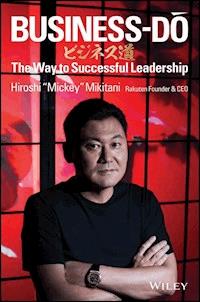
Practical advice for your personal journey, from a self-made billionaire Business-Do is your personal handbook for achieving happiness by systematically turning your dreams into reality. Success looks different to everyone, but author Hiroshi Mikitani exemplifies its essential, universal qualities: as the founder and CEO of Rakuten, Mikitani is a self-made entrepreneur who became Japan's leader in the new global economy--a journey that made him a billionaire. In this book, he shows you how to achieve your own version of success in work and in life. Paying homage to Japan's ethos of quality and discipline, this book shares 89 principles Mikitani has gathered over the course of his remarkable career. These thought-provoking, action-oriented rules show you everything from how useful your dreams are, to the best way to harness the internet, to what management techniques work to the importance of self-improvement. The result: your own powerful, personal playbook straight from the mind of an inspirational trailblazer. Mikitani guided Rakuten from its 1997 foundation to become one of the world's largest e-commerce platforms, with a still rapidly-expanding global footprint reaching industries including fintech, messaging, digital content, and even drones. This book describes the ideas, thoughts, actions, and philosophies that drove Mikitani to the top. * Discover the myriad ways in which the internet is fundamentally transforming the world * Learn from a blend of Japanese discipline and commitment to quality and the Silicon Valley approach to business, where collaboration and agility are essential and lucrative * Adopt data-driven management techniques that constantly question, constantly improve, and empower people to exceptional performance * Share in Mikitani's optimistic vision, and his industry-specific predictions Happiness is something you live every day. It is both the result and the critical ingredient of success, and there is plenty to go around. Business-Do gives you the principles you need on your own journey to success.
Sie lesen das E-Book in den Legimi-Apps auf:
Seitenzahl: 267
Veröffentlichungsjahr: 2018
Ähnliche


















Table of Contents
Cover
Title Page
Introduction
0 Clean Your Space
1 The 10 Core Principles
01 All concepts are relative
02 Believe in the power of the moonshot
03 Learn the difference between a group and a team
04 Think about your mindset, skills, and knowledge
05 Question yourself
06 A brand is a flag
07 The internet transformation continues
08 The internet will curate the world's knowledge and data, but the human touch will still be key
09 Taking action leads to deeper thinking
10 Continuously improve by a fraction. It's the key to what others call “good luck”
2 Personal Development
11 Push yourself like a professional (athlete) does
12 Play catch between your left and right brain
13 Plan forward from birth or backward from death
14 Create an objective personality when you're in the hot seat
15 Never stop learning. Ever
16 Build self‐confidence through small successes
17 Always be curious and ambitious
18 Find a partner to play intellectual “catch” with
19 Set clear goals for your actions
20 Remember that great information can come from surprising places
21 Don't rationalize your behavior as others do
22 Interrogate your intuition with hard numbers
23 Aim to understand the framework
24 Create solutions that break down barriers and reveal new challenges
25 Identify your weaknesses. Fix them or find workarounds
26 Never let your mental energy levels drop
3 The Value of Relationships
27 Offer value‐added services. Anything less is meaningless
28 Put yourself in their shoes
29 See the essence of things
30 Size up risk by quantifying it
31 Seek out best practices all around you
32 Listen especially closely to people you disagree with
33 Value the balance between cooperation and competition
34 Teaching others will help you grow
35 Develop win‐win relationships
36 Start with good footwork
37 Report, contact, and consult
38 Analyze the situation from all angles
39 Know who and what works, even in tight spots
40 Be courageous
4 Get Your Organization Moving
41 Numbers give clarity, so set KPIs
42 Pay close attention to resource allocation
43 Lead by teaching
44 Leverage the organization to move faster
45 Harness the power of competition
46 Share the sense of accomplishment
47 Find the bottlenecks
48 Create your own turning point
49 Meet and revive in the morning
50 Think like a manager
51 Create and share a template for success
52 Earn trust within your company
53 Establish symbolic rituals
54 Successful organizations combine pressure and excitement
55 Know that there are two types of speed: velocity and agility
56 Divide into small groups to improve transparency
5 Win Every Battle
57 Analyze and execute with an eye on the future
58 Hypothesize, then create
shikumi
59 Get things done
60 Examine the facts from every angle
61 Keep your eyes on what's at your feet and what lies ahead
62 Factorize
63 Lean operations generate innovation and growth
64 Think about both vertical and horizontal competition
65 The Mikitani Curve: Quality depends on a 0.5 percent difference in effort
66 Identify what is core and what is mission‐critical
67 Deciding not to do something can be the most important thing to do
68 Companies are sumo rings. They need wrestlers
69 Master the timeline
70 The devil is in the details
71 Success is born of failure. Never hesitate to improve
72 Find trends in the numbers
73 Think about value chains
74 To win, close the gaps and add originality
75 No business is special
76 Boost profits by using assets in multiple ways
77 Strategy, execution, and operation
78 No single path leads to success
79 Generate the largest cost advantage to win
80 Create
shikumi
that will keep generating value
6 Nurture a Global Mindset
81 The essence of e-commerce is communication
82 Seek information beyond your borders
83 Your network is your best news source; media come second
84 The internet will eliminate national borders. Think global
85 Learn from the world's best practices
86 Thinking globally will make you stronger locally
87 Thoroughly and humbly analyze past successes
88 It's never too late
Acknowledgments
Index
End User License Agreement
Guide
Cover
Table of Contents
Begin Reading
Pages
C1
iii
iv
v
xiii
xiv
xv
1
2
3
4
5
6
7
8
9
10
11
12
13
14
15
16
17
18
19
20
21
22
23
24
25
26
27
29
30
31
32
33
34
35
36
37
38
39
40
41
42
43
44
45
46
47
48
49
50
51
52
53
54
55
56
57
58
59
60
61
62
63
64
65
66
67
68
69
70
71
72
73
74
75
76
77
78
79
80
81
82
83
84
85
86
87
88
89
90
91
92
93
94
95
96
97
98
99
100
101
102
103
104
105
106
107
108
109
110
111
112
113
115
116
117
118
119
120
121
122
123
124
125
126
127
128
129
130
131
132
133
134
135
136
137
138
139
140
141
142
143
144
145
146
147
148
149
150
151
152
153
154
155
156
157
158
159
160
161
162
163
164
165
166
167
169
171
172
173
174
175
176
E1
Business-Dō
THE WAY TO SUCCESSFUL LEADERSHIP
HIROSHI “MICKEY” MIKITANIFounder & CEO of Rakuten, Inc.
Copyright © 2018 by Hiroshi Mikitani. All rights reserved.
Published by John Wiley & Sons, Inc., Hoboken, New Jersey.
Published simultaneously in Canada.
No part of this publication may be reproduced, stored in a retrieval system, or transmitted in any form or by any means, electronic, mechanical, photocopying, recording, scanning, or otherwise, except as permitted under Section 107 or 108 of the 1976 United States Copyright Act, without either the prior written permission of the Publisher, or authorization through payment of the appropriate per‐copy fee to the Copyright Clearance Center, Inc., 222 Rosewood Drive, Danvers, MA 01923, (978) 750‐8400, fax (978) 646‐8600, or on the Web at www.copyright.com. Requests to the Publisher for permission should be addressed to the Permissions Department, John Wiley & Sons, Inc., 111 River Street, Hoboken, NJ 07030, (201) 748‐6011, fax (201) 748‐6008, or online at www.wiley.com/go/permissions.
Limit of Liability/Disclaimer of Warranty: While the publisher and author have used their best efforts in preparing this book, they make no representations or warranties with respect to the accuracy or completeness of the contents of this book and specifically disclaim any implied warranties of merchantability or fitness for a particular purpose. No warranty may be created or extended by sales representatives or written sales materials. The advice and strategies contained herein may not be suitable for your situation. You should consult with a professional where appropriate. Neither the publisher nor author shall be liable for any loss of profit or any other commercial damages, including but not limited to special, incidental, consequential, or other damages.
For general information on our other products and services or for technical support, please contact our Customer Care Department within the United States at (800) 762‐2974, outside the United States at (317) 572‐3993, or fax (317) 572‐4002.
Wiley publishes in a variety of print and electronic formats and by print‐on‐demand. Some material included with standard print versions of this book may not be included in e‐books or in print‐on‐demand. If this book refers to media such as a CD or DVD that is not included in the version you purchased, you may download this material at http://booksupport.wiley.com. For more information about Wiley products, visit www.wiley.com.
Library of Congress Cataloging‐in‐Publication Data is Available:
ISBN 9781119412229 (Hardcover)
ISBN 9781119412212 (ePDF)
ISBN 9781119412250 (ePub)
Cover Image: Mika Ninagawa
Cover Design: Rakuten
This book is for my partner in life and work and our children.
Introduction
Dreams are for the young. This is a beautiful saying. But it's wrong. Dreams are the very fuel that moves our society forward.
Although there's nothing wrong with having dreams when you're young, the saying implies that you no longer have time to dream once you grow up and are thrown into the cold reality of society.
I would argue that dreams are even more valuable as you move through your life. But as you leave childhood behind, you must do more than dream. Just having a dream is meaningless. You must turn your dreams into specific goals, work out the steps necessary to achieve them, and then, one by one, actually take those steps. You have to use everything you have—your talents, abilities, strength, and perseverance—to reach these goals.
You need skills to realize your dreams. What's more, you need a system and a process to acquire those skills and execute them. This is what in Japanese we call creating shikumi—or systemization. When you pair a dream with a shikumi, you may reach even the most extraordinary goals.
I had a dream over two decades ago, and I have spent my whole life since pursuing that dream. The number of people who have joined me in pursuing the same dream has also grown. The company I started with one other person has grown into a company of thousands. And the whole time, I've been constantly asking myself: How can I best communicate my method of achieving dreams and goals? What do you have to do to be truly successful? And what shouldn't you do?
I've put my ideas into words and shared them with my colleagues many times, and I believe Rakuten is what it is today as a result of this effort. The company's continued growth, even through times of global economic crisis, is proof of that.
I share my methods more widely now because we are in an era of great change—a turbulent time when dreams and their execution could not be more important.
We are at a time when it's clear that the internet is not simply a new format—another channel for our existing products and services. Instead, it is a platform on which transformed industries will grow and change. The internet has already reconfigured commerce and the media. It's now far into its transformation of financial services, turning money from bills and coins into a digitized promise and giving rise to a new industry (fintech). It's clear that this is only the start of change that will move through all industries. What will the next new major industry transformations be? Autotech? Pharmatech? Edutech? And as those industries rise up, what new questions will they raise? As the internet becomes the platform for education, of course we rethink the nature of “books” but we can also ask: What is a teacher? What is a classroom? What is a student? How does the internet transform these basic concepts? This is true for every industry. We are also seeing the changes take place in transportation. Already we have AI drones and cars. What is next? Even my own job will face change. Will we see the AI CEO? That's not so farfetched.
In a time of great change, it becomes that much more important to have guiding principles. These are not rules that cut us off from change, but truths that help us navigate it. They are methods that help us move forward and achieve our dreams. They are principles that give us a system in which to operate effectively.
This book, Business‐Dō, is a detailed look at my guiding principles, offering specific instructions, stories, and techniques to help anyone realize dreams and achieve lasting success. In Japanese characters, “Dō” represents the “way” or the “path” and it can be used to represent an essential philosophy, spirit or a moral code. You might be more familiar with the term “Bushido” which also uses this character and is loosely translated as the way of the warrior. This book breaks down my fundamental philosophy for business and leadership into useful lessons. You can be successful in business as well if you put these lessons into practice. They reflect how I think and act when facing the problems that arise in business. You don't have to learn all the rules. If you follow the ones that speak to you, I'm sure the doors of opportunity will open to you.
Don't be troubled by critics who say dreams and reality are two different things. That's just a spiteful excuse used by those who didn't work hard enough to realize their dreams. Of course dreams and reality are different. But that's why turning dreams into reality is so worthwhile and rewarding—not just for the dreamer, but for all of us who benefit when big dreams become successful reality.
It is my hope that this book helps you realize your dreams.
Here's how it's done.
Hiroshi “Mickey” Mikitani
0Clean Your Space
Why do I have a Chapter 0?
I was through the first draft of this book when I realized I would need a Chapter 0—and that it would be about our ritual at Rakuten of cleaning our workspaces.
There is quite a bit of good advice in this book. But if you only take away one idea, I hope it will be this one: Make sure you clean your office by yourself.
I don't mean set a time for the janitorial staff to come by. That's a different issue. I mean: clean your own workspace. It is a ritual that I believe is a crucial building block of professional success. Sometimes, it is the most basic of rituals that allows us to achieve greatness.
Every week, at the same time in the morning, everyone at Rakuten cleans his or her workspace. We take out the rags and spray bottles. We clean off our surfaces. We pick up any trash. We get down on our hands and knees and polish the legs of our office chairs.
When I say everyone, I mean everyone. You will find me doing this chore every week, without fail.
Why?
It is a question I am asked often, since it's not common for everyone in a company to engage in this behavior. We do it because I know it's important. In fact, I know it's critical to our success.
Like many company rituals, this one started in the earliest days of our company. That's when Rakuten was just a handful of people in a single room, trying to start something big. Every week we cleaned our humble space. We had to. Who else would if we did not?
As we grew, we continued to engage in this ritual—not because we had to, but because we came to understand what it meant. I recognize this is not how many other leaders in Silicon Valley behave. Still, even though it is different from other companies, I know it is something that is very important to me personally, and to the way I want to lead.
For me, personally, cleaning reminds me to be appreciative for what I have. I often find myself thinking about the people who have supported me in my efforts to build this company. I remind myself, in this one moment a week, that I am lucky and that I should remember what got me here.
This is a mindset I spread in Rakuten by making this not just my ritual, but also our ritual. I want us all to take that moment to step back, to be humble, to engage in this shared practice.
A shared practice reminds us that we are all connected. Every job in your company is your job. It's all about whether you fully realize this or not. Those who do not realize this will absolutely never succeed in business. We clean to remind ourselves and each other that there is no job in the company that is unrelated to our own work. We are united, in this one practice and in all the things we do every day. This is a concept that we may remind ourselves of weekly, so that when we face a challenge, we can pull together, draw on that knowledge of connection, and fight as one.
What is more, cleaning reminds us to care. Think about your home for a moment. If you walked into your living room, for example, and you saw a piece of trash on the floor, would you walk around it? Would you ignore it because it was someone else's job to pick it up? Of course not. This is your home, you feel a sense of pride about it. It has a place in your heart. So of course you take the time to take care of it. Your home is worth that one moment it takes to bend down and pick up a piece of trash on the floor. Whenever I am considering investing in a company, I will always look to see how clean the office is. If I go in and it is messy and there is trash on the floor that makes me wonder if the people in the company care about it. A clean office, on the other hand, inspires me to feel confident that this company is united in the pursuit of excellence.
This is the feeling we want to instill here at Rakuten. Many companies may come and go in this world, but only some will achieve greatness. Only a few will change the world. To do this, I believe we must feel about our company the way we feel about our homes. We must feel that sense of pride and be willing to care for it. The company must have a special place in our hearts.
At Rakuten, I look for ways all the time to build that feeling in all of us. The weekly office cleaning is one ritual in which I pursue that goal. We are not just cleaning up our desks in those few minutes. We are engaging in a ritual that reminds us this is a special place. We are here not just to get through the day and make money, but also to do something extraordinary. We care about what we do and we show this in ways that are big—in innovation—and in ways that are small, such as this moment we set aside to take care of the space around us.
Many companies have achieved greatness by incorporating rituals. Sam Walton, founder of Walmart, used to lead store employees in a rousing “Walmart cheer.” Many companies hold monthly birthday parties or organize regular volunteer outings. There was once a businessman in Japan who was known, even as his company grew, to go outside each morning and sweep the doorstep of the company entrance. These are rituals and they are all designed to remind the people within a company that they are engaged in something special. They can and should take the time to value that opportunity.
So I place this piece of advice in Chapter 0—a space that is empty and with no distractions. Cleaning your workspace is a simple, easy way to remind yourself that you value the work you are doing. It sets the stage, both physically and mentally, for you to achieve something great. Value the space you are in. Take the moment, put it on your calendar, make it a ritual. Do this and I am sure you will be successful.
1The 10 Core Principles
The ten business rules explored in this chapter are the foundation of my business philosophy. They are the keys to success, and I review them here in order of importance. I urge you to read these rules in sequence, from the beginning.
01 All concepts are relative
Never believe in the absolute.
No one way of thinking is perfect. Nothing in this world is absolute. Say you turn on a light bulb in a dark room. It feels bright. But step inside a room lit by a single bulb after being outside in the midday sun, and it will seem dark. Everything is relative.
Nothing in human thought is absolutely right. So you shouldn't put your faith in dubious expressions such as, “It's just common sense.”
This is my basic philosophy. In fact, common sense itself is often completely arbitrary.
Here's an example: Some 20 years ago, I began my business—an online shopping marketplace. I was not the first to try this. Several other companies including famous leaders such as IBM had tried this, and failed. Because they had failed, many told me I was foolish to try it myself. Online shopping malls won't work, they told me. It's just common sense.
Obviously, that turned out not to be true. It was not “common sense” that blocked online marketplaces from thriving. Online marketplaces were a good idea, waiting for good execution to attract customers. When the right online marketplaces were launched, customers flocked to them. So much for the “common sense” that said it would never work.
Business books repeat ad nauseam that you shouldn't fall into the trap of common sense. So why do people continue to do so? We need to seriously consider the reasons for this.
All ways of thinking have strengths and weaknesses. That's why—despite many thousands of years having passed since people started to form societies—humankind still hasn't discovered how to organize a perfect society. Perhaps it never will.
Philosophies, ideas, and ideologies continually evolve and change with surprising fluidity. This is the nature of human society. Nothing is certain. It doesn't follow, however, that nothing has any value.
What's important is to keep moving forward, even if you're unsteady. Children who have just started to walk fall over all the time. You have to lose your balance in order to walk. The very act of taking a step forward means being off balance. You lose your balance, then regain it. Repeat this action, and you move forward.
Civilizations and societies seem to progress in essentially the same way. This loss of balance is at the heart of evolution.
I'm not talking in the abstract. Awareness of this idea plays a vital role in all aspects of daily life. And naturally, that includes business.
Don't be afraid of losing your balance and falling over. After all, children learn how to walk by falling. After only six months of practice, they'll rarely stumble.
There's no such thing as a way of thinking that's correct all of the time. That's ultimately why I think “common sense” should be viewed skeptically. Ideas evolve and can be refined when they are thrown off balance.
Be suspicious of common sense. Don't be afraid of defying it. Follow the path you believe in.
02 Believe in the power of the moonshot
Aim high—higher than you think is possible.
Both individuals and businesses have to experience breakthroughs to grow significantly. NASA made it to the moon because the moon was the goal. It wasn't simply the result of gradual technical improvements. The stretch goal itself had power.
Achieving a breakthrough means going beyond limits. Only after breaking through barriers that weren't meant to be broken and going beyond your own limits will you be able to see through to the next stage.
The problem is, the barriers themselves can be hard to see. Athletes aside, most of us don't think about the pursuit of our fullest potential and where our limits may be.
What is it that allows you to see your limits clearly? Goals.
On May 25, 1961, John F. Kennedy announced that the United States would land a man on the moon by the end of the 1960s. This was a response to the Sputnik crisis. Sputnik was the world's first artificial satellite, and it had been launched successfully by the Soviet Union. The United States had been outpaced. The thought that the Soviet Union, the hypothetical enemy, had overtaken the United States was a huge blow to American confidence. And just a month before Kennedy's address, the USSR had successfully launched a manned satellite into space. Yuri Gagarin became the first human being to look down on the Earth with his own eyes.
President Kennedy announced the plan to send a man to the moon to counter the widespread shock felt in the United States. His speech galvanized the American people. And the genius of it was that Kennedy set a time frame of nine years, telling the public that the United States would achieve the goal not “someday,” but “before this decade is out” (for more information, see https://er.jsc.nasa.gov/seh/ricetalk.htm).
The United States committed itself to sending a man to a heavenly body some 240,000 miles away when it was having trouble even launching satellites into orbit around Earth. And it was going to get that done in just nine years.
Common sense would say that it was impossible.
But that near impossibility instead made it a noble, heroic target.
Obviously, President Kennedy couldn't have been certain the goal would be achieved. But he probably thought he could prove it wasn't impossible.
Hearing of this seemingly impossible goal must have helped to make crystal clear the barriers blocking the way of the people working on the space program. I don't know if they faced dozens or hundreds of barriers, but I can say for certain that they overcame every one of them. They achieved dozens, perhaps hundreds, of breakthroughs, and on July 20, 1969, at 4:17 p.m. Eastern Daylight Time, Apollo 11 landed on the moon.
Nothing is impossible. Inevitably, the impossible will become a possibility.
Humankind's future depends on how many people believe this, and the Apollo 11 moon landing definitely created some believers.
It was achieved because President Kennedy set a clear, specific time frame of nine years, not simply because advances in aviation technology suddenly meant humankind could reach the moon.
This principle applies to all kinds of business, too. There is no such thing as aimless growth. There is no way that people or companies can truly grow if they simply plod along aimlessly doing routine work. Setting clear, specific goals and doing everything in your power to achieve them is essential for growth.
Set big goals. Set clear and specific goals with deadlines, and commit to achieving them. It's those goals that will generate transformational growth for you and for your company.
03 Learn the difference between a group and a team
You'll do your best work—by far—when you think of yourself as part of a team.
A group of thousands who merely carry out their assigned tasks is nothing more than a mob. It doesn't deserve to be called an organization. An organization must always strive to be more than just a random group completing predefined tasks. It must aim to be a team where members transcend individual roles and their efforts complement each other.
For practical reasons, roles and responsibilities have to be distributed when organizations become large. However, this often goes too far, especially in big organizations. Employees come to believe that their job is to simply fulfill the role they've been given. They even start to think that it's wrong for them to do anything that doesn't match their job description. This way of thinking is a destructive sickness.
Every business is at war in the effort to excel.
Since it's a competition, it's meaningless unless you win. To be certain of achieving victory, every member of your organization must work as though they themselves bear full responsibility for accomplishing the goals of the team. That is the moment at which a group evolves and can truly be called a team.
Here's one way I work to make that happen. At Rakuten, all employees clean their workplaces on Monday mornings. This has been the practice since the company had just a handful of employees.
It doesn't matter whether you are a new hire fresh out of college or a senior executive. We all clean our workplaces thoroughly. We all get down on our knees and polish our chair legs. We do this to remind ourselves that there's no aspect of the company's business that doesn't concern us.
The company's business is our business. From where you sit, do you believe this with all your heart? Those who don't will never succeed.
If you are a supervisor or a manager, you should never forget that winning hinges on whether you can bring together the people who work with you—to form that kind of team. If you are an employee, winning hinges on whether you can work as a member of your team, without ever losing focus. This is extremely important—important enough to transform your life.
If you think it's enough just to do the work you're paid for, and that doing any more is a waste of time, you're throwing your life down the drain. Working in this way is simply selling off chunks of your life—and our lives are not long enough for that. If you sell your life bit by bit, 30 to 40 years will go by before you know it.
New hires and junior employees should approach their work with the belief that they are key players who will take the company to new heights. An organization starts to realize its true potential when all team members share this belief. And when that happens, your own individual abilities will start to shine.
Even the best racecar driver won't win with an underperforming car. The relationship between individuals and a team is no different. You must not see yourself as alone, but as a part of a larger project. The key to realizing your full potential is working not in just any ordinary group but as part of an outstanding team.
04 Think about your mindset, skills, and knowledge
If you just daydream about success, you'll never actually be successful. Success doesn't depend on luck. You have to grab it with your own two hands.
There are only two types of people in this world: successful people and unsuccessful people. By definition, successful people succeed, while unsuccessful people never do. Successful people have three characteristics in common: mindset, skills, and knowledge.
When I say mindset, I mean your passion for work. Your mindset is the root of your motivation in the workplace. It could be the desire to succeed or to become rich, or a passion to satisfy your customers. Skills refers to your abilities. Communication and computer skills are useful in business. The ability to self‐manage is also a skill. Then there's knowledge. It goes without saying




