


16,99 €
Mehr erfahren.
- Herausgeber: John Wiley & Sons
- Kategorie: Geisteswissenschaft
- Serie: New Human Frontiers - Polity
- Sprache: Englisch
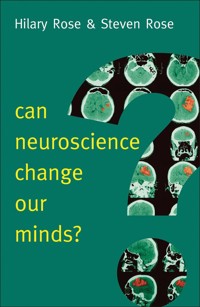
Neuroscience, with its astounding new technologies, is uncovering the workings of the brain and with this perhaps the mind. The 'neuro' prefix spills out into every area of life, from neuroaesthetics to neuroeconomics, neurogastronomy and neuroeducation. With its promise to cure physical and social ills, government sees neuroscience as a tool to increase the 'mental capital' of the children of the deprived and workless. It sets aside intensifying poverty and inequality, instead claiming that basing children's rearing and education on brain science will transform both the child's and the nation's health and wealth.
Leading critic of such neuropretensions, neuroscientist Steven Rose and sociologist of science Hilary Rose take a sceptical look at these claims and the science underlying them, sifting out the sensible from the snake oil. Examining the ways in which science is shaped by and shapes the political economy of neoliberalism, they argue that neuroscience on its own is not able to bear the weight of these hopes.
Sie lesen das E-Book in den Legimi-Apps auf:
Seitenzahl: 175
Veröffentlichungsjahr: 2016
Ähnliche




















Table of Contents
New Human Frontiers series
Title page
Copyright page
acknowledgements
introduction
The proliferating prefix
The co-production of neuroscience, society and the self
The technosciences in neoliberalism
Notes
one: The Rise and Rise of the Neurosciences
The genealogy of the neurosciences
The birth of a new science
The power of neuro
Hunting the molecule of madness
The animal model and its limits
The happy marriage?
Notes
two: The Neurosciences Go Mega
The Human Brain Project
Public engagement in science
In the beginning was the mouse
DARPA and the BRAIN Project
Solving the brain
A rip in neuroscience's big tent?
And yet neuro proliferates
Notes
three: Early Intervention
Mental and other capital
From Foresight to Allen
The political significance of the redefinition of poverty
The reports and their neuroscience
The origins of those MRI images of normality and neglect
Neuroscience, development and early intervention
(1) Synapses – the more the better?
(2) Enriched and impoverished environments
(3) Sensitive periods
(4) Stress and cortisol
(5) Attachment
The bridge is still too far
Notes
four: Neuroscience Goes to School
A booming industry
Enhancing educational achievement
Enhancing the brain
Neuroeducation and neuromyths
Neuroeducation within the boundaries
The ethics of research into education
Spaced learning
Teen sleep
And the view of the teens?
Neuroscience and neurodiversity
Dyslexia
Dyscalculia
Notes
conclusion
Public engagement with neuroscience
Hope, hype and neoliberalism
Pessimism of the intellect and optimism of the will?
Note
Index
End User License Agreement
Guide
Cover
Table of Contents
Start Reading
CHAPTER 1
Index
Pages
ii
iv
vii
viii
1
2
3
4
5
6
7
8
9
10
156
11
12
13
14
15
16
17
18
19
20
21
22
23
24
25
26
27
28
29
30
31
33
32
34
35
36
37
38
39
40
41
42
43
44
45
46
47
48
49
50
51
52
53
54
55
56
57
58
59
157
60
61
62
63
64
65
66
67
68
69
70
71
72
73
74
75
76
77
78
79
80
81
82
83
84
85
86
87
88
89
90
91
92
93
94
95
96
97
98
99
100
101
102
103
158
159
104
105
106
107
108
109
110
111
112
113
114
115
116
117
118
119
120
121
122
123
124
125
126
127
128
129
130
131
132
133
134
135
136
137
138
139
140
141
142
143
144
145
146
147
148
160
161
149
150
151
152
153
154
155
162
163
164
165
166
167
168
169
170
171
172
New Human Frontiers series
Harry Collins,
Are We All Scientific Experts Now?
Everett Carl Dolman,
Can Science End War?
Mike Hulme,
Can Science Fix Climate Change?
Margaret Lock & Gisli Palsson,
Can Science Resolve the Nature/Nurture Debate?
Hugh Pennington,
Have Bacteria Won?
Hilary Rose & Steven Rose,
Can Neuroscience Change Our Minds?
Copyright page
Copyright © Hilary Rose and Steven Rose 2016
The right of Hilary Rose and Steven Rose to be identified as Authors of this Work has been asserted in accordance with the UK Copyright, Designs and Patents Act 1988.
First published in 2016 by Polity Press
Polity Press
65 Bridge Street
Cambridge CB2 1UR, UK
Polity Press
350 Main Street
Malden, MA 02148, USA
All rights reserved. Except for the quotation of short passages for the purpose of criticism and review, no part of this publication may be reproduced, stored in a retrieval system, or transmitted, in any form or by any means, electronic, mechanical, photocopying, recording or otherwise, without the prior permission of the publisher.
ISBN-13: 978-0-7456-8931-9
ISBN-13: 978-0-7456-8932-6 (pb)
A catalogue record for this book is available from the British Library.
Library of Congress Cataloging-in-Publication Data
Names: Rose, Hilary, 1935- author. | Rose, Steven P. R. (Steven Peter Russell), 1938-author.
Title: Can neuroscience change our minds? / Hilary Rose, Steven Rose.
Description: Cambridge, UK ; Malden, MA : Polity, 2016. | Includes bibliographical references and index.
Identifiers: LCCN 2015046128 (print) | LCCN 2016003260 (ebook) | ISBN 9780745689319 (hbk) | ISBN 9780745689326 (pbk) | ISBN 9780745689340 (Mobi) | ISBN 9780745689357 (Epub)
Subjects: LCSH: Neurosciences. | Brain.
Classification: LCC QP356 .R57 2016 (print) | LCC QP356 (ebook) | DDC 612.8–dc23
LC record available at http://lccn.loc.gov/2015046128
Typeset in 11 on 15 pt AGaramond
by Toppan Best-set Premedia Limited
Printed and bound in Great Britain by Clays Ltd, St. Ives PLC
The publisher has used its best endeavours to ensure that the URLs for external websites referred to in this book are correct and active at the time of going to press. However, the publisher has no responsibility for the websites and can make no guarantee that a site will remain live or that the content is or will remain appropriate.
Every effort has been made to trace all copyright holders, but if any have been inadvertently overlooked the publisher will be pleased to include any necessary credits in any subsequent reprint or edition.
For further information on Polity, visit our website: politybooks.com
acknowledgements
We wish to acknowledge the generous help our readers, Simon Gibbs, Maureen McNeil, Helen Roberts and Vince Walsh, have given us. That they come from the very different but very relevant disciplines of educational psychology, women's and cultural studies, medical sociology and human neuroscience has critically nourished our intellectual and political project of bringing the claims of neuroeducation into public scrutiny and debate. We have enjoyed debating the neurosciences and the theoretical frames through which they can be viewed with Steven's younger brother, the sociologist Nikolas Rose – especially over good food and wine. At Polity, Jonathan Skerrett, our perceptive editor, has been a pleasure to work with, as have indeed his colleagues. Apologies to those whose work we have drawn on but in this short book have had no space to acknowledge.
introduction
The proliferating prefix
How to understand the ever-proliferating neuro-prefix, attached to everything from new academic disciplines – neuroeconomics, neuromarketing, neuroethics, neuroaesthetics, neuropsychoanalysis – to the marketing of neuro-eticals such as the soda drinks NeuroBliss, NeuroPassion etc.? Neuro occupies more and more space within mainstream science; neuro research papers dominate the leading journals, Science and Nature. Specialist journals proliferate. Neuro books, from the academic to the popular, stream from the presses. One publishing house alone, the venerable Oxford University Press, has no less than 1,200 neuro titles in its list. They range from handbooks on the wiring patterns of the brain through philosophical reflections on the relations between brain, mind and consciousness, to self-help texts on brain optimization. Unsurprisingly, the press has not been left out of this neuro-feeding frenzy; one research study mapped the steady rise of newspaper articles on the brain in the UK's top three broadsheets and the top three tabloids between 2000 and 2010.1 The flow only slackened in 2008, when that year's near-cataclysmic banking crash briefly drove neuro from the pages. Brain optimization and brain pathologies, ranging from eating disorders to dementia, drew most of the journalists' interest. Neuro has gone into orbit and neuromania is all too often the order of the day.
Can neuroscience really change our minds? As a neuroscientist and a sociologist who share the view that neuroscience is dramatically increasing our understanding of the brain and also that science and society shape each other – that is, they are co-produced2 – we have written this book together to unpick the hope from the hype of these neuro-prefixes, arising, as they do, as part of today's neoliberal political economy. The hopes that the neurosciences offer equal, even surpass, those of genomics at the time of the launch of the Human Genome Project in 1990, but with one crucial difference. Then one of the world's leading molecular biologists, James Watson, claimed that ‘our fate lay in our genes’, thus only geneticists could offer hope through their molecular biology, their genetic manipulation and their bespoke drugs, and could save us from our destiny.3 The imaginary that they depicted left those outside the community of molecular biology as passive, waiting rescue. Despite the ideology of reductionism they share, the neurosciences' imaginary is radically different, claiming that their knowledge can empower us to remake our brains, and hence our minds and our very selves. Personal effort, guided by the neurosciences, can overcome the injuries of poverty and inequality. Plasticity, a property of the brain central to neuroscientific thinking for half a century, has become a quasi-magical term within public-policy discourse, offering an entirely new solution to problems of child development and poor educational performance, and heralded as the new elixir by the self-help manuals.
So is the answer to the question in the title of this book a simple ‘yes’? As we will show in the chapters that follow, things aren't quite that simple.
For neuroscientists, the brain is the last biological frontier. It is seen as the repository of learning, thinking, deciding, acting, feeling angry, afraid, loving, remembering, forgetting, even consciousness4 itself. Well funded, with €6 billion for just two Euro-American mega-projects, bolstered by an astonishing array of new technologies from the atomic to the systemic, and with research papers tumbling out in a seemingly inexhaustible torrent, it was almost inevitable that for most neuroscientists all doubts would vanish: the mind is the brain, the brain the mind. With this, the philosophical debate of centuries is simply bypassed.
Not everyone goes along with this, although an increasing corporatism in universities is hostile to dissent, and controversial ideas that might stir thought are unwelcome. With research money in short supply, only a handful of neuroscientists are willing to stick their heads above the parapet. More audible are the grumbles from psychiatry, although individuals who have vigorously entered public debate have encountered problems. British psychiatrist David Healy found his appointment to a senior position in a Canadian university blocked, following pressure from a pharmaceutical company, the efficacy of whose drug he had questioned.5 Philosophers are freer from the constraints of needing substantial research grants, and many, John Searle, Raymond Tallis and Mary Midgley among them, have mounted a vigorous public defence of the mind.
The co-production of neuroscience, society and the self
Scholars working in science and technology studies – for the most part sociologists, anthropologists, philosophers and historians – have observed the fusion of science and technology in genomics, informatics and the neurosciences, and renamed them technosciences. Genomics would be impossible without high-throughput sequencers, and neuroscience without its imagers, and neither without mega-powerful computers.6 The technosciences and today's neoliberal political economy are not separate entities: they are co-produced; the demands of the political economy shape the development of the technosciences, while in turn genomics and the neurosciences are powerful sources of innovation and hence provide the economic growth on which capitalism depends. What this structural account leaves out, however, is the agency of humans, both the technoscientists studying and manipulating life itself – from plants to animals, including the human animal – and the audiences and users of these new knowledges and technologies. The neuroscientists offer compelling imaginaries of how this new knowledge will help midwife new and hitherto undreamed of societies, while more mundanely their new understanding offers possibilities of manipulating the brain – from therapeutic interventions to new military neurotechnologies.
As so often with new technologies, humans modify their use for purposes other than were intended; as, for example, with the telephone, intended to make business more efficient but hijacked to facilitate social communication, call the family or speak to friends. The neurosciences offer similar possibilities. Anthropologist Rayna Rapp's ethnographic study7 describes the experience of children and young adults going through hi-tech procedures to diagnose neurological problems, such as those of dyslexia or Asperger's syndrome. She observed that some, particularly young adults with a common diagnosis, came together as biosocial groups, not in opposition to neuroscience but seizing it as a resource to support their claim to a different, not deficit, brain identity. Their emphasis on diversity not deficit has found support from among the neuroscientific and clinical communities, and together they are building a new concept of neurodiversity. No longer are normal and abnormal brains set against each other; instead neurodiversity locates the neurotypical as one (albeit the most numerous) among many different brains.
This biosocial concept of neurodiversity offers more open ways to think about identity. By contrast, others, such as the philosophers Fernando Ortega and Francisco Vidal, argue that we live in a neuroculture, and thus conceptualize the brain as the centre of the self, as ‘brainhood’.8 Such theories of individual self-making exclude biosociality and hence the possibility of a shared construction of neuro-identity – a philosophical move which tends to reinforce the reductionist ideology of neuroscience, so clearly expressed in the titles of Jean-Pierre Changeux's book Neuronal Man or Joseph LeDoux's Synaptic Self. Such titles ignore Rapp's reminder that ‘A child surrounds this brain.’ Can brainhood make space for an identity of resistance?
The technosciences in neoliberalism
Since the mid-1970s the social rights embedded in the welfare states of Western Europe have been steadily eroded, a process dramatically accelerated by the near meltdown of the banking system. (The US trajectory has been rather different, never having had a welfare state on the European model – think of Obama's ongoing battle to secure access to health care for the poor.) Europe now follows the US and welfare is increasingly targeted towards the poorest by means-testing, even though research has long demonstrated that it is expensive to administer, humiliating to the recipients, and often misses those in greatest need. In Britain, even the right of free access to the treasured NHS is under systematic attack, beginning with the denial of health care to refugees.
In economics, it's been goodbye Keynesianism and hello to Chicagoan, or neo-classical, economics, with its reliance on complex algorithms and huge computing power. This latter, beginning as a distinctly marginal approach, rapidly increased its influence as cracks began to appear in the long post-1945 boom, with confidence in the welfare state fast fading. Today, despite the 2008 crash, which triggered a brief turn to Keynesianism, Chicagoan economics rises like the phoenix from what has unquestionably been ashes for most. The market remains fetishized as the guarantor of efficiency, innovation, economic growth and wealth creation, despite the challenge of the Occupy movement with its attack on the banking system and the obscene wealth of the 1 per cent.
Within this intensely marketized economy, social cohesion is weakened and collectivity fast replaced by the culture of what the political scientist C. B. Macpherson termed ‘possessive individualism’. What then might be expected of the sciences co-produced with neoliberalism? When, in 1975, biologist E. O. Wilson published his foundational text, Sociobiology, its message was in accord with Macpherson's thesis. Sociobiology offers to explain why we – that is, humans – are what we are and do what we do. It draws on animal studies, genetics and evolutionary theory to argue that societies are indeed aggregates of selfish individuals, whose telos is the propagation of their genes into succeeding generations. By the 1990s, sociobiology, rebranded as evolutionary psychology, was offering a fully fledged account of human nature as universal, fixed in the distant past of the Pleistocene, and persisting ever since, across all societies and despite 200,000 years of social, cultural and technological change. Its conception of this genetically driven universal human nature is hierarchical, individualistic, competitive and patriarchal. In the world as conceived by evolutionary psychology, collectivity within a group – be it nation or state – is possible only insofar as it is genetically advantageous to the individual. Evolutionary psychology thus ideologically positioned itself against the welfare state, with its ideology of cooperation and universal social care.9 As Wilson put it, humans might possibly create a fairer, more equal society, but only at the cost of losing efficiency.
The co-production of evolutionary psychology's theoretical apparatus and the ideology of neoliberalism is all too evident. But while it commanded substantial media space, it took little more than a pittance from the life-science budgets. The big money was increasingly in the biomedical technosciences, above all genomics and the neurosciences, seen as not merely wealth creators through innovation, but also as elegantly tailored to neoliberalism's shift from the collective to the individual. Neuroscience's preoccupation with the workings of the individual brain, even when the owner of that brain is engaged in intensely social interaction, and its reduction of persons to collections of neurons (nerve cells) and synapses (the junctions between them) is thus in accord with this focus on the individual, each ‘neuro-self’ responsible for their own well-being, sustained through the promises of personalized medical care.
In the chapters that follow, focusing mainly on the UK, we examine the ways in which, within this neoliberalism, neuroscience is being called upon to shape social and educational policy, targeting the deprived and the unemployed, who are blamed for what is described as poor parenting and thus limiting the ‘mental capital’ and aspirations of their children (Chapter 3), while offering the prospect of rational neuroscience-based education to enhance and optimize the brains of the young (Chapter 4). But, first, we ask how, from the dreams of an infant science half a century ago, neuroscience rose to its current pre-eminence (Chapters 1 and 2).
Notes
1
O’Connor, C. O., Rees, G. and Joffe, H., Neuroscience in the public sphere,
Neuron
74: 220–6, 2012.
2
Jasanoff, S.,
The Co-production of Science and the Social Order
, Routledge, 2006.
3
Discussed in our earlier book,
Genes, Cells and Brains: The Promethean Promises of the New Biology
, Verso, 2012.
4
Social theory has a very different theory of consciousness, seeing it as a product of social relations.
5
Healy, D., Conflicting interests in Toronto: anatomy of a controversy at the interface of academia and industry,
Perspectives in Biology & Medicine
45: 250–63, 2002.
6
As the term ‘neurotechnoscience’ is cumbersome, we follow the common shorthand practice of using ‘neuroscience’ much as we use the singular for the plural ‘neurosciences’.
7
Rapp, R., A child surrounds this brain: the future of neurological difference according to scientists, parents and diagnosed young adults,
Advances in Medical Sociology
13: 3–26, 2011.
8
Vidal, F., Brainhood: anthropological figure of modernity,
History of the Human Sciences
22
:
5–36, 2009.
9
We discussed the rise of evolutionary psychology in our book
Alas, Poor Darwin
:
Arguments against Evolutionary Psychology
, Cape, 2000.
oneThe Rise and Rise of the Neurosciences
The genealogy of the neurosciences
Of course, the development of the brain sciences long pre-dates the current neuro-surge, although today's flowering matches, if only coincidentally, the late twentieth- and early twenty-first-century rise of neoliberalism. But it is worth sketching out, if only briefly, this early history, beginning as it does for Western science with Descartes' location of the pineal gland in the brain as the junction point between soul and body in the 1630s – the moment when the brain became the site at which two different traditions converged: philosophers interested in the workings of the mind and the seat of the soul; and biomedicine, interested in the functions of the brain in the bioeconomy of the body and its various pathologies.
It took another two centuries for a new science to offer a materialist account relating brain to mind:




