


Erhalten Sie Zugang zu diesem und mehr als 300000 Büchern ab EUR 5,99 monatlich.
- Herausgeber: The History Press
- Kategorie: Geisteswissenschaft
- Sprache: Englisch
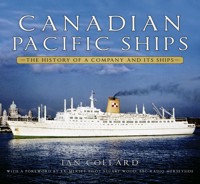
In 1873 a company was formed to construct the first railway across Canada. It soon branched out into shipping, chartering ships from the Cunard Line for service between Vancouver, Yokohama, Shanghai and Hong Kong. In 1889 Canadian Pacific would be awarded the mail contract for the service across the Pacific and, by 1903, they would purchase Elder Dempster & Company and begin sailing from Liverpool to Quebec and Montreal. They obtained control of the Atlantic, rail and Pacific routes, and later interest in the Canadian–Australasian Line, becoming 'the world's greatest transportation system', bridging two oceans and linking four continents. Canada's largest operator of Atlantic and Pacific steamships until after the Second World War, CP Ships boasted such names as Empress of Britain, Empress of Ireland and Empress of Canada. This new history of the shipping side of Canadian Pacific includes a wealth of illustrations and a detailed fleet list that will enthral maritime enthusiasts.
Sie lesen das E-Book in den Legimi-Apps auf:
Seitenzahl: 342
Veröffentlichungsjahr: 2022
Das E-Book (TTS) können Sie hören im Abo „Legimi Premium” in Legimi-Apps auf:
Ähnliche




















First published 2022
The History Press
97 St George’s Place, Cheltenham,Gloucestershire, GL50 3QB
www.thehistorypress.co.uk
© Ian Collard, 2022
The right of Ian Collard to be identified as the Author of this work has been asserted in accordance with the Copyright, Designs and Patents Act 1988.
All rights reserved. No part of this book may be reprinted or reproduced or utilised in any form or by any electronic, mechanical or other means, now known or hereafter invented, including photocopying and recording, or in any information storage or retrieval system, without the permission in writing from the Publishers.
British Library Cataloguing in Publication Data.
A catalogue record for this book is available from the British Library.
ISBN 978 1 8039 9079 8
Typesetting and origination by The History Press
Printed in Turkey by IMAK
eBook converted by Geethik Technologies
Princess Maquinna.
CONTENTS
Foreword by Senior Mersey Pilot, Stuart Wood
Introduction and Acknowledgements
1 The Development of Shipping Links between Europe and Canada across the North Atlantic
2 The First World War and the Formation of Canadian Pacific Steamships Limited
3 The Second World War
4 The Development of Services in Peacetime
5 The Last White ‘Empress’ Liners
6 A New Livery
7 Acquisitions and Joint Ventures
Fleet List
Bibliography
FOREWORD BY SENIOR MERSEY PILOT, STUART WOOD
IT IS A GREAT PRIVILEGE to have been asked to put a few words together as a foreword for this remarkable book by my good friend Ian Collard.
We first met many years ago at opposite ends of one of his many cameras. My profession of pilot on the Mersey took me past his doorstep on countless occasions. The ships under my charge were often the subject of photographic attention from his very high balcony overlooking one of the most iconic rivers in the world. Whilst my ships were, of course, some distance away from the Collard balcony, as our relationship grew I soon learned to ensure that my tie was properly tied. Ian’s attention to detail is totally clinical. The results of this care can be seen in the many books Ian has published, all containing examples of his craft supported by the necessary written detail from his own archives and elsewhere.
With this latest and grandest offering, Ian has broadened his approach and stepped further back in time than perhaps he has done in the past. The history of the operation carrying a number of labels, the principal one being Canadian Pacific, reads more like that of a major, powerful, global state. As Ian’s story unfolds it becomes clearer that without the wide variety of interlinked companies and families operating all forms of transport from Canada westwards across the Pacific into and beyond Asia, eastwards across the Atlantic into the United Kingdom and Europe, and within the country itself, which together made up Canadian Pacific, it is certain that Canada would not be the Canada we know and love today.
I have greatly enjoyed reading this amazing story and am confident that you will too.
Stuart Wood MNILicensed Liverpool Pilot, 1968–2009
INTRODUCTION AND ACKNOWLEDGEMENTS
This book is a complete history of one of Britain and Canada’s main shipping companies and contains a detailed fleet list of all ships owned and chartered by Canadian Pacific. It is also a story about the history of Canada and shows how the company contributed to the development of the transport and economy of the country. Steamships and railways played an important part in the progression of Canada from the earliest days. Both modes of transport were responsible for bringing supplies to the construction sites and isolated areas. Ships were used to bring materials to be utilised by men and machines building the new country. The ports of Liverpool, Greenock and London contributed greatly to the growth of the Dominion, being the ports of departure for so many of the emigrants whose subsequent efforts in the new country resulted in Canada becoming a powerful and successful nation. The story of the ships employed between England, Scotland and New York has often been told, but the Canadian services have usually been overlooked, despite the fact that many interesting vessels of the smaller type have been engaged in the North Atlantic routes. In earlier years, the competition for passengers was intensely keen and companies competed for the available traffic. Although the ships bear Canadian names, the majority were designed and built in Britain, and helped to maintain the very close political and economic ties between both nations.
All images are from the author’s collection. I am most grateful to many people for the valuable help and assistance in preparing and researching this piece of work, including The Journal of Commerce, the World Ship Society, George Musk, Duncan Haws, Frank C. Bowen, Alan L. Cary, Robert D. Turner and Peel Ports.
Princess Victoria arriving at Victoria, BC.
1
THE DEVELOPMENT OF SHIPPING LINKS BETWEEN EUROPE AND CANADA ACROSS THE NORTH ATLANTIC
CANADA SHARES A LAND BORDER with the United States of America to the south and the US state of Alaska to the north-west. The country stretches from the Atlantic Ocean in the east to the Pacific Ocean in the west, and the Arctic Ocean lies to the north. It is the second largest country in the world, after Russia, and by land area it stands fourth, due to it having the world’s largest proportion of freshwater lakes. Only Alberta and Saskatchewan of the country’s thirteen provinces and territories are landlocked as the others border one of the oceans. The country covers 9.98 million square kilometres (3.85 million square miles). The southern border with the United States is 8,891 kilometres (5,525 miles) and is the world’s longest land border.
The Confederation Act proclaimed Canadian Confederation on 1 July 1867, creating Ontario, Quebec, Nova Scotia and New Brunswick, and Yukon joined a year later. British Columbia and Vancouver Island joined in 1871, and Prince Edward Island two years later. Alberta and Saskatchewan became provinces in 1905, and Newfoundland in 1949.
Because of the increase in European immigration, it was decided to construct transcontinental railways to open the west to development by families making a new life in Canada. The creation of the Canadian Pacific Railway was discussed by the prime minister, Sir John A. Macdonald, and Sir Alexander Tilloch Galt, the owner of the North Western Coal and Navigation Company. British Columbia had insisted upon a land transport link to the east as a condition for joining the Confederation and in 1871 the government agreed to build a railway linking the Pacific to the eastern provinces within ten years.
Although the pioneer ships of the Cunard Line – then known as the British and North American Royal Mail Steam Packet Company – called at Halifax on passage to Boston and New York, they did not operate to Montreal until the early years of the twentieth century. The Montreal Ocean Steamship Company was formed in 1854 by Hugh Allan, a native of Saltcoats, Ayrshire, where he was born in 1810. At the age of 16 he arrived in Montreal and found employment in a shipping office. His obvious flair for the business of shipping enabled him to progress sufficiently to establish, with the help of members of his family in Glasgow and Liverpool, the first viable steamship link with the St Lawrence River. However, the Crimean War caused the suspension of the service after only two voyages, as the pioneer steamer, the Canadian, was requisitioned by the government as a troopship. In 1856, the service resumed, but the hazards of navigation in the St Lawrence were great, and in its first nine years the company lost eight ships – all in the St Lawrence. The North American, Nova Scotian, Hibernian, Saint Andrew, Saint George and Peruvian were all involved in the trade, with the Austrian and Nestorian being added in 1867. At this time the Inman Line and the Anchor Line were interested in these services but did not enter into the St Lawrence shipping routes.
The Canada Shipping Company was founded in 1867 by a number of wealthy Montreal merchants to run a line of fast iron sailing ships between Liverpool and Montreal, but it only enters the story proper in 1875, when it ordered steamers. William Murray, Alexander Buntin, Alexander Urquhart, and John and Hugh McLennan were all involved in this new venture. Five iron ships were built on the Clyde, and all these had the prefix ‘Lake’ before their name. Lake Erie and Lake Ontario were built by Barclay Curle, and Robert Steele of Glasgow built Lake Superior. Lake Huron was the fourth vessel, and Lake Michigan completed the first fleet.
Lake Nipigon, Lake Champlain and Lake Megantic introduced steam into the fleet, and were all built by the London and Glasgow Shipbuilding Company. In 1895, the English debenture holders accepted 7s 6d in the pound, handing everything over to the Canadians, for whom D. & C. MacIver continued as managers for the Beaver Line. Competition to the line appeared when British shipping company Elder Dempster and Company took over the Dominion Line’s Bristol Channel service. D. & C. MacIver floated the Beaver Line Associated Steamers Limited, and chartered tonnage. In 1898, the Beaver Line was transferred to Elder Dempster, who set about building up the fleet with new vessels. D. & C. MacIver then chartered the Pacific Steam Navigation Company’s (PSNC) Lusitania and Tongariro, and the Cunarder Gallia. Beaver Line Associated Steamers went into voluntary liquidation in 1900, leaving Elder Dempster with no competition in the Atlantic. However, in 1903 it was announced that Elder Dempster had sold its Canadian interests to the Canadian Pacific Railway for just under £1.5 million. Lake Manitoba took the last Beaver Line sailing on 31 March 1903, and the Beaver Line flag was replaced by the chequered flag of Canadian Pacific.
In 1870, the Liverpool and Mississippi Steamship Company was formed to trade between the Mersey and the southern states of America. In 1872, this company decided to break the monopoly of the Allan Line and become the Mississippi and Dominion Steamship Company Limited, popularly known as the Dominion Line. The Allan Line commissioned some new tonnage, which included the Polynesian, Samaritan and Circassian, all of which were in service by 1873. They were followed in 1875 by the Sardinian. In 1874, the Allan Line Caspian brought the first consignment of frozen meat from Canada to Liverpool. In 1880, the Dundee firm of William Thomson began carrying store cattle from Canada to Britain, and Birkenhead developed as a terminal for this traffic.
The Canadian Pacific Railway (CPR) was created on 1 February 1881 and construction began on 2 May at Montreal. However, financial problems caused some delays, which were resolved by Donald A. Smith (later Lord Strathcona) and George Stephen (later Lord Mount Stephen). George Stephen became the first president of the CPR, Sandford Fleming was appointed as chief engineer and surveyor, and William Van Horne was in charge of construction. In 1884, the company agreed to:
have the power and authority to erect and maintain docks, shipyards, wharves, slips and piers at any point on or in connection with the said Canadian Pacific Railway and at the termini thereof on navigable water, for the convenience and accommodation of vessels and elevators, and also to acquire and work elevators and to acquire, own, hold, charter and run steam and other vessels for cargo and passengers upon any navigable water which the Canadian Pacific Railway may reach or connect with.
Grain storage elevators were built along the north shore of Lake Superior and other elevators were provided to receive prairie grain for onward shipment. Algoma, Alberta and Athabasca were introduced to the fleet and were able to be divided in half at Montreal to fit through the canal and towed to Buffalo. The new vessels also carried construction workers and material along the lake while the railway was being constructed. A service from Vancouver to Hong Kong was advertised, with two sailings a month, and on 7 November 1885, the last spike of the CPR line was driven in at Craigellachie, British Columbia. However, on the same day, the Algoma sank in a storm off Isle Royale. Four days earlier, the last spike of the Lake Superior section had been driven in west of Jackfish, Ontario. The Lake section alone had taken 12,000 men and 5,000 horses to construct.
Donald Smith, later Lord Strathcona, drives the last spike on 7 November 1875.
By 1885, a network of lines was created from Quebec City to St Thomas, Ontario, following the acquisition of the Quebec, Montreal, Ottawa and Occidental Railway from the Quebec Government. A fleet of Great Lakes ships linked the terminals and the leases of a number of railways were purchased, including the Ontario and Quebec Railway. A 999-year lease had been acquired on the Ontario and Quebec Railway on 4 January 1884, and the following year a minority interest was obtained in the Toronto, Hamilton and Buffalo Railway. This gave the company a link to New York and the north-east United States. On 28 June 1886, passenger services were inaugurated between Montreal and Port Moody, with a journey time of five and a half days. The train consisted of two baggage cars, a mail car, one second-class coach, two immigrant sleepers, two first-class coaches, two sleeping cars and a diner. A service by ship was introduced between Montreal and Port Moody, and several sailing ships were chartered, including the W.B. Flint, which arrived at Port Moody on 26 July 1886 with its cargo of tea. The western terminus was moved from Port Moody to Granville, which was renamed Vancouver on 23 May 1886. Bylgia, Carrie Delap, Eudora, Flora P. Frieda, Gramph, Stafford and Zoroya were chartered, and the steamship Skuzzy was used by the construction engineer Andrew Onderdonk for work on the Fraser River. Adamson, Bell and Company were appointed as agents in Hong Kong, and Port Fairy, Straits of Belle Isle, Sussex and Zambesi were chartered for single voyages on the Hong Kong–Japan–Vancouver route. Adamson Bell had also signed an agreement with Canadian Pacific, on 11 February 1887, for the Abyssinia, Batavia and Parthia to operate on Pacific routes. A Vancouver–United States service was introduced to cater for the increase in Chinese workers crossing the Pacific, and another from Vancouver to Hong Kong via Shanghai was offered in 1889.
In 1886, Canadian Pacific built several small hotels to accommodate travellers. Glacier House was built in Glacier National Park at Rogers Pass, and Mount Stephen House in Field, British Columbia, along with hotels at Kicking Horse Pass, North Bend in Fraser Canyon, Sicamous on Shuswap Lake, and Revelstoke. Some of the original smaller hotels were designed to provide meals for passengers in the Rocky Mountains, where railway grades were too severe to justify the operation of dining cars. However, Glacier House and Sicamous were destination hotels. Most operated for several years before dining-car service made them unprofitable. Glacier House was very popular until the diversion of the main passenger service to the Southern Mainline disconnected it from the main track. Small hotels were built in the Kootenays region at Balfour, where Balfour House provided accommodation for ferry passengers travelling across Kootenay Lake, which was part of the service on the Southern Mainline.
The Royal York Hotel, Toronto.
The Empress Hotel, Victoria.
Windsor Street Station, Montreal headquarters of CPR.
Van Horne built Fraser Canyon House in North Bend in 1886. It was originally referred to as the CPR Hotel, and later became the North Bend Hotel. The original building burned down in 1927 and a new hotel opened two years later. CPR’s Hotel Department was established when the Hotel Vancouver opened on 16 May 1888, followed by the Banff Springs Hotel on 1 June. The Château Lake Louise opened in 1890, as a single-storey building of log construction, and several additions were made over the following years. The Banff Springs Hotel was extended during the first two decades of the twentieth century. The company also owned five bungalow camps across the country and leased a number of camps, tea houses and chalets in the Rockies, which were all served by Canadian Pacific lines. Château Frontenac was opened at Quebec City on 11 December 1893, with additions to the building made in 1904, 1906, 1916 and 1923, which included the great central tower. It was improved in 1926 and in 1992–93, with the addition of the Claude-Pratte Wing.
The Place Viger Hotel in Montreal was built in 1898 and closed in 1935. The Hotel Sicamous, overlooking Shuswap Lake, British Columbia, was opened in 1900 and later operated under lease; it was demolished in 1964. One of the smaller hotels, the McAdam, was opened at McAdam, New Brunswick, in 1901, and this was followed a year later by the Emerald Lake Chalet, near Field, British Columbia. In 1903, the Algonquin Hotel at St Andrews, New Brunswick, was taken over by CPR. The Royal Alexandra Hotel in Winnipeg was completed in 1906, with substantial alterations made in 1914. However, with the dominance of the airlines, the hotel closed in December 1967, and was demolished in 1971. The Empress Hotel at Victoria, British Columbia, was opened in January 1908 and renovated and refurbished in the 1960s and 1970s. The Palliser Hotel at Calgary was enlarged in 1929, and the Hotel Saskatchewan at Regina was a favourite for visitors to the Queen City of the West. Once advertised as the largest hotel in the British Empire, the Royal York hotel opened in June 1929 in Toronto. In Nova Scotia, the CPR was the lead investor in the Lord Nelson Hotel in Halifax, which was opened in 1927 to rival Canadian National Railway’s Hotel Nova Scotia. Originally built in 1892, the Aberdeen Hotel at Kentville in the Annapolis Valley was renamed the Cornwallis Inn in 1919 after it was purchased by DAR and later reopened in the much grander CPR Baronial style in 1930, and the Château Montebello was opened in 1930, with 211 guest rooms and suites. The Digby Pines Hotel was rebuilt and the new rustic Lakeside Inn resort at Yarmouth was completed in June 1931.
In the 1890s, Canadian Pacific were building a rail line through the Kootenays and acquired the Columbia & Kootenay Steam Navigation Company for $200,000. The steamboat Rossland was built by David Bulger of Nakusp, and she operated at a speed of 20 knots. She was followed by Kootenay and Minto, all three constructed for service on the Arrow Lakes. The company intended to send Minto to the Stikine River for the gold rush of 1898, but she was diverted to the Columbia route. Bonnington was introduced in 1911 and operated until 1929, when business started to fall off due to increasing road traffic. In 1904, Minto was tied up at Arrowhead when around 600,000 tons of rock broke away from a mountain and slipped into the lake. This created a 6ft-high wave, which reportedly lifted her out of the water and set her down on the dock; the after wave heaved her clear of the dock and back into the water again.
Manitoba replaced Algoma in 1889 and she was fitted with Algoma’s machinery. A ten-year Canadian Mail contract was signed with the British Government for the Pacific service from Vancouver to Yokohama, Shanghai and Hong Kong, which was to be accomplished in 684 hours from Hong Kong to Quebec between April and November, and 732 hours from Hong Kong to Halifax between December and March. On 12 October 1889, three ships were ordered for the route; they were named Empress of India, Empress of Japan and Empress of China. A transatlantic service was suggested by the government but it was felt that this would not be viable because of the competition from New York.
As traffic on the railway increased, the company became profitable and loans from the federal government were repaid. A branch line was opened between Sudbury and Sault Ste Marie, which connected with the United States railroad system and its own steamships. A line was constructed between London, Ontario and the American border at Windsor, Ontario, and this was opened on 12 June 1890. The following year, the New Brunswick Railway was leased for 991 years and a connection was made from Montreal to Saint John, New Brunswick. This allowed transatlantic cargo and passenger services to continue year-round when ice in the Gulf of St Lawrence closed the port of Montreal during the winter months.
A branch line was constructed from London, Ontario, to Detroit, and the ferries Michigan and Ontario were introduced for the crossing of the Detroit River. Alberta and Athabasca were introduced on the Toronto–Chicago and Montreal–Chicago routes and three delivery around-the-world cruises were announced for the new Empress liners. The itinerary was Liverpool–Gibraltar–Naples–Port Said–Suez–Colombo–Penang–Singapore–Hong Kong–Woosung–Nagasaki–Kobe–Yokohama–Vancouver, with a rail connection to Montreal and an Atlantic sailing back to Britain.
Canadian Pacific Facts and Figures (revised edition, 1946) states that Sir William C. Van Horne (1843–1915), the second president of the CPR, ‘even took time out to design the red and white checkered house flag of the company steamships’. In the chapter ‘Ocean Steamships’ by Pat Donovan, assistant press relations officer at Vancouver, it states:
To many people the steamships service is symbolized by the Canadian Pacific house flag, the six squares, red and white, checker-board style, which proudly enters ports all over the world and adorns the uniform caps of all captains, officers and warrant officers of the company’s fleets. It was designed by Van Horne, which was particularly appropriate since it was he who was at the helm for the first maritime development.
Mr D. Duff, assistant manager, who later became assistant to the chairman, said that he wrote to Van Horne asking if it was true that he had designed the flag. The letter came back with Sir William’s answer written in the left-hand margin: ‘Yes, I designed the house flag, partly to differ from any in use and partly that it might be easily recognized hanging loose. It has no historical or heraldic significance.’
The three new Empress liners were introduced in 1891, with the Empress of Japan taking the transpacific record on her second voyage. The Yokohama mail reached London in less than three weeks, which was ten days less than the contract time. Abyssinia, Batavia and Parthia were released from passenger services. A railway was constructed through Crowsnest Pass to the south shore of Kootenay Lake in exchange for the company agreeing to reduce freight rates in perpetuity for key commodities shipped in western Canada. In 1897, Canadian Pacific Railway purchased the Columbia & Kootenay Steam Navigation Company, entering into the sternwheeler traffic of the lakes and rivers of the Canadian Rockies. Athenian and Tartar were purchased from the Union Steamship Company and were loaded with cargo for their delivery voyage across the Atlantic. The Hongkong Maru and America Maru were introduced by the Japanese in 1898, but were never as popular as the Canadian Pacific Empress ships, although serious competition arrived in 1910 in the form of Korea and Siberia, which were built for the Pacific Mail Company. They were larger and faster than the Canadian Pacific vessels.
Empress of Japan.
Empress of India.
Sir William Van Horne.
When the branch railway line from Sicamous to Okanagan Landing was built, the Canadian Pacific Railway opened a shipyard near the railhead in 1893. On 22 May, they launched the sternwheeler Aberdeen, which was designed to provide a connection to Penticton. York was added in January 1902, and the Okanagan in April 1907. They were followed by the Bonnington, Nasookin and Sicamous. The Sicamous would leave Penticton at 5.30 a.m. each day, returning at 8 p.m. after calling at fourteen places. Following the completion of the Canadian Pacific branch into Kelowna, the number of passengers travelling on the lake began to decline. Sicamous was laid up at Okanagan Landing in 1931, but the service was reinstated for a short period until it finished in 1935. It was planned to operate Sicamous as a freight-only vessel but this proved unsuccessful; she was taken out of service in October 1936. In June 1949, she was sold to the city of Penticton for $1, moved to a permanent berth and operated by the Gyro Club. Following extensive work, she was finally opened to the public on 24 May 1952. Canada West Inspection Services were contracted to test the hull in 1987, and they concluded that it was in a fair condition. The SS Sicamous Restoration Society was formed to undertake work on the ship and she was leased by the city to the society on 1 June 1988. She reopened in 1993, allowing visitors to tour her decks and view her boiler and engine rooms. More than 30,000 people visited her in 1996–97. The steam tug Naramata remained in service until 1965, when she was laid up, and she is also preserved at Okanagan Landing. Both vessels are part of the SS Sicamous Inland Marine Museum at Penticton.
The Great Lakes.
The ships and coastal services of the Canadian Pacific Navigation Company were purchased in 1901. However, the largest vessel, the Islander, was lost before entering Canadian Pacific service and was replaced by Ningchow, which was renamed Princess May. In 1903, a deal was announced with the Canadian Government when the CPR purchased the interests and fleet of fifteen vessels of the North Atlantic routes of Elder Dempster and Company Limited, including the Beaver Line. The ships were Lake Manitoba, Lake Michigan, Lake Champlain and Lake Erie from the Beaver Line, and Milwaukee, Montreal, Montcalm, Montfort, Monterey, Monteagle, Montrose, Monmouth, Montezuma, Mount Royal and Mount Temple from Elder Dempster. Canadian Pacific services were then introduced from Liverpool, London and Avonmouth. The deal was heavily oversubscribed and shares exchanged hands at a premium.
On 20 January 1904, the Princess Beatrice started a new year-round service between Seattle and the British Columbian capital of Victoria. Vancouver was later added to the schedule and Princess Victoria was also placed on this service. She was able to maintain 20 knots and was popular with regular passengers. The Canadian Pacific service competed with the American Puget Sound Navigation Company, who operated Chippewa and Iroquois. Montrose, Montreal, Mount Temple and Montfort were placed on the London service, and Antwerp was added as an additional port of call. On 11 June 1905, Princess Victoria established a record for the Seattle–Victoria route and carried a broom on her foremast to signify her conquering speed.
Empress of Britain entered service between Liverpool and Quebec and was joined by the Empress of Ireland. The CPR was awarded the half mail contract with Allan Line’s Victorian and Virginian. The two companies later amalgamated and the Beaver Line vessels were transferred to the second service. St George was introduced on the Bay of Fundy service between Saint John, New Brunswick and Digby. Tartar and Athenian were sold for demolition and were replaced by Monteagle. Princess Ena and Princess Royal were delivered for the Alaska service and Assiniboia and Keewatin were allocated to the Great Lakes route, replacing the Athabasca and Alberta.
Keewatin left Greenock on 14 September 1907, arriving at Montreal on 23 September. The following month she was cut in half at the Lévis Dry Dock to allow her to sail through the Welland Canal, and she was rejoined at Buffalo. She was fitted with quadruple expansion machinery, which gave her a speed of 14 knots, and she was able to cover the 600 miles between ports in two days, with a round trip taking five days. Her hull colour was changed from black to white and green in 1919, and a ballroom was added in the 1920s. Her wheelhouse was enclosed in 1946, and the funnel given the CPR chequerboard flag. Her wooden masts were later replaced by steel masts. She continued to operate on the Great Lakes service until 1965, when new regulations were introduced regarding her wooden superstructure, which could be regarded as a fire risk. It was decided that it would be too costly to rebuild her cabin and passenger accommodation in steel so the company withdrew the vessel from service. She was sold to Marine Salvage of Port Colborne in November 1966, and it was expected that she would be dismantled. However, she was resold the following year and left Port McNicoll on 24 June 1967 in tow of the tug Amherstburg for her new home at Douglas. She was later opened to the public, visitors being allowed to tour the ship and view the lobby, purser’s office, barber’s shop, boiler room and engine room. Her sister ship, Assiniboia, was converted to burn oil fuel in the 1950s and was sold in 1967 to be used as a floating restaurant, but caught fire and was destroyed during the conversion.
Keewatin advertisement.
Keewatin.
In 1908, the Princess Charlotte operated on the Seattle–Victoria–Vancouver service and the North Atlantic Conference was formed. An anonymous offer was made for the Allan Line by the Royal Trust Company of Montreal and a Canadian Pacific appointee joined the Allan Board. The Detroit River Tunnel was opened in 1910, which reduced the number of cars travelling on the trans-service river ferries. Following the opening of the electric railway, the sternwheeler services on the Vancouver–Chilliwack route ceased. Montrose became the first vessel to use wireless in assisting the police when Dr Crippen and his mistress were discovered to be aboard. This was radioed to England and two detectives later arrested Crippen.
On 26 July 1911, Empress of China was wrecked near Yokohama and the Japanese Toyo Kisen Kaisha Line introduced three new express steamers on the transpacific services. The following year, the Dominion Atlantic Railway Company was leased to Canadian Pacific for 999 years, with its six ships. However, all but the Prince Rupert were sold. The control of the Allan Line moved to Montreal, and a Canadian Pacific director was appointed as chairman. In 1913, the Allan Line and Canadian Pacific collaborated by setting up joint victualling and stores depots at Liverpool, England. Allan’s general manager retired and was replaced by a Canadian Pacific appointee. Following competition from the Japanese company, Canadian Pacific introduced the Empress of Russia and Empress of Asia.
A passenger and freight service was introduced between Trieste, Italy, and Canada. Lake Erie was renamed Tyrolia, and Lake Champlain became Ruthenia for the route, which only operated until the outbreak of the First World War the following year. Allan Line’s Alsatian and Calgarian came into service in 1914 and were regarded as being superior to other vessels employed on Atlantic routes.
On 29 May 1914, the Empress of Ireland sank near the mouth of the St Lawrence River following a collision in fog with the Norwegian collier Storstad. Following the Titanic disaster two years earlier, the ship had been fitted with watertight compartments and carried sufficient lifeboats for the number of passengers on board. In the early hours, she reached Pointe-au-Père (Father Point), near the town of Rimouski, Quebec, where the pilot disembarked. Soon after the Storstad had been sighted, fog enveloped the area, and at 2 a.m. the vessels collided. The Storstad remained afloat but it became apparent that the Empress of Ireland was severely damaged. The Empress soon flooded and quickly listed to starboard; it was not possible to close the watertight doors, and passengers and crew on the lower decks drowned within minutes. Passengers on the upper decks made their way to the lifeboats, but the list was so severe that the boats on the port side could not be launched. When attempts were made to launch them, they crashed into the side of the ship and spilled their passengers into the cold water. Five lifeboats were finally launched successfully and, ten minutes after the collision, the Empress of Ireland turned onto her starboard side, which allowed many passengers and crew to crawl out of the portholes. She lay on her side for several minutes, having run aground, and fifteen minutes after the collision, her stern rose out of the water and she sank. It was reported that over 1,000 people lost their lives in the tragedy.
Empress of Ireland ship’s officers.
Empress of Ireland.
2
THE FIRST WORLD WAR AND THE FORMATION OF CANADIAN PACIFIC STEAMSHIPS LIMITED
FOLLOWING THE OUTBREAK OF THE First World War, the Princess Irene and Princess Margaret were converted into naval minelayers, and the British Admiralty requisitioned Montezuma, Montcalm, Mount Royal, Tyrolia, Ruthenia and Montrose. Missanabie and Metagama entered service in 1915. The new ships were the first to introduce the Atlantic cabin class, which accommodated 520 passengers, with 1,100 in third class. On 16 March 1915, the government in Ottawa granted Canadian Pacific the right to operate ships independently from any railway undertaking. Canadian Pacific Steamships Limited was established as a subsidiary, with separate accounts. The Princess Irene suffered an internal explosion on 27 May 1915 at Sheerness and was destroyed.
Canadian Pacific Ocean Services Limited was formed on 1 October 1915 to manage the North Atlantic fleet. The following year, the Allan Line and Canadian Pacific fleets were merged. The Allan Line ships comprised Alsatian, Calgarian, Corinthian, Corsican, Grampian, Ionian, Mongolian, Pomeranian, Pretorian, Sardinian, Scandinavian, Scotian, Sicilian, Tunisian, Victorian and Virginian. The tonnage of the combined fleet constituted 239,000 Canadian Pacific and 155,000 Allan. The staff and assets of the Allan Line were incorporated into Canadian Pacific and the head office was located at 8 Waterloo Place, London. All of the Allan Line vessels retained their names.
The Cunard Steamship Company took over the Canadian Shipping interests of the Canadian Northern Railway in 1916, which gave them an entry into the St Lawrence trade from Avonmouth, Bristol, on the resumption of peacetime trading. The formation of the Anchor-Donaldson Line, within the orbit of the Cunard group, was an assurance that the company intended to participate fully in the Canadian trade. Donaldson’s had employed vessels to the St Lawrence from Glasgow for many years, and from 1904 had engaged in passenger traffic with the Athenia, Letitia, Saturnia and Cassandra. The first two were lost during the war.
Canadian Pacific carried over 1 million troops and passengers during the First World War, as well as 4 million tons of cargo and munitions. The company took over two cabin-class ships, the Melita and Minnedosa, from the Liner Requisition Scheme in 1918. The ships were ordered before the war for a British subsidiary of the Hamburg America Line, and it was planned to operate them on the Liverpool–Canada route. After having served as troopships, in 1925 Melita was sent to Palmers Shipbuilding & Iron Company at Jarrow, and Minnedosa to Hawthorn Leslie at Hebburn. They emerged from their refit with accommodation for 480 cabin-class and 1,250 third-class passengers. Melita and Minnedosa were based at Liverpool in 1927, and also operated comprehensive cruise programmes from Greenock and Belfast in the early 1930s. Both vessels were laid up in 1934 and were sold to Ricuperi Metallici the following year with the expectation that they would be broken up. However, they were purchased by the Italia Line to operate as troopships, with Melita becoming Liguria and Minnedosa renamed Piemonte. Both ships were eventually scuttled – the Liguria on 22 January 1941 and the Piemonte at Messina on 15 August 1943.
Empress of Britain in 1917.
Canadian Pacific lost nine vessels during 1918 and efforts were made to replace them with available tonnage. In January, Montreal was rammed by White Star Line’s Cedric and sank. Calgarian, Pomeranian, Medora, Milwaukee, Missanabie and Montfort were torpedoed. Princess Sophia was lost in the Pacific when she was swept off a reef by high seas, with the loss of all 345 people on board. The final loss was the Corinthian. Batsford, Dundrige, Holbrook and Mottisfont were acquired from Harris & Dixon. Lake Manitoba was severely damaged by fire at Montreal in 1919, and she later left the fleet.
In August 1920, Empress of France made a new record when she crossed between Liverpool and Quebec in five days, twenty hours and six minutes, with an average speed of 18.8 knots. Because of the fluctuating price of coal, Canadian Pacific converted its Pacific ships back to coal. When the mail contract came up for revision, the Dominion government transferred some mail from Empress of Asia to a Nippon Yusen sailing but the United States authorities used Canadian Pacific and diverted their mail via Vancouver. Following a press campaign, the Canadian Pacific contract was renewed.
On 8 September 1921, the operating company became Canadian Pacific Steamships Limited. The ships’ funnels were painted buff, and a white band was added to the hulls. The Canadian Pacific Railway vessels on the Pacific and Bay of Fundy were not affected by this change. The passage time of five days, nine hours and thirty minutes was attained by the Empress of Britain in 1921. Empress of India, Empress of Australia and Empress of Scotland were added to the fleet. The United Kingdom base was transferred from Liverpool to Southampton in 1922 and Metagama joined Tunisian, Corsican and Scotian on the joint Canadian Pacific–Anchor service from the Clyde to Canada. Montcalm, Montrose and Montclare were introduced to replace a number of older vessels. These three ships increased the cabin-class capacity on the routes. Empress of Canada was delivered for Pacific services, which brought the Pacific fleet up to four vessels. Empress of Scotland made her first post-war cruise of seventy-nine days to the Mediterranean during the winter of 1922 for the Frank C. Clarke Travel Agency of New York. In no other year had the company seen so much activity as in 1922. Between January and August there were eighteen notable sailings – not all from Liverpool – of new ships or newly acquired ships of which all had some association with Canada.
Japan, China, Manila via Vancouver sailing list for 1921.
Atlantic and Pacific routes.
1922 advertisement.
1922 advertisement.
1925 advertisement for farmers.
Scandinavian was sold for scrap and Montcalm was sold to Norwegian interests for conversion into a whale factory ship in 1923. On 1 September that year, when Empress of Australia was leaving her berth at Yokohama an earthquake struck and she returned to berth to give assistance. The British Columbian sternwheeler fleet was reduced to five vessels – Nasookin, Kuskanook, Moyie, Bonnington and Minto – and twelve cargo ships were given names commencing with ‘B’. In 1924, Belfast was added to the Clyde–Canada route.
The increase in tonnage built during the First World War and the lower number of immigrants crossing the Atlantic meant that there were too many vessels trading in 1925. Restrictions were placed on immigrants to the United States, and the Canadian Government brought in a scheme for two years where immigrants to Canada paid £2 and they made up the balance. Pretorian, Scotian and Grampian were sold to ship-breakers and the Clyde–Canada service was reduced to Metagama and Montnairn in 1926.
Beaverburn, Beaverford, Beaverdale, Beaverhill and Beaverbrae were introduced, and Bawtry (ex-Mottisfont) was sold in 1927. The following year it was decided to land registered mail at Father Point, near the mouth of the St Lawrence, and fly it to Quebec and Montreal. The ‘Beaver’ boats were easily distinguishable by their four sets of ‘goal post’ masts and a single tall funnel. They all entered service in 1927 and were normally based at the Surrey Commercial Docks, London, and regularly called at Hamburg and Antwerp, with occasional calls at Le Havre, before sailing to Montreal or Saint John in the winter. The Duchess of Bedford entered service on 1 June 1928, and Balfour, Berwyn, Brecon and Brandon were sold. The following year, Metagama was transferred to the Antwerp–Quebec–Montreal service via Southampton and Cherbourg, and Canadian Pacific made a record of 127 Atlantic crossings.
Duchess of Bedford was the first of four twin-funnelled vessels with cruiser sterns; they were fitted with geared turbines driving twin screws, which gave a maximum speed of 19 knots in service. They operated from Liverpool to Quebec and Montreal in the summer, and to Saint John, New Brunswick, in the winter months. The Duchess of Bedford was followed by the Duchess of Atholl, Duchess of Richmond and Duchess of York.
On 27 April 1928, the first air–sea mail service took place when deliveries for Canada, carried by the Empress of Scotland to Quebec, were flown on from Rimouski, at the mouth of the St Lawrence, to Montreal and Toronto without any extra charge. On the return flight to connect with the Empress of Scotland, mail for England was also carried. This service was repeated in 1931 when mail from the Duchess of Richmond




