


Erhalten Sie Zugang zu diesem und mehr als 300000 Büchern ab EUR 5,99 monatlich.
- Herausgeber: The Crowood Press
- Kategorie: Lebensstil
- Sprache: Englisch
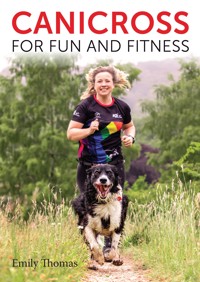
Canicross for Fun and Fitness is the essential guide to running safely with your dog. Taking a dog-centred approach, this book covers every stage of your canicross journey. Filled with practical advice and inspiring stories from the canicross community, it includes everything you need to get started and succeed in this enjoyable sport.
Sie lesen das E-Book in den Legimi-Apps auf:
Seitenzahl: 191
Veröffentlichungsjahr: 2025
Das E-Book (TTS) können Sie hören im Abo „Legimi Premium” in Legimi-Apps auf:
Ähnliche



















CONTENTS
Foreword
Introduction What is Canicross?
Chapter 1 Canicross Basics
Chapter 2 Canicross Equipment
Chapter 3 How to Canicross
Chapter 4 The Canicross Environment
Chapter 5 Health Considerations
Chapter 6 Behavioural Considerations
Chapter 7 Nutritional Considerations
Chapter 8 Future and Further Development
Appendix Training Plans and Resources
Further Information
Index
FOREWORD
I first came across canisports in 2006 and took part in my first canicross ‘race’ with my two cocker spaniels in 2007. It really was experimental for me and truthfully, I barely knew what I was doing, beyond making sure my dogs were physically capable of running 5km (3mi) attached to me – a very poor excuse for a runner.
I look back at photos of our kit then and smile – I was wearing a big, baggy T-shirt and jogging bottoms. My spaniels wore their fleece-lined, short walking harnesses and their lines were non-bungee, ladder lines with a series of grab handles along them. They also had chunky brass trigger clips at each end. My running belt was a bulky contraption that fitted around my waist and looking back, I now see why running with dogs then hurt my back!
If a friendly and accessible user guide such as this had been available then, I am certain we would have been happier, safer, and saved significantly financially by not making costly, poor purchases.
In the years since, I stopped running for a bit, concentrating on other canine sports, but in late 2018 I revisited canicross and realised things had changed hugely. One significant change was increased specialisation in canisports and the advent of specialist retailers such as K9 Trail Time, offering superb support, advice and guidance. I had the huge pleasure and privilege of getting to know Emily and work with her during the isolation of a pandemic lockdown, running webinars for canisports newbies and chatting about canine science and nutrition regularly. Indeed, that time saw a boom in interest in canicross as a way to exercise dog and person. As a result, quality, supportive and effective advice to ensure canine and human health and well-being was hugely important – Emily was then and remains my ‘go-to guru’ for any of my own, or my clients’ canisports needs, queries and purchases.
This book represents the culmination of not just a passion and deep interest in canicross, but also extensive experience in training, competing in and supporting canisports. Emily is dedicated to helping handlers (‘mushers’) make excellent choices for themselves and their dogs, with bespoke harness fitting services and advice, as well as offering educational resources and training opportunities. In addition to running a specialist canisports retail business, a canicross coaching business and an ‘active dog academy’, Emily is also a qualified canine hydrotherapist, so has more than an average appreciation for the importance of training, conditioning, rehabilitation and recovery for active dogs.
I know this book will be a valuable addition to the bookshelf or reading list of any active dog enthusiast. For anyone needing an accessible and user-friendly guide when starting out, this book encapsulates the essentials and provides scope for knowledge acquisition towards competitive events, longer distances and canisports challenges.
In the words of Emily, ‘active dogs are happy dogs’. This book will allow you to support your dog’s happiness with a great guide to canicross.
Hike on!
Dr Jacqueline Boyd
Animal Scientist, Canine Consultant, Cocker Spaniel Afficionado, Canicrosser
Emily's philosophy that active dogs are happy dogs underpins everything she does, encouraging dog owners to join their dogs exercising.
INTRODUCTION What is Canicross?
C anicross, when viewed through the eyes of a bystander, may look like a sport that is only available for certain people and certain breeds of dogs. Running with dogs is something that can be seen as being limited in its accessibility, and there are many myths surrounding canicross that I hope to dispel throughout this book. The canicross community is one of the most inclusive and welcoming in the dog world, and I look forward to sharing how canicross can help you and your dog find fun and fitness together.
Canicross is the fun sport of cross-country running with your dog attached to you. It requires specific equipment and training.
The History of Canicross
Canicross is known as an ‘extreme’ sport originating from dog sledding, when the dog kennel owners sought another activity to keep their sled dog teams fit during warmer months.
The original dogs pulling in harness were the traditional sled dog breeds, the most recognisable being Huskies and Malamutes, but there are many more. These dogs were doing a job alongside us, transporting goods on sleds across difficult winter terrain when vehicle access was limited, or impossible, due to the conditions.
Once the need for these teams of dogs required for transportation became less important in the twentieth century, the activity of dog sledding became more recreational, although it is thought that there have always been races connected to the sport.
When the dogs were retiring, or as part of a summer conditioning routine, the ‘mushers’, as they are known, would attach the dogs to themselves to run. This meant more gentle exercise for the dogs and prevented them losing fitness, keeping their mental and physical stimulation going when they were unable to do their normal job.
The International Federation for Sleddog Sports (IFSS), the main global governing body for the sled dog sports including canicross, now classifies any breed of dog fit to run in a harness as a ‘sled dog’.
It’s not known exactly when canicross started to be developed as a sport, but it has been growing exponentially across Europe and the USA for over 20 years, with the most growth seen since the lockdowns of the COVID-19 pandemic.
During this time dog ownership figures rocketed, due to so many people working from home and making the decision to add a dog to their family.
SLED DOG
A sled dog is a dog, irrespective of the breed or type, capable of being harnessed and of competing in one of the classes listed in the IFSS Regulations without a potential, risk, to be calculated beforehand, of harming the dog’s well-being.
(Taken from the IFSS Race Rules 2022–2024.)
Even the smallest of dogs can be considered a ‘sled dog’ under the international classification for the sport, so don’t rule it out just because you have a small dog.
What is Canicross?
Canicross in its most basic form involves running with your dog, but the key difference in ‘running with your dog’ and ‘canicross’ lies in the use of the specialised equipment, and the attachment of your dog to you.
The equipment includes a specifically designed harness to allow the dog full freedom of movement, a belt for the human, ergonomically fitted to distribute any pull force away from your back, and a bungee lead to absorb any pull between you. By attaching your dog to you via the harness, belt and bungee, you can form effective communication while promoting teamwork and strengthening the bond between you.
You don’t need to be able to run to follow the principles of canicross training outlined in this book; you can do this at a slower speed and even from a wheelchair.
Canicross is generally thought to be trail running rather than road running, because the ‘cross’ element is cross country, where you and your dog can make the most of your running together, because it’s far more mentally and visually stimulating to be out in the countryside.
If the running element of canicross is putting you off, everything in this book can be applied to canihiking too, which is canicross but walking instead of running, and might appeal to people who have more limited mobility or who don’t feel that they are ready for running yet.
Throughout this book I will refer to canicross and running with your dog, but the benefits, equipment, principles of training and developing your bond with your dog, can all be found in walking with your dog using the canicross methods, and can also be applied for wheelchair users who want to give this incredible sport a go.
Specifically adapted cross-country wheelchairs can be used with your dog attached to you via a belt and bungee line, and even mobility chairs more suitable for urban terrain can be used; you would just need to consider the routes you choose for your dog.
Why I Started Canicrossing
While I was not someone who wanted to run, let alone someone who wanted to run with my dog, circumstances led me to canicross when I adopted a highly active Husky Collie cross.
Tegan was not only reactive to dogs, but she also suffered with separation anxiety and I spent months trying different sports, and being asked to leave, before a friend suggested canicross. It didn’t take long to see the benefits of running together and realise this was going to be our thing.
Tegan was more tired after our runs because she was having to focus on listening for my directions, using her brain as well as her body. We started to build up our fitness together, and I began to see a happier and more settled dog because we had found a way to connect through activity.
If I had done my research initially, then I should have realised that running would be the perfect activity to bond with my Husky (bred for endurance running in harness) crossed with Collie (bred for running all day working sheep), but it took me a while to figure that out. It took even longer to work out how to get the best experience from our running, and that’s why I have written this book: to share with you all the things I wish I’d known from the beginning, to support you in your canicross journey with your dog, so you can enjoy running with your dog right from the start.
Your Why
Your reasons for reading this book on canicross will be personal to you. Everyone who canicrosses with their dog has their own story, their own history with their dog, and their own reasons for wanting to take part in this fun activity.
You might have a dog (like I did) who is driving you crazy with some unwanted behaviour, and you might be at your wits’ end with it all, looking for the perfect solution. You might want to get fitter and healthier, and this might be a way to motivate yourself to get out there and discover a new sport with your dog that can help you both build stronger and fitter bodies for a longer future together.
You can enjoy canicross and running achievements with your dog if you take the time to learn a little bit more about the sport before you get started.
You might want to connect with your dog more and develop your bond in a different way that interests you both. You might just want to save time and get yourself and your dog exercised in the minimum amount of time in the day, because we all lead busy lives.
Whatever your reason for wanting to get started, it will be very specific and very personal, and I hope to give you even more reasons to continue down this path.
Most people who start canicross will tell you they were struggling with some aspect of their dog’s behaviour or exercise regime, and this led them to seek out an activity where they could still have fun with their dog, but keep them on the lead and safe.
People have many individual reasons for getting into canicross with their dogs, and everyone will start at different points in their life.
Looking at canicross from the outside, it is easy to see why people with more challenging dogs find the sport, because of the element of control you still retain over your dog when they are attached to you. Having a dog attached to you means they can’t run off and chase the local wildlife, or worse, livestock. It also means you don’t have the worry of them running into a road, or up to other people and their dogs. During the pandemic, when the price of dogs in the UK went up by over 50 per cent and similar increases were reported across the US, it also provided security that your dog wasn’t about to be snatched away from you, at least not without a fight.
There are many obvious benefits of canicross for your dog, but some are more subtle. The list that follows is not exhaustive, but is generally recognised as containing the main reasons people choose canicross as a sport for themselves and their dogs.
Benefits for Your Dog
Physical Exercise
Canicross provides a great form of physical exercise for dogs. It allows them to release their pentup energy, which can be particularly beneficial for high-energy breeds. Dogs were all bred with a purpose in mind and, while they may not be fulfilling their traditional breed purpose in your household, they will still need something to satisfy their need to run.
We know that dogs, being quadrupeds, are highly efficient at running – much more so than us – and as a result do not tire so easily from general running as we might. That explains why so many people have discovered that taking your dog for a bit of a run around the park is often not enough to then allow for a relaxing day at home. Many active dog owners report that their dogs will go home from a walk and immediately initiate play in the garden, as if they have not been exercised at all. There can be many reasons for this, but generally you will not be able to meet all your dog’s exercise needs through a simple walk or run, which is where the mental stimulation that canicross provides will take effect.
Mental Stimulation
Running connected to a person will engage your dog’s mind more as they navigate the environment with you. Using voice cues ensures you are training at the same time as running, and switches on your dog’s brain to concentrate on the cues.
You will be indicating to your dog what pace you’re going to go at, which direction you’re going to go in, and give them a focus for their running that you don’t get if they are off lead and doing their own thing. The engagement of your dog’s brain, to get them thinking and concentrating, satisfies another need for them and can help prevent destructive behaviours displayed in dogs who are bored.
Socialisation
A huge benefit of canicross is that it allows dogs to interact with new dogs and people without being forced to engage with them. You might encounter numerous ‘others’ during your run, but you have the control to either prevent your dog from going over to them, or stop others interfering with your dog. This type of interaction, from a distance, promoting healthy socialisation, can be incredibly useful in reducing fear or aggression towards unfamiliar individuals, and is one of the reasons that canicross is looked upon as a sport particularly suitable for nervous and reactive dogs.
If you have found that regular walks are not meeting your dog’s needs, then running with your dog could be the activity for you.
Safe interaction with other dogs is one of the reasons that canicross is looked upon as being a good sport for reactive dogs.
Reduced Stress and Improved Behaviour
The physical activity of running alone can help alleviate anxiety and stress in dogs. Research has shown that regular exercise for dogs who have general anxiety, can reduce anxiety-related behaviours; so, even if your dog is too nervous to contemplate running in a group or where others are, you can help your dog simply in the activity of canicross. A reduction in anxiety is also linked with an improvement in behaviour.
Tired dogs or ‘fulfilled’ dogs, are generally better behaved. Canicross can help reduce destructive behaviours such as chewing or digging, because your dog will lack the energy or motivation to partake in something that it’s not been directed to do. Your dog will have had their mental and physical needs met and so they will not be looking for extracurricular activities. It also makes unwanted behaviours less appealing to your dog, because they have something much more exciting to focus on.
Enhanced Obedience
As canicross is a sport that you need to train for, you will find that during the process of this training, your dog will learn to follow cues during canicross runs such as ‘right’, ‘left’ or ‘steady’. These cues will be easily transferable into other activities of daily life, which can then translate into better obedience in different situations, so it’s a win-win situation.
Weight Management and Health
An additional benefit of regular canicross sessions is that physical exercise can help dogs maintain a healthy weight, or even lose any excess pounds, which is crucial for their overall health. The number of dogs considered to be obese in the UK by vets in 2022 was thought to be one in 14, but the vets who were involved in reporting for the study, estimate this figure could be far higher. In the US, this figure is currently estimated at nearly 60 per cent. This is far from ideal and when you consider that obesity is the cause of so many conditions in both ourselves and our dogs, it is a benefit that cannot be overlooked. Closely connected to this is cardiovascular health.
Dogs who are fulfilled both mentally and physically will be less likely to display unwanted behaviours, as they have a focus for their energy.
Like humans, dogs benefit from cardiovascular exercise. Canicross can improve their heart and lung health, and I have personal experience of how having a fit and healthy dog through canicross can benefit them if they do end up with a condition. Both of my original Collie crosses developed mitral valve disease, and the consultant cardiologist said the fact they were so fit would only support the condition and prolong the declining effects of it.
It might seem obvious but it’s worth noting as a benefit of canicross that running helps develop a dog’s muscle strength and tone. Due to the nature of canicross being a sport in which dogs propel themselves forwards, the increase in muscle tone can often be seen in the hindquarters, which can aid mobility and reduce the risk of injury. Some dogs will develop very strong forequarters, as they use their shoulders to pull themselves forward in harness. Whichever style of running your dog has, the main benefit comes from the straight and stable technique of running that a dog will have when running in harness, and it’s this which makes the benefits to the muscles of your dog unique to canicross.
Enhanced Agility and Other Benefits
In cross-country running, you will inevitably be moving through varied terrain with natural obstacles, which can improve a dog’s agility and coordination. We know that this coordination, known as proprioception, is very important for a dog’s overall health and well-being. It is one of the less-discussed benefits of canicross, but one which will certainly help your dog, particularly as they move into old age.
Running with your dog can help support a longer healthier life for your dog, as the controlled exercise has many health benefits.
Typically, when canicrossing, you will start to expand your horizons with new routes that take you slightly further afield from your usual dog walking haunts. This will enable your dog to have the opportunity to explore new scents and environments, stimulating their senses, which is beneficial for their mental health.
It is well known that regular exercise is associated with a longer, healthier life for humans, and the same can be assumed for dogs. Canicross can contribute to this overall well-being and longevity by providing regular, controlled exercise, which facilitates good health.
Canicross involves strengthening muscles in your dog whilst in harness, which can help target areas of weakness.
Canicross is a shared activity that promotes trust, teamwork and builds a bond with the owner. Your dog will begin to look to you for everything fun and fulfilling, thereby strengthening your relationship and the trust they have in you.
Many dogs simply love running alongside their owners, and the enjoyment they get from this is a benefit in itself.
Increased Awareness of Health
One of the things you will find as a result of starting to canicross is that you will begin to be more observant of your dog’s behaviour, and you may start to notice things you hadn’t previously. For example, because you end up behind your dog when they are running, you will notice subtle differences in the way they move, you will spot where they place their paws when they are in particular gaits, and you will start to build a bigger picture of your dog’s overall health and well-being.
This attention to detail will allow you to pick up on differences in your dog before they become a problem, and you will potentially save yourself a lot of time at the vets by being able to accurately observe and record anything related to your dog’s health.
Benefits for You
We’ve extensively covered the benefits of canicross for your dog, but there are also many benefits for you. Your main goal might be to keep your dog fit, healthy and happy, but you can’t ignore the fact that you are going to be a 50/50 partner in this sport.
The one thing I was unsure of when I first started running with my dogs was whether I would want to continue to do the sport once I’d got a bit fitter, as motivation for going to the gym or any other form of physical activity had always been very hit-and-miss for me.
Over the years, I have found that although there have been peaks and troughs in my motivation, the way I feel both physically and mentally when I’m regularly canicross training, means I don’t think I will ever give it up now.
In sharing an activity with your dog in which you are both so involved, you will inevitably strengthen the bond between you.
You may find that the first few weeks of training are tough, as you and your dog establish your own boundaries and capabilities within the sport, but almost everyone who tries canicross ends up falling headlong into it for the reasons I will outline below.
Exercise Motivation and Improved Fitness
This is probably one of the most important benefits if you are someone like me who was never particularly motivated to take part in sport at school, college or in adult life. Canicross provides a strong incentive for people to get outside and exercise regularly, since they have a dedicated running partner who is always eager to go. The daily exercise needs of your dog provide a compelling reason for you to maintain a consistent workout routine. Your dog can be a mini-motivator, spurring you on with their endless energy and eagerness. Many people will say they can find numerous reasons not to do something, but if their dog is staring up at them with those ‘puppy dog’ eyes, they will find the energy and motivation to get out and go for a run.




