


Erhalten Sie Zugang zu diesem und mehr als 300000 Büchern ab EUR 5,99 monatlich.
- Herausgeber: Pocket Essentials
- Kategorie: Geisteswissenschaft
- Sprache: Englisch
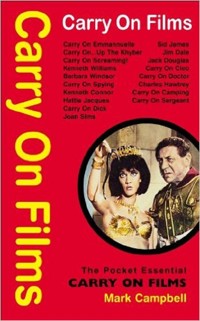
Infamy! Infamy! They've All Got It In For Me! Beginning with the feel-good conscription caper Carry On Sergeant (1958) and finishing up with the much-maligned sex farce Carry On Emmannuelle (1978), producer Peter Rogers and director Gerald Thomas tossed off a record-breaking thirty films, all with that unique 'naughty but nice' seaside postcard-style humour. A team of spot-on comedy performers, headed by Kenneth Williams, Sid James, Charles Hawtrey, Hattie Jacques and Kenneth Connor, provided the great unwashed public with brain-achingly corny gags, ridiculous slapstick antics and seminal scenes of mayhem and speeded-up chicanery that would have brought a smile to the most jaded of palates. The Carry On comedy partnership of Rogers and Thomas (later combined with the wit of scriptwriter Talbot Rothwell) was responsible for many a classic production. From historicals such as Carry On Cleo (1964) and Carry On...Up The Khyber (1968) - the latter quite possibly the funniest film ever made in Wales - to such contemporary rib-ticklers as Carry On Doctor (1967) and - possibly the most famous entry of all, thanks to Barbara Windsor's elasticised brassiere - the seminal Carry On Camping (1968). The series may have ended in the gutter with Carry On Behind (1975) and Carry On England (1976), but such was the sheer talent on display throughout those twenty years, we can forgive them this small failing. Any genre was up for ridicule - bored with Lawrence Of Arabia (1962)? Try Carry On...Follow That Camel (1967). Fed up with Hammer horror? Turn off the light and shudder at the spine-chilling Carry On Screaming! (1966). Everyone has a personal favourite Carry On film - look up yours in this concise introduction to the whole, extraordinary phenomenon. What's in it? Every film examined in detail, with full cast and crew listing, key scenes and dialogue gems, and an informed critique; brief biographies of the major players, TV shows and theatre plays; appendices that include an exhaustive bibliography and an overview of the best Carry On websites around; all rounded off with a fiendish quiz on all things Carry On.
Sie lesen das E-Book in den Legimi-Apps auf:
Seitenzahl: 180
Veröffentlichungsjahr: 2016
Das E-Book (TTS) können Sie hören im Abo „Legimi Premium” in Legimi-Apps auf:
Ähnliche

















Infamy! Infamy! They've All Got It In For Me! Beginning with the feel-good conscription caper Carry On Sergeant (1958) and finishing up with the much-maligned sex farce Carry On Emmannuelle (1978), producer Peter Rogers and director Gerald Thomas tossed off a record-breaking thirty films, all with that unique 'naughty but nice' seaside postcard-style humour. A team of spot-on comedy performers, headed by Kenneth Williams, Sid James, Charles Hawtrey, Hattie Jacques and Kenneth Connor, provided the great unwashed public with brain-achingly corny gags, ridiculous slapstick antics and seminal scenes of mayhem and speeded-up chicanery that would have brought a smile to the most jaded of palates.
The Carry On comedy partnership of Rogers and Thomas (later combined with the wit of scriptwriter Talbot Rothwell) was responsible for many a classic production. From historicals such as Carry On Cleo (1964) and Carry On...Up The Khyber (1968) - the latter quite possibly the funniest film ever made in Wales - to such contemporary rib-ticklers as Carry On Doctor (1967) and - possibly the most famous entry of all, thanks to Barbara Windsor's elasticised brassiere - the seminal Carry On Camping (1968). The series may have ended in the gutter with Carry On Behind (1975) and Carry On England (1976), but such was the sheer talent on display throughout those twenty years, we can forgive them this small failing. Any genre was up for ridicule - bored with Lawrence Of Arabia (1962)? Try Carry On...Follow That Camel (1967). Fed up with Hammer horror? Turn off the light and shudder at the spine-chilling Carry On Screaming! (1966). Everyone has a personal favourite Carry On film - look up yours in this concise introduction to the whole, extraordinary phenomenon.
What's in it? Every film examined in detail, with full cast and crew listing, key scenes and dialogue gems, and an informed critique; brief biographies of the major players, TV shows and theatre plays; appendices that include an exhaustive bibliography and an overview of the best Carry On websites around; all rounded off with a fiendish quiz on all things Carry On.
About the Author
Mark Campbell has written for The Independent, Midweek, Crime Time and The Dark Side, and is one of the main contributors to the two-volume British Crime Writing: An Encyclopedia. He has written Pocket Essentials on Sherlock Holmes, Agatha Christie and Carry on Films. He lives in Kent and was the last theatre critic for The Kentish Times when they published reviews. He directs and appears in plays when he's not busy reading his collection of Whizzer and Chips comics.
Carry On Films
MARK CAMPBELL
Pocket Essentials
For Simon
Acknowledgements
Special thanks to Christine, Linda and the greatly missed Martina at the Slade Library, Plumstead, for their invaluable help in obtaining books and videos; to Iain Jarvis and Ian Long for plugging the gaps; to Anne and Andreas Rudloff for translating German over the ’phone; to Andy Slater for giving me his PC and navigating me through south-east London in the rush hour; to Jason Tomes for ‘Name That Tune’; to David Benson for good advice; to Andy Davidson at Carry On Line for his help and support; to Steve Holland for not cracking the whip; to my friends at Woolwich Community Church for their support (especially Pete and Richard); to my wife Mary for proof-reading and putting up with me while I sat at home watching Carry On films (‘Of course it’s work!’); to my children Ben and Emily for their pertinent observations (‘Carry On Don’t Lose Your Head sounds weird’); and last but not least to Jesus Christ for his continued grace and mercy.
Contents
1: Infamy, Infamy …
Carry Onfilms – so bad they’re good? Or genuine comedy masterpieces? Mark Campbell on the horns of a dilemma
2: Carry On Quizzing
Test your knowledge of arcane Carry On trivia – answers at the end of the book
3: Biographies
Brief round-ups of the main Carry On actors and actresses and behind-the-scenes folk
4: ‘Weigh Anchor!’ (1958–1963)
The birth of a legend – from Sergeant to Jack
5: ‘What a Send Up!’ (1964–1972)
The peak of perfection – from Spying to Matron
6: ‘I’m in the Pit!’ (1972–1992)
The decline and fall – from Abroad to Columbus
7: Stage
Further theatrical Carry On offerings
8: Television
Choice spin-offs from the world of the small screen
9: Reference Materials
Books and Internet sites with a Carry On flavour
10: Quiz Answers
The solutions to those cryptic conundrums posed earlier
1: Infamy, Infamy …
You know the story – a classic British film series that began in the 1950s, reached its heights in the 1960s and tailed off in quality until it ceased production in the late 1970s; a small, repertory cast of actors and actresses appearing countless times in similar roles; ludicrous scenarios and hilarious dialogue; plenty of heaving bosoms and scantily-clad blondes … but enough of Hammer horror films, let’s talk about the Carry Ons.
Britain’s three main film exports – Hammer, Carry On and James Bond – all have one thing in common. Regardless of whether you think they’re good or bad, they all display a constancy of tone and technique that marks them out as being cast from the same mould. Blindfolded, you’d know you were watching a Hammer film by the portentous music, hoof-beat sound effects and stilted dialogue. Or a James Bond by the operatic score and dry delivery of unlikely lines. The same goes for Carry On films. Each and every one of them has the same Tom And Jerry-style ‘comedy’ soundtrack, the same arch delivery of pointed innuendo, the same stereotyped characters. As a friend once said to me, ‘Carry On films are so reassuring.’ And he’s right – even the bad ones can buoy you up, in a resigned, ‘I don’t believe I’m watching this rubbish, but what the heck, I can’t be bothered to turn over’ kind of way. You stop, sit back a little, ponder idly to yourself which Carry On it might be, before either giving in and watching it, or (if you’re made of sterner stuff) switching to reruns of Frasier. The Carry Ons exhibit a primitive magnetism, drawing you into their own little world of schoolboy smut and silly pratfalls in the same way that a snake hypnotises a mouse. Once captured, it’s very difficult to escape. ‘Just five more minutes,’ you say to yourself, trying not to think of that huge pile of dirty crockery waiting to be washed. But then you realise you know what’s going to happen next (‘Oh, I remember this,’ you mutter), and you give it a further five minutes. And another five. The fact that most Carry Ons are watched again and again over the years – the scenes burnt into the brain like a channel ident on a plasma screen – adds to their cosy, feel-good appeal. We’re virtually born with all the jokes from Carry On Cleo hardwired into our DNA. The films go beyond simple cinematic entertainments and into the very fabric of our society. They’re as deep-rooted as our national identity, as vital as the air we breathe. They’re icons of pop culture, like The Magic Roundabout or The Beatles. They define who we are.
Alternatively, they’re just 31 efficiently made light comedies of a rather old-fashioned kind starring a team of actors and actresses who were very good at what they did but are now mostly all dead. We may laugh at them but let’s be clear about one thing – it’s not because we find them funny. Our laughter is more hard-edged; the sort of sneering laugh that we might bestow on an old Benny Hill Show perhaps, as if to say, ‘Is that what they called funny in those days? Oh dear!’ To misquote a 1990s compilation series, we’re not really laughing with the Carry Ons, we’re laughing at them. They’re relics of the past, museum pieces seen through rose-tinted spectacles in which fat people are funny, nurses strip to their undies and frustrated husbands drool over women with unfeasibly large breasts. If there’s a banana skin, someone will slip on it. If there’s a foreigner, he’ll be a villain or a fool. Characters are called Tingle and Bigger and Nookey. The action takes place on a 1950s housing estate in Slough. I mean, it’s all so passé. How can anyone think they’re any good? More pertinently, how can anyone find them funny anymore?
A few years ago a noted academic voted Carry On…Up the Khyber his favourite film – leading to a furore in the media and a clutch of Daily Mail-type editorials about falling standards in further education. But the reason this chap chose Khyber was that it made him laugh, simple as that. He didn’t bother to consider whether it was a ‘good’ film (whatever that means), just whether it did its job. And it did – perfectly. Let’s face it, Up the Khyber is a hundred times funnier than Citizen Kane or Raging Bull. There was also a class element to the story – it is generally assumed that the Carry On films were designed (unconsciously I think) to appeal to a working-class audience – the ‘masses’ who liked vulgar humour and toilet jokes. Unlike the middle and upper classes, you see, who spend their time chuckling politely over the refined wit of Wodehouse and Belloc. Of course, this compartmentalising of the classes is always a dangerous notion, and with the Carry On films it’s clear that they were (and still are) enjoyed by people of all classes, ages and social backgrounds. ‘If something’s funny, it’s funny no matter whose mother gave birth to you,’ Woody Allen notably didn’t say. I reckon the Queen herself enjoys a crafty peep at Carry On Henry when she’s not being called upon to plant a tree or open a new civic centre. And Tony Blair’s favourite is surely Carry On Regardless. (Little bit of politics, as Ben Elton might say.)
What I’m trying to say in my roundabout way is that the Carry On films are universally derided but universally loved. We’ve all watched them, even though deep down inside we know there’s something more important we should be getting on with. Produced by one man (Peter Rogers), directed by another (Gerald Thomas) and featuring an almost unchanging team of character actors, the Carry Ons typify the idiom, ‘If you’re going to do it, do it well.’ Even if it’s only an innuendo-filled farce filmed on the cheap (Kenneth Williams was never paid more than £5,000 per film) over four weeks in a draughty Pinewood studio, it makes no difference – do it well, or don’t do it at all. And in my opinion, the Carry On series did do it well, with a few notable exceptions.
For what it’s worth, my formula for the perfect Carry On would be as follows – no Barbara Windsor, narration by Raymond Allen, several men in drag, a ‘c’ sound in the title (no, seriously), a historical setting and no speeded-up sequences or stock footage. Alas, no film quite has them all, but of the many that come close, I offer Cabby, Cleo, Cowboy, Screaming!, Don’t Lose Your Head, Up the Khyber, Henry and Girls. (I throw this last one in as the exception that proves the rule.)
Lastly, you’ve probably noticed that this book is only available in a handy, pocket-sized edition. Bearing this in mind I have taken the decision not to fill it with boring facts and figures. There are other writers far more capable of that than me. The film section – the bulk of this guide, naturally – thus consists of straightforward reviews rather than in-depth histories about how they were made and what socio-political ideology they represented. Sorry if that’s your bag, but I feel you can kill comedy by over-analysing it, and that’s never truer than with the Carry On films. So I have attempted to judge them on one criterion alone: are they funny?
And they are. You know they are …
2: Carry On Quizzing
Call yourself a true Carry On fan? Here is a selection of fiendishly cunning questions about the film series to frustrate and bemuse you. So get your thinking caps on and remember – no prizes, it’s just for fun.
1) First lines – but from which film?
1) ‘Ooh, how am I going to get all this lot in?’
2) ‘I wonder what they wanted?’
3) ‘Congratulations!’
4) ‘Yes, speaking.’
5) ‘Come in!’
6) ‘Oh come on, what’s keeping her?’
7) ‘And you men have been especially chosen for one task.’
8) ‘Well, bye-bye old lad, and thanks for an absolutely smashing weekend.’
2) Who said what, and in which film?
1) ‘Gentlemen, have I your agreement for a policy of unremitting quasi-Teutonic organisational perfectionism?’
2) ‘Now look, you’ve got to face up to it. You’re an obsessional with visual complications.’
3) ‘By Jove, a simian amorist with a paralysed conscience.’
4) ‘It came off in my hand!’
5) ‘Oh, I beseech you from my bowels!’
6) ‘We have ways of making you talk!’
7) ‘Oh, my head is broken!’
8) ‘Oh, an epigram – oh I say, sir.’
9) ‘I’m really engaged to a very well-known butcher in Wolverhampton.’
3) In which films were these characters mentioned?
1) Fanny Fusspot
2) Aunt Lill
3) Lucy Nation
4) Farmer Giles
5) Beau Legs
4) Which films featured the following on-screen books?
1) ‘Wooing to Win’
2) ‘Fu-Kung Sex’
3) ‘Ye Joyes of Ye Marriage Bed’
4) ‘Articles of War’
5) ‘The Angel Behind the Cosh’
6) ‘They Do It for Fun’
7) ‘Metamorphosis: A Study of the Sex Change in Man’
8) ‘The Wit to Woo’
9) ‘A Belle Parisienne’
10) ‘Wakefield’s Practical Surgery’
11) ‘How to Avoid Sea Serpents’
3: Biographies
What follows are potted resumes of the key actors and technical personnel involved in the Carry On series. With regard to television series, dates in parenthesis refer to the entire run of the show in question.
Bernard BresslawActor(25 February 1934 – 11 June 1993)
Bresslaw’s comedy career began with the radio series Educating Archie (1958–59). He also worked on the Granada sitcom The Army Game (1957–61) alongside Carry On regular Charles Hawtrey, as well as its 1957 cinema spin-off, I Only Arsked!. Other television appearances included The Bernard Bresslaw Show (1958–59), Bresslaw And Friends (1961) and Doctor Who (as an Ice Warrior, 1967). His hulking presence made him the perfect gormless giant in the Carry On series, and he notched up 14 appearances, beginning with Cowboy (1965). In later life he found critical acclaim in serious roles.
Peter ButterworthActor(4 February 1919 – 17 January 1979)
Butterworth met future Carry On scribe Talbot Rothwell in a German POW camp in the Second World War, where Rothwell persuaded him to perform in a camp concert in order to distract attention away from an escape attempt. Butterworth married comedienne Janet Brown and appeared in many films and television shows, often as the bumbling stooge. His 16 Carry On films cover the rich period from Cowboy (1965) to Emmannuelle (1978).
Kenneth ConnorActor(6 June 1916 – 28 November 1993)
Connor made a name for himself in radio shows such as Ray’s A Laugh (1949–61), starring music hall comedian and musician Ted Ray. In the Carry On series, he played shy, nervous romantic leads, beginning with Sergeant (1958), until this role was usurped by Jim Dale. After a gap of some years he returned to play character roles nearer his own age. As well as his 17 Carry On films, he guest-starred in ’Allo ’Allo! (1982–92), Hi-de-Hi! (1980–88), Blackadder the Third (1987) and Rentaghost (1976–84).
Bernard CribbinsActor(29 December 1928)
Lancashire-born Cribbins enjoyed a wide variety of film roles, from a policeman in Daleks’ Invasion Earth 2150 A.D. (1966) to a stationmaster in The Railway Children (1970). He starred in three Carry On films and was responsible for the 1960s novelty songs Right Said Fred and Hole in the Ground. On television, he appeared in the second series of the sketch show Get the Drift (1971–76) and the Granada sitcom Langley Bottom (1986); he also memorably voiced the original series of The Wombles (1973).
Jim DaleActor(15 August 1935)
Born James Smith, Dale trained as a dancer and singer, first coming to the public’s attention on the BBC’s pop music show Six-Five Special (1957–58). A successful, if short-lived, career as a pop singer saw him reach no.2 in the charts with a song called Be My Girl in 1957. Cabby was the first of his 11 Carry On appearances, mostly as a clumsy romantic lead, but it was not until the final entry in the series, Columbus (1992), that he received top billing. He emigrated to America in the 1970s and, always keen to do his own stunts, took the title role in the original Broadway production of the circus musical Barnum.
Jack DouglasActor(26 April 1927)
Born Jack Roberton, producing pantomimes at an early age gave Douglas a taste for comedy and he appeared in eight of the later Carry Ons, normally in the guise of fidgeting, arm-waving alter ego Alf Ippititimus. Television shows included sitcoms Dave’s Kingdom (1964), Not on Your Nellie (1974–75) and Cuffy (1983).
A Twitch in Timeby Sue Benwell & Jack Douglas, 2002
Derek FrancisActor(7 November 1923 – 27 March 1984)
Stout character actor, normally cast in pompous roles. He appeared in six Carry Ons, beginning with Carry On Doctor in 1967. Other films included Hammer smuggling yarn CaptainClegg (1962) and medieval comedy Jabberwocky (1977). On television he starred with Derek Nimmo in the last two series of Oh Brother! (1968–70), while guest appearances included Doctor Who (1963–present) and Man in a Suitcase (1967).
Liz FraserActress(14 August 1933)
Blonde Cockney comedienne. She played opposite Peter Sellers in I’m All Right, Jack (1959) and appeared in three early Carry Ons, beginning with Regardless (1961), before returning to the series over a decade later with Behind (1975). A semi-regular in Hancock’s Half-Hour (1956–60), she also popped up with Robin Asquith in two Confessions sex comedies: Driving Instructor (1976) and Holiday Camp (1977).
Peter GilmoreActor(25 August 1931)
Tall, rugged and gruff-voiced, Gilmore appeared in 11 Carry On films, often playing heavies. On television he became famous as the star of the BBC seafaring series The Onedin Line (1971–1980). Notable film appearances included The Great St Trinian’s Train Robbery (1966), The Abominable Dr Phibes (1971) and Warlords of Atlantis (1978), while in 1984 he appeared with this author in the radio drama Early Unions and the Tolpuddle Martyrs. The same year he made his one and only appearance in Doctor Who (1963–present).
Charles HawtreyActor(30 November 1914 – 27 October 1988)
Born George Frederick Joffre Hartree, the rake-thin Hawtrey enjoyed a prolific career in radio, theatre and films. He appeared as an unfeasibly old schoolboy in several Will Hay film farces in the late 1930s and early 1940s, and a role in the sitcom The Army Game (1957–61) led to a similar part in the first Carry On film, Sergeant (1958). He went on to star in 23 Carry Ons, but after long-standing wrangles over screen billing and an ongoing alcohol problem, producer Peter Rogers severed his connection after Abroad in 1972. Hawtrey subsequently retired to a cottage in Deal where he became an alcoholic recluse. He died after refusing an operation to amputate his legs.
Charles Hawtrey 1914–1988 – The Man Who Was Private Widdleby Roger Lewis, 2001
Julian HollowayActor(24 June 1944)
The son of character actor and music-hall entertainer Stanley Holloway, Julian made eight Carry On appearances, usually in supporting roles. Other films included Amicus horror flick Scream and Scream Again (1969) and sitcom spin-off Porridge (1979). On television he appeared in the PG Wodehouse series Ukridge (1968), the sitcom Keep It in the Family (1980–83) and, in 1989, the last regular Doctor Who story before its revival in 2005. Through a brief relationship with actress and novelist Tessa Dahl, he is the father of Sophie Dahl, the fashion model and granddaughter of children’s author Roald Dahl.
Frankie HowerdActor(6 March 1917 – 19 April 1992)
Born Francis Alick Howard, Howerd’s stammer at first proved a stumbling block to his showbusiness dreams, although it later became integral to his stand-up routine. In a television career spanning many sitcoms, he achieved most recognition as Lurcio in Up Pompeii! (1970), written mainly by Carry On scriptwriter Talbot Rothwell. His two Carry On appearances – Doctor and Up the Jungle – came at a high point in his career. He was awarded an OBE in 1977.
On the Way I Lost It – An Autobiographyby Frankie Howerd, 1976
Titter Ye Not! – The Life of Frankie Howerdby William Hall, 1992
Frankie Howerd – The Illustrated Biographyby Mick Middles, 2000
The Complete Frankie Howerdby Robert Ross, 2001
Frankie Howerd: Stand Up Comicby Graham McCann, 2004
Norman HudisWriter(27 July 1922)
Trained as a newspaper reporter, Hudis teamed up with Carry On producer Peter Rogers for Tommy Steele’s 1957 biopic Rock Around the World. This led to him turning RF Delderfield’s novel The Bull Boys into Carry On Sergeant (1958). Five further Carry Ons followed, all with the same premise. He moved to America in the 1960s where he wrote for The Man From U.N.C.L.E. (1964–68) and Hawaii Five-O (1968–80) amongst others.
Hattie JacquesActress(7 February 1924 – 7 October 1980)




