


4,79 €
Mehr erfahren.
- Herausgeber: Luath Press
- Kategorie: Geisteswissenschaft
- Sprache: Englisch
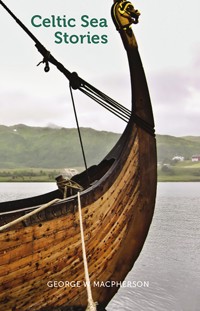
The Celtic belief that by recording a story the spirit of the story and its teller would die, has meant that generations worth of stories of have been lost. Celtic Sea Stories brings together myths and legends from the past, which the author has collected throughout his lifetime, along with others written specifically for the collection, to provide an enchanting vision of Scottish life by the sea. From kings and fairies to mermaids and witches every tale explores a different aspect of a forgotten way of life. Before schools and television storytelling was the only way to entertain, impart wisdom and explain the inexplicable. Celtic Sea Stories allows readers to share in the storytelling experience again and again, while learning about Scottish history and culture.
Das E-Book können Sie in Legimi-Apps oder einer beliebigen App lesen, die das folgende Format unterstützen:
Seitenzahl: 168
Veröffentlichungsjahr: 2020
Ähnliche



















GEORGE W. MACPHERSON lives in Glendale on the Isle of Skye. He has followed the oral traditions handed down through generations of his family, and has become one of the best known traditional storytellers in Scotland. George’s storytelling technique is both memorable and distinctive, capable of captivating any audience, young or old, all over the world.
George began collecting stories at the age of three, and has amassed an impressive repertoire of stories from all over Scotland, ranging from the heroes of Celtic folklore to the mythical and fantastical creatures of Scottish myth. He has told his stories in many countries world-wide, including France, Germany, Malta, Thailand, Spain and England. In 1997 he opened the Commonwealth Heads of State Convention in Edinburgh with one of his stories.
As well as telling stories, George has published an historical account of John Macpherson, Skye Martyr, and two books of traditional stories, North West Skye and Highland Myths and Legends. He has also had published many articles in papers and magazines, both prose and poetry, on a variety of subjects, and has contributed to Cuillin FM, the radio station for Skye. A participant in the Edinburgh Storytelling Festival for ten years, he also organises the annual Skye and Lochalsh Storytelling Festival, bringing to Scotland the storytelling traditions of countries such as France and Spain.
A wearer of the kilt, either in its modern mode or in its ancient and traditional form, the philimore, he believes that stories should entertain and that the great stories of the oral tradition should not be altered but should be told as they were learned.
First Published 2009Reprinted 2013This Edition 2016
eISBN: 978-1-912387-85-4
The paper used in this book is recyclable. It is madefrom low chlorine pulps produced in a low energy,low emissions manner from renewable forests.
The publisher acknowledges subsidy from Scottish
towards the publication of this volume.
Printed and bound byCPI Antony Rowe, Chippenham
Typeset in 10.5 point Sabon by3btype.com
Illustrations by Alice Gamper
The author’s right to be identified as author of thisbook under the Copyright, Designs and Patents Act1988 has been asserted.
© George Macpherson 2009
contents
Preface
The Dark Doctor – An Dotair Dhubh
Real Mist
The Whale of Mull
The Greenock Lass
The Cave of Death – Uamh Nan Bas
The Battle of the Spoiled Dykes – La Mille Garaidh
Ramasaig – The Three Witches
The White Cow of Greshornish
Blar Breacan Phuill – The Blood Spot Flower
The Farmer’s Wife – Bean Tuathanach
The Girl from under the Sea – Cala Lochlanaich
The Old Man of Skye – Bodach Sgith
The Silver Chanter
Annag MacCruimen
One of Those Who Search Always
Sgiath’s Gift to Love – Tiodhlaic Sgiath an Gaol
The Cup of Healing – Cupan Beatha
The Sound of the Surge of the Sea – An Ataireachd Ard
The Three Feathers – Na Tri h’Itean
The Last Great Clan Battle
Brandon the Navigator
Hector the Fisherman – Eachan An’t Iasgair
Amadan Domhnallach – MacDonald’s Fool
The Boat – Am Bata
The Minister and the Evils of Drink
The People from Under the Sea – An Lochlannaich
Lochlannaich – The People from below the Sea
The Flying Barrel
Mermaids – Maighdean Mhara
Seamus and the Monster
The Ship that Died for Love
The Loch of the Grey Wolf – Loch Madadh Glaseachd
The Factor of Kilchoan
Preface
THIS BOOK IS like my previous books, especially so Highland Myths and Legends, in that through them I try to preserve some of the stories told to me by many persons of varying ages and areas.
Several of the stories were given to me on the condition that if I told or published them the name of the teller would not be connected to them. In fact, some were very insistent on such a promise before they told the stories to me. I have tried to be faithful to their wishes even though many of them are ‘Past the Change’ as it was called earlier on; what is now known as death.
One of the reasons I have tried to maintain this promise is that I discovered there was a belief in the very old Celtic tradition that if a story was recorded in any way whilst the teller was telling it, then part of the spirit of both story and teller died with it. Even my own father would not allow his stories to be recorded and if he thought a shorthand writer, or tape recorder, or any such thing was in range, he would refuse to tell and remain silent till he was sure the coast was clear.
These stories carry in them the culture and way of life of whatever age they are set, whether ancient or modern, and in some cases it is difficult to differentiate between them.
When a story is passed to one it brings with it a duty and privilege to be true to the story and allow the natural rhythm of it to carry as you tell. It is the story that counts, not the teller. I hope in this book I have achieved that aim and that in written form I have managed to preserve the natural rhythm of the story and readers know it is the story and not the author. These are stories of the sea and its people, An Lochlannaich, and their descendants who carry its spirit with them wherever they wander.
Throughout my life I have been lucky in that people have confided stories to me and stories have happened around me, just waiting for their time to be told. I hope this continues and is reflected in the book.
I have had great help in the production of this book and especially so from Kati Waitzmann, who with great patience typed the stories from my dictation – and did it with a smile. My thanks to her. My thanks go also to the publishers, who encouraged me and showed patience in my slow production of the manuscripts.
My thanks also to my wife and family, who listened to me telling the stories many times and did not pour cold water on my efforts too often.
Above all my thanks to all the friends and relations who passed stories to me over the last seventy years, and even the odd enemy who did the same.
Seoras Macpherson
George W. Macpherson 2009
The Dark Doctor – An Dotair Dhubh
IN THE FURTHEST WEST PART of Skye, in a place now called Glendale there lived a woman and her son. She was very poorly off. She had a small house and a little plot of land. On the plot of land she grew some potatoes, a little oats and she had a goat that she milked. But her pride and joy was her son. He was everything to her, but the son was a strange boy. He would wander down by the shore, listen to the sound of the waves and always he looked as if he was searching for something. He was never one with the other children and people would say to his mother, ‘Oh, he will grow out of it. He’ll grow out of it and help you on the croft. He’ll help you with all your work.’
But the boy grew older and he made no sign of wanting to help with the work. Still all he wanted to do was wander down by the shore, dream his dreams and search for whatever it was he was searching for – which even he didn’t know what it was.
But then, one day he was down by the shore he saw bobbing out in the sea something strange. At first he thought it was a wrack of seaweed that had been carried in by the tide but when he looked more he saw it was not seaweed and he could not decide what this object was. So he waited there at the shore to see what it could be. The sea tossed it in closer and closer until it landed in the sand at his feet. He looked at it and it was a strange object. It was like a triangle made of wood with two long sides and a short side. And then between the short side and one of the long sides there were strings. When he picked it up and touched the strings, they sang. He picked it up and carried it up to the house and when his mother saw it, she told him to put it back into the sea as it was probably an evil gift from the fairies of the sea, the little people below the sea, who gave only evil gifts. But the boy would not listen to her. He placed his fingers upon the strings again and heard the sounds they made. But the music that was in his heart he could not put through his fingers to the strings and he tried very hard. Every day after that, he went out to try out the sound of the strange thing but he could not get the music out of it that he wanted. And his mother saw him striving there and felt the song was in him but he could not pour out the music of his heart.
To do the best for her son she went and saw the Dark Doctor; the Doctor whom some said was in league with the devil. Some said he was the devil, but she went to see him and said to him what her son had and asked the Dark Doctor to give the gift to her son, hoping he would be able to get the music from his heart into the strings, into his fingers.
The Doctor said, ‘Oh, I can do that. That is no problem. But what can you give me in return?’
And the woman thought, ‘as I have very little, nothing.’ She replied, ‘You can have me if you want.’
And the Dark Doctor laughed at her. ‘Why would I want an old wrinkled crone like you?’, says he. ‘What good would that do me?’
‘Well’, she said. ‘I don’t think I have anything else I can give, but whatever I can give I will if you’ll give my son this gift.’
And the Dark Doctor said, ‘Well, if you will promise to give me your soul when I come for it, I will do this for your son.’
The woman agreed. And when she had done so the Dark Doctor said to her, ‘The thing that your son has is called the clarsach. And already I have fulfilled my part of the bargain and you must fulfil yours.’
The woman went back to the croft and there was her son sitting, his fingers ranging across the strings of the clarsach and from it poured music, beautiful music, such as never had been heard before. The woman knew that the Dark Doctor had indeed given her wish to her son.
The son kept playing the clarsach and grew better and better. His music grew greater and greater. Nobody had ever heard such music. But then the son noticed that his mother was looking strange and was feeling strange. She was not as she had been. And the son said to his mother, ‘What is it?’ ‘Why are you like this?’ He kept asking her. Eventually, the mother told him what she had done.
The boy was aghast. He thought this was a terrible thing altogether and he went to the Dark Doctor and asked him to take away the gift of music that had been given him, and set free his mother from the promise she had made. But the Dark Doctor just laughed and said, ‘No. We have made a pact and it will be carried out and you will have that gift forever. I, however, will have your mother’s soul.’
The boy went back to the croft and continued to play the clarsach. But now there was sadness in his music, as had not been there before; soulfulness, a haunting sound. And the time came when the Dark Doctor arrived at the door and demanded the soul of the mother, and the mother died there and then. Afterwards the boy played on, and the music that he played now was wonderful; wonderful, beautiful, magical music. Music nobody had ever heard before. Music, that rang out all through the world. But there was a sad haunting in the music and always a tremendous sadness. And this was the origin of music. And the sadness is there still to this day, for if anyone plays the clarsach, no matter what tune they play, there is always behind it the haunting sadness that no one knows where it came from.
Real Mist
WHEN I WAS JUST a young bit of a lad, there was an old man down in the glen and his name was Neil. Old Neil he was called, Neil Seinn. Old Neil had a good boat which required four men to pull the oars. Neil himself was just beyond pulling at an oar then, but four of us young lads in the glen would go down, take the boat down with him and row out with Neil sitting at the stern and steering with a sweep. We would go and we would fish. And at that time it was easy to catch fish. You could fill the boat in just an hour or two’s fishing without much bother at all.
We were rowing out across Moonen Bay, well past the Neistpoint Lighthouse, when all of a sudden the mist came down; thick mist. We decided it would be better if we headed back. That was fine, and the mist was getting thicker but it wasn’t a great bother to us because we could hear the foghorn of Neistpoint Lighthouse booming out. We followed the sound of it quite happily. Then the old Neil started to talk.
He said to us. ‘Well boys, you know this isn’t a real mist at all. When I was a young man we had real mist. This is nothing. And we did not have a Lighthouse to steer by then either.’
Which was absolutely true, because the Lighthouse was only built in 1908.
He said, ‘We used to go out in the mist and we would go out and the mist would come down. But this day that I remember well, the mist came down and it came down thick; thick and heavy. It was so thick and heavy that you could cut it into slabs.’
‘Ach yes, that would be right Neil’, said we. ‘That would be right, aye?’
‘Well’, said Neil. ‘It’s right enough, I tell you boys, and the boat we were in, it had a mast, so we could sail her as well as row her. I was the youngest and the lightest of the crew, so eventually I was told to go and climb the mast. Maybe I could see over the top of the mist, which does sometimes happen, that you could see over the top of the mist.
‘Well you know boys’, he said. ‘I climbed up the mast and looked to the North and to the South and to the East and to the West and all I could see was mist. Not even a bit of headland or anything. And you know this boys, when I climbed back down, the boat was gone.’
The Whale of Mull
ON THE ISLAND OF MULL there is a long peninsula known as Oa, the Oa of Mull. It runs from Bunnessan down to Fionnphort, where there is now the crossing to Iona. Quite a few years ago this peninsula was dependent entirely on itself for produce from the sea and from the land. There wasn’t a great deal of land so the main thing was to fish from the sea. The fish would be caught during the summer weather, the good weather, and it would be smoked, salted and stored for food over the winter. If the people would not make use of that they would die of starvation.
One year the crops had been poor, what little there was of them, and what made things even worse, the fishing had been very bad indeed. When winter came in the people realised that they had not enough food to last them over the complete winter. They started as best they could by reducing the rations but by midwinter they were already out of food and starting to starve.
There was an old man with his two sons at Bunnessan and they were reckoned to be the best fishers of all. They said if a window would come up in the weather, a small break in the weather, regardless of the risk, they would go out on their boat and try to catch some fish to help them through the winter. Although it would not feed the whole of Oa, it would help. Soon enough there came about a small break in the weather and the old man and his two sons, true to their word, launched their boat and rowed out to sea. They rowed out and they fished for the whole of the winter’s day but they caught not one single fish. Eventually as night was coming in fast they realised they have to turn back to Bunnessan. As they were turning the boat they saw a whale in the horizon, a whale lying like a bank of mist on the surface.
The old man said to his two boys, ‘Well now boys, if we could catch that whale and get it ashore we could feed every person on the whole of Oa of Mull for the whole of the winter.’
The two boys looked at their father. ‘Oh, don’t be so daft. Look at it!’ they said. ‘It is far bigger than us and our boat combined, far bigger. We could never do that.’
‘Ach yes, you are right enough,’ said the old man. But he said, ‘We will turn around before we head back to the land, just to see what it’s like.’ So they rowed out to see the great whale and started to row around it. As they came to the head of the whale all of a sudden its mouth opened wide and with a great gulp down went the boat, the old man and his two sons into the stomach of the whale. And there they were down in the whale’s stomach, still in their boat. The two sons looked at the old man and said, ‘Look! What have you got us into now? How are we ever to get out of this?’
‘Oh well’, said the old man. ‘It’s a bit of a bad position right enough and we’ll need to think what we can do.’
Then he took out his sharp knife. For every Muileach, every man from Mull, carries a very sharp knife because of Fraoch, but that is another story altogether.
The old man took out his knife and he leant over one side of the boat to cut a hole in the side of the whale. He leant to the other side of the boat to cut a hole in the other side of the whale.
‘Now’, he said to the boys. ‘You put your oar through that hole and you’, he said to the other son, ‘put your oar out through the other hole. When I tell you to start rowing you row as hard as you can. When I tell you to pull hard to the right you pull hard to the right. If I tell you to pull hard to the left you pull hard to the left.’




