


63,99 €
Mehr erfahren.
- Herausgeber: John Wiley & Sons
- Kategorie: Fachliteratur
- Serie: Wiley Finance Series
- Sprache: Englisch
Practical guidance toward handling the latest changes to the OTC derivatives market
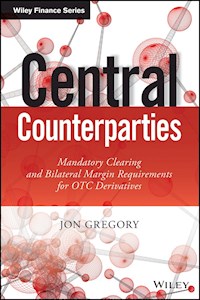
Central Counterparties is a practical guide to central clearing and bilateral margin requirements, from one of the industry's most influential credit practitioners. With up-to-date information on the latest regulations imposed after the global financial crisis, this book covers the mechanics of the clearing process and analyses the resulting consequences. Detailed discussion explains the ways in which the very significant clearing and margining rules will affect the OTC derivatives market and the financial markets in general, with practical guidance toward implementation and how to handle the potential consequences.
Over-the-counter derivatives were blamed by many for playing a major role in the 2007 financial crisis, resulting in a significant attention and dramatic action by policymakers, politicians, and regulators to reduce counterparty credit risk which was seen as a major issue in the crisis. The two most important regulatory changes are the mandatory clearing of standardised OTC derivatives, and the requirements for bilateral margin posting in non-standard OTC contracts. Central Counterparties is a complete reference guide to navigating these changes, providing clarification and practical advice.
- Review the mitigation of counterparty credit risk with the historical development of central clearing
- Clarify the latest regulatory requirements imposed by Dodd-Frank, EMIR, Basel III and more
- Learn the mechanics of central clearing, with special attention to complex issues such as margin calculations, the loss waterfall, client clearing and regulatory capital rules
- Gain insight into the advantages and disadvantages of clearing and bilateral margin requirements, and the potential issues that arise
As the clearing and margining mandates are phased in, the associated costs will be severe enough to dramatically shift the topology of the financial markets and transform the nature of risk. Central Counterparties provides the information, clarification and expert insight market practitioners need to get up to speed quickly.
Sie lesen das E-Book in den Legimi-Apps auf:
Seitenzahl: 638
Veröffentlichungsjahr: 2014
Ähnliche

















Contents
Cover
Half Title page
Title page
Copyright page
Dedication
Acknowledgements
Part I: Background
Chapter 1: Introduction
1.1 The Crisis
1.2 The Move Towards Central Clearing
1.3 What is a CCP?
1.4 Initial Margins
1.5 Possible Drawbacks
1.6 Clearing in Context
Chapter 2: Exchanges, OTC Derivatives, DPCs and SPVs
2.1 Exchanges
2.2 OTC Derivatives
2.3 Counterparty Risk Mitigation in OTC Markets
2.4 Summary
Chapter 3: Basic Principles of Central Clearing
3.1 What is Clearing?
3.2 Functions of a CCP
3.3 Basic Questions
3.4 The Impact of Central Clearing
Chapter 4: The Global Financial Crisis and the Clearing of OTC Derivatives
4.1 The Global Financial Crisis
4.2 Regulatory Changes
4.3 Regulation of CCPS
Part II: Counterparty Risk, Netting and Margin
Chapter 5: Netting
5.1 Bilateral Netting
5.2 Multilateral Netting
Chapter 6: Margining
6.1 Basics of Margin
6.2 Margin and Funding
6.3 Margin in Bilateral OTC Derivatives Markets
6.4 The Risks of Margining
6.5 Regulatory Margin Requirements
Chapter 7: Counterparty Risk in OTC Derivatives
7.1 Introduction
7.2 Exposure
7.3 Valuation Adjustments
Appendix 7A: Simple Formula for The Benefit of a Margin Agreement
Part III: Structure and Mechanics of Clearing
Chapter 8: The Basics of CCP Operation
8.1 CCP Setup
8.2 CCP Operation
8.3 CCP Risk Management
8.4 Default Management
8.5 CCP Linkage
Chapter 9: Margin and Default Fund Methodologies
9.1 Variation Margin
9.2 Initial Margin
9.3 VAR and Historical Simulation
9.4 Initial Margins for OTC Derivatives
9.5 Cross-Margining
9.6 Default Funds
Chapter 10: The Loss Waterfall and Loss Allocation Methods
10.1 Potential CCP Loss Events
10.2 Analysis of CCP Loss Structure
10.3 Other Loss Allocation Methods
10.4 Capital Charges for CCP Exposures
Appendix 10A: Technical Details on the Interim and Final Rules
Chapter 11: Client Clearing, Segregation and Portability
11.1 Operational Aspects
11.2 Segregation, Rehypothecation and Margin Offset
11.3 Methods of Segregation
11.4 Regulatory Requirements
Part IV: Analysis of the Impact and Risks of Central Clearing
Chapter 12: Analysis of the Impact of Clearing and Margining
12.1 The Clearing Landscape
12.2 Benefits and Drawbacks of OTC Clearing
12.3 Side Effects
12.4 Is There a Better Idea?
Chapter 13: The Cost and Impact of Clearing and Margining
13.1 Overview
13.2 Examples
13.3 The Cost of Margining
13.4 Implications
Chapter 14: Risks Caused by CCPs
14.1 Overview
14.2 Historical CCP Failures and Near Misses
14.3 Important Considerations
14.4 Risks Faced by CCPS
14.5 Keeping CCPS Safe
Chapter 15: The Future Impact on Financial Markets
15.1 Regulatory Change
15.2 The Impact
15.3 Good or Bad?
Glossary
References
Index
Central Counterparties
For other titles in the Wiley Finance Seriesplease see www.wiley.com/finance
This edition first published 2014© 2014 Jon Gregory
Registered officeJohn Wiley & Sons Ltd, The Atrium, Southern Gate, Chichester, West Sussex PO19 8SQ, United Kingdom
For details of our global editorial offices, for customer services and for information about how to apply for permission to reuse the copyright material in this book, please see our website at www.wiley.com.
All rights reserved. No part of this publication may be reproduced, stored in a retrieval system, or transmitted, in any form or by any means, electronic, mechanical, photocopying, recording or otherwise, except as permitted by the UK Copyright, Designs and Patents Act 1988, without the prior permission of the publisher.
Wiley publishes in a variety of print and electronic formats and by print-on-demand. Some material included with standard print versions of this book may not be included in e-books or in print-on-demand. If this book refers to media such as a CD or DVD that is not included in the version you purchased, you may download this material at http://booksupport.wiley.com. For more information about Wiley products, visit www.wiley.com.
Designations used by companies to distinguish their products are often claimed as trademarks. All brand names and product names used in this book are trade names, service marks, trademarks or registered trademarks of their respective owners. The publisher is not associated with any product or vendor mentioned in this book.
Limit of Liability/Disclaimer of Warranty: While the publisher and author have used their best efforts in preparing this book, they make no representations or warranties with respect to the accuracy or completeness of the contents of this book and specifically disclaim any implied warranties of merchantability or fitness for a particular purpose. It is sold on the understanding that the publisher is not engaged in rendering professional services and neither the publisher nor the author shall be liable for damages arising herefrom. If professional advice or other expert assistance is required, the services of a competent professional should be sought.
A catalogue record for this book is available from the Library of Congress
A catalogue record for this book is available from the British Library.
ISBN 978-1-118-89151-3 (hardback) ISBN 978-1-118-89157-5 (ebk)ISBN 978-1-118-89158-2 (ebk) ISBN 978-1-118-89156-8 (obk)
For Mum and Dad
Acknowledgements
Less than a year has passed since I decided that it might be useful to compliment my existing text on counterparty credit risk with a book covering central clearing and bilateral margining rules applied to over-the-counter (OTC) derivatives. Given the implementation of mandatory clearing and margining rules is progressing rapidly, I do hope that this book will be of increasing relevance to anyone with an interest in financial markets, and OTC derivatives in particular.
It should be mentioned upfront that the focus of this book is very much on the future role of central counterparties (CCPs) in OTC derivative markets and not as much their (rather different) historical role in exchange-traded markets. I will often make this fact clear by the use of the terms such as ‘OTC CCP’. The reader should have in mind that, whilst much of the theory, discussion and analysis is relevant to all aspects of central clearing, the OTC angle has been the major driver for this work and is therefore the main focus.
As with my other book covering counterparty credit risk and credit value adjustment, this is a challenging topic to write about since the area is changing rapidly, with new regulation and market innovations appearing frequently. The reader may find it useful to visit my personal website at www.cvacentral.com for corrections and updates to the book. In particular, I plan to keep a list of errata and updated URLs there (since the links are commonly changed). There will also be some spreadsheets included that may be useful. You can also contact me via this website – I would be pleased to hear from readers with any comments on the book, which I will certainly seek to incorporate into the next edition.
Whilst this is the first book on mandatory clearing and bilateral margining requirements for OTC derivatives, I would like to mention two other useful and complementary books on the subject. Norman (2011) provides a very in-depth historical background of the development of central counterparties whilst Murphy (2013) compares the traditional bilateral derivatives market with the future market under mandatory central clearing and other new regulation brought about by the global financial crisis.
I am extremely grateful to Craig Pirrong for many interesting discussions on this subject and for his excellent research in this area (which I strongly recommend to any reader). I am also grateful to Craig, together with Alistair Milne, for providing very useful feedback on the first version of the text. Additionally, I would like to thank my colleagues at Solum Financial Partners in London for interesting discussions around many topics related to counterparty risk, margining and central clearing.
I am grateful to Werner Coetzee, Sam Hartley and Jennie Kitchin at Wiley for assisting with this project and to Tom Fryer and the team at Sparks Publishing for the efficiency in the copy editing process to facilitate a timely publishing schedule. Thanks to Rebecca Newenham and Jane Knight at Get Ahead VA for help around administration and proofreading. Any remaining errors are my responsibility.
Finally, special thanks to my wife Ginnie and children George and Christy for their continuing support, encouragement and humour.
Jon Gregory April 2014
Part I
Background
Chapter 1
Introduction
What we know about the global financial crisis is that we don’t know very much.
Paul Samuelson (1915–2009)
1.1 THE CRISIS
In 2007, a US housing crisis led to a credit crisis, which caused the failures of large financial institutions and a severe economic downturn. The aftermath of the ‘global financial crisis’ (GFC) is still being felt across the general economy, and has led to significant changes in the functioning of financial markets and the way in which financial institutions are regulated. The GFC highlighted the importance of controlling risk in over-the-counter (OTC) derivatives to maintain global financial stability. Whilst OTC derivatives did not cause the GFC, they likely contributed to amplifying various problems and provided channels for systemic risk to propagate.
A derivative trade is a contractual relationship that may be in force from a few days to several decades. During the lifetime of the contract, the two counterparties have claims against each other such as in the form of cashflows that evolve as a function of underlying assets and market conditions. Derivatives transactions create counterparty credit risk (counterparty risk) due to the risk of insolvency of one party. This counterparty risk in turn creates systemic risk due to derivatives trading volume being dominated by a relatively small number of large derivatives counterparties (‘dealers’) that are then key nodes of the financial system. Counterparty risk refers to the possibility that a counterparty may not meet its contractual requirements under the contract when they become due. Counterparty risk is managed over time through clearing: this can be performed bilaterally, where each counterparty manages the risk of the other, or centrally through a central counterparty (CCP). Historically, bilateral clearing is far more dominant for OTC derivatives.
During the GFC, authorities had to make key decisions over large failing financial institutions such as Bear Stearns, Lehman Brothers, the Royal Bank of Scotland and AIG. These decisions were made with a very opaque view of the situation the firms were in and the potential knock-on impact of any choices made. One of the reasons for the opacity was the large volume of bilateral OTC derivatives contracts on the balance sheets of such large financial institutions. Bilateral OTC derivatives are essentially private contracts that may be illiquid and have non-standard or exotic features. A key concern over the global OTC derivatives market has always been systemic risk, which in this context refers to financial system instability exacerbated by the distress of financial institutions. In the context of the GFC, systemic risk arose due to the failure of large financial institutions and the resulting domino effects.
Bilateral OTC derivatives were clearly in the eye of the financial storm from 2007 onwards, and the creditworthiness of financial institutions and counterparty risks between them clearly contributed to the ongoing crisis. The large web of OTC derivatives positions between banks and other financial institutions suddenly became a major issue as the creditworthiness of such institutions worsened. For example, American International Group (AIG) exploited its strong credit rating to sell protection via credit default swaps (CDS). When AIG could not post additional collateral (referred to hereafter as ‘margin’) and was required to provide funds to counterparties in the face of deteriorating reference obligations in the CDS, the US government bailed them out. Politicians and regulators were concerned that default of AIG would ripple through the counterparty chains and create a systemic crisis. This led to the view that counterparty risk and the interconnectedness of large financial institutions was a channel of contagion that could amplify and transmit financial shocks.
One particular problem in relation to counterparty risk in OTC derivatives is the close out process. When a party to a contract defaults, their counterparties typically need to terminate and replace the underlying trades. In the aftermath of a large default, the OTC derivative replacement process can be associated with market illiquidity and large volatility of prices during a scramble to replace trades. Such problems were clearly illustrated in the Lehman bankruptcy and are a key reason behind some financial institutions being ‘too big to fail’.
In contrast to OTC derivatives, the derivatives market that was cleared via central counterparties (CCPs) or ‘clearinghouses’ was much more stable during the GFC. CCPs such as LCH.Clearnet coped well with the Lehman bankruptcy when virtually every other element of the OTC derivative market was creaking or failing. One of the reasons for this is that, unlike most market participants, they had actually envisaged and prepared for such a situation. Hence, whilst CCPs still experienced problems (such as identifying the positions of Lehman’s clients), they were able, with help from their members, to transfer or close out a large volume of Lehman derivatives positions without major issues. Indeed, within a week of Lehman’s bankruptcy most of their outstanding OTC-cleared positions had been hedged, and within another week most of their client accounts had been transferred. Centrally cleared OTC derivatives were seemingly much safer than their bilateral equivalents.
1.2 THE MOVE TOWARDS CENTRAL CLEARING
In the aftermath of the GFC, policymakers (not surprisingly) embarked on regulatory changes that seemed largely aimed at moving risk away from global banks, and the dangerous bilateral OTC derivatives market. This seemed to be driven generally by the view that the size, opacity and interconnectedness of the market were too significant. One aspect of these policy changes were greater bank capital requirements for OTC derivatives, hardly surprising given the seemingly high leverages and accordingly low capital bases of stricken banks. Another aspect was in relation to mandatory central clearing for certain products, with CCPs seemingly emerging as a panacea for financial markets’ stability. For example:
How do we establish good regulatory structure without destroying the incentive to innovate, without destroying the marketplace? We agree that we need to improve our regulations and to ensure that markets, firms, and financial products are subject to proper regulation and oversight. For example, credit default swaps – financial products that ensure against potential losses – should be processed through centralized clearinghouses.
George Bush, 15 November 2008.
As a part of financial reform, important legislative changes with respect to the OTC derivatives market were introduced. In September 2009, G20 leaders agreed that all standardised OTC derivatives would, in the future, need to be cleared through CCPs. This was done with the belief that a CCP can reduce systemic risk, operational risks, market manipulation and fraud, and contribute to overall market stability. It is interesting to note that the original push towards central clearing seemed to be much lighter. The G20 meeting in 2008 defined a regulatory goal to be:
Strengthening the resilience and transparency of credit derivatives markets and reducing their systemic risks, including by improving the infrastructure of over-the-counter markets
G20 declaration, Washington, November 2008
Less than a year later, the clearing mandate was clear and the focus on credit derivatives had expanded greatly to cover potentially all OTC derivatives:
All standardized OTC derivative contracts should be traded on exchanges or electronic trading platforms, where appropriate, and cleared through central counterparties by end-2012 at the latest. OTC derivative contracts should be reported to trade repositories. Non-centrally cleared contracts should be subject to higher capital requirements. We ask the FSB [Financial Stability Board] and its relevant members to assess regularly implementation and whether it is sufficient to improve transparency in the derivatives markets, mitigate systemic risk, and protect against market abuse.
G20 declaration, Pittsburg, September 2009
The Dodd–Frank Wall Street Reform and Consumer Protection Act enacted in July 2010, and the European Market Infrastructure Regulation (EMIR) proposed in September 2010 were legislative responses to this call for a new regulation of OTC derivatives markets. Key parts of both Dodd–Frank and EMIR were formal legislative proposals that all standardised OTC derivatives should be cleared through CCPs.
In the period since the G20 agreement on mandatory clearing, the scale and complexity of the task has gradually emerged. The requirement to clear a large fraction of OTC derivatives that are more complex and illiquid than existing cleared products is far from trivial. Furthermore, the number and variety of OTC derivative users represents a massive challenge for CCPs, who will have to develop the capability to clear new OTC derivatives and develop their offerings in the area of client clearing (where CCP ‘clearing members’ clear trades on behalf of clients). The case of client clearing gives rise to many important questions such as where the risk lies in the CCP–clearing member–client chain. Additional problems arise around the possible fragmentation of regulatory regimes globally, leading to potential arbitrages. Questions have also been raised regarding the systemic and operational risks represented by a large ‘OTC CCP’. CCPs may also need to develop linkages with each other to be ‘interoperable’, leading to the question of the increased risk that may arise out of such connections.
1.3 WHAT IS A CCP?
Clearing is a process that occurs after the execution of a trade in which a CCP may step in between counterparties to guarantee performance. The main function of a CCP is, therefore, to interpose itself directly or indirectly between counterparties to assume their rights and obligations by acting as buyer to every seller and vice versa. This means that the original counterparty to a trade no longer represents a direct risk, as the CCP to all intents and purposes becomes the new counterparty. CCPs essentially reallocate default losses via a variety of methods including netting, margining and loss mutualisation. Obviously, the intention is that the overall process will reduce counterparty and systemic risks.
CCPs are not a new idea and have been a part of the derivatives landscape for well over a century in connection with exchanges. An exchange is an organised market where buyers and sellers can interact to trade. Central clearing developed to control the counterparty risk in exchange-traded products, and limit the risk that the insolvency of a member of the exchange may have. CCPs for exchange-traded derivatives are arguably a good example of market forces privately managing financial risk effectively. The two clearing structures, bilateral and central, share many common elements such as netting and margining but also have fundamental differences. The fact that neither has become dominant suggests that they may each have their own strengths and weaknesses that are more or less emphasised in different markets.
CCPs provide a number of benefits. One is that they allow netting of all trades executed through them. In a bilateral market, an institution being long a contract with counterparty A and short the same contract with counterparty B has counterparty risk. However, if both contracts are centrally cleared then the netted position has no risk. CCPs also manage margin requirements from their members to reduce the risk associated with the movement in the value of their underlying portfolios. CCPs also allow loss mutualisation; one counterparty’s losses are dispersed throughout the market rather than being transmitted directly to a small number of counterparties with potential adverse consequences. Moreover, CCPs can facilitate orderly close out by auctioning off the defaulter’s contractual obligations with netting reducing the total positions that need to be replaced, which reduces price impact. A well-managed centralised auction mechanism can be liquid, and result in smaller price disruptions than uncoordinated replacement of bilateral positions during periods of pronounced uncertainty. CCPs can also facilitate the orderly transfer of client positions from financially troubled intermediaries. The margins and other financial resources they hold protects against losses arising from this auction process.
The general role and mechanics of a CCP are:
A CCP sets certain standards for its clearing members.
The CCP takes responsibility for closing out all the positions of a defaulting clearing member.
To support the above, the CCP maintains financial resources to cover losses in the event of a clearing member default:
The CCP also has a documented plan for the very extreme situation when all their financial resources (initial margin
1
and the default fund) are depleted. For example:
It is important to note that many ‘end users’ of OTC derivatives (e.g. pension funds) will access CCPs through a clearing member and will not become members themselves. This will be due to the membership, operational and liquidity requirements related to being a clearing member. Some end users will also be exempt from the clearing obligation and will therefore be able to choose whether to clear via a CCP or not.
1.4 INITIAL MARGINS
A key method to mitigate counterparty credit risk is the provision of margin based on a contractual agreement. Margin serves as an effective insurance against counterparty risk if exchanged in a timely manner in a legally enforceable way. Bilateral margin arrangements tend to be relatively customised, may not require the posting of full margin, and typically allow margin to be posted in relatively illiquid assets. They also tend to allow ‘rehypothecation’ or reuse of margin. Whilst such flexibility is useful in promoting liquidity, it can be dangerous when counterparties default and the margin held is insufficient, declining in value or not legally enforceable.
Centrally cleared markets tend to have tighter margin requirements compared to bilateral ones, for example by only allowing cash or liquid bonds to be posted. The most important difference, though, is in relation to initial margin. The majority of bilateral arrangements provide only for the exchange of variation margin (covering fluctuations in the value of the underlying contracts). Centrally cleared markets also require initial margin (covering the potential cost of replacing the underlying contracts in case the original counterparty defaults). For example, a CCP member whose positions have a value of minus 10 units may have to post 15 units to the CCP, 10 of which is variation margin and an extra 5 is the initial margin. Initial margin is taken by CCPs to provide the first defence against potential losses in the event that one of their members defaults. As such, initial margin has the potential to reduce counterparty risk as defaulting parties essentially pay for their default via the initial margin held by the CCP. Although it reduces counterparty risk, initial margin is expensive as it represents parties posting more in margin than they owe. Furthermore, the expense of initial margin is increased by the fact that it cannot typically be rehypothecated or reused.
Since central clearing applies only to ‘standardised’ OTC derivatives, there is a potential issue that market participants could simply argue that a given contract was ‘non-standard’ to circumvent the clearing mandate and avoid the requirement to post initial margin. To avoid this problem, policymakers have decided to impose initial margin requirements for non-cleared OTC derivatives. This means that the extra protective margin will be present whether a trade is centrally cleared or not.
The push towards higher margin requirements is not surprising. A key problem of the GFC was that many OTC derivatives counterparties (for example, sovereigns, central banks and high credit quality financial counterparties) typically did not post margin at all. Financial counterparties such as large OTC derivatives dealers usually did post margin to each other, but historically such agreements have been under- rather than over-margined. Another problem is that margin in OTC markets can be made up of assets with significant market, credit and liquidity risks. This creates the risk that when margin is required in an insolvency scenario, its price has declined or it is difficult to liquidate quickly except at ‘fire sale’ prices.
An obvious drawback of margin is the underlying cost. This may be seen through a decline in liquidity, as more margin has to be posted within the financial system. This may be particularly acute for counterparties who struggle to meet margin requirements due to not having enough liquid assets to post. In turn, this may lead to financial engineering techniques to generate more high-quality margin and even regulatory arbitrage where market participants attempt to find ways to circumvent the various rules. Obviously, these effects are not desirable.
1.5 POSSIBLE DRAWBACKS
Despite the obvious advantages, mandatory central clearing of OTC derivatives is not without criticism. CCPs have failed in the past and have therefore been shown to be potentially dangerous. For instance, the difficulties faced by CCPs in the stock market crash of 1987 posed a serious threat to the entire financial system. For the past century and longer, clearing has been limited to listed derivatives traded on exchanges. Bilateral OTC markets have been extremely successful and their growth has been greater than that of exchange-traded products over the last two decades. Whilst LCH.Clearnet has been clearing certain OTC derivatives (notably interest rate swaps) since 1999, the majority of OTC products have not moved to central clearing by means of natural forces. At the end of 2010, whilst a large proportion of all outstanding OTC interest rate products (mainly swaps) were centrally cleared, less than 10% of credit default swaps (CDS) and almost no OTC foreign exchange or equity derivatives were cleared through CCPs.
The trouble with clearing OTC derivatives is that they are more illiquid, long-dated and complex compared to their exchange-traded relatives. Hence they may prove a challenge for traditional CCP risk management methods, especially with cross-border activity being so important. To some, the role of CCPs in making financial markets safer seems to be more of a hope than an expectation. What is indisputable is that centralised clearing will have significant structural and behavioural effects on the management and allocation of risk in financial markets, causing a profound change in market structure and trading practices. The financial system is extremely complex, and the potential changes in behaviour will be far-reaching, dynamic and impossible to predict with any precision.
A first obvious and almost paradoxical problem with mandatory clearing is that CCPs clearing OTC products will likely become ‘systemically important’, creating a potential moral hazard if it is clear that government financial support will be forthcoming in the event of a CCP risk management failure. After all, bailing out a CCP is ultimately no better than bailing out any other financial institution. CCPs do not magically make counterparty risk vanish, and forcing derivatives through CCPs could create sizable financial risks via concentrating counterparty risk within a single systemic point in the system. As CCPs clear more complex, less liquid and longer-term instruments, their potential risks will likely increase.
A second concern is the costs and instabilities that CCPs (and bilateral margin requirements) will introduce through requiring a significant amount of liquid margin to be posted by members and their clients, with various estimates putting this increase in the region of trillions of US dollars. There is a question over the economic impact of such margin, which may start via financial institutions being less profitable but will eventually have an impact on economic growth in general. A more subtle problem is that margining can transmit systemic disturbances as changes in requirements can induce destabilising trading. This can occur, for example, when firms that must meet large margin calls respond by selling assets and reducing positions in ways that exacerbate the price changes that caused the margin calls. Moreover, initial margins generally increase in volatile markets, which could have the effect of catalysing rather than resolving financial distress via a damaging system-wide liquidity drain.
A third potential problem is related to the loss mutualisation that CCPs use whereby any losses in excess of a member’s own financial resources (mainly initial margin) are generally mutualised across all the surviving members. The impact of such a mechanism is to homogenise the underlying credit risk such that all CCP members are more or less equal. The most creditworthy market participants may see less advantage of their stronger credit quality with CCP clearing. As with any form of insurance, adverse selection is a problem and can make risk sharing costly. Adverse selection occurs when the insured know more about risks than the insurer. In a clearing context, to the extent where firms that trade OTC derivatives know more about the risks of particular cleared products than the CCP, these firms will tend to over-trade the product for which the CCP underestimates risk, and under-trade the products for which the CCP overestimates risk. CCPs could encourage excessive risk taking compared to bilateral trading since an institution knows that their potential losses are mutualised among other members. Many firms trading derivatives (e.g. large banks and hedge funds) specialise precisely in understanding risks and pricing, and hence are likely to have better information than CCPs especially for more complex derivatives.
1.6 CLEARING IN CONTEXT
It is worthwhile emphasising that this book is focused on the role of CCPs in OTC derivative markets and not their more traditional role in securities markets. The central clearing of securities trades (although it may be carried out by the same CCPs) is very different from that of OTC derivatives. The primary role of central clearing in securities trades is to standardise and simplify operational processes. In OTC derivative markets, central clearing is more focused on the reduction of counterparty risk.
Some other high-level points are important to mention at this stage. First, when assessed in terms of a given characteristic, CCPs will probably give rise to both positive and negative aspects. For example, CCPs reduce systemic risk (e.g. mitigating the impact of clearing member failure) but also increase it (e.g. by increasing margin requirements during a period of stress). Hence, CCPs transform risk but do not definitely reduce it overall. CCPs may also be beneficial for certain products and markets and less so for others, depending on the characteristics of the product or market in question.
CCPs perform a number of functions such as netting, margining, transparency, loss mutualisation and default management. Another important point to note is that some of these functions can be achieved via other mechanisms. For example, trade compression can facilitate greater netting benefits, bilateral markets can (and do) have margining mechanisms, and trade repositories can provide greater transparency.
The ability of CCPs to prevent future financial crises is not completely clear. What is clear is that the analysis of the impact of CCPs leads to many unanswered questions and a balance of advantages and disadvantages. On the one hand, policymakers seem to believe that mandatory central clearing of OTC derivatives will make financial markets safer, but on the other hand some of the criticism has gone so far as to say that this is completely wrong.
The aim of this book is not to define whether CCPs are good or not. Indeed, there is no question that CCPs can be beneficial as one of a choice of potential risk-mitigating mechanisms. However, the mandatory clearing requirement means that OTC CCPs will develop and grow rapidly over the coming years. This, together with the bilateral margin requirements, will create a significant underlying cost. Hence there is a need to provide a detailed analysis of the theory and practice of central clearing of OTC derivatives together with a balanced analysis of the pros and cons of mandatory clearing and margin requirements for OTC derivatives.
1Note that only the defaulter’s initial margin can be used.
Chapter 2
Exchanges, OTC Derivatives, DPCs and SPVs
A too-big-to-fail firm is one whose size, complexity, interconnectedness, and critical functions are such that, should the firm go unexpectedly into liquidation, the rest of the financial system and the economy would face severe adverse consequences.
Ben Bernanke (1953–)
2.1 EXCHANGES
2.1.1 What is an exchange?
In derivative markets, many contracts are exchange-traded. An exchange is a central financial centre where parties can trade standardised contracts such as futures and options at a specified price. An exchange promotes market efficiency and enhances liquidity by centralising trading in a single place. The process by which a financial contract becomes exchange-traded can be thought of as a long journey where a critical trading volume, standardisation and liquidity must first develop.
Exchanges have been used to trade financial products for many years. The origins of central counterparties (CCPs) date back to futures exchanges, which can be traced back to the 19th century (and even further). A future is an agreement by two parties to buy or sell a specified quantity of an asset at some time in the future at a price agreed upon today. Futures were developed to allow merchants or companies to fix prices for certain assets, and therefore be able to hedge their exposure to price movements. An exchange was essentially a market where standardised contracts such as futures could be traded. Originally, exchanges were simply trading forums without any settlement or counterparty risk management functions. Transactions were still done on a bilateral basis and trading through the exchange simply provided a certification through the counterparty being a member of the exchange. Members not fulfilling their requirements were deemed in default and were fined or expelled from the exchange.
An exchange performs a number of functions:
Product standardisation:
An exchange designs contracts that can be traded where most of the terms (e.g. maturity dates, minimum price quotation increments, deliverable grade of the underlying, delivery location and mechanism) are standardised.
Trading venue:
Exchanges provide either a physical or an electronic trading facility for the underlying products they list, which provides a central venue for trading and hedging. Access to an exchange is limited to approved firms and individuals who must abide by the rules of the exchange. This centralised trading venue provides an opportunity for price discovery.
Lesen Sie weiter in der vollständigen Ausgabe!
Lesen Sie weiter in der vollständigen Ausgabe!
Lesen Sie weiter in der vollständigen Ausgabe!
Lesen Sie weiter in der vollständigen Ausgabe!
Lesen Sie weiter in der vollständigen Ausgabe!
Lesen Sie weiter in der vollständigen Ausgabe!
Lesen Sie weiter in der vollständigen Ausgabe!
Lesen Sie weiter in der vollständigen Ausgabe!
Lesen Sie weiter in der vollständigen Ausgabe!
Lesen Sie weiter in der vollständigen Ausgabe!
Lesen Sie weiter in der vollständigen Ausgabe!
Lesen Sie weiter in der vollständigen Ausgabe!
Lesen Sie weiter in der vollständigen Ausgabe!
Lesen Sie weiter in der vollständigen Ausgabe!
Lesen Sie weiter in der vollständigen Ausgabe!
Lesen Sie weiter in der vollständigen Ausgabe!
Lesen Sie weiter in der vollständigen Ausgabe!
Lesen Sie weiter in der vollständigen Ausgabe!
Lesen Sie weiter in der vollständigen Ausgabe!




