


Erhalten Sie Zugang zu diesem und mehr als 300000 Büchern ab EUR 5,99 monatlich.
- Herausgeber: Crown House Publishing
- Kategorie: Lebensstil
- Sprache: Englisch
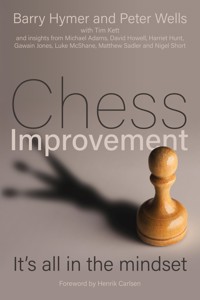
Written by Barry Hymer and Peter Wells, Chess Improvement: It's all in the mindset is an engaging and instructive guide that sets out how the application of growth mindset principles can accelerate chess improvement. With Tim Kett and insights from Michael Adams, David Howell, Harriet Hunt, Gawain Jones, Luke McShane, Matthew Sadler and Nigel Short. Foreword by Henrik Carlsen, father of world champion Magnus Carlsen. Twenty-first-century knowledge about skills development and expertise requires us to keep such mystical notions as fixed 'talent' in perspective, and to emphasise instead the dynamic and malleable nature of these concepts. Nowhere is this more apparent than in chess, where many gifted players fall prey to plausible but self-defeating beliefs and practices - and thereby fail to achieve the levels their 'natural' abilities predicted. Happily, however, the reverse can be true too; through learned dispositions such as grit, risk-taking, strategic thinking and a capacity for sheer hard work, players of apparently modest abilities can achieve impressive results. Blending theory, practice and the distinct but complementary skills of two authors - one an academic (and amateur chess player) and the other a highly regarded England Chess Olympiad coach (and grandmaster) - Chess Improvement is an invaluable resource for any aspirational chess player or coach/parent of a chess player. Barry and Peter draw on interviews conducted with members of England's medal-winning elite squad of players and provide a template for chess improvement rooted in the practical wisdom of experienced chess players and coaches. They also include practical illustrative descriptions from the games and chess careers of both developing and leading players, and pull together themes and suggestions in a way which encourages readers to create their own trajectories for chess improvement.
Sie lesen das E-Book in den Legimi-Apps auf:
Seitenzahl: 598
Veröffentlichungsjahr: 2021
Das E-Book (TTS) können Sie hören im Abo „Legimi Premium” in Legimi-Apps auf:
Ähnliche


















Praise for Chess Improvement
Wise, witty, informative and inspiring!
Carol Dweck, Lewis and Virginia Eaton Professor of Psychology, Department of Psychology, Stanford University
Well written and rigorously researched, Chess Improvement shares valuable insights and is often very funny. By interviewing England’s leading chess players, Barry Hymer and Peter Wells help readers to understand what it takes to become a top chess player: how they studied, the steps in their chess development, and most of all their mindset. In doing so, both authors – one an amateur and the other a professional player – make sense of their enduring fascination with the game and learn how, even after many decades of involvement in the chess world, they can continue to learn and improve.
The real-life stories of the players and the authors are examined through the lens of educational and psychological theories, in particular the growth mindset. As a player and coach, I share many of the experiences considered in the book and I can relate to much of the material. The interviewed players reveal different paths to improvement (even if they all, to some extent, share the growth mindset). These differing paths are dissected and discussed thoughtfully and carefully with caveats and consideration.
Daniel King, chess grandmaster and coach
A quirkily delightful book, at turns wise, insightful and funny. Every coach and every parent who wants to support their chess-playing child should buy a copy.
David Edmonds, co-author of Bobby Fischer Goes to War
When I co-founded Chessable, I spent a year studying the scientific literature on chess improvement and learning. Chess Improvement condenses the science into an engaging, highly enjoyable and instructive text that you can read in under a week. This distillation of the key lessons that learning science has for us has the potential to have a greater impact on chess than AlphaZero. A seminal work.
David Kramaley, co-founder and Chief Executive Officer, Chessable
BChess Improvement is a brilliant mix of research and practical advice on what it takes to improve at chess (along with great takeaways for other pursuits, too). There’s a great blend of theoretical works, such as from Carol Dweck, combined with practical insights from the top chess players and coaches. The focus is not on memorising strategies, but on setting up the proper environment and mindset for success. There’s also a nice summary at the end of each chapter with specific advice for parents and coaches.
The case is made for a growth mindset, that effort matters, that process matters, that every challenge is a learning opportunity, and that how we structure rewards and even the words we use with ourselves (often inadvertently) and our students can really impact progress. It sounds simple in theory, but the book does a great job in giving specific examples of the top players and coaches who are exemplary in how they approach chess improvement, as well as unfortunate examples of the less experienced who tend to get stuck in their progress.
Coaches working with young students will benefit immensely from watching how they word their praise or feedback, or even how they structure their lessons in general. I also really enjoyed grandmaster Peter Wells’ insights and anecdotes which described chess culture both from how the top players really think and approach tournament and training life as well as the culture at the junior tournaments that may be helpful for those who are ready to enter this magical world of chess.
Chess Improvement is a must for all chess educators, as well as for aspiring players (and their parents) of all levels of ability.
Dmitri Shneider, Chief Financial Officer, PlayMagnus, and chess international master
‘Find your thing and sweat blood to get brilliant at it’ is good advice for a fulfilled life. If chess is your thing, this book is right on the money. If it isn’t, just substitute your thing, and read it anyway. It will strengthen the oomph you need in order to succeed.
Guy Claxton, author of The Learning Power Approach
Since the pioneering work of Djakow, Petrovskij and Rudek in the Soviet Union in the 1920s, Adriaan de Groot in the Netherlands in the 1940s, and Chase and Simon in the United States in the 1970s, psychologists have studied chess – and chess players – in great detail. However, most psychological Cstudies of chess have focused on the nature of expertise in chess, rather than how the expertise is developed. There have, of course, been literally thousands of books published on how to improve one’s chess playing, but these have in general been written by chess experts, rather than by those with expertise in learning. Now, for the first time, we have a book that brings these two themes together – blending the latest research on motivation and learning with insight from great chess players. If you have any interest in chess or in learning, you will find this book worthwhile. If you have an interest in both, you will be enthralled.
Dylan Wiliam, Emeritus Professor of Educational Assessment, UCL Institute of Education
Chess Improvement is one of those chess books that contains so many rich and uncomfortable truths that as a player you are dimly aware of, but may have avoided facing up to. It forces you to look starkly at your whole relationship with and attitude to studying and playing chess. It is a wonderfully creative collaboration between educational psychologist Barry Hymer and Peter Wells, one of the most thoughtful and eloquent English chess writers, and draws on contributions from top English players with whom Peter has worked extensively over the last few decades. The sometimes haphazard personal trajectories of these players, who forged to the top of English and international chess despite the absence of any specific or helpful guide to their development, leap from the page.
Harriet Hunt, chess international master
The joy and horror of chess is that once in battle, whether as a young beginner or the world champion, you alone are totally responsible for yourself – and, in order to withstand the pressure, you need both psychological clothing and technical weaponry. In this very interesting book, Barry and Peter draw on their skill sets to help chess players enhance their game in both of these key areas.
Jon Speelman, world championship semi-finalist and three-time British chess champion, chess columnist for The Observer
I must confess to a long-standing personal fascination with the topics at the centre of Chess Improvement, having done quite a bit of work and reflection in similar directions. The novel ingredient that this book brings to the task is DBarry Hymer’s academic credentials, as well as the book’s division of topics into scholarly theory and chess practice.
Chess Improvement is a welcome addition to a very niche segment of chess training manuals; a book that makes the effort to combine mainstream work on psychology and education and apply it to the game. The authors make no effort to sugar-coat what is clearly a serious tome – the book demands time and effort, and doesn’t tempt with quick fixes. What it does do, however, is scrutinise aspects of (chess) teaching, thinking and learning in a way that should fascinate and galvanise trainers and parents. It also provides valuable and scarce food for thought for players wondering about their personal obstacles to improvement. Working your way through this book will surely bring rewards – not just because that is the bonus of making a targeted effort towards improvement, but because Chess Improvement offers a very different type of material, including insights into the thoughts of elite English players.
Chess Improvement will take its spot on a sparsely populated shelf alongside volumes such as Chess for Zebras, books which navigate the fascinating waters of chess psychology and contemplation.
Jonathan Tisdall, chess grandmaster and FIDE Senior Trainer
In Chess Improvement Barry Hymer and Peter Wells make a compelling case that a growth mindset is valuable to a chess player. Equally importantly, they confront just how tough it is to cultivate and maintain an optimal approach to the game in the face of inevitable adversity. The wide experiences of many players, illustrated throughout the book, attest to that. Whilst reading, I was fascinated by the diverse ways in which colleagues in the chess world have grappled with these issues.
Peter has been a chess trainer to me, and a trusted adviser, on countless significant occasions. I recognise that same psychological insight in these pages, and revere the imagination which conjured, amongst other highlights, two (!) sparkling piece sacrifices on the f4 square. Look out for those as well!
Luke McShane, chess grandmaster and England Olympiad Team member
This absorbing and thought-provoking book takes an unusually well-structured approach to chess improvement, allying mindset theory to the practice and experience of some of Great Britain’s best players. The result Eis a series of actionable recommendations for self-improvement as well as a revealing insight into the personal journeys of world-class international masters and grandmasters.
Chess Improvement offers something for all chess players, both young and old – and even for established players who might be curious to learn for the first time what their colleagues and competitors really think about the game.
Matthew Sadler, IT consultant, chess grandmaster and co-author of Game Changer
Chess Improvement is a hugely informative and highly readable account of how you can improve your chess by adopting a growth mindset. It is so reassuring to know that traits like intelligence are not fixed, but can develop with time and effort. Barry and Peter weave together theory and practice so that both strands inform each other in a beautifully judged dialogue. They also helpfully draw out practical learning points for parents and coaches, relevant to children’s progress both in chess and education more broadly.
For the average club player, there is much to enjoy. I identified, as many will, with Barry’s early promise, and his buoyant struggles on returning to the board in later life. But I also loved Peter Wells’ perceptive insights from the world of top players, and his tenacious attempts to move beyond his own self-criticism.
There’s some great chess in there too. Take a look at the account on pages 34–36 of Peter’s win in the 2017 Blackpool Open. I find it hard to imagine I could ever play a game like that, but, having read this book, I guess I’ll keep trying!
Sandy Ruxton, Honorary Research Fellow, Department of Sociology, Durham University, and chess coach
With its thought-provoking and fresh approach, Chess Improvement successfully splices the worlds of chess and academia to offer the reader a challenge – with a strong emphasis on personal growth. And instead of attempting to fine-tune the pure chess element of a player’s operating system, Barry Hymer and Peter Wells prefer to address the inner struggle, digging down very deeply into highly significant and important subjects which are more often than not completely absent from chess literature. The authors continually challenge our established beliefs across a whole range of subjects, going beyond simply scratching the surface. For example, when discussing Fthe impact of failure, they are keen to investigate ‘Why it’s needed and how to deal with it’ rather than ignore the recurring factor altogether.
One especially noteworthy aspect is the inclusion of quotes and advice from a whole host of British chess greats – namely, Tim Kett, Michael Adams, David Howell, Harriet Hunt, Gawain Jones, Luke McShane, Matthew Sadler and Nigel Short. We don’t hear enough from these chess players, yet their combined experience of playing at a very high level (in the case of both Short and Adams, all the way to the final of the world championship) and the amount of work they had to put into the game on the way up all makes for very instructive reading.
The experts referred to within the book are not confined to the world of chess either. Most notable amongst those from a step beyond the 64 squares is Professor Carol Dweck, a psychologist and leading world expert in the field of mindset theory. The book presents a plethora of information and analysis on the contrast between fixed and growth mindset, and it is extremely interesting to see examples of the two applied to specific aspects of chess – such as the impact of praise and criticism, choice of openings and the age-old ‘problem’ of playing against up-and-coming juniors.
Chess Improvement will no doubt be a significant addition to chess literature, offering full accessibility to players, tutors and parents.
Sean Marsh, chess tutor, trainer and writer
G
BH:
To Elizabeth, Clare, and Miriam, the three queens in my life – who need no improvement.
PW:
To Melanie, whose encouragement and patience throughout this lengthy project has been a huge source of strength, and to Emily and Freya, who give me so much satisfaction and joy, and a glimpse of whose cheekiness has even made it into Chapter 6. With enduring thanks as well to my mother Mary and late father Ken, who delivered just that magic formula of steadfast support without undue pressure which we advocate in these pages.
Contents
Foreword by Henrik Carlsen
I’ve been granted the privilege of writing a short foreword to this extraordinary book about chess improvement by educational psychologist Barry Hymer and grandmaster Peter Wells. The authors combine the use of theoretical knowledge about learning processes with relevant chess practice, based in part on key insights from most of the leading British chess players over the last 30 years. The result is interesting, useful and also entertaining thanks to the numerous anecdotes and general insights shared throughout.
Coaching a student or child is hugely challenging due to the remarkable individual differences in talent, ambition and ways of learning. As we all know from school, the one-size-fits-all approach is basically equivalent to one-size-fits-none. So, from a personal perspective, this book is a timely and useful reminder of the many and significant differences in approaches to learning between the two chess players I know best: my son, GM Magnus Carlsen, and myself – rated about 800 Elo points below him. Chapter 1 focuses on mindset, distinguishing between a growth mindset – clearly relevant to Magnus’ approach to chess learning for more than 20 years – and the alternative more fixed and limiting mindset that I’m painfully aware fits all too well with my own approach to chess both 40 years ago and now – but not in the future!
The book is well structured, proceeding from a discussion of mindset, through motivation, challenge and feedback, purposeful practice, dealing with failure, metacognition (reflecting on the thinking and learning process), to the role of cooperation. Within each chapter the authors provide useful relevant theory combined with examples of chess practice and experience, and without making the common mistake of generalising and pronouncing too much. By describing different approaches and trying to find common ground, the authors invite the reader to reflect and grow personally as a chess player. As such, the book is itself a good example of metacognition in action. The main takeaway isn’t and shouldn’t be a strict recipe on how to coach, but rather a broad and logical framework, helping the reader to better understand, ivexamine and address the needs of a student or child on ‘growing into’ the chess learning process.
For me personally the book is a treasure trove of useful insights and anecdotes that can help me improve as a chess player, and it would have been a very useful vehicle of enhanced metacognition if it had been available 20 or so years ago when my kids were young. On the other hand, not every insight would have been a revelation to Magnus and his intuitive approach to chess learning that my wife and I somehow managed not to harm or disrupt significantly. Whilst the general framework is highly useful for most coaches and parents, for outliers represented by the world chess elite there are usually extremely strong individual qualities that turned out to be decisive – even if more or less unnoticed at the time – and the main role of coaches and parents is, in my view, to provide careful facilitation and to ‘do no harm’.
In the chapter on metacognition Peter refers to former child prodigy Josh Waitzkin, well known as the subject of the book Searching for Bobby Fischer,1 pinpointing an important truth: ‘listening is the most vital skill for any teacher,’ specifically referring to the former trainer of Kasparov and others: the late Yuri Razuvaev. This is supported by our own experience with Razuvaev. Back in the spring of 2005 he was tasked by Garry Kasparov with giving Magnus homework between two training sessions. This consisted of analysing in detail four of Magnus’ own losses, a general practice promoted by most chess coaches and also in this book. Magnus was already a GM at the time, but frankly he was not used to this approach. He disliked the whole concept and subsequently he even cancelled the second training session. In October 2006 Magnus participated in the Tal Memorial for the first time. I met Razuvaev at the opening ceremony and apologised for the fact that Magnus hadn’t heeded his advice on playing less and analysing his own games thoroughly. Razuvaev smiled and said something like: ‘No, don’t worry! I’ve followed Magnus closely and he seems to have an extraordinary ability to learn from his games just through preparation, playing and immediate reflection after the game. Just keep up what you’re doing!’ I’ve always been thankful for his encouraging remark, and the exemplary way in which he showed his own growth mindset!
For the chapter on purposeful practice nine useful conclusions are presented. Starting with ‘The passion is the point’ and ‘The best chess work your child vwill ever do is the work they are driven to do by themselves’ seems highly appropriate to me. A comparison between Magnus’ primary and secondary school progress in maths and chess is instructive: in maths he was a bit of a wizard at the age of six, but after receiving more than 500 hours of maths teaching he finished secondary school worse at arithmetic then he’d been at six. In chess he received maybe a few hundred hours of coaching in the same period and went from being a complete beginner to qualifying for the World Championship Candidates tournament a few days after his 15th birthday. His own passion, drive and curiosity trumped every external factor.
Most people can think of a few books that have had a profound impact on them. These books achieve this effect by providing insights that enable a paradigm shift in their way of thinking about or understanding a significant topic. Personally, I would point out for instance The Rebel2 by the philosopher Albert Camus and The Quark and the Jaguar3 by the physicist Murray Gell-Mann. I think Chess Improvement: It’s All in the Mindset will be such a game changer for many players, parents and coaches, and I hope you enjoy the book as much as I have!
1 F. Waitzkin, Searching for Bobby Fischer: The Father of a Prodigy Observes the World of Chess (London: Penguin, 1993).
2 A. Camus, The Rebel, tr. Anthony Bower (London: Penguin Classics, 2000 [1951]).
3 M. Gell-Mann, The Quark and the Jaguar: Adventures in the Simple and the Complex (Royal Tunbridge Wells: Abacus, 1995).
Preface and acknowledgements
The February 2020 issue of Chess magazine arrived a fortnight before we were due to deliver this book’s manuscript to our publisher. In a thought-provoking article on the risks of chess to relationships, the author Mark Ozanne wrote these words about himself:
How did someone who loved the game so much, who spent so much time on it, who gave up so much for it, achieve so little? Maybe I wasn’t genetically wired for it. Too right-brained rather than left? Perhaps. It was probably that I liked the idea of chess more than the reality. I was always happier reading about chess than actually playing. I preferred the theory to the practice. More enticed by tapping my way through a Fischer game and reading the biographical detail, rather than analysing my own games.1
Ozanne’s reflection is analogous to a variety of fields: passionate musicians who choose musicology over composition or instrumental excellence, committed educators who choose to expound on good education rather than teach well, academics who prefer to write about history rather than make it and so on. None of this is to imply a value judgement in any direction – all these domains and many others are able to accommodate a multitude of ways of engaging in them. In chess, for instance, there is so much in the game’s rich history, its logic and its aesthetic beauty to learn, enjoy and appreciate, independently of its competitive performance aspect. Indeed, there is a strong case to be made for chess as a purely educational endeavour – and this case is well made by many national organisations, such as Dansk Skoleskak in Denmark and Chess in Schools and Communities in England. For one thing, there are few activities that better reveal the value of embracing the concept of challenge within a game-based context – that is, viiithe capacity of the brain for growth and development in a supportive learning environment. This is one reason for promoting chess as a powerful route to the development of a growth mindset – of which more shortly.
Nonetheless, as our title indicates, the book you are reading is unashamedly about chess improvement. Yet it differs from most chess books in that we approach the issue of chess improvement obliquely. We offer no new opening wrinkles and no exercises to hone tactical awareness or strategic thinking in the middlegame or endgame. And though we do offer up illustrative games or game fragments at several points in the narrative, these are intended only to illustrate the substantive points made in the text. Instead of exercises, we aim to offer you an evidence-based framework for thinking about and acting on your own development as a chess player – or that of a child you parent or coach. This framework draws on lessons from academic studies in key areas of learning and achievement, which we can also relate to the domain of chess. As such, we do not present this book as a substitute for more traditional chess improvement exercises, but as an overarching tool for navigating such practices and applying them wisely. In short, we will be affirming a more nuanced version of the second explanation for Mark Ozanne’s failure to reach the chess heights to which he once aspired: it’s less about genetic wiring than it is about the effective melding of theory and practice. The two are strongest when interwoven rather than treated as binary opposites.
In integrating learning theory with chess practice we make two claims: that theory without practice is pointless, and that practice without a theoretical hinterland leaves too much to the vagaries of whim or chance. Too many talented and enthusiastic players – of all ages – leave the game when the chart of steady progress changes to rougher terrain, punctuated by missteps, obstacles and a (mis)perception of having reached their ‘peak’. In making our case, we draw from time to time on the insights of chess legends and frequently on the lived experiences of elite players and emergent talents. We are careful throughout to avoid the perception that the application of research evidence inevitably provides a smooth and reliable path to achievement. For one thing, empirical evidence often struggles to make the transition from laboratory to the whirring, buzzing confusion of the natural environment. For another, the differing experiences of the elite players interviewed for this book are testament to the fact that ‘best practice’ takes many forms. But we are confident in the assertion, buttressed by theory and practice working in harmony, that chess progress requires adroitness in the handling of each of the themes addressed in the seven chapters of this book.ix
Although we have taken responsibility for the same sections in each chapter – theory (Barry) and chess practice (Peter) – we have worked closely together on the whole book from conception to creation, suggesting revisions, additions and elisions to each other’s sections where we thought these were merited. As such, we accept joint and several responsibility for the full text. In the event of error, culpability is shared!
In telling our generic tale of chess improvement, we are deeply indebted to the individuals who, in responding at length to our research questions in interviews, have told us their own unique tales. This they each did with enthusiasm, candour and great generosity. These individuals represent the very pinnacle of developed English chess talent in recent decades: Nigel Short, Matthew Sadler, Luke McShane, Gawain Jones, Harriet Hunt, David Howell and Michael Adams. Matthew also provided annotated material from his work with Mark Dvoretsky which greatly enhanced the narrative in Chapter 6. From a parental perspective, Kurt Moreby has provided some welcome insights into the early training regime of his son, James.
For the England stars listed above, we quote directly from the transcripts of our interviews, usually referring to them by their first names only in the interests of space. If their words are differently sourced, we provide the relevant reference. As a general principle, we have aimed for full and accurate referencing throughout, with the exception being the epigraphs introducing each chapter section. The absence of attribution here is purely for reasons of ‘visual hygiene’, but with very few exceptions (e.g. personal communications and conversations, noted as such) these epigraphs are all derived from sources referenced elsewhere in the book.
We are especially grateful to the seasoned and highly successful chess coach (and Welsh international and four-time national champion) Tim Kett. Tim has been a fellow traveller from the outset of this project, and anyone who knows him knows that he thinks deeply and passionately about the vicissitudes of chess development. Tim’s contribution is most readily apparent in the succinct advice we offer at the end of Chapters 2–7, for which pointers he was the primary author.
We would also like to thank Karel and Merijn van Delft, who greeted news of this book project with enthusiasm and offered both wise words from their extensive coaching experience and substantial help with research materials. We also received help with materials from John Emms, Richard Palliser, Dylan Wiliam, and Andrew English (Peter’s long-time colleague at Abingdon xSchool). All four, alongside David Kramaley and Jonathan Rowson, have also shared helpful and insightful advice. David Kramaley has been hugely supportive and generous with his time and influence, especially in the final stages of the book’s gestation.
We are indebted too to Henrik Carlsen for agreeing to write the foreword. Without much fear of contradiction we can claim to draw here on the perspective of one of the two most successful ‘chess parents’ in the world, whose son – Magnus Carlsen – is the living embodiment of every virtue extolled in this book. Though Henrik himself is far too modest to claim significant influence on the development of these virtues, it takes parenting of a high order simply to – in his words – ‘do no harm’ whilst simultaneously feeding the fire of a passionate and intrinsically motivated learner. The chess world commends Magnus’ parents for the role they have played in his development.
We wish to express our thanks to Crown House for having the courage and growth mindset required to enter the world of chess publishing, and for their astonishingly careful, attentive and supportive liaison with us throughout the publication process. This has been greatly appreciated.
Finally, we thank you, the reader, for having the courage to begin a journey which will eschew quick fixes and will perhaps at times lead to moments of cognitive conflict or disequilibrium. These are essential prerequisites for real learning, and we are confident that the time and thought you invest in a critical reading of this book will repay you – or your child or student – handsomely.
Barry Hymer and Peter Wells
1 M. Ozanne, The love of a woman … or the love of chess? Chess, 84(11) (February 2020), 30–31.
Chapter 1
Mindset and chess
The hallmark of successful individuals is that they love learning, they seek challenges, they value effort, and they persist in the face of obstacles.
Carol Dweck
I want to dispel the myth of the Mozart-like easiness of [Tal’s] play and demonstrate his enormous efforts and bitter tears. I will cite chess material to confirm these psychological hypotheses.
Alexander Koblenz, Mikhail Tal’s former trainer
The nature of mindset
This is a book that attempts to synthesise current understandings about learning and apply this knowledge to the domain of chess improvement. In so doing, we draw on research from many domains of cognitive, developmental and educational psychology, and go on to relate this knowledge to the lived experiences of elite chess players. What were the moments and periods in their lives that distinguished their trajectories from other, perhaps equally ‘talented’, contemporaries? What drove and inspired them in their love for the game, and sustained them in and through the tough times? Did they actually have tough times at all, or was their eventual chess eminence a tale of smooth progression and therefore largely inevitable? Do their stories have any significance for junior players and their parents, and for amateur players trying to improve at the game they love whilst also juggling family and career demands that pull in the opposite direction?
In arguing that, yes indeed, the developed expertise of elite players speaks powerfully to those of us operating far lower on the chess food chain, we 2draw in particular on a field of psychology that examines the crucial role that beliefs about the concept of ‘ability’ play in influencing our learning behaviour. This is the place of mindset. Mindset theory is the brainchild of the Stanford developmental psychologist Professor Carol Dweck. It has been over four decades in the making and it continues to evolve and grow in response to new research findings, new challenges and new applications in fields as diverse as education, business, sport, art, interpersonal relationships and geopolitical conflict resolution – indeed, any conceivable domain of human achievement. Within education, there is an apparently insatiable interest in Dweck’s work and in finding ways to translate the theory into practical ideas for implementation – although unfortunately not all of these applications are based on sound understandings of the research.
We have no intention of attempting to outline 40 years’ worth of theoretical and empirical evidence around mindset in this book,1 so here is a simple tabulated representation of the core of mindset theory.
Fixed versus growth mindsets
3As this table attempts to capture, a mindset is simply a belief about the mutability or otherwise of concepts such as intelligence. Individuals holding fixed mindsets for intelligence tend to believe that intelligence or talent is essentially stable and resistant to significant change. With this mindset, the provenance of intelligence is something of a mystery, but it’s likely to lie in our genetic make-up. And we all know that genes are highly resistant to environmental manipulation – don’t we?
For individuals holding growth mindsets, by contrast, we see our skills or talents not simply as the fruits of some chromosomal alchemy but as an indicator of the extent to which we have seized on learning opportunities, persisted in the face of obstacles, increased our effort, improved our learning strategies and so on. We don’t deny the existence of such abstract concepts as ‘intelligence’ or ‘ability’, but we see these things as starting points, not as predetermined destinations.
So far, so obvious, surely? Deep down, doesn’t everybody realise that working hard and strategically at something leads to improvement? Well, perhaps amazingly, no – we don’t all believe this. In his autobiography, the English comedian Eddie Izzard writes, ‘When I was about twelve, I realized that if you work hard, you get better results. This might seem obvious to most people, but it was not apparent to me.’2 Eddie isn’t alone – the numbers who don’t ‘get’ the link between effort and achievement are large. And there are reasons for this: if I have been conditioned to believe that my successes are down not to my own actions but to some inherent quality (‘Clever boy!’), then surely it follows that my failures must be attributable to some inherent deficit? And inherent deficits by their very nature aren’t easily remediable. This conditioning starts very young. One study found that parents’ praise of children’s effort at 14–38 months of age (e.g. ‘Good job putting that block back in!’) rather than natural ability (‘You’re a smart girl!’) predicted growth mindsets at 7–8 years, suggesting that causal mechanisms identified in many experimental studies focused on school-related achievement may be operating in home environments too.3
It’s important to note that arguing whether a belief in the fixed or plastic nature of intelligence is ‘right’ or ‘wrong’ is, in many ways, to miss the point. 4It’s not especially relevant whether or not things like twin studies adequately explain the genetic or environmental roots of individual variation in human performance. Although there is now overwhelming evidence from such fields as epigenetics and neuropsychology for the essential plasticity of the brain and its capacity for growth when the conditions are right, what is more significant is the effect of your belief on your behaviour. As Henry Ford (perhaps erroneously) is said to have put it, ‘Whether you think you can, or whether you think you can’t, you’re right.’ If I don’t believe that investing in hard work and effective strategies is going to do much more than tinker around the edges of achievement, I’m unlikely to be prepared to make this investment. And I’ll be able to attribute my resultant lack of progress or success to that early diagnosis of ‘insufficient raw material’. But if I believe that I could develop the skills required for higher performance, the chances are I will seek out the opportunities to do just that. As a consequence, I have far greater prospects for progress and ultimate success.
A few subtle but important points to make about the nature of mindset, before we turn to its specific relationship to chess development: mindsets aren’t themselves fixed, and nor do they exist as mutually exclusive binary opposites. It’s because they aren’t fixed (they’re just beliefs, and beliefs can change in response to a whole variety of factors, including new experiences and insights) that they can’t exist as mutually exclusive binary opposites: we present mindsets for clarity’s sake as positions on a continuum. Although these positions can be relatively stable for some people in some situations, they can also be rather fluid and context specific. I could, for instance, have a typically fixed response to DIY tasks (‘I’m not the practical sort’) but a typically growth response to IT (‘Let’s see if it helps if I reload this program’).
Even within the same domain of achievement, such as chess, it’s possible to present with differentially fixed (or growth) responses: ‘I’ve never been any good at endings – they don’t suit me – but in dynamic middlegames I’m in my element.’ What is significant here is not that there are skill differences between and within individuals – that much is often palpably obvious – what matters is the reasons we give for these differences. For example, in acknowledging Keith Arkell’s expertise in rook endgames, there is a big difference between believing he was ‘born’ to develop these skills (that rook endgame marker on chromosome 23, perhaps?) and believing these to be a product of the fact that he has worked hard at this area of his game for many decades 5and, indeed, often aimed to lead his opponent into these positions – thereby serving to add to the weight of his accumulated experience.4
Let’s stick with this example to make a final and even more nuanced point: there is a risk that we might be tempted to reify mindsets as representing some sort of identity statement: ‘She’s got a really good growth mindset, whereas he’s so fixed.’ When we resort to verbs like ‘got’ and ‘have’ and the ‘is’ form of the verb ‘to be’, it’s a very short jump to the world of implicit blame and accusation – for example, ‘He’s failed to reach his potential because of his fixed mindset.’ Mindsets aren’t statements of identity; they’re characteristic responses to certain critical conditions like high challenge, failure and criticism. And they’re only important in these specific instances. In situations of low challenge, easy success and effusive praise, fixed mindsets can ‘work’ just fine, and growth mindsets could even be a handicap. Although they’ve often been misunderstood in terms of ‘getting’ and ‘having’ and ‘being’, mindsets can more accurately be seen as something akin to a coping strategy, and this is the sense in which we use them in this book. So, if you really want to go for the growth mindset burn, you’ll convert this understanding into great care when using the verb ‘to be’: there’s a fine but crucial difference between observing that Keith Arkell commonly plays rook endgames brilliantly and asserting that he is a brilliant rook endgame player!
Chess development as a domain of mindset
The thing about talent, however much you have, you still have to keep improving. And that depends on so many other factors, which are probably more important than your raw ability.
Michael Adams
Mickey’s observation from his long career as an elite player – and as an observer of other elite players – was made towards the end of his interview. 6It captures beautifully many key aspects of learning theory in general and mindset in particular: raw talent is only the starting point of real achievement. And as other interviewees have also noted – we’re not even talking ‘exceptional talent’ here – just ‘good enough’ or ‘sufficient’. Kurt Moreby, father of the promising young FIDE Master (FM) James, was especially candid in his attribution of James’ development as a player to an intensive and carefully calibrated training programme (‘Project James’) rather than to any ‘natural ability’. The factors that grow talent are not fixed – they can be pursued, nurtured, finessed and harnessed in the service of continued progress.
There isn’t (yet) a substantial corpus of work in the academic domain that explores the role of mindset in chess improvement, but in a creative small-scale study (which merits replication with a more robust sample size) Kramaley and Wishart found indicative evidence that chess players with a growth mindset for chess ability had longer serious study sessions, and those with an intelligence growth mindset participated in more serious competitions.5 This is in line with what might be predicted: players who believe they are capable of making continuous progress are more likely to commit to serious study (which may not always be enjoyable – see Chapter 4) and are less likely to be put off by the inevitable failures associated with strong competition (see Chapter 5).
Although academic studies in the field are few, very many chess authors have identified salient features of mindset theory implicitly and from an intuitive, experiential perspective.6 A few have even namechecked Carol Dweck and mindset theory explicitly,7 but we are not aware of any previous attempt to structure an entire chess development guide around its central tenets. In 7this book, we aim to show what Mickey knows – that chess expertise is less a function of the natural outworking of some inborn gift (as in the much-used and little-evidenced phrase, ‘Talent will out’), and more a consequence – from whatever starting point of ‘natural talent’ – of a long-term and faithful adherence to well-researched principles and practices of talent development. Such elements include persistence in the face of difficulties, the quality of practice and the nurturing of intrinsic rather than extrinsic motivators, for instance.
When Genna Sosonko, in his fascinating book Russian Silhouettes, asks, rhetorically, ‘Why did [Tal] play like he did and why did he win?’ we want to affirm his response, ‘Of course, it is easy to hide behind the words talent or genius.’8 This would be the fixed mindset response that is frequently heard, and it works in reverse too as an explanation for a failure to reach the highest levels. An especially vivid representation of this fixed mindset belief can be seen in the following extraordinary claim: ‘People often give up chess too late … not every chess addict has the talent to become a grandmaster as shown by my father [B. H. Wood] and my brother-in-law [Peter Clarke].’9
Aligning ourselves with Sosonko, we will offer alternative answers than talent alone to the explanation for Tal’s giftedness. Alongside the happenstance of limited opportunities or parental support, we will explore answers that offer us no easy excuses for failing to reach high levels of expertise (‘I wasn’t blessed with the gift of good chess genes’), and instead which challenge us to confront the franker and more awkward realities10 – perhaps I was too lazy or insufficiently motivated to put in the hard yards? Or perhaps I focused my chess energies on the wrong or deficient practices? Or perhaps I was too resistant to challenges or too timid at critical moments? Perhaps, more generally, I allowed my fixed mindset responses to prevail?
In the table that follows, we highlight some of the ways in which mindsets can manifest themselves in chess. We recommend that you see this table as 8an indicative guide, rather than as a tool to nail down your own or someone else’s mindset. Whilst there is no empirically robust correlation between ‘natural ability’ and mindset in chess, or in any other domain, you would expect titled chess players to be more likely to have held growth mindsets at critical junctures in their chess development. After all, they’ve needed these in order to cope with inevitable disappointments and difficulties en route to securing their titles, and the best of them continue to provide evidence of growth mindset reactions in their careers. For example, as we’ll see later, Garry Kasparov was and Magnus Carlsen is known to be especially good at rebounding from defeats, whereas lesser players might tend to catastrophise a defeat – viewing it as a function of being rumbled or reaching their limit and playing weakly in their next game as a result (reactions which are often colloquially attributed to ‘psychological weakness’ or ‘lacking resilience’).
That said, it should be recognised that a few chess legends could, in a historical reading of their careers, be exposed as having been in thrall to a fixed mindset. Players with exceptional natural talent, having often had childhoods of prodigious and apparently effortless achievement (with all the praise and attention that accompanies this), can be especially vulnerable. Accounts of the adult Samuel Reshevsky’s less-than-endearing behaviour at the board,11 his lifelong aversion to working at widening his opening repertoire, and his refusal to play second fiddle to the new kid on the block (Fischer) at Olympiads are a possible ‘tell’, for instance. And the great Cuban José Raúl Capablanca’s entire career can be viewed through the fixed mindset prism. Here was a player who most commentators describe as one of the most naturally gifted players of all time. By all accounts he had an apparently inborn, intuitive feel for the game, a remarkable capacity for rapid processing and a record of largely uninterrupted success since early childhood. In a tournament career from 1910 to 1939, he won the vast majority outright and placed lower than third only once – AVRO 1938. In these tournaments he recorded 270 wins and a mere 26 defeats. Effortless success breeds complacency. Capablanca’s hold on the chess crown was relatively brief – certainly by contrast with both his predecessor and his successor. Against all expectations at the outset of the match, he lost the world championship in 1927 to the great workaholic, chess obsessive and seeker-after-complexity Alexander 9Alekhine, and never got a chance to win it back. As Fred Reinfeld observed, ‘The tragedy of Capablanca’s career is perhaps the most shattering of all the tragedies of the World Champions: the gods blessed him with a gift whose very unfolding made self-realization and artistic growth impossible … What did not come easily to him, did not come at all.’12
More generally, many very promising young players who reveal characteristic fixed mindset responses are prone to reject the game at the point at which they encounter truly strong opposition and resultant defeats; they falsely attribute these moments to ‘reaching their potential’. But as we’ll see later, even today’s elite players are susceptible to fixed mindset moments – they wouldn’t be human if they weren’t. So, take heart if you identify strongly with some of the fixed descriptors below – you could be in good company!
What is my chess mindset? Indicative responses and attitudes
We will be expanding on many of these areas over the course of this book, and showing how and why they come into being, and how they are maintained. Even more importantly, we will show how we can adopt characteristic growth mindset positions in order to nurture a love of chess and to sustain that passion over many years. For present purposes, however, and in the interests of full disclosure, we offer next a few reflections on our own development as chess players in the light of mindset and how mindset informs our 14practice to this day.13 We write from contrasting perspectives – an amateur player with modest chess skills on the one hand, and a lifelong professional chess player and coach on the other.
The authors’ chess mindset biographies
Barry
Surely the psychologists would say that this dropping of [Capablanca’s] academic career follows a pattern: a brilliant, effortless start, then a relaxation of effort, an evasion, at the point where hard work is required.
Fred Reinfeld
Early promise, unrealised
Eminence is a relative term, and in terms of chess achievement I am a patzer in comparison to my co-author. I am what is often euphemistically described as a ‘strong club player’ or a ‘keen amateur’. I connect with the fixed mindset from personal experience: only much later in life did I come to see the many ways in which this mindset held back and ultimately destroyed my engagement in the game. In late middle age, I am in the process of reconnecting with the intrinsic pleasures of chess.
15Although my earliest years were spent playing rugby and cricket (the twin pillars of a ‘whites-only’ education for boys in apartheid-era South Africa), at 13 I learned the moves of chess from a family friend. On moving from Pretoria to an academically oriented state secondary school in the Cape in 1974, I was lucky enough to find myself being taught history and Latin by a former South African chess champion, Kenneth Kirby. Chess was Mr Kirby’s passion. Although he rarely spoke about his own rich chess experiences, it was rumoured (and subsequently confirmed in the databases) that he had once clashed with his hero Mikhail Botvinnik at an Olympiad, and we held his eminence in high regard.
Mr Kirby was the doyen of schools chess in the Cape Town suburbs in the 1970s, and he rarely missed a lunchtime meeting of the school chess club. He gave no formal chess lessons at all, as I recall, but he would stand alongside our games, mostly silently, but exhaling heavily when exasperated by poor moves (frequent), tapping his fingers against his leg when excited by good ones (rarer) and wordlessly intervening by shifting pieces with nicotine-stained fingers to reveal the grim consequences of our poorer decisions or the unimagined riches of missed opportunities. Vladimir Zak, Mark Dvoretsky, Judit Polgár or Maurice Ashley he was not, but nonetheless he created an environment in which the playing of chess flourished. It was through his labours that I got exciting opportunities to play in schoolboy simuls (I remember few girls or non-white players in those strange times) against venerable visiting masters like Count Albéric O’Kelly de Galway and Karl Robatsch and the young Michael Stean, Hans Ree and Heikki Westerinen. And a few years later, as an undergraduate, it was Mr Kirby who gave me the chance to play in a simul against the great Ulf Andersson – immediately following Andersson’s victory in a formidable four-player tournament in Johannesburg, which also involved Viktor Korchnoi, Robert Hübner and John Nunn. Although the chess was hardly Speelmanesque in its inventiveness, I was thrilled with the result:
Ulf Andersson – Barry Hymer
Cape Town, 24 August 1981, 30-board simul (won 25, drew 5)
16Looking back now at my adolescent interest in chess, I can see how the fixed mindset both drew me to the game and prevented me from embracing it in a guilt-free manner: chess was something I used to mask my lack of academic engagement. Having succeeded effortlessly at a provincial primary school and unwisely accepted the mantle of ‘gifted’, my arrival at a strongly academic, highly competitive high school brought with it a strange experience. I was behind the rest of the class for the first time in my life, and I began to doubt my parents’ and primary teachers’ judgements about my ability. Of course, this didn’t cause me to kick in with greater effort or improved strategies – as we’ve seen, the fixed mindset sees effort as a poor substitute for raw ability and simply confirms your limitations. Instead, I adopted a variety of defensive psychological carapaces: I became the class wit, assumed the socially acceptable role of ‘gifted underachiever’ and took to chess – I suspect at least in part because that’s what ‘bright kids’ do. I was abetted in this course by Mr Kirby, who perhaps related to my predicament – I’m sure he preferred chess to teaching Latin! Throughout my high school years, educational underachievement ran parallel to chess achievement, much to the confusion and consternation of my parents and teachers. The net result was that any chess activity became suffused with a sense that ‘I should really be doing schoolwork’.
Beneath its usefulness as cover for my academic torpor, I did love chess in and of itself, of course. I played a lot (I thought) and even read a few chess books – progressing from Bott and Morrison and Reinfeld primers in my earliest teens to heavier duty fare like Alekhine’s and Capablanca’s best games and (the first three pages of) Nimzowitsch’s My System14 – the latter works in those stylish, pure red Bell & Sons hardcovers. Over time I became first board for a trophy-winning school team and represented Western Province several times in the South African Schools’ Championship. In my undergraduate years I also won my senior provincial colours and even the occasional tournament. I laboured under three impressions, in retrospect all false: (1) I 17was working hard at my chess, (2) I was doing rather well at it and (3) maybe someday I could even make a living from the game.




