


16,99 €
Mehr erfahren.
- Herausgeber: John Wiley & Sons
- Kategorie: Geisteswissenschaft
- Serie: China Today
- Sprache: Englisch
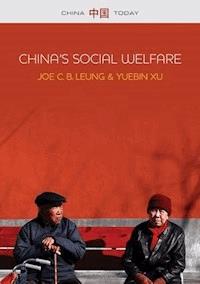
The extraordinary rise of China is one of the greatest global stories of recent times. However, China's development has been described as ‘uneven, uncoordinated, and unsustainable’, and has now reached a critical turning point. To transform itself into a successful high-income economy, China urgently needs to develop a new welfare regime. Social policy and social welfare programmes are pivotal not only to meet mounting social needs but also to promote social cohesion.
This timely book explores key turning points in China’s trajectory, from the creation of a socialist egalitarian society promising a relatively stable livelihood at the expense of economic development, through the market-oriented reforms which have dismantled the traditional social protection system. The authors present the formidable social challenges ahead, including demographic shift, residential migration, and corrosive inequalities, and outline the emerging forms of social security protection in urban and rural areas, community-based social care services, non-governmental organizations and the social work profession. To redress inequalities and strengthen social cohesion, China needs to construct a robust developmental and redistributive strategy with shared responsibility between different levels of governments, as well as between civil society, the state and the market.
This comprehensive and astute guide to one of China’s key current challenges will be welcomed by students and scholars of social policy, welfare, sociology and political science, and all interested in contemporary China.
Sie lesen das E-Book in den Legimi-Apps auf:
Seitenzahl: 357
Veröffentlichungsjahr: 2015
Ähnliche




















China Today series
Greg Austin,
Cyber Policy in China
David S. G. Goodman,
Class in Contemporary China
Stuart Harris,
China's Foreign Policy
Elaine Jeffreys with Haiqing Yu,
Sex in China
Michael Keane,
Creative Industries in China
Joe C. B. Leung and Yuebin Xu,
China's Social Welfare
Pitman B. Potter,
China's Legal System
Xuefei Ren,
Urban China
Judith Shapiro,
China's Environmental Challenges
Teresa Wright,
Party and State in Post-Mao China
LiAnne Yu,
Consumption in China
Xiaowei Zang,
Ethnicity in China
Copyright © Joe C. B. Leung and Yuebin Xu 2015
The right of Joe C. B. Leung and Yuebin Xu to be identified as Authors of this Work has been asserted in accordance with the UK Copyright, Designs and Patents Act 1988.
First published in 2015 by Polity Press
Polity Press
65 Bridge Street
Cambridge CB2 1UR, UK
Polity Press
350 Main Street
Malden, MA 02148, USA
All rights reserved. Except for the quotation of short passages for the purpose of criticism and review, no part of this publication may be reproduced, stored in a retrieval system, or transmitted, in any form or by any means, electronic, mechanical, photocopying, recording or otherwise, without the prior permission of the publisher.
ISBN-13: 978-0-7456-8056-9
ISBN-13: 978-0-7456-8057-6 (pb)
ISBN-13: 978-0-7456-9047-6 (epub)
ISBN-13: 978-0-7456-9046-9 (mobi)
A catalogue record for this book is available from the British Library.
Library of Congress Cataloging-in-Publication Data
Leung, Joe C. B.
China's social welfare : the third turning point / Joe C. B. Leung, Yuebin Xu.
pages cm
Includes bibliographical references and index.
ISBN 978-0-7456-8056-9 (hardback : alk. paper) – ISBN 978-0-7456-8057-6 (pbk. : alk. paper) 1. Public welfare–China. 2. Public welfare administration–China. I. Xu, Yuebin. II. Title.
HV418.L482 2015
361.951–dc23
2014030422
The publisher has used its best endeavours to ensure that the URLs for external websites referred to in this book are correct and active at the time of going to press. However, the publisher has no responsibility for the websites and can make no guarantee that a site will remain live or that the content is or will remain appropriate.
Every effort has been made to trace all copyright holders, but if any have been inadvertently overlooked the publisher will be pleased to include any necessary credits in any subsequent reprint or edition.
For further information on Polity, visit our website: politybooks.com
List of Tables
3.1 Basic population information in the 2000 and 2010 censuses
3.2 China's Gini coefficient as compiled by the NBS
3.3 Annual urban per capita disposable income and rural per capita net income (in yuan)
3.4 Poverty line, numbers in poverty and headcount rate, 1978–2013
4.1 Funding and coverage of dibao, 1998–2013
4.2 Average thresholds and payments of dibao, 2006–2013
5.1 Coverage and funding of rural dibao, 2007–2013
5.2 Average assistance standard and actual payment of rural dibao (yuan per person per month)
5.3 Coverage and funding of the NCMS, 2005–2012
6.1 Provision of beds, number of residents and occupancy rates, 1990–2013
7.1 The development of social organizations
Chronology
1894–5
First Sino-Japanese War
1911
Fall of the Qing dynasty
1912
Republic of China established under Sun Yat-sen
1927
Split between Nationalists (KMT) and Communists (CCP); civil war begins
1934–5
CCP under Mao Zedong evades KMT in Long March
December 1937
Nanjing Massacre
1937–45
Second Sino-Japanese War
1945–9
Civil war between KMT and CCP resumes
October 1949
KMT retreats to Taiwan; Mao founds People's Republic of China (PRC)
1950–3
Korean War
1951
Regulations on Labour Insurance
1953–7
First Five-Year Plan; PRC adopts Soviet-style economic planning
1954
First constitution of the PRC and first meeting of the National People's Congress
1956–7
Hundred Flowers Movement, a brief period of open political debate
1957
Anti-Rightist Movement
1958–60
Great Leap Forward, an effort to transform China through rapid industrialization and collectivization
March 1959
Tibetan Uprising in Lhasa; Dalai Lama flees to India
1959–61
Three Hard Years, widespread famine with tens of millions of deaths
1960
Sino-Soviet split
1962
Sino-Indian War
October 1964
First PRC atomic bomb detonation
1966–76
Great Proletarian Cultural Revolution; Mao reasserts power
February 1972
President Richard Nixon visits China; ‘Shanghai Communique’ pledges to normalize US–China relations
September 1976
Death of Mao Zedong
October 1976
Ultra-leftist Gang of Four arrested and sentenced
December 1978
Deng Xiaoping assumes power; launches Four Modernizations and economic reforms
1978
One-child family planning policy introduced
1979
US and China establish formal diplomatic ties; Deng Xiaoping visits Washington
1979
PRC invades Vietnam
1982
Census reports PRC population at more than 1 billion
December 1984
Margaret Thatcher co-signs Sino-British Joint Declaration agreeing to return Hong Kong to China in 1997
1986
Bankruptcy Law
1989
Tiananmen Square protests culminate in June 4 military crackdown
1992
Deng Xiaoping's Southern Inspection Tour re-energizes economic reforms
1993–2002
Jiang Zemin, new president of PRC, continues economic growth agenda
1994
Regulations on the Work of Rural Five-Guarantees Households
1997
Decisions on Establishing a Unified Basic Pension System for Enterprise Employees
1998
Decisions on Establishing the Basic Medical Care Insurance System for Urban Employees
1999
Regulations on Unemployment Insurance; Regulations on the Guarantee of the Minimum Living Standard System for Urban Residents
November 2001
WTO accepts China as member
August 2002
World Summit on Sustainable Development held in Johannesburg; PRC ratifies 1997 Kyoto Protocol to the United Nations Framework Convention on Climate Change
2002–12
Hu Jintao General-Secretary of the CCP (and President of the PRC from 2003)
2002–3
SARS outbreak concentrated in PRC and Hong Kong
2006
PRC supplants US as largest CO
2
emitter
2003
Third Plenum of the 16th Party Congress endorsed the concept of ‘Scientific Development’
2003
Proposal on Establishing New Cooperative Medical System
2005
Decisions on Perfecting the Pension System for Workers in Enterprises
2006
Sixth Plenum of the 16th Party Congress: Decisions Concerning the Construction of the Socialist and Harmonious Society
2006
National People's Congress announced the plan of Building a New Socialist Countryside
2007
Decisions on the Pilot Medical Care Insurance System for Urban Residents
2008
Labour Contract Law
August 2008
Summer Olympic Games in Beijing
2010
Shanghai World Exposition
2010
Social Insurance Law
2012
Xi Jinping appointed General-Secretary of the CCP (and President of PRC from 2013)
2013
18th Party Congress pledged to build a moderately well-off society and achieve major results on economic and social reforms by 2020
Preface
Having been born in Hong Kong, I found that my understanding of the changes under socialist China was limited. As a child, in 1958, I made my first visit to Guangzhou, China, a city 120 kilometres from Hong Kong. It took a day of travel by train (now it is a two-hour journey), and we were interrogated thoroughly at the border checkpoints at Shenzhen by Chinese immigration and customs officials. Looking hostile, a People's Liberation Army soldier holding a machine gun guarded the bridge between Hong Kong and Shenzhen. My family had taken along as many essential basic goods as we could carry, such as cooking oil, canned food, used clothing, shoes, etc., as gifts for our relatives. We had to pay a tax on items that were considered to be beyond personal use. In order for us to stay with our poor relatives, our names had to be registered with the neighbourhood police. Food was terrible and in extremely short supply. My relatives had to seek special permission to obtain some eggs for me. However, when we were treated by another relative, who worked in the customs office, we had lots to eat, including meat and soup. That was my first experience of inequality in China.
After the Cultural Revolution I made occasional tour visits to southern China. My impression was that China was extremely poor, underdeveloped and secretive. We had to live in specified hotels for foreigners and purchased goods with foreign exchange certificates from the friendship stores. My journey of academic exchange and research on social welfare in China began in the mid-1980s, when I was a junior lecturer at the University of Hong Kong. The Department of Social Work and Social Administration received invitations from the reinstated Sociology Department of Sun Yat Sen University in Guangzhou to introduce social work education into China. Under the leadership of Professor Richard Nann of the University of Hong Kong, I was responsible for initiating three major projects in 1986: setting up a social work programme at Sun Yat Sen University with courses taught by teachers from Hong Kong; introducing summer social work fieldwork placements for Hong Kong social work students in work units (neighbourhood offices, youth services, schools and non-governmental organizations); and introducing a course on social welfare in China at the University of Hong Kong (most likely the first of its kind inside or outside China since 1949).
Teaching social work and developing fieldwork placements was difficult, as no one in China at that time seemed to know what social work was. After listening to my lecture ‘What is Social Work?’, one student challenged me, saying that Chinese workers and peasants were also social workers, as they ‘served the people’. I still remember that, in 1987, one of my masters' students from Hong Kong was detained for hours and warned by the Guangzhou city police for carrying out a survey on the welfare of industrial workers.
Inspired by Professor Nann, in 1995 I co-authored with him the book Authority and Benevolence: Social Welfare in China. Initially, it was difficult to find a publisher interested in our manuscript. China was perceived as a backward and somewhat isolated country, particularly after the Tiananmen protest and crackdown in 1989. World interest was based largely on curiosity rather than on the need to engage China. There were hardly any books or journal papers published internationally on this topic. The questions ‘What is Social Welfare?’, ‘What is Social Policy?’, and ‘What is Social Work?’ did not seem to receive a great deal of attention within China. China studies were dominated by Sinologists, who were preoccupied mainly with political and economic change. Limited publications on social welfare provisions were based chiefly on travel logs, visits and interviews with Chinese scholars rather than on empirical research. In 1994 I was able to publish a paper on social welfare reforms in China in the Journal of Social Policy. Presumably, this was the first time this journal had published a paper on social welfare reforms in China. In the early 1990s, the University of Hong Kong began to enrol PhD students from mainland China in social welfare courses.
In 2002, the University of Hong Kong was able to set up two masters' programmes, in social work and social service management, a collaborative project with Fudan University, Shanghai. This was the first social work programme registered under the Ministry of Education to be operated by an outside university. Because of the lack of reference material, we had to provide hundreds of donated books on social work from Hong Kong. Even in the early 2000s, university facilities were poor and teachers were poorly paid. We had to contribute an overhead projector for teaching purposes. Teachers at that time lived on the campus with students, and everyone owned a bicycle. Today, most professors live outside the campus in their own purchased house and drive to the office in their own private car. Parking is now a big problem at most universities in China.
The late 1990s saw the beginning of a thriving interest in studying social policy in China, particularly among scholars in Hong Kong. We could obtain Hong Kong-based research grants to carry out research in China, often in collaboration with our partners or with University of Hong Kong graduates. By that time, the study of social policy had emerged under different disciplines, namely sociology, political science, public administration, geography, economics and social work. The appearance of Chinese social policy scholars trained overseas had stimulated a proliferation of related publications. They often collaborated with their Western colleagues to carry out research and publish papers and books. Besides being more open, with the publication of policy documents and key statistics, the Chinese government has sponsored social policy research by local research institutes. There is also growing interest among international organizations, such as the World Bank, the Asian Development Bank, the United Nations Development Programme and the Organization for Economic Cooperation and Development, to provide consultancy to the Chinese government, and joint reports and working documents have been published. One of the major difficulties arising from studying social policy in China is that one can easily miss key publications and research studies published locally and internationally. However, internet searches for publications and information have become convenient and expedient.
In recent years, I have been more preoccupied with the provision of training to social work students and government civil servants from China. In 2006–9, supported by the Hong Kong University Grant Committee, I headed a longitudinal study on social assistance recipients in three cities. I was the international consultant for the Asian Development Bank, evaluating the impact of rural social assistance (2010–11). Since that time my focus has been on the government purchase of welfare services from non-governmental organizations, particularly in Guangdong province. As such, I was appointed as an advisor to the Committee for Social Affairs of the Guangdong Provincial Party Committee, an organization working to promote service innovation and maintain social stability.
Finally, I was honoured to be invited by Polity Press in autumn 2012 to submit a book proposal. It was indeed a formidable challenge for me as I approach my imminent full retirement, and I invited Professor Xu Yuebin of Beijing Normal University to team up with me. He has contributed the two chapters on urban and rural social protection systems. Locally, he works closely with the Ministry of Civil Affairs on welfare policy evaluation. Overseas, he has been contracted by a number of international organizations, including the Ford Foundation, the World Bank and the Asian Development Bank, to carry out social policy studies.
Inevitably, we may easily have missed out key readings, references and perspectives and committed factual mistakes. To be sure, the study of China now involves not only a tremendous amount of reading from a variety of sources but also contested interpretations. We are fully responsible for all omissions, mistakes and misinterpretations.
Joe Leung
July 2014
List of Abbreviations
Chinese currency is in yuan; in July 2014, the exchange rate was approximately US$1 to 6.2 yuan.
Lesen Sie weiter in der vollständigen Ausgabe!
Lesen Sie weiter in der vollständigen Ausgabe!
Lesen Sie weiter in der vollständigen Ausgabe!
Lesen Sie weiter in der vollständigen Ausgabe!
Lesen Sie weiter in der vollständigen Ausgabe!
Lesen Sie weiter in der vollständigen Ausgabe!
Lesen Sie weiter in der vollständigen Ausgabe!
Lesen Sie weiter in der vollständigen Ausgabe!
Lesen Sie weiter in der vollständigen Ausgabe!
Lesen Sie weiter in der vollständigen Ausgabe!
Lesen Sie weiter in der vollständigen Ausgabe!




