



0,49 €
Mehr erfahren.
- Herausgeber: Booksell-Verlag
- Kategorie: Abenteuer, Thriller, Horror
- Sprache: Englisch
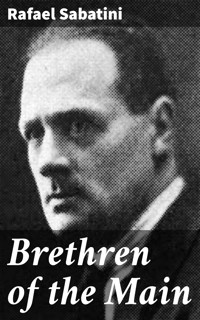
This edition includes some of the most renowned stories by the great storyteller of pirates, action and adventure, Rafael Sabatini. Stories such as "Annabel's Wager" and "The Vicomte's Wager" show Sabatini's fondness for risk as a driving force, where a single bet can expose pride, desperation, or hidden courage. In "Out of the Dice Box" and "The Lottery Ticket," luck becomes a dangerous companion, tempting characters into choices that test their moral limits. Sabatini delights in reminding the reader that fortune is never neutral—it always demands a price. Other tales lean into darker or more ironic territory. "The Malediction" and "The Night of Doom" explore fear and superstition, while "The Duellist's Wife" and "The Marquis' Coach" combine romance with sharp social observation. Meanwhile, stories like "Sword and Mitre" and "The Captain of the Guard" echo Sabatini's love of historical conflict, where power struggles play out through wit as much as violence. Together, these stories showcase Sabatini's versatility. Whether dealing with wagers, disguises, or sudden reversals of fate, each piece delivers a complete, satisfying arc—proof that his mastery of adventure shines just as brightly in short form as it does in his longer works.
Das E-Book können Sie in Legimi-Apps oder einer beliebigen App lesen, die das folgende Format unterstützen:
Veröffentlichungsjahr: 2021
Ähnliche


















Collected Stories Vol. II
Table of Contents
Annabel's Wager
I once knew a man who, being under sentence of death, was fretted, the night before they hanged him, at having taken cold—which may serve as an instance of how it is not so much the greater of foreshadowed ills that harasses us as the more imminent. To this construction of the human mind I may set it down that, lying besieged in Penhilgon Castle, with the assurance that should we fall into the hands of the Roundheads that were besetting us there was an overwhelming likelihood of a short shrift in payment for our obstinate resistance, I was a thousand times more plagued and vexed by the coldness of Sir Andrew Penhilgon's daughter than by any contemplation of what might befall did His Majesty's move from Oxford fail to take place in time to save us.
You may say that I was a fool not to discern that a maid could hardly opine the season one for dalliance; but defer your judgment until you have heard what else I have to tell.
A time there had been when it had seemed that my suit with Annabel was like to prosper, and this it had done but for the coming to Penhilgon of Master Steele—a man as out of place in that stern garrison as a shaveling monk in a regiment of cavalry. He was a pretty fellow—thus much justice I will do his looks—but it would seem that Nature jested in that he had been born a man. At heart, I'll swear, he was a woman. He had a woman's daintiness of speech, a woman's mincing ways of gesture; like a woman, he inclined to the pursuit of flowers and verses, and he was stirred by all a woman's gentle horror of war and bloodshed. He started did a musket crack, and the flash of a drawn sword would make him blench and shudder, whilst the sight of blood turned him as squeamish as the sight of virtue might old Satan.
It was over-strange how Annabel, the child of a warlike race, should come to suffer the attentions of this feeble creature, scented like a nosegay and beribboned like a church in time of victory. Yet this she did; and whilst I went about my duties at the castle in sombre, jealous moodiness, and Sir James scowled damnably upon the business, Master Steele sunned himself in her smiles, walked with her in the quadrangle or upon the ramparts, sat with her at the spinet, and, in short, was never from her side. That he was named Steele was but another irony. Had I had the naming of him I would have called him Water.
Enough was Sir James put about by the siege, and I dared not intrude my grievance upon the anxiety wherewith already he was over-burdened. Moreover, for all that he disliked good Master Steele, yet were his views less rancorous than mine, for, after all, he was but Annabel's father; and a father is oft wont to be less troubled by his daughter's choice of a lover than are other men.
I stood one night upon the ramparts to the north, looking down upon the lights gleaming in the Parliamentarian lines, and wondering how soon the King would come. There was a bloody bandage about my head, for there had been sharp work that day, and though we had repulsed the enemy effectively for the time, yet the victory had been dearly bought in lives and limbs. Annabel approached me softly in the dark, and her voice was tender as a caress.
"My poor Jocelyn, does your head hurt?"
I started round, and, my mood being boorish and surly with jealousy "'Tis naught," said I. "The graze of a pike. A little more and it had made an end of me; yet I know gentler hands that deal wounds less bloody but more hurtful."
"'Tis perhaps that you wound yourself upon the weapons of those hands."
"Mistress," I answered, "I have not a poet's mind to grasp these nice distinctions. Master Steele," I went on, with my back turned, "I pray you make clear to me her meaning."
"To whom are you speaking?" she asked. "Master Steele is not here."
"Is he not!" I cried in feigned surprise, and turning as if to assure myself of his absence: "why, what hath chanced that he is not beside you? And just as I so needed him! Lackaday!"
"Jealousy lends you a poor wit," said she, "and outrivals Nature in making you a dullard."
"Madam," said I with a great dignity, "a wounded head is a not over-useful thing to think with."
She came a step nearer at that, but ere she could speak there was a heavy tread behind us, and Sir Andrew's voice.
"Is it not strange, Jocelyn," said the knight, "with what insistence they press us here on the northern side?"
"I had indeed remarked it," I replied. "Our weakness in this quarter cannot be apparent to them from without, yet, by a singular ill-chance, each attack has been directed against it."
"Ay," he growled sourly, "it would almost seem as if they had information from within."
"Impossible," I answered quickly.
"So you say, yet I cannot repress the suspicion. There is one here of whom we know but little save that he fled to us for shelter."
"Monstrous!" cried Annabel, divining of whom he spoke.
He laughed contemptuously, and looked to me for an answer.
I hesitated for a moment. The rivalry that lay between Steele and me made me pause before uttering what otherwise I had spoken boldly. Yet in the end, deeming the season other than one for scruples, and realising how much foundation there was for Sir Andrew's suspicion, "It might not be ill," I hazarded, "to apply some test."
"'Tis what I had thought," he agreed, whereupon Annabel cried "Monstrous" again; then turning to me, "'Tis cowardly in you," she exclaimed. "Master Steele is an honourable gentleman, and I would as soon suspect you of being the traitor."
I smiled wistfully, and held up my left hand, from which the two middle fingers had been lopped by a Puritan sword some months ago.
"'Od's life, Annabel," I answered, "I wear the signs of my loyalty for all to read."
"And so does he, for those that have discerning eyes. He is aglow with loyalty. Could you but see the verses he has written on the King—"
"Bah!" snarled Sir Andrew, rudely interrupting her.
"Verses are but words," said I, "and words need not express our true sentiments. Of what value, for instance, is a liar's word?"
"You dub him liar now!" she cried, with a woman's faculty for subverting a man's meaning. "I vow 'tis very noble of you!"
Whereupon, seeing how her mood had grown of that quality in which the merest word offends, I held my peace.
But coming later to ponder what Sir Andrew had said—and aided, maybe, in some unconscious way by my dislike for Steele—I grew more and more distrustful of the youth; to such a degree at last that, seeking Sir Andrew on the morrow, I counselled that some measure of test be applied.
"Do what you will," said he. "I mislike the coxcomb with his oily, insidious ways; and if you do no more than prove him a craven, and cure Annabel of her unaccountable kindness for him, 'twill be something."
He set his hand on my shoulder, and, letting his eyes meet mine, he sighed.
"Before he came to us it seemed that Annabel was growing fond of you, Jocelyn." Then, bracing himself: "Make your experiment, lad. Put him to some test; and may Heaven send you success, and prove him a rogue!"
With that encouragement I set to work. And, my plans being laid, I went in quest of good Master Steele that evening. I found him in one of the rooms overlooking the courtyard. He sat with Annabel, citing lines—whose virtues he was extolling—from the words of one Thomas Campion. Annabel, who reclined in a great chair, listened with great show of attention.
"Master Steele," said I, as politely as may be.
"Your servant, sir," said he, in a tone that implied the very contrary; then added that anon he would give me his attention. I told him, with a brevity that held more peremptoriness than wit, that my business could not wait, for it was desired that within an hour, as soon as it grew dark, he should leave the castle. Before I had got further Annabel was on her feet, and eyeing me with some show of anger.
"This is your doing, Jocelyn!" she exclaimed hotly.
"In a measure it may be; yet things are not as you think. There is no question of Master Steele's dismissal. On the contrary. I come from Sir Andrew to afford him an opportunity of very signally distinguishing himself, if he is minded to undertake the task I shall propose."
He was toying stupidly with a lock of his hair, his jaw fallen, and his cheeks, methought, a little paler than their wont.
"Master Steele," I resumed, seeing that he had no word to offer, "as you may in a measure realise, our circumstances here are growing sorely straitened, and we shall not be able to resist the crop-ears much longer. We have just had news that Rupert is at Stafford; and we require a messenger who, escaping the vigilance of the Puritans, will make his way to the Prince, and bring him with all despatch to our assistance. It is Sir Andrew's wish that you undertake this."
"But why send Master Steele?" cried Annabel. "He is not a soldier."
"Of that," I answered drily, "I was dimly aware. But for this work a messenger is needed, not a soldier."
Steele stood before me in a very stricken attitude; and from the fact that he betrayed no alacrity to be about the business, I already began to think that we had misjudged him; for, were he a spy, what easier than, upon leaving us, to join the Roundheads, and tell them of our plight, leaving the message to Rupert undelivered?
"But—but," he stammered, taken aback, "I am all unversed in these affairs. Were it not better, Master Varley, to employ one of the men of the garrison?"
"We can ill afford a single man," I answered; "though, even if we could, matters would be no better. We require someone who will carry a message by word of mouth, and not by letter; else, did our messenger fall into Puritan hands, our condition would be discovered. We require a gentleman who will permit himself to be hanged ere he will betray us; and we can think of no likelier person than yourself."
'Swounds! How those reassuring words of mine froze him with their foreshadowing of violence! Pale as the dead, and with eyes that would not meet my glance, he stood and spake no word—he whose tongue we knew for as glib and pert as that of a hostelry wench. Annabel was watching him; and as moments passed and still he uttered never a syllable, a frown of displeasure fell between her fine eyes.
"You will go, of course, Master Steele?" said she at last.
"Why—why, yes," he faltered, ashamed at least of the pusillanimity he was manifesting. "Since it is required of me, I'll go. You say that I am to be sent out in an hour?"
"As soon as it is dark," I answered.
Under pretence of making ready he left us upon the instant; and I never doubted but that it was shame that drove him to hide his palsied condition from Annabel's eyes.
Her wrath boiled up as he departed, and like a fury—the sweetest, loveliest, daintiest fury that ever graced the realms of Pluto—she turned upon me.
"I read your motive, Master Jocelyn," quoth she indignantly, "as plainly as though you had told me of it!"
"My motive, Madam," said I testily, "is to get a message to Rupert by means of Master Steele."
"Not so," she cried. "You sought but to prove him a coward in my eyes."
"And have I failed?"
"Most signally. For you see that he is prepared to go."
"He could be no less, in your presence, if he would not be branded a craven by you."
"You do him wrong," she cried, with loyal heat, "as you yourself shall confess. You think because he is not a bloodthirsty swaggerer of your own kidney, that he has no valour; because he prefers to smell of musk rather than to reek of leather, you account him a milksop. But already has he proven you wrong, for you see that he goes."
"Ay," I replied unguardedly. "But he shall prove me right ere the business is concluded."
"You confess it, then?" she cried in triumph.
I bit my lip, and swore softly to myself.
"Why, yes. It seems I do."
She measured me with her eyes for a moment, and a curious smile sat on her lips.
"Jocelyn," said she at last, "have you a mind to make a wager with me touching this?"
"A wager? I'll wager all I am possessed of. What do you lay against it?"
She was silent for a spell, and, turning half from me, she looked through the open window into the gathering dusk. Then: "You have oft wooed me, Jocelyn," she murmured, "have you not?"
"Why, yes; and until this milksop appeared it seemed that I did not do so quite in vain."
"And are you still of the same mind concerning me?" she asked.
The throb of my pulses quickened. I took an eager, yet hesitant, step in her direction, for with my sudden hopes were blended fears and doubt of her.
"Annabel!" I cried. But she waved me back, growing of a sudden very chill, and her answer fell calm and deliberate.
"So sure am I of Master Steele's high spirit, Jocelyn, that I am willing to wager myself against whatever you may incline to lay as of equal value that his courage will be proof against any test that you may apply to it."
"Done!" I cried hotly. "By my soul. I have naught of equal value, yet all I have I'll stake."
"You will be a poor man to-morrow, Jocelyn," she laughed.
"Mayhap," I answered, turning to depart in quest of Master Steele, "and, mayhap, a passing rich one."
From Sir Andrew himself did Steele receive his parting injunctions, and anon we saw him leave the castle by the postern-gate, despite his fears and tremors, and vanish into the darkness of the lowering night.
Now, the news that I had said we had of Rupert had been brought us by one Richard Cartwright—a nephew of Sir Andrew's—who had ridden from Stafford to reassure us with word that the Prince was moving to our relief, and should reach Penhilgon on the morrow. Since this Cartwright was unknown to Steele, I entrusted to him the leading part in the comedy that was about to be enacted, giving him for companions a half-dozen men taken from the stables, and likewise unknown to our coxcomb. We had tricked the men out in plain cuirasses and steel-pots, over scarlet coats, to give them the air of soldiers of the Commonwealth. And these knaves, having left the castle in advance of Master Steele, brought him back within a half-hour of his departure bound and blindfolded. They carried him to one of the lower rooms of the castle, which we had prepared with furnitures of a Puritanical severity, and where, with more troopers of a Parliamentarian aspect, Sir Andrew and I, in cloaks and steeple hats, awaited him. To the uncertain light and our shadowing headgear we trusted to go unrecognised; and, the better to ensure this, we stood not forward, but mingled in the crowd of men-at-arms. Annabel, too, was there by her own desire, but well in the background and the shadows, and wearing also a broad-brimmed hat and a long cloak.
We had strewn the place with accoutrements; and at a littered table Dick Cartwright—looking as sour and solemn a Puritan as ever discoursed through his nose—took his seat and ordered the bandage to be taken from the prisoner's eyes.
"Thy name, fellow?" Cartwright arraigned him harshly.
"Roland Steele, sir," faltered the poet.
"Art well named, you that come stealing here in the night like a devouring lion bearing down upon the fold of Israel. Confess art a spy sent out by that blasphemous, drunken, swaggering knight of hell, Sir Andrew Penhilgon—is't not so?" he roared.
"He's an eloquent man, on my soul," grunted Sir Andrew at my elbow.
As for the miserable Master Steele, who had more the look of a mouse than a lion, he fell to trembling very violently, and his eyes were open wide in affright.
"You are in error, sir," he cried. "By my every hope of heaven I swear I am no spy!"
"Are you not from the ogre's castle?"
"From Penhilgon? Yes, sir. But—but—I am a servant there, and—"
"A servant, thou, and in those garments?" bellowed Cartwright, the veins on his forehead swelling with the rage he simulated. "Liar, dost think to catch me with such a falsehood? Go capture an eagle with birdlime! 'Twill prove easier."
"You see," whispered Annabel, "that he is no Parliamentarian spy, else had he made himself known to them."
"I confess I had realised thus much," I answered. "Yet your wager with me touches his mettle rather than his loyalty. They are about to apply the test."
Already Cartwright was speaking. With much mention of the Lord of Hosts, and here and there a proverb interlarded, he was giving Steele the reassuring news that he was to be hanged at once.
"Take him away," he ended, with a wave of the hand, "and get it over speedily."
Then a wild, blood-curdling shriek rang through the apartment, and the coxcomb had fallen on his knees, and was mumbling an incoherent prayer for mercy, swearing with great readiness of oaths that he was no spy.
"Take him away," Cartwright repeated more peremptorily; and a couple of men advanced and laid rough hands upon him.
"Spare me, my masters," he shrieked. "I'll buy my life from you. I'll buy it with information that may be of value to you."
Cartwright raised his hand.
"Stay," he commanded, and the men fell back from the prisoner. "Now, sir, you grow more reasonable. What information have you? Come, sir."
"First promise me," said Steele, "that I shall go free if I tell you all I know."
"If you do that, and answer faithfully such further questions as I may put you, you shall go free," Cartwright promised.
Having received that assurance, Master Steele recounted how hard pressed we were, and so at the end of our tether that he was on his way to Stafford to urge Prince Rupert to hasten to our relief. He assured Cartwright that, did he press the castle without delay, it must fall, adding that on the northern side lay our weakness.
"The dastard!" Annabel breathed fiercely in my ear.
"Wait," said I. "It is not ended yet. He is to drink the cup of Judas to the dregs."
"Before I release you," said Cartwright to the prisoner, "there is a service of incalculable value you can render us, and which will satisfy me of your good intentions. You say that you left Penhilgon Castle by the postern-gate. Could you re-enter it by the same means?"
"Assuredly. If I make myself known to them they will readmit me."
He was speaking more calmly now that the shadow of impending doom was lightening.
"You shall do so then, and we will go with you. You shall return to the postern, and you shall announce that you have information of value for that ruffianly Sir Andrew's ear—news of importance to that godless, bottle-emptying Amalekite."
"His stock of epithets is passing vast," ...snorted Sir Andrew.
"They will open for you," pursued Cartwright, "and as they do so we will rush their gates. Thus shall the chosen ones of the Lord triumph over these Babylonians. You agree to this?" he demanded sharply.
Steele bowed his head in silence.
"Go, then," said the pseudo-Roundhead, rising. But, as the troopers made shift to lead him out, "Stay!" he commanded, "It were best to blindfold him. Once a traitor, always a traitor; and should he by any chance escape us, it will be best he shall have seen naught that he may anon betray."
I was with with them at the postern when, presently, after having borne him three times round the castle, we halted at the little gate, and the bandage was again removed from his eyes.
"'Tis here, is it not?" whispered Cartwright.
He peered about him in the gloom.
"Yes," he answered softly. "It is here." And, urged by Cartwright, who was on his right, he stepped up to the gate and knocked noisily. I myself was close upon his other side, confident that in the dark, and my face all hidden by my Puritan hat, he would not know me.
He was hailed from within, and in reply he called upon them to open.
"Who are you?" demanded the sentry, and as he seemed to hesitate I gripped him suddenly by the arm to urge him.
He shuddered in my grasp; for a second he faltered; then, to our ineffable amazement, "Let Sir Andrew look to his gates!" he cried in a loud voice. "The enemy is here! God save His Majesty!"
That said, he stood in an attitude of fearsome expectancy, as well he might; for had we been the Roundheads we represented ourselves, a dozen sword-thrusts had laid him stark at once.
For a moment the surprise of it had robbed me of speech. When at last I recovered, I did a thing in which I take pride to this day. I clapped him on the shoulder, and, "Bravely spoken, Master Steele," quoth I warmly. "I crave your pardon for the wrong I have done you in holding you a coward, and submitting you to this test."
And then the door of the postern swung open, and lanterns gleamed within, disclosing—among the men-at-arms assembled there—Sir Andrew and Annabel awaiting us. On our shoulders we bore him into the castle, acclaiming him a hero as we went; and that same night a banquet was held at Penhilgon, whereat he sat in the place of honour, 'twixt Sir Andrew and Annabel, flushed with victory, and acknowledging with smiles the toasts that again and again were drunk in his honour and to his heroism. Annabel sat beside him, smiling and treating him with a kindness perchance the greater because she sought to make amends for the moment's doubt that she, too, had entertained. On every hand was laughter, mirth, and song, for wine flowed over-freely, until the only glum countenance at that jovial board was mine. For what manner of wager had I not lost? And how much had I not stood to win?
At last, towards midnight, the company rose, and the men sought their beds, the greater part of them lurching uncertain 'neath their load of wine. I was going by way of the southern rampart to my own apartments when suddenly I came upon our hero giving Annabel "Good-night." I was in too sombre a mood to desire aught but to escape unobserved, and so I flattened myself in the angle of a buttress, waiting for them to leave me a clear way to depart. But as it chanced they turned and came in my direction, so that I was forced to overhear what passed. Steele's loud voice and the thickness of his utterance placed his condition beyond doubt.
"It may be a goodly thing to have thews and sinews and a knowledge of arms," he was boasting, "but meseems I've proven it a greater thing to have a generous share of mother-wit and a quick brain."
"How so?" she asked.
"Why, 'slife," he laughed, with a hiccough, "when that jealous dog Jocelyn Varley gripped my arm at the postern, a slow-reasoning, dull-witted clod would have profited nothing. But on the instant I knew the touch of that maimed stump of his, and detected the two missing middle fingers. I tell you, sweet Annabel—"
"More than enough you have already told me!" she broke in, with a fierceness of which even I hardly thought her capable—and heaven knows I had tasted the edge of her temper more than once. "You craven, you cheat, you hound!" she cried. "And you sat at table and let them make a hero of you! Why, you—"
"Nay, nay! I vow I'll—" he began, all of a sudden all subdued, and awake to the indiscretion he had committed.
"I vow you'll leave Penhilgon Castle at daybreak," she cried firmly. "Else will I tell them what you are; and you may come to know the sting of a rope-end, or worse, ere you are driven forth. Now go, and never let me see you—"
"On my soul, blood and wounds, you go too far!" His voice grew threatening and he stepped towards her.
"You would dare? Go!" I heard her say again; and, thinking it high time to show myself, I stepped out into the moonlight.
"Did I hear this lady bid you go, good Master Steele?" I asked him sweetly. "I pray you obey her." And so, prompted, maybe, by the generous share of mother-wit he boasted, he took his departure without more ado.
When he was gone Annabel turned to me, and hung her head.
"It seems, that, after all, I have lost my wager," said she.
"Annabel," said I very tenderly—for methought that haply she might have cared a little for Master Steele, and that his vileness had hurt her—"if you regret your wager we will forget you made it."
Her eyes flashed me a sudden look I could not understand.
"Fool!" she said, and, turning on her heel, she would have left me, but that I put forth my hand and caught her.
"Annabel," I pleaded, "Annabel!"
"Would you have the wager forgotten?" she asked and her voice trembled never so lightly.
"Would I? I stand to gain much, Annabel. The best there is to be gained in life. But you—"
"Think you I had risked so much had I not been disposed to chance the losing?" she broke in.
With a cry I drew her to me, forgetting the wager and how else I had come to wring that confession from her lips; for when we have gained what we desire it is the way of our weak nature to forget the means by which we have gained it.
>Gismondi's Wage
Cosmopolitan Magazine, January, 1910.
Benvenuto Gismondi, thief and scoundrel, sat his horse, breathing hard and grinning. Supine and cruciform, with arms flung wide, lay Messer Crespi in the snow, grinning, too, but breathing not at all. Midway between Forli and Rimini, on the long road that, coming from beyond Bologna, runs southeastward to the sea in a line of rare directness, had this murder been committed in the full glare of a brilliant January noontide. And no witness was in sight as far as eye could reach, onward toward the hazy spires of distant Rimini, or backward in the direction of Forli.
So, well content, Ser Benvenuto, grinning under the shadow of his morion, got him down from his horse to reap the profit of his morning's work. What though in falling the dying man had cursed him? It is true that Benvenuto's superstitious soul had quaked under the awful malediction from those writhing lips, but only for an instant. He was as nimble with spiritual as with lethal tools, and to avert his victim's curse he had crossed himself devoutly, and devoutly breathed a prayer to our Lady of Loreto, whose ardent votary he had ever been. Moreover, he wore armor against such supernal missiles as the moribund had hurled at him: the scapulary of the Confraternity of Saint Anne hung upon his breast and back, beneath his shirt, to turn the edge of any curse, however keenly barbed.
Easy therefore in mind and conscience he got him down into the snow, all trampled and slushy where their horses had circled in the fight, and having tethered his own beast he fetched Messer Crespi's a cruel cut across the hams that sent it off at the gallop in the direction of Forli. Next he applied himself to the garnering of the spoil. The dead gallant was richly arrayed; it was this very richness of his raiment that had caught in passing the eye of Ser Benvenuto and lured him by its promise. But the raiment that had erstwhile tempted, mocked him now; for his prize, it seemed, was gilt, not solid gold. He rose from an unfruitful search cursing the poverty of the dead man's pockets, cursing himself for the risk he had run in so poor a cause, and weighing in his palm a trumpery jewel he had plucked from Crespi's cap and a silken purse containing but some five gold pieces. Then in a frenzy, half disappointed rage, half greed, he returned to his investigations; carefully, piece by piece, he examined his victim's garments, nor paused until he reached his skin, but all in vain. Then he bethought him of the dead man's boots. He dragged them off and, handsome though they were, tore them soles from uppers, in the ardor of his search. He had all but flung them from him in despair when a certain stiffness in the leg of one arrested him.
There came a gleam into his foxy, close-set eyes; thoughtfully he rubbed his lean long nose and leered. His perseverance had been, it seemed, rewarded. To rip the outer leather from its lining was an instant's work. He withdrew a package composed of several sheets of paper. With disappointment rising anew, he spread one of these. Swiftly his eye played over it. It was a letter couched in Latin, and from that letter it was that he learned his victim's name. But more he learned, for Ser Benvenuto had been reared for the Church by a doting mother, and had. not yet forgotten the knowledge he had gained of the Latin tongue; he learned sufficient to make his eyes to gleam anew. He had chanced upon something that might be worth a hundred times its weight in gold. But not here, not on the open road and in the glare of light from the sun-drenched snow, would he investigate his prize. He stuffed the papers into the bosom of his doublet, and climbed back into his saddle.
His spurs dripping blood he rode his cruelly-punished horse some three hours later into the town of Rimini, and drew rein at the Osteria del Sole. He had a way of command with him, had Messer Gismondi, despite his sinister face, half wolf, half fox, and though a courtier might have mistaken him for a lackey, a lackey would certainly have mistaken him for a courtier. The host of the Sole received him with all deference, and since the common room was thronged with Borgian soldiery, for the Duke of Valentinois was in the town, he set a room apart for Messer Gismondi's convenience. There for an hour the rascal pored over those documents, mastering the details of a plot aimed at the very life of the Lord Cesare Borgia himself—details that the Lord Cesare should pay for handsomely.
He would not stay to sup, but rising presently he took up his cloak and there and then directed his steps to the Palazzo, where his highness lay. After much questioning—for Duke Cesare had grown cautious since the plot of Sinigaglia some weeks ago—he was at last admitted to the Borgia's presence, to tell of the discovery upon which he had chanced.
The duke, a slender, shapely man, finely featured, auburn haired and with beautiful restless eyes whose glance smote fear into the rascally soul of Messer Gismondi, listened gravely to his tale and scanned the papers which the masnadiero set before him. But surely his nature had been misrepresented to Gismondi, for he betrayed none of the ferocious satisfaction that the latter had looked see in him. Instead he posed Gismondi a question that almost turned the villain sick with sudden apprehension, so cold, so deadly cold, was Duke Cesare's voice.
"How came you by these papers?"
Gismondi paled; he stammered; he was unprepared for this. He could scarce conceive that he had heard aright. He had brought the duke proof and details of a plot against his life—a plot involving some of the best blood in Italy, a plot so far-reaching that scarce a subjected state of any consequence but was sending its envoy to the assassin's gathering that was to take place that very night in Rimini. Yet the duke could pause coldly to ask him how he came by those papers, as though so small a thing could matter where so great an one was at issue.
Observing his confusion, Cesare smiled, and his smile was the deadliest that Gismondi had ever seen. It turned the scoundrel's soul to water; it froze the marrow in his spine. He felt his skin roughening like a dog's; he sought in vain to dissemble the terror glaring from his eyes; but the duke's smile grew and grew till it ended in a laugh, short and terrible as a note of doom.
"I see," he said, and pushed the papers back across the table to Gismondi. "What is your name?" And under the play of those awful, beautiful eyes Gismondi answered truth, feeling that he dared not lie, that to lie was idle.
Cesare nodded shortly. "Take you these papers of which in the way of your scoundrel's trade you have become possessed. Memorize their contents. Then go at midnight—as the letter appoints—to the Palazzo Mattoli. Play the part of Messer Crespi, and bring me news tomorrow of what these conspirators intend and who their associates elsewhere."
Gismondi fell back a pace, his cheeks blanching. "My lord," he cried, "my lord, I dare not."
Cesare shrugged his shoulders "Oh, as you please," said he most sweetly, and raising his voice, "Lorenzo!" he called.
The captain in steel who had stood by the door all ears came sharply to attention. The duke made a sign.
"Wait, magnificent!" cried the masnadiero, startled by this fresh terror. "If I do this thing—" he began, and stopped appalled by the very contemplation of it.
"If you do this thing," said Cesare, answering the uncompleted question, "we will not inquire into the death of Messer Crespi. Our forgetfulness shall be your wage. Fail me or refuse the task and the hoist shall extract confession from you, and the hangman make an end of you. The choice is yours," he ended, his tone most amiable.
Gismondi stared and stared to that beautiful young face, so mockingly impassive. His terror gave way to a dull rage, and but for the presence of that captain in steel he might not have curbed his impulse to attempt upon the duke to anticipate the work of Messer Crespi's friends. He cursed his folly in setting trust in the gratitude of princes; he mocked his own credulity in thinking that his tale would be received with joy and purchased at more gold than he could carry. In the end he staggered out of the Palazzo pledged to betake himself at midnight to the house of Mattoli at the imminent risk of his life, and assured that he would be watched and that did he fail to perform the task he had undertaken the risk to his life would be more imminent still.
He spent the interval closeted in that room of his at the Osteria del Sole, poring over the papers that had been his ruin, and learning by heart—as Duke Cesare had urged him—the matters they contained that he might be well instructed in his fearful role.
Midnight found him at a wicket that opened into the garden of the Palazzo Mattoli. He was muffled in a black cloak, a black vizor on his face; for his papers told him—and he gathered some comfort from the knowledge—that the conspirators were to present themselves in masks. The Palazzo Mattoli, be it known, was at the time untenanted, and had therefore been chosen for this secret meeting. Gismondi boldly thrust the gate open, and went in.
A tall figure, black in the faint luminosity the night gathered from the snow, confronted him. "Good evening, friend," the stranger greeted him, and Gismondi was conscious of a thrill of fear. Nevertheless he answered bravely with the countersign in which he had schooled himself.
"It would be a better evening were it warmer."
"Warmer for whom?" the other catechized him. Yet, following his instructions, Gismondi answered not until the question was repeated: "Warmer for whom? A corpse might find it warm enough."
"A corpse shall find it so ere the winter's done," Gismondi answered, at which the guardian of that place stood aside, and bade him go forward to the house. Already others were advancing from the gate; but Gismondi stayed not to look at them. He pushed on as he had been bidden. He bent his steps to the small doorway that had been indicated in Crespi's papers. He pushed the door, and it fell open. He entered, closed it after him, and groped his way forward through Stygian darkness till, of a sudden, strong hands gripped him and brought him to a halt. Despite himself he was afraid; yet, mastering his growing terror, he answered in a steady voice the questions that were set him, and so won through.
He was led forward, a guiding hand upon his wrist, round a corner and on until at last they came to a halt. There was a creak, and suddenly he was blinking in the blaze of light that smote him through the open door of a vast apartment. His companion thrust him swiftly across the threshold, and he heard the door closed softly again behind him. The sound chilled him, suggesting to his fevered mind the closing of a trap. He heartened himself with the reflection that he had learned his lesson well; he persuaded himself that he had naught to fear, and he went forward into a handsome and lofty chamber, that had been the late Count Mattoli's library. The room was tenanted by seven other plotters masked and muffled as was he, and they sat apart and silent like so many beccamorti. He found himself a chair, sat down and waited, glad enough that the secrecy of these proceedings precluded intercommunion. And presently others came, as he had come, and like himself each held himself aloof from his fellow plotters.
At last the door was opened to admit one who differed from the rest in that his cloak was red, and red the vizor on his face. He was followed by two figures in black, who had the air of being in attendance, and at his entrance the entire company, now numbering fifteen, rose to its feet as by one accord. Had Gismondi known more of this affair in which an odd irony had forced him to play his part, he might have wondered why this man—who was obviously the head and leader of the congiura—should come masked at all; for while the identity of the plotters was secret from one to another, yet their leader was known, at least by name, to each and all, as all were known, by name at least, to him. But the first words the red mask spoke when, having taken his seat at the head of long table around which all gathered, he had waved the company to their chairs, were in elucidation of this very circumstance.
"You may wonder, my friends," said he, and his voice was rich musical, "why, since my name is known to all of you, I should come masked among you." He paused a moment, and Gismondi wondered half contemptuously what might be the meaning of this mummery. When the president's next words made clear that meaning Gismondi was nigh to fainting from affright, and he breathed a prayer of thanks to the Virgin of Loreto that he had a mask upon his face to conceal its deathly pallor.
"I have taken this measure of precaution," the red mask had added, "because among us here there is a traitor, a spy."
There was a rustle as of a wind through trees, as the muffled company stirred at that fell announcement. Men turned about and scanned one another with eyes that flashed fiercely through their eye-holes, as though their glances would have burned their way through the silk that screened their neighbors' countenances. It seemed to Gismondi in that moment of panic that the entire company stared at him; then he knew it for a trick of his imaginings, and betide what might he set himself to do as others did and to glare fiercely in his turn at this and that one. Some three or four were upon their feet.
"His name!" they cried. "His name, magnificent!"
But the magnificent shook his head and motioned them to resume their seats. "I know it not," said he, "nor in whose place he is here." Whereat Gismondi breathed again more freely. "All that I know is this: a body was brought into Rimini this evening after sunset; it was that of a man who had been found murdered some three leagues from here on the Bologna road His clothes were disordered, his points untrussed, his pockets empty, from which it was surmised that he had fallen at the hands of some common bandit. But it seemed to me the work had been over-arduous for a thief, and when I came to investigate more closely I found that his boots had been torn to shreds in a frenzied search for something." The president paused a moment, then continued. "That was enough to waken my suspicions. I contrived to have the handling of one of his boots, one in which the lining had been divided at the top from the outer leather. I thrust my hand into that secret pocket that the thief had opened, and at the bottom I found a scrap of paper, no more than a corner that had been torn from one of the documents I now know that it contained. Upon that shred of paper I found but two words written, two words of no account whatever—save that the character of the writing was my own."
He paused again, and in a deathly silence the company waited for him to proceed.
"I knew for certain, then, that the murdered man was one of our comrades in the affair on which we are met tonight. Had I made the discovery earlier, had I known where each of you was lodged, I had found means to warn you not to come here tonight. As it is I can only hope that we are not yet betrayed. But this I know: that the man who came possessed of the secret of our plot sits here among us now."
Again there was that rustling stir, and several voices spoke, harsh and hot with threats of what should be the fate of this rash spy. Gismondi gnawed his lip in silence, waiting and wondering, the strength all oozing from him.
"Eighteen of us were to have foregathered here tonight," said the red mask impressively. "One of us lies dead, yet eighteen are here. You see, my friends," said he, a sardonic note vibrating in his voice, "that there is one too many. That one," he concluded, and from sardonic his voice turned grim, "we must weed out."
He rose as he spoke, a splendid figure, tall and stately. "I will ask you one by one to confer with me apart a moment," he announced. "Each of you will come when summoned. I shall call you not not by name, but by the city from which you hail."
He left the table, and moved down into the shadows at the far end of the long chamber, and with him went the two who had attended him on his arrival. Gismondi watched them, fascinated; the two attendants, no doubt, would do the uprooting when the weed was found; that, he thought, was the purpose for which they accompanied the gentleman in scarlet, and for that was it that they withdrew into the shadow as more fitting than the light for the deed of darkness that would presently be done.
"Ancona!" called the voice of the president, and the name echoed mournfully through the chill air. A masker rose upon the instant, thrusting back his chair, and marched fearlessly down to confer with the master-plotter.
Gismondi wondered how many moments of life might yet be left himself. There was a mist before his eyes, and his heart was thumping horridly at the base of his throat with a violence that seemed to shake him in his chair at each pulsation, and he marveled that the boom of it did not draw the attention of his neighbor.
"Asti!" came the voice from across the chamber, and another figure rose and went apart, passing the returning Ancona on the way. Bologna followed Asti, and now Gismondi began to realize that the president was taking them alphabetically, and he wondered how many more there might be ere Forli was called, for Crespi he knew was from Forli. He wondered, too, what questions would be asked him. From the knowledge those papers had imparted to him, he found that he was able to surmise them, and he knew what answers he should make. Still, his terror did not leave him; some other question there must be—something for which those papers did not make provision.
"Cattolica!" came the summons, a fourth conspirator arose, and then of a sudden the whole company was on its feet; mechanically, and from very force of imitation, Gismondi had risen too, and the heart-beats in his throat were quickened now with sudden hope. In the distance there had been a sound of voices, and this was followed on the instant by a heavy tread in the corridor without, a tread accompanied by the clank of armor.
"We are betrayed!" cried a voice, after which in awful silence the masked company stood and waited.
A heavy blow smote the door, and it fell open. Across the threshold, the candlelight reflected from his corselet as from a mirror, came a mighty figure armed cap-a-pie; behind him three men-at-arms, sword on hip and pike in hand, pressed closely.
Three paces within the room the captain came to a halt and surveyed them with eyes that smiled grimly from a bearded face. "Sirs," said he, "resistance will be idle. I have fifty men with me."
The president advanced with a firm step "What may be your will with us?" quoth he, a fine arrogance in his voice.
"The will of his Highness the Duke of Valentinois," was the man's answer, "to whom your plot is known in its every detail."
"You are come to arrest us?"
"One by one," said the captain with an odd significance and a slight inclination of the head. "My grooms await you in the courtyard."
For an instant there was silence, as well there might be at that pronouncement. The memory of the terrible justice the duke had wrought in Sinigaglia was still fresh in every mind, and Gismondi understood—as all understood—that here in the courtyard of the Palazzo Mattoli these gentlemen caught red handed were to meet the fate that had overtaken Vitelli and his confederates.
"Infamy!" cried one who stood beside Gismondi. "Infamy! Are we to have no trial?"
"In the courtyard," replied the captain grimly.
"Not I, for one," exclaimed another. "I am as noble as the duke himself. I'll not be strangled in a corner like a capon. If die I must I claim by right of birth the ax."
"By right of birth," the captain mused, and smiled. "Indeed, your very birthright, so it seems. Come, sirs."
But others stormed with interruptions, and one there was who called upon his fellows to draw what steel they carried and die with weapons in their hands.
Gismondi, apart, with folded arms, watched them and grinned behind his vizor. It was with him an hour of exultation in the revulsion from his recent terrors. He wondered to what length of folly these rash fools would go. He thought he might witness a pretty fight; but the man in red disappointed him of such expectations. He came forward to the table-head, and his voice was raised to dominate and quell the others.
"Sirs," said he, "the game is lost. Let us pay the forfeit and be done."
Again for a moment a silence fell. Then one, with a sudden strident laugh, stepped forward. "I'll lead the way, my brothers," he said, and bowing to the captain, "I am at your orders, sir," he announced.
The captain made a sign to his men. Two deposed their pikes, and coming forward seized that volunteer. Swiftly and without word spoken they hurried him from the chamber. Gismondi smiled. This entertainment amused his cruel nature better than had done that other of a little while ago. Swiftly the soldiers went about their work, and in a brief ten minutes there remained but four of the conspirators. One of them was the man in scarlet, who, as their captain, reserved to himself the honor of going last; two others were the men who had been attendant upon him, and the fourth was Gismondi.
The men-at-arms reentered, and the man in red made a sign to Gismondi that was plain of meaning. Gismondi shrugged, smiled to himself, and stepped forward jauntily. But when the soldiers seized him he shook them off.
"A word with you, sir," said he to the captain.
The captain eyed him keenly. "Ah!" said he. "You will be he whom I was told to look for. Tell me your name that I may know you."
"I am Benvenuto Gismondi."
The captain nodded thoughtfully. "I must permit myself no error here. You are Benvenuto Gismondi, and—?" He paused inquiringly.
"And," answered Gismondi with impatience, "I am here on behalf of Duke Cesare Borgia."
A quiet, wicked laugh broke from the captain's bearded lips. One of his heavy gauntleted hands fell upon Gismondi's shoulder, the other tore the vizor roughly from his face.
"Does your excellence know the villain?"
"I do not," answered the man in red, and added, "God be thanked!"
He clapped his hands, and now it was that Gismondi saw into what manner of trap he had fallen, what manner of ruse the master-plotter had adopted to weed out, as he had promised, the one who had usurped the place of him that had been slain on the Bologna road. That clapping of hands was your summons, in answer to which there came trooping back into the chamber the entire company of muffled plotters. No farther than the corridor had they been taken, and on arrival there, to each had been explained the test that was afoot.
Betimes next morning Don Miguel—Cesare Borgia's Spanish captain—waited upon his master with a dagger and a bloodstained scrap of paper. He had to report the finding of the body of Benvenuto Gismondi under the trees in the square that fronted the Palazzo Mattoli. The dagger that had slain the man had been employed two attach two him the label Don Miguel presented to the duke, on which was written, "The property of Cesare Borgia." Don Miguel wondered did his magnificence desire the culprits to be brought to account.
Cesare shook his head and smiled.
"It has fallen out as I intended," said he, and fell to musing. "It would have grieved me had they not discovered him, for it would have put me to the need of sterner measures. As it is, I think their discovery will have heightened their dread of me and of the ubiquity of my spies, and in their terror they will have scattered, their plot abandoned. It is best so. To give them open trial and expose their plot would be to invite imitators to follow in their lead, for man excels himself in playing the ape. You may go, Miguel. I think Messer Benvenuto Gismondi has served my purpose as excellently as I meant he should, and, incidentally, he has had his wage."
Intelligence
Grand Magazine, Jan 1918
For an hour Professor Kauffmann had been deep in the slumber that is common alike to just and unjust provided that physical conditions are healthy, when he was aroused, first subconsciously, then consciously, by the loud insistent trilling of the electric bell.
Professor Kauffmann sat up in bed, switched on the light, and verified that it was ten minutes past two. A little while he sat quite still, an oddly intent alertness in the grey eyes that looked so very light by contrast with his swarthy black-bearded face and the black hair, cut en brosse, that rose stiffly above it. At last, moving leisurely, he left the bed, and from a chair-back near at hand he took up a heavy quilted dressing-gown. He was a tall, active man of about forty, who did not look as if he were an easy prey to fear. Yet he trembled a little as he put on that garment. But then the night was cold, for the month was December—December of that fateful year 1914. From a small table near the bed he picked up a life-preserver, a slight weapon of lead and whipcord, and he thrust it together with the hand that held it into the roomy pocket of his gown.
Then—the bell still ringing—he left his bedroom, passed down the heavily-carpeted stairs of that choicely appointed little house in Mayfair, and went to open the door. As it swung back, the light from the hall behind the professor fell upon a slim pale young gentleman in a fur-lined coat over evening clothes.
Professor Kauffmann's relief showed itself a moment, to give place almost at once to surprise and irritation.
"Elphinstone!" he exclaimed. "What the devil...? Do you realise that it is after two o'clock?"
His English was so fluent and colloquial that he might easily have passed for an Englishman. It was only occasionally that a too guttural note proclaimed his real origin.
The young gentleman lounged in without waiting to be invited.
"Awfully sorry, Kauff, to drag you out of bed. But I never imagined you would answer the bell yourself."
The professor grunted, and closed the door. "I am all alone in the house. My man is away ill," he explained. And he added without cordiality—"Come along in. There may still be a fire in the study."
He led the way upstairs, opened a door, touched a switch, and lighted up a spacious lofty room, the air of which was pleasantly warm and tobacco-laden. In the fireplace the remains of a fire still smouldered under an ashen crust. The professor went to stir it into life, and as he passed the massive writing-table that occupied the middle of the room he put down the life-preserver which the event had proved to be unnecessary.
Elphinstone removed his opera hat and loosened his heavy coat. His hands trembled a little. He was very pale and rather breathless. Uneasiness was stamped upon his weak face and haunted the restless eyes that took stock of the room, from the gleaming bookcases flanking a blank-faced mahogany press to the heavy purple curtains masking the French windows of the balcony above the porch.
"I'm a dreadful nuisance, Kauff, I know," he was apologising. "But I certainly shouldn't have knocked you up at this time of night if the matter hadn't been urgent." He paused nervously, to add a moment later—"I'm in trouble rather."
Kauffmann came upright again and looked round calmly, still grasping the poker. "Have a drink," he invited, and pointed to a side-table and a tray bearing decanters, glasses, and a syphon.
"Thanks."
The visitor crossed, poured himself a half-tumbler of whiskey, squirted a tablespoonful of soda into it, and gulped it down.
The professor's light eyes watched him inscrutably.
"Been playing bridge again, I suppose," he hazarded. "I've told you before that you ought to give it up. You know that you're not lucky, and everybody else knows that you can't play. You haven't the temperament."
"Oh, shut up," was the peevish answer. "It isn't bridge this time."
Elphinstone flung himself into the padded chair at the writing-table and looked across it at his host. "As a matter of fact, it isn't chiefly about myself that I'm troubled. It's about you."
"About me? Oh! What about me?"
Watching the man's calm assurance Elphinstone's lip curled in a deprecatory smile. He half shrugged.
"What do you suppose? Do you think a man can go on behaving as you do in such times as these—with the country excited about spies?"
Very quietly the professor put down the poker. In silence he crossed the room, and came to lean upon the writing-table, facing Elphinstone at close quarters.
"I don't know what you mean," he said in a very level voice.
"Oh, yes, you do. I mean that your damned mysterious ways of life have brought you under the notice of the Home Office. I don't know whether there's occasion for it or not, and I don't want to know. I've got troubles enough of my own. But you've behaved rather decently to me, Kauff, and...well, there it is. I thought you'd like to know that you're being watched."
"You thought I'd like to know it?" Kauffmann smiled. "Of course it gives me the liveliest pleasure. And who is watching me?"
"The Government, of course. Have you ever heard of Scott-Drummond?"
The light eyes flickered, and a keen ear might have detected the faintest change in the voice that asked—"Scott-Drummond? Do you mean Scott-Drummond of the Intelligence?"
"Do I mean...? What other Scott-Drummond should I mean? What other Scott-Drummond is there?"
"Ha!" Kauffmann stood upright again, his hands in the pockets of his dressing-gown. "I know of him—yes," he answered easily. "What about him?"
"I have good reason to believe that he is in charge of your case. He is having you shadowed—or whatever they call it. That's what I came to tell you, so that you may take your precautions."
The professor laughed outright, a thought too heartily perhaps.
"That's very kind of you, Elphinstone—very kind. But what precautions need I take? Good Heavens, if Scott-Drummond chooses to waste his time over my affairs, the more fool he. Have another drink?"
But Elphinstone ignored the invitation. His weak mouth was sullen, and it was an impatient hand that thrust back the rumpled fair hair from his brow. "It's not very generous of you to pretend that my warning is of no value," he complained. "I don't suppose they'd suspect you without good reason. And I can tell you that I've come here at considerable risk to myself."
The professor smiled at him tolerantly as one smiles at a foolish child.
"You really believe that, do you? Well, well!" He sat on the edge of the writing-table. "Tell me, anyhow: Where did you pick up this priceless piece of gossip?"
"It's more than gossip. I happened to overhear something from a talkative young under-secretary at Flynn's this evening. And from what he said I should clear the country quick if I were you, Kauff. That's all."
"Bah! You've stumbled on a mare's nest."
"You know best, of course." There was vexation in the thin voice. "But at least you'll admit that I've acted as a friend to you—that I've taken a good deal of risk in coming here."
"Not much risk, really," laughed the professor. "Still you are very kind, and I am grateful to you for your friendly intentions."
"Oh, that's all right. I think I'll be going." He rose slowly. The uneasiness that had marked his manner throughout became more manifest. "That's all right," he repeated, faltering. Then he paused. "There's another matter I wanted to talk to you about," he said. And then, speaking quickly, like a man who, resolved, takes things at the rush—"Fact is, I am in a bit of a mess," he confessed. "I absolutely must have a hundred pounds by morning. Do you think you could...I mean, I should be most awfully grateful to you if you would..."
He left the sentence there, glancing self-consciously at his host.
Kauffmann's eyes considered the weedy degenerate with frank contempt. He even laughed shortly, through closed lips.
"I thought we should come to that sooner or later," said he.
Elphinstone made a movement of indignant protest. His cheeks flushed faintly.
"You don't suppose," he cried, "that I am asking you to pay me for the information I have..."
"Are you quite sure," Kauffmann cut in, "that you didn't manufacture the information for the express purpose of placing me in your debt?"
"Kauffmann!"
"Are you quite sure," the other continued, his light eyes almost hypnotic in their steady glance, "that you are not simply making capital out of silly suspicions of your own, and that this story about Scott-Drummond is not a pure fabrication?"
"What do you take me for?" was the resentful question.
"For a young gentleman who plays bridge for stakes far beyond his means, who loses persistently, and who is reduced by his losses to perpetual borrowing."
The flush deepened in Elphinstone's cheeks; then it ebbed again, leaving them paler than ever. With a great show of dignity he buttoned his coat and reached for his hat. "It's no use being angry with you..." he was beginning.
"No use at all," Kauffmann agreed.
Elphinstone shrugged, put on his hat, and turned to go. But his need was greater than his pride. He paused again.
"Kauffmann," he said seriously, "I only wish for your own sake that I could confess that you are right. But I haven't said a word that isn't absolutely true. From what I overheard I'll lay fifty to one that if you remain in England until to-morrow night you will spend it in prison."
"Don't be a fool." There was a note of irritation creeping into the voice that hitherto had been so smooth. "A man can't be arrested in this country without some sort of evidence against him, and there's not a scrap of evidence against me; not a scrap."
"If Scott-Drummond makes it his business to find evidence that you are in the pay of Germany—naturalised British subject though you may be—he'll find it."
"Not if it doesn't exist; and it doesn't exist; it can't exist. I tell you," the professor added vehemently, "that I am not in the pay of Germany. In fact, you would be insulting me if you weren't boring me, and after all you're obviously only half sober. It's very late, Elphinstone, and I want to go to bed."
"All right," was the sullen answer. "I am going."
But it was one thing to announce the resolve, and another to find the courage to carry it out. Far, indeed, from doing so, Elphinstone broke down utterly. Quite suddenly the lingering remains of reserve fell from him.




