


20,99 €
Mehr erfahren.
- Herausgeber: John Wiley & Sons
- Kategorie: Fachliteratur
- Serie: PRS - Polity Resources series
- Sprache: Englisch
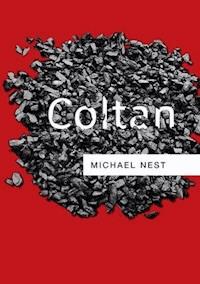
A decade ago no one except geologists had heard of tantalum or 'coltan' - an obscure mineral that is an essential ingredient in mobile phones and laptops. Then, in 2000, reports began to leak out of Congo: of mines deep in the jungle where coltan was extracted in brutal conditions watched over by warlords. The United Nations sent a team to investigate, and its exposé of the relationship between violence and the exploitation of coltan and other natural resources contributed to a re-examination of scholarship on the motivations and strategies of armed groups.
The politics of coltan encompass rebel militias, transnational corporations, determined activists, Hollywood celebrities, the rise of China, and the latest iGadget. Drawing on Congolese and activist voices, Nest analyses the two issues that define coltan politics: the relationship between coltan and violence in the Congo, and contestation between activists and corporations to reshape the global tantalum supply chain. The way production and trade of coltan is organised creates opportunities for armed groups, but the Congo wars are not solely, or even primarily, about coltan or minerals generally. Nest argues the political significance of coltan lies not in its causal link to violence, but in activists' skillful use of mobile phones as a symbol of how ordinary people and transnational corporations far from Africa are implicated in Congo's coltan industry and therefore its conflict. Nest examines the challenges coltan initiatives face in an activist 'marketplace' crowded with competing justice issues, and identifies lessons from coltan initiatives for the geopolitics of global resources more generally.
Sie lesen das E-Book in den Legimi-Apps auf:
Seitenzahl: 322
Veröffentlichungsjahr: 2013
Ähnliche


















Coltan
For my mother, Denise Nest (1938–2009),
who loved the excitement of a new research project
Coltan
MICHAEL NEST
Polity
Copyright © Michael Nest 2011
The right of Michael Nest to be identified as Author of this Work has been asserted in accordance with the UK Copyright, Designs and Patents Act 1988.
First published in 2011 by Polity Press
Polity Press65 Bridge StreetCambridge CB2 1UR, UK
Polity Press350 Main StreetMalden, MA 02148, USA
All rights reserved. Except for the quotation of short passages for the purpose of criticism and review, no part of this publication may be reproduced, stored in a retrieval system, or transmitted, in any form or by any means, electronic, mechanical, photocopying, recording or otherwise, without the prior permission of the publisher.
ISBN-13: 978-0-7456-3771-6
A catalogue record for this book is available from the British Library.
Typeset in 10.25 on 13 pt FF Scalaby Servis Filmsetting Ltd, Stockport, CheshirePrinted and bound in Great Britain by MPG Books Group, UK
The publisher has used its best endeavours to ensure that the URLs for external websites referred to in this book are correct and active at the time of going to press. However, the publisher has no responsibility for the websites and can make no guarantee that a site will remain live or that the content is or will remain appropriate.
Every effort has been made to trace all copyright holders, but if any have been inadvertently overlooked the publisher will be pleased to include any necessary credits in any subsequent reprint or edition.
For further information on Polity, visit our website: www.politybooks.com
Contents
List of abbreviations
List of figures, tables and text boxes
Acknowledgements
1 Facts, figures and myths
2 Organization of production and markets
3 Coltan and conflict
4 Advocacy, campaigns and initiatives
5 The future of coltan politics
Notes
Selected readings
Index
Abbreviations
CNDP
Congrès National pour la Défense du Peuple
DRC
Democratic Republic of the Congo
EITI
Extractive Industries Transparency Initiative
FDLR
Forces Démocratiques pour la Libération du Rwanda
MLC
Mouvement pour la Libération du Congo
MONUC
Mission de l’Organisation des Nations Unies au Congo
NGO
non-governmental organization
OECD
Organisation for Economic Co-operation and Development
PARECO
Patriotes Résistants du Congo
RCD-Goma
Rassemblement Congolais pour la Démocratie–Goma
RCD-ML
Rassemblement Congolais pour la Démocratie–Mouvement de Libération
SOMIGL
Société Minière des Grands Lacs
SOMINKI
Société Minière et Industrielle du Kivu
Figures, tables and text boxes
Figures
1.1 Tantalum price movements in 2007 dollars per pound, 1960–2008
1.2 Sources of tantalum, 2007
1.3 Global tantalite reserves, 2009
1.4 Locations of significant developed and prospective tantalite mines
1.5 Estimated global tantalite primary production, 1984–2007, metric tonnes
1.6 African tantalite production, 1997–2007, metric tonnes
1.7 Sources of tantalite primary production, 2008
2.1 Hypothetical supply chain convergence, c. 2007
3.1 Major armed groups’ engagement in conflict,1998–2009
3.2 Estimated value of mineral exports from South Kivu, millions of dollars
3.3 AK-47s that could be purchased from coltan profits; selected years
4.1 No Blood On My Mobile poster
4.2 Breaking The Silence, Congo Week poster
4.3 They’re Calling On You poster
5.1 Imports to China of niobium, tantalum, vanadium and zirconium ore and concentrates, selected countries, 1995–2009, millions of dollars
Tables
1.1 Industrial applications for tantalum, 2005
1.2 Myth busters: some facts about coltan and tantalum
2.1 Distribution of coltan profits, c.2000
3.1 Major armed groups and sources of mineral revenue, 1998–2003
3.2 Major armed groups and sources of mineral revenue, 2006–2008
3.3 Estimated profits from coltan mining, selected armed groups
4.1 Coltan initiatives and their supply chain focus
4.2 Global minerals initiatives: key agents for change
5.1 Top twenty countries (plus DRC) for mobile phone and Internet subscriptions, 2008
5.2 Estimated population, teledensity and forecast economic growth, selected countries
Text boxes
1 1 On the trail of ‘80 per cent’
2.1 Measuring coltan
Acknowledgements
US Secretary of State, Hillary Clinton, once said ‘it takes a village to raise a child’, and I can attest that it also takes a village to write a book. Thank you to Polity Press for giving me the opportunity to write about this most modern metal, especially Louise Knight and David Winters who entrusted me with the job and gave me feedback on the manuscript.
I cannot thank Claudia Halbac enough for lending her intellect to the project, and for the repartee. Her advice on the manuscript made it so much better and opened a wonderful new chapter in our friendship. Julian Kelly also provided extensive editorial comments that immeasurably improved the manuscript – thank you for so being so generous with your time. Evalynn Mazurski cast an eagle eye over the tables and figures, and over the course of the project listened with collegial patience and interest to each new development. Isaac Djumapili gave me firsthand insights into the life of a coltan trader and commented on the manuscript. Who would have thought I would meet an Mbuti coltan trader in Sydney? His stories, his wife’s cooking and the courtesy of his children transported me right back to the Congo. Two anonymous reviewers also provided helpful advice.
Ian Redmond of the Gorilla Organization and Aloys Tegera of the Pole Institute in Goma kindly gave me permission to make use of the treasure trove of interviews that were conducted as part of research projects which they had organized in the early 2000s. These qualitative field data remain an important source of information on the lives, aspirations and fears of coltan miners. Aloys Tegera provided further clarification on several additional issues.
A special thank you to Emma Wickens and Ulric Schwela of the Tantalum-Niobium International Study Center in Brussels, who patiently answered my many emails, provided data and clarified aspects of the tantalum industry that I found difficult to understand.
Thank you to Broederlijken Delen in Belgium, Melbourne Zoo in Australia and Maurice Carney of Friends of the Congo in Washington, DC for permission to reproduce posters created for their coltan-related initiatives.
The participants in the focus group that I organized in Sydney helped me to understand the logic and motivations of activists interested in justice issues related to the exploitation of natural resources. I would very much like to name them, but promised anonymity – thank you for generously sharing your time, energy and ideas on a rainy day. Thank you as well to Deborah Boswell for her scribing, enthusiasm and support. Lucy Hobgood-Brown also provided advice on organizing the focus group and, most of all, has been a source of encouragement and enthusiasm.
I pursued many people and organizations for clarification of details. Thank you to Dan Bucknell, Dirk Küster, Elisabeth Wood, Estelle Levin, Frank Melcher, Gary Coussins, Harrison Mitchell, Jacques Batumike, Jill Dobson, Kevin Hobgood-Brown, Laura Seay, Lee Ann Fujii, Matthew Cuolahan, Mei Yueh Hsieh, Odile Ruijs, Patrice Nyembo, Philippe Le Billon, Renee Cramer, Richard Burt, Serena Fletcher and Sevérine Autesserre, as well as Global Witness and Metal-Pages. Any errors are, of course, mine alone.
Sometimes there is serendipity in life, and so it has been with Ramin: a materials scientist, under the same roof, able to answer questions about ductility, alloys and industrial applications of metals, and a whiz with Adobe Photoshop. Thank you, once again, for the love, patience and support.
1
Facts, figures and myths
A decade ago virtually no one except geologists had heard of tantalite, or ‘coltan’ as it is known in the Congo. Today, it is discussed at the United Nations, in the media, at student teach-ins and on activist websites, and is linked to some of the worst atrocities to blight the planet – mass rape, slave labour, extrajudicial killings and the illegal arms trade. There is even Coltan the novel, and ‘Coltan Rush’, a ‘groove against war’ by the Afro-jazz band, Bantunani. Whereas coltan was once an obscure mineral, there is now contestation over how it is produced, traded and sold. A politics of coltan has been brought into existence, one that encompasses warlords, transnational corporations, determined activists, Hollywood film stars, the rise of China, and the latest iGadget from Apple Inc. How did this happen? Why did an obscure mineral achieve such infamy? This volume analyses the two issues that have come to define coltan politics: the relationship between coltan and ongoing violence in the Democratic Republic of the Congo (hereafter DRC or ‘Congo’), and contestation to reshape the global coltan supply chain.
Coltan gained widespread attention from journalists, activists and social scientists in 2001, when reports by the United Nations linked it, and other minerals, to ongoing violence in the DRC. Armed groups waging war were reportedly seizing control of coltan mines to take advantage of the record high prices which the mineral was fetching on the international market. Militia leaders boasted to journalists about the millions of dollars they were making in profits. In a complicated and seemingly unending conflict in which causes and motivations seemed to change from year to year, this provided a moment of clarity: armed groups were fighting to control coltan deposits and using violence against civilians who got in the way, and coltan was being bought by multinational corporations and used to make electronic gadgets, such as mobile phones, laptops, iPods and personal digital assistants, for Western consumers . . . or so the story went.
Over the 2000s the coltan industry became a ‘lightning rod’ for those concerned about conflict in the Congo. Activists, frustrated by a general lack of interest, suddenly had a symbol they could use to link the public to violence in far-off Congo: the mobile phone or ‘cell’ phone. Ordinary citizens became implicated. A US Senator claimed ‘without knowing it, tens of millions of people in the United States may be putting money in the pockets of some of the worst human rights violators in the world simply by using a cell phone or laptop computer.’1 Governments held inquiries into allegations that corporations from their countries bought coltan that had passed through the hands of armed groups; the United Nations and non-governmental organizations (NGOs) kept publishing reports implicating more and more companies in the illegal trade of natural resources from the DRC; and activists urged consumers to boycott products made from ‘conflict minerals’. There are some inaccuracies and exaggerations in NGOs’ and activists’ accounts of cause and effect about coltan and conflict, but there is a determination to politicize the exploitation of natural resources such as coltan because of its perceived relationship with inequity and violence.
Lesen Sie weiter in der vollständigen Ausgabe!
Lesen Sie weiter in der vollständigen Ausgabe!
Lesen Sie weiter in der vollständigen Ausgabe!
Lesen Sie weiter in der vollständigen Ausgabe!
Lesen Sie weiter in der vollständigen Ausgabe!
Lesen Sie weiter in der vollständigen Ausgabe!
Lesen Sie weiter in der vollständigen Ausgabe!




