


56,99 €
Mehr erfahren.
- Herausgeber: John Wiley & Sons
- Kategorie: Fachliteratur
- Sprache: Englisch
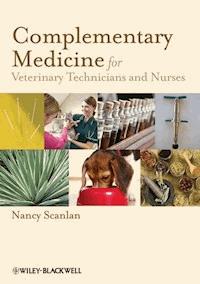
Complementary Medicine for Veterinary Technicians and Nurses Complementary Medicine for Veterinary Technicians and Nurse Complementary Medicine for Veterinary Technicians and Nurses is a resource on holistic veterinary care written specifically for the veterinary technician. Organized by treatment modality, the book offers practical information designed to help readers develop an understanding of each modality, assist with procedures associated with holistic medicine, and knowledgeably discuss treatment options with clients. Outlining the respective roles of technicians and veterinarians throughout, Complementary Medicine for Veterinary Technicians and Nurses provides thorough coverage of integrative veterinary medicine in a user-friendly, digestible format. A range of common and lesser-known modalities are covered, including physical therapy; holistic nutrition; acupuncture; chiropractic; Chinese, Western, and Ayurvedic herbal medicine; homotoxicology; homeopathy; aromatherapy; and grief counseling. This book is a welcome reference for both technicians and veterinarians looking to expand their knowledge of complementary veterinary medicine and introduce additional treatment options in their practice. Key features * Offers complementary veterinary medicine information designed specifically for veterinary technicians and nurses * Clearly defines the scope of the technician's role in complementary medicine * Covers both common and lesser-known holistic modalities * Includes historical background, step-by-step procedure guidelines, and practical tips for client communication for each modality * Aids technicians in confidently and competently discussing alternative medicine treatment options with clients * Provides clinically relevant patient history and release forms, glossary of terms, quick reference charts, and contact information for additional resources and training
Sie lesen das E-Book in den Legimi-Apps auf:
Seitenzahl: 549
Veröffentlichungsjahr: 2011
Ähnliche


















Table of Contents
Cover
Table of Contents
Half title page
Title page
Copyright page
Dedication
Preface
About the Author
Introduction
1 What Is Holistic Medicine?
DEFINITION OF HOLISTIC MEDICINE
HISTORY OF HOLISTIC MEDICINE
HOLISTIC AND CONVENTIONAL TREATMENTS
HOLISTIC VETERINARIANS VERSUS HUMAN HOLISTIC PRACTITIONERS
USE OF HOLISTIC MEDICINE IN HUMAN PATIENTS
LAY (UNLICENSED) PRACTITIONERS
INTEGRATION WITH CONVENTIONAL MEDICINE
RESEARCH
TELLING THE DIFFERENCE BETWEEN REAL AND FAKE
CONCLUSION
SUMMARY
2 The Role of the Veterinary Technician or Veterinary Nurse in the Holistic Practice
WHAT A TECHNICIAN CAN AND CANNOT DO
SUMMARY
3 Legal Implications
HERBS
HERB SAFETY
HERB QUALITY
CHIROPRACTORS, ACUPUNCTURISTS, AND VETERINARIANS
HOMEOPATHY AND HERBALISTS
TELEPHONE CONSULTATIONS
RELEASE FORMS
SUMMARY
WEBLIOGRAPHY
4 Introduction to Modalities
MODALITIES
SUMMARY
5 Holistic Training for Veterinary Technicians: Physical Therapy and Hospice Care
PHYSICAL THERAPY
HOSPICE CARE
SUMMARY
6 The Touch Therapies
INTRODUCTION
TTOUCH
MASSAGE THERAPY
ACUPRESSURE
TUI NA
SUMMARY
TRIGGER POINT THERAPY
SUMMARY
REIKI
SUMMARY
7 Detoxification
DESCRIPTION
PURPOSE
WHEN TO DETOXIFY
AVOIDING TOXIC DETOX
HISTORY
HOW IT WORKS
DETOXIFICATION PROBLEMS
HOW DETOXIFICATION WORKS
HOW IMPROPER FASTING AND DETOXIFICATION MAY INCREASE TOXICITY
EXCESS PHASE I ENZYMES
HOW DETOXIFICATION AND FASTING CAN DECREASE TOXICITY
PUTTING IT ALL TOGETHER
WHERE TO LEARN HOW
SUMMARY
8 Holistic Diet and Nutrition
DESCRIPTION
WHY “NATURAL”?
HISTORY
DEFINITION
BY-PRODUCTS: WHY ARE THEY UNACCEPTABLE?
OTHER INGREDIENTS
RAW OR COOKED?
DESCRIPTION OF NATURAL DIETS
HOW MUCH TO FEED?
CHANGING THE DIET
PRESCRIBING SPECIFIC DIETS
SPECIFIC DIETS FOR SPECIFIC CONDITIONS
ROLE OF THE VETERINARY TECHNICIAN
ROLE OF THE VETERINARIAN
WHERE TO LEARN HOW
SUMMARY
9 Nutraceuticals
DEFINITION
HOW THEY WORK
PURPOSE
HISTORY
DESCRIPTION
ANTIOXIDANTS IN GENERAL
VITAMINS AND VITAMIN-LIKE SUBSTANCES
MINERALS
TRACE FATTY ACIDS
DIETARY FIBER
AMINO ACIDS
OTHER
VETERINARIAN’S ROLE
TECHNICIAN’S ROLE
WHERE TO LEARN HOW
SUMMARY
10 For Veterinarians: Treatments with a Certification Program
TRADITIONAL CHINESE MEDICINE THEORY
HERBAL MEDICINE
CHIROPRACTIC
VETERINARY ORTHOPEDIC MANIPULATION
EQUINE OSTEOPATHY
OTHER MODALITIES OF TREATMENT
VETERINARY NAMBUDRIPAD’S ALLERGY ELIMINATION TECHNIQUE
11 Other Commonly Employed Modalities
HOMOTOXICOLOGY
APPLIED KINESIOLOGY
BACH FLOWER REMEDIES
GLANDULAR THERAPY
COLD LASER
MAGNETIC THERAPY
OZONE THERAPY
HYPERBARIC OXYGEN THERAPY
PROLOTHERAPY
PULSATING MAGNETIC FIELD THERAPY
SUMMARY
12 Other Less Commonly Used Modalities
NUTRITIONAL BLOOD TESTING
IMMUNO-AUGMENTIVE THERAPY
COLOR THERAPY
ROYAL RIFE’S MICROSCOPE AND BEAM RAY MACHINE
ELECTRO-ACUPUNCTURE AND OTHER EQUIPMENT
ANIMAL COMMUNICATORS
SUMMARY
Appendix 1 Glossary
Appendix 2 Alphabetical List of Holistic Veterinary Modalities
Appendix 3 Where To Go for More Help
VETERINARY ORGANIZATIONS
HOLISTIC ASSOCIATIONS, ORGANIZATIONS, AND TEACHING CENTERS
BOOKS AND PROFESSIONAL JOURNALS
Appendix 4 Questions to Help Define the Scope of Your Practice
Appendix 5 Patient History Chart
Appendix 6 Consent Form
Appendix 7 Vaccination Consent Form
Appendix 8 Writing Case Reports
IMPROVING EVIDENCE: A BRIEF REVIEW OF THE USE OF CLINICAL CASE REPORTS IN COMPLEMENTARY AND ALTERNATIVE VETERINARY MEDICINE
Appendix 9 Special Diets for Disease Problems
RECOVERY FROM DISEASE CAUSING WEIGHT LOSS
ALLERGIC CONDITIONS THAT CAUSE ITCHY SKIN
ARTHRITIS
CANCER
COGNITIVE DYSFUNCTION
DIABETES
HEART DISEASE
IRRITABLE OR INFLAMMATORY BOWEL DISEASE
KIDNEY DISEASE
KIDNEY AND BLADDER STONES AND URINARY CRYSTALS
LIVER DISEASE
OBESITY
TARTAR
Appendix 10 Analysis of Some Homemade Diets
DIET 1 (BOTH CATS AND DOGS)
DIET 2 (DOGS)
DIET 3 (DOGS)
DIET 4 (SENIOR CATS)
Appendix 11 Doses for Herbs
Appendix 12 Dosing Schedule for Homotoxicology Formulas
Appendix 13 Alphabetical List of Bach Flower Remedies
Appendix 14 How to Find a Holistic Veterinarian
Appendix 15 Inventory Management
ORDERING
INVENTORY ARRANGEMENT
“JUST-IN-TIME” ROTATION
TALKING TO SALESPEOPLE
PRICES AND MARKUP
CLIENT EDUCATION
Appendix 16 Medicating and Grooming
DOGS
CATS
LIQUID MEDICATION
HOW TO FORCE-FEED
USE OF A FEEDING TUBE
FURMINATOR
Webliography
Index
Complementary Medicine for Veterinary Technicians and Nurses
Edition first published 2011
© 2011 Blackwell Publishing Ltd.
Blackwell Publishing was acquired by John Wiley & Sons in February 2007. Blackwell’s publishing program has been merged with Wiley’s global Scientific, Technical, and Medical business to form Wiley-Blackwell.
Editorial Office
2121 State Avenue, Ames, Iowa 50014-8300, USA
For details of our global editorial offices, for customer services, and for information about how to apply for permission to reuse the copyright material in this book, please see our Website at www.wiley.com/wiley-blackwell.
Authorization to photocopy items for internal or personal use, or the internal or personal use of specific clients, is granted by Blackwell Publishing, provided that the base fee is paid directly to the Copyright Clearance Center, 222 Rosewood Drive, Danvers, MA 01923. For those organizations that have been granted a photocopy license by CCC, a separate system of payments has been arranged. The fee code for users of the Transactional Reporting Service is ISBN-13: 978-0-8138-1862-7/2011.
Designations used by companies to distinguish their products are often claimed as trademarks. All brand names and product names used in this book are trade names, service marks, trademarks or registered trademarks of their respective owners. The publisher is not associated with any product or vendor mentioned in this book. This publication is designed to provide accurate and authoritative information in regard to the subject matter covered. It is sold on the understanding that the publisher is not engaged in rendering professional services. If professional advice or other expert assistance is required, the services of a competent professional should be sought.
Library of Congress Cataloging-in-Publication Data
Scanlan, Nancy.
Complementary medicine for veterinary technicians and nurses / Nancy Scanlan.
p. ; cm.
Includes bibliographical references and index.
eISBN 978-0-4709-5889-6 (ebk)
ISBN 978-0-8138-1862-7 (pbk. : alk. paper) 1. Alternative veterinary medicine. 2. Animal health technicians. 3. Veterinary nursing. I. Title.
[DNLM: 1. Complementary Therapies–veterinary. 2. Animal Technicians. 3. Dietary Supplements. SF 745.5]
SF745.5.S2v3 2011
636.089'55–dc22
2010030976
A catalog record for this book is available from the U.S. Library of Congress.
Disclaimer
The publisher and the author make no representations or warranties with respect to the accuracy or completeness of the contents of this work and specifically disclaim all warranties, including without limitation warranties of fitness for a particular purpose. No warranty may be created or extended by sales or promotional materials. The advice and strategies contained herein may not be suitable for every situation. This work is sold with the understanding that the publisher is not engaged in rendering legal, accounting, or other professional services. If professional assistance is required, the services of a competent professional person should be sought. Neither the publisher nor the author shall be liable for damages arising herefrom. The fact that an organization or Website is referred to in this work as a citation and/or a potential source of further information does not mean that the author or the publisher endorses the information the organization or Website may provide or recommendations it may make. Further, readers should be aware that Internet Websites listed in this work may have changed or disappeared between when this work was written and when it is read.
This book is dedicated to
R.B. Barsaleau, DVM, who taught me everything worth knowing about endurance riding and guided me into teaching veterinary technicians;
T.A. Holliday, DVM, PhD, who showed me how a specialist should behave;
and to my husband, Allan, who takes good care of my animal friends when I am gone and who puts up with all my projects.
And my sincere thanks to all the organizations who have helped expand the knowledge about complementary and alternative veterinary medicine.
Preface
Although books on complementary veterinary medicine are becoming more plentiful, they are usually written for veterinarians and tend to be on the veterinary student textbook level. Other books on the subject are written for pet owners. They are good for an introduction to the subject but lack the depth needed to be useful for a technician in a practice. There are a growing number of owners who use natural methods for their pets. If a practice can’t answer the questions these owners have, the owners often look for another resource who can. The other resource may be another veterinary practice, a well-meaning but misinformed neighbor, a poorly prepared lay practitioner, or even the Internet.
This book was written to help fill this information gap. It contains a description of the most common treatment modalities, with references supporting their use. It includes lists of commonly used herbs, supplements, and other methods. It also includes a discussion of how to navigate through the pro- and anti-holistic opinions to make an informed decision about whether a treatment method is promising or useful.
By opening informed discussions with pet owners about complementary medicine, it encourages owners to tell the technician or veterinarian about items their pets are being given, which they may never have mentioned to you previously. Being conversant with these methods will encourage your clients to ask before, not after using herbs or supplements that may interfere with a pet’s treatment. It will help technicians answer any questions their practice’s clients may have and help give answers to the skeptical. It can also help those who want to know if their clients are helping or hurting their pets.
This book can also answer questions for any veterinarian who is curious about the field but who does not yet need the depth of a textbook on the subject. The reference list in the appendices will help those who want to delve deeper into the subject and who want to find veterinarians well-versed in this field. There is a discussion of how to judge research in JAVMA, Medline, and other sources to verify benefits of a treatment and how to spot fallacies in reasoning (by both regular practitioners and holistic ones). Finally, there is a list of classes and certification courses that veterinarians, and sometimes technicians, can take for training in these subjects.
I hope you find this book useful.
About the Author
Dr. Scanlan taught veterinary technicians for 10 years in community colleges and at a 4-year college. She absorbed the best of both college cultures and learned how to help students become the best possible part of a veterinary health team.
Dr. Scanlan got her start in holistic medicine during her senior year in veterinary school when she read a book about the use of vitamin E for heart disease. One of the patients in her charge was a boxer dog with congestive heart failure. The dog had been given digoxin and furosemide for 1 year, and the heart condition was just starting to get worse. The supervising clinician did not want to increase the dose of digoxin for fear of side effects, and he was open to the idea of trying vitamin E. Dr. Scanlan guessed at a dose, and within 24 hours she was introduced to all the main aspects of complementary medicine:
1. Vitamin E worked a little too well, and the dog showed signs of digitalis toxicity. (Just because it’s natural does not mean it is harmless.)
2. A lower dose helped and the dog improved. (Natural methods, used properly at the correct dose, can be safer than conventional medications.)
3. The supervising clinician was impressed, wanted to publish the results, but did not want it in a famous journal for fear of what his peers would think. (Some conventional veterinarians are interested and supportive but are worried about what could happen to their reputation if they become too involved.)
4. The cardiologist (who confirmed the digitalis toxicity) refused to believe that it was vitamin E even though he could not offer any better explanation. (Others do not believe in holistic medicine, do not believe it works, do not accept the connection between a symptom or improvement in disease, or may think it is dangerous.)
This was the beginning of Dr. Scanlan’s studies in nutraceuticals. Years later she heard a lecture by a medical doctor who also had learned acupuncture before it was recognized as a valid practice in this country. The doctor was a pain specialist and used it only on his worst cases. He requested they not tell anyone (for the same reasons as the veterinary clinician), but it worked so well he found people lined up on his clinic doorstep wanting treatment. Dr. Scanlan decided she needed to learn about this also.
She became certified in acupuncture, intending to use it only for pain. This worked for exactly 1 month, after which time a Doberman was brought in who “wanted to die,” according to her owner. Blood tests were normal. An X ray showed arthritis in one hip. A physical exam showed a lick granuloma on the hock of the opposite leg (which had been there despite treatment for 7 years). Acupuncture helped so much that the lick granuloma went away. However, the dog still was not acting normally: she did not want to leave the house, had to be pushed out the door to relieve herself (and came back in as soon as possible), clung to the owner, and did not want to go anywhere. Drugs did not work. There was no good Western diagnosis. In TCM theory, this dog was exhibiting very yin behavior. Because she had not really intended to use acupuncture for anything but pain, Dr. Scanlan’s TCM diagnosis did not go any further than this. She placed acupuncture needles in all the yang points she could remember.
The next week, the owner said, “I think maybe we overdid it.” The dog was staying outside, refused to come in except to eat (then dashed back out), barked at everything, and had turned into an independent brat. This convinced Dr. Scanlan that TCM theory was actually worthwhile, and it was useful as a different way of looking at things when Western medicine can’t give an answer. (A second, more balanced acupuncture treatment got the dog back in balance.)
That opened the doors to other studies, a membership in several holistic organizations, the founding of the California Holistic Veterinary Medical Association, and finally, to this book.
Introduction
“It does not matter whether medicine is old or new, so long as it brings about a cure. It matters not whether theories be eastern or western, so long as they prove to be true.”
Jen Hsou Lin, D.V.M., Ph.D.
Holistic veterinary medicine, also known as alternative, complementary, or integrative veterinary medicine, is increasing in importance and use in veterinary practice. Training of veterinary assistants and receptionists usually omits most methods of complementary medicine, thus anyone working for a holistic veterinarian may have to learn by osmosis, so to speak. Pet owners are often more knowledgeable in this field than are technicians or veterinarians, but they are also sources of misinformation. If you know at least a little bit about a subject, even if complementary medicine is not performed in your practice, clients are more likely to tell you about any complementary therapies they are using and to accept your advice about combining or dropping certain therapies. Other pet owners have many beginners’ questions that could be easily answered by a technician with a little knowledge, allowing the holistic veterinarian to spend time doing what he or she does best: applying additional methods of diagnosis and treatment to chronic conditions that do not respond well to conventional treatments.
OBJECTIVES
The objectives of this book are to help the technician to
understand holistic veterinary medicine.educate the public about holistic veterinary medicine.understand his or her role in helping the holistic veterinarian and what he or she can and cannot do.learn about methods the technicians themselves can use.gain some familiarity with what a holistic veterinarian can and cannot do.learn about training and certification programs in various aspects of holistic medicine for technicians and veterinarians.learn how to judge whether a nontraditional treatment shows promise.The place of the technician can be especially important when performing the following tasks:
answering general questions about holistic medicinediscussing the practice’s views on holistic medicineexplaining what the veterinarian does and does not dotaking a holistic historydesigning, judging, and feeding holistic dietsexplaining the care and administration of homeopathic remedies and preparing those remediesexplaining how to store and administer herbal medicationexplaining Chinese medical theoryhelping with hospice care and grief counselingdesigning and administering a physical therapy programOVERVIEW OF HOLISTIC MEDICINE
Veterinarians are interested in holistic medicine for a number of reasons. Many holistic veterinarians became interested because they themselves were helped by holistic rather than conventional medicine. Others saw the results that a holistic veterinarian was achieving that they themselves were unable to achieve using conventional medicine.
Some methods used in holistic medicine can add income and clients to the practice with only a little study and a minimum of additional expense. At the other extreme, however, are methods that require more expensive education and lifelong study. A holistic veterinarian may use a single modality, a few, or a combination of many. In general, no matter how it is used, complementary medicine emphasizes wellness, natural methods, treating the whole animal (not just a single disease), and preventive medicine. The human–animal bond often plays a big part in holistic medicine.
To attract clients who are interested in holistic methods, both the technician and the veterinarian must understand the clients’ viewpoint and speak their language. In addition, if the clinicians in a practice are recognized as being knowledgeable about complementary medicine, the practice’s clients are more likely to turn to the veterinarian rather than the Internet as a source of information, which may prevent problems with malnutrition and misuse of herbs and other modalities. Instead of ignoring warnings about a dangerous practice, pet owners will act on the veterinarian’s advice, perhaps preventing a catastrophe. For example, when grapes and raisins were first recognized as causing kidney damage in susceptible individuals, there was a message making the rounds of pet owner e-mail lists that this was just another example of veterinarians who thought all dogs should eat only commercial dog food and that grapes were a healthy treat for dogs. Holistic veterinarians answered those claims, spread the word about the very real dangers, gave supporting case studies, and their responses rapidly replaced those uninformed comments. Until a veterinarian who is respected in the alternative medicine community gives a valid response to this type of misinformation, there is a very real danger of problems such as this, as well as use of toxic herbs, improper detoxification procedures (which can lead to death), avoidance of veterinary care until it is too late, and other disasters.
COMPLEMENTARY MEDICINE FOR SMALL ANIMALS
The goal of holistic medicine is to normalize the body, bring it back into balance, help it heal itself, and provide solutions that are more natural than those used in traditional medicine. Better food, exercise, and treating the whole animal, not just the symptoms, are elements of practicing holistic medicine. Instead of giving medications that just counteract the symptoms without fixing the root cause, holistic medicine tries to heal the body and stop the cause itself.
Conventional veterinarians follow this practice to a certain extent and have begun using items that have been staples of holistic medicine for years. (See Chapter 4 for examples.)
For instance, to treat inflammatory bowel disease, special diets are often prescribed, some of which contain prebiotics. A few companies are now also marketing probiotics to conventional veterinarians to treat this disease as well as others. This approach is good for you, your pet, and the environment. Because complementary medicine aims to treat the whole animal, not just the disease, the idea is to help the body heal itself rather than use methods to fight single problems and ignore others (including side effects brought on by those other methods).
To determine what is wrong in the whole animal, diagnostic methods and vocabulary may be used that are different from that to which conventional veterinarians are accustomed, including methods that have been used for thousands of years. These methods may bring insight by offering a new way of looking at a problem and may guide the veterinarian to a new treatment modality. This is especially true of chronic diseases. For example, inflammatory bowel disease (IBD) is a catch-all term for chronic inflammation of the gastrointestinal tract. Veterinarians will readily admit that what works for one animal will not work for all animals in treatment of this disease. In fact, a diet that helps one animal (such as a high-fiber diet) may harm another animal (that requires a low-fiber diet). By using traditional Chinese theory, Ayurvedic medicine, or taking a homeopathic case study, this general diagnosis can be broken down into a number of different parts, each of which would require different herbs or remedies and diets. Instead of a hit-or-miss treatment method (if this doesn’t work, try that thing next), a more precise treatment may begin right away.
Another tenet of holistic medicine is the idea that we and our pets are bombarded by unnatural substances: artificial flavors, colors, and preservatives, substances such as corn gluten meal, insecticides, air fresheners, cat litter perfumes, even nylon dog collars. These substances can build up in the body and cause reactions in sensitive individuals. Treatment consists of not only removing these from the environment but also removing them from the body by a procedure known as detoxification.
Overvaccination is an issue of concern to many holistic veterinarians. Fibrosarcomas in cats have been linked to vaccination. Other less well-known problems may include autoimmune disease and chronic arteritis, as well as other chronic inflammatory diseases (Hogenesch et al., 1999; Souayah et al., 2009). The American Association of Feline Practitioners (AAFP), the American Animal Hospital Association (AAHA), and the American Veterinary Medical Association (AVMA) all now recommend vaccinating less often than once a year, and there is research in progress as of the writing of this book indicating that rabies vaccination is not needed more often than every 7 years. (See www.rabieschallengefund.org for progress and more information.)
Dogs and cats, originally considered to be servants (guard dogs and ratters) and then treated as employees (given a place in the house to sleep), are now increasingly looked upon as members of the family. Owners are more attuned to the human–animal bond.
With advances in veterinary medicine, dogs and cats (and other pets) are living longer lives, so the incidence of chronic conditions has increased. Owners are also increasingly concerned about a healthier lifestyle for themselves and for their pets. As a result of these concerns, owners are turning more and more to complementary medicine.
Veterinarians often practice both complementary and conventional veterinary medicine rather than only one or the other. Veterinarians may also use small parts of complementary medicine or they may embrace most of it wholeheartedly. This can lead to confusion in the minds of the public. It is important for veterinary technicians and nurses to recognize the practice philosophy of the veterinarian with whom they work in order to be able to explain what the practice does and why when taking questions by clients who are shopping for a new veterinarian.
Practitioners of complementary medicine emphasize that they don’t practice in a vacuum. Proper nutrition and exercise are important parts of complementary medicine, and no single modality works for every situation. There are situations for which surgery is the best answer, and in an emergency, Western medicine, with its fast action, is best for saving lives. But after the emergency is over and we need to get an animal back to homeostasis, complementary medicine is best to restore that balance.
Generally, when visiting a holistic practitioner, the first visit will last longer than does the average visit with a veterinarian who practices conventional veterinary medicine. For a holistic practitioner, the visit may last anywhere from 20 to 90 minutes. Clients are asked questions that a regular veterinarian may not ask, resulting in a more complete discussion of diet, supplements, exercise habits, and behavior. Because of the length of time and complexity of the visit, as well as the additional training required for the veterinarian, fees are generally higher. The public needs to understand that this increased attention is the reason for higher fees.
Complementary medicine is most useful for chronic problems. Because of the chronic nature of the problem being treated, the total number of visits varies depending on whether the problem can be cured or if the goal is to control the condition. Initially, most conditions will require several visits spaced anywhere from once a week to once a month. Later, they may be spaced farther apart.
As mentioned previously, veterinarians who practice complementary medicine usually have additional training and often, special certification in their chosen modalities. Veterinary technicians may also receive additional training in some modalities. It is important that clients understand what the practice does so they are not disappointed by, for instance, a veterinarian’s views on vaccinations, raw foods, or other controversial issues. It is also good for one practice to know about other practices whose knowledge may be complementary. For example, if a patient does not fully respond to one technique, such as acupuncture, they may do better when chiropractic, massage therapy, or time in an underwater treadmill is added. If a practice is able to freely refer to and accept referrals from other practices, as other specialty practices do, this helps the whole veterinary community as well as the patients.
Just as in Western medicine, complementary medicine can have side effects. Properly trained veterinarians and technicians are aware of potential side effects and which treatments can interfere with Western medicine. When conventional practitioners see that a holistic practice is aware of these matters, they will be more likely to support their clients’ use of holistic medicine and may even start referring them to a complementary medicine practice.
COMPLEMENTARY MEDICINE FOR HORSES AND LIVESTOCK
For large animals, holistic medicine has a different emphasis. For horses, a major emphasis of holistic medicine is that of sports medicine. Horse owners have been using physical therapy, including nutraceutical therapy, for many years. Stem cell therapy research started in horses (2003) before it was used in dogs (2006). Glycosaminoglycans have been available as products for horses longer than for dogs (1984 and 1997, respectively).
Reproductive problems are important for all large animals, and acupuncture plays a big part here. Some herbal medicine is also used. Large animals are most commonly treated by the veterinarian in stables or on farms, although owners may bring individual animals to a central clinic. Some horses are like family, but others are an investment for a specific goal (winning shows or races), and thus performance, rather than chronic care, is the emphasis for holistic medicine. For livestock, growth and reproduction usually are the areas of emphasis, and any treatment must be economical enough that a farmer or rancher will still make a profit when an animal is sold or has offspring. Preventive care as well as reproductive care can be helpful here. A holistic approach to feeding and pasture management can make a big difference in the success of a practice.
WHAT TECHNICIANS CAN AND CANNOT DO
By law in the United States, only a veterinarian can diagnose, prescribe, or perform surgery. If a technician is involved in any of these procedures, it is only under the direct supervision of a veterinarian. For example, although a technician may be certified in physical therapy and may recognize that there is restriction in motion of a limb or a trigger point present in the neck, the initial diagnosis of a physical problem must be done by a veterinarian. In most states, even licensed acupuncturists and chiropractors must work under the direct supervision of a veterinarian and will come to a veterinary practice to perform their services.
Some other practices, such as Reiki, are in more of a gray area and may be allowed by a state without the practitioner having to practice through a veterinary office. Practitioners of complementary medicine should be familiar with their state’s practice acts in order to avoid breaking the law. The fact that another practitioner is treating animals independently of a veterinarian does not mean that the practice is legal.
There are some areas of holistic medicine that are more controversial. These modalities may not be supported by research that conventional practitioners are aware of, either because research is difficult because of the way the modality is practiced; because most research may be in a foreign language such as Chinese, Japanese, or German; or because studies are few due to potential researchers having great difficulty obtaining research funds. Sometimes the methods just sound crazy, according to the way we understand the world. If a method has wide acceptance, there is a chance that there is something valid there, perhaps buried, perhaps different from what practitioners believe, but worth looking at. For example, there is no published double-blind research study showing an improvement in cancer using the Rife machine. However, the machine has been reported to be extremely effective in relieving the pain of osteosarcoma. (This observation has been confirmed by holistic veterinarians questioned at conferences and meetings.) Conventional painkillers at very high doses do not do this. For humans, treatment for this pain is palliative radiation therapy, enough to temporarily kill cancer cells and some normal tissue. Instead of attacking the use of a Rife machine for what it does not do, it would be far better to explore the helpful things it can do.
Finally, research on complementary or holistic medicine is scarce. There are also many more associations devoted to facets of human holistic medicine than there are for veterinary holistic medicine. Therefore, in this book, references and web sites for humans are often included, especially when they have more information (or sometimes, the only information) available.
REFERENCES
Hogenesch H., et al. 1999. Vaccine-induced autoimmunity in the dog. Adv Vet Med 41:733–744.
Souayah N., et al. 2009. Small fiber neuropathy following vaccination for rabies, varicella, or Lyme disease. Vaccine 10:1016–1120.
WEBLIOGRAPHY
Luitpold, maker of Adequan, the first injectible glycosaminoglycan.
http://www.adequan.com/veterinarian_resource.aspx
A good source of information for Adequan. Includes package inserts, with research results.
1
What Is Holistic Medicine?
DEFINITION OF HOLISTIC MEDICINE
There are a number of terms used to describe holistic medicine. They have similar meanings, but some subtle differences.
Holistic medicine treats the body as a whole, using whole herbs, complete supplements rather than single chemical sources, etc.Natural medicine does not use artificial chemicals; rather, it uses natural methods such as acupuncture, massage, herbs, and nutritional supplements.Integrative medicine uses a combination of the best of conventional and holistic medicine.Alternative medicine uses nonconventional but valid methods, including such ancient methods as Ayurvedic medicine and traditional Chinese medicine.Holistic medicine is also called natural medicine, complementary medicine, integrative medicine, and alternative medicine. There is currently no single accepted name for the concept. Each of these labels indicates a separate aspect of the idea of non-mainstream medicine. In addition, treatments that were originally considered alternative are now becoming part of mainstream medicine. This shift makes the term alternative less useful than some would think. Complementary or integrative medicine indicates the way that many holistic veterinarians practice this type of medicine: they rely on certain aspects of conventional medicine in their practice and use less conventional means for other aspects. In addition, mainstream veterinarians who adopt a formerly alternative treatment have integrated this into their practice. Many veterinarians prefer this terminology.
Lesen Sie weiter in der vollständigen Ausgabe!
Lesen Sie weiter in der vollständigen Ausgabe!
Lesen Sie weiter in der vollständigen Ausgabe!
Lesen Sie weiter in der vollständigen Ausgabe!
Lesen Sie weiter in der vollständigen Ausgabe!
Lesen Sie weiter in der vollständigen Ausgabe!
Lesen Sie weiter in der vollständigen Ausgabe!
Lesen Sie weiter in der vollständigen Ausgabe!
Lesen Sie weiter in der vollständigen Ausgabe!
Lesen Sie weiter in der vollständigen Ausgabe!
Lesen Sie weiter in der vollständigen Ausgabe!
Lesen Sie weiter in der vollständigen Ausgabe!
Lesen Sie weiter in der vollständigen Ausgabe!
Lesen Sie weiter in der vollständigen Ausgabe!
Lesen Sie weiter in der vollständigen Ausgabe!
Lesen Sie weiter in der vollständigen Ausgabe!
Lesen Sie weiter in der vollständigen Ausgabe!
Lesen Sie weiter in der vollständigen Ausgabe!
Lesen Sie weiter in der vollständigen Ausgabe!
Lesen Sie weiter in der vollständigen Ausgabe!
Lesen Sie weiter in der vollständigen Ausgabe!
Lesen Sie weiter in der vollständigen Ausgabe!
Lesen Sie weiter in der vollständigen Ausgabe!
Lesen Sie weiter in der vollständigen Ausgabe!
Lesen Sie weiter in der vollständigen Ausgabe!
Lesen Sie weiter in der vollständigen Ausgabe!
Lesen Sie weiter in der vollständigen Ausgabe!
Lesen Sie weiter in der vollständigen Ausgabe!
Lesen Sie weiter in der vollständigen Ausgabe!




