


32,99 €
Mehr erfahren.
- Herausgeber: ibidem
- Kategorie: Geisteswissenschaft
- Serie: Soviet and Post-Soviet Politics and Society
- Sprache: Englisch
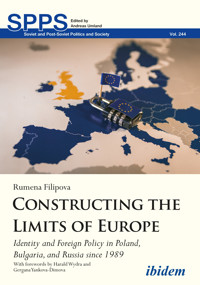
This comparative study harks back to the revolutionary year of 1989 and asks two critical questions about the resulting reconfiguration of Europe in the aftermath of the collapse of communism: Why did Central and East European states display such divergent outcomes of their socio-political transitions? Why did three of those states—Poland, Bulgaria, and Russia—differ so starkly in terms of the pace and extent of their integration into Europe? Rumena Filipova argues that Poland’s, Bulgaria’s, and Russia’s dominating conceptions of national identity have principally shaped these countries’ foreign policy behavior after 1989. Such an explanation of these three nations’ diverging degrees of Europeanization stands in contrast to institutionalist-rationalist, interest-based accounts of democratic transition and international integration in post-communist Europe. She thereby makes a case for the need to include ideational factors into the study of International Relations and demonstrates that identities are not easily malleable and may not be as fluid as often assumed. She proposes a theoretical “middle-ground” argument that calls for “qualified post-positivism” as an integrated perspective that combines positivist and post-positivist orientations in the study of IR.
Das E-Book können Sie in Legimi-Apps oder einer beliebigen App lesen, die das folgende Format unterstützen:
Seitenzahl: 739
Veröffentlichungsjahr: 2022
Ähnliche


















ibidem Press, Stuttgart
Contents
Acknowledgments
Foreword
Foreword Foreign Policy after Regime Change: Articulated Identity vs. Affronted Identity?
1 Central and Eastern Europe after the 1989 Revolution Diverging Identities in a Reunifying Era
2 Are the Social Sciences Indeed ‘Sciences’? Towards a Middle-Ground Methodological Perspective
3 Shades of Affinity An Interactive Constructivist Theory of Self and Other in Bordering Belongingness
4 The Interactive Constructivist Theory of Self & Other and IR Debates Refinement, Dialogue and Challenge
5 A European Trailblazer The Thick Europeanisation of Polish Foreign Policy
6 Neither In, Nor Out The Ambivalent Europeanisation of Bulgarian Foreign Policy
7 Europe’s Outlier The Thin Europeanisation of Russian Foreign Policy
8 Three Limits of Europe Poland, Bulgaria and Russia in Comparative Perspective
Epilogue Europe Beyond the 30-year Limit
List of Abbreviations
Bibliography
Acknowledgments
The writing of this book was always motivated by my enduring fascination with the historic social, political, economic and international changes Central and Eastern Europe has been through after the collapse of communism. Growing up in post-1989 Bulgaria imbued me with a burning curiosity about the new phenomena that Bulgarian society was grappling with: How could the country implement ‘democratic values’, ‘privatisation’, ‘EU and NATO accession talks’, which were gaining a foothold in public discourse?
Finding out the answers to these questions took a long intellectual journey, along which I received invaluable guidance from my mentors. The journey started at St. Catharine’s College, University of Cambridge, where Harald Wydra lent the decisive intellectual support. It ranged from the most foundational task of learning how to construct and defend a persuasive argument to the thorniest philosophical queries—namely, how should we approach the social sciences? Do they require an ‘understanding’ or ‘explanation’, in Max Weber’s terms, or both? Was the ‘transition’ in Central and Eastern Europe only about the fulfilment of formal institutional criteria or was there something more—connected to the ‘spirit’ of nations?
While at St. Catharine’s, I met Gergana Yankova-Dimova, whom I have always looked up to as an academic role model. Our shared concerns about democratisation and Europeanisation and our long-lasting association have since grown into a fruitful professional partnership as part of the Institute for Global Analytics that we founded.
I am grateful to Jean Thomas, Philip Oliver, Miranda Griffin for the stimulating conversations and for bringing forth the example of how academic dedication went hand in hand with care for the community: making sure that St. Catharine’s College students grew as professionals as well as individuals. Studying Politics, Psychology and Sociology at the Department of Politics and International Studies at Cambridge was an eye-opening and endlessly absorbing experience based on a multifaceted understanding of the variety of disciplinary approaches within the social sciences. The emphasis on history of ideas and the historical, cultural and national context in the interpretation of politics has become pivotal in my own research orientation.
Continuing my journey to St. Cross College, University of Oxford, opened the gates to the captivating study of the theory and history of international relations. It was there that I embarked on turning the comparison of the Europeanisation process of Poland, Bulgaria and Russia, which had been an idea in gestation, into a fully-fledged DPhil dissertation. As my dissertation supervisor, Neil MacFarlane was an invariable source of intellectual growth and refinement. Our painstaking discussions impressed upon me the outlook that since social and political life is so complex, the explanations that we seek and supply would inevitably involve multiple considerations—rather than singular factors. Hence, as social scientists we should retain a degree of caution and restraint in that we can strive for ‘plausibility’ but not to once-and-for-all measurable solutions.
I would like to thank Alex Pravda, Jan Zielonka, Roy Allison, Hartmut Mayer, who represented a key influence in framing my understanding of Russian foreign policy and EU-wide policy processes. My research assistance to Yuen Foong Khong widened my perspectives, including through the study of the region of East Asia, and provided an insight into his ever-original analysis of international relations dynamics. I benefited significantly from exchanges with Kalypso Nicolaidis and Kataryna Wolczuk. I owe my maturation as a scholar to the Department of Politics and International Relations at Oxford.
At St. Cross College, Joanna Ashbourn and Glenda Abramson lent moral support and encouraged me along my academic path. The St. Cross community—headed by Mark Jones and Carole Souter, created the most favourable conditions ensuring that graduate experience was full of prolific debates and mutual learning.
During my studies, I also ventured into the think tank world. As an intern at the Russia and Eurasia Programme at Chatham House, I collaborated closely with James Nixey and Lubica Pollakova, who involved me in every aspect of the think-tank job: from assisting in conferences featuring leading authorities on Russia and the rest of the post-Soviet space to helping out with cutting-edge research reports. It was through this inspiring cooperation that I became convinced that in my future career development I would combine the academic and think-tank track.
Over the course of my research for my DPhil dissertation, I set out to conduct fieldwork in Poland, Bulgaria and Russia. I aimed for a deep immersion in the respective local contexts in order to inquire after what the Poles, Bulgarians and Russians themselves thought about the Europenisation of their countries. Three institutions made this endeavour possible. The Carnegie Moscow Center and its director Dmitri Trenin provided a highly welcoming, expertise- and resource-rich environment that allowed a deep-dive into the intricacies of Russian political and societal developments after the disintegration of the USSR. I deeply appreciate the interviews I carried out in Moscow in 2014 with Nadezhda Arbatova, Vladimir Baranovsky, Irina Busygina, Alexey Fenenko, Alexey Gromyko, Lev Gudkov, Andrey Kortunov, Andrej Krickovic, Maria Lipman, Alexey Malashenko, Olga Malinova, Sergey Medvedev, Andrey Melville, Alexey Miller, Viacheslav Morozov, Yulia Nikitina, Boris Shmelev, Mark Simon, Pavel Smirnov, Alexander Tevdoy-Burmuli, Ivan Timofeev, Dmitri Trenin, Mikhail Troitskiy, Sergey Utkin, Igor Zevelev.
While in Poland, I was hosted by the Polish Institute of International Affairs. The consultation of PISM’s expertise and written record of Polish foreign policy was crucial for a detailed understanding of Warsaw’s external relations in every step of the post-1989 way. The general ambience in a country that had grown assured of its European-ness, not least through what many Poles judged to be the success of their democratic transformation, made for ardent conversations. I would like to extend my gratitude for the interviews I carried out in Warsaw in 2015 with Łukasz Adamski, Adam Eberhardt, Konstanty Gebert, Leszek Jesień, Piotr Kościński, Jerzy Koźmiński, Marek Krząkała, Roman Kuźniar, Wojciech Lorenz, Anna-Sophie Maass, Marek Madej, Jerzy Nowak, Cornelius Ochmann, Zbigniew Pisarski, Adam Rotfeld, Patrycja Sasnal, Tobias Schumacher, Stanislav Secrieru, Ryszard Stemplowski, Andrzej Szeptycki, Sergiusz Trzeciak, Witold Waszczykowski, Bartosz Wieliński and three experts, who preferred that their identities be kept confidential.
In Bulgaria, the Centre for Liberal Strategies and its chairman, Ivan Krastev, facilitated a research stay in my homecountry after many years of studying abroad. I benefited immensely from the learned—and frank (i.e. nationally self-critical), conversations with the Centre’s experts about the Bulgarian experience of Europeanisation since 1989. I am grateful for the interviews I was able to conduct in Sofia in 2015 with Marchela Abrasheva, Irina Alexieva, Marco Arndt, Iskra Baeva, Tatiana Burudjieva, Dimitar Dimitrov, Boriana Dimitrova, Hristo Georgiev, Zhivko Georgiev, Marin Lessenski, Iliyana Marcheva-Atanasova, Tanya Mihaylova, Ognyan Minchev, Yuliana Nikolova, Krastyo Petkov, Antoaneta Primatarova, Stefan Ralchev, Valeri Ratchev, Ingrid Shikova, Vladimir Shopov, Nikolay Slatinski, Louisa Slavkova, Kristian Vigenin and one expert, who preferred that their identity be kept confidential.
The completion of my doctoral work was followed by the next phase in my professional path based on further building on my academic—an increasingly also policy relevant—study of Central and Eastern Europe. One step of the new journey was established by the Center for the Study of Democracy in Sofia, which provided me with a sense of place and also widened my research vistas.
The other main milestone consisted in turning my DPhil dissertation into a fully-fledged book. I would like to express my special thanks to Andreas Umland, series editor of Soviet and Post-Soviet Politics and Society at ibidem Press, for appreciating this project and enabling its realisation. Valerie Lange has been a source of support ensuring the smooth running of the publication process.
My deepest gratitude goes to my parents. They have been the staunchest pillar of guidance, consolation and forward-looking direction, who made this book possible. I dedicate the book to them.
For my mum, Galina, and my dad, Valentin
Foreword
I am writing these lines in the week when the Russian Federation closed down its diplomatic mission at NATO and the Polish Constitutional Court ruled that parts of the Polish Constitution are superior to European law. The former is another blow to relations between a key Western alliance and the Russian Federation, whilst the latter undermines one of the EU’s fundamental principles and dramatizes an already difficult conflict. The insistence of the Polish government on the sovereignty of the Polish nation against what it claims to be a rising bureaucratic and liberal-secular totalitarianism in the EU reveals that even within Europe, perceptions of common values may be contested. Be it as it may, what matters is such conflicts about sovereignty and national independence have accompanied Europe for a long time. After recent massive drawbacks of the debt crisis, Brexit, and the controversial refugee policies, the recalcitrant attitudes of newer member states such as Poland, Hungary, or Slovenia continue to ask a long-standing question: where does Europe end? How far can enlargement go? Should Europe remain a Europe of homelands and nations or should it become a post-sovereign state?
Rumena Filipova’s book does more to illuminate such questions than any other scholarly contribution in the field of International Relations that I know of. Hers is a historically rich, culturally sensitive, and imaginative tour de force through the meanings and layers of Europeanisation after the end of communism. It is a thoroughly researched and lucid book. This work does not design policy agendas or provide recommendations for strategic decision-making. It actually offers something much more valuable. It spells out why Europeanisation has been and will continue to be a moving target. It asks: what do states and societies mean when they invoke their belonging to Europe, to its traditions, values, norms, and horizons? For Filipova, it is identity that defines the limits of Europe. National identities, in particular, are not stable or unequivocal. They are dynamic but also deeply rooted. Unlike many other scholarly treatments of Europeanisation, Filipova acknowledges the reciprocity that underlies ideas, perceptions, and psychological bonds between different cultures and societies. She thus links Europeanisation to deeper long-standing cultural patterns that have dominated public debates in these countries for decades, if not for centuries. Without the ideas that have dominated the self-perception of leaders and followers in the three countries under study, we cannot comprehend the different trajectories that have delineated their current position within Europe.
Long-term trajectories of Europeanisation have indeed gone opposite ways. Few would disagree that the European Community was a project designed, assembled, and deepened by politicians and citizens from the parts of Europe that are usually called ‘Western Europe’. As European institutions integrated further within the West, citizens of France, Netherlands, or Germany came to identify Europe with core values such as economic cooperation, capitalist wealth creation, progressive modernization, individualism, and the extension of individual rights and their protection. The ideological traditions of Poland, Russia, and Bulgaria were very different, each of them reflecting each country’s historical individuality. Their collective identity has been more fragile, fragmented, and tormented. Poles, for instance, fought to conquer back their sovereignty—from 1956 to 1989—by retrieving traditional republican and spiritual values from its own national heritage. When the streets of Paris in spring 1968 sent shockwaves across Europe, heralding emancipation, anti-traditionalism, and embracing accelerated modernity, Eastern Europe’s uprisings in Czechoslovakia and ten years later in Poland pursued projects that were inward-looking and orientated towards their own history. Poles sought to retrieve traditional republican and spiritual values from their own national heritage. The ‘spring of the peoples’ in 1989 therefore already projected meanings of Europe as culturally tinged by expectations and hope that differed from the acquired status quo in the West. Further South, Bulgaria’s self-perception has for a long time oscillated between allegiance to Russia and a tentative openness towards Western institutions, whereas Russia’s initial post-1991 liberal-democratic honeymoon with Western values was quickly superseded by a chaotic and painful transition, which turned the leadership towards a centralizing sovereign conception of managed democracy.
This book does not simply deplore the different speeds and depths by which Europeanisation has been sedimented. In a boost to infuse foreign policy analysis with perspectives that are much more fine-grained than traditional premises of conditionalities, national interests, and geo-strategic imperatives, Filipova acknowledges the importance of inter-subjective formation of strategic outlooks and the imitation of foreign models. Western European countries have scrutinized their Eastern neighbours for their ‘Europeanness’. The latter were met by trust, fascination, and openness but also, to different degrees, by great caution, diffidence, and stigma. Her thorough analysis leads the author to claim that Poland’s encounter with Europeanisation can be considered as ‘thick’, whereas Bulgaria’s has been ambivalent at best. Russia’s initial opening to the West was channelled into pragmatic nationalism, before the turn towards restoring Russia’s great power identity would create multiple conflicts which have maintained a rather thin form of Westernisation. Filipova’s key point is that identity-building in Europe has not been a one-way street. All three countries, to different degrees, learnt political modernity, social progress, and secularism under the iron fist of communism. For them, the question of belonging to Europe is not easily separable from ontological security about one’s own borders and self-determination. In the centre are questions of belonging to Europe, which are not primarily understood institutionally, legally, or politically. There is a significant and decisive pre-political element. Integration and proximity to Europe or the West has been a relational, intersubjective process of recognition and acceptance of values, traditions, and self-perceptions that diverged massively between the core of ‘Western Europe’ and the newcomers in the East.
Different speeds, contradictory conceptions of belonging, and opposed aspirations are the stuff out of which Europe has been made. Multiple crises—many of them considered to be existential—have been and continue to be an inherent part of Europe’s construction. The first member state left the alliance, the rifts between the wealthy North and the financially struggling South has gripped Europeans ever since the financial crisis of 2008. A shrinking population, rising populism, and mounting pressure from strong nations and alliances outside Europe have seriously affected confidence. And yet, in Filipova’s panoramic picture there are rays of hope. Europe’s raison d’être has never been settled around a stable identity. Quite the opposite. The signatories of the treaty of Rome were ‘determined to lay the foundations of an ever-closer union among the peoples of Europe’. Such a project with an open horizon requires ideas and leaders. Filipova indicates at some point that any great project requires a genuine elite that is animated by the care of the soul, a project of political morality that precedes institutional engineering. Disaster, crisis, and collapse cannot create a new community without political morality. And yet, with good leadership and a keen eye on essentials there is always hope. The elites that pushed towards European unification post-1945 had grown up far before the beginning of the First World War. Many of the key figures, like Adenauer, de Gasperi, or Robert Schuman came from border regions with high sensitivity for transitional zones, for the undetermined, and the marginal. They had ‘learnt’—as many of their contemporaries—that European meant almost always ‘somebody else’, the ‘other’, or the former enemy. Europe would become a beacon of hope for the uprooted, an alternative to closed minds and hermetic borders. Although often left undefined and hazy, it was such conflicting aspirations that fuelled the creativity of leaders and followers. The generation of leaders such as Jacques Delors, Helmut Kohl, and François Mitterand pushed European integration to a new level.
Readers should recognize that it cannot be the task of this book to identify potential candidates for such leadership in the third decade of the 21st century. Perhaps the quality of leaders today is indeed not up to the task. Perhaps the tensions between different conceptions of national prestige, collective identity, and democratic legitimacy are too high, and not only in the East of Europe. After all, democratic referenda in France and the Netherlands put the European Constitutional project to rest. Many countries are in the grip of populist projects that are deeply Eurosceptic and inward-looking. Moreover, politicians should be under no illusion that rivalry with Russia will end any time soon. Scepticism towards greater integration will continue in Central and Eastern Europe. But if for Western eyes, they present backward and outdated visions, we must realize that there is no cogent argument to consider them in any way less European than narratives based on progressive secularism and liberal individualism that have dominated the ‘core of Europe’. As Pope John Paul II once argued, Western Europe has a much richer heritage of Christendom, civilisation, and human freedom. Yet, concomitantly, secularism and rationalistic-technological civilisation have opposed and challenged such traditions. They put in question many of the values and norms that have been so fundamental in the self-extrication of Eastern Europe from communism. Poland’s struggle against communism aimed at the recovery of human dignity and personal freedom. It thus pointed to a greater resourcefulness in spiritual values that were invested in the defence of the person and the nation. Whilst such views may be seen as outdated and backward, they should remind us that Europe’s legitimacy is not only in European institutions but also in the traditions that are by definition plural, diverse, and often in tension with each other. It may be an irony of history that the old Polish credo of being the antemurale Christianitatis, the bulwark of Catholicism against Orthodoxy, is now fuelling deep scepticism against the secular, progressive, and centralized European core values. It may also be seen as irrelevant and outdated what Fyodor Dostoevsky said in 1881, when he argued that in Europe Russians are Tatars, whilst in Asia they are seen as Europeans. And yet, decision-makers in Brussels, Paris, or Berlin should be advised to take such statements as indicative of a very deep sense of how European identity has been and will be shaped by what has been beyond the limits of its core lands. If the limits of Europe are a moving target, as Filipova’s important book so lucidly demonstrates, such inter-subjective self-perceptions must not be sidelined by ideological parochialism. As a post-sovereign entity, the European Union will need to accommodate the plurality of national self-perceptions in a political space in which meanings of the people are always—from any vantage point—pointing to ‘others’.
Harald Wydra, University of Cambridge, United Kingdom
Foreword Foreign Policy after Regime Change: Articulated Identity vs. Affronted Identity?
Dr Filipova’s book “Constructing the Limits of Europe” tells a thought-provoking story, which would be useful to potentially understand the foreign policy choices of various countries, which in the future undergo a transitionary period from one regime type to another. The puzzle that the book seeks to unravel is as follows: for countries, which emerge from one regime type, how do we know which foreign policy orientation they would choose? Would they revert back to the foreign policy orientation they harbored before the transition, or would they choose to belong to the set of institutions and values, which countries of a new regime type espouse? This inquiry is far from a foregone conclusion, especially in the area of foreign policy as a lot of attention has been focused on understanding the domestic choices that transitionary countries make, but not as much scholarly debate has been devoted to comprehending the foreign policies that the same countries make. The puzzle has recently become even more “puzzling” as countries, which had previously been considered as Western-leaning and fully espousing a Central European identity, such as Hungary, have spurned some of the policies of the European Union. The puzzle is also very important because Ukraine’s desire to join the European Union sparked the annexation of Crimea and a prolonged international conflict in Donbas.
So, how do transitioning countries make foreign policy choices? The very simplified version of the answer that the book provides is “identity”: transitionary countries would pivot to the foreign locus that is closest to the way that they identify themselves as. Thus, Bulgaria’s foreign policy, with its perfunctory and formalistic European identity, would take on a course of ambivalent Europeanisation; Russia, based on its fractured and weak cultural-historical basis for European identity, has defied belongingness to the Euro-Atlantic community; and Poland, identifying as through and through European, and most decisively denouncing the Soviet past, has whole-heartedly embraced the foreign policy institutions and policies of the West. The book develops a neat typology of these three outcomes: a thick Europeanization of foreign policy in Poland, an ambivalent Europeanization of foreign policy in Bulgaria, and a thin Europeanization of foreign policy in Russia.
The book offers a constructivist explanation, but with a very important twist: this construction of foreign policy orientation is interactive. The twist comes from the fact that identities are not just “there”, automatically prompting states to enter NATO, join the European Union, or revert to the Eurasia Union. The twist is, in my interpretation, in the articulation and implementation of various identities. Dr Filipova calls this an interactive process of mutual recognition of identities. The lesson I took away, especially from the information emerging from the interviews that the author conducted, is that the process through which identity made its way into foreign policy decisions took (at least) two manifestations: the articulated identity and the affronted identity. These two derivations of identity happen at two different levels. The “articulated identity” was the identity, which local political elites verbalized and delivered to the public in the aftermath of the fall of communism. Thus, the articulated identity is domestically embedded. By contrast, the notion of the “affronted identity” I extrapolated from the text is internationally located as it refers to the degree to which the proverbial West has welcomed the transitioning countries, and how these countries have reacted to this reception.
In terms of what I conceive as the problem of “(un)articulated identity”, the lesson I learnt from the book is that it is important for the elites to express the principles of identity in public. The Polish case, in my reading, is a case of a well-articulated identity, where the strong anti-communist movements during communism and the vibrant émigré and underground intellectual circles, such as the Kultura intellectuals, had already identified the names for the values and norms that constituted the Western identity. As the German philosopher Martin Heidegger (2015) has suggested, one’s language to a large extent defines one’s world1, and the “language of Western identity” was present in the public space right after the fall of communism. It spilled directly out from the underground intellectual discourse. As Sing (1993) would put it, the role of the language was “world-yielding”.2
By contrast, the Bulgarian case, as described in chapter 6, points to the lack of language describing the key principles of ideational belonging to the West. This is in contrast to the Lech Walesa and the Polish leaders who, as shown in chapter 5, presented to the public a more intricate and fully fledged vision of what it means to feel and be a part of the West. The Bulgarian situation is similar to a case of liking a coat one sees in the shop window versus just dreaming of a new piece of clothing. Actual coats in shop windows people can admire, and occasionally, take a liking of. General ideas about clothes float around, and if they are not anchored by words or images, they can be elusive and evasive. Arguably, the Bulgarian elites from the Union of Democratic Forces, who carried the impetus of the initial post 1989 transition to democracy, failed to draw the coat, they failed to capture in words what it means to belong to the West. Ideas of the transformative power of the free and entrepreneurial individual, of the belief in hard work and meritocratic success, of the American dream, of separation of powers, of respect for minorities, of the power of order and respect for rules, of technological progress and the general feeling of optimism, were never spoken. Because these ideas were never verbalized and explicitly debated in the public space, they failed to offer the opportunity to a large number of people to “try on the coat” of Western identity. Was this simply a failure of words or the presence of an underdeveloped PR strategy? Or was this due to an absence of a sustained preceding intellectual discourse, is a good point for further discussion.
In any case, in the absence of a public discourse, which exemplified, visualized and led on the experiment of testing the limits of belonging to the West (or trying on a new coat), Western identity in Bulgaria came to be interpreted in a variety of ways, and it never acquired a monolithic meaning. Perhaps above all, Western identity was the anti-dote of the lived communist experience. Democracy and capitalism were everything that communist and a command economy were not. Western identity was defined by what it is lacking, not by what it entails. Secondly, Western principles were equalized with economic well-being. Instead of conceiving of the principles of freedom and achievement through hard work, many people in the post-Soviet bloc equated the Western identity with pictures of the clandestine catalogues of goods that somehow made their way into the Soviet bloc from East Germany (the Neckermans) and with the shops selling Westerns goods for dollars. Gradually, their visuals were enriched by observations from their travel to the West and by the communications with the American and Western European tourists who came to visit the Bulgarian resorts. Books containing writings of John Keynes, Thomas Hobbes, Winston Churchill and the Founding Fathers, to name a few, made a very limited presence in elite academic and dissident circles, who- and this is crucial- failed to disseminate them through plain and spoken ideas to the public. In my reading, the elite interviews in the book “Constructing the Limits of Europe” open up the possibility that the political party leaders did not incorporate vivid visions of Western norms and principles in their discourse. The post-communist public sphere, as outlined by Juergen Habermas (1964)3, lacked the liberal principles that even those people, who did have a predisposition to liberal values, could recognize themselves in.
The societal members dressed in the Western brands, such as Nike and Puma, but talked about anti-communism, not liberalism. These were people who could have potentially sympathized with liberal political theory, but they were never in a position to make a conscious choice. Consequently, when they were faced with a situation, where they had to make a conscious choice between joining NATO, the Euro-Atlantic community and the European Union, they were unprepared, and their choices were, as the book argues, situational. In some situations, their ideational proclivities flared up, but this was a sporadic process, that made for a half-hearted choice in favor of Western institutions. As the German philosopher Martin Heidegger has said, my language is my world, and in Bulgaria, it was never in the language, and never in the world. It is easier to understand how an identity, which equalizes principles with products, began to wane, when the economic hardships struck the post-communist economy. When the economy did not deliver, there was very little left to sustain pro-Euro-Atlantic orientation. Such a flimsy and fluid identity orientation was easy to manipulate, undermine and reverse. It was there to change course, when the winds start blowing in another direction.
In addition to the issue of the “(un)articulated identity”, Filipova’s book, in my reading, also posits the question of the “affronted identity”. Filipova lists a number of cases when the West could have integrated Russia into its alliances, but it chose not to integrate it. Russia, for its part, most likely felt affronted. These Western choices, as the book argues, were, among others, the omission to consult Russia about the bombing of Kosovo in 1999, and the non-admission of Russia in NATO. On these occasions, Russia was spurned by its would-be friends, and this affront may have fueled and channeled the anti-Western identity formation. Although there is no counter-factual to show what would have happened if the West had reached out to Russia earlier, if we follow Filipova’s logic, we would understand that the West made Russia feel as “the other” and it alienated it in the process. As the text propounds an inherently interactive process of identity recognition, the West’s cold-shoulder treatment of Russia may have triggered an equally hostile counter-reaction.
The book offers yet another twist in this constructivist interactive process. It shows that Russia’s anti-Western reaction to Clinton’s policies were predicated on two internal developments: Yeltsin’s proclivity to divide the political elites and the failure of some Western initiatives in Russia. The first factor—the fact that former President Yeltsin kept the ruling classes divided so that they could clamor for his approval and he could centralize his power—in this case had the effect that there were some factions, which were powerful and interested to use the Western foreign policy snub to assert anti-Western tendencies and identities. These “interests” included the armed forces, the military-industrial complex, the gas and oil lobby, the KGB.
The second factor, which according to the book was a part of the interactive process of constructing a more anti-Western identity, and consequently adopting a more anti-Western foreign policy stance on the part of Russia, was that some policies instituted by Western agencies did not produce good results. Some of the IMF’s and the World Bank’s policies were subject to dissatisfaction in Russia. Particularly, the loans-for-shares and voucher privatisation schemes failed to transform the state-owned companies by issuing vouchers for their shares to the company’s workforce. The schemes were largely unsuccessful because most vouchers somehow went into the hands of people in the management or those from the ruling echelons of power. In addition, the book argues, the size of Western aid was perceived to be much smaller than expected. The combination of these factors—the reluctance of the West to incorporate Russia more quickly, the power of anti-Western elites, and the negative economic fallout of Western policies, made for a more solid anti-Western foreign policy orientation. This is partly how Filipova builds up a case for an interactive constructivist explanation for the degree of belongingness to the Euro-Atlantic community.
The book opens up other avenues for discussion. One can argue whether Russia’s foreign policy could be explained only by the identity-related factors mentioned in the book, in other words whether this ideational explanation is not only necessary but sufficient. A realist perspective would point out that Russia had an alternative, and from the perspective of a rational, interest maximizing country it is easier to turn down an ally on the West, if there is a powerful alternative ally on the East, namely China. Perhaps it is less costly to turn down the European Union, when there is a Eurasian Union in the works. Furthermore, a realist would argue that an affronted identity impacts policy choices mainly when there is a plan B. In this case, an affronted and an unarticulated identity would be a facilitating factor, not the main cause of various degrees of Europeanisation. Thus, while the weighted causality of the interactive constructivist explanation, could be open to scaling, it is still a thought-provoking theorizing, backed by dozens of interviews, about the power of history, culture, and how they interact to define foreign policy choices.
Gergana Yankova-DimovaOxford, United Kingdom
1 Rentsch, T., (ed.), 2015, Martin Heidegger.Sein und Zeit, Vol. 25, Berlin: de Gruyter.
2 Singh, R.R.,1993, ‘Heidegger and the world-yielding role of language‘,Journal of Value Inquiry, Vol. 27, pp.203–214, https://doi.org/10.1007/BF01207378.
3Habermas, J., 2010, ‘The Public Sphere: An Encyclopedia Article (1964)’. In Gripsrud, J., et al.,The Idea of the Public Sphere: A Reader, pp.114-120.
1Central and Eastern Europe after the 1989 RevolutionDiverging Identities in a Reunifying Era
1989 marked a revolutionary time—largely peaceful and non-violent but nonetheless momentously far-reaching in its consequences. The end of the Cold War and the collapse of communism culminated in that year and heralded the beginning of dramatic transformational processes in Central and Eastern Europe (CEE)—i.e., in the countries having formerly constituted the Soviet bloc and the European part of the USSR. These transformational processes encompassed the development of liberal democracy, free market economy as well as integration into and civilizational ‘return to Europe’—in contrast to the totalitarian rule, suppressed freedoms and isolation from the West that had previously characterised the predicament of CEE.
Yet, the sweeping changes and reversals that typically accompany the impassioned revolutionary impulse cannot wipe the slate clean and fulfil the ideals for the future in oblivion of historical accretions. So too the promise of 1989 has been unevenly and incompletely realised, remaining just as pertinent nowadays. Indeed, the diversity in the outcomes of the attempted post-communist transformations is striking as CEE states have not managed to join the Euro-Atlantic, liberal democratic community of nations in the same way or at all. In particular, three of those states—Poland, Bulgaria and Russia, have differed among each other in their ability to Europeanise, i.e., to integrate into European (and more generally—Western) institutional structures by enunciating, implementing and sustaining a domestic and foreign policy based on civilizational belongingness to Europe and shared European values. The continuing patterns of differentiation—represented by Poland’s assertive determination to become an inseparable part of ‘core’ Europe, Bulgaria’s struggle to find a meaningful and substantive role in the EU and NATO and Russia’s repudiation of European values and cooperation with the West, still underline the gap between revolutionary expectations and outcomes in the unfinished journey of European integration.
Hence, a key conundrum of post-1989 transformations is contained in an overarching trend, whereby post-communist states have not transitioned and become Europeanised in a similar way, although their internal, political, economic and social systems as well as external relations had an analogous formal-institutional organisation. The book sets out to account for the diversity in the foreign policy responses of Poland, Bulgaria and Russia to the collapse of formerly similarly established state structures and the international system all three belonged to by considering how these countries’ elites have interpreted and reacted to dramatic change on the basis of conceptions of nation-state identity.
In short, identity has shaped patterns of Europeanised transformation of foreign policy after 1989. Since identity is relational and requires both a Self and an Other to become meaningful, the book argues that it has been the interactive process of identification between the Western (European) Other and the CEE Selves that has defined the borders of belongingness to the Euro-Atlantic community. And given that mutual attraction or repulsion in the process of identification depend on degrees of inclusivity and ideational affinity, the following pattern can be observed: the closer the boundaries of similarity and recognition, the more Self and Other will be united in a shared standard of communal belongingness. Accordingly, the extent to which Poland, Bulgaria and Russia have been able to integrate and Europeanise their foreign policy identities has been conditioned by their external acceptance as rightfully ‘European’ as well as by the normative compatibility of the domestically constructed Polish, Bulgarian and Russian conceptions of ‘Europe’ with the values and principles benchmarking the Euro-Atlantic community. This ideational benchmark—which CEE states have had to live up to in their bid to rejoin Europe, crystallized after 1989 into a historically and politically informed set of European values, norms and principles emanating from the Western experience (whereby the term ‘Western’ denotes both West European dominance in defining what Europe stands for as well as the ideational overlaps between Western Europe and America within a values-based Euro-Atlantic community). The different levels of fulfilment of this benchmark constitute what I propose to be ‘thick’, ‘ambivalent’ and ‘thin’ forms of Europeanisation.
The book’s argument about differentiated Europeanisation of foreign policy as stemming from differentially domestically constructed and correspondingly externally confirmed culturally-historically shaped visions of Europe, however, stands in contrast to the universalist-rationalist academic and policy-making belief that predominated in the aftermath of 1989. It held that the ‘legacies’ of the past could be overcome through the implementation of a liberal democratic, market economic blueprint for reform that would eventually lead to sameness and the convergence of East and West.
Most conspicuously embodied in Francis Fukuyama’s ‘end-of-history’ argument, this belief held that the collapse of communism inaugurated the end point of humanity’s ideological evolution and the universalisation of Western liberal democracy as the final form of human government (Fukuyama, 1989:1, 1992). Such an assumption proved to be a powerful one, shaping expectations and the conceptual lens through which transformations in CEE began to be perceived.1 Following Fukuyama, a significant body of the literature on democratic transition treated CEE states as clean slates on which to inscribe a set of institutional-administrative and political-elite behavioural norms that would be conducive to democracy as the end point of political development (Ekiert, 2003; Fish, 2005; Linz, 2000; Linz, Stepan, 1996; Eckstein, 1998; Anderson, Fish, Hanson, Roeder, 2001; Pridham, Lewis, 1996; Higley, Pakulski, Wesołowski, 1998; Dawisha, Parrott, 1997; Kaldor, Vejvoda, 1999). In this view, the past is treated as a ‘legacy’, which represents a de-historicised abstraction of a set of habits and attitudes inherited from the previous regime and which is a structural variable that either acts as a constraint or permissive force in achieving a predetermined outcome (Wydra, 2007:2-3, 6, 18, 24, 34; Whitehead, 2002:3-4).
However, there are at least two problems with such research premises. First, the underlying assumption of a law-like unfolding of historical development and a structural necessity, according to which political evolution occurs (from one political system or order to another) and where even if some societies do not manage to become liberal democracies, at least they ‘end their ideological pretensions’ of representing a higher form of human organisation, often casts CEE countries as tabula rasa (Wydra, 2007:41; Fukuyama, 1989:12). This may encourage a sense of ‘normative hegemony’ and a positivist approach that strictly separates types of domestic and international systems (on the basis of distinctly measurable rational-institutional characteristics), going hand in hand with obliviousness to long-term culturally-historically informed identities and conceptions of ‘Europe’ that are continuously reproduced and constitutive of the process of democratisation and Europeanisation. Second, the overwhelming focus on domestic transition has meant that transformations in the issue area of foreign policy (and particularly in Poland, Bulgaria and Russia) have not been adequately, extensively or at all examined by International Relations (IR) or area studies scholars, as is further discussed in Chapter 4.
Hence, in contrast to the predominant, yet empirically unsustainable, universalist-rationalist assumption that exiting one system of international relations (the former Soviet bloc) and integrating into another (the Euro-Atlantic family of nations) was to be primarily a matter of implementing a set of institutional-administrative requirements and demonstrating interest-based behavioural compliance, the book’s distinctiveness lies in the argument that it is identity that defines the limits of Europe. Identity shapes the ability to internalise and apply a set of European norms, principles and values posited by the West as embodying European-ness. A number of implications are entailed from this argument.
In particular, the cases of Poland, Bulgaria and Russia exemplify how in their quest to rejoin ‘Europe’ and become ‘Europeanised’, post-communist states proceeded in a divergent rather than uniform manner as their understandings of Europe matched and were positively received or were incongruent with European normative standards. That is, the extent of normative affinity, inclusiveness and mutual recognition between Poland, Bulgaria and Russia, on the one hand, and the Euro-Atlantic community, on the other, conditioned the capacity of these countries to converge on the Western European normative framework of international relations. Thus, identity delimits the boundaries of Europe, including the values-based distance between the Western and Eastern parts of the continent as well as among the sub-regions of CEE itself, as expressed in Poland’s, Bulgaria’s and Russia’s respective belongingness to the Central European, Southeast European and former Soviet/imperial Russian region.
Moreover, the post-1989 process of European integration of the CEE states has revealed not only these states’ ability to integrate according to a set of European values but has also shone a light on (Western) Europe in general—including its willingness to engage with a variety of constructions of European-ness as well as its own level of espousal of and adherence to these values. Although ‘European’ values have been (hegemonically) posited as representative of what European-ness stands for, a focus on Polish, Bulgarian and Russian visions demonstrates that a generalised European normative model neither holds sway over the whole continent and nor is it consistently and indisputably followed within the West itself—as the rise of far-right, nationalist ideas and their political empowerment across Europe and the US has evidenced.
Finally, in showing that identity has been a key shaper of the foreign policy transformations of CEE countries, the book makes a reinvigorated case for the significance of ideational factors in the study of International Relations through the development of an interactive Constructivist theory of Self and Other in bordering belongingness. The study also puts forward a middle-ground methodological argument advancing qualified post-positivism. It is grounded in the perspective that context, meaning and flux are crucial to social and political life, while retaining positivist injunctions of scientific enquiry and advocating for a contextual combination of qualitative and quantitative methods.
Why identity matters: A conceptual, theoretical and methodological framework
Identity is a fundamentally constitutive psychological factor both on the personal and group level, as it informs the foundational query about who I am/who we are. The specific answer to this query shapes one’s preferences, interests, actions, delineates the boundaries of communal relatedness and situates oneself in the world, which is rendered meaningful on the basis of the guidepost provided by the self’s identity map. Indeed, since the inception of the social sciences, scholars have emphasised the centrality of identity. Sigmund Freud, Erik Erikson, George Herbert Mead made it explicit that feelings of contentment are associated with a secure sense of identity, while discomfort and personality breakdown accompany any identity crisis. Ultimately, individuals have a need to defend their identity. For its part, ideology represents a psychological necessity on the social level since it takes on the specific psychological meaning as that generalised identification which is a prerequisite for an adult participation in society (Bloom, 1993:34-38; Stryker, 2008:5; Berger, 1966:9). As further elaborated by Jürgen Habermas (1992), satisfactory group identification is the essential prerequisite for a cohesive social system. And whether in primitive or in industrial societies, humans manifest the same psychological syndrome—social reality must be satisfactorily mediated to them through a myth or ideology which meets the behavioural imperative to identify (Bloom, 1993:50).
Identity thus represents a vital factor in personal and social life, referring to a set of typical characteristics and attributes, which define the outlooks, values, goals and interests of a person or a group. Yet, these typical characteristics and attributes cannot be constructed in a self-standing and isolated manner but require an external reference point to become meaningful. Apart from the internal component, the definition of one’s identity further requires an external reference point, a significant Other, comparisons with whom are integral to situating and actualising one’s own sense of Self. A core feature of identity is therefore its relationality.
The particular type of (social) identity that the present study focuses on is that of nation-state identity, which captures both the interior constructions of those cultural-historical traditions, myths and distinctive traits that mould a national entity as well as the latter’s projection and concomitant reframing through its organisation in the form of a state that operates in the exterior arena of international relations. The book explores the manifestations of nation-state identity in foreign policy, as the domain of external relations epitomises most conspicuously a nation-state’s place in the world and civilizational belongingness in interaction with significant Others (Hill, Wallace, 1996:8). Hence, the way that the relevant foreign policy decision-makers within the political elite and the influential international relations experts define and express their nation-state’s identity becomes paramount in the examination of Poland’s, Bulgaria’s and Russia’s Europeanisation because external policy is usually the limited preserve of a top professional, policy-making circle. However, this focus does not preclude a comparison as to whether the political elite’s articulations of nation-state identity correspond to or diverge from the ideational positions of other societal groups (such as business elites, journalists, the wider populace).
Theoretically, the examination of identity within the discipline of International Relations has been the preserve of Constructivism, which provides the analytical guidelines for exploring how socially constructed rules, norms and ideas shape international politics. The book contributes to the development of Constructivism by putting forward an interactive Constructivist theory of Self and Other in bordering belongingness, which advances a mid-range theoretical exploration of identity construction in an interactive and comparative manner. The theoretical framework is based on the elaboration of the cultural and psychological dynamics that define the mutually constitutive process of identification between Self and Other and that take on an added prominence during times of crisis, destabilising established bounds of mutuality. To investigate whether and how such a destabilisation leads to identity continuity or change, I draw on the discipline of Social Psychology, which supplies an analytical lens for a concrete examination of the operation and effects of identity, which remains a neglected and underdeveloped pathway of analysis in Constructivism, given the latter’s predominant meta-theoretical debates. The incorporation of Social Psychological insights points to the persistence as opposed to fundamental change of identities—and hence the re-enactment rather than radical displacement of boundaries of belongingness. It also corroborates the behaviourally consequential effects of identity, which do not remain simply confined to the socio-cognitive realm.
The application of the interactive Constructivist framework to the European context involves the rendering and collective signification of Poland, Bulgaria and Russia as the respective Selves and of Western Europe as the relevant Other, whose interaction determines the extent of belongingness to and limits of the Euro-Atlantic community. Europeanisation thus refers to the dynamic, mutually constitutive process of identification between Self and Other, whereby the scope of mutual acceptance, recognition and ideational affinity conditions Poland’s, Bulgaria’s and Russia’s ability to integrate in the Euro-Atlantic community. The benchmark of that community according to which the ability to integrate is evaluated can be represented in the form of an ideal-typical model of European-ness.
So what is ‘European-ness’? The book treats the concept of ‘European-ness’ as a value-laden notion that denotes the quality of being ‘European’ in terms of adhering to a set of norms and principles. These norms and principles can be generalised into an ideal-typical model, which generalisation is justified by the Western (European) historical experience and normative projections to CEE as well as CEE’s own perceptions. More concretely, a set of norms, values and principles can be extrapolated as being commonly shared by Western Europe: despite the diversity of national traditions, they have emerged as part of the Western political-historical trajectory and have been further projected onto Central and East European states after 1989 in the form of a (hegemonic) normative discourse. Moreover, overall CEE representations have been historically continuous in depicting and perceiving Western Europe through a totalised mythical and utopian image, made up of those norms, values and principles.
As Chapter 3 elaborates, derived from the principled standpoints codified in the strategic documents, treaties, organisational framework, membership criteria of the state and international institutional entities that can be taken to embody the West European experience, the core normative features of the ideal-typical model of European-ness include the rule of law, human rights, tolerance, pluralism, support for civic expressions of nationalism, the free market. The conduct of foreign policy and vision of international relations stem from and are expected to safeguard these values along a number of key (yet overlapping and mutually entailing) dimensions linked to the realisation of a liberal, rules-based international order and politics, the establishment of regionally cooperative relations and integration within the core European organisations of the EU, NATO, the OSCE and the Council of Europe.
It should also be noted that the general characteristics of ‘European-ness’ can be associated with the ‘West’ more generally, to which the US and Canada also belong. The West can be taken to represent an abstract concept referring to a group of countries sharing a similar civilizational code. Emerging as the most powerful representative of the West particularly after World War II, the US has epitomised Western civilization’s progress and modernity, further cementing an institutional link to Europe through NATO, the notion of the ‘Euro-Atlantic’ community and agreements stipulating the complementarity and interdependence of the transatlantic partners’ roles in European affairs (Charter of Paris for a New Europe, 1990:6; Helsinki Document, 1992:2; Study on NATO Enlargement, 1995). So the ideational and institutional closeness between Europe and America (and the predominant conflation of Europe and America into the notion of the West in CEE political imagination) allows studying the impact of the US on the Europeanisation of CEE countries and justifies references to the term ‘West’ and ‘Euro-Atlantic community’ instead of just ‘Europe’.
The theoretical framework developed in the book refines and addresses some persistent contentious points, gaps and weaknesses in the Constructivist paradigm. A particularly poignant and divisive debate has centred on ontological and epistemological questions. As regards ontology, I weigh in and build on the interactive-holistic strand of Constructivism, which holds that identity construction, continuity and change represent the product of the mutually constitutive interaction of systemic- and unit-level factors. This stands in contrast to those Constructivists, who place an emphasis on either systemic or unit-level factors as respectively taking precedence in affecting ideational outcomes in international relations. The book also makes a case in favour of a middle-ground epistemological position, which mounts a critique both against objectivist expectations of law-like regularities in ideational processes and post-structuralist assumptions of perpetual contingency, malleability and fluidity of identity. Thus, taking an approach that is sensitive to repetitive ideational continuities as well as possibilities for change can accommodate the insights of the different strands of Constructivism—including objectivist, scientifically realist ‘conventional’ Constructivism and post-structuralist ‘critical’ and ‘linguistic’ Constructivism.
Having forged an integrated perspective combining elements of the extremes of Constructivist ontological and epistemological theorising, I further argue for the conduct of mid-range theoretical examinations as a way of moving beyond arguments about the philosophical underpinnings of Constructivism and addressing Constructivists’ own self-critique. It consists in identifying the disjuncture that has been created between ontology/epistemology and history/empirics—i.e., between a strong emphasis on ontological and epistemological theorising and an insufficient concrete empirical and mid-range theoretical exploration of how identities are constructed in an interactive and comparative mode and how these identities in turn affect state behaviour. Correspondingly, there is a very limited number of Constructivist studies, which undertake interactive, empirically-informed examinations of identity and its effects on state behaviour as applied empirically to either CEE or other geographical areas. Indeed, there are no systematic comparative investigations of Polish, Bulgarian and Russian foreign policy identities.
Moreover, the book promotes cross-disciplinary dialogue with those areas of study that share common concerns with Constructivism. In this way, mutually beneficial cross-learning can take place, while retaining caution to the limits of disciplinary integration. For instance, although I argue for an ideational definition of European-ness, whose concrete expression and projection is not necessarily institutionally confined to the EU, the Europeanisation literature’s findings on how EU member states coordinate their external stances on the Union level, especially by undergoing a process of socialisation, can be usefully taken into account as a facet of foreign policy Europeanisation. Similarly, the overblown academic boundaries between International Relations and Foreign Policy Analysis (FPA) can obscure the avenues for cross-learning, given that both disciplines are ultimately committed to studying the international dimension of politics. Constructivism and FPA’s Role Theory (informed by ‘roles’ as social positions shaping an actor’s behaviour) share a general focus on researching the impact of ideas on foreign policy decision-making. Constructivist insights on the interrelation between the socio-cognitive, discursive and behavioural elements of identification can contribute to the resolution of certain weaknesses in Role Theory scholarship (linked to conceptual imprecision and tensions in the treatment of the agent-structure relationship in the formation and effects of roles).
The development of an ideational theoretical perspective by working within Constructivism and simultaneously building bridges to related areas of study additionally goes in hand in hand with defending the persuasiveness of this perspective vis-a-vis materialist approaches. Despite the centrality of identity as a foundational (social) psychological force defining an individual’s and a group’s self-perception, actualisation and place in the world, the discipline of International Relations has been dominated by interest-based, materialist theoretical explanations, which have downplayed the importance of ideational factors. Yet, the case for reinvigorating the focus on Constructivist studies within the discipline is made by critically interrogating core assumptions of rationalist theories. As against the premium these theories place on power-political, instrumental considerations, I argue that preferences, power-maximisation motives and actors themselves are constituted by norms, intersubjective beliefs and socialisation processes (whereby even instrumentally-motivated actions in pursuit of given means to achieve a specific end are derived from individual/group identity that bestows meaning on those actions). Moreover, the goal pursued by Neoclassical Realism to refine Neorealism’s overly structuralist premises (that privilege the system in determining state behaviour) by introducing unit-level variables leads to conceptual and theoretical inconsistencies and contradictions. Consequently, the attempt to improve upon the systemic Realist bent actually results in undermining the distinctiveness and determinacy of Realism as a research paradigm that can convincingly account for empirical phenomena.
In turn, the book demonstrates Constructivism’s conceptual soundness and interpretive power in illuminating the empirical complexity of large-scale transformational processes in CEE. The fact that Constructivism more convincingly accounts for developments as momentous as the restructuring of international relations in Europe since 1989 shows that the explanatory potential of dominant rationalist theories such as Realism is far from comprehensive, while identity-based interpretations represent auspicious avenues for research able to challenge dominant Realist conceptualisations.
Finally, the conceptual and theoretical standpoints of the study are operationalized through the development of a middle-ground methodology based on ‘qualified post-positivism’. This perspective defends the robustness and value of the interpretivist-qualitative approach to the social sciences, which privileges in-depth explorations of context, detail and particularity, as against the dominance of statistical-quantitative procedures that aim to model the investigation of social and political life on a set of generalizable and objective laws. At the same time, an integrated view is advanced via the recognition that the positivist striving after the uncovering of regularities in the human world is a worthwhile endeavour. To this end, the methodological procedures of scientific inquiry should continue to be maintained and I argue that these procedures are applicable and relevant not just to positivist-quantitativist research set-ups.
Countries in focus: Poland, Bulgaria and Russia
The book’s singling out of Poland, Bulgaria and Russia has been motivated by the goal to understand the driving factors behind the following observations: why was Poland a trailblazer in the EU and NATO accession process on the basis of its advanced domestic and external transformation? Why did Bulgaria achieve accession status at a much slower pace, showing ambivalence about its civilizational orientation? And why is Russia not a member of either the EU or NATO, engaging in normative contestation with the West? The illumination of this patterned Europeanisation through the perspective of national identities shaped by sub-regional belongingness means that regularised similarities and differences among the three states under investigation can be uncovered and that these regularities apply to other countries in the respective, historically bounded parts of CEE. The choice of Poland, Bulgaria and Russia is therefore aimed at ensuring ‘representativeness’ of countries selected from the three sub-regions of CEE to establish if the culturally-historically shaped sub-regional characteristics (informed and refracted through distinctive national-identity frames) and trends of likeness and differentiation are reproduced in the post-1989 contemporary period.
The overall comparability between Poland, Bulgaria and Russia stems from long-term cultural-historical developments, which have imparted some commonly shared characteristics across the whole of Central and Eastern Europe, while distancing it from the West in political-cultural terms (Dandolov, 2012; Light, 2003; Wydra, 2000). In particular, the consequences of foreign domination and dependence, the historical development of the state and its disconnection from society, the weak democratic tradition, the lagging process of economic modernisation as well as the implications of communist rule, have been invoked as influences upon the political culture of CEE countries (Keane, 1988; Bibo, 2004; Schöpflin, 1990). As Banac (1992) points out, the features of Central-East European societies created by Leninist rules included the perception of the political realm as something dangerous, which strengthened the insular, privatised quality of social life and stifled the development of social trust and civil society.
Moreover, during the Cold War, Poland, Bulgaria and Russia (as part of the then Soviet Union) conducted foreign policies based on three official principles: competition (but also peaceful coexistence) with the West; socialist internationalism (presupposing unity, friendship and close cooperation among the socialist states); and solidarity (with nations in the Third World fighting for national and social liberation) (Zięba, 2011:2). As opposed to the security community (informed by elite ties, economic interdependence and institutional integration) that gradually developed in the West, the Soviet Union’s international relations were predicated on the need for allies as buffer zones, which were disciplined by Soviet military preponderance. This logic of international relations led to habits of paternalism in Moscow and passivity in the satellites; the totalitarian mentality was manifested in a vision of the world exclusively in friend-enemy distinctions and fostered zero-sum, bilateral rules of behaviour.
The resemblances inherited from the overarching trends in the historical experience of Central and Eastern Europe have, however, been complemented by distinctions arising from Poland’s, Bulgaria’s and Russia’s respective presence in the Central, South-eastern and the former Russian Empire/post-Soviet European sub-regions of CEE. Although subject to contested interpretation of boundaries and membership, the concept of Central Europe (encompassing Poland, the Czech Republic, Hungary, Slovakia) generally denotes certain cultural-political differences from South-eastern Europe (the Balkan states of Bulgaria, Romania, the former Yugoslav countries) and the former Russian Empire/post-Soviet area (including the Russian Federation and the rest of the post-Soviet republics other than the Baltic states, whose cultural attributes make them more firmly anchored in Central Europe). Already in mediaeval times, Central Europe forged stronger links to Western civilization through Roman Catholicism, the Latin language and alphabet as well as the emerging practice of self-government and political liberty. All of these formed a political-religious frontier to the Orthodox Christian Slavs, the Cyrillic literary tradition and the despotic Byzantine political habits in the south and Muscovite autocracy in the east (Szücs, 1983; Delanty, 2012).
The three sub-regions were also shaped by the respective animating characteristics of the Austro-Hungarian, Ottoman and Russian Empires that dominated them. Habsburg rule bequeathed to Central Europe a tradition of a hard-working and fairly honest bureaucracy that fostered trust in its inhabitants in the respectability of government. Given the legal and practical limits on their authority, the Habsburgs were often forced to compromise with their subject populations, which led to a degree of political modernisation (Becker, Boeckh, Hainz, Wassmann, 2015:2-3; Subtelny, 1997:88). In contrast, the Ottomans’ preoccupation with the supply of revenue and recruits for the army incubated traditions of public ignorance, technological backwardness, local corruption, social injustice and lawlessness, with the subject Christian populations only gaining independence in the late 19th century (Ingrao, 1996). The Russian rulers saw themselves as the sole centres of power and could not envisage the Empire as anything but a unitary entity. While society gradually modernised, the political system remained militantly conservative, focused on the triad of ‘Orthodoxy, Autocracy and Nationality’ (Subtelny, 1997:89-91). The Soviet Union perpetuated the traditions of a centralised state, unaccountable political power and authoritarian attitudes of the population.




