


22,99 €
Mehr erfahren.
- Herausgeber: John Wiley & Sons
- Kategorie: Fachliteratur
- Sprache: Englisch
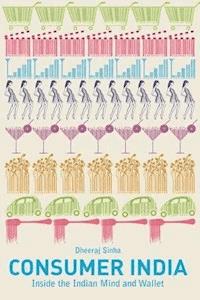
A richly insightful account of one of the most significant transformations in the world today. Dheeraj Sinha's intelligence vividly illuminates the intersection of culture and commerce in New India. Adam Morgan Founder eatbigfish Among the many books I have read on the cultural evolution taking place in India, this is perhaps the most insightful. It does not just map mindset changes; it does so with the certainty of a person who has lived the changes as much as he has witnessed them. Every marketeer should keep this book on his office desk as a ready reckoner. Ranjan Kapur Country Manager - India WPP India in many ways is a "Nation of Nations." So much heterogeneity and hence complexity in understanding consumers and consumerism. Dheeraj has done a commendable job in peeling off the layers from the onion--creating frameworks and providing very relatable examples to understand the culture. For instance, Dheeraj has used Bollywood as an effective mirror to portray societal changes. Consumer India is a must-read for those who want to understand the cultural evolution of India with its nuances. Rajesh Jejurikar Chief Executive - Automotive Division Mahindra & Mahindra Ltd. A labor of love. For years, I have marveled at how Dheeraj's inquisitive brain continuously churns away to make meaning of everything he observes. His writing simultaneously reflects him as a "sutradaar" telling the captivating story of a changing India, even as it does so with the unbiased and expert credentials of the "computerji" he describes here. Dheeraj insightfully marries the rapid changes he chronicles with the assimilative fabric of India; where "and" trumps "or." Against the cliché "change is the only constant," he underlines that in India, change works with the constant. Enjoy the ride on Dheeraj's time machine! Prasad Narasimhan Managing Partner, Asia Brandgym
Sie lesen das E-Book in den Legimi-Apps auf:
Seitenzahl: 328
Veröffentlichungsjahr: 2011
Ähnliche


















Contents
Foreword
Acknowledgments
Introduction
Chapter 1 : Transforming the Karma
A Changing India
Karmic Transformation: The New Diving Force
The Criticality of the Last Lap
The New Order of Culture and Business
Chapter 2 : The Currency of Emotion
The Carrier of Emotions
Played Down in Importance
Out of the Closet
A Life Less Ordinary
Amplifying the Sounds of Celebration
A Newfound Access
Making the Everyday Special
Recalibrating the Ticket Size of Dreams
Living with Credit
Selling Motivation, Not Money
Chapter 3 : Beauty in Action
Skin Deep
Defined by the Face
From Art to Action
From Two-Dimensional to Three-Dimensional
From Held Back to Vibrant
Attitude, Accessibility, and Universality
Highlighting Natural Appeal
Engaging through the Body
The Connection between Health and Good Looks
Driven by a Larger Cultural Change
Flipping the Beauty Equation
The Indian Beauty Market
An Instrument for Life Fulfillment
Chapter 4 : Masala Media
Rationed Entertainment
The Changing Conscience of the Nation
Nothing Nutritional About It
Reel Life Meets Real Life
The Reality of Television
Pleasure, Purpose, and Platform
From Broadcast to Narrowcast
Media in Different SKUs
Reflecting Change, Driving Change
Chapter 5 : Meaningful Technology
It’s Not about Efficiency
Social Leapfrogging
Enabling the New
Vehicles of Social Significance
Early Upgrades
Techno Sheen
Marking a Discontinuity
High Tech, High Connection
Chapter 6 : Branding the Bazaar
The Effect, Not the Cause
The Changing Shape of the Indian Market
Credible Stretch
Access Brands
The Indigenous Instinct
Following the Market Logic
Linking the Haves and the Have-Nots
Chapter 7 : Youth versus Youthful
Squeezed Out
Not a Different Species
Bridging the Gap
Participation Labs
Key Drivers of Change
A New Framework for Youth Brands
Thinking of Youth Brands as Life Links
True Blue Youth Brands
Being on Youth’s Side, Looking Up
Chapter 8 : Seamless Savitris
Breaking the Internal Glass Ceiling
Dependently Independent
The Cultural Middle Point
Finding Herself
Money Is a Facilitator
A Sense of “Complementality”
Seamless but Stretched
Marketing to Stereotypes
New Woman, New Opportunities
Chapter 9 : Small is Big
Charged with Potential
The New Small-Town India
The Power Shift: From India Shining to Bharat Nirman
Urban versus Small Town versus Rural
Achievement Driven Youth
Pride in Roots
Individuality Finds Expression
Rural Women: Transformation Within Boundaries
The Need to Shine
A Trajectory of Its Own
Chapter 10 : Three Generations, One Big Market
Between Homogeneity and Hypersegmentation
Mainstream Myopia
A New Basis for Segmenting India
A Mélange of Three Mindsets
Potential at Two Ends of the Spectrum
The Partition Generation: Cautious Opening Up
Transition Generation: Heading to Tomorrow, Bringing Yesterday Along
The No-Strings Generation: Life Unbound
Unlocking New Opportunities
Notes
Index
Copyright © 2011 John Wiley & Sons (Asia) Pte. Ltd.
Published in 2011 by John Wiley & Sons (Asia) Pte. Ltd.
2 Clementi Loop, #02-01, Singapore 129809
All rights reserved.
No part of this publication may be reproduced, stored in a retrieval system, or transmitted in any form or by any means, electronic, mechanical, photocopying, recording, scanning, or otherwise, except as expressly permitted by law, without either the prior written permission of the Publisher, or authorization through payment of the appropriate photocopy fee to the Copyright Clearance Center. Requests for permission should be addressed to the Publisher, John Wiley & Sons (Asia) Pte. Ltd., 2 Clementi Loop, #02-01, Singapore 129809, tel: 65-6463-2400, fax: 65-6463-4605, e-mail: [email protected].
This publication is designed to provide accurate and authoritative information in regard to the subject matter covered. It is sold with the understanding that the publisher is not engaged in rendering professional services. If professional advice or other expert assistance is required, the services of a competent professional person should be sought.
Neither the authors nor the publisher are liable for any actions prompted or caused by the information presented in this book. Any views expressed herein are those of the authors and do not represent the views of the organizations they work for.
Other Wiley Editorial Offices
John Wiley & Sons, 111 River Street, Hoboken, NJ 07030, USA
John Wiley & Sons, The Atrium, Southern Gate, Chichester, West Sussex, P019 8SQ, United Kingdom
John Wiley & Sons (Canada) Ltd., 5353 Dundas Street West, Suite 400, Toronto, Ontario, M9B 6HB, Canada
John Wiley & Sons Australia Ltd., 42 McDougall Street, Milton, Queensland 4064, Australia
Wiley-VCH, Boschstrasse 12, D-69469 Weinheim, Germany
Library of Congress Cataloging-in-Publication Data
ISBN 978-0-470-82465-8
To my father Shri Birendra Prasad and mother Shrimati Lakshmi
To my wife Valerie
Foreword
It’s been more than a decade that I moved out of India to the Southeast Asia and, since then, I have had the opportunity of looking at India from the outside. The biggest change that I see in India today is its energy. The buoyancy in India is palpable on its streets, in its boardrooms and in the eyes of every Indian walking the road. Needless to say, this new India is making news all over the world today. As the equation of the world economy changes in favor of India and China, the World’s attention is turning sharply towards these markets. While on one level China and India look attractive for their potential, with a closer look they are not so easy to crack. For many marketers brought up in a Western way of thinking, these are comparatively new markets, and consumers in them think and behave very differently. Marketing in India and China is about unlearning our past and learning for the future.
This doesn’t however mean that from within, it’s easy to understand India. As Dheeraj points out in this book, India has seen unprecedented change in a short time: about 15 years. For people living through the change it generally appears continuous, unless they step out of their lives and look at it objectively. It is important to do this, as most Indian business houses have built their success through the traditional Indian value system. Today, they face the huge challenge of transforming their culture, products and services based on an understanding of this new, changing India.
That India is different and has its own logic is not a new statement. The biggest advantage of this book is that it goes beyond the “India is different, India is complex” argument. It actually pins down what is so unique about the Indian consumer and the market today. Dheeraj has an innate understanding of India’s past through its culture, mythologies, and cinema. In Consumer India, he brings alive the change that India is going through in its mind and the wallet, and contrasts this with the traditional way of living and thinking. The way Dheeraj has woven stories on changing India makes this book an insightful, but more importantly an enjoyable read.
This is a revelatory book about the Indian consumer and the market as it illustrates concepts that have never been explained before with such sharpness. The concept of access brands—brands that bring consumers membership to categories dominated by premium and luxury players—is a unique one for emerging markets. The other big feature of the book is that it makes several complicated issues look simple. The chapter “Branding the Bazaar” talks about how there is a viable “New Premium” segment emerging at the top-end of the market and the “Entry Level” shaping up at the bottom-end of the Indian market. In chapter Three, “Generations, One Big Market,” one finds that there are only three big consumer segments in India—the No-Strings Generation, the Transition Generation and the Partition Generation. If we overlap these two frameworks, we know exactly where the hot, new opportunities are emerging in India. For example, the overlap between the No-Strings Generation and the New Premium gives us a “premium young” segment. This is a clear opportunity for brands to tap a young population, which has the desire and the means to live a good life. There are many such nuggets in the book, which lead us to new opportunities for brands, and businesses in India.
As Dheeraj has put it in the chapter “Masala Media,” Indians have progressed more than India has. The fact that the Indian civil infrastructure and government policies have somewhat lagged behind the personal progress that Indians have made. Amid all the positive chatter about India and its progress, this is the biggest challenge for the India growth story to continue. But, like everything else in India, this too is an opportunity. Media in India has risen to this opportunity by mobilizing the mass of consumer momentum for causes relevant to everyday people. There are opportunities for other businesses in helping India cover this gap between the progress of its infrastructure and the progress of its people.
The other gap in India is between India A (the urban and affluent India), the beneficiary of most of this progress, and India B (the rural and high-potential India). Bridging the gap in progress of these two sections of people within India is also a huge opportunity for the marketing and business fraternity, especially since projects like the Nano have proved the feasibility of targeting the “Bottom of the Pyramid” as a business model. In the global arena today, I feel proud to be an Indian but the lopsidedness of India’s growth is disturbing. I am convinced that strategies to make the growth more inclusive make sense both for our businesses and our souls.
The idea of “complementality” as Dheeraj describes, is a fascinating understanding of how the relationships between today’s urban couples are changing, where it’s perhaps not so important to be together but more important to be there for each other. Similarly, the understanding that in a country where everyone is feeling young, the real youth is feeling squeezed and is looking for brands that are their partners in crime. The overall shift of the Indian mindset from the Brahminical (priestly class) mindset to a Kshatriya (warrior class) mindset explains at a larger level why all these changes are taking place. These and many such insights power up this book.
Understanding India is not easy. India has opportunities but only if you know how to find them. And most answers lie at a level deeper below. India needs a guide to walk you through and Dheeraj steers you through consumer India with anecdotes and stories from consumers, Bollywood, category data, marketing cases and the macroeconomics of the country. The book is like 10 different stories on the Indian consumer market told in an easy and engaging style. Above all, it presents the most definitive account of how things are changing in this country written till date. India has produced many fine strategic planning minds. This book, to my mind, puts Dheeraj right on top of the lot.
Sonal Dabral
Managing Partner India
Head of Creative Asia
Bates141
Acknowledgments
This book is a shared dream with those who have goaded me to write one. That it’s a reality today is an acknowledgement of their belief in me.
The possibility of writing a book on the Indian consumer market was first discussed with CJ Hwu of John Wiley & Sons (Asia). CJ patiently guided me through the early stages of the development of this book before she moved on to bigger things at Wiley. Nick Melchior has been mature in his advice and accommodating in his handling thereon. I wish to thank Kristi Hein for her efforts at understanding the Indian nuances while editing and Joel Balbin for ensuring a smooth production of the book, coordinating various people and processes.
It can be said that your first job is like your first love; it changes you forever and can never be forgotten. My first six years of working life was spent at McCann Erickson under Santosh Desai (formerly President McCann, now MD Future Brands). The work that I did at McCann helped develop my worldview on Indian consumer and brands.
As I moved on to explore life on my own, Bates141 offered me the playing field to explore new ideas. Bates141 has been a story of my personal transformation along with that of the agency. My ideas and views on the Indian consumer market have grown and matured because of two factors at Bates141—the challenge of building an agency almost ground up and the freedom to dream and implement brave ideas. I want to thank our mentor Ranjan Kapoor and the Regional Leadership at Bates141, Jeffery Yu, Sonal Dabral, Frederique Covington and David Meredith.
I have been fortunate to work with clients who have engaged me in brand and business conversations right from the conception stage. I need to acknowledge the various conversations with clients at Virgin Mobile, TVS motors, Dabur, Cavin Kare, Max Bupa, Marico, Tata AIG and many others that have helped clarify my thinking on brands and the Indian market.
A very deserving thanks to the entire strategic planning team at Bates141 India, who have been with me in this process of understanding the Indian consumer and have humored me on some insane theories and experiments. For the working relationship that I share with them, thanks are due to Sandeep Pathak (CEO, Bates141) and Manosh Mukherjee (COO, Bates141).
Some of the concepts used in the book started to take shape with the papers that I presented at the ESOMAR Asia Pacific conferences. I am thankful to Esomar for allowing me the opportunities to present at these forums and to use parts of the thinking here.
The young and talented art director, Preeti Varma has with much hard work and flair conceptualized and created the cover design for the book.
Valerie, my wife, who has changed various hats from being the bouncing board, the reviewer and to the motivator. She has patiently lived through my mental absence from the house during my writing weekends. She still made sure that I got my endless cups of masala tea while I typed the stories of the Indian consumer on my laptop.
Dhruva, my five-year-old son, who could never understand why I can’t finish my work at office, has demonstrated unbelievable patience in allowing me to be on my computer despite being at home. He is secretly hoping that I write something as interesting as the Spiderman series.
INTRODUCTION
Dilwale Dulhania Le Jayenge (“The Big Hearted Will Take the Bride”), directed by Aditya Chopra and released in 1995, became the biggest Bollywood hit of the year and a defining film of the decade. In an emotionally charged moment in the movie, Raj (played by Shahrukh Khan) refuses to elope with his heroine, Simran, because he wants her family to endorse their marriage, even though Simran’s mother is encouraging him to run away.
Thirteen years later, in 2008, Chopra’s Rab Ne Bana Di Jodi (“A Match Made by God”) became the fourth-highest-grossing Bollywood film of all time. This time around, in a similar movie moment, Raj (played by Shahrukh Khan) asks his heroine Taani to run away with him if she thinks she is not happy in her marriage; he exhorts her to snatch her personal happiness from her destiny. From refusing to elope with his girlfriend to asking someone else’s wife to run away in search of personal happiness, the depiction of relationships and morality in mainstream Bollywood cinema has come a long way—obviously mirroring the tremendous change that India has seen in the last 15 years. This transformation of India, which started with its economy, is affecting its sociocultural fabric and people’s everyday behavior and consumption patterns.
Lesen Sie weiter in der vollständigen Ausgabe!
Lesen Sie weiter in der vollständigen Ausgabe!
Lesen Sie weiter in der vollständigen Ausgabe!
Lesen Sie weiter in der vollständigen Ausgabe!
Lesen Sie weiter in der vollständigen Ausgabe!
Lesen Sie weiter in der vollständigen Ausgabe!
Lesen Sie weiter in der vollständigen Ausgabe!
Lesen Sie weiter in der vollständigen Ausgabe!
Lesen Sie weiter in der vollständigen Ausgabe!
Lesen Sie weiter in der vollständigen Ausgabe!
Lesen Sie weiter in der vollständigen Ausgabe!
Lesen Sie weiter in der vollständigen Ausgabe!




