


45,99 €
Mehr erfahren.
- Herausgeber: John Wiley & Sons
- Kategorie: Fachliteratur
- Sprache: Englisch
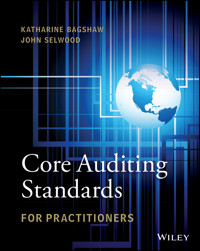
The only book on the market specifically designed to help audit staff stay ahead of inspectors
This comprehensive, practical, and theoretical guide covers the key ISAs that underpin audit methodologies and the recently revised ISAs that cause practitioners the most concern. It is designed to enhance auditors' understanding of critical ISAs, reducing their dependence on methodologies to mediate and explain ISA requirements. Using plenty of examples, the book helps audit staff learn to tailor audit methodologies and remove redundancies, as well as form high-quality judgments with a thorough grounding in ISA to serve in discussions with file reviewers and audit inspectors.
- Features practical examples that appeal to auditors with technical responsibilities
- Covers key topics such as smaller audits, management override of controls, documenting judgments, and dealing with accounting estimates and written presentations
- Ideal for practitioners in companies and accounting firms, as well as auditing students
- Includes access to a companion website with constantly updating ISAs and case studies
Mixing theory with practical examples, Core Auditing Standards for Practitioners provides experienced audit staff with key ISA-related information they need to succeed.
Sie lesen das E-Book in den Legimi-Apps auf:
Seitenzahl: 361
Veröffentlichungsjahr: 2014
Ähnliche


















Contents
Introduction
Chapter 1: Smaller Entity Audits
1.1 The Issues
1.2 What the Regulators Say
1.3 What Practitioners Say
1.4 What the Standards Say
Chapter 2: Materiality
2.1 The Issues
2.2 What the Regulators Say
2.3 What Practitioners Say
2.4 What the Standards Say
Chapter 3: Related Parties
3.1 The Issues
3.2 What the Regulators Say
3.3 What Practitioners Say
3.4 What the Standards Say
Chapter 4: Get This Right and the Rest Falls into Place: Understanding the Entity and Assessing Risk
4.1 The Issues
4.2 What the Regulators Say
4.3 What Practitioners Say
4.4 What the Standards Say
Chapter 5: Really Efficient Audits: What Sort of Evidence Do I Really Need?
5.1 The Issues
5.2 What the Regulators Say
5.3 What Practitioners Say
5.4 What the Standards Say
Chapter 6: Fraud
6.1 The Issues
6.2 What the Regulators Say
6.3 What Practitioners Say
6.4 What the Standard Says
Chapter 7: Communications with Those Charged with Governance
7.1 The Issues
7.2 What the Regulators Say
7.3 What Practitioners Say
7.4 What the Standard Says
Chapter 8: Group Audits
8.1 The Issues
8.2 What the Regulators Say
8.3 What Practitioners Say
8.4 What the Standards Say
Chapter 9: Other Things Good Auditors Need to Know About ISAs
9.1 Other Good Things – The Issues
9.2 ISA 230 on Documentation – The Issues
9.3 Documentation – What the Regulators Say
9.4 Documentation – What Practitioners Say
9.5 Documentation – What the Standards Say
9.6 ISA 501 on Additional Considerations for Specific Items – The Issues
9.7 Inventory – What the Regulators Say
9.8 Inventory – What Practitioners Say
9.9 ISA 510 on Initial Engagements and Opening Balances – The Issues
9.10 Initial Engagements – What the Regulators Say
9.11 Initial Engagements – What Practitioners Say
9.12 Initial Engagements – What the Standards Say
9.13 ISA 530 on Audit Sampling – The Issues
9.14 Audit Sampling – What the Regulators Say
9.15 Audit Sampling – What Practitioners Say
9.16 Audit Sampling – What the Standards Say
9.17 ISA 540 on Accounting Estimates – The Issues
9.18 Accounting Estimates – What the Regulators Say
9.19 Accounting Estimates – What Practitioners Say
9.20 Accounting Estimates – What the Standards Say
9.21 ISA 560 on Subsequent Events – The Issues
9.22 Subsequent Events – What the Regulators Say
9.23 Subsequent Events – What Practitioners Say
9.24 Subsequent Events – What the Standards Say
Index
End User License Agreement
List of Illustrations
Figure 1.1
Figure 1.2 Ten top tips for cost-effective smaller and less complex audits
Figure 4.1
Figure 4.2
Figure 4.3
Figure 4.4
Figure 4.5
Figure 4.6
Figure 5.1
Figure 5.2
Figure 6.1
Figure 6.2
Figure 7.1
Figure 7.2
Figure 8.1
Figure 8.2
Figure 9.1
List of Tables
Table 4.1 What Auditors Need to Understand, Why it Matters, and What Might Not Matter
Table 4.2
Table 4.3 Standard Forms Used in Understanding the Entity: Advantages and Disadvantages
Table 7.1
Table 8.1 Financial Significance
Pages
iii
iv
1
2
3
4
5
6
7
8
9
10
11
12
13
14
15
16
17
18
19
20
21
22
23
24
25
26
27
28
29
30
31
32
33
34
35
36
37
38
39
40
41
42
43
44
45
46
47
48
49
50
51
52
53
54
55
56
57
58
59
60
61
62
63
64
65
66
67
68
69
70
71
72
73
74
75
76
77
78
79
80
81
82
83
84
85
86
87
88
89
90
91
92
93
94
95
96
97
98
99
100
101
102
103
104
105
106
107
108
109
110
111
112
113
114
115
116
117
118
119
120
121
122
123
124
125
126
127
128
129
130
131
132
133
134
135
136
137
138
139
140
141
142
143
144
145
146
147
148
149
150
151
152
153
154
155
156
157
158
159
160
161
162
163
164
165
166
167
168
169
170
171
172
173
174
175
176
177
178
179
180
181
182
183
184
185
186
187
188
189
190
191
192
193
194
Guide
Cover
Table of Contents
Begin Reading
Core Auditing Standards for Practitioners
Katharine Bagshaw
John Selwood
This edition first published 2014
© 2014 Katharine Bagshaw and John Selwood
Registered office
John Wiley & Sons Ltd, The Atrium, Southern Gate, Chichester, West Sussex, PO19 8SQ, United Kingdom
For details of our global editorial offices, for customer services and for information about how to apply for permission to reuse the copyright material in this book please visit our website at www.wiley.com.
The right of the author to be identified as the author of this work has been asserted in accordance with the Copyright, Designs and Patents Act 1988
All rights reserved. No part of this publication may be reproduced, stored in a retrieval system, or transmitted, in any form or by any means, electronic, mechanical, photocopying, recording or otherwise, except as permitted by the UK Copyright, Designs and Patents Act 1988, without the prior permission of the publisher.
Wiley publishes in a variety of print and electronic formats and by print-on-demand. Some material included with standard print versions of this book may not be included in e-books or in print-on-demand. If this book refers to media such as a CD or DVD that is not included in the version you purchased, you may download this material at http://booksupport.wiley.com. For more information about Wiley products, visit www.wiley.com.
Designations used by companies to distinguish their products are often claimed as trademarks. All brand names and product names used in this book are trade names, service marks, trademarks or registered trademarks of their respective owners. The publisher is not associated with any product or vendor mentioned in this book.
Limit of Liability/Disclaimer of Warranty: While the publisher and author have used their best efforts in preparing this book, they make no representations or warranties with respect to the accuracy or completeness of the contents of this book and specifically disclaim any implied warranties of merchantability or fitness for a particular purpose. It is sold on the understanding that the publisher is not engaged in rendering professional services and neither the publisher nor the author shall be liable for damages arising herefrom. If professional advice or other expert assistance is required, the services of a competent professional should be sought.
Library of Congress Cataloging-in-Publication Data is available
A catalogue record for this book is available from the British Library.
ISBN 978-1-118-70711-1 (pbk); ISBN 978-1-118-70709-8 (ebk);
ISBN 978-1-118-70706-7 (ebk)
INTRODUCTION
WHY READ THIS BOOK?
Good quality, smaller ISA audits are conducted all over the world, profitably
The sole aim of this book is to help auditors perform more efficient and effective ISA audits. While the focus of the technical material in this book is on the requirements of the ISAs, the overriding objective is always to help auditors perform audits in a manner that promotes cost-effectiveness, efficiency and a high level of audit quality in equal measure.
We believe that there is a strong link between audit quality, and efficient and cost-effective audits. We believe that audit firms performing the best audits are often the most profitable, and that firms with audit quality issues are rarely performing profitable audits.
Dispelling the myth that quality and cost-effectiveness are mutually exclusive is important to us. Some, possibly many, practitioners take the view that audit quality and the maintenance of technical standards are little more than a cost to be minimised. We beg to differ. When time spent gaining a better understanding of core auditing standards is seen more as an investment than a cost, it not only enables auditors to perform more cost-effective audits, it also makes them better auditors.
Lesen Sie weiter in der vollständigen Ausgabe!
Lesen Sie weiter in der vollständigen Ausgabe!
Lesen Sie weiter in der vollständigen Ausgabe!
Lesen Sie weiter in der vollständigen Ausgabe!
Lesen Sie weiter in der vollständigen Ausgabe!
Lesen Sie weiter in der vollständigen Ausgabe!
Lesen Sie weiter in der vollständigen Ausgabe!
Lesen Sie weiter in der vollständigen Ausgabe!
Lesen Sie weiter in der vollständigen Ausgabe!
Lesen Sie weiter in der vollständigen Ausgabe!
Lesen Sie weiter in der vollständigen Ausgabe!




