


135,99 €
Mehr erfahren.
- Herausgeber: John Wiley & Sons
- Kategorie: Fachliteratur
- Sprache: Englisch
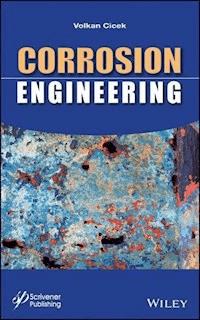
Corrosion costs billions of dollars to each and every single economy in the world. Corrosion is a chemical process, and it is crucial to understand the dynamics from a chemical perspective before proceeding with analyses, designs and solutions from an engineering aspect. The opposite is also true in the sense that scientists should take into consideration the contemporary aspects of the issue as it relates to the daily life before proceeding with specifically designed theoretical solutions. Corrosion Engineering is advised to both theoreticians and practitioners of corrosion alike. Corrosion engineering is a joint discipline associated primarily with major engineering sciences such as chemical engineering, civil engineering, petroleum engineering, mechanical engineering, metallurgical engineering, mining engineering among others and major fundamental sciences such as sub-disciplines of physical, inorganic and analytical chemistry as well as physics and biology, such as electrochemistry, surface chemistry, surface physics, solution chemistry, solid state chemistry and solid state physics, microbiology, and others. Corrosion Engineering is a must-have reference book for the engineer in the field that covers the corrosion process with its contemporary aspects with respect to both of its scientific and engineering aspects. It is also a valuable textbook that could be used in an engineering or scientific course on corrosion at the university level.
Sie lesen das E-Book in den Legimi-Apps auf:
Seitenzahl: 473
Veröffentlichungsjahr: 2014
Ähnliche
















Contents
Cover
Half Title page
Title page
Copyright page
Dedication
Foreword
Preface
Chapter 1: Corrosion of Materials
1.1 Deterioration or Corrosion of Ceramic Materials
1.2 Degradation or Deterioration of Polymers
1.3 Corrosion or Deterioration of Metals
Chapter 2: Cost of Corrosion
2.1 Corrosion Preventative Measures
2.2 Lost Production Due to Plants Going out of Service or Shutdowns
2.3 Product Loss Due to Leakages
2.4 Contamination of the Product
2.5 Maintenance Costs
2.6 Overprotective Measures
Chapter 3: Factors Influencing Corrosion
3.1 Nature of the Metal
3.2 Nature of the Corroding Environment
Chapter 4: Corrosion Mechanisms
4.1 Direct Chemical Attack or Chemical or Dry Corrosion
4.2 Electrochemical or Aqueous or Wet Corrosion
4.3 Differences between Chemical and Electrochemical Corrosion
Chapter 5: Types of Corrosion
5.1 Uniform Corrosion
5.2 Non-Uniform Corrosion
Chapter 6: The Thermodynamics of Corrosion
6.1 Gibbs Free Energy (ΔG)
6.2 Passivity
6.3 Pourbaix Diagrams
6.4 Corrosion Equilibrium and Adsorptions
6.5 Concentration Corrosion Cells
6.6 Polarization
6.7 Polarization Curves
Chapter 7: Corrosion Prevention and Protection
7.1 Proper Design
7.2 Choice of Material
7.3 Protective Coatings
7.4 Changing the Environmental Factors that Accelerate Corrosion
7.5 Changing the Electrochemical Characteristic of the Metal Surface
Chapter 8: Corrosion and Corrosion Prevention of Concrete Structures
8.1 Concrete’s Chemical Composition
8.2 Corrosion Reactions of Concrete
8.3 Factors Affecting Corrosion Rate in Reinforced Concrete Structures
8.4 Corrosion Measurements in Reinforced Concrete Structures
8.5 Corrosion Prevention of Reinforced Concrete
Chapter 9: Corrosion and Corrosion Prevention of Metallic Structures in Seawater
9.1 Factors Affecting Corrosion Rate of Metallic Structures in Seawater
9.2 Cathodic Protection of Metallic Structures in the Sea
Chapter 10: Corrosion and Corrosion Prevention in Petroleum Industry
10.1 Chemicals that Cause Corrosion in Petroleum Industry
10.2 Petroleum or Crude Oil Pipeline Systems
10.3 Crude Oil or Petroleum Storage Tanks
Chapter 11: Corrosion and Corrosion Prevention in Water Transportation and Storage Industry
11.1 Water Pipeline Systems
11.2 Cooling Water Systems
11.3 Potable Water Tanks
11.4 Boilers
11.5 Geothermal Systems
References
Index
Corrosion Engineering
Scrivener Publishing 100 Cummings Center, Suite 541J Beverly, MA 01915-6106
Publishers at Scrivener Martin Scrivener ([email protected]) Phillip Carmical ([email protected])
Copyright © 2014 by Scrivener Publishing LLC. All rights reserved.
Co-published by John Wiley & Sons, Inc. Hoboken, New Jersey and Scrivener Publishing LLC, Salem, Massachusetts. Published simultaneously in Canada.
No part of this publication may be reproduced, stored in a retrieval system, or transmitted in any form or by any means, electronic, mechanical, photocopying, recording, scanning, or otherwise, except as permitted under Section 107 or 108 of the 1976 United States Copyright Act, without either the prior written permission of the Publisher, or authorization through payment of the appropriate per-copy fee to the Copyright Clearance Center, Inc., 222 Rosewood Drive, Danvers, MA 01923, (978) 750-8400, fax (978) 750-4470, or on the web at www.copyright.com. Requests to the Publisher for permission should be addressed to the Permissions Department, John Wiley & Sons, Inc., 111 River Street, Hoboken, NJ 07030, (201) 748-6011, fax (201) 748-6008, or online at http://www.wiley.com/go/permission.
Limit of Liability/Disclaimer of Warranty: While the publisher and author have used their best efforts in preparing this book, they make no representations or warranties with respect to the accuracy or completeness of the contents of this book and specifically disclaim any implied warranties of merchantability or fitness for a particular purpose. No warranty may be created or extended by sales representatives or written sales materials. The advice and strategies contained herein may not be suitable for your situation. You should consult with a professional where appropriate. Neither the publisher nor author shall be liable for any loss of profit or any other commercial damages, including but not limited to special, incidental, consequential, or other damages.
For general information on our other products and services or for technical support, please contact our Customer Care Department within the United States at (800) 762-2974, outside the United States at (317) 572-3993 or fax (317) 572-4002.
Wiley also publishes its books in a variety of electronic formats. Some content that appears in print may not be available in electronic formats. For more information about Wiley products, visit our web site at www.wiley.com.
For more information about Scrivener products please visit www.scrivenerpublishing.com.
Library of Congress Cataloging-in-Publication Data:
ISBN 978-1-118-72089-9
I dedicate this book to each and every engineer and scientist, who is working hard to make this world a better place. I also acknowledge Zirve University of Gaziantep, Turkey for the willingness to support my studies.
Foreword
In the modern world, one of the most significant problems encountered by engineers, in line with the technological developments, is corrosion. In this regard, the author aims to inform the reader in the broader area of engineering sciences, both theoreticians and practitioners alike, including metallurgical and material engineers, civil engineers, mining engineers, petroleum engineers, chemical engineers, mechanical engineers, marine engineers, industrial engineers, computer engineers, electrical and electronics engineers. The author does that not only in a very organized manner but also proper to the Bloom’s Taxonomy so that almost all the readers may get the level of information they would like to have. I would like to appreciate the author for this effort which is worthy of commendation.
Prof. Dr. Sinan Hinislioglu,Dean of College of Engineering, Civil Engineering Professor,Zirve University of Gaziantep/Turkey
Preface
Corrosion is, in essence, a chemical process; hence it is crucial to understand the dynamics from a chemical perspective before proceeding with analyses, designs and solutions from an engineering aspect. The opposite is also true in the sense that scientists should take into consideration the contemporary aspects of the issue as it relates to the daily life before proceeding with specifically designed theoretical solutions. Thus, this book is advised to both theoreticians and practitioners of corrosion alike.
Corrosion is associated primarily with major engineering sciences such as chemical engineering, civil engineering, petroleum engineering as well as with sub-disciplines of major fundamental sciences such as physical, inorganic, and analytical chemistry, surface chemistry and surface physics, electrochemistry, solution chemistry, solid state chemistry and solid state physics, crystalline and amorphous structures, and microbiology.
Hence, a reference book that summarizes the process of corrosion with its contemporary aspects with respect to both scientific and engineering aspects was needed. In addition to be used as a reference book, this book could also be used as a textbook most conveniently for a single semester technical elective course; while the period of the course could be adjusted to fit into a long or a short summer term as well as a complete year depending on the nature of the course. In the case that this book is used as a textbook for a full year course, using supplementary resources may be beneficial especially in the case of engineering sciences.
Chapter 1
Corrosion of Materials
Corrosion comes from the Latin word “corrodere.” Plato talked about corrosion first during his lifetime (B.C. 427–347), defining rust as a component similar to soil separated from metal. Almost 2000 years later, Georgius Agricola gave a similar definition of rust in his book entitled ‘Mineralogy’, stating that rust is a secretion of metal and can be protected via a coating of tar. The corrosion process is mentioned again in 1667 in a French-German translation, and in 1836 in another translation done by Sir Humphrey Davy from French to English, where cathodic protection of metallic iron in seawater is mentioned. Around the same time, Michael Faraday developed the formulas defining the generation of an electrical current due to electrochemical reactions.
According to the American Society for Testing and Materials’ corrosion glossary, corrosion is defined as “the chemical or electrochemical reaction between a material, usually a metal, and its environment that produces a deterioration of the material and its properties”. Other definitions include Fontana’s description that corrosion is the extractive metallurgy in reverse, which is expected since metals thermodynamically are less stable in their elemental forms than in their compound forms as ores. Fontana states that it is not possible to reverse fundamental laws of thermodynamics to avoid corrosion process; however, he also states that much can be done to reduce its rate to acceptable levels as long as it is done in an environmentally safe and cost-effective manner.
To one degree or another, most materials experience some type of interaction with a large number of diverse environments. Often, such interactions impair a material’s usefulness as a result of the deterioration of its mechanical properties, e.g., ductility, strength, other physical properties, and appearance. Deteriorative mechanisms are different for the three material types, ceramics, polymers, and metals. Ceramic materials are relatively resistant to deterioration, which usually occurs at elevated temperatures or in extreme environments; that process is also frequently called “corrosion.” In the case of polymers, mechanisms and consequences differ from those for metals and ceramics, and the term “degradation” is most frequently used. Polymers may dissolve when exposed to liquid solvent, or they may absorb the solvent and swell. Additionally, electromagnetic radiation, e.g., primarily ultraviolet and heat, may cause alterations in their molecular structures. Finally, in metals, there is actual material loss, either by dissolution or corrosion, or by the formation of a film or nonmetallic scales by oxidation; this process is titled “corrosion” as well.
In today’s world, a stronger demand for corrosion knowledge arises due to several reasons. Among them, the application of new materials requires extensive information concerning corrosion behavior of these particular materials. Also the corrosivity of water and atmosphere have increased due to pollution and acidification caused by industrial production. The trend in technology to produce stronger materials with decreasing size makes it relatively more expensive to add a corrosion allowance to thickness. Particularly in applications where accurate dimensions are required, the widespread use of welding due to the developing construction sector has increased the number of corrosion problems. Developments in other sectors such as offshore oil and gas extraction, nuclear power production and medicinal health have also required stricter rules and control. More specifically, reduced allowance of chromate-based corrosion inhibitors due to their toxicity constitutes one of the major motivations to replace chromate inhibitors with environmentally benign and efficient ones.
Lesen Sie weiter in der vollständigen Ausgabe!
Lesen Sie weiter in der vollständigen Ausgabe!
Lesen Sie weiter in der vollständigen Ausgabe!
Lesen Sie weiter in der vollständigen Ausgabe!
Lesen Sie weiter in der vollständigen Ausgabe!
Lesen Sie weiter in der vollständigen Ausgabe!
Lesen Sie weiter in der vollständigen Ausgabe!
Lesen Sie weiter in der vollständigen Ausgabe!
Lesen Sie weiter in der vollständigen Ausgabe!
Lesen Sie weiter in der vollständigen Ausgabe!
Lesen Sie weiter in der vollständigen Ausgabe!
Lesen Sie weiter in der vollständigen Ausgabe!
Lesen Sie weiter in der vollständigen Ausgabe!




