


Erhalten Sie Zugang zu diesem und mehr als 300000 Büchern ab EUR 5,99 monatlich.
- Herausgeber: Seren
- Kategorie: Geisteswissenschaft
- Sprache: Englisch
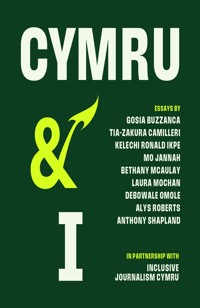
In Cymru & I nine new writers look at what Wales means to them as people from backgrounds previously marginalized or excluded. Their kaleidoscopic viewpoints prove that the concept of 'Welshness' is broader, deeper, and far more nuanced than that portrayed in the mainstream. These unheard stories reflect the experiences of many, but such stories have too often been overlooked or ignored. Here are essays on identity, integration, the power of language to welcome or divide, acceptance, personal aspiration, civic decline, and hill walking. Among the contributors are those who have sought sanctuary or space in Wales: immigrants – current and first or second generation – neurodivergent, LGBTQ+ and working-class people. Their articulate and compelling essays demand attention. Cymru & I is made of nine very human stories about Wales and the many different kinds of Welshness it encompasses. The contributors are: Gosia Buzzanca, Tia-zakura Camilleri, Kelechi Ronald Ikpe, Mo Jannah, Bethany Mcaulay, Laura Mochan, Debowale Omole, Alys Roberts and Anthony Shapland.
Sie lesen das E-Book in den Legimi-Apps auf:
Seitenzahl: 331
Veröffentlichungsjahr: 2023
Das E-Book (TTS) können Sie hören im Abo „Legimi Premium” in Legimi-Apps auf:
Ähnliche




















Seren is the book imprint of
Poetry Wales Press Ltd.
Suite 6, 4 Derwen Road, Bridgend,
Wales, CF31 1LH
www.serenbooks.com
Follow us on social media @SerenBooks
Essays © individual authors, 2023
The right of the above mentioned to be identified as the authors of this work has been asserted in accordance with the Copyright, Designs and Patents Act, 1988.
ISBN: 978-1-78172-730-0
Ebook: 978-1-78172-731-7
A CIP record for this title is available from the British Library.
All rights reserved. No part of this publication may be reproduced, stored in a retrieval system, or transmitted at any time or by any means, electronic, mechanical, photocopying, recording or otherwise without the prior permission of the copyright holder.
The publisher acknowledges the financial assistance of the Books Council of Wales.
Printed by Severn, Gloucester
CONTENTS
Introduction
Debowale Omole, Scars, Knotweed and a Dream
Bethany Mcaulay, Vague Shapes Inland
Tia-Zakura Camilleri, Dringo’n Ddu
Alys Roberts, My Dyslexic Disguise
Mo Jannah, Global Wales: The Legacy of Multiculturalism
Gosia Buzzanca, A Concatenation
Kelechi Ronald Ikpe, In a New Land
Laura Mochan, When Giants Fall
Anthony Shapland, Meantime
About Inclusive Journalism Cymru
Notes on Contributors
INTRODUCTION
The story of contemporary Wales is like a jigsaw puzzle made up of more than 3 million pieces. Individual, multi-layered stories that are unique, irregular and complicated, but fit together to make the whole. Frustrating and infuriating at times, but something that we might eventually be satisfied with, or perhaps even proud of.
It’s obvious where some of those stories, those pieces, sit. They have a natural place, they fit comfortably, and in many ways they are the building blocks from which the rest of the puzzle can start to be seen.
But others don’t fit in so easily.
They might be interesting shapes or sizes, look different from the rest or may be a bit broken. We need to think harder about where those pieces fit, mend them or carefully ease them into place.
Some pieces, though, are missing.
They definitely exist, but they’re unseen, ignored or overlooked. They might not feel important at first, but we need them if we’re going to see the full picture and make sense of it.
Stories are how we make sense of the world, but we’re never going to be able to understand how the jigsaw fits together if some of the pieces, some of the stories, are missing.
When we started Inclusive Journalism Cymru, we knew that we wanted to create opportunities for people from marginalised backgrounds or identities to tell their stories, precisely so that we could fill in the gaps and complete the picture. So we could tell the true story of Wales.
Cymru & I explores some of the questions, the challenges and the delights that have surfaced as Wales gradually becomes a more diverse, but also occasionally more fractured, nation. You’ll read stories of people who’ve felt welcomed, rejected, broken or built by this country. Some of our writers feel viscerally Welsh, while others find their relationship with that word much more complicated. That’s what happens when different people tell different stories, in different ways – we begin to embrace the complexities of our identities rather than reducing each other to stereotypes or caricatures.
But none of that is easy. To tell those different stories we need to create genuinely inclusive processes that make it possible for the most marginalised voices to be heard. We can’t continue to apply the same lenses that have traditionally privileged those with power or status and expect those new perspectives to be magically revealed.
If we want to complete the jigsaw we need to think differently and open our eyes to where those missing or broken pieces might be, and do everything we can to make sure they’re part of that full picture.
We’re thankful to the Books Council of Wales, Creative Wales and Seren for supporting and collaborating with us on this journey of change, and being prepared to think differently and help find those missing pieces of the jigsaw.
Although most of the writers in this collection have never been published before, they are not ‘new voices’; they’ve always had their stories. What we’re trying to change is who hears those stories, and how hard they listen.
So we thank you too for reading this book and helping us do the jigsaw together. We won’t finish it today, or even tomorrow, because – like anything that’s worth doing – it’ll take concentration, application, hard work and time. But it’s good to make a start, knowing that seeing the full picture will be our reward.
SCARS, KNOTWEED AND A DREAM DEBOWALE OMOLE
‘Daddy!’ screamed my daughter. I’d heard my seven-year-old scream many times, but never like this. And at 4.00 a.m. A cold sweat washed over me and my heart started racing so fast I feared I might vomit. As I bolted out of bed, trying to reach her as fast as I could through the darkness, there came a second, piercing scream. I looked over – my wife wasn’t there. Perhaps she had already reached the bedroom where our three children slept. As I got closer to their room, not only could I hear the frightful whimpers of my second daughter and my son, but I could also hear my wife plead and try to reason with strange voices.
Once I reached the landing connecting our bedrooms, I saw what was happening downstairs: three fierce-looking immigration enforcement officers had entered our home, clearly with the intention of detaining us. Instinctively, my immediate thought was to free my wife from the officer about to put her in handcuffs. I say instinctively, because I had no sense to walk down the stairs at this point – I thought it more expedient to jump down the whole flight instead. I was mid-air when my head bounced off the beam above the stairs, and by the time my body touched down at the feet of the officer, I was unconscious.
‘Daddy!’ shouted my little boy, waking me with a start. Drenched in a cold sweat and with my heart racing, I jumped out of bed, almost knocking myself out against the wall. I looked over – my wife was still in bed, and I didn’t hear a scream nor whimper from the room my children share. I must’ve had a wild look in my eyes because my usually boisterous four-year-old son took frightened, cautious steps backwards and said timidly, ‘I need to pee… Sor-wee, Daddy, sor-wee.’ The alarm on my wristwatch went off: 6.00 a.m. ‘It’s OK, K-Bobo. Daddy is the one who is sorry. I am sorry I scared you. Daddy had a bad dream.’
This nightmare was from four years ago. Hauntings like these are like faded scars that never truly disappear from most immigrants’ lives. I have been scarred by prejudice, and it is a hard-to-kill type of knotweed that requires strenuous effort to eradicate from hearts and minds. My mind on most days is a litany of endless prayer – ‘Lord, let this day be good’ – or a mantra of defiance: ‘Not today!’ This mental struggle has shaped my experiences and how I respond to Wales as home.
Why have you left your ‘original home’? Why has Wales become your home? Why should anyone move homes? Why do we have prejudice and why are we sometimes traumatised by different people and different environments?
Change, as the saying goes, is inevitable and it happens to us all. Though I am the hero and historian of the story you are about to read, I do not promise you answers to the small word that asks big questions: why? This essay is an invitation, if you accept, to answer them for yourself. Will you feel what I felt? Would you make the same choices as I did?
BEFORE THE BAD DREAM
It is the year 2012. A significant year in the history of the United Kingdom. London hosted the 2012 Olympics and Paralympics. The first city to invite the world to its home for a third time. The year 2012 was also significant for the UK because it was the year of Queen Elizabeth II’s Diamond Jubilee. The second monarch in British history to celebrate sixty years on the throne after Queen Victoria in 1897. It was also a significant year for me: it was the year I moved to the UK to join my wife. She was pregnant with our first child and due in the spring. It was, for me, figuratively and literally, a season of new beginnings. My wife and I had long debated our next move after she completed her master’s in public health at Swansea University. It wasn’t the pregnancy that swayed our decision to stay for the time being, it was the illness in the agonising months prior to my arrival that made travel for her impossible. Consequently, I conceded to join her in Swansea till we could move out of the city, which I’ve come to have a complicated relationship with.
‘Croeso i Abertawe’ crackled over the public announcement speaker as I stepped out of the bus. It was bright. The sun was up, and it was a beautiful day. The air caressed my ears and neck tenderly; it made me pull the collar of my coat up, imagining it would miraculously shield my ears from the unwanted whispers that I suspected came from the sea. For someone who arrived from a city where the average temperature in the coldest months is 26 degrees Celsius, the smile of the sun and the whisper of the breeze seemed to foreshadow a complicated dichotomy that would lead me to appreciate why Dylan Thomas called Swansea an ‘ugly, lovely town’. As I waited patiently in the queue beside the coach for the driver to retrieve my bags, I became keenly aware that my heart was racing, and it wasn’t because the cold air made me want to sprint for the door. Thoughts of seeing my wife for the first time in nearly nine months filled my head. What would I do, what condition would she be in, and how would I support her in the weeks ahead? I was momentarily lost in my musings when I was interrupted by an ‘Oi, mate!’ I smiled and apologised to the driver. I instantly bent to pick up my bags, except that they were not in front of me. I looked at him, still smiling, but he wasn’t smiling back. I thought I must have done something wrong and apologised again for not paying attention earlier. ‘Are those your bags?’ he queried, pointing to the open compartment beneath the coach. ‘Yes, they are,’ I confirmed.
He replied, ‘I’m not touching those; they are too heavy.’ I crawled into the belly of the coach to retrieve my bags as quickly as possible without a fuss. What’s the big deal, right? I thanked the driver with a smile. He considered me briefly and muttered something as he resumed retrieving the bags of the other passengers. I assume he uttered a greeting and that I could not understand due to his accent, so I smiled again in acknowledgement and turned around to leave.
Upon making a 180-degree turn to approach the large glass automatic doors of the bus station, I was confronted by another non-smiler. This time the person was a fellow passenger, a white lady with medium-cropped, greying brown hair. She had the aura of a grandmother and a pleasant demeanour. We had chatted briefly on the bus from London. I knew she was Welsh because she had used that to explain her inquisitiveness about my mission to Wales. What I didn’t know at this moment was why she looked vexed. ‘He shouldn’t have done that, that wasn’t polite,’ she said. I told her I didn’t hear the comment, but he sounded polite to me. I bade her farewell as I was keen to get to my wife, whom I had now spotted through the open glass doors. Many months later, I came to understand that many off-handed British insults can be delivered while sounding and looking polite. My African experience has been that there is often congruence between how insults are delivered and how the face is contorted. Incongruence between spoken insult and facial expression is another British dichotomy I learnt.
We often have different ideas about what our experiences in new places might be like, but we also miss early clues about what the journey ahead could be. In my first hour in Swansea, I was given clues I had not noticed until now. It is only when we look backwards that we can connect the dots and make sense of the trajectory of our lives. With the benefit of hindsight, I can now see that those few moments of my arrival were a precursor to how my journey in Wales would play out. I would, in a sense, start from a place of ignorance and crawl briefly into the city’s underbelly before standing again to walk towards an exciting future. While ignorance for me was probably bliss in the short term, Swansea showed me that no form of ignorance is sustainable. I was glad I wasn’t upset about what wrong the driver may or may not have done. I was not physically or emotionally hurt. But I could have been. I would later attend some training and come to understand that the UK works and thrives because of policies, standards and laws. Procedures that have been put in place for the safety and dignity of all.
For the next few months, I remained blissfully unaware of why it was so hard to secure a job at a similar assistant managerial level I had left in Lagos. After all, I had a degree from a university and ten years of work experience dealing with some of the most demanding clients. Moreover, most people here were polite and friendly (or so I thought). How hard could living and succeeding in this society be? I was positively content that, before long, I would land a good position. It took the feedback from a particular application to jolt me out of my naivety and make me realise that my dictionary of communication needed to be changed.
THE FIRST SCAR
My first job came in the form of a sales representative for LoveFilm, before Amazon acquired it. I was thrilled when I was invited to interview and offered a job with a group of sales reps. We were given the rules to dress smart, wear a suit, put on a tie and a pair of black shoes. I have experience working with sales reps back in Lagos; they were given cars to attend meetings and talk to potential clients in different locations. I was right and wrong about this job: I did speak to potential clients, but I walked up and down sloped streets in the cold and rain, knocking on doors trying to sell people LoveFilm. I found I was working for a marketing agency of some sort without proper structures. I fell ill after three days, mentally sick because my job made me feel like a con man, and physically sick from the exhaustion and the weather my body had not adjusted to. I never returned there nor got paid for my efforts though I had earned some commission.
Shortly after my daughter was born, I secured a temporary role in a warehouse. It felt like a leg through the door to get to where I wanted to be. All through our induction training I was entranced by the picture painted before us about how easy it was to move upwards. The lead trainer enthusiastically spoke of how she and her colleague had moved through the ranks in a space of a year. I noted that the people before me now were an American, two Poles, a Welsh man and an English woman. It looked international enough, with no visible discrimination.
This is perfect, I thought. A year of hard graft and showing my potential will set me on the right path. On the warehouse floor, we were informed about the procedure for applying for roles that became available ‘upstairs’. We would write applications that had to pass through our floor manager for endorsement. In the meantime, I would work as hard as I could to make it easy for the manager to endorse my application when the time came. For weeks I stacked items on shelves as fast and as accurately as I possibly could. The monotonous work and the prison-like regimen became depressing after four weeks. But my time there was also enlightening. No matter how fast or accurately I stacked items, I was not hitting the targets given to the floor staff. Curiously, though, most of my Welsh colleagues and the more experienced ethnic minority staff were not having issues. My employment here was at risk. Though the warehouse role involved a lot of walking and pushing carts, I was determined not to return to walking out in the cold with the marketing agency. I had to study what the ‘Perms’ here were doing.
Before securing the role at the warehouse, I got into the habit of wandering through the Kingsway and Oxford Street in Swansea’s city centre to browse the windows of recruitment agencies for opportunities that might be available. I recall a particular day walking through the bustling centre at the time when the subdued turf war between people and seagulls was at its peak. I looked for familiarity and found none. I breathed in deeply, desperately hoping to recognise the smell of loamy dust agitated by the first drops of rain. I took more deep breaths looking for traces of aromas from familiar goat meat stews, or from jollof rice burning in cast iron pots. But there were none. I looked out for eyes that would lock with mine and at least communicate familiarity or reassurance. I found a pair and held them for an unforgettable few seconds. They were grey, intelligent and weary with bags underneath them. The owner was a heavily bearded man in his sixties. He stood out with his woolly hat and belongings in a makeshift bag. The eyes were watery though no tears were about to break their boundary. He sat alone, sober, on the floor, in a disused entrance of a building. He was homeless. Nobody engaged him in conversation, but he did engage with me in the briefest of moments. His look seemed to say, ‘You are lonely. I know this. You’ll be fine, son.’ It’s possible I imagined what I saw next, but I thought I saw him smile at me. Whether that moment was real or not, the imagined kindness stuck with me.
I would later be informed that he was well-known in Swansea. I would later make his acquaintance again when I volunteered with a ministry in City Church (formerly called City Temple). The man was referred to as ‘Teabag’ by fellow homeless men and women who came to the church every Friday night for some food and company. His real name was Pete. He was said to have walked for miles to return a wallet holding thousands of pounds and refused any reward. I heard that he was a colleague of the former Archbishop of Canterbury. Before my brief encounter on the street with Pete, I felt like a man floating in the sea, thirsting for water to drink. I needed a friend.
Ryan was the first Welsh colleague I became friendly with at the warehouse. He had, like the Welsh ‘nan’ on the coach, also enquired about what brought me to Wales. He was kind enough to grant me the freedom to be as inquisitive with him as he was with me. I jokingly told him I might be kicked out soon because I was not hitting my targets. He was puzzled because he knew how hard I worked. He showed me what to do at the risk of getting a backlash from other ‘natives’. It turned out that while I was killing myself with lots of heavy lifting and random medium-large items, the natives were strategic with the trolleys they took. ‘You hit your target faster by collecting multiple and similar smaller items,’ Ryan confided. I started hitting my targets and unwittingly picked up a few adversaries along the way. I wondered if that workplace was specifically meant for natives. It sounds easy to play the race card at the workplace, but it is all you are left with when you can’t find a logical reason as to why a group of people who look different from you feel threatened by your presence and potential to rise. It also becomes more difficult to prove when the ones you believe are antagonising you are the ones that claim to be friendly with you. Friendly, yes. Friends, no. After a few consistent weeks of hitting targets and repelling a couple of disgruntled side comments, an opportunity from ‘upstairs’ came along. I applied. I waited. I was hopeful that I’d be invited for an interview. I wasn’t. I could always learn from the feedback and improve on the next try. When I did get feedback, it was hard to understand. My line manager informed me with the same grace one would use to brush off small droplets of rain from a hat, ‘Sorry, but your English is not good enough, my friend.’ That was it. No further comments. No encouragement to try again or input on what to do better next time.
Nigeria is a country that, to my astonishment, many of the people that I interacted with at the warehouse knew little about. Most were surprised to learn that Nigeria was a British colony, or that English is the national language. We are educated in English and speak English widely. I admit I lacked the hands-on experience that most of the permanent floor staff had, but it turned out I had more qualifications and education than they did. So I felt deeply stung when the feedback from the interview was that my English was not good enough. When my failed attempt to move upstairs became common knowledge, I gained lots more admirers than the pockets of adversaries I had had to endure. Almost every interaction with a native became a test of patience. ‘Where are you from, mate?’ ‘How did you get here, love?’ ‘How come your English is so good?’ ‘I went to Africa for holidays last year and I met a lovely guy named XYZ, do you live around those parts?’ ‘I’ve seen Africa on TV. It’s not very safe for you, is it?’ Safety. That is a paramount need for every living being, isn’t it? Freedom from harm. Assurances that those we care about and important things to us won’t be lost. We protect what we don’t want to lose. We have bills to pay. The need for financial safety is why we trade precious time for money. It is why our suffering under inhumane work conditions and ungodly hours has meaning. We love our culture and way of life. We don’t want to lose it to foreigners. The need for mental and psychological safety is the ‘why’ some people choose to be on the offensive, while others survive best by choosing to remain unseen and unheard. In fairness to my warehouse colleagues, I believe they would have acted better if they knew better or if their information sources were better. I was able to educate a few that Africa is not a country and that, contrary to what they’ve seen on TV, countries in Africa have lovely cities, electricity and brilliant people.
Ironically, the realisation of a progression threat led me to quit the warehouse job to pursue higher knowledge and skills. I realised I had a problem, and my solution was to re-educate myself. It would cost me, but the sacrifice would be worth it.
A TRAUMATIC NIGHT OUT
The year 2013. It was the year Margaret Thatcher died, and the year the UK government announced they would hold a referendum asking the public if it should remain a member of the EU. Queen Elizabeth’s first great-grandson was born in July, on the very same day my second daughter arrived. She was sent a silver penny to mark the historic occasion and was featured in our local newspaper, the Evening Post, as one of the royals in Swansea. The year 2013 was also the year I chose to enrol for an MBA with Swansea University. At the time, it felt like an escape from the enclosure of the warehouse, for I would be free from condescending ‘Perms’. This was the year that marked the beginning of what would be for me ‘crawling in and out of the belly of the coach’, though I had no idea then. I would experience another side to Dylan Thomas’s ugly, lovely town.
Swansea University was a breath of fresh air. A historic campus located along Oystermouth Road and opposite one pleasant stretch of Swansea’s neat sandy beach. I had looked forward to meeting more Welsh and English classmates. The fact that their fees were £6,000 cheaper than international students, in addition to the student loans available was surely an incentive? They wouldn’t question my language proficiency and we could talk about solving world problems. Our MBA programme director was a pleasant Welsh gentleman and academic called Noel (not his real name), whom I had met before my enrolment to ask about the requirements for becoming one of their students. I liked him and remained grateful to him for his encouragement and support, along with other brilliant and outstanding tutors that watered me with knowledge like caring gardeners in a greenhouse.
I was the last to arrive among my MBA cohort due to the late arrival of a document I was expecting from Nigeria. My classmates consisted of people from Hong Kong, China, India, the USA, the Philippines, Saudi Arabia, Jordan, Pakistan and Libya, and we were all ethnic minorities. These factors in no way diminished my enjoyment of the classes. The reality of seeing that there were no Welsh students in my postgraduate programme could be said to have fallaciously reinforced the idea now forming in my head: no wonder the warehouse guys think Africa is a country! My fallacy was confirmed a few months down the line at the then notorious nightlife epicentre of Swansea known as Wind Street.
International students are limited to twenty hours of work during term time. Eight hours out of my twenty could be spent at any of the bars or clubs that lined either side of the street. I had an SIA licence that enabled me to work as a doorman at any establishment that required security personnel to maintain some level of decorum in what is a bustling hive of activity. Wind Street has an appeal that attracts an eclectic mix of university students, academics, top executives, professionals, small-business owners, locals, tourists, street pastors and the homeless. On many occasions, some esteemed people I knew were too drunk to recognise me. Others became overly familiar after a few too many drinks. I wasn’t judging. I always prayed before every shift, ‘Lord, let this day be good.’ All I cared about was having a good night. A good night was when I had surprisingly articulate conversations with inebriated locals who dispelled the dark clouds of racism and ignorance. A good night was when I didn’t have to convince people who engaged me in conversation that a lot of Africans are educated and most cleaning and security jobs you see them do are only stopgaps, a temporary need to stoop low to stand tall. A good night for me was when troublemakers were promptly shown the door and I wasn’t called upon to give first aid. A good night was a night when I could return home to my wife and kids in one piece. Not in pieces.
Despite the warm welcome Wind Street offers to all, certain individuals have been banned from entry into many of the establishments. I met one of them, who was particularly known to be violent, on a summer night. My fellow doorman, Dan (not his real name), who was more experienced and a regular at the venue I was posted that night, had shown me the individual. Dylan (again a pseudonym) had been in and out of prison and I imagined he would have been quite the charmer when he was younger. Dylan walked past my colleague and me a few times as we manned the entrance of a pub. ‘I pray he stays this calm all night. Lord, let this day be good.’ All he did was smile and wave every thirty minutes that he walked past our venue, until my colleague was called in to sort out brewing trouble. I didn’t look big and strong enough to settle the indoor scuffle, so I was left stationed at the door. I was going to have to deal with violent Dylan alone. ‘Lord, let this day be good.’
On more than one occasion, when I have had to speak while waiting in a queue, the people in front of me often look up rather than down when they glance back. Friends tell me I have a deep voice for someone with my small stature. Dylan tried to walk past me as if I were invisible. I stepped into his path. He stopped, looked at me and smiled. He stepped back and then forward again towards my left. Again, I stepped in his path. This time he took a step back with rage on his face. Dylan and I stared squarely at each other. He was probably halfway between 5 feet and 6 feet in height and possibly weighed about 12 stone. He was the first to speak: ‘Do you know who I am?’ I nodded. He slid one hand into his pocket after glancing around his perimeter. ‘Do you know I could slit your throat right now, you black bastard?’ he asked me with gritted teeth. Did I just hear what I’ve just heard? My pulse started racing. Another mantra seized my mind: Not today. Not today! I steadied myself. My fists were clenched. My jaw tightened. I scanned the area from the corners of my eyes, trying not to remove my gaze from Dylan. Not today.
I struggled to keep my mouth moist because of the adrenaline rush, but I managed to keep my voice clear. I asked Dylan to repeat what he had just said with the calmness and authority of a war-weary general. He momentarily lost a bit of composure. I suspect he did not expect to hear such a deep and strong voice from someone so little. Dan arrived, aiding a mischief maker out of the door. He saw what was about to happen and boomed, ‘Oi, Dylan! I see you’ve met my friend. He’s ex-special forces from Africa. Don’t let his looks deceive you. Did you think we’d leave him alone on the door if he couldn’t look after himself?’ I didn’t flinch or say anything. I was too busy trying to control the mixture of fear turned to anger flowing through my veins. I stared a lot more intently and emotionless at Dylan, allowing Dan’s brazen lie to sink in. Dan went on, ‘We are obliged to call the police if you try to come in yer.’
Dylan cast another glance at me. He softened, removed his hand from his pocket and trudged away. The adrenaline overflow had made my hands shaky and sweaty. What would have happened if Dan hadn’t shown up? I might have died at the hands of a violent Welsh man. At the same time, I was rescued by a resourceful Welsh colleague. Dichotomy. I could not sleep that night as questions flooded my head about the evening’s events. Is it possible that I am not ever reminded that there is an expectation for people like me not to rise above stations imposed by society? Is there ever going to be a time where migrants will stop being seen as mere objects of pity? What does it mean for people like us to call this place home?
ABOUT THAT WEDDING
19 May 2018. It’s now three years since I bagged my MBA from Swansea University. I’ve now been blessed with three children, then aged six, five and four years old. The investment in my postgraduate education is yet to yield any dividends. However, on this spectacularly bright and vibrant day in the UK, a significant wedding is taking place.
On the day Prince Harry and Meghan Markle were married, there was a lot of interest all over the world. The union of an English prince and a woman of colour from the United States of America held implications for race relations. The marriage had implications for the union between royalty and commoners and it had an unexpected implication for me.
My children had started going to nursery and they knew a big celebration was happening. We were all keen to see what this royal wedding would look like. There was anticipation in the air – what for, I couldn’t tell. As we stayed glued to the television in our living room, I watched my kids taking in all the colourful scenes on the screen before them. They were entranced as if magically transported to a fun land they had only read about in their fairy-tale books. My second daughter was the keenest. She knew she was Prince George’s age mate and birthday mate. She always imagined what life was like for the young prince and hoped she would one day meet him and ask him tons of questions. Anyway, as I took in the scenes on the screen and occasionally studied the impact they had on my kids, my middle child stunned me with a statement. As the camera zoomed in and scanned the guests, she pointed to the screen and looked at me wide-eyed with a triumphant and excited shrill: ‘Look, Daddy! People like us were invited!’
I was struck as if by a lightning bolt. Where on earth did that come from? Her innocent but serious observation made me well up. I smiled at her and simply said ‘Yes.’ My mind went into overdrive with more questions than answers – what does a little girl know about ‘us’ and ‘them’? At what age do children become conscious about race, class or barriers? What do my children think about themselves? Are they already believing they are less than their schoolmates because of their appearance? What do they see or perceive when they learn from Mommy and Daddy? I was more heartbroken than I was proud at that instant. As far as I could tell, my kids were just thrilled that ‘people like us’, people they could identify with, be it by the colour of our skin or perceived social class, were invited to the party.
Sadly, it’s not enough to be invited to the party, and I’ll explain. I had an application to join an organisation in a voluntary capacity accepted once. I was celebrated and featured prominently as part of the organisation. I was the only migrant ethnic minority at the level I was brought in. At the time I left, I felt like a token. I still wonder if I could have done better to make my voice heard and made some impact in the organisation. But could I? Most of my attempts to work with the staff there were met with ‘Thank you, but we got this,’ or ‘Aww, that’s kind of you. We’ve already done it.’ There was not much to do. I have found that the issues of race and culture often overlap though they are different. The concept of an ‘us’ against ‘them’ can be ambiguous and misleading. Often a lack of cultural awareness can become a misnomer for racism. The difficulty here is that a race can have people with vastly different cultural affiliations. To illustrate, the fact that I am a Black man from Nigeria does not imply that a fellow Black man from the UK will identify with the same social norms as I do. While the colour of our skin is physical, inherited and similar, our values may not necessarily be. It will then be unfair of me to accuse a host of being racist when I’m invited to a party, only to find my favourite ‘local’ dish is not on the menu because the host doesn’t know about it. However, this scenario can play very differently if my presence at a party were merely to show the world that my host can accommodate a Black guest, despite the fact that I have not been offered food nor been taught how to contribute to the party. At that point, cultural ignorance crosses into the territory of tokenism. Tokenism is patronising. Patronising in this context is racism.
The BBC camera continued to zoom in and out on celebrities as the coverage of the royal wedding continued. I wondered how the couple decided on who made it to their list for invites and who didn’t. Was there anyone at this wedding who didn’t expect to be among the ‘posh people’ in the majestic St George’s Chapel? Is it possible they felt like they received a favour? I wondered how my kids saw themselves. Wales is the only home they’ve known. As far as I know, Wales and Swansea have offered me and my family sanctuary. And it is perhaps due the fact that Swansea is Wales’s first official City of Sanctuary that some of the people we meet daily assume every African is a refugee or asylum seeker. Regardless of which category we fall into, a lot of us are here with a deep sense of appreciation for peace and for safety. This is what a home provides even when it is not perfect.
THE THEFT OF AN ASYLUM SEEKER
All immigrants in the UK must apply for the renewal of their visa, aptly called evidence of ‘Leave to Remain’ by the UKVI (United Kingdom Visas and Immigration) arm of the Home Office. It is not always a straightforward process. On two separate occasions, when our initial applications had complications, my family and I received letters telling us, ‘You will be removed within 14 days from the date of this letter if…’ I detest that phrase. It’s caused my wife and I untold trauma. When you receive such a letter for the very first time, it destabilises you. It is a kind of violence done to the mind. Was this also part of the consideration when initiating the hostile environment policy?
Such letters make me dread the actualisation of threats largely because of the impact they might have on my young children. Every time I have had to await the outcome of an application for ‘Leave to Remain’, my prayer continues: ‘Lord, let this day be good. Let me receive good news.’ So it was, in December 2018, I was awaiting the outcome of another application. Christmas was in the air, but celebrations while awaiting news from UKVI tend to be cautious. The reason is that, while these letters always nag at one’s mind regardless of the season, in this instance, based on precedents, their response was almost certainly to come in the new year. Then, most unexpectedly, the unimaginable happened.
While dark, in the very early hours of Christmas day, when Santa Claus must have just retired from gift deliveries, a Congolese asylum seeker who was quite popular in our community was taken from his bed by immigration officers. The news spread fast and shocked the community. My trauma resumed. Was this to be my fate? Are we to be stolen from our beds when we least expect – by immigration enforcement officers coming like thieves at night? January 2019 passed with no incident. But the dread of the unexpected hovered over me like a vulture would over a carcass. Eventually, I fell asleep without trouble after a night in celebrating my daughter’s seventh birthday. I remember muttering, ‘Lord, let the days ahead be good. Give us some good news,’ as I snuggled under the duvet.
‘Daddy!’ screamed my daughter. I’d heard my seven-year-old scream many times, but never like this. I couldn’t see. The darkness was thick. It was 4.00 a.m. A cold sweat washed over me; my heart raced hard and fast. I bolted out of bed, trying to reach her as fast as I could. ‘Daddy!’ A second, piercing scream. I looked over – my wife wasn’t there. She was a light sleeper. Please be with the kids. Please be with the kids. As I got closer to their room, I heard the frightful whimpers of my second daughter and only son. I also heard my wife plead and try to reason with strange voices.
Once I reached the landing connecting our bedrooms, I saw downstairs, with terror, the dread that had hung over me since Christmas. Three fierce-looking immigration enforcement officers had entered our home while we slept. I immediately thought about freeing my wife from the clutches of the officer about to put her in handcuffs. I had no sense to walk down the stairs at this point – I thought it more expedient to jump down the whole flight instead. I was mid-air when my head bounced off the beam above the stairs, and by the time my body touched down at the feet of the officer, I was unconscious.




